

Starting a clothing brand can look deceptively simple from the outside.
Choose a name. Create a logo. Design a few T-shirts. Find a manufacturer. Build a website. Post on social media. Launch.
But anyone seriously researching how to start a clothing brand in the USA quickly discovers that a clothing business is not one decision. It is a chain of decisions involving brand positioning, customer research, product development, business setup, trademarks, fabrics, technical specifications, sampling, manufacturing, quality control, importing, pricing, packaging, marketing, inventory and reorders.
And those decisions are connected.
A beautiful logo cannot rescue a poorly developed garment.
A strong product cannot rescue pricing that leaves no viable margin.
Excellent marketing cannot permanently rescue inconsistent sizing.
And a manufacturer cannot manufacture the idea inside a founder’s head unless that idea is converted into specifications that can actually be produced.
This guide is designed to solve that problem.
If you are starting a clothing brand in the USA, the following 99-point roadmap takes you from the earliest idea through product development, manufacturing and launch.
It is particularly relevant to founders developing:
- streetwear brands;
- activewear brands;
- sportswear brands;
- gymwear brands;
- teamwear brands;
- private-label clothing;
- T-shirt collections;
- hoodies and sweatshirts;
- shorts and tracksuits;
- performance apparel;
- custom cut-and-sew clothing.
It also explains where Elahi Vertex International can fit into the manufacturing side of that journey. According to its current manufacturing information, Elahi Vertex International supports custom clothing manufacturing, OEM, ODM and private-label projects, including design development, fabric sourcing, sampling, customization, bulk production, quality control and packaging. (Elahivertex International)
This is not a promise that every specification, quantity, material, price or production requirement can automatically be accepted. Those details must be confirmed for each project.
The objective is simpler:
Help a USA founder move from “I want my own clothing brand” to a product that is properly researched, specified, sampled, manufactured and prepared for market.
The 99-Step Clothing Brand Startup Checklist
PHASE 1 — BUILD THE FOUNDATION
1. Decide Why Your Clothing Brand Should Exist
Before asking how to start a clothing brand in the USA, ask a harder question:
Why should this clothing brand exist at all?
“Because I like fashion” is a reason to enter the industry.
It is not yet a market position.
Your brand needs a reason for a particular customer to choose it instead of the hundreds of alternatives already available.
That reason might involve:
- a distinctive aesthetic;
- an underserved sport;
- a particular fit philosophy;
- a community;
- a cultural influence;
- specialized performance requirements;
- a strong design language;
- a particular lifestyle;
- better customization;
- a niche product category.
Write your answer in one sentence.
If you cannot explain why the brand deserves attention, keep developing the concept before spending heavily on inventory.
2. Define the Customer Before the Clothes
One of the biggest mistakes when starting a clothing brand in the USA is designing entirely around the founder’s personal taste.
Your taste matters.
Your customer’s willingness to buy matters more.
Define:
Age range: Who are you primarily serving?
Location: Nationwide USA, one city, one region, or an online niche?
Lifestyle: Gym, streetwear, basketball, running, college culture, combat sports, fashion?
Buying behavior: Impulse purchase or researched purchase?
Price sensitivity: Budget, mid-market or premium?
Problem: What frustration are you solving?
The clearer the customer, the easier later decisions become.
3. Pick a Specific Market First
Do not begin with:
“My brand is for everyone.”
That usually means the brand is specifically relevant to nobody.
A stronger starting point could be:
Premium oversized streetwear for American men aged 18–30.
Or:
Women’s strength-training activewear focused on supportive fit and sophisticated neutral colors.
Or:
Custom-inspired basketball lifestyle apparel for amateur players and basketball culture.
Your market can expand later.
At launch, specificity creates clarity.
4. Identify the Customer’s Existing Alternatives
Your competition is not limited to brands selling exactly the same garment.
If you sell a $70 hoodie, your customer is comparing that $70 against every other way they could spend it.
Study brands your target customer already follows.
Look at:
- products;
- pricing;
- reviews;
- colors;
- sizing;
- photography;
- website structure;
- delivery expectations;
- returns;
- social content;
- complaints.
Do not copy them.
Learn what customers already expect.
5. Find the Gap
Your research should eventually reveal something.
Perhaps competitors have excellent graphics but inconsistent fit.
Perhaps the market is full of black activewear but lacks the aesthetic your customer wants.
Perhaps local sports organizations struggle to find coordinated teamwear.
Perhaps streetwear competitors focus heavily on graphics while your opportunity is fabric, silhouette and construction.
The gap becomes part of your positioning.
This is one of the most important stages of any clothing brand startup checklist because it determines whether subsequent work is building differentiation or merely another generic collection.
6. Choose Your Clothing Category
Do not manufacture everything simultaneously.
Choose a core category.
For example:
Streetwear:
T-shirts, oversized tees, hoodies, sweatshirts, shorts, tracksuits, jackets.
Activewear:
Leggings, sports bras, training tops, compression apparel, shorts, tracksuits.
Sportswear/teamwear:
Jerseys, shorts, uniforms, tracksuits, training wear.
Lifestyle:
T-shirts, polos, sweatshirts, hoodies, pants, jackets.
A focused first collection is easier to develop, photograph, explain, stock and market.
7. Decide Whether You Are Building Fashion or a Business
Ideally, both.
But founders sometimes optimize entirely for artistic expression without calculating whether the product can become commercially sustainable.
A business needs:
Demand → Product → Margin → Customer acquisition → Delivery → Satisfaction → Repeat purchase
Your creativity should exist inside a viable commercial system.
8. Write a One-Sentence Brand Position
Try this framework:
We create for [customer] who wants [specific benefit/identity], differentiated through [reason].
For example:
We create premium training apparel for strength-focused women who want understated aesthetics and confident gym performance.
That sentence can guide your product decisions.
9. Decide What You Will Not Sell
This is surprisingly powerful.
A focused brand needs boundaries.
If you are launching performance activewear, perhaps you do not need denim in Collection 01.
If you are launching premium streetwear, perhaps you do not need 30 unrelated accessories.
Saying “no” protects capital.
10. Establish a Realistic First Milestone
Do not define success as:
“Become the next billion-dollar clothing company.”
Your first milestone could be:
- complete the first tech pack;
- approve the first sample;
- launch three products;
- acquire the first 50 customers;
- sell through the first production batch;
- achieve the first profitable reorder.
Large businesses are built from smaller validated steps.
PHASE 2 — BUILD THE BRAND
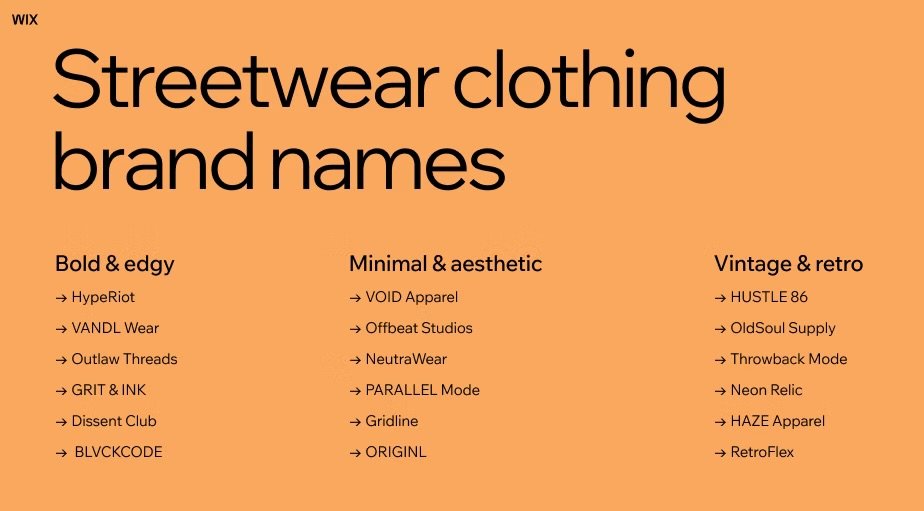
11. Choose a Strong Brand Name
Your brand name should be:
- memorable;
- pronounceable;
- visually usable;
- appropriate for your positioning;
- sufficiently distinctive;
- expandable if your category grows.
Do not fall in love with a name before checking whether it creates legal or commercial conflicts.
12. Search the Name Before Investing
For anyone learning how to start a clothing brand in the USA, trademark research deserves attention early.
The USPTO explains that trademarks can include words, phrases, symbols or designs identifying the source of goods or services. It also recommends searching for similar trademarks when preparing to file. (USPTO)
Do not treat an available Instagram handle as trademark clearance.
For legal decisions, consult an appropriate U.S. trademark professional.
13. Prefer a Distinctive Name
The USPTO explains that stronger marks are generally distinctive, while descriptive or generic marks can be weaker and more difficult to protect. (USPTO)
This has a branding advantage too.
A distinctive name gives you something ownable in the customer’s mind.
14. Secure Your Digital Identity
Once appropriate checks have been made, investigate:
- domain;
- Instagram;
- TikTok;
- Facebook;
- YouTube;
- Pinterest;
- X;
- relevant marketplace usernames.
Consistency reduces confusion.
15. Develop Your Logo
A clothing logo needs to work in more places than a website header.
Consider:
- neck labels;
- woven labels;
- embroidery;
- screen printing;
- heat transfer;
- packaging;
- hangtags;
- small digital icons.
An overly complicated logo may look excellent on a laptop but become difficult to reproduce at small physical sizes.
16. Create a Secondary Mark
Consider developing:
- primary wordmark;
- monogram;
- icon;
- simplified mark.
A secondary mark can be valuable for chest embroidery, labels, caps and small branding areas.
17. Build a Color System
Define:
- primary brand color;
- secondary colors;
- neutrals;
- accent colors.
Do not confuse your brand palette with your garment colorways.
They can overlap, but they serve different purposes.
18. Choose Typography
Use a controlled type system for:
- website;
- packaging;
- advertising;
- social graphics;
- lookbooks.
Visual consistency makes a young company look more deliberate.
19. Define Your Brand Voice
Should your company sound:
- technical;
- rebellious;
- athletic;
- minimalist;
- luxurious;
- energetic;
- community-driven?
Your captions, product descriptions, emails and packaging should sound like the same company.
20. Build a Simple Brand Guide
Your first brand guide does not need 100 pages.
Document:
- logo;
- logo spacing;
- colors;
- fonts;
- tone;
- photography direction;
- graphic style;
- prohibited uses.
This prevents visual inconsistency as more people begin working on the brand.
PHASE 3 — SET UP THE USA BUSINESS FOUNDATION
21. Choose an Appropriate U.S. Business Structure
Business structure can affect taxes, paperwork, fundraising and personal liability. The U.S. Small Business Administration advises founders to choose the structure before state registration and notes that requirements can vary by state. (Small Business Administration)
Common structures include sole proprietorships, partnerships, LLCs and corporations.
Do not choose solely because a social-media creator said every clothing brand “must” use one structure.
Your circumstances matter.
U.S. SBA — Choose a Business Structure
22. Register the Business Where Required
USA requirements depend on location and structure.
The SBA’s startup guidance covers choosing a location, business structure and name, registering the business, obtaining relevant tax IDs, licenses and permits, opening a bank account and considering insurance. (Small Business Administration)
Use official federal and state resources for your particular situation.
23. Address Tax Identification Requirements
Determine which federal and state registrations apply to your business.
Do not rely on an overseas clothing manufacturer to advise you on U.S. tax law.
Manufacturing and legal/tax compliance are separate disciplines.
24. Open Dedicated Business Banking
Separating business and personal finances can make accounting and financial management significantly clearer.
Your brand needs to know:
- money invested;
- deposits paid;
- inventory costs;
- shipping expenses;
- marketing expenses;
- sales;
- refunds;
- profit.
If everything flows through personal accounts without structure, analysis becomes unnecessarily difficult.
25. Build Basic Bookkeeping From Day One
Do not wait until the company becomes “big.”
Track:
Revenue
Cost of goods
Freight
Duties/taxes where applicable
Packaging
Payment processing
Advertising
Software
Returns
Operating expenses
Revenue is not profit.
26. Understand U.S. Trademark Basics
A trademark identifies the source of goods or services. Federal registration can provide broader rights than unregistered use, although registration is not mandatory simply to use a mark. (USPTO)
The exact strategy is a legal decision.
Do not use the ® symbol unless you are entitled to do so for the relevant registered mark and goods/services. The USPTO specifically distinguishes ® from TM/SM usage. (USPTO)
27. Identify Your Goods Correctly
Trademark applications connect marks to specified goods/services. The USPTO notes that applicants should accurately identify the goods and services associated with the mark. (USPTO)
For a clothing founder, this matters because “I have a brand” and “I have legally protected everything connected to my brand” are not equivalent statements.
28. Understand Apparel Import Responsibilities
If you manufacture overseas and import into the United States, importing is part of your business model.
U.S. Customs and Border Protection notes that textile imports can involve labeling and country-of-origin considerations, among other requirements. (CBP Customer Service)
CBP — Regulations for Importing Textiles
Verify the requirements applicable to your specific products before importing.
29. Plan Compliance Before Production
Do not manufacture a large order and investigate U.S. requirements afterward.
Depending on the product, relevant issues can include:
- fiber-content labeling;
- country-of-origin marking;
- care information;
- product-specific safety requirements;
- customs classification;
- import documentation.
Use appropriate U.S. authorities and qualified professionals for product-specific compliance.
Your manufacturer can produce approved labels and garments according to confirmed specifications, but the U.S. brand/importer should independently understand its obligations.
30. Protect Your Records
Maintain organized files for:
- business registration;
- trademark documents;
- supplier quotations;
- invoices;
- purchase orders;
- tech packs;
- sample approvals;
- shipping documents;
- customs records;
- product photography;
- contracts.
A company becomes easier to operate when information is retrievable.
PHASE 4 — DESIGN THE FIRST COLLECTION
31. Start With a Small Product Architecture
A new founder may dream about 40 SKUs.
Start smaller.
For example, a streetwear launch might begin with:
- heavyweight-style T-shirt;
- hoodie;
- sweatpants.
An activewear launch might begin with:
- leggings;
- sports bra;
- training top.
A focused collection concentrates your development budget.
32. Choose a Hero Product
What single product should customers remember?
Your hero product deserves disproportionate attention.
It may become:
- the advertisement;
- the first customer acquisition product;
- the most photographed garment;
- the repeat-order anchor.
Do not treat every SKU equally if one has greater commercial potential.
33. Define the Product’s Job
For every garment, complete this sentence:
This product exists to ______.
Examples:
This hoodie exists to deliver an oversized premium streetwear silhouette with restrained branding.
These leggings exist for strength-training customers who prioritize coverage, support and clean styling.
That statement guides later technical decisions.
34. Build a Reference Board
Collect visual references for:
- silhouette;
- fit;
- seams;
- collars;
- cuffs;
- pockets;
- colors;
- trims;
- fabric appearance;
- branding placement.
References communicate direction.
But do not ask a manufacturer to counterfeit another brand’s protected product or branding.
Use references to explain your concept, then develop your own product.
35. Sketch the Garment
You do not need to be a world-class fashion illustrator.
The sketch needs to communicate.
Show:
- front;
- back;
- relevant side views;
- pockets;
- seams;
- panels;
- branding;
- trims.
The clearer the information, the fewer assumptions manufacturing requires.
36. Decide the Fit
Fit is part of brand identity.
Options can include:
- slim;
- regular;
- relaxed;
- oversized;
- cropped;
- compression;
- athletic.
“Medium” does not describe fit.
Measurements do.
37. Create a Measurement Specification
Define points of measurement appropriate to the garment.
For a T-shirt, this might involve:
- chest;
- body length;
- shoulder;
- sleeve;
- opening measurements.
For leggings, the required measurement set differs.
Do not invent measurements casually.
Develop them around your intended fit.
38. Build the Size Range
Decide which sizes you will sell.
Consider your actual target customer.
Then develop grading appropriate to the product.
A size range should not be added to the website before you know what those sizes physically mean.
39. Choose Construction Details
Decide relevant features such as:
- seam type;
- rib;
- cuffs;
- waistband;
- drawcord;
- pocket construction;
- zipper;
- gusset;
- paneling;
- lining.
Construction influences cost, appearance and performance.
40. Build the Tech Pack
For anyone learning how to manufacture a clothing line, this is one of the most valuable documents to understand.
A tech pack can communicate:
- technical drawings;
- measurements;
- fabric;
- colors;
- construction;
- trims;
- labels;
- artwork;
- placement;
- packaging;
- revision information.
A vague idea asks the factory to guess.
A good tech pack reduces guessing.
PHASE 5 — FABRIC, TRIMS AND BRANDING
41. Choose Fabric by Product Requirement
Do not ask:
“What is your best fabric?”
Ask:
“Which fabric direction suits this specific product?”
Define:
- intended use;
- feel;
- appearance;
- weight direction;
- stretch requirements;
- performance requirements;
- season;
- target price.
The word “premium” is not a fabric specification.
42. Understand GSM Without Worshipping It
GSM is useful for describing fabric weight per unit area.
But higher GSM does not automatically mean higher quality.
A garment’s quality perception can involve:
- fiber;
- yarn;
- construction;
- finish;
- stability;
- sewing;
- fit;
- color;
- durability;
- intended application.
Choose the specification for the product—not for the biggest number.
43. Evaluate Fabric Physically
Whenever practical, assess actual swatches.
Consider:
- hand feel;
- drape;
- surface;
- opacity;
- stretch;
- recovery;
- color;
- structure.
Digital photographs cannot communicate every textile characteristic.
44. Match Fabric to Fit
An oversized streetwear T-shirt and a compression top perform very different jobs.
The fabric must cooperate with the pattern.
Do not finalize textile and fit as unrelated decisions.
45. Develop Colors Deliberately
Choose a controlled launch palette.
A first collection does not necessarily need 15 colors.
Every additional color can add complexity to:
- development;
- photography;
- inventory;
- merchandising;
- demand forecasting.
Start with colors your positioning and research support.
46. Specify Your Labels
Private-label clothing can involve:
- main labels;
- size labels;
- care/content labels;
- heat-transfer neck labels;
- woven labels;
- hangtags.
Requirements depend on the product and market.
Confirm both design and compliance information before production.
47. Plan Branding Placement
Branding can include:
- embroidery;
- screen printing;
- heat transfers;
- sublimation where appropriate;
- patches;
- woven applications;
- custom labels.
Elahi Vertex International’s current manufacturing page lists custom branding, labels, sublimation and cut-and-sew capabilities among its services. (Elahivertex International)
Project-specific compatibility still requires confirmation.
48. Design Packaging With Purpose
Packaging should protect the garment and support the customer experience.
Consider:
- individual garment packaging;
- size identification;
- barcode/SKU needs;
- shipping protection;
- brand presentation.
Do not spend disproportionately on luxury packaging before proving customers want the product.
49. Create SKU Logic
A simple SKU system helps distinguish:
Product → Color → Size
For example, your internal structure might identify one hoodie, one color and one size uniquely.
This becomes increasingly useful as inventory grows.
50. Freeze Specifications Before Final Sampling
Constantly changing the design while expecting accurate costing and sampling creates confusion.
At some point, the project needs a controlled version.
Mark it clearly:
VERSION 1
VERSION 2
FINAL SAMPLE SPECIFICATION
Version control is boring until it saves an order.
PHASE 6 — FIND AND EVALUATE A MANUFACTURER
51. Understand What Type of Manufacturer You Need
A blank-apparel printer and a custom cut-and-sew manufacturer solve different problems.
If you want to print your logo on existing blanks, your supply chain can be relatively simple.
If you want your own:
- pattern;
- measurements;
- fabric;
- labels;
- trims;
- construction;
- branding;
you are entering custom manufacturing.
Know which service you actually need.
52. Learn OEM vs ODM vs Private Label
OEM generally means producing according to the buyer’s design/specifications.
ODM can involve greater manufacturer participation in product development.
Private label broadly means products manufactured for sale under the buyer’s own brand.
Elahi Vertex International currently describes all three pathways as part of its manufacturing services. (Elahivertex International)
The exact project scope should always be confirmed.
53. Shortlist Manufacturers by Capability
Do not choose exclusively by the lowest quote.
Check whether the supplier works with your product category.
A teamwear specialist may not be the best fit for a complex fashion jacket.
A fashion cut-and-sew supplier may not be the best choice for technical sports uniforms.
Match capability to product.
54. Send the Same Brief to Shortlisted Suppliers
Comparison becomes difficult if every manufacturer receives different information.
Prepare a standardized RFQ containing:
- product;
- design;
- quantity;
- size range;
- material;
- branding;
- packaging;
- destination;
- target timing.
Then compare responses.
55. Evaluate Communication
Manufacturing is collaborative.
Observe:
- response clarity;
- questions asked;
- whether specifications are understood;
- whether unknowns are acknowledged;
- whether the supplier makes unsupported promises.
Good communication does not guarantee perfect production.
Poor communication is still a warning.
56. Ask About Sampling
Before bulk production, understand:
- sample process;
- sample cost;
- development requirements;
- revisions;
- estimated timing;
- shipping.
All of these should be confirmed for your specific project.
57. Ask How Customization Is Handled
If you require custom:
- labels;
- embroidery;
- prints;
- patterns;
- colors;
- packaging;
include those requirements early.
Adding them after quotation can change the project.
58. Request Relevant Work Evidence
Ask to see relevant manufacturing work where appropriate.
Do not be impressed by random photographs unrelated to your category.
If you need activewear, look for activewear-related capability.
If you need teamwear, look for teamwear.
Elahi Vertex International currently publishes a portfolio and manufacturing-work section covering multiple apparel categories. (Elahivertex International)
View Elahi Vertex International’s Portfolio
59. Compare Total Value, Not Unit Price Alone
A cheaper garment can become more expensive if it causes:
- high returns;
- unusable inventory;
- inconsistent sizing;
- poor reviews;
- rework;
- delays;
- customer dissatisfaction.
Your objective is not the lowest factory number.
It is a commercially viable landed product.
60. Choose a Manufacturer That Fits Your Stage
A startup needs a supplier relationship appropriate to its current level.
This is where private label clothing for startups becomes especially relevant.
Early-stage founders often need more than sewing capacity.
They may need help converting:
idea → specifications → fabric → sample → revisions → approved product
Elahi Vertex International states that it works with startups as well as established brands and provides custom, OEM, ODM and private-label manufacturing services. (Elahivertex International)
That is one reason a USA startup can consider Elahi Vertex International during manufacturer evaluation—but the final decision should still be based on the actual project’s requirements, sample, quotation and agreed terms.
PHASE 7 — SAMPLING AND PRODUCT DEVELOPMENT
61. Never Treat Sampling as a Formality
Sampling is where your idea encounters reality.
Your first sample may reveal:
- incorrect fit;
- wrong fabric feel;
- artwork scale issues;
- pocket problems;
- color problems;
- construction improvements;
- label-placement issues.
That is useful information.
The sample is doing its job.
62. Review the Sample Systematically
Do not simply say:
“I like it.”
Review:
Design
Measurements
Fit
Fabric
Color
Construction
Branding
Trims
Labels
Packaging
Document every issue.
63. Measure the Sample
Compare the physical garment against the approved measurement specification.
A visual check alone is insufficient.
If measurements differ, record them.
64. Fit Test on the Intended Customer
A garment can match measurements and still need fit refinement.
Evaluate:
- comfort;
- mobility;
- silhouette;
- proportion;
- intended styling.
For performance clothing, test movements relevant to actual use.
65. Test the Product’s Intended Function
If it is a gym product, evaluate it during gym-related movement.
If it is teamwear, evaluate range of motion.
If it is streetwear, evaluate silhouette, drape and styling.
Product testing should reflect product purpose.
66. Photograph Problems
When requesting revisions, photographs can communicate clearly.
Mark:
- location;
- issue;
- desired change.
“Fix the sleeve” is vague.
“Reduce this confirmed measurement according to revised spec V2” is actionable.
67. Change One Version at a Time
Do not send conflicting revision messages across WhatsApp, email and Instagram.
Consolidate feedback.
Create a revision sheet.
This is essential when learning how to manufacture a clothing line professionally.
68. Approve Branding Physically
Logo size on a computer screen can feel different on a garment.
Check:
- dimensions;
- position;
- color;
- technique;
- surface compatibility.
Approve the actual result.
69. Review Packaging Sample Where Necessary
If packaging is customized, confirm:
- logo;
- dimensions;
- warnings/information if required;
- barcode/SKU placement;
- color;
- material.
Do this before mass production of packaging.
70. Create a Final Approved Sample
Once all required changes are resolved, identify the approved sample clearly.
This becomes a reference for bulk production.
Do not continue casually modifying the product after approval unless the changes are formally documented.
PHASE 8 — COSTING, PRICING AND FIRST ORDER
71. Understand the Quotation
Ask what is included.
Potential components can include:
- garment;
- fabric;
- trims;
- labels;
- customization;
- packaging;
- sample/development;
- shipping.
Never assume.
Get project-specific confirmation.
72. Understand MOQ
MOQ means minimum order quantity.
But MOQ can vary by:
- product;
- fabric;
- color;
- customization;
- manufacturing process;
- supplier.
Do not build your entire business plan around a generic MOQ found online.
Request a quotation for your actual product.
73. Calculate Landed Cost
For a USA brand manufacturing internationally, the factory price is not necessarily the final inventory cost.
Consider applicable:
- product cost;
- packaging;
- freight;
- insurance where relevant;
- customs duties;
- brokerage;
- domestic transportation;
- payment costs.
Verify import costs for your specific shipment and classification.
74. Build Margin Before Setting Retail Price
Do not price by:
“Competitors charge $50, so I’ll charge $45.”
Calculate your economics.
Your retail price needs to support the business model.
Consider:
- landed product cost;
- payment fees;
- fulfillment;
- returns;
- marketing;
- discounts;
- overhead;
- profit.
75. Account for Customer Acquisition
A $60 product with a $20 landed cost does not automatically create $40 profit.
If acquiring the customer costs $20, fulfillment costs $7 and payment/operating costs consume more, economics change rapidly.
Build a complete model.
76. Create a Conservative First Forecast
Do not manufacture 10,000 units simply because you want to “look serious.”
Estimate demand using:
- audience size;
- email list;
- prelaunch engagement;
- competitor benchmarks;
- paid-ad tests;
- preorder data where appropriate;
- previous sales if available.
Inventory is cash converted into garments.
77. Allocate Inventory by Size Intelligently
Do not automatically order equal quantities of every size.
Your target customer and available demand data should influence the size curve.
After launch, actual sales data becomes even more valuable.
78. Allocate Inventory by Color
One hero color may outsell five experimental colors.
Forecast accordingly.
Aesthetic variety is attractive.
Dead stock is expensive.
79. Keep Contingency Capital
Do not invest every dollar into inventory.
Your business may still need money for:
- freight;
- duties;
- photography;
- website;
- marketing;
- fulfillment;
- returns;
- unexpected costs.
Cash flow matters.
80. Approve the Purchase Order Carefully
Before committing to bulk production, confirm:
- product;
- quantity;
- size breakdown;
- colors;
- specifications;
- branding;
- packaging;
- price;
- payment terms;
- production terms;
- shipping terms;
- destination.
If something matters, document it.
PHASE 9 — BULK PRODUCTION, QC AND IMPORTING
81. Freeze the Approved Specification
Bulk production should follow an approved reference.
Avoid uncontrolled design changes after production starts.
If a change is necessary, document its implications.
82. Maintain Communication During Production
Establish agreed checkpoints.
You do not need to message the factory every hour.
You do need clarity about important approvals and issues.
83. Understand Quality Control
Quality control is not simply asking:
“Is the quality good?”
Define what should be checked.
Potential areas include:
- measurements;
- workmanship;
- construction;
- branding;
- color;
- labels;
- packaging;
- quantities.
Project-specific QC requirements should be agreed.
84. Establish Measurement Tolerances
Manufactured garments require measurable standards.
Define relevant tolerances rather than expecting an abstract concept of perfection.
The correct tolerances depend on product and specification.
85. Check Branding Consistency
Bulk products should reflect the approved branding.
Inspect relevant:
- print;
- embroidery;
- label;
- placement;
- color;
- size.
A premium brand can be damaged by inconsistent branding details.
86. Confirm Quantity and Size Breakdown
Before shipment, reconcile production against the purchase order.
Know what is being shipped.
87. Confirm Packaging
Check that garments are packaged according to the approved requirement.
For e-commerce brands, accurate size/product identification can simplify fulfillment.
88. Prepare Import Documentation
If your clothing is manufactured outside the United States, understand the documentation and customs requirements before the shipment arrives.
CBP notes specific considerations for textile and apparel imports, including origin and labeling issues. (CBP Customer Service)
Use a qualified customs broker or other appropriate professional where needed.
89. Understand Country-of-Origin Requirements
Do not remove or invent origin information because you think customers prefer another country.
CBP’s textile-import guidance specifically addresses country-of-origin marking considerations for textiles. (CBP Customer Service)
Follow applicable law.
A serious brand builds trust through compliance, not concealment.
90. Inspect Inventory When It Arrives
Receiving the shipment is not the end of QC.
Check:
- cartons;
- quantities;
- SKUs;
- sizes;
- visible damage;
- random garments;
- packaging.
Record problems promptly.
PHASE 10 — LAUNCH, LEARN AND SCALE
91. Build Your Website Around the Customer
Your website should answer:
What is this?
Who is it for?
Why is it different?
How does it fit?
What does it cost?
When will I receive it?
What if I need to return it?
Do not make customers hunt for basic information.
92. Invest in Strong Product Photography
Clothing is visual.
Show:
- front;
- back;
- details;
- fit;
- fabric texture;
- branding;
- lifestyle context;
- relevant movement.
Customers cannot physically touch an online product.
Photography has to reduce uncertainty.
93. Write Product Descriptions That Sell the Product, Not Adjectives
Avoid:
Premium quality. Amazing design. Best fabric.
Explain:
- fit;
- material;
- construction;
- features;
- use;
- sizing;
- care;
- relevant product benefits.
Specific information builds confidence.
94. Build an Audience Before Launch Day
If nobody knows your company exists, launch day can be painfully quiet.
Start building:
- email subscribers;
- social audience;
- founder content;
- product-development content;
- behind-the-scenes material;
- early customer interest.
The manufacturing journey itself can become content.
95. Launch With a Clear Hero Message
Do not announce:
“We are finally live!”
and expect strangers to care.
Tell them:
- what you made;
- who it is for;
- why it exists;
- why it is worth considering.
Your launch should communicate the positioning established in Step 8.
96. Collect Customer Feedback Systematically
After orders arrive, ask:
- How was the fit?
- Was sizing clear?
- What did you think of the fabric?
- Which color should come next?
- What would you change?
- Would you buy again?
Customers can become your product-development department.
97. Track Returns by Reason
Do not simply refund and forget.
Categorize:
- too small;
- too large;
- fit;
- color;
- quality issue;
- changed mind;
- product expectation;
- shipping issue.
Patterns reveal what to fix.
98. Reorder Winners Before Expanding Recklessly
A common founder temptation is launching Collection 02 immediately.
But if Product A is selling strongly, your best opportunity may be:
Reorder Product A.
Successful brands are not measured by how many different SKUs they can create.
They are measured by whether customers repeatedly buy profitable products.
99. Build a Repeatable Manufacturing System
This is the final point—and one of the most important.
When starting a clothing brand in the USA, your first collection is not only about selling clothes.
It is about building a system.
You should finish the first development cycle with:
- approved designs;
- finalized tech packs;
- measurement specifications;
- fabric references;
- color standards;
- branding files;
- approved samples;
- costing records;
- supplier communication history;
- QC requirements;
- packaging specifications;
- customer feedback;
- sales data.
Then Collection 02 is not another leap into the unknown.
It is an iteration.
That is how a startup begins becoming an operating clothing company.
Clothing Brand Startup Checklist: The Entire Journey at a Glance
If you are starting a clothing brand in the USA, think about the business in ten stages:
Brand Strategy
Who is the customer, what are you making, and why should they care?
Business Foundation
Structure, registration, finance, trademarks and compliance.
Collection Planning
Choose focused products rather than manufacturing everything.
Product Development
Sketches, measurements, fit and tech packs.
Materials & Branding
Fabric, colors, trims, labels, printing and packaging.
Manufacturer Selection
Find the right production capability and evaluate communication.
Sampling
Turn specifications into a physical garment, test it and revise it.
Commercial Planning
Calculate landed cost, margin, inventory and first-order quantities.
Production & Import
Manufacture against approved specifications, perform QC and prepare for U.S. import requirements.
Launch & Reorder
Sell, measure customer response, fix weaknesses and reorder winners.
That is a much more useful model of how to start a clothing brand in the USA than “design a logo and find a supplier.”
How to Manufacture a Clothing Line Without Losing Control of Your Idea
Many first-time founders are concerned that they do not understand manufacturing terminology.
You do not need to become a textile engineer before contacting a manufacturer.
You do need to become clear about what you want.
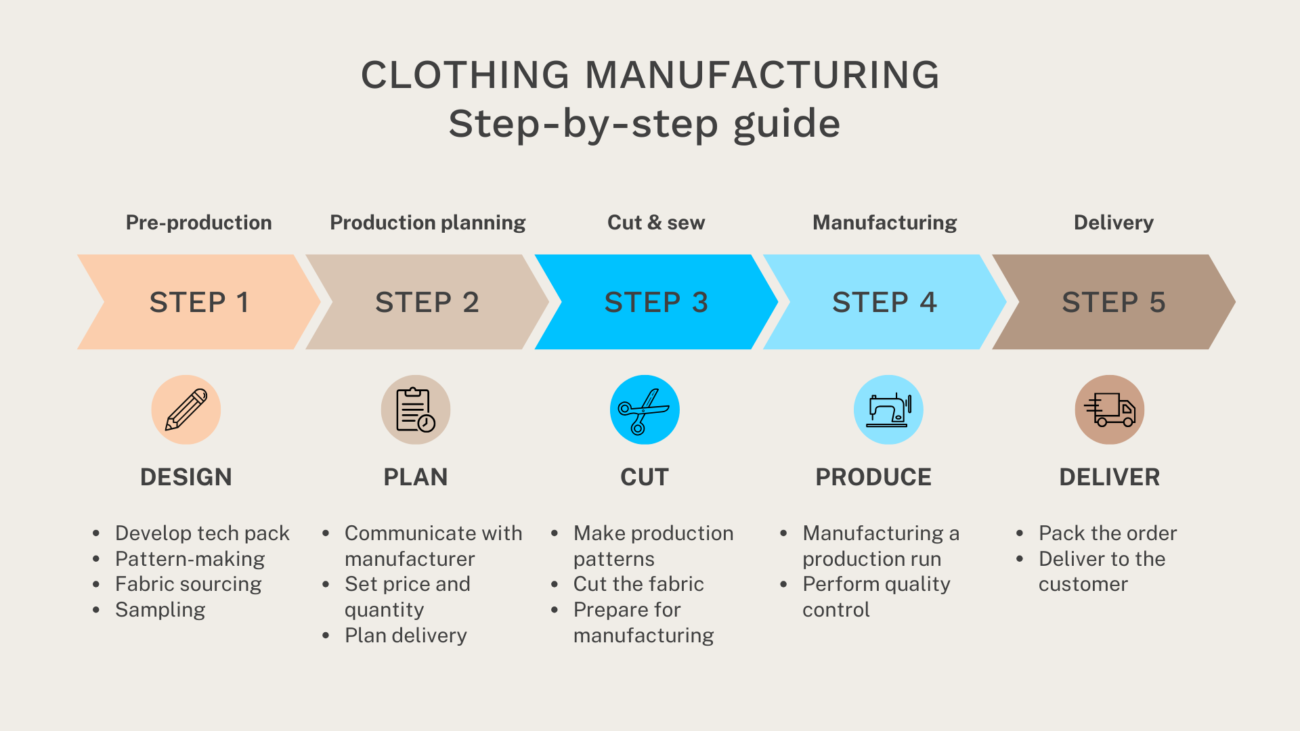
The strongest workflow for how to manufacture a clothing line is:
IDEA → DESIGN → SPECIFICATION → FABRIC → SAMPLE → FIT REVIEW → REVISION → APPROVAL → QUOTATION → BULK PRODUCTION → QC → SHIPPING → CUSTOMER FEEDBACK → REORDER
Each stage should reduce uncertainty.
Idea
What are you making and for whom?
Design
What should the garment look like?
Specification
What measurements, materials, construction and branding define it?
Fabric
Which material supports the desired appearance and performance?
Sample
Can the concept actually become the product you imagined?
Review
What needs correction?
Approval
Which version becomes the manufacturing reference?
Production
Can the approved product be reproduced consistently?
QC
Does production align with the agreed requirements?
Feedback
What does the market tell you?
Reorder
What should stay the same, and what should improve?
This is the operational backbone behind private label clothing for startups.
Why USA Clothing Startups Can Consider Elahi Vertex International
A useful manufacturing partner should be evaluated on what it can actually support—not on slogans.
Elahi Vertex International currently describes itself as a custom clothing manufacturer and apparel exporter based in Sialkot, Pakistan. Its published manufacturing services include custom manufacturing, OEM, ODM, private-label manufacturing, fabric sourcing, product development, sampling, customization, bulk production, quality control and packaging. Its stated product scope includes sportswear, teamwear, activewear, streetwear and other private-label apparel. (Elahivertex International)
For a USA founder researching private label clothing for startups, several parts of that model are particularly relevant.
1. You Can Start With Your Own Concept
You do not need to build a brand around another company’s consumer identity.
The manufacturing process is designed around buyer specifications and customization requirements. (Elahivertex International)
2. OEM Manufacturing Is Available
If you already have designs and technical specifications, Elahi Vertex International states that its OEM service can manufacture according to buyer designs, patterns, measurements, materials, branding, colors and trims. (Elahivertex International)
3. ODM Support Is Available
For founders who have an idea but need more product-development input, its manufacturing page also describes an ODM pathway involving development of practical apparel designs, materials and construction details. (Elahivertex International)
4. Private-Label Manufacturing Is Part of the Service
The published service includes custom designs, labels, branding, packaging and bulk production for private-label projects. (Elahivertex International)
5. Sampling Is Part of the Manufacturing Workflow
Sampling matters because a USA founder should evaluate the physical product before committing to bulk production. Elahi Vertex International lists sampling and prototyping within its manufacturing process. (Elahivertex International)
6. Multiple Clothing Categories Are Supported
The current website covers sportswear, teamwear, activewear, streetwear, boxing wear, leatherwear and private-label apparel, giving founders several potential directions for collection development. (Elahivertex International)
7. Custom Branding Can Be Incorporated
The manufacturing information includes custom labels and branding alongside multiple customization processes. (Elahivertex International)
8. Buyers Can Submit Detailed Specifications
The current manufacturing inquiry system accepts product selections, design uploads and information concerning fabric, GSM, fit, printing, labels, sizes and target quantity. (Elahivertex International)
That is exactly the type of information founders should prepare before requesting an accurate project review.
9. The Relationship Can Start With Requirements, Not Guesswork
A USA startup can send its concept, design or tech pack and have the project reviewed before manufacturing terms are confirmed.
That final qualification is important.
MOQ, price, fabric availability, sampling cost, production timing, shipping timing and every project-specific technical specification should be confirmed for the actual order.
Elahi Vertex International should earn the business through the project review, sample and agreed commercial terms—not through unsupported promises.
Explore Elahi Vertex International Manufacturing
What Should a USA Clothing Startup Send Elahi Vertex International?
If you are ready to move from reading about how to start a clothing brand in the USA to discussing an actual product, prepare as much of the following as possible:
1. Product type
T-shirt, hoodie, leggings, tracksuit, jersey, shorts, jacket or another garment.
2. Design
Tech pack, sketch, reference images or concept.
3. Quantity
Estimated initial order requirement.
4. Sizes
Your intended size range.
5. Measurements
Your measurement specification or desired fit direction.
6. Fabric
Known specification or desired characteristics.
7. Colors
Pantone/reference information where available.
8. Branding
Logo, labels, embroidery, print or other customization.
9. Packaging
Any custom packaging requirements.
10. Destination
U.S. city/state or shipping destination relevant to quotation.
11. Target timing
Your desired delivery period.
12. Questions
Anything you do not yet understand.
If something is unknown, say so.
A manufacturer can discuss an unknown requirement.
It cannot reliably read your mind.
20 Questions USA Founders Should Ask Before Their First Clothing Order
1. Who exactly is my target customer?
If you cannot answer this, your product decisions will remain unfocused.
2. What is my hero product?
Choose the product most likely to define the launch.
3. Why should someone buy from my brand?
Develop a meaningful differentiation.
4. Is my brand name commercially and legally appropriate?
Investigate before investing heavily.
5. Have I chosen the right U.S. business structure?
Use appropriate professional and official guidance.
6. Do I understand the relevant U.S. apparel requirements?
Research them before production and import.
7. Do I have a tech pack?
If not, organize the specifications required for development.
8. Have I defined the fit?
“Regular” or “oversized” needs to become measurements.
9. Have I selected fabric for a reason?
Do not choose solely because a supplier calls it premium.
10. Have I physically reviewed a sample?
Never confuse a rendering with a finished garment.
11. Have I tested the intended use?
Performance products should be evaluated in relevant conditions.
12. Have I documented revisions?
Version control prevents manufacturing confusion.
13. Do I know my landed cost?
Factory cost is only one part of international sourcing.
14. Does my retail price support the business?
Calculate margin after realistic expenses.
15. Is my first quantity based on demand or ego?
Inventory ties up capital.
16. Have I approved labels and packaging?
Small details influence both compliance and customer experience.
17. Have I defined QC expectations?
“Good quality” is not sufficiently specific.
18. Am I prepared for importing?
Understand customs and documentation before shipment.
19. How will I acquire customers?
Manufacturing inventory is not the same as creating demand.
20. What will trigger my first reorder?
Define the sales and inventory signals in advance.
Starting a Clothing Brand in the USA: The Mistakes to Avoid
The most expensive mistakes are often not dramatic.
They are small assumptions repeated across a large order.
Avoid:
Designing before identifying a customer.
Ordering too many SKUs.
Choosing a name without proper research.
Treating the logo as the entire brand.
Copying competitors rather than finding a position.
Choosing fabric by photograph.
Choosing fabric by GSM alone.
Skipping technical specifications.
Approving samples emotionally rather than systematically.
Changing requirements without version control.
Selecting a manufacturer only by price.
Ignoring landed cost.
Manufacturing excessive inventory before validating demand.
Ignoring U.S. labeling/import considerations until shipment.
Launching without an audience.
Ignoring customer-return reasons.
Creating new products before reordering proven winners.
The goal of this clothing brand startup checklist is not to make entrepreneurship look difficult.
It is to make the risks visible while they are still inexpensive to fix.
Final 99-Point Principle: Build a Brand Customers Can Reorder From
The biggest mindset change for someone researching how to start a clothing brand in the USA is understanding that the objective is not simply to “launch.”
Launch day is the beginning.
A real clothing company needs to repeatedly convert:
customer insight → product → manufacturing → inventory → marketing → sale → customer experience → data → improved product → reorder
Your first collection teaches you.
Your second collection should use those lessons.
Your first customer gives you information.
Your hundredth customer gives you patterns.
Your first sample exposes assumptions.
Your approved sample converts those assumptions into something physical.
And your first successful reorder is often a stronger business milestone than your first Instagram post.
If you are starting a clothing brand in the USA, focus less on looking like a giant company on Day 1 and more on building a product and supply chain capable of becoming one.
1. Start With a Clear Clothing Brand Concept
Learning how to start a clothing brand in the USA begins with defining exactly what the brand will sell and who it will serve. A founder should decide whether the first collection will focus on streetwear, activewear, sportswear, teamwear, casual clothing or another specific niche. A narrow initial product direction can make design, sourcing, pricing and marketing decisions easier. When researching how to start a clothing brand in the USA, founders should think beyond creating a logo and concentrate on building products for a clearly defined customer.
2. Research the USA Market Before Developing Products
One important part of understanding how to start a clothing brand in the USA is researching what customers already buy, what competitors offer and where a new brand can differentiate itself. Analyze competing products, price positioning, materials, sizing, customer reviews and common complaints. This research can reveal opportunities before money is invested in samples or inventory. Founders studying how to start a clothing brand in the USA should use market research to influence the collection rather than developing products entirely from personal preference.
3. Build a Focused First Collection
Founders researching how to start a clothing brand in the USA do not necessarily need a large first collection. Starting with a focused group of products can simplify development, sampling, inventory and marketing. A streetwear startup might begin with a few coordinated garments, while an activewear startup could concentrate on a tightly defined training collection. A practical approach to how to start a clothing brand in the USA is to validate a strong product concept before expanding into numerous categories.
4. Convert Designs Into Manufacturing Specifications
A major step in how to start a clothing brand in the USA is translating creative ideas into information a manufacturer can actually use. Reference images and sketches can communicate direction, but measurements, fabric requirements, colors, trims, artwork placement, labels and construction details need to become clearer during development. Anyone learning how to start a clothing brand in the USA should understand that better specifications can reduce ambiguity during quotation, sampling, revisions and eventual production.
5. Treat Sampling as Product Development
Understanding how to start a clothing brand in the USA also means understanding that the first sample may not automatically be the final product. Sampling gives founders an opportunity to evaluate fit, measurements, fabric, construction, colors, branding and overall appearance before committing to bulk production. For entrepreneurs researching how to start a clothing brand in the USA, sample revisions should be treated as controlled product development. Record each requested change so the final approved version can become a clearer production reference.
6. Calculate the Full Commercial Picture
A founder learning how to start a clothing brand in the USA should consider more than the manufacturing price per garment. Product development, samples, packaging, freight, import-related costs, payment processing, warehousing, fulfillment, returns and marketing can all affect the commercial model. Before placing a production order, founders researching how to start a clothing brand in the USA should understand their expected landed cost and intended selling price sufficiently to evaluate whether the product can support the business model.
7. Choose a Manufacturer Based on Fit, Not Price Alone
Finding a manufacturing partner is a central part of how to start a clothing brand in the USA. The lowest quotation does not automatically represent the best option. Buyers should consider communication, product-category relevance, customization requirements, sampling, specification accuracy, quality expectations and commercial terms. When deciding how to start a clothing brand in the USA, founders should compare manufacturers against the requirements of their actual products instead of choosing solely from headline unit prices.
8. Approve the Product Before Bulk Production
A disciplined approach to how to start a clothing brand in the USA includes establishing a clear approval point before production. Review the final sample against confirmed measurements, fabric, colors, artwork, labels, construction and other agreed specifications. Any unresolved issue should be discussed before bulk production begins. This is one of the most important lessons in how to start a clothing brand in the USA because fixing a problem during sampling is generally preferable to discovering the same issue across an entire production order.
9. Plan the Launch Before Inventory Arrives
Another overlooked part of how to start a clothing brand in the USA is preparing the commercial launch while products are being developed and produced. Product photography, website content, sizing information, pricing, packaging, fulfillment, customer service and launch marketing should not all begin after inventory arrives. Founders researching how to start a clothing brand in the USA can use the production period to prepare these assets so the business is ready to sell when approved inventory becomes available.
10. Build the Brand for Reorders, Not Just the First Drop
The long-term answer to how to start a clothing brand in the USA is not simply launching the first collection. A sustainable brand needs to learn from sales, customer feedback, returns, sizing issues and product performance. Keep records of approved samples, fabrics, measurements, colors, artwork and manufacturing specifications so successful products can be reordered more efficiently. Founders who understand how to start a clothing brand in the USA should treat the first production run as the beginning of a product-development cycle: launch → measure → improve → reorder → scale.
11. Define Your Target Customer Before Designing
Understanding how to start a clothing brand in the USA requires knowing exactly who the first collection is designed for. Age range, lifestyle, purchasing behavior, preferred fit, price expectations and product use can influence nearly every development decision. Founders researching how to start a clothing brand in the USA should create a specific customer profile before finalizing fabrics, silhouettes, colors or pricing.
12. Decide Your Brand Positioning Early
An important part of how to start a clothing brand in the USA is deciding where the brand should sit in the market. A startup could pursue premium streetwear, performance activewear, accessible basics, custom sportswear or another clearly differentiated position. When planning how to start a clothing brand in the USA, positioning should influence product quality expectations, packaging, photography, pricing and marketing rather than being treated as only a branding statement.
13. Validate Products Before Building a Large Collection
Founders learning how to start a clothing brand in the USA should avoid assuming that more products automatically create a stronger launch. A focused initial range can make sampling, inventory planning and customer feedback easier to manage. One practical approach to how to start a clothing brand in the USA is to validate several carefully selected products before investing in a much broader collection.
14. Develop an Accurate Size Strategy
Sizing is an important part of how to start a clothing brand in the USA because customers need to understand which size is appropriate for them. Founders should establish intended measurements, fit direction and size ranges during product development rather than treating sizing as an afterthought. Anyone researching how to start a clothing brand in the USA should also ensure that website size information reflects the actual approved garments.
15. Select Fabrics According to Product Purpose
Learning how to start a clothing brand in the USA includes understanding that fabric should be selected according to the intended garment rather than appearance alone. Weight, composition, construction, stretch, recovery, hand feel and other relevant characteristics can affect product performance. When working through how to start a clothing brand in the USA, founders should evaluate physical fabric options and samples before approving materials for production.
16. Plan Custom Branding From the Beginning
For founders studying how to start a clothing brand in the USA, branding extends beyond the logo printed on the garment. Depending on the product, brand identity can involve labels, hangtags, packaging, embroidery, printing and other customization elements. A stronger approach to how to start a clothing brand in the USA is to include these requirements in the development brief so they can be evaluated together with the garment.
17. Create a Clear Tech Pack
A tech pack becomes particularly valuable when learning how to start a clothing brand in the USA because it helps translate a product concept into organized manufacturing information. It can document measurements, construction, materials, colors, artwork, branding and other confirmed requirements. Founders researching how to start a clothing brand in the USA should treat the tech pack as a working document that becomes more precise as samples are reviewed and revised.
18. Compare Manufacturers Using the Same Requirements
One challenge in how to start a clothing brand in the USA is comparing quotations that may not represent identical products. If different manufacturers receive different fabrics, measurements, customization or packaging requirements, comparing unit prices can be misleading. Founders learning how to start a clothing brand in the USA should provide comparable specifications wherever practical so manufacturing proposals can be evaluated on a more consistent basis.
19. Understand MOQ Before Finalizing Your Collection
A practical part of how to start a clothing brand in the USA is aligning the first collection with realistic minimum-order requirements. At Elahi Vertex International, the standard MOQ is 20 pieces, which can help buyers structure initial product planning around a defined production minimum. When considering how to start a clothing brand in the USA, founders should also evaluate how quantities are distributed across products, sizes and colors before confirming an order.
20. Build Quality Requirements Into Product Development
Learning how to start a clothing brand in the USA also means defining what acceptable quality means for the specific product. Buyers should review relevant measurements, fabric, stitching, construction, branding, colors and finishing against confirmed requirements. A founder researching how to start a clothing brand in the USA should establish these expectations before production rather than relying on a vague request for “premium quality.”
21. Keep Sample Revisions Organized
Sample revisions are a normal part of how to start a clothing brand in the USA, particularly when developing original custom products. After reviewing a sample, document changes to fit, measurements, fabric, construction, artwork or branding clearly. Founders working through how to start a clothing brand in the USA can reduce confusion by numbering sample versions and recording exactly what changed between one version and the next.
22. Plan Packaging Around the Customer Experience
Packaging deserves attention when considering how to start a clothing brand in the USA because it can influence product presentation and fulfillment. The appropriate solution depends on the brand, sales channel and product requirements. Founders researching how to start a clothing brand in the USA should determine packaging requirements before production completion so approved garments can move efficiently into the intended distribution process.
23. Prepare Your E-Commerce Store Before Launch
A complete plan for how to start a clothing brand in the USA should include the online buying experience. Product photography, descriptions, sizing information, policies, inventory, checkout and fulfillment should be prepared before launch. Entrepreneurs learning how to start a clothing brand in the USA can use the sampling and production period to build these assets instead of waiting until finished inventory is ready.
24. Use Customer Feedback to Improve the Second Production Run
The first launch provides valuable information for anyone learning how to start a clothing brand in the USA. Customer feedback can reveal patterns involving sizing, fit, colors, product preferences and the overall buying experience. Founders developing how to start a clothing brand in the USA into a sustainable business should separate isolated opinions from recurring patterns and use meaningful evidence when planning revisions or reorders.
25. Build a Repeatable Manufacturing System
The strongest approach to how to start a clothing brand in the USA extends beyond successfully completing one production order. Preserve approved tech packs, measurements, fabrics, color references, artwork, labels, packaging specifications and sample records. As founders progress from learning how to start a clothing brand in the USA toward scaling one, organized product records can make successful styles easier to reproduce, improve and reorder.
26. Choose a Brand Name That Can Grow With the Business
An early decision in how to start a clothing brand in the USA is selecting a brand name that fits the intended market and long-term direction. Founders should consider whether the name works across websites, packaging, garment labels and future product categories. When planning how to start a clothing brand in the USA, trademark availability and other legal considerations should be properly researched before investing heavily in permanent branding materials.
27. Secure Your Digital Brand Identity Early
A practical part of how to start a clothing brand in the USA is establishing a consistent digital identity before launch. Founders can research suitable domain names and relevant social-media handles while developing the brand. Anyone learning how to start a clothing brand in the USA should aim for consistency so customers can recognize the same brand identity across its website, social platforms, packaging and products.
28. Create a Realistic Startup Budget
Financial planning is essential when researching how to start a clothing brand in the USA. The budget may need to account for product development, samples, manufacturing, labels, packaging, freight, import-related expenses, photography, e-commerce, fulfillment and marketing. A founder working through how to start a clothing brand in the USA should maintain additional financial flexibility rather than committing every available dollar to initial inventory.
29. Decide Between Custom Manufacturing and Existing Product Directions
Another important question in how to start a clothing brand in the USA is how original the first collection needs to be. Some founders want extensively customized garments, while others may prioritize a simpler private-label development pathway. When evaluating how to start a clothing brand in the USA, the manufacturing approach should match the brand’s design requirements, differentiation strategy, budget and intended customer experience.
30. Create a Product Development Calendar
Time management is often underestimated when learning how to start a clothing brand in the USA. Design preparation, fabric selection, sampling, revisions, approvals, production, logistics, photography and launch preparation all require coordination. Founders researching how to start a clothing brand in the USA should create a development calendar while leaving room for revisions rather than planning every stage around an ideal scenario with no changes.
31. Prepare Professional Design References
A manufacturer needs clear information to understand what the founder wants to produce. For anyone learning how to start a clothing brand in the USA, useful references can include sketches, technical drawings, inspiration images, artwork and existing garments used to explain particular details. A stronger approach to how to start a clothing brand in the USA is to clearly identify which elements are references and which specifications must be reproduced in the final product.
32. Define Your Color Strategy
Color can become an important commercial decision when studying how to start a clothing brand in the USA. Every additional color can affect product development, sampling and inventory complexity. Founders working through how to start a clothing brand in the USA should consider beginning with commercially relevant colorways that support the brand identity instead of creating numerous variations simply to make the first collection appear larger.
33. Develop Branding That Works on Actual Garments
Understanding how to start a clothing brand in the USA also requires translating digital branding into physical apparel. Logo size, placement and application method can influence how a garment looks and feels. Entrepreneurs researching how to start a clothing brand in the USA should review branding on physical samples whenever possible rather than approving every detail solely from digital mockups.
34. Think About Fabric Before Finalizing Every Design Detail
Fabric can influence silhouette, fit, drape, stretch and construction, making material selection an important stage in how to start a clothing brand in the USA. A design developed without considering its intended textile may require revisions later. Founders learning how to start a clothing brand in the USA should therefore connect design decisions with realistic fabric options during development instead of treating sourcing as a completely separate final step.
35. Create an Approval System for Every Sample
Sample management becomes increasingly important when learning how to start a clothing brand in the USA. Each sample should have a clear status such as review required, revision required or approved. Founders following a structured approach to how to start a clothing brand in the USA can record measurements, fit observations, fabric comments, artwork changes and construction corrections so outdated versions are not accidentally treated as final approvals.
36. Understand the Difference Between Sample and Bulk Production
A key lesson in how to start a clothing brand in the USA is that approving one sample is not the end of production management. The approved sample establishes a reference, while bulk manufacturing requires the agreed specifications to be followed across the order. Founders researching how to start a clothing brand in the USA should maintain their approved sample and technical documentation so they have clear references when reviewing production quality.
37. Plan Inventory Around Demand, Not Excitement
Inventory planning can determine whether a startup preserves or traps its working capital. Entrepreneurs studying how to start a clothing brand in the USA should think carefully about quantities across products, colors and sizes. A disciplined approach to how to start a clothing brand in the USA uses market research and realistic sales expectations rather than ordering excessive inventory simply because the founder is confident about the launch.
38. Prepare Product Photography Around the Brand Position
Product presentation is part of how to start a clothing brand in the USA because online customers cannot physically inspect garments before buying. Clear product images should communicate fit, construction, colors and important details while supporting the intended brand positioning. Founders researching how to start a clothing brand in the USA should plan photography before launch so product pages can be completed when inventory becomes available.
39. Create Accurate Product Descriptions
A strong e-commerce experience is another important element of how to start a clothing brand in the USA. Product descriptions should explain relevant materials, fit, features, sizing and care information without making unsupported performance claims. Anyone learning how to start a clothing brand in the USA should make sure marketing language accurately reflects the approved product because customer expectations are created before the package ever arrives.
40. Treat the First Collection as Business Data
One of the most valuable lessons in how to start a clothing brand in the USA is that the first collection provides evidence for future decisions. Track which products sell, which sizes move fastest, which colors customers prefer, what gets returned and what buyers repeatedly praise or criticize. Founders who move beyond simply learning how to start a clothing brand in the USA can use this information to improve reorders, discontinue weak products and invest more confidently in successful styles.
Ready to Start Your Clothing Brand?
If you have a clothing-brand idea, design, tech pack or reference product and want to explore custom manufacturing, Elahi Vertex International provides custom clothing, OEM, ODM and private-label manufacturing pathways for startups and established B2B buyers. Its current manufacturing workflow includes product development, fabric sourcing, sampling, customization, bulk production, quality control and packaging. (Elahivertex International)
Send:
- your product/design or reference;
- estimated quantity;
- intended sizes;
- fabric requirements, if known;
- colors;
- branding requirements;
- destination in the USA;
- target delivery period.
Your project can then be reviewed for the applicable specifications, sampling requirements, quotation and manufacturing terms.
Send Your Clothing Brand Requirements to Elahi Vertex International
Contact Elahi Vertex International
Email: elahivertexinternational@gmail.com
Phone / WhatsApp: +92 309 1639614
