

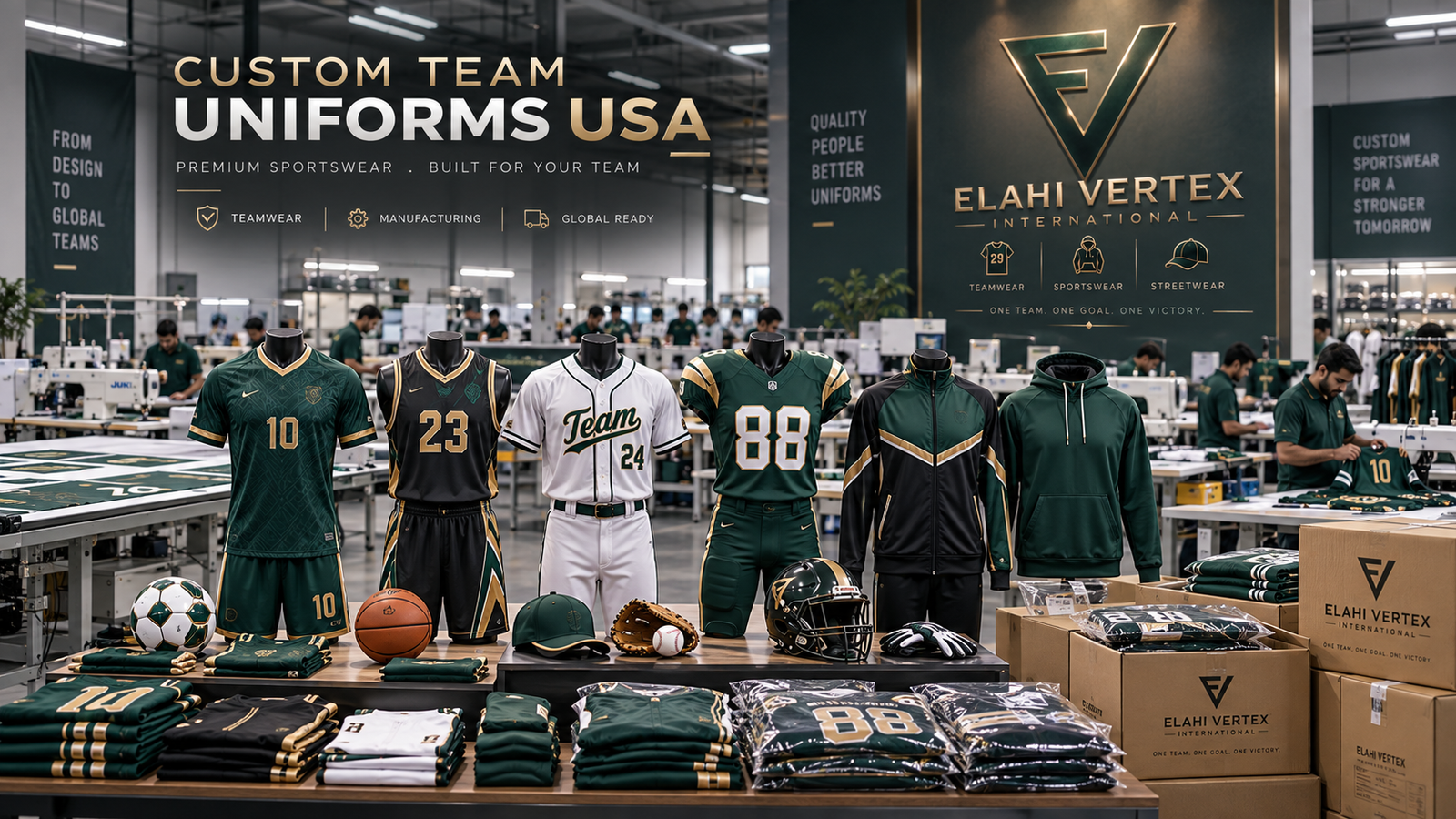
Buying custom team uniforms USA organizations can depend on is not simply a matter of finding the cheapest jersey.
A serious uniform order affects athlete appearance, comfort, team identity, sponsor visibility, delivery deadlines, roster accuracy, budget, reorders and—if you are a reseller or sportswear brand—your own reputation with your customers.
Need custom team uniforms USA clubs, academies, schools or brands can order factory-direct? Start from MOQ 20 pieces per product/category, develop a qualifying sample with a $50 commitment credited toward qualifying bulk, or order 50 qualifying paid uniforms and receive 2 matching uniforms plus 1 custom coach hoodie under the confirmed promotional terms.
For USA clubs, academies, schools, leagues, coaches, sportswear brands, teamwear resellers, startups, wholesalers and distributors, the better buying question is:
Which manufacturing system gives us the right product, customization, landed cost, delivery plan and repeat-order reliability?
Elahi Vertex International is a custom sportswear and apparel manufacturer and exporter based in Sialkot, Pakistan, serving international commercial buyers including sports clubs, teams, academies, brands, wholesalers, distributors, retailers and importers. Its published manufacturing scope includes teamwear, jerseys, sportswear, activewear, streetwear and private-label apparel.
This guide explains how to evaluate custom team uniforms USA sourcing properly—from custom soccer uniforms and basketball kits to private-label teamwear, samples, production, quality control, freight, landed cost and repeat orders.
Quick Answer: What Should USA Buyers Look for in a Custom Team Uniform Manufacturer?
A qualified team uniform manufacturer should be able to establish, in writing:
- Product specification
- Fabric composition and GSM where relevant
- Size range and measurement chart
- Youth, adult and women’s fits where required
- Artwork and color references
- Team logos
- Sponsor logos
- Player names and numbers
- Decoration method
- Labels and packaging
- Sample terms
- MOQ
- Bulk quantity
- Production target
- Shipping method
- Delivery destination
- Payment milestones
- Quality-control procedure
- Reorder information
A low unit price means very little if those variables are unresolved.
For factory-direct purchasing, compare landed cost and execution risk, not only the factory price.
2026 Elahi Vertex International Team Offer
Order 50 Qualifying Paid Custom Team Uniforms → Get 2 Matching Uniforms + 1 Custom Coach Hoodie Free
For qualifying projects, Elahi Vertex International can offer:
Order 50 qualifying paid custom team uniforms → receive 2 additional matching team uniforms FREE + 1 custom coach hoodie FREE.
That means an eligible buyer paying for 50 qualifying uniforms can receive:
50 paid uniforms + 2 matching promotional uniforms + 1 promotional coach hoodie.
Promotional conditions
The offer should be confirmed in the written quotation before the order is placed.
The commercial terms are:
- 50 qualifying paid custom team uniforms are required.
- The 2 additional uniforms use the approved core team design.
- The coach hoodie follows the agreed promotional specification.
- The promotion is intended primarily for a first qualifying bulk order where applicable.
- Multiple unrelated designs may require separate costing.
- Premium or unusually expensive fabrics can change pricing.
- Complex trims, construction or decoration may require revised terms.
- Shipping is not automatically free.
- U.S. customs duties, taxes, brokerage or other import costs are not automatically included.
- The promotion must appear in the quotation or written order confirmation to apply.
- It should not automatically be combined with another promotion.
Why 2 uniforms + a coach hoodie can beat a generic discount
A percentage discount reduces the invoice but may create little additional operational value.
Extra uniforms can solve real team problems.
A 50-player organization may need:
- A replacement for a damaged uniform
- An emergency roster addition
- A spare goalkeeper or player kit
- A sample for future recruits
- A display uniform
- A contingency piece during a tournament
The coach hoodie also gives the staff part of the same visual identity.
For many clubs, therefore, the promotional value is tangible rather than abstract.
The offer also preserves the manufacturer’s ability to maintain an appropriate specification instead of pushing the factory price down until quality, material choice or workmanship becomes the hidden casualty.
That does not mean the promotion is automatically better for every customer. A buyer who wants exactly 50 units and nothing else should compare the total commercial value against alternative quotations.

MOQ for Custom Team Uniforms USA Orders
Standard MOQ: 20 Pieces Per Product/Category for Qualifying Projects
Elahi Vertex International’s standard commercial MOQ is:
20 pieces per product/category for qualifying projects.
MOQ 20 and the 50-piece promotion are two different things.
A buyer can therefore potentially start at 20 pieces without qualifying for the 50-piece promotional package.
Example
An academy ordering 24 soccer kits may meet the standard MOQ.
It would not qualify for the 50-paid-uniform promotional threshold.
An organization ordering 50 qualifying paid uniforms may qualify for:
2 additional matching uniforms + 1 custom coach hoodie, provided the promotion is confirmed in writing.
This distinction should appear clearly in the quotation so there is no ambiguity.
$50 Sample Commitment Fee
Sampling is one of the most important risk-control stages in custom sports uniforms USA sourcing.
For qualifying projects, Elahi Vertex International uses a:
$50 Sample Commitment Fee.
The buyer initially pays $50 toward qualifying sample development.
If that buyer proceeds with the qualifying bulk order, the $50 is credited 100% toward the bulk order.
This should not be advertised as an unconditional free sample.
Sample policy in practical terms
A suitable project may follow this structure:
- Buyer submits specification.
- Commercial feasibility and indicative bulk pricing are discussed.
- Buyer confirms serious interest.
- $50 sample commitment is paid.
- Sample is developed.
- Buyer evaluates it.
- Required adjustments are agreed.
- Bulk specifications are locked.
- If the qualifying bulk order proceeds, the $50 is credited toward that order.
Courier costs and any exceptional development costs should be clarified separately before development starts.
Typical sample-development target
For suitable projects:
Approximately 5–7 days is the typical development target.
That is a target, not an unconditional guarantee.
Complex custom fabrics, unusual trims, special embroidery, advanced pattern development, repeated revisions or unavailable materials can extend development time.
Why charge a sample commitment?
A serious sample requires actual manufacturing resources:
- Pattern or artwork preparation
- Fabric
- Printing or sublimation
- Cutting
- Stitching
- Decoration
- Finishing
- QC
- Packaging
- Communication and development time
The $50 commitment helps prevent manufacturing resources from being consumed by buyers with no realistic purchasing intention.
At the same time, crediting that amount to a qualifying bulk order rewards buyers who move from development into production.
That creates a healthier relationship on both sides.
Typical Bulk Production Target: 10–15 Days
For suitable, approved projects, the normal bulk-production target is:
Approximately 10–15 days.
Again, this is a manufacturing target—not a universal delivery guarantee.
Actual timing depends on:
- Quantity
- Product category
- Fabric
- Material availability
- GSM
- Number of designs
- Size complexity
- Sublimation
- Printing
- Embroidery
- Custom labels
- Packaging
- Buyer approvals
- Production schedule
- Capacity available when the order is confirmed
A buyer requiring custom team uniforms USA delivery before a fixed tournament or season should work backward from the required arrival date.
Production time and shipping time are separate.
What Are Custom Team Uniforms?
Custom team uniforms are sports garments manufactured or decorated according to a team’s visual and functional requirements.
Depending on the project, customization may include:
- Team colors
- Custom patterns
- Team logos
- Sponsor logos
- Player names
- Player numbers
- Custom necklines
- Custom sleeves
- Fabric selection
- GSM
- Fit
- Size specifications
- Labels
- Packaging
Fully manufactured custom team jerseys offer significantly more control than simply applying a logo to a pre-existing blank garment.
Factory-Direct vs U.S. Teamwear Platform: Which Is Better?
Neither model is automatically better.
They solve different problems.
A domestic teamwear platform may be the better option if you need:
- One replacement jersey
- Direct-to-player shipping
- An online team store
- Very fast domestic fulfillment
- Major branded blanks
- No MOQ
- Emergency reorders
For example, SquadLocker publicly advertises no minimums on certain programs and custom sublimated uniform shipping in as little as 3–5 business days.
Wooter also publicly markets a self-service system, no-minimum options on parts of its platform, free design support and extensive custom sports categories. Its team-uniform page references typical 3–4 week turnaround, with faster rush options.
A factory-direct custom sports uniforms manufacturer becomes especially relevant when you need:
- Deeper product development
- Fabric control
- GSM control
- Custom cut-and-sew
- OEM manufacturing
- Private-label branding
- Custom labels
- Custom packaging
- Broader apparel collections
- Consolidated bulk production
- Product development for resale
- Repeat-order specification management
The right answer depends on the buyer.
Custom Soccer Uniforms
Soccer is one of the strongest applications for sublimated teamwear because a jersey can incorporate complex visual identity without adding multiple heavy surface print layers.
Elahi Vertex International’s current soccer-uniform product information includes custom colors, team logos, player names, numbers, sponsor branding, sublimation, custom patterns, custom collars, labels and private-label options.
Explore Elahi Vertex International custom soccer uniforms
A typical soccer package may include:
- Match jersey
- Match shorts
- Goalkeeper jersey
- Training jersey
- Training shorts
- Warm-up top
- Tracksuit
- Coach polo
- Coach hoodie
- Supporter merchandise
Soccer buyers should specify
- Home or away design
- Short- or long-sleeve
- Collar style
- Logo placement
- Sponsor layout
- Name placement
- Number dimensions
- Jersey fit
- Shorts fit
- Youth/adult ratio
- Goalkeeper distinction
- Fabric and GSM
- Required delivery date
A club ordering custom soccer uniforms should also preserve its Pantone or approved color reference so that future reorders do not depend on someone trying to visually match an old photograph.
Custom Basketball Uniforms
Basketball uniforms create different fit and movement requirements.
A buyer ordering custom basketball uniforms should define:
- Jersey cut
- Armhole
- Shoulder width
- Neckline
- Jersey length
- Shorts inseam
- Waist construction
- Side panels
- Ventilation
- Fabric weight
- Reversible or single-layer construction
- Numbers
- Names
- Team graphics
Basketball teams commonly benefit from sublimation where bold gradients, patterns and integrated graphics are required.
A club may also combine the game uniform with:
- Shooting shirts
- Warm-up suits
- Hoodies
- Training shorts
- Staff apparel
- Fan merchandise
For academies and leagues, roster management becomes particularly important because a numbering mistake can turn a perfectly constructed garment into an unusable game jersey.
Custom Baseball Uniforms
Custom baseball uniforms require more attention to structure than lightweight soccer jerseys.
Common products include:
- Baseball jerseys
- Full-button jerseys
- Two-button jerseys
- Pants
- Training shirts
- Hoodies
- Jackets
- Coach apparel
- Caps where applicable
Important variables include:
- Jersey construction
- Button configuration
- Piping
- Sleeve design
- Team wordmark
- Player number
- Player name
- Embroidery versus print
- Pant style
- Belt loops
- Fabric durability
- Fit
For baseball programs, embroidery and applique-style visual treatments may be desirable for specific identities, while sublimation can be useful for highly graphic designs.
The choice should be based on the intended appearance, durability expectation, weight and budget rather than assuming one decoration method is universally superior.
Custom American Football Uniforms
Custom football uniforms require particularly careful technical specification.
Depending on the program, the buyer may require:
- Football jersey
- Football pants
- Practice jersey
- Compression base layer
- Warm-up
- Hoodie
- Coach apparel
- Sideline apparel
Football jersey construction can be affected by equipment and shoulder pads, so fit requirements should be established before production.
A buyer should define:
- Position-specific fit if relevant
- Sleeve length
- Stretch
- Reinforcement
- Neck construction
- Player number layout
- Name layout
- Team mark
- Pants construction
- Fabric
- GSM
- Ventilation
- Durability priorities
Do not approve a football uniform only because the digital mockup looks attractive.
Fit and construction matter.
Volleyball Uniforms
Volleyball buyers commonly need:
- Jerseys
- Shorts
- Women’s-specific fits
- Youth sizes
- Warm-up garments
- Training products
- Coach polos
- Team hoodies
The buyer should pay particular attention to:
- Fit
- Stretch
- Range of motion
- Jersey length
- Shorts length
- Women’s measurement charts
- Number placement
- Team logos
- Breathability
For schools and clubs, a consistent sizing system across multiple age groups can matter as much as the artwork.
Lacrosse Uniforms
Lacrosse projects can include:
- Game jerseys
- Shorts
- Shooter shirts
- Warm-ups
- Practice jerseys
- Hoodies
- Coach apparel
For custom jerseys for teams playing lacrosse, buyers should evaluate mobility, ventilation, sizing and the way the jersey interacts with equipment.
Complex all-over artwork is well suited to sublimation when the underlying fabric and performance requirements support it.
Other Teamwear Categories
A capable custom teamwear manufacturer should be able to discuss more than one game jersey.
Depending on the organization, the total uniform ecosystem can include:
Jerseys
For games, training, practice or supporters.
Shorts
Match, training, basketball, soccer, running or warm-up shorts.
Tracksuits
For travel, warm-ups, coaching staff and team presentation.
Training wear
Including training shirts, shorts, compression items and practice kits.
Coach apparel
Polo shirts, tracksuits, jackets, quarter-zips and hoodies.
Hoodies
For teams, staff, supporter programs, private-label sales and seasonal merchandise.
Supporting merchandise
A buyer may develop coordinated pieces for:
- Fans
- Parents
- Staff
- Tournament volunteers
- Sponsors
- Retail
- Fundraising
- Brand merchandising
Sublimated Team Uniforms
Sublimation is a common process for polyester sportswear because the artwork can become part of the textile coloration rather than sitting as a thick layer on the fabric surface.
It is particularly useful for:
- Gradients
- All-over patterns
- Multiple colors
- Team graphics
- Repeating motifs
- Names
- Numbers
- Sponsor graphics
Sublimated team uniforms can therefore offer significant creative freedom.
However, the buyer should still approve:
- Digital artwork
- Physical color where needed
- Fabric
- GSM
- Size
- Construction
- Placement
Sublimation does not eliminate the need for QC.
Screen Printing, Heat Transfer and Embroidery
Not every product should be sublimated.
Screen printing
Useful for many garments, especially where a limited number of graphics or colors are applied to suitable fabric.
Heat transfer
Useful for certain logos, names, numbers and specialized graphic applications.
Embroidery
Often appropriate for:
- Team crests
- Coach polos
- Jackets
- Caps
- Hoodies
- Premium identity applications
Embroidery adds thread and weight, so applying a large dense embroidery to lightweight gamewear may not always be desirable.
A good manufacturer should recommend the technique based on product use rather than simply sell the most expensive option.
Fabric Selection and GSM
One of the most important advantages of full custom manufacturing is the ability to discuss the actual textile.
Ask about:
- Fiber composition
- Knit or weave
- Mesh construction
- Stretch
- Hand feel
- Moisture management
- Breathability
- Durability
- Shrinkage expectations
- Opacity
- GSM
GSM means grams per square meter and is a measure of fabric mass per area.
Higher GSM does not automatically mean better quality.
A lightweight performance jersey may intentionally use a lower GSM than a heavyweight hoodie.
The right GSM depends on the product.
Fit and Measurement Development
Do not approve a factory simply because its size chart says S, M, L and XL.
Two manufacturers’ size medium can fit very differently.
A serious custom sportswear manufacturer should work from measurements.
Important dimensions may include:
- Chest
- Body length
- Shoulder
- Sleeve
- Waist
- Hip
- Inseam
- Outseam
- Thigh
- Leg opening
The measurements required depend on the garment.
Youth, Adult, Women’s and Inclusive Sizing
USA clubs and academies can have complicated rosters.
A single organization may need:
- Youth sizes
- Adult men’s sizes
- Women’s-specific sizes
- Extended sizes
- Custom measurements
Women’s fit should not simply be treated as a smaller men’s garment.
Likewise, youth proportions may require separate patterns.
Inclusive sizing is not only a social consideration.
It is a practical purchasing issue.
If five athletes cannot wear the standard size range comfortably, the team’s uniform program has failed those athletes.
Pantone and Color Management
Color is one of the most common sources of disagreement in apparel manufacturing.
A screen is not an objective color standard.
Different monitors display colors differently.
Whenever precise identity matters, provide:
- Pantone or agreed color reference
- Physical reference where available
- Approved artwork
- Previous approved sample
For repeat orders, preserve the approved reference instead of relying on phrases like “navy blue” or “bright red.”
Team Logos, Sponsor Logos, Names and Numbers
Roster errors can destroy otherwise good production.
Before manufacturing bulk custom jerseys, create a roster document with separate fields for:
| Field | Example |
|---|---|
| Player | Jordan Smith |
| Size | Adult L |
| Jersey number | 17 |
| Player name | SMITH |
| Product | Home jersey |
| Notes | Long sleeve |
Do not send roster information scattered across WhatsApp messages, screenshots and emails if it can be consolidated into one controlled document.
For sponsor-heavy soccer designs, approve each logo and location explicitly.
Custom Collars and Sleeves
Custom manufacturing allows clubs and brands to differentiate silhouettes rather than only graphics.
Options may include:
- Crew neck
- V-neck
- Polo-style collar
- Contrast collar
- Raglan sleeves
- Set-in sleeves
- Short sleeves
- Long sleeves
- Custom cuffs
- Side panels
However, each additional construction detail creates another variable that must be sampled and controlled.
Complexity should have a reason.
Custom Labels, Care Labels, Size Labels and Hangtags
Clubs buying only for internal use may require relatively simple labeling.
Private-label buyers usually require more.
Possible branding components include:
- Main woven label
- Printed neck label
- Size label
- Care label
- Country-of-origin information where applicable
- Hangtag
- Barcode sticker
- Product code
- Packaging sticker
The label specification should be approved before bulk.
Custom Packaging
Packaging may include:
- Individual polybags
- Size stickers
- Team sorting
- Player sorting
- Retail-ready packaging
- Custom bags
- Branded inserts
- Carton markings
Private-label buyers should think about packaging early.
A perfect garment in inappropriate packaging can still create a poor retail experience.
Artwork and Tech Packs
A tech pack reduces ambiguity.
Depending on the product, a tech pack can include:
- Flat sketch
- Measurements
- Fabric
- GSM
- Color
- Construction
- Stitching
- Artwork
- Print dimensions
- Label placement
- Packaging
- Size range
Buyers without complete tech packs can still work with development support, but the final specifications should eventually become structured enough to manufacture consistently.
Elahi Vertex International’s published ordering process specifically asks buyers to provide a design, artwork, reference imagery, tech pack or product concept and then finalize fabric, measurements, branding, decoration, labels, packaging and other specifications before sample and bulk production.
See the Elahi Vertex International How to Order process
OEM vs ODM vs Private Label Sportswear Manufacturing
These terms are often used loosely.
OEM manufacturing
OEM generally means the buyer controls the product specification and the factory manufactures it.
For example:
A sportswear brand supplies:
- Tech pack
- Fabric requirement
- Measurements
- Artwork
- Branding
- Packaging
The manufacturer produces accordingly.
Elahi Vertex International publishes an OEM clothing manufacturing service for buyer-controlled specifications.
Explore OEM Clothing Manufacturing
ODM or development support
ODM/development support becomes more relevant when the buyer has a concept but needs manufacturing assistance to convert it into a production-ready product.
That may include:
- Fabric options
- Construction suggestions
- Measurements
- Artwork development
- Sampling
- Refinement
Private-label manufacturing
A private label sportswear manufacturer produces garments that carry the buyer’s branding rather than the manufacturer’s consumer brand.
Private label can include:
- Custom labels
- Hangtags
- Packaging
- Custom colors
- Custom graphics
- Private sizing
- Buyer-controlled identity
White label vs private label vs full custom
White label
Existing or substantially standardized product sold under different buyer branding.
Private label
Product manufactured for a specific buyer with that buyer’s identity and selected customization.
Full custom
Product developed around buyer-controlled design, materials, patterns, measurements and branding.
The terms overlap in real-world apparel sourcing, so the specification matters more than the label.
Custom Team Uniforms for USA Sports Clubs
Sports clubs should prioritize:
- Team identity
- Size range
- Roster control
- Replacement plan
- Sponsor placement
- Season deadline
- Reorder consistency
A club may not require retail-ready packaging, but it may require exact player sorting.
For a club, custom uniforms for clubs should solve operational problems, not create more administration.
Custom Uniforms for Academies
Academies often have more complicated requirements than a single adult team.
They may have:
- Multiple age groups
- Multiple squads
- Recurring player intake
- Youth and adult sizing
- Training gear
- Coach apparel
- Reorders throughout the year
For that reason, custom uniforms for academies should be designed as a system.
Store approved artwork, sizing and specifications so new batches can be reproduced more efficiently.
Custom Team Uniforms for Schools
Schools may prioritize:
- Budget
- Deadline
- School colors
- Approval hierarchy
- Youth/adult sizing
- Repeatability
- Multiple sports
- Administrative documentation
Domestic suppliers may have an advantage where a school requires individual ordering, major branded uniforms or very fast replacement pieces.
For example, SquadLocker provides school-oriented direct ordering and brand-management tools, while BSN SPORTS offers a wide range of major sports brands and school/team shop solutions.
A factory-direct option is more compelling when the school or affiliated program is ordering custom bulk merchandise and values deeper product customization.
Custom Uniforms for Leagues
Leagues require consistency across more people.
Key issues include:
- Multiple teams
- Team-specific colors
- Unique roster lists
- Shared template structure
- Number control
- Division sorting
- Delivery logistics
A league should avoid managing every jersey as a separate unstructured order.
Standardization creates scale.
Coaches and Team Managers
A coach usually wants the uniform problem solved with minimum administration.
The manufacturing partner should make it easy to provide:
- Quantity
- Sizes
- Team logo
- Player list
- Numbers
- Delivery date
The coach should not have to become a textile engineer.
At the same time, important decisions still need written approval.
Teamwear Resellers
A reseller has a different objective.
They need enough margin and control to serve downstream clubs profitably.
Important concerns include:
- Factory price
- Freight
- MOQ
- Sampling
- White-label/private-label options
- Production capacity
- Repeatability
- Packaging
- Neutral shipping where agreed
- Product range
A reseller should compare wholesale team uniforms on landed margin rather than factory unit price alone.
Sportswear Startups
A startup’s biggest manufacturing risk is usually not that the factory refuses to produce 100,000 units.
It is ordering the wrong product before demand exists.
Startups should prioritize:
- Low commercial MOQ
- Focused first collection
- Sample accuracy
- Fit
- Fabric
- Differentiation
- Cash-flow discipline
An MOQ starting at 20 pieces per product/category can make development more accessible for qualifying projects, but even a low MOQ should not justify launching ten products simultaneously.
Validate.
Then scale.
Established Sportswear Brands
Established brands usually require stronger process control.
They may need:
- Detailed tech packs
- Multiple fabrics
- Color approvals
- Custom trims
- Bulk capacity
- Packaging specifications
- Inspection documentation
- Multiple SKUs
- Repeat-order controls
At this level, communication discipline matters as much as sales communication.
Private-Label Brands
Private-label buyers should clarify exactly what is private.
A garment is not meaningfully private label simply because a neck label was changed.
A strong private-label program can include:
- Buyer-controlled brand identity
- Woven labels
- Printed labels
- Size labels
- Care labels
- Hangtags
- Packaging
- Custom fit
- Custom fabric
- Custom colors
- Custom artwork
For buyers developing a broader collection, EVI’s published portfolio includes teamwear, activewear, hoodies, private-label clothing and other custom categories.
View Elahi Vertex International Portfolio
Wholesalers and Distributors
Wholesalers care about scale and repeatability.
They should establish:
- Price breaks
- MOQ
- Master specification
- Carton packing
- SKU structure
- Reorder procedure
- Capacity
- Freight option
- Payment terms
Their strongest negotiating leverage usually comes from predictable repeat volume rather than forcing the smallest possible margin out of the first order.
How Elahi Vertex International Manufacturing Works
A serious custom sports uniforms manufacturer is not simply a printing service.
The production system can involve:
- Requirement collection
- Artwork
- Material planning
- Fabric sourcing/preparation
- Pattern preparation
- Sublimation or printing
- Cutting
- Embroidery where required
- Stitching
- Finishing
- Measurement QC
- Artwork and roster checking
- Packing
- Final inspection
- Dispatch
EVI’s published manufacturing page describes end-to-end manufacturing including design development, fabric sourcing, sampling, customization, bulk production, quality control, packaging and worldwide shipping.
See Elahi Vertex International Manufacturing
What Does 15,000 Pieces Per Month of Production Capacity Actually Mean?
Elahi Vertex International states an approximate manufacturing capability of 15,000 pieces per month.
The useful commercial question is not simply whether the factory can say “15,000.”
The useful question is:
How much suitable capacity is available for your specific order during your required production window?
Capacity must be scheduled.
A manufacturer could theoretically produce 15,000 pieces in a month and still be unable to accept a new 8,000-piece rush order if existing customers have already booked most of that month’s production.
Therefore, USA buyers should ask for capacity confirmation when placing larger orders.
Material planning
Bulk capacity starts before stitching.
Fabric, trims, labels, thread, transfer materials and packaging must be prepared.
If one critical material arrives late, sewing capacity alone cannot rescue the schedule.
Artwork
Sublimated orders require artwork to be approved before full production.
Large orders amplify artwork mistakes.
A single incorrect logo repeated on 1,000 jerseys is not a small error.
Cutting
Accurate cutting affects:
- Fit
- Matching components
- Size consistency
- Sewing efficiency
Sublimation and printing
Artwork should be checked before bulk output.
Color and placement need approval.
Embroidery
Embroidery introduces separate machine time and production planning.
A heavily embroidered collection may therefore have a different production flow from fully sublimated team jerseys.
Stitching
Stitching capacity must be distributed across products and sizes.
Complex garments use more manufacturing time than simple jerseys.
Finishing
Loose threads, pressing, cleaning and final presentation are part of production.
QC
Quality control consumes time.
That is a feature—not waste.
A factory that promises impossible speed by eliminating inspection has simply moved the risk to the buyer.
Packing
Player-sorted or retail-ready packaging takes longer than placing mixed garments in bulk cartons.
Dispatch
Production completion does not equal U.S. delivery.
Goods still need:
- Export handling
- Courier/freight movement
- Import clearance
- Final delivery
Scaling
A good first order should create a basis for larger orders.
For example:
20 → 50 → 150 → 500 → 1,500
The manufacturer’s ability to preserve the approved product while scaling matters more than a capacity headline by itself.
Production visibility
For qualifying commercial orders, buyers should request visibility at useful milestones.
That may include:
- Sample images
- Production photos
- Video call
- Bulk-progress images
- Finished-product images
- Packing confirmation
Visibility cannot eliminate every production risk.
It can reduce uncertainty.
Reorders
Capacity becomes commercially valuable when the factory can reproduce approved products.
A manufacturer that wins a first order but loses control of specifications on the second has not created a reliable supply relationship.
Quality Control for Custom Team Jerseys
Quality control should start before bulk production.
1. Sample approval
The physical sample establishes the reference.
2. Measurement checking
Compare the garment against the approved measurement chart.
3. Stitching
Inspect:
- Seam construction
- Stitch security
- Loose threads
- Alignment
4. Artwork
Confirm the correct graphic version.
5. Color
Compare against the agreed reference.
6. Names
Roster spelling must be verified.
7. Numbers
Check both accuracy and duplication rules where applicable.
8. Logos
Ensure correct logo version and orientation.
9. Quantity
Count sizes and products against the order.
10. Labels
Confirm branding and size information.
11. Packaging
Check the agreed packaging system.
12. Finishing
Inspect presentation and obvious defects.
13. Pre-shipment visibility
Photos or video can provide an additional review layer.
No responsible manufacturer should promise “zero defects forever.”
The appropriate goal is controlled production, inspection, accountability and a clear procedure when an issue occurs.
Shipping Custom Team Uniforms to the USA
Shipping prices cannot responsibly be reduced to one universal number.
Freight depends on:
- Quantity
- Product weight
- Fabric weight
- Number of cartons
- Carton dimensions
- Volumetric weight
- Shipping method
- Destination
- USA ZIP code
- Fuel surcharges
- Carrier pricing
- Import process
International courier
Courier can be practical for:
- Samples
- Smaller orders
- Time-sensitive shipments
Larger freight shipments
Larger quantities may justify alternative freight arrangements depending on total weight, volume, timing and destination.
Always compare options at the actual order size.
Sample Shipping vs Bulk Shipping
A one-piece sample can have a high freight cost per garment because the courier shipment has minimum and fixed logistics costs.
Bulk freight distributes logistics cost across many garments.
Therefore:
Do not extrapolate sample courier cost into bulk cost by multiplying it by the number of garments.
Likewise, do not assume bulk shipping will be cheap without calculating weight and volume.
Production Time vs Shipping Time
This distinction is essential.
If a factory says production requires 12 days, that does not mean the uniforms will arrive in America in 12 days.
The buyer needs to plan:
Approval time + production + export handling + international transportation + customs clearance + domestic delivery.
Season deadlines should be based on arrival date.
U.S. Customs, Duties and Taxes
Import duties and other charges depend on classification, origin, value and the applicable U.S. rules.
Do not rely on an apparel manufacturer quoting a random universal duty percentage.
U.S. Customs and Border Protection states that imported goods may be subject to duties and user fees and advises importers to determine the requirements applicable to the specific goods and entry.
DHL similarly notes that duty/tax responsibility depends on how an international shipment is set up and provides landed-cost tools for estimating duties, taxes and import fees.
For larger commercial imports, buyers should involve their customs broker or qualified import adviser where appropriate.
What Is Landed Cost?
The real cost of custom team uniforms USA buyers import is broader than the factory invoice.
Use this formula:
Manufacturing + customization + packaging + international freight + applicable duties/taxes + customs/brokerage + domestic delivery + expected defect/replacement risk = realistic landed cost
Consider two suppliers.
Supplier A:
- $20 factory cost
- Weak QC
- Expensive freight
- Poor replacement handling
Supplier B:
- $23 factory cost
- More controlled specification
- Better freight consolidation
- Lower expected failure cost
Supplier A is not automatically cheaper.
The buyer should compare total economic outcome.
Payment Terms for Custom Manufacturing
Custom manufacturing requires commitment from both sides.
A professional order should normally have:
- Written quotation
- Product specification
- Quantity
- Unit pricing
- Decoration specification
- Sample terms
- Shipping terms
- Payment terms
- Buyer approval
- Invoice
Payment milestones should be documented when agreed.
Unknown buyers should not assume that a manufacturer will provide unsecured commercial credit.
Likewise, buyers should not send significant funds without verifying the supplier and documentation.
Bank-Detail-Change Fraud Protection
International B2B buyers should treat unexpected bank-account changes seriously.
The FBI identifies business email compromise as a major fraud category and specifically warns businesses to verify changes in payment instructions or account numbers through a trusted independent communication channel.
If an email suddenly says:
“Our bank account has changed. Send payment here instead.”
Do not rely on the email alone.
Verify the change through:
- Known telephone number
- Established WhatsApp contact
- Video call
- Previously authenticated company contact
Do the same whether you are the buyer or manufacturer.
Building a Reorder System
Repeat orders matter more than winning a single transaction.
The first order carries expensive learning:
- Fit decisions
- Artwork development
- Color approval
- Fabric selection
- Sample adjustment
- Packaging decisions
If that information is preserved, later orders become easier.
Maintain a reorder file containing:
- Approved artwork
- Fabric
- Fabric composition
- GSM
- Approved measurements
- Size chart
- Pantone/color references
- Label artwork
- Packaging
- Roster structure
- Previous invoice/order reference
- Product photos
- Approved sample notes
A reliable custom teamwear manufacturer should treat these as production assets.
Why Repeat Orders Matter Commercially
The first order proves whether the relationship works.
The reorder proves whether the manufacturing system works.
A profitable manufacturing partnership is not:
quote → order → disappear.
It is:
development → sample → bulk → QC → delivery → feedback → reorder → scale.
That is particularly important for:
- Academies adding players
- Clubs entering new seasons
- Leagues growing divisions
- Brands restocking best sellers
- Wholesalers replenishing inventory
Halloween Hoodie Opportunity for USA Buyers
A Separate Seasonal Promotion—Not Automatically Combined With the Team Uniform Offer
Halloween merchandise should be treated as its own commercial project.
Do not automatically stack a Halloween hoodie promotion with the:
50 paid uniforms → 2 uniforms + 1 coach hoodie offer.
Any Halloween commercial incentive should be quoted and confirmed separately.
Why Halloween Merchandise Deserves Attention in 2026
As of September 6, 2026, the National Retail Federation had not yet released its full 2026 Halloween spending survey; NRF says that report is expected in late September.
However, its early 2026 research already found that by early August, one quarter of consumers had purchased at least one Halloween item.
That matters for manufacturers and brands because seasonal product development cannot begin on October 25.
The previous year’s market was substantial: NRF estimated 2025 U.S. Halloween spending at a record $13.1 billion, with nearly half of shoppers beginning in September or earlier.
The manufacturing lesson is clear:
Seasonal merchandise should be planned before the season peaks.
Halloween Hoodie Product Opportunities
Team hoodies
A club can develop a seasonal variation of its identity.
Club hoodies
Club-level merchandise can be sold to players, staff, families and supporters.
Coach hoodies
A limited staff edition can create stronger organizational identity.
Supporter merchandise
Fans do not need the exact performance jersey worn on the field.
A hoodie can be easier to wear casually.
Limited-edition sweatshirts
Limited seasonal drops create a reason for existing buyers to purchase again.
Seasonal streetwear capsules
Private-label and streetwear buyers can create broader capsules using:
- Hoodies
- Sweatshirts
- Tees
- Joggers
- Jackets
But the product should fit the brand.
Adding pumpkins to an unrelated garment is not a strategy.
Website + Alibaba + Sample + Video + Documentation + QC + Shipment
No single trust signal is enough in international sourcing.
The better approach is to combine multiple signals.
For EVI, a USA buyer can evaluate:
- Company website
- Published manufacturing information
- About page
- Portfolio/work
- Case studies
- Contact information
- Alibaba presence
- Sample
- Video communication
- Written quotation
- Invoice
- Product specification
- QC visibility
- Shipment documentation
EVI’s website currently identifies the company as a custom sportswear/apparel manufacturer in Sialkot, Pakistan and publishes contact information, manufacturing services, portfolio material and case-study examples.
Visit Elahi Vertex International
Read About Elahi Vertex International
Visit the EVI Alibaba storefront
Alibaba should be treated as an additional commercial presence—not as proof of a badge, certification or supplier status that has not been independently verified.
Do not assume Trade Assurance, Verified Supplier status or any certification unless the relevant current Alibaba page confirms it.
25 Competitor and Supplier Comparison Points USA Buyers Should Evaluate
This comparison is not designed to make EVI “win” every row.
That would destroy credibility.
Wooter, SquadLocker, BSN SPORTS, Allen Sportswear and CHAMPRO all have capabilities that may be more attractive for certain buyers.
Public evidence shows, for example:
- SquadLocker advertises no minimum orders, direct-to-player options and very fast fulfillment on certain programs.
- Wooter advertises free custom design, extensive customization, self-service ordering and no-minimum options.
- BSN SPORTS has a particularly strong U.S. ecosystem involving major sports brands, online team shops, schools and equipment.
- Allen Sportswear states that its uniforms are built to order, offers free design help and does not require payment until mockup approval.
- CHAMPRO publicly offers cut-and-sew sublimated uniforms plus printing and embroidery services.
Use the following 25 points when comparing suppliers.
| # | Buying factor | What current competitors demonstrate | Where EVI fits |
|---|---|---|---|
| 1 | MOQ | SquadLocker and parts of Wooter’s platform advertise no-minimum ordering. | EVI’s 20-piece MOQ is weaker for one-piece orders but may make more sense for factory-direct development and bulk production. |
| 2 | One-off replacements | Domestic/direct-to-player systems can be much stronger. | EVI should focus on planned bulk and controlled reorders rather than pretending to beat U.S. one-piece fulfillment. |
| 3 | Free mockups | Wooter and SquadLocker advertise free design/logo assistance. | EVI should clarify artwork support during quotation rather than promise unlimited design work generically. |
| 4 | Sample model | Many platforms operate from proven styles rather than traditional factory sampling. | EVI’s $50 sample commitment is valuable for genuinely custom products because it creates a physical approval stage. |
| 5 | Sample credit | Not all competitors market a credit-to-bulk sample structure. | EVI credits the qualifying $50 commitment to bulk, reducing development friction for buyers who proceed. |
| 6 | Fully custom construction | Allen, Wooter, CHAMPRO and others offer substantial custom uniform programs. | This is not unique to EVI. EVI must compete on execution, specification control and commercial flexibility. |
| 7 | Fabric control | Retail-style platforms may emphasize catalog styles. | Factory-direct manufacturing can provide deeper fabric/GSM discussion when the project requires it. |
| 8 | Sublimation | Wooter, SquadLocker and CHAMPRO all advertise sublimated options. | Sublimation is a required capability, not a credible unique selling proposition by itself. |
| 9 | Embroidery | SquadLocker and CHAMPRO advertise embroidery on suitable products. | EVI can combine embroidery with broader cut-and-sew and private-label development where appropriate. |
| 10 | Names and numbers | Several U.S. competitors include personalization. | EVI must compete on roster accuracy, not merely on offering personalization. |
| 11 | Major brands | BSN SPORTS and SquadLocker can provide well-known brands such as Nike, adidas and Under Armour in relevant programs. | This is a competitor advantage when buyers specifically want those brands. EVI’s proposition is buyer-controlled custom/private-label production. |
| 12 | Buyer-controlled branding | Retail platforms emphasize team branding. | EVI also serves private-label brands needing their own labels, tags and packaging. |
| 13 | Online team store | SquadLocker, Wooter and BSN have powerful digital ordering systems. | EVI is weaker if the buyer’s main requirement is direct-to-parent/player ecommerce. |
| 14 | Direct-to-player fulfillment | SquadLocker is explicitly built around it. | EVI’s stronger use case is consolidated factory-direct bulk production. |
| 15 | Very fast replacement fulfillment | SquadLocker publicly advertises extremely fast programs. | Domestic production/stock systems may be objectively stronger for emergencies. |
| 16 | Bulk-production target | Wooter commonly references weeks; fully custom BSN programs can also have multi-week lead times depending on product. | EVI targets roughly 10–15 days for suitable approved bulk orders when capacity/materials permit, but must confirm each schedule. |
| 17 | Custom labels | Not every teamwear platform focuses on private-label garment identity. | This is important for EVI’s brand/reseller customers. |
| 18 | Custom packaging | Team platforms often prioritize player fulfillment instead. | EVI’s private-label model can accommodate agreed buyer packaging requirements. |
| 19 | Broader apparel | Wooter, BSN and SquadLocker also offer broad ranges. | EVI should not claim category breadth is unique, but combining teamwear, activewear, hoodies and private label under one manufacturing relationship may still be commercially useful. |
| 20 | Equipment | BSN SPORTS is much stronger because it sells extensive sports equipment alongside apparel. | EVI should not compete outside its manufacturing scope simply to appear larger. |
| 21 | Production visibility | Domestic platforms provide dashboards/order tracking in many cases. | EVI can provide factory-oriented visibility through samples, communication, photos/video and production updates where agreed. |
| 22 | Reorder convenience | Wooter and SquadLocker have strong online reorder systems. | EVI’s solution should be disciplined retention of artwork, measurements, fabric, colors, labels and previous order data. |
| 23 | Pricing transparency | Wooter publishes starting prices on many items. | EVI factory-direct projects often require quotation because specification, quantity and freight materially alter price. |
| 24 | Landed-cost simplicity | A domestic vendor can make final U.S. cost easier to understand. | Imported EVI orders require freight and import-cost analysis; buyers should calculate landed cost before committing. |
| 25 | Best-fit customer | Platforms excel at team-store convenience, branded goods and domestic fulfillment. | EVI is best positioned for qualified clubs, brands, resellers and commercial buyers seeking deeper factory-direct customization, OEM/private-label capability and repeat bulk manufacturing. |
The important conclusion is not that EVI beats every competitor.
It does not.
The conclusion is that USA buyers should select the business model that matches the purchasing problem.
25 Growth and Emerging Apparel/Sportswear Brands USA Buyers Can Learn From
These companies are presented as market lessons only.
None of them are claimed to manufacture with Elahi Vertex International.
1. Vuori
Vuori has expanded aggressively from a digitally native California activewear business into physical retail. Forbes reported more than 80 U.S. stores in early 2025 and plans to exceed 100 stores in 2026.
Lesson: Strong product positioning can support physical expansion.
Manufacturing implication: Build hero products that can be replenished consistently rather than constantly replacing the collection.
2. Fabletics
Fabletics reported passing $1 billion in annual revenue after 2025 while continuing to expand its membership/value/retail model.
Lesson: Recurring customer relationships can be more powerful than one-off transactions.
Manufacturing implication: Design products and supply chains around replenishment.
3. Alo Yoga
Behavioral research published in 2026 found significant acceleration in U.S. search engagement around Alo, positioning it as a major premium-athleisure challenger.
Lesson: Brand desirability changes purchase behavior even in crowded categories.
Manufacturing implication: Technical adequacy alone does not create demand; visual identity matters.
4. FP Movement
Glossy reported roughly 30% year-over-year sales growth for FP Movement in a 2025 quarter and significant store expansion.
Lesson: Brands can expand from a core fitness identity into adjacent sports.
Manufacturing implication: Use a scalable core product language when entering new categories.
5. CSB
Vogue reported that Australian-born CSB recorded 118% U.S. revenue growth from 2024 to 2025 and drew substantial attendance to U.S. pop-up events.
Lesson: Community-driven physical activation can accelerate a digital brand.
Manufacturing implication: High-growth brands need inventory planning capable of surviving sudden demand spikes.
6. 437
Forbes reported that activewear became a major revenue driver for 437 and highlighted rapid profit growth after the category expansion.
Lesson: A brand does not have to remain trapped in its original product category.
Manufacturing implication: Expand only where customer behavior supports the move.
7. SET
Forbes reported strong year-over-year momentum for SET while the company emphasized differentiated fits, contrast details and crossover styling.
Lesson: Small silhouette and design details can differentiate familiar activewear categories.
Manufacturing implication: Pattern, fit and trims can matter as much as the logo.
8. Beyond Yoga
Levi Strauss filings show Beyond Yoga revenue continuing to grow at double-digit rates, including 19.3% reported growth for the first half of its 2026 reporting period.
Lesson: Fabric feel can become a brand asset.
Manufacturing implication: Preserve the exact approved textile and hand feel on reorders.
9. Rhone
Current ecommerce intelligence identifies Rhone as a U.S.-oriented performance apparel business with continued digital growth expectations.
Lesson: Men’s performance apparel remains a distinct positioning opportunity.
Manufacturing implication: Avoid assuming every activewear customer wants the same fit or visual language.
10. TALA
TALA reported revenue growth while expanding retail and wholesale; its U.S. ambitions also encountered real tariff challenges, illustrating that expansion and logistics risk occur simultaneously.
Lesson: Growth does not eliminate operational risk.
Manufacturing implication: Import economics must be included in expansion planning.
11. Outdoor Voices
Founder Ty Haney returned to Outdoor Voices as part of a brand turnaround effort after ownership changes.
Lesson: Brand equity can survive operating mistakes, but recovery is expensive.
Manufacturing implication: Inventory discipline and sustainable growth matter.
12. Halfdays
Forbes reported more than 50% year-over-year growth, substantial wholesale expansion and a $10 million Series A for Halfdays by 2026.
Lesson: Solve a real fit problem—in this case women’s technical ski apparel—rather than merely adding another aesthetic.
Manufacturing implication: Product-market differentiation should be visible in pattern and fit.
13. Bandit Running
Bandit has developed a strong position among serious runners and unsponsored competitive athletes while using membership and community as part of its commercial model.
Lesson: A narrowly defined tribe can be commercially powerful.
Manufacturing implication: Build products for a specific user’s real use case.
14. Tracksmith
Tracksmith built a cult running position by focusing deeply on running culture and distinctive New England-inspired design. Forbes previously reported substantial expansion from its earlier base.
Lesson: Category depth can outperform broad generic positioning.
Manufacturing implication: Consistency of design language matters across every product.
15. Janji
Janji differentiated itself through global storytelling, distinctive graphics and a community-oriented running identity; Forbes Vetted continues to include it among notable independent running brands.
Lesson: Product can carry a narrative.
Manufacturing implication: Complex prints require repeatable artwork and color management.
16. Rabbit
Forbes describes Rabbit as a California running label that has built an authentic running community since its 2016 launch.
Lesson: Community credibility compounds over time.
Manufacturing implication: Performance product must survive real use, not merely photoshoots.
17. Path Projects
Forbes Vetted includes Path Projects among noteworthy independent running labels.
Lesson: Specialized independent brands can compete without copying giant brands.
Manufacturing implication: Specific performance problems create better briefs than “make something like Nike.”
18. Speedland
Speedland also appears among Forbes’ independent-running-brand selections.
Lesson: Premium specialist positioning can attract consumers who care deeply about use-case performance.
Manufacturing implication: Do not remove expensive functional details simply to hit an arbitrary target price.
19. Norda
Norda has gained recognition in the independent running category, particularly around premium trail positioning.
Lesson: Specialist performance markets can support premium products.
Manufacturing implication: Premium positioning requires premium execution, not simply premium pricing.
20. Ciele Athletics
Ciele built a recognizable position through technical running headwear and distinctive color blocking.
Lesson: One recognizable hero category can create brand memory.
Manufacturing implication: Startups do not need 40 SKUs to look serious.
21. Saysky
Saysky is another independent performance-running brand highlighted by Forbes for its distinctive performance apparel.
Lesson: Visual identity can differentiate technical apparel.
Manufacturing implication: Artwork consistency must survive across product categories.
22. Satisfy
Satisfy has developed a premium fashion-performance position within independent running.
Lesson: Performance and fashion do not have to be separate markets.
Manufacturing implication: Material, trims and finishing become more important as price point rises.
23. Girlfriend Collective
Girlfriend Collective became known for eco-oriented activewear and extended into adjacent apparel basics.
Lesson: Material narrative can become part of brand positioning.
Manufacturing implication: Sustainability claims require real sourcing evidence rather than vague marketing language.
24. Year of Ours
Year of Ours built differentiation around inclusive fitting and recognizable sports-inspired styling.
Lesson: Fit can be part of brand identity.
Manufacturing implication: Invest heavily in patterns, fittings and size grading.
25. Ten Thousand
Ten Thousand has built a clear identity around hard training and athlete-tested men’s performance products.
Lesson: A clear customer persona sharpens product development.
Manufacturing implication: Specify the environment in which a garment must perform before selecting the fabric.
The Bigger USA Sportswear Opportunity
The U.S. performance market continues to evolve.
Running alone remains a large participation category: Outdoor Industry Association data reported 52.3 million U.S. road runners in 2025 and 17.2 million trail runners, with growth increasingly coming from casual and multi-sport participants.
For brands and manufacturers, this reinforces an important idea:
Athletic apparel is no longer divided neatly into “professional athlete” and “non-athlete.”
Consumers increasingly wear performance products across:
- Training
- Running
- Clubs
- Travel
- Casual use
- Social activity
- Lifestyle
That is why teamwear buyers should think beyond the match jersey.
Why Elahi Vertex International for Custom Team Uniforms USA?
Selecting a factory should never be based on a paragraph claiming “we are the best.”
The better question is:
Does the manufacturer’s operating model fit your buying requirements?
The following are practical reasons a qualified USA club, academy, reseller, sportswear startup, established brand, wholesaler or private-label business may consider Elahi Vertex International.
1. MOQ starting at 20 pieces per product/category
Many early-stage buyers face a basic contradiction.
They need custom manufacturing to differentiate their product, but they are not ready to commit to hundreds or thousands of units.
A standard MOQ starting at 20 pieces for qualifying projects can reduce that initial barrier.
It gives a smaller club, startup or specialist brand a path into production without automatically forcing a huge inventory position.
That does not mean every possible product can economically be manufactured at 20 pieces.
Special materials, custom-developed trims or unusual processes can change minimums and pricing.
But the 20-piece standard provides a commercially useful starting framework.
2. MOQ 20 is not disguised as the 50-piece offer
The distinction matters.
A buyer does not have to order 50 merely to qualify for standard production.
Twenty pieces is the standard MOQ for qualifying projects.
Fifty qualifying paid uniforms is the separate threshold for the promotional package.
That makes the offer easier to understand.
3. Sample commitment credited to bulk
The $50 sample commitment structure is designed to distinguish development from free promotional giveaways.
A manufacturer incurs real costs developing a physical custom product.
A buyer, meanwhile, reasonably wants to limit risk before placing a bulk order.
The credit-to-bulk structure puts both interests together.
The buyer demonstrates commercial intent.
The factory allocates development resources.
If the project advances to qualifying bulk, the $50 is credited back.
4. Physical sampling before scale
A digital mockup can confirm aesthetics.
It cannot fully prove:
- Fabric hand
- Actual fit
- Garment measurements
- Stitching
- Print result
- Embroidery
- Weight
- Construction
A physical sample gives the buyer a more meaningful approval point.
That is particularly important for a new private-label product.
5. Full custom manufacturing
EVI is positioned around made-to-order manufacturing rather than simply applying decoration to standard blanks.
Its current manufacturing information describes buyer-controlled designs, measurements, materials, branding and production requirements.
Explore Custom Clothing Manufacturing
For buyers who only want an existing Nike or adidas jersey decorated with a team logo, a U.S. distributor may be a better solution.
For buyers who want to control the garment itself, factory-direct manufacturing becomes more relevant.
6. Sublimation capability
Sublimation is central to modern teamwear.
It enables complex custom graphics while maintaining the basic character of appropriate polyester performance fabrics.
However, EVI should not sell sublimation as a unique technological miracle.
Many serious competitors offer it.
The differentiation has to come from:
- Artwork control
- Fabric
- Color
- Construction
- Execution
- QC
- Commercial terms
7. Multiple decoration methods
Different products demand different applications.
A soccer jersey may use sublimation.
A coach polo may use embroidery.
A hoodie may use screen printing, embroidery or another suitable technique.
Working across sublimation, printing and embroidery can reduce the need to split a coordinated collection among unrelated suppliers.
8. OEM manufacturing
OEM is particularly relevant to established brands.
The buyer may already know exactly what it wants.
EVI’s role is then not to redesign the product unnecessarily.
It is to manufacture the approved specification.
That requires discipline.
A good OEM manufacturer should know when not to improvise.
9. Development/ODM support
Not every buyer arrives with a professional tech pack.
A club may only have:
- Logo
- Colors
- Inspiration
- Quantity
A startup may have:
- Sketch
- Reference garment
- Fabric concept
Development support can help convert that information into something manufacturable.
The ultimate objective should still be a clear specification.
10. Private-label capability
EVI serves buyers who want their own brand on the garment.
That can include:
- Labels
- Size identification
- Hangtags
- Packaging
- Custom product identity
That is materially different from buying another sportswear company’s branded product.
11. Buyer-controlled brand identity
A private-label customer should own the customer-facing identity.
The garment should not become advertising for the factory unless the buyer wants that.
For sportswear startups and resellers, that distinction matters.
12. Teamwear plus broader apparel
Teams increasingly sell or use more than game uniforms.
A broader range may include:
- Tracksuits
- Training tops
- Hoodies
- Sweatshirts
- Activewear
- Staff wear
- Streetwear-style supporter merchandise
EVI’s portfolio currently spans custom teamwear, activewear, hoodies, private-label products and other categories.
This can support buyers seeking fewer production relationships.
It does not mean every category should automatically be ordered together.
Product specialization still matters.
13. Custom labels
Labels are operationally important for brands.
They affect:
- Brand presentation
- Sizing
- Care
- Inventory
- Customer experience
Custom labels help move an order from generic teamwear toward a commercial branded product.
14. Packaging options
USA brands and wholesalers often need a defined packaging system.
The order may need to arrive:
- Individually bagged
- Size labeled
- SKU sorted
- Player sorted
- Retail prepared
Packaging should therefore be part of the quotation rather than an afterthought.
15. USA-focused commercial approach
A USA buyer needs the manufacturer to understand that the factory gate is not the end of the transaction.
Important U.S.-specific commercial questions include:
- ZIP code
- Delivery date
- Freight
- Import process
- Landed cost
- Season calendar
A quote intended for a buyer in Texas or New York should therefore ask where the goods are actually going.
16. International export orientation
EVI publicly positions itself as a global apparel exporter rather than only a domestic garment workshop.
For an international buyer, export orientation matters because packaging, documentation and logistics become part of the workflow.
17. Approximate 15,000-piece monthly capability
For smaller clubs, 15,000-piece capacity is not meaningful because they may order only 30 uniforms.
For growing resellers and brands, it becomes more relevant.
It suggests a potential path from low-MOQ development into materially larger production.
But available capacity must still be reserved and confirmed for each order.
A headline capacity number is not a production guarantee.
18. Scaling without changing manufacturing relationship
If a buyer successfully tests 30 pieces, then wants 100, then 500, switching manufacturers at every stage creates new risk.
A manufacturing partner that can support both early and larger stages can preserve:
- Fabric
- Pattern
- Artwork
- Labels
- Packaging
- QC expectations
That continuity can be valuable.
19. Structured order process
EVI’s current published process follows:
Design → product/fabric selection → specification → sample → sample approval → bulk production → QC → packaging/shipping.
That is important because serious manufacturing should have approval gates.
20. Production visibility
International manufacturing creates distance.
Distance creates uncertainty.
Useful manufacturing visibility can include:
- Video discussion
- Sample photos
- Physical sample
- Production images
- Final product images
- Packing evidence
Buyers should ask for visibility at commercially useful milestones rather than requesting random daily photos that do not actually control the order.
21. Direct communication
Factories and buyers can lose money through ambiguity.
“Make it premium.”
“Make the blue darker.”
“Same as last time.”
Those are dangerous instructions.
A long-term manufacturer should move the conversation toward:
- Approved measurement
- Approved fabric
- Approved artwork
- Approved color
- Approved roster
Good communication means converting opinion into specification.
22. Portfolio and case-study visibility
EVI has published both work/portfolio pages and case-study material covering sportswear/teamwear and private-label categories.
A portfolio cannot guarantee your order.
It does provide another layer of pre-order evaluation.
23. Website plus Alibaba presence
A buyer should never rely on one profile alone.
EVI can be assessed through:
- Website
- Alibaba presence
- Direct contact
- Sample
- Video
- Quotation
- Invoice
- Production communication
Multiple independent contact and documentation layers reduce the dependency on a single sales message.
24. 50 + 2 + coach hoodie promotion
For a qualifying first bulk order, the 50-piece promotion provides useful team inventory rather than simply reducing the invoice percentage.
It is especially relevant to:
- Clubs
- Academies
- Schools
- Leagues
- Tournament teams
But it should never be used to distract from the underlying product.
A bad 53-piece package is still a bad purchase.
Approve quality first.
25. Long-term manufacturing relationship
The strongest reason to choose a supplier should ultimately be the supplier’s ability to perform repeatedly.
A professional buyer should not ask:
“Who will give me the lowest price today?”
The better question is:
“Who can reproduce the approved product, solve problems professionally and grow with our purchasing volume?”
That is the relationship EVI should aim to earn.
Not through slogans.
Through execution.
About Elahi Vertex International
Elahi Vertex International is a custom sportswear and apparel manufacturer and exporter based in Sialkot, Pakistan.
The company serves international commercial buyers including:
- Sports clubs
- Teams
- Academies
- Sportswear brands
- Activewear brands
- Startups
- Private-label businesses
- Wholesalers
- Distributors
- Retailers
- Importers
Its manufacturing scope includes:
- Teamwear
- Custom jerseys
- Soccer uniforms
- Activewear
- Gymwear
- Hoodies
- Streetwear
- Boxing apparel
- Leather apparel
- Private-label clothing
EVI’s current website also publishes manufacturing, OEM, custom clothing, portfolio, case-study, ordering and contact resources for buyers who want to conduct further due diligence.
About Elahi Vertex International
Buyer Checklist Before Requesting a Quote
The fastest way to receive an accurate quotation for custom team uniforms USA is to provide useful information from the start.
Send:
1. Sport/product
Soccer, basketball, baseball, football, volleyball, lacrosse, hoodie, tracksuit, etc.
2. Quantity
Example: 58 soccer sets.
3. Sizes
Youth/adult/women’s breakdown where known.
4. Logo
Vector artwork is preferable where available.
5. Artwork/reference
Send the actual concept.
6. Names and numbers
Roster file if known.
7. Customization
Printing, sublimation, embroidery, labels and packaging.
8. Fabric requirement
Include composition/GSM if already specified.
9. Required delivery date
Not just “ASAP.”
10. USA destination
City, state and ZIP code.
With these details, the manufacturer can evaluate production and shipping rather than guessing.
Frequently Asked Questions About Custom Team Uniforms USA
1. What is Elahi Vertex International’s MOQ?
The standard MOQ is 20 pieces per product/category for qualifying projects.
The actual feasibility of a specific product can depend on its materials and customization.
2. Do I have to order 50 pieces?
No.
The standard MOQ begins at 20 pieces per product/category for qualifying projects.
Fifty paid qualifying uniforms are required only for the 50-piece promotional offer.
3. What is the 50-piece team uniform promotion?
Order 50 qualifying paid custom team uniforms and receive 2 additional matching uniforms plus 1 qualifying custom coach hoodie free.
The promotion must be confirmed in the quotation.
4. Are the two free uniforms completely different designs?
Normally, no.
They should use the approved core team design associated with the qualifying paid order.
Different designs may require separate costing.
5. Can I choose any coach hoodie specification?
The promotional hoodie follows the specification agreed in the promotion/quotation.
Premium fabrics, unusually complex construction or special decoration may require revised terms.
6. Is shipping free with the promotion?
No—not automatically.
International freight should be quoted according to shipment size, weight, method and destination.
7. Are U.S. duties and taxes included?
Not automatically.
Import costs depend on the specific shipment and applicable U.S. customs treatment.
The buyer should establish responsibility for duties, taxes, brokerage and related costs before shipment.
8. Is the sample free?
No.
For qualifying projects, EVI uses a $50 Sample Commitment Fee.
9. Is the $50 sample fee refundable?
It is better described as credited to qualifying bulk, not as an unconditional cash refund.
If the buyer proceeds with the qualifying bulk order, the $50 is credited 100% toward that bulk order.
10. Who pays sample courier charges?
Courier should be clarified separately before sample dispatch.
A small sample shipment may have a relatively high freight cost per garment.
11. How long does sampling take?
Approximately 5–7 days is the typical target for suitable projects.
Complex development may require more time.
12. How long does bulk production take?
Approximately 10–15 days is the typical production target for suitable approved projects.
It is not an unconditional guarantee.
Quantity, materials, complexity, approvals and current production schedule affect timing.
13. Can you manufacture player names and numbers?
Yes, custom roster personalization can be incorporated into suitable teamwear projects.
The buyer should provide one final controlled roster file before production.
14. Can sponsor logos be added?
Yes, suitable uniforms can incorporate sponsor graphics.
Placement and artwork should be approved before manufacturing.
15. Can EVI manufacture custom soccer uniforms?
Yes.
Custom soccer uniforms are part of EVI’s current teamwear offering, with options including team colors, logos, player names, numbers, sponsor branding and sublimated designs.
16. Can EVI manufacture custom basketball uniforms?
Yes, qualifying custom basketball projects can be developed according to design, fabric, sizing and branding requirements.
Provide jersey and shorts specifications when requesting a quote.
17. Can EVI manufacture custom baseball uniforms?
Yes, qualifying baseball projects can include custom jerseys and related teamwear.
Construction and decoration should be specified because baseball garments can differ significantly from lightweight sublimated jerseys.
18. Can EVI manufacture custom American football uniforms?
Yes, qualifying American football teamwear can be developed.
Fit, stretch, equipment interaction, reinforcement and construction should be agreed before bulk.
19. Does EVI offer private-label manufacturing?
Yes.
EVI’s published manufacturing scope includes private-label apparel and buyer-controlled branding.
20. Can I add my own labels?
Yes, custom labels can be discussed for qualifying projects.
Specify main label, size label, care label, hangtag and packaging requirements before quotation.
21. Can you copy another brand’s uniform exactly?
A buyer may provide references for fit, construction or inspiration, but should not ask a manufacturer to unlawfully reproduce protected branding or counterfeit another company’s merchandise.
Develop your own team or brand identity.
22. Can one order contain multiple sizes?
Yes.
The size breakdown should be finalized before bulk production.
23. Can you make youth and adult sizes?
Yes, depending on the approved product and size specification.
Youth and adult sizing should be treated as distinct measurement requirements where necessary.
24. How much does shipping to the USA cost?
There is no responsible universal price.
Shipping depends on:
- Quantity
- Weight
- Carton dimensions
- Courier/freight method
- Destination
- ZIP code
Provide the destination and order quantity for calculation.
25. Why is sample shipping expensive?
Because an international courier shipment includes fixed logistics and handling costs even when only one garment is inside.
Bulk shipping distributes those costs over a larger number of pieces.
26. How do I calculate landed cost?
Use:
Factory price + customization + packaging + freight + applicable duty/tax + customs/brokerage + domestic delivery + expected quality/replacement risk.
Do not compare quotations using only factory unit price.
27. Can I reorder the same uniform later?
Yes, but consistency is strongest when the approved manufacturing information is preserved.
Maintain:
- Artwork
- Fabric
- GSM
- Measurements
- Color references
- Labels
- Packaging
- Roster format
- Previous order reference
28. Do you guarantee identical colors forever?
No responsible manufacturer should promise absolute color identity forever without controlling the relevant material, dye/print conditions and approved reference.
Preserving an approved physical and Pantone/color reference reduces variation risk.
29. Can I use the Halloween promotion and 50-piece uniform promotion together?
Not automatically.
Seasonal hoodie promotions and the team-uniform promotion are separate commercial offers unless the written quotation explicitly says otherwise.
30. How do I request a quotation?
Send:
- Sport/product
- Quantity
- Sizes
- Logo
- Artwork/reference
- Names/numbers
- Customization requirements
- Required delivery date
- USA city/state/ZIP
Contact Elahi Vertex International for a quotation
REQUEST YOUR CUSTOM TEAMWEAR QUOTE
If your club, academy, school, team, league, sportswear business or private-label brand needs custom team uniforms USA, do not start with:
“What’s your cheapest jersey?”
Start with the product you actually need.
Elahi Vertex International can evaluate qualifying custom projects beginning from:
MOQ from 20 pieces per product/category
For buyers who want to validate a design or outfit a smaller organization.
$50 sample commitment
The $50 qualifying sample commitment is credited 100% toward the qualifying bulk order when the project proceeds.
50-piece team promotion
Order 50 qualifying paid custom team uniforms → Get 2 additional matching uniforms + 1 custom coach hoodie FREE.
Terms must be confirmed in the written quotation.
Shipping and applicable import charges are not automatically included.
What to Send Now
Send your:
- Sport/product
- Quantity
- Sizes
- Team or brand logo
- Artwork/reference
- Player names/numbers
- Sponsor logos
- Fabric/GSM requirement if known
- Printing/sublimation/embroidery requirement
- Labels/packaging requirement
- Required delivery date
- USA city
- State
- ZIP code
If you are still comparing manufacturers, say so.
A serious supplier should be able to explain the commercial differences rather than pressure you into ordering before the specification is clear.
But if your season, tournament or product-launch date is fixed, do not delay development until the last minute.
Sampling, approvals, manufacturing, freight and customs all require time.
REQUEST YOUR CUSTOM TEAMWEAR QUOTE
Request a Quote from Elahi Vertex International
SEO Assets
SEO Title
Custom Team Uniforms USA 2026 | Factory-Direct Buyer Guide + 50+2 Offer
H1
Custom Team Uniforms USA: The Complete 2026 Factory-Direct Buyer Guide + Order 50, Get 2 Uniforms & 1 Coach Hoodie Free
Recommended Slug
custom-team-uniforms-usa
Meta Description
Custom team uniforms USA buyer guide for clubs, schools and brands. MOQ 20, $50 sample credit, custom manufacturing and 50+2 uniform offer.
Primary Focus Keyword
custom team uniforms USA
Secondary Keywords
- custom sports uniforms USA
- custom team jerseys
- custom sports jerseys
- bulk custom jerseys
- custom basketball uniforms
- custom baseball uniforms
- custom soccer uniforms
- custom football uniforms
- sublimated team uniforms
- team uniform manufacturer
- custom sportswear manufacturer
- custom sports uniforms manufacturer
- custom uniforms for sports teams
- custom teamwear manufacturer
- private label sportswear manufacturer
- wholesale team uniforms
- sports uniform supplier USA
- custom uniforms for clubs
- custom uniforms for academies
- custom jerseys for teams
Excerpt
Looking for custom team uniforms in the USA? This 2026 factory-direct buyer guide explains custom soccer, basketball, baseball and football uniforms, fabrics, sublimation, private label, samples, MOQ, production, quality control, USA shipping and landed cost. Elahi Vertex International offers qualifying manufacturing projects from 20 pieces, a $50 sample commitment credited toward qualifying bulk, and a promotional offer where 50 qualifying paid team uniforms can receive 2 additional matching uniforms plus 1 custom coach hoodie, subject to written quotation terms.
Featured Image Filename
custom-team-uniforms-usa-2026-elahi-vertex-international.webp
Featured Image ALT
Custom team uniforms USA manufacturing by Elahi Vertex International with soccer basketball baseball and football uniforms
Image Title
Custom Team Uniforms USA – Elahi Vertex International
Image Caption
Factory-direct custom teamwear manufacturing for USA clubs, academies, schools, teams, brands and commercial buyers.
Image Description
Premium photorealistic 16:9 commercial manufacturing scene showing professional custom team uniforms in an authentic sportswear production environment. Include realistic performance fabrics, stitching, cutting, sublimation, quality-control and export-ready packaging cues. Use dark-green accents and restrained metallic-gold details consistent with Elahi Vertex International’s identity. The official Elahi Vertex International logo must be the only company logo visible and must remain completely unchanged. No fake brands, random text or invented logos.
OG Title
Custom Team Uniforms USA 2026 – Factory-Direct Buyer Guide
OG Description
Compare custom team uniform manufacturing, MOQ, sampling, production, shipping, private label and landed cost. Includes EVI’s qualifying 50+2 uniforms and coach hoodie offer.
Tags
Custom Team Uniforms USA, Custom Sports Uniforms USA, Custom Team Jerseys, Custom Sports Jerseys, Bulk Custom Jerseys, Custom Soccer Uniforms, Custom Basketball Uniforms, Custom Baseball Uniforms, Custom Football Uniforms, Sublimated Team Uniforms, Team Uniform Manufacturer, Custom Sportswear Manufacturer, Private Label Sportswear, Wholesale Team Uniforms, USA Teamwear, Sports Uniform Manufacturer, Teamwear Supplier, OEM Sportswear, Private Label Teamwear, Custom Jerseys
Category
Custom Sportswear & Teamwear Manufacturing
Recommended Schema
1. Article Schema
Use Article or BlogPosting for the main guide.
Recommended properties:
- headline
- description
- image
- author
- publisher
- datePublished
- dateModified
- mainEntityOfPage
2. FAQPage Schema
Use only for FAQs that are actually visible on the page.
Do not generate hidden FAQ content only for schema.
3. Organization Schema
Use consistent EVI information including:
- Elahi Vertex International
- Website
- Logo
- Sialkot, Pakistan
- Verified contact information
- Real social profiles
4. BreadcrumbList Schema
Suggested hierarchy:
Home → Custom Sportswear → Custom Team Uniforms USA Guide
5. Product/Service Schema
Use carefully.
The pillar guide itself should not be artificially marked as dozens of separate products.
Link to actual product pages with their own appropriate structured data instead.
Internal-Link Anchor Recommendations
Use internal links contextually throughout the article.
| Recommended anchor | Destination |
|---|---|
| custom sportswear manufacturer | Home |
| about Elahi Vertex International | About Us |
| apparel manufacturing process | Manufacturing |
| custom clothing manufacturing | Custom Clothing Manufacturing |
| OEM clothing manufacturing | OEM Clothing Manufacturing |
| how to order custom apparel | How to Order |
| custom sportswear portfolio | Portfolio / Our Works |
| sportswear manufacturing case studies | Case Studies |
| custom soccer uniforms | Soccer Uniform product page |
| request a custom teamwear quote | Contact |
| contact Elahi Vertex International | Contact |
Recommended live destinations
Home – Elahi Vertex International
Final Publishing Notes for SEO, AEO, GEO, LLM SEO and LLMO
Keep the page structured around buyer questions instead of artificially repeating custom team uniforms USA in every paragraph.
The strongest search-answer sections are:
- Quick definition
- MOQ
- Sample policy
- 50-piece offer
- Production time
- Shipping
- Landed-cost formula
- Competitor comparison
- Buyer checklist
- FAQ
- CTA
These sections provide clear question-and-answer relationships that Google and AI systems can extract.
Do not manufacture a 1% keyword density by blindly repeating the primary keyword.
Use custom team uniforms USA strongly in:
- SEO title
- H1
- Introduction
- Early answer passage
- Relevant H2s
- Buyer sections
- FAQ
- CTA
- Image ALT
- Meta description
Then allow semantic variants such as custom sports uniforms USA, custom team jerseys, custom sports jerseys, team uniform manufacturer, custom sportswear manufacturer, custom jerseys for teams, wholesale team uniforms, and individual sport keywords to carry topical coverage naturally.
The objective is not to convince a search engine that the phrase was typed enough times.
The objective is to build the clearest and most commercially useful resource answering the buyer’s real question:
How do I source custom team uniforms for a USA organization without making an expensive manufacturing mistake?
Buying custom team uniforms USA organizations can depend on is not simply a matter of finding the cheapest jersey.
A serious uniform order affects athlete appearance, comfort, team identity, sponsor visibility, delivery deadlines, roster accuracy, budget, reorders and—if you are a reseller or sportswear brand—your own reputation with your customers.
For USA clubs, academies, schools, leagues, coaches, sportswear brands, teamwear resellers, startups, wholesalers and distributors, the better buying question is:
Which manufacturing system gives us the right product, customization, landed cost, delivery plan and repeat-order reliability?
Elahi Vertex International is a custom sportswear and apparel manufacturer and exporter based in Sialkot, Pakistan, serving international commercial buyers including sports clubs, teams, academies, brands, wholesalers, distributors, retailers and importers. Its published manufacturing scope includes teamwear, jerseys, sportswear, activewear, streetwear and private-label apparel.
This guide explains how to evaluate custom team uniforms USA sourcing properly—from custom soccer uniforms and basketball kits to private-label teamwear, samples, production, quality control, freight, landed cost and repeat orders.
Quick Answer: What Should USA Buyers Look for in a Custom Team Uniform Manufacturer?
A qualified team uniform manufacturer should be able to establish, in writing:
- Product specification
- Fabric composition and GSM where relevant
- Size range and measurement chart
- Youth, adult and women’s fits where required
- Artwork and color references
- Team logos
- Sponsor logos
- Player names and numbers
- Decoration method
- Labels and packaging
- Sample terms
- MOQ
- Bulk quantity
- Production target
- Shipping method
- Delivery destination
- Payment milestones
- Quality-control procedure
- Reorder information
A low unit price means very little if those variables are unresolved.
For factory-direct purchasing, compare landed cost and execution risk, not only the factory price.
2026 Elahi Vertex International Team Offer
Order 50 Qualifying Paid Custom Team Uniforms → Get 2 Matching Uniforms + 1 Custom Coach Hoodie Free
For qualifying projects, Elahi Vertex International can offer:
Order 50 qualifying paid custom team uniforms → receive 2 additional matching team uniforms FREE + 1 custom coach hoodie FREE.
That means an eligible buyer paying for 50 qualifying uniforms can receive:
50 paid uniforms + 2 matching promotional uniforms + 1 promotional coach hoodie.
Promotional conditions
The offer should be confirmed in the written quotation before the order is placed.
The commercial terms are:
- 50 qualifying paid custom team uniforms are required.
- The 2 additional uniforms use the approved core team design.
- The coach hoodie follows the agreed promotional specification.
- The promotion is intended primarily for a first qualifying bulk order where applicable.
- Multiple unrelated designs may require separate costing.
- Premium or unusually expensive fabrics can change pricing.
- Complex trims, construction or decoration may require revised terms.
- Shipping is not automatically free.
- U.S. customs duties, taxes, brokerage or other import costs are not automatically included.
- The promotion must appear in the quotation or written order confirmation to apply.
- It should not automatically be combined with another promotion.
Why 2 uniforms + a coach hoodie can beat a generic discount
A percentage discount reduces the invoice but may create little additional operational value.
Extra uniforms can solve real team problems.
A 50-player organization may need:
- A replacement for a damaged uniform
- An emergency roster addition
- A spare goalkeeper or player kit
- A sample for future recruits
- A display uniform
- A contingency piece during a tournament
The coach hoodie also gives the staff part of the same visual identity.
For many clubs, therefore, the promotional value is tangible rather than abstract.
The offer also preserves the manufacturer’s ability to maintain an appropriate specification instead of pushing the factory price down until quality, material choice or workmanship becomes the hidden casualty.
That does not mean the promotion is automatically better for every customer. A buyer who wants exactly 50 units and nothing else should compare the total commercial value against alternative quotations.
MOQ for Custom Team Uniforms USA Orders
Standard MOQ: 20 Pieces Per Product/Category for Qualifying Projects
Elahi Vertex International’s standard commercial MOQ is:
20 pieces per product/category for qualifying projects.
MOQ 20 and the 50-piece promotion are two different things.
A buyer can therefore potentially start at 20 pieces without qualifying for the 50-piece promotional package.
Example
An academy ordering 24 soccer kits may meet the standard MOQ.
It would not qualify for the 50-paid-uniform promotional threshold.
An organization ordering 50 qualifying paid uniforms may qualify for:
2 additional matching uniforms + 1 custom coach hoodie, provided the promotion is confirmed in writing.
This distinction should appear clearly in the quotation so there is no ambiguity.
$50 Sample Commitment Fee
Sampling is one of the most important risk-control stages in custom sports uniforms USA sourcing.
For qualifying projects, Elahi Vertex International uses a:
$50 Sample Commitment Fee.
The buyer initially pays $50 toward qualifying sample development.
If that buyer proceeds with the qualifying bulk order, the $50 is credited 100% toward the bulk order.
This should not be advertised as an unconditional free sample.
Sample policy in practical terms
A suitable project may follow this structure:
- Buyer submits specification.
- Commercial feasibility and indicative bulk pricing are discussed.
- Buyer confirms serious interest.
- $50 sample commitment is paid.
- Sample is developed.
- Buyer evaluates it.
- Required adjustments are agreed.
- Bulk specifications are locked.
- If the qualifying bulk order proceeds, the $50 is credited toward that order.
Courier costs and any exceptional development costs should be clarified separately before development starts.
Typical sample-development target
For suitable projects:
Approximately 5–7 days is the typical development target.
That is a target, not an unconditional guarantee.
Complex custom fabrics, unusual trims, special embroidery, advanced pattern development, repeated revisions or unavailable materials can extend development time.
Why charge a sample commitment?
A serious sample requires actual manufacturing resources:
- Pattern or artwork preparation
- Fabric
- Printing or sublimation
- Cutting
- Stitching
- Decoration
- Finishing
- QC
- Packaging
- Communication and development time
The $50 commitment helps prevent manufacturing resources from being consumed by buyers with no realistic purchasing intention.
At the same time, crediting that amount to a qualifying bulk order rewards buyers who move from development into production.
That creates a healthier relationship on both sides.
Typical Bulk Production Target: 10–15 Days
For suitable, approved projects, the normal bulk-production target is:
Approximately 10–15 days.
Again, this is a manufacturing target—not a universal delivery guarantee.
Actual timing depends on:
- Quantity
- Product category
- Fabric
- Material availability
- GSM
- Number of designs
- Size complexity
- Sublimation
- Printing
- Embroidery
- Custom labels
- Packaging
- Buyer approvals
- Production schedule
- Capacity available when the order is confirmed
A buyer requiring custom team uniforms USA delivery before a fixed tournament or season should work backward from the required arrival date.
Production time and shipping time are separate.
What Are Custom Team Uniforms?
Custom team uniforms are sports garments manufactured or decorated according to a team’s visual and functional requirements.
Depending on the project, customization may include:
- Team colors
- Custom patterns
- Team logos
- Sponsor logos
- Player names
- Player numbers
- Custom necklines
- Custom sleeves
- Fabric selection
- GSM
- Fit
- Size specifications
- Labels
- Packaging
Fully manufactured custom team jerseys offer significantly more control than simply applying a logo to a pre-existing blank garment.
Factory-Direct vs U.S. Teamwear Platform: Which Is Better?
Neither model is automatically better.
They solve different problems.
A domestic teamwear platform may be the better option if you need:
- One replacement jersey
- Direct-to-player shipping
- An online team store
- Very fast domestic fulfillment
- Major branded blanks
- No MOQ
- Emergency reorders
For example, SquadLocker publicly advertises no minimums on certain programs and custom sublimated uniform shipping in as little as 3–5 business days.
Wooter also publicly markets a self-service system, no-minimum options on parts of its platform, free design support and extensive custom sports categories. Its team-uniform page references typical 3–4 week turnaround, with faster rush options.
A factory-direct custom sports uniforms manufacturer becomes especially relevant when you need:
- Deeper product development
- Fabric control
- GSM control
- Custom cut-and-sew
- OEM manufacturing
- Private-label branding
- Custom labels
- Custom packaging
- Broader apparel collections
- Consolidated bulk production
- Product development for resale
- Repeat-order specification management
The right answer depends on the buyer.
Custom Soccer Uniforms
Soccer is one of the strongest applications for sublimated teamwear because a jersey can incorporate complex visual identity without adding multiple heavy surface print layers.
Elahi Vertex International’s current soccer-uniform product information includes custom colors, team logos, player names, numbers, sponsor branding, sublimation, custom patterns, custom collars, labels and private-label options.
Explore Elahi Vertex International custom soccer uniforms
A typical soccer package may include:
- Match jersey
- Match shorts
- Goalkeeper jersey
- Training jersey
- Training shorts
- Warm-up top
- Tracksuit
- Coach polo
- Coach hoodie
- Supporter merchandise
Soccer buyers should specify
- Home or away design
- Short- or long-sleeve
- Collar style
- Logo placement
- Sponsor layout
- Name placement
- Number dimensions
- Jersey fit
- Shorts fit
- Youth/adult ratio
- Goalkeeper distinction
- Fabric and GSM
- Required delivery date
A club ordering custom soccer uniforms should also preserve its Pantone or approved color reference so that future reorders do not depend on someone trying to visually match an old photograph.
Custom Basketball Uniforms
Basketball uniforms create different fit and movement requirements.
A buyer ordering custom basketball uniforms should define:
- Jersey cut
- Armhole
- Shoulder width
- Neckline
- Jersey length
- Shorts inseam
- Waist construction
- Side panels
- Ventilation
- Fabric weight
- Reversible or single-layer construction
- Numbers
- Names
- Team graphics
Basketball teams commonly benefit from sublimation where bold gradients, patterns and integrated graphics are required.
A club may also combine the game uniform with:
- Shooting shirts
- Warm-up suits
- Hoodies
- Training shorts
- Staff apparel
- Fan merchandise
For academies and leagues, roster management becomes particularly important because a numbering mistake can turn a perfectly constructed garment into an unusable game jersey.
Custom Baseball Uniforms
Custom baseball uniforms require more attention to structure than lightweight soccer jerseys.
Common products include:
- Baseball jerseys
- Full-button jerseys
- Two-button jerseys
- Pants
- Training shirts
- Hoodies
- Jackets
- Coach apparel
- Caps where applicable
Important variables include:
- Jersey construction
- Button configuration
- Piping
- Sleeve design
- Team wordmark
- Player number
- Player name
- Embroidery versus print
- Pant style
- Belt loops
- Fabric durability
- Fit
For baseball programs, embroidery and applique-style visual treatments may be desirable for specific identities, while sublimation can be useful for highly graphic designs.
The choice should be based on the intended appearance, durability expectation, weight and budget rather than assuming one decoration method is universally superior.
Custom American Football Uniforms
Custom football uniforms require particularly careful technical specification.
Depending on the program, the buyer may require:
- Football jersey
- Football pants
- Practice jersey
- Compression base layer
- Warm-up
- Hoodie
- Coach apparel
- Sideline apparel
Football jersey construction can be affected by equipment and shoulder pads, so fit requirements should be established before production.
A buyer should define:
- Position-specific fit if relevant
- Sleeve length
- Stretch
- Reinforcement
- Neck construction
- Player number layout
- Name layout
- Team mark
- Pants construction
- Fabric
- GSM
- Ventilation
- Durability priorities
Do not approve a football uniform only because the digital mockup looks attractive.
Fit and construction matter.
Volleyball Uniforms
Volleyball buyers commonly need:
- Jerseys
- Shorts
- Women’s-specific fits
- Youth sizes
- Warm-up garments
- Training products
- Coach polos
- Team hoodies
The buyer should pay particular attention to:
- Fit
- Stretch
- Range of motion
- Jersey length
- Shorts length
- Women’s measurement charts
- Number placement
- Team logos
- Breathability
For schools and clubs, a consistent sizing system across multiple age groups can matter as much as the artwork.
Lacrosse Uniforms
Lacrosse projects can include:
- Game jerseys
- Shorts
- Shooter shirts
- Warm-ups
- Practice jerseys
- Hoodies
- Coach apparel
For custom jerseys for teams playing lacrosse, buyers should evaluate mobility, ventilation, sizing and the way the jersey interacts with equipment.
Complex all-over artwork is well suited to sublimation when the underlying fabric and performance requirements support it.
Other Teamwear Categories
A capable custom teamwear manufacturer should be able to discuss more than one game jersey.
Depending on the organization, the total uniform ecosystem can include:
Jerseys
For games, training, practice or supporters.
Shorts
Match, training, basketball, soccer, running or warm-up shorts.
Tracksuits
For travel, warm-ups, coaching staff and team presentation.
Training wear
Including training shirts, shorts, compression items and practice kits.
Coach apparel
Polo shirts, tracksuits, jackets, quarter-zips and hoodies.
Hoodies
For teams, staff, supporter programs, private-label sales and seasonal merchandise.
Supporting merchandise
A buyer may develop coordinated pieces for:
- Fans
- Parents
- Staff
- Tournament volunteers
- Sponsors
- Retail
- Fundraising
- Brand merchandising
Sublimated Team Uniforms
Sublimation is a common process for polyester sportswear because the artwork can become part of the textile coloration rather than sitting as a thick layer on the fabric surface.
It is particularly useful for:
- Gradients
- All-over patterns
- Multiple colors
- Team graphics
- Repeating motifs
- Names
- Numbers
- Sponsor graphics
Sublimated team uniforms can therefore offer significant creative freedom.
However, the buyer should still approve:
- Digital artwork
- Physical color where needed
- Fabric
- GSM
- Size
- Construction
- Placement
Sublimation does not eliminate the need for QC.
Screen Printing, Heat Transfer and Embroidery
Not every product should be sublimated.
Screen printing
Useful for many garments, especially where a limited number of graphics or colors are applied to suitable fabric.
Heat transfer
Useful for certain logos, names, numbers and specialized graphic applications.
Embroidery
Often appropriate for:
- Team crests
- Coach polos
- Jackets
- Caps
- Hoodies
- Premium identity applications
Embroidery adds thread and weight, so applying a large dense embroidery to lightweight gamewear may not always be desirable.
A good manufacturer should recommend the technique based on product use rather than simply sell the most expensive option.
Fabric Selection and GSM
One of the most important advantages of full custom manufacturing is the ability to discuss the actual textile.
Ask about:
- Fiber composition
- Knit or weave
- Mesh construction
- Stretch
- Hand feel
- Moisture management
- Breathability
- Durability
- Shrinkage expectations
- Opacity
- GSM
GSM means grams per square meter and is a measure of fabric mass per area.
Higher GSM does not automatically mean better quality.
A lightweight performance jersey may intentionally use a lower GSM than a heavyweight hoodie.
The right GSM depends on the product.
Fit and Measurement Development
Do not approve a factory simply because its size chart says S, M, L and XL.
Two manufacturers’ size medium can fit very differently.
A serious custom sportswear manufacturer should work from measurements.
Important dimensions may include:
- Chest
- Body length
- Shoulder
- Sleeve
- Waist
- Hip
- Inseam
- Outseam
- Thigh
- Leg opening
The measurements required depend on the garment.
Youth, Adult, Women’s and Inclusive Sizing
USA clubs and academies can have complicated rosters.
A single organization may need:
- Youth sizes
- Adult men’s sizes
- Women’s-specific sizes
- Extended sizes
- Custom measurements
Women’s fit should not simply be treated as a smaller men’s garment.
Likewise, youth proportions may require separate patterns.
Inclusive sizing is not only a social consideration.
It is a practical purchasing issue.
If five athletes cannot wear the standard size range comfortably, the team’s uniform program has failed those athletes.
Pantone and Color Management
Color is one of the most common sources of disagreement in apparel manufacturing.
A screen is not an objective color standard.
Different monitors display colors differently.
Whenever precise identity matters, provide:
- Pantone or agreed color reference
- Physical reference where available
- Approved artwork
- Previous approved sample
For repeat orders, preserve the approved reference instead of relying on phrases like “navy blue” or “bright red.”
Team Logos, Sponsor Logos, Names and Numbers
Roster errors can destroy otherwise good production.
Before manufacturing bulk custom jerseys, create a roster document with separate fields for:
| Field | Example |
|---|---|
| Player | Jordan Smith |
| Size | Adult L |
| Jersey number | 17 |
| Player name | SMITH |
| Product | Home jersey |
| Notes | Long sleeve |
Do not send roster information scattered across WhatsApp messages, screenshots and emails if it can be consolidated into one controlled document.
For sponsor-heavy soccer designs, approve each logo and location explicitly.
Custom Collars and Sleeves
Custom manufacturing allows clubs and brands to differentiate silhouettes rather than only graphics.
Options may include:
- Crew neck
- V-neck
- Polo-style collar
- Contrast collar
- Raglan sleeves
- Set-in sleeves
- Short sleeves
- Long sleeves
- Custom cuffs
- Side panels
However, each additional construction detail creates another variable that must be sampled and controlled.
Complexity should have a reason.
Custom Labels, Care Labels, Size Labels and Hangtags
Clubs buying only for internal use may require relatively simple labeling.
Private-label buyers usually require more.
Possible branding components include:
- Main woven label
- Printed neck label
- Size label
- Care label
- Country-of-origin information where applicable
- Hangtag
- Barcode sticker
- Product code
- Packaging sticker
The label specification should be approved before bulk.
Custom Packaging
Packaging may include:
- Individual polybags
- Size stickers
- Team sorting
- Player sorting
- Retail-ready packaging
- Custom bags
- Branded inserts
- Carton markings
Private-label buyers should think about packaging early.
A perfect garment in inappropriate packaging can still create a poor retail experience.
Artwork and Tech Packs
A tech pack reduces ambiguity.
Depending on the product, a tech pack can include:
- Flat sketch
- Measurements
- Fabric
- GSM
- Color
- Construction
- Stitching
- Artwork
- Print dimensions
- Label placement
- Packaging
- Size range
Buyers without complete tech packs can still work with development support, but the final specifications should eventually become structured enough to manufacture consistently.
Elahi Vertex International’s published ordering process specifically asks buyers to provide a design, artwork, reference imagery, tech pack or product concept and then finalize fabric, measurements, branding, decoration, labels, packaging and other specifications before sample and bulk production.
See the Elahi Vertex International How to Order process
OEM vs ODM vs Private Label Sportswear Manufacturing
These terms are often used loosely.
OEM manufacturing
OEM generally means the buyer controls the product specification and the factory manufactures it.
For example:
A sportswear brand supplies:
- Tech pack
- Fabric requirement
- Measurements
- Artwork
- Branding
- Packaging
The manufacturer produces accordingly.
Elahi Vertex International publishes an OEM clothing manufacturing service for buyer-controlled specifications.
Explore OEM Clothing Manufacturing
ODM or development support
ODM/development support becomes more relevant when the buyer has a concept but needs manufacturing assistance to convert it into a production-ready product.
That may include:
- Fabric options
- Construction suggestions
- Measurements
- Artwork development
- Sampling
- Refinement
Private-label manufacturing
A private label sportswear manufacturer produces garments that carry the buyer’s branding rather than the manufacturer’s consumer brand.
Private label can include:
- Custom labels
- Hangtags
- Packaging
- Custom colors
- Custom graphics
- Private sizing
- Buyer-controlled identity
White label vs private label vs full custom
White label
Existing or substantially standardized product sold under different buyer branding.
Private label
Product manufactured for a specific buyer with that buyer’s identity and selected customization.
Full custom
Product developed around buyer-controlled design, materials, patterns, measurements and branding.
The terms overlap in real-world apparel sourcing, so the specification matters more than the label.
Custom Team Uniforms for USA Sports Clubs
Sports clubs should prioritize:
- Team identity
- Size range
- Roster control
- Replacement plan
- Sponsor placement
- Season deadline
- Reorder consistency
A club may not require retail-ready packaging, but it may require exact player sorting.
For a club, custom uniforms for clubs should solve operational problems, not create more administration.
Custom Uniforms for Academies
Academies often have more complicated requirements than a single adult team.
They may have:
- Multiple age groups
- Multiple squads
- Recurring player intake
- Youth and adult sizing
- Training gear
- Coach apparel
- Reorders throughout the year
For that reason, custom uniforms for academies should be designed as a system.
Store approved artwork, sizing and specifications so new batches can be reproduced more efficiently.
Custom Team Uniforms for Schools
Schools may prioritize:
- Budget
- Deadline
- School colors
- Approval hierarchy
- Youth/adult sizing
- Repeatability
- Multiple sports
- Administrative documentation
Domestic suppliers may have an advantage where a school requires individual ordering, major branded uniforms or very fast replacement pieces.
For example, SquadLocker provides school-oriented direct ordering and brand-management tools, while BSN SPORTS offers a wide range of major sports brands and school/team shop solutions.
A factory-direct option is more compelling when the school or affiliated program is ordering custom bulk merchandise and values deeper product customization.
Custom Uniforms for Leagues
Leagues require consistency across more people.
Key issues include:
- Multiple teams
- Team-specific colors
- Unique roster lists
- Shared template structure
- Number control
- Division sorting
- Delivery logistics
A league should avoid managing every jersey as a separate unstructured order.
Standardization creates scale.
Coaches and Team Managers
A coach usually wants the uniform problem solved with minimum administration.
The manufacturing partner should make it easy to provide:
- Quantity
- Sizes
- Team logo
- Player list
- Numbers
- Delivery date
The coach should not have to become a textile engineer.
At the same time, important decisions still need written approval.
Teamwear Resellers
A reseller has a different objective.
They need enough margin and control to serve downstream clubs profitably.
Important concerns include:
- Factory price
- Freight
- MOQ
- Sampling
- White-label/private-label options
- Production capacity
- Repeatability
- Packaging
- Neutral shipping where agreed
- Product range
A reseller should compare wholesale team uniforms on landed margin rather than factory unit price alone.
Sportswear Startups
A startup’s biggest manufacturing risk is usually not that the factory refuses to produce 100,000 units.
It is ordering the wrong product before demand exists.
Startups should prioritize:
- Low commercial MOQ
- Focused first collection
- Sample accuracy
- Fit
- Fabric
- Differentiation
- Cash-flow discipline
An MOQ starting at 20 pieces per product/category can make development more accessible for qualifying projects, but even a low MOQ should not justify launching ten products simultaneously.
Validate.
Then scale.
Established Sportswear Brands
Established brands usually require stronger process control.
They may need:
- Detailed tech packs
- Multiple fabrics
- Color approvals
- Custom trims
- Bulk capacity
- Packaging specifications
- Inspection documentation
- Multiple SKUs
- Repeat-order controls
At this level, communication discipline matters as much as sales communication.
Private-Label Brands
Private-label buyers should clarify exactly what is private.
A garment is not meaningfully private label simply because a neck label was changed.
A strong private-label program can include:
- Buyer-controlled brand identity
- Woven labels
- Printed labels
- Size labels
- Care labels
- Hangtags
- Packaging
- Custom fit
- Custom fabric
- Custom colors
- Custom artwork
For buyers developing a broader collection, EVI’s published portfolio includes teamwear, activewear, hoodies, private-label clothing and other custom categories.
View Elahi Vertex International Portfolio
Wholesalers and Distributors
Wholesalers care about scale and repeatability.
They should establish:
- Price breaks
- MOQ
- Master specification
- Carton packing
- SKU structure
- Reorder procedure
- Capacity
- Freight option
- Payment terms
Their strongest negotiating leverage usually comes from predictable repeat volume rather than forcing the smallest possible margin out of the first order.

How Elahi Vertex International Manufacturing Works
A serious custom sports uniforms manufacturer is not simply a printing service.
The production system can involve:
- Requirement collection
- Artwork
- Material planning
- Fabric sourcing/preparation
- Pattern preparation
- Sublimation or printing
- Cutting
- Embroidery where required
- Stitching
- Finishing
- Measurement QC
- Artwork and roster checking
- Packing
- Final inspection
- Dispatch
EVI’s published manufacturing page describes end-to-end manufacturing including design development, fabric sourcing, sampling, customization, bulk production, quality control, packaging and worldwide shipping.
See Elahi Vertex International Manufacturing
What Does 15,000 Pieces Per Month of Production Capacity Actually Mean?
Elahi Vertex International states an approximate manufacturing capability of 15,000 pieces per month.
The useful commercial question is not simply whether the factory can say “15,000.”
The useful question is:
How much suitable capacity is available for your specific order during your required production window?
Capacity must be scheduled.
A manufacturer could theoretically produce 15,000 pieces in a month and still be unable to accept a new 8,000-piece rush order if existing customers have already booked most of that month’s production.
Therefore, USA buyers should ask for capacity confirmation when placing larger orders.
Material planning
Bulk capacity starts before stitching.
Fabric, trims, labels, thread, transfer materials and packaging must be prepared.
If one critical material arrives late, sewing capacity alone cannot rescue the schedule.
Artwork
Sublimated orders require artwork to be approved before full production.
Large orders amplify artwork mistakes.
A single incorrect logo repeated on 1,000 jerseys is not a small error.
Cutting
Accurate cutting affects:
- Fit
- Matching components
- Size consistency
- Sewing efficiency
Sublimation and printing
Artwork should be checked before bulk output.
Color and placement need approval.
Embroidery
Embroidery introduces separate machine time and production planning.
A heavily embroidered collection may therefore have a different production flow from fully sublimated team jerseys.
Stitching
Stitching capacity must be distributed across products and sizes.
Complex garments use more manufacturing time than simple jerseys.
Finishing
Loose threads, pressing, cleaning and final presentation are part of production.
QC
Quality control consumes time.
That is a feature—not waste.
A factory that promises impossible speed by eliminating inspection has simply moved the risk to the buyer.
Packing
Player-sorted or retail-ready packaging takes longer than placing mixed garments in bulk cartons.
Dispatch
Production completion does not equal U.S. delivery.
Goods still need:
- Export handling
- Courier/freight movement
- Import clearance
- Final delivery
Scaling
A good first order should create a basis for larger orders.
For example:
20 → 50 → 150 → 500 → 1,500
The manufacturer’s ability to preserve the approved product while scaling matters more than a capacity headline by itself.
Production visibility
For qualifying commercial orders, buyers should request visibility at useful milestones.
That may include:
- Sample images
- Production photos
- Video call
- Bulk-progress images
- Finished-product images
- Packing confirmation
Visibility cannot eliminate every production risk.
It can reduce uncertainty.
Reorders
Capacity becomes commercially valuable when the factory can reproduce approved products.
A manufacturer that wins a first order but loses control of specifications on the second has not created a reliable supply relationship.
Quality Control for Custom Team Jerseys
Quality control should start before bulk production.
1. Sample approval
The physical sample establishes the reference.
2. Measurement checking
Compare the garment against the approved measurement chart.
3. Stitching
Inspect:
- Seam construction
- Stitch security
- Loose threads
- Alignment
4. Artwork
Confirm the correct graphic version.
5. Color
Compare against the agreed reference.
6. Names
Roster spelling must be verified.
7. Numbers
Check both accuracy and duplication rules where applicable.
8. Logos
Ensure correct logo version and orientation.
9. Quantity
Count sizes and products against the order.
10. Labels
Confirm branding and size information.
11. Packaging
Check the agreed packaging system.
12. Finishing
Inspect presentation and obvious defects.
13. Pre-shipment visibility
Photos or video can provide an additional review layer.
No responsible manufacturer should promise “zero defects forever.”
The appropriate goal is controlled production, inspection, accountability and a clear procedure when an issue occurs.
Shipping Custom Team Uniforms to the USA
Shipping prices cannot responsibly be reduced to one universal number.
Freight depends on:
- Quantity
- Product weight
- Fabric weight
- Number of cartons
- Carton dimensions
- Volumetric weight
- Shipping method
- Destination
- USA ZIP code
- Fuel surcharges
- Carrier pricing
- Import process
International courier
Courier can be practical for:
- Samples
- Smaller orders
- Time-sensitive shipments
Larger freight shipments
Larger quantities may justify alternative freight arrangements depending on total weight, volume, timing and destination.
Always compare options at the actual order size.
Sample Shipping vs Bulk Shipping
A one-piece sample can have a high freight cost per garment because the courier shipment has minimum and fixed logistics costs.
Bulk freight distributes logistics cost across many garments.
Therefore:
Do not extrapolate sample courier cost into bulk cost by multiplying it by the number of garments.
Likewise, do not assume bulk shipping will be cheap without calculating weight and volume.
Production Time vs Shipping Time
This distinction is essential.
If a factory says production requires 12 days, that does not mean the uniforms will arrive in America in 12 days.
The buyer needs to plan:
Approval time + production + export handling + international transportation + customs clearance + domestic delivery.
Season deadlines should be based on arrival date.
U.S. Customs, Duties and Taxes
Import duties and other charges depend on classification, origin, value and the applicable U.S. rules.
Do not rely on an apparel manufacturer quoting a random universal duty percentage.
U.S. Customs and Border Protection states that imported goods may be subject to duties and user fees and advises importers to determine the requirements applicable to the specific goods and entry.
DHL similarly notes that duty/tax responsibility depends on how an international shipment is set up and provides landed-cost tools for estimating duties, taxes and import fees.
For larger commercial imports, buyers should involve their customs broker or qualified import adviser where appropriate.
What Is Landed Cost?
The real cost of custom team uniforms USA buyers import is broader than the factory invoice.
Use this formula:
Manufacturing + customization + packaging + international freight + applicable duties/taxes + customs/brokerage + domestic delivery + expected defect/replacement risk = realistic landed cost
Consider two suppliers.
Supplier A:
- $20 factory cost
- Weak QC
- Expensive freight
- Poor replacement handling
Supplier B:
- $23 factory cost
- More controlled specification
- Better freight consolidation
- Lower expected failure cost
Supplier A is not automatically cheaper.
The buyer should compare total economic outcome.
Payment Terms for Custom Manufacturing
Custom manufacturing requires commitment from both sides.
A professional order should normally have:
- Written quotation
- Product specification
- Quantity
- Unit pricing
- Decoration specification
- Sample terms
- Shipping terms
- Payment terms
- Buyer approval
- Invoice
Payment milestones should be documented when agreed.
Unknown buyers should not assume that a manufacturer will provide unsecured commercial credit.
Likewise, buyers should not send significant funds without verifying the supplier and documentation.
Bank-Detail-Change Fraud Protection
International B2B buyers should treat unexpected bank-account changes seriously.
The FBI identifies business email compromise as a major fraud category and specifically warns businesses to verify changes in payment instructions or account numbers through a trusted independent communication channel.
If an email suddenly says:
“Our bank account has changed. Send payment here instead.”
Do not rely on the email alone.
Verify the change through:
- Known telephone number
- Established WhatsApp contact
- Video call
- Previously authenticated company contact
Do the same whether you are the buyer or manufacturer.
Building a Reorder System
Repeat orders matter more than winning a single transaction.
The first order carries expensive learning:
- Fit decisions
- Artwork development
- Color approval
- Fabric selection
- Sample adjustment
- Packaging decisions
If that information is preserved, later orders become easier.
Maintain a reorder file containing:
- Approved artwork
- Fabric
- Fabric composition
- GSM
- Approved measurements
- Size chart
- Pantone/color references
- Label artwork
- Packaging
- Roster structure
- Previous invoice/order reference
- Product photos
- Approved sample notes
A reliable custom teamwear manufacturer should treat these as production assets.
Why Repeat Orders Matter Commercially
The first order proves whether the relationship works.
The reorder proves whether the manufacturing system works.
A profitable manufacturing partnership is not:
quote → order → disappear.
It is:
development → sample → bulk → QC → delivery → feedback → reorder → scale.
That is particularly important for:
- Academies adding players
- Clubs entering new seasons
- Leagues growing divisions
- Brands restocking best sellers
- Wholesalers replenishing inventory
Halloween Hoodie Opportunity for USA Buyers
A Separate Seasonal Promotion—Not Automatically Combined With the Team Uniform Offer
Halloween merchandise should be treated as its own commercial project.
Do not automatically stack a Halloween hoodie promotion with the:
50 paid uniforms → 2 uniforms + 1 coach hoodie offer.
Any Halloween commercial incentive should be quoted and confirmed separately.
Why Halloween Merchandise Deserves Attention in 2026
As of September 6, 2026, the National Retail Federation had not yet released its full 2026 Halloween spending survey; NRF says that report is expected in late September.
However, its early 2026 research already found that by early August, one quarter of consumers had purchased at least one Halloween item.
That matters for manufacturers and brands because seasonal product development cannot begin on October 25.
The previous year’s market was substantial: NRF estimated 2025 U.S. Halloween spending at a record $13.1 billion, with nearly half of shoppers beginning in September or earlier.
The manufacturing lesson is clear:
Seasonal merchandise should be planned before the season peaks.
Halloween Hoodie Product Opportunities
Team hoodies
A club can develop a seasonal variation of its identity.
Club hoodies
Club-level merchandise can be sold to players, staff, families and supporters.
Coach hoodies
A limited staff edition can create stronger organizational identity.
Supporter merchandise
Fans do not need the exact performance jersey worn on the field.
A hoodie can be easier to wear casually.
Limited-edition sweatshirts
Limited seasonal drops create a reason for existing buyers to purchase again.
Seasonal streetwear capsules
Private-label and streetwear buyers can create broader capsules using:
- Hoodies
- Sweatshirts
- Tees
- Joggers
- Jackets
But the product should fit the brand.
Adding pumpkins to an unrelated garment is not a strategy.
Website + Alibaba + Sample + Video + Documentation + QC + Shipment
No single trust signal is enough in international sourcing.
The better approach is to combine multiple signals.
For EVI, a USA buyer can evaluate:
- Company website
- Published manufacturing information
- About page
- Portfolio/work
- Case studies
- Contact information
- Alibaba presence
- Sample
- Video communication
- Written quotation
- Invoice
- Product specification
- QC visibility
- Shipment documentation
EVI’s website currently identifies the company as a custom sportswear/apparel manufacturer in Sialkot, Pakistan and publishes contact information, manufacturing services, portfolio material and case-study examples.
Visit Elahi Vertex International
Read About Elahi Vertex International
Visit the EVI Alibaba storefront
Alibaba should be treated as an additional commercial presence—not as proof of a badge, certification or supplier status that has not been independently verified.
Do not assume Trade
Assurance, Verified Supplier status or any certification unless the relevant current Alibaba page confirms it.
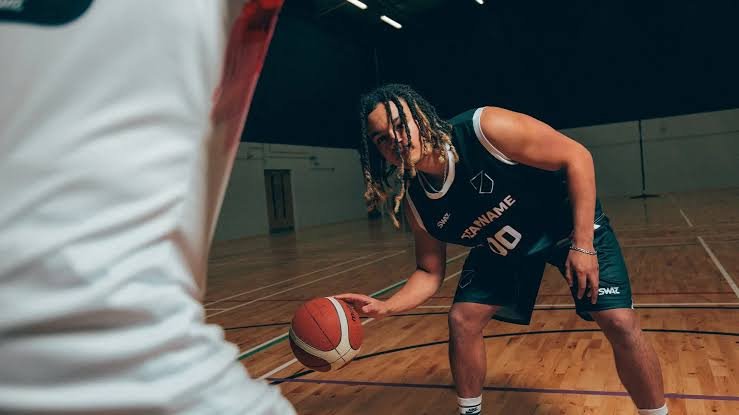
25 Competitor and Supplier Comparison Points USA Buyers Should Evaluate
This comparison is not designed to make EVI “win” every row.
That would destroy credibility.
Wooter, SquadLocker, BSN SPORTS, Allen Sportswear and CHAMPRO all have capabilities that may be more attractive for certain buyers.
Public evidence shows, for example:
- SquadLocker advertises no minimum orders, direct-to-player options and very fast fulfillment on certain programs.
- Wooter advertises free custom design, extensive customization, self-service ordering and no-minimum options.
- BSN SPORTS has a particularly strong U.S. ecosystem involving major sports brands, online team shops, schools and equipment.
- Allen Sportswear states that its uniforms are built to order, offers free design help and does not require payment until mockup approval.
- CHAMPRO publicly offers cut-and-sew sublimated uniforms plus printing and embroidery services.
Use the following 25 points when comparing suppliers.
| # | Buying factor | What current competitors demonstrate | Where EVI fits |
|---|---|---|---|
| 1 | MOQ | SquadLocker and parts of Wooter’s platform advertise no-minimum ordering. | EVI’s 20-piece MOQ is weaker for one-piece orders but may make more sense for factory-direct development and bulk production. |
| 2 | One-off replacements | Domestic/direct-to-player systems can be much stronger. | EVI should focus on planned bulk and controlled reorders rather than pretending to beat U.S. one-piece fulfillment. |
| 3 | Free mockups | Wooter and SquadLocker advertise free design/logo assistance. | EVI should clarify artwork support during quotation rather than promise unlimited design work generically. |
| 4 | Sample model | Many platforms operate from proven styles rather than traditional factory sampling. | EVI’s $50 sample commitment is valuable for genuinely custom products because it creates a physical approval stage. |
| 5 | Sample credit | Not all competitors market a credit-to-bulk sample structure. | EVI credits the qualifying $50 commitment to bulk, reducing development friction for buyers who proceed. |
| 6 | Fully custom construction | Allen, Wooter, CHAMPRO and others offer substantial custom uniform programs. | This is not unique to EVI. EVI must compete on execution, specification control and commercial flexibility. |
| 7 | Fabric control | Retail-style platforms may emphasize catalog styles. | Factory-direct manufacturing can provide deeper fabric/GSM discussion when the project requires it. |
| 8 | Sublimation | Wooter, SquadLocker and CHAMPRO all advertise sublimated options. | Sublimation is a required capability, not a credible unique selling proposition by itself. |
| 9 | Embroidery | SquadLocker and CHAMPRO advertise embroidery on suitable products. | EVI can combine embroidery with broader cut-and-sew and private-label development where appropriate. |
| 10 | Names and numbers | Several U.S. competitors include personalization. | EVI must compete on roster accuracy, not merely on offering personalization. |
| 11 | Major brands | BSN SPORTS and SquadLocker can provide well-known brands such as Nike, adidas and Under Armour in relevant programs. | This is a competitor advantage when buyers specifically want those brands. EVI’s proposition is buyer-controlled custom/private-label production. |
| 12 | Buyer-controlled branding | Retail platforms emphasize team branding. | EVI also serves private-label brands needing their own labels, tags and packaging. |
| 13 | Online team store | SquadLocker, Wooter and BSN have powerful digital ordering systems. | EVI is weaker if the buyer’s main requirement is direct-to-parent/player ecommerce. |
| 14 | Direct-to-player fulfillment | SquadLocker is explicitly built around it. | EVI’s stronger use case is consolidated factory-direct bulk production. |
| 15 | Very fast replacement fulfillment | SquadLocker publicly advertises extremely fast programs. | Domestic production/stock systems may be objectively stronger for emergencies. |
| 16 | Bulk-production target | Wooter commonly references weeks; fully custom BSN programs can also have multi-week lead times depending on product. | EVI targets roughly 10–15 days for suitable approved bulk orders when capacity/materials permit, but must confirm each schedule. |
| 17 | Custom labels | Not every teamwear platform focuses on private-label garment identity. | This is important for EVI’s brand/reseller customers. |
| 18 | Custom packaging | Team platforms often prioritize player fulfillment instead. | EVI’s private-label model can accommodate agreed buyer packaging requirements. |
| 19 | Broader apparel | Wooter, BSN and SquadLocker also offer broad ranges. | EVI should not claim category breadth is unique, but combining teamwear, activewear, hoodies and private label under one manufacturing relationship may still be commercially useful. |
| 20 | Equipment | BSN SPORTS is much stronger because it sells extensive sports equipment alongside apparel. | EVI should not compete outside its manufacturing scope simply to appear larger. |
| 21 | Production visibility | Domestic platforms provide dashboards/order tracking in many cases. | EVI can provide factory-oriented visibility through samples, communication, photos/video and production updates where agreed. |
| 22 | Reorder convenience | Wooter and SquadLocker have strong online reorder systems. | EVI’s solution should be disciplined retention of artwork, measurements, fabric, colors, labels and previous order data. |
| 23 | Pricing transparency | Wooter publishes starting prices on many items. | EVI factory-direct projects often require quotation because specification, quantity and freight materially alter price. |
| 24 | Landed-cost simplicity | A domestic vendor can make final U.S. cost easier to understand. | Imported EVI orders require freight and import-cost analysis; buyers should calculate landed cost before committing. |
| 25 | Best-fit customer | Platforms excel at team-store convenience, branded goods and domestic fulfillment. | EVI is best positioned for qualified clubs, brands, resellers and commercial buyers seeking deeper factory-direct customization, OEM/private-label capability and repeat bulk manufacturing. |
The important conclusion is not that EVI beats every competitor.
It does not.
The conclusion is that USA buyers should select the business model that matches the purchasing problem.
25 Growth and Emerging Apparel/Sportswear Brands USA Buyers Can Learn From
These companies are presented as market lessons only.
None of them are claimed to manufacture with Elahi Vertex International.
1. Vuori
Vuori has expanded aggressively from a digitally native California activewear business into physical retail. Forbes reported more than 80 U.S. stores in early 2025 and plans to exceed 100 stores in 2026.
Lesson: Strong product positioning can support physical expansion.
Manufacturing implication: Build hero products that can be replenished consistently rather than constantly replacing the collection.
2. Fabletics
Fabletics reported passing $1 billion in annual revenue after 2025 while continuing to expand its membership/value/retail model.
Lesson: Recurring customer relationships can be more powerful than one-off transactions.
Manufacturing implication: Design products and supply chains around replenishment.
3. Alo Yoga
Behavioral research published in 2026 found significant acceleration in U.S. search engagement around Alo, positioning it as a major premium-athleisure challenger.
Lesson: Brand desirability changes purchase behavior even in crowded categories.
Manufacturing implication: Technical adequacy alone does not create demand; visual identity matters.
4. FP Movement
Glossy reported roughly 30% year-over-year sales growth for FP Movement in a 2025 quarter and significant store expansion.
Lesson: Brands can expand from a core fitness identity into adjacent sports.
Manufacturing implication: Use a scalable core product language when entering new categories.
5. CSB
Vogue reported that Australian-born CSB recorded 118% U.S. revenue growth from 2024 to 2025 and drew substantial attendance to U.S. pop-up events.
Lesson: Community-driven physical activation can accelerate a digital brand.
Manufacturing implication: High-growth brands need inventory planning capable of surviving sudden demand spikes.
6. 437
Forbes reported that activewear became a major revenue driver for 437 and highlighted rapid profit growth after the category expansion.
Lesson: A brand does not have to remain trapped in its original product category.
Manufacturing implication: Expand only where customer behavior supports the move.
7. SET
Forbes reported strong year-over-year momentum for SET while the company emphasized differentiated fits, contrast details and crossover styling.
Lesson: Small silhouette and design details can differentiate familiar activewear categories.
Manufacturing implication: Pattern, fit and trims can matter as much as the logo.
8. Beyond Yoga
Levi Strauss filings show Beyond Yoga revenue continuing to grow at double-digit rates, including 19.3% reported growth for the first half of its 2026 reporting period.
Lesson: Fabric feel can become a brand asset.
Manufacturing implication: Preserve the exact approved textile and hand feel on reorders.
9. Rhone
Current ecommerce intelligence identifies Rhone as a U.S.-oriented performance apparel business with continued digital growth expectations.
Lesson: Men’s performance apparel remains a distinct positioning opportunity.
Manufacturing implication: Avoid assuming every activewear customer wants the same fit or visual language.
10. TALA
TALA reported revenue growth while expanding retail and wholesale; its U.S. ambitions also encountered real tariff challenges, illustrating that expansion and logistics risk occur simultaneously.
Lesson: Growth does not eliminate operational risk.
Manufacturing implication: Import economics must be included in expansion planning.
11. Outdoor Voices
Founder Ty Haney returned to Outdoor Voices as part of a brand turnaround effort after ownership changes.
Lesson: Brand equity can survive operating mistakes, but recovery is expensive.
Manufacturing implication: Inventory discipline and sustainable growth matter.
12. Halfdays
Forbes reported more than 50% year-over-year growth, substantial wholesale expansion and a $10 million Series A for Halfdays by 2026.
Lesson: Solve a real fit problem—in this case women’s technical ski apparel—rather than merely adding another aesthetic.
Manufacturing implication: Product-market differentiation should be visible in pattern and fit.
13. Bandit Running
Bandit has developed a strong position among serious runners and unsponsored competitive athletes while using membership and community as part of its commercial model.
Lesson: A narrowly defined tribe can be commercially powerful.
Manufacturing implication: Build products for a specific user’s real use case.
14. Tracksmith
Tracksmith built a cult running position by focusing deeply on running culture and distinctive New England-inspired design. Forbes previously reported substantial expansion from its earlier base.
Lesson: Category depth can outperform broad generic positioning.
Manufacturing implication: Consistency of design language matters across every product.
15. Janji
Janji differentiated itself through global storytelling, distinctive graphics and a community-oriented running identity; Forbes Vetted continues to include it among notable independent running brands.
Lesson: Product can carry a narrative.
Manufacturing implication: Complex prints require repeatable artwork and color management.
16. Rabbit
Forbes describes Rabbit as a California running label that has built an authentic running community since its 2016 launch.
Lesson: Community credibility compounds over time.
Manufacturing implication: Performance product must survive real use, not merely photoshoots.
17. Path Projects
Forbes Vetted includes Path Projects among noteworthy independent running labels.
Lesson: Specialized independent brands can compete without copying giant brands.
Manufacturing implication: Specific performance problems create better briefs than “make something like Nike.”
18. Speedland
Speedland also appears among Forbes’ independent-running-brand selections.
Lesson: Premium specialist positioning can attract consumers who care deeply about use-case performance.
Manufacturing implication: Do not remove expensive functional details simply to hit an arbitrary target price.
19. Norda
Norda has gained recognition in the independent running category, particularly around premium trail positioning.
Lesson: Specialist performance markets can support premium products.
Manufacturing implication: Premium positioning requires premium execution, not simply premium pricing.
20. Ciele Athletics
Ciele built a recognizable position through technical running headwear and distinctive color blocking.
Lesson: One recognizable hero category can create brand memory.
Manufacturing implication: Startups do not need 40 SKUs to look serious.
21. Saysky
Saysky is another independent performance-running brand highlighted by Forbes for its distinctive performance apparel.
Lesson: Visual identity can differentiate technical apparel.
Manufacturing implication: Artwork consistency must survive across product categories.
22. Satisfy
Satisfy has developed a premium fashion-performance position within independent running.
Lesson: Performance and fashion do not have to be separate markets.
Manufacturing implication: Material, trims and finishing become more important as price point rises.
23. Girlfriend Collective
Girlfriend Collective became known for eco-oriented activewear and extended into adjacent apparel basics.
Lesson: Material narrative can become part of brand positioning.
Manufacturing implication: Sustainability claims require real sourcing evidence rather than vague marketing language.
24. Year of Ours
Year of Ours built differentiation around inclusive fitting and recognizable sports-inspired styling.
Lesson: Fit can be part of brand identity.
Manufacturing implication: Invest heavily in patterns, fittings and size grading.
25. Ten Thousand
Ten Thousand has built a clear identity around hard training and athlete-tested men’s performance products.
Lesson: A clear customer persona sharpens product development.
Manufacturing implication: Specify the environment in which a garment must perform before selecting the fabric.
The Bigger USA Sportswear Opportunity
The U.S. performance market continues to evolve.
Running alone remains a large participation category: Outdoor Industry Association data reported 52.3 million U.S. road runners in 2025 and 17.2 million trail runners, with growth increasingly coming from casual and multi-sport participants.
For brands and manufacturers, this reinforces an important idea:
Athletic apparel is no longer divided neatly into “professional athlete” and “non-athlete.”
Consumers increasingly wear performance products across:
- Training
- Running
- Clubs
- Travel
- Casual use
- Social activity
- Lifestyle
That is why teamwear buyers should think beyond the match jersey.
Why Elahi Vertex International for Custom Team Uniforms USA?
Selecting a factory should never be based on a paragraph claiming “we are the best.”
The better question is:
Does the manufacturer’s operating model fit your buying requirements?
The following are practical reasons a qualified USA club, academy, reseller, sportswear startup, established brand, wholesaler or private-label business may consider Elahi Vertex International.
1. MOQ starting at 20 pieces per product/category
Many early-stage buyers face a basic contradiction.
They need custom manufacturing to differentiate their product, but they are not ready to commit to hundreds or thousands of units.
A standard MOQ starting at 20 pieces for qualifying projects can reduce that initial barrier.
It gives a smaller club, startup or specialist brand a path into production without automatically forcing a huge inventory position.
That does not mean every possible product can economically be manufactured at 20 pieces.
Special materials, custom-developed trims or unusual processes can change minimums and pricing.
But the 20-piece standard provides a commercially useful starting framework.
2. MOQ 20 is not disguised as the 50-piece offer
The distinction matters.
A buyer does not have to order 50 merely to qualify for standard production.
Twenty pieces is the standard MOQ for qualifying projects.
Fifty qualifying paid uniforms is the separate threshold for the promotional package.
That makes the offer easier to understand.
3. Sample commitment credited to bulk
The $50 sample commitment structure is designed to distinguish development from free promotional giveaways.
A manufacturer incurs real costs developing a physical custom product.
A buyer, meanwhile, reasonably wants to limit risk before placing a bulk order.
The credit-to-bulk structure puts both interests together.
The buyer demonstrates commercial intent.
The factory allocates development resources.
If the project advances to qualifying bulk, the $50 is credited back.
4. Physical sampling before scale
A digital mockup can confirm aesthetics.
It cannot fully prove:
- Fabric hand
- Actual fit
- Garment measurements
- Stitching
- Print result
- Embroidery
- Weight
- Construction
A physical sample gives the buyer a more meaningful approval point.
That is particularly important for a new private-label product.
5. Full custom manufacturing
EVI is positioned around made-to-order manufacturing rather than simply applying decoration to standard blanks.
Its current manufacturing information describes buyer-controlled designs, measurements, materials, branding and production requirements.
Explore Custom Clothing Manufacturing
For buyers who only want an existing Nike or adidas jersey decorated with a team logo, a U.S. distributor may be a better solution.
For buyers who want to control the garment itself, factory-direct manufacturing becomes more relevant.
6. Sublimation capability
Sublimation is central to modern teamwear.
It enables complex custom graphics while maintaining the basic character of appropriate polyester performance fabrics.
However, EVI should not sell sublimation as a unique technological miracle.
Many serious competitors offer it.
The differentiation has to come from:
- Artwork control
- Fabric
- Color
- Construction
- Execution
- QC
- Commercial terms
7. Multiple decoration methods
Different products demand different applications.
A soccer jersey may use sublimation.
A coach polo may use embroidery.
A hoodie may use screen printing, embroidery or another suitable technique.
Working across sublimation, printing and embroidery can reduce the need to split a coordinated collection among unrelated suppliers.
8. OEM manufacturing
OEM is particularly relevant to established brands.
The buyer may already know exactly what it wants.
EVI’s role is then not to redesign the product unnecessarily.
It is to manufacture the approved specification.
That requires discipline.
A good OEM manufacturer should know when not to improvise.
9. Development/ODM support
Not every buyer arrives with a professional tech pack.
A club may only have:
- Logo
- Colors
- Inspiration
- Quantity
A startup may have:
- Sketch
- Reference garment
- Fabric concept
Development support can help convert that information into something manufacturable.
The ultimate objective should still be a clear specification.
10. Private-label capability
EVI serves buyers who want their own brand on the garment.
That can include:
- Labels
- Size identification
- Hangtags
- Packaging
- Custom product identity
That is materially different from buying another sportswear company’s branded product.
11. Buyer-controlled brand identity
A private-label customer should own the customer-facing identity.
The garment should not become advertising for the factory unless the buyer wants that.
For sportswear startups and resellers, that distinction matters.
12. Teamwear plus broader apparel
Teams increasingly sell or use more than game uniforms.
A broader range may include:
- Tracksuits
- Training tops
- Hoodies
- Sweatshirts
- Activewear
- Staff wear
- Streetwear-style supporter merchandise
EVI’s portfolio currently spans custom teamwear, activewear, hoodies, private-label products and other categories.
This can support buyers seeking fewer production relationships.
It does not mean every category should automatically be ordered together.
Product specialization still matters.
13. Custom labels
Labels are operationally important for brands.
They affect:
- Brand presentation
- Sizing
- Care
- Inventory
- Customer experience
Custom labels help move an order from generic teamwear toward a commercial branded product.
14. Packaging options
USA brands and wholesalers often need a defined packaging system.
The order may need to arrive:
- Individually bagged
- Size labeled
- SKU sorted
- Player sorted
- Retail prepared
Packaging should therefore be part of the quotation rather than an afterthought.
15. USA-focused commercial approach
A USA buyer needs the manufacturer to understand that the factory gate is not the end of the transaction.
Important U.S.-specific commercial questions include:
- ZIP code
- Delivery date
- Freight
- Import process
- Landed cost
- Season calendar
A quote intended for a buyer in Texas or New York should therefore ask where the goods are actually going.
16. International export orientation
EVI publicly positions itself as a global apparel exporter rather than only a domestic garment workshop.
For an international buyer, export orientation matters because packaging, documentation and logistics become part of the workflow.
17. Approximate 15,000-piece monthly capability
For smaller clubs, 15,000-piece capacity is not meaningful because they may order only 30 uniforms.
For growing resellers and brands, it becomes more relevant.
It suggests a potential path from low-MOQ development into materially larger production.
But available capacity must still be reserved and confirmed for each order.
A headline capacity number is not a production guarantee.
18. Scaling without changing manufacturing relationship
If a buyer successfully tests 30 pieces, then wants 100, then 500, switching manufacturers at every stage creates new risk.
A manufacturing partner that can support both early and larger stages can preserve:
- Fabric
- Pattern
- Artwork
- Labels
- Packaging
- QC expectations
That continuity can be valuable.
19. Structured order process
EVI’s current published process follows:
Design → product/fabric selection → specification → sample → sample approval → bulk production → QC → packaging/shipping.
That is important because serious manufacturing should have approval gates.
20. Production visibility
International manufacturing creates distance.
Distance creates uncertainty.
Useful manufacturing visibility can include:
- Video discussion
- Sample photos
- Physical sample
- Production images
- Final product images
- Packing evidence
Buyers should ask for visibility at commercially useful milestones rather than requesting random daily photos that do not actually control the order.
21. Direct communication
Factories and buyers can lose money through ambiguity.
“Make it premium.”
“Make the blue darker.”
“Same as last time.”
Those are dangerous instructions.
A long-term manufacturer should move the conversation toward:
- Approved measurement
- Approved fabric
- Approved artwork
- Approved color
- Approved roster
Good communication means converting opinion into specification.
22. Portfolio and case-study visibility
EVI has published both work/portfolio pages and case-study material covering sportswear/teamwear and private-label categories.
A portfolio cannot guarantee your order.
It does provide another layer of pre-order evaluation.
23. Website plus Alibaba presence
A buyer should never rely on one profile alone.
EVI can be assessed through:
- Website
- Alibaba presence
- Direct contact
- Sample
- Video
- Quotation
- Invoice
- Production communication
Multiple independent contact and documentation layers reduce the dependency on a single sales message.
24. 50 + 2 + coach hoodie promotion
For a qualifying first bulk order, the 50-piece promotion provides useful team inventory rather than simply reducing the invoice percentage.
It is especially relevant to:
- Clubs
- Academies
- Schools
- Leagues
- Tournament teams
But it should never be used to distract from the underlying product.
A bad 53-piece package is still a bad purchase.
Approve quality first.
25. Long-term manufacturing relationship
The strongest reason to choose a supplier should ultimately be the supplier’s ability to perform repeatedly.
A professional buyer should not ask:
“Who will give me the lowest price today?”
The better question is:
“Who can reproduce the approved product, solve problems professionally and grow with our purchasing volume?”
That is the relationship EVI should aim to earn.
Not through slogans.
Through execution.
About Elahi Vertex International
Elahi Vertex International is a custom sportswear and apparel manufacturer and exporter based in Sialkot, Pakistan.
The company serves international commercial buyers including:
- Sports clubs
- Teams
- Academies
- Sportswear brands
- Activewear brands
- Startups
- Private-label businesses
- Wholesalers
- Distributors
- Retailers
- Importers
Its manufacturing scope includes:
- Teamwear
- Custom jerseys
- Soccer uniforms
- Activewear
- Gymwear
- Hoodies
- Streetwear
- Boxing apparel
- Leather apparel
- Private-label clothing
EVI’s current website also publishes manufacturing, OEM, custom clothing, portfolio, case-study, ordering and contact resources for buyers who want to conduct further due diligence.
About Elahi Vertex International
Buyer Checklist Before Requesting a Quote
The fastest way to receive an accurate quotation for custom team uniforms USA is to provide useful information from the start.
Send:
1. Sport/product
Soccer, basketball, baseball, football, volleyball, lacrosse, hoodie, tracksuit, etc.
2. Quantity
Example: 58 soccer sets.
3. Sizes
Youth/adult/women’s breakdown where known.
4. Logo
Vector artwork is preferable where available.
5. Artwork/reference
Send the actual concept.
6. Names and numbers
Roster file if known.
7. Customization
Printing, sublimation, embroidery, labels and packaging.
8. Fabric requirement
Include composition/GSM if already specified.
9. Required delivery date
Not just “ASAP.”
10. USA destination
City, state and ZIP code.
With these details, the manufacturer can evaluate production and shipping rather than guessing.
Frequently Asked Questions About Custom Team Uniforms USA
1. What is Elahi Vertex International’s MOQ?
The standard MOQ is 20 pieces per product/category for qualifying projects.
The actual feasibility of a specific product can depend on its materials and customization.
2. Do I have to order 50 pieces?
No.
The standard MOQ begins at 20 pieces per product/category for qualifying projects.
Fifty paid qualifying uniforms are required only for the 50-piece promotional offer.
3. What is the 50-piece team uniform promotion?
Order 50 qualifying paid custom team uniforms and receive 2 additional matching uniforms plus 1 qualifying custom coach hoodie free.
The promotion must be confirmed in the quotation.
4. Are the two free uniforms completely different designs?
Normally, no.
They should use the approved core team design associated with the qualifying paid order.
Different designs may require separate costing.
5. Can I choose any coach hoodie specification?
The promotional hoodie follows the specification agreed in the promotion/quotation.
Premium fabrics, unusually complex construction or special decoration may require revised terms.
6. Is shipping free with the promotion?
No—not automatically.
International freight should be quoted according to shipment size, weight, method and destination.
7. Are U.S. duties and taxes included?
Not automatically.
Import costs depend on the specific shipment and applicable U.S. customs treatment.
The buyer should establish responsibility for duties, taxes, brokerage and related costs before shipment.
8. Is the sample free?
No.
For qualifying projects, EVI uses a $50 Sample Commitment Fee.
9. Is the $50 sample fee refundable?
It is better described as credited to qualifying bulk, not as an unconditional cash refund.
If the buyer proceeds with the qualifying bulk order, the $50 is credited 100% toward that bulk order.
10. Who pays sample courier charges?
Courier should be clarified separately before sample dispatch.
A small sample shipment may have a relatively high freight cost per garment.
11. How long does sampling take?
Approximately 5–7 days is the typical target for suitable projects.
Complex development may require more time.
12. How long does bulk production take?
Approximately 10–15 days is the typical production target for suitable approved projects.
It is not an unconditional guarantee.
Quantity, materials, complexity, approvals and current production schedule affect timing.
13. Can you manufacture player names and numbers?
Yes, custom roster personalization can be incorporated into suitable teamwear projects.
The buyer should provide one final controlled roster file before production.
14. Can sponsor logos be added?
Yes, suitable uniforms can incorporate sponsor graphics.
Placement and artwork should be approved before manufacturing.
15. Can EVI manufacture custom soccer uniforms?
Yes.
Custom soccer uniforms are part of EVI’s current teamwear offering, with options including team colors, logos, player names, numbers, sponsor branding and sublimated designs.
16. Can EVI manufacture custom basketball uniforms?
Yes, qualifying custom basketball projects can be developed according to design, fabric, sizing and branding requirements.
Provide jersey and shorts specifications when requesting a quote.
17. Can EVI manufacture custom baseball uniforms?
Yes, qualifying baseball projects can include custom jerseys and related teamwear.
Construction and decoration should be specified because baseball garments can differ significantly from lightweight sublimated jerseys.
18. Can EVI manufacture custom American football uniforms?
Yes, qualifying American football teamwear can be developed.
Fit, stretch, equipment interaction, reinforcement and construction should be agreed before bulk.
19. Does EVI offer private-label manufacturing?
Yes.
EVI’s published manufacturing scope includes private-label apparel and buyer-controlled branding.
20. Can I add my own labels?
Yes, custom labels can be discussed for qualifying projects.
Specify main label, size label, care label, hangtag and packaging requirements before quotation.
21. Can you copy another brand’s uniform exactly?
A buyer may provide references for fit, construction or inspiration, but should not ask a manufacturer to unlawfully reproduce protected branding or counterfeit another company’s merchandise.
Develop your own team or brand identity.
22. Can one order contain multiple sizes?
Yes.
The size breakdown should be finalized before bulk production.
23. Can you make youth and adult sizes?
Yes, depending on the approved product and size specification.
Youth and adult sizing should be treated as distinct measurement requirements where necessary.
24. How much does shipping to the USA cost?
There is no responsible universal price.
Shipping depends on:
- Quantity
- Weight
- Carton dimensions
- Courier/freight method
- Destination
- ZIP code
Provide the destination and order quantity for calculation.
25. Why is sample shipping expensive?
Because an international courier shipment includes fixed logistics and handling costs even when only one garment is inside.
Bulk shipping distributes those costs over a larger number of pieces.
26. How do I calculate landed cost?
Use:
Factory price + customization + packaging + freight + applicable duty/tax + customs/brokerage + domestic delivery + expected quality/replacement risk.
Do not compare quotations using only factory unit price.
27. Can I reorder the same uniform later?
Yes, but consistency is strongest when the approved manufacturing information is preserved.
Maintain:
- Artwork
- Fabric
- GSM
- Measurements
- Color references
- Labels
- Packaging
- Roster format
- Previous order reference
28. Do you guarantee identical colors forever?
No responsible manufacturer should promise absolute color identity forever without controlling the relevant material, dye/print conditions and approved reference.
Preserving an approved physical and Pantone/color reference reduces variation risk.
29. Can I use the Halloween promotion and 50-piece uniform promotion together?
Not automatically.
Seasonal hoodie promotions and the team-uniform promotion are separate commercial offers unless the written quotation explicitly says otherwise.
30. How do I request a quotation?
Send:
- Sport/product
- Quantity
- Sizes
- Logo
- Artwork/reference
- Names/numbers
- Customization requirements
- Required delivery date
- USA city/state/ZIP
Contact Elahi Vertex International for a quotation
REQUEST YOUR CUSTOM TEAMWEAR QUOTE
If your club, academy, school, team, league, sportswear business or private-label brand needs custom team uniforms USA, do not start with:
“What’s your cheapest jersey?”
Start with the product you actually need.
Elahi Vertex International can evaluate qualifying custom projects beginning from:
MOQ from 20 pieces per product/category
For buyers who want to validate a design or outfit a smaller organization.
$50 sample commitment
The $50 qualifying sample commitment is credited 100% toward the qualifying bulk order when the project proceeds.
50-piece team promotion
Order 50 qualifying paid custom team uniforms → Get 2 additional matching uniforms + 1 custom coach hoodie FREE.
Terms must be confirmed in the written quotation.
Shipping and applicable import charges are not automatically included.
What to Send Now
Send your:
- Sport/product
- Quantity
- Sizes
- Team or brand logo
- Artwork/reference
- Player names/numbers
- Sponsor logos
- Fabric/GSM requirement if known
- Printing/sublimation/embroidery requirement
- Labels/packaging requirement
- Required delivery date
- USA city
- State
- ZIP code
If you are still comparing manufacturers, say so.
A serious supplier should be able to explain the commercial differences rather than pressure you into ordering before the specification is clear.
But if your season, tournament or product-launch date is fixed, do not delay development until the last minute.
Sampling, approvals, manufacturing, freight and customs all require time.
REQUEST YOUR CUSTOM TEAMWEAR QUOTE
Request a Quote from Elahi Vertex International
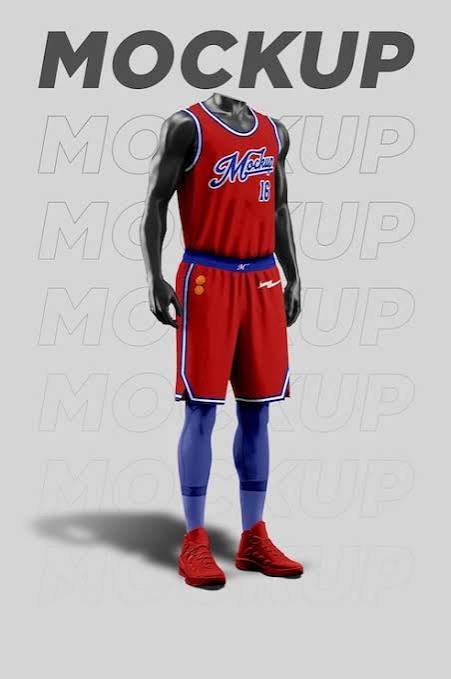
- Custom team uniforms USA buyers should compare fabric, sizing, customization, production time, shipping and landed cost before ordering.
- Custom sports uniforms USA projects can include game jerseys, shorts, training wear, tracksuits, coach apparel and supporter merchandise.
- Professional custom team jerseys should be developed around approved colors, logos, player names, numbers and measurements.
- High-quality custom sports jerseys require the correct fabric, GSM, printing method, stitching and fit for the intended sport.
- Buyers ordering bulk custom jerseys should confirm quantity, size breakdown, roster details, production schedule and USA delivery destination.
- Custom basketball uniforms should provide comfortable movement, appropriate jersey length, durable shorts and accurate player personalization.
- Custom baseball uniforms can include full-button jerseys, pants, team logos, names, numbers, embroidery and custom branding.
- Custom soccer uniforms can combine sublimation, sponsor logos, player names, numbers, team colors and custom collar designs.
- Custom football uniforms require careful attention to stretch, construction, equipment fit, reinforcement, numbers and team identity.
- Sublimated team uniforms allow detailed patterns, gradients, logos, names and numbers to become part of the garment design.
- A professional team uniform manufacturer should provide clear specifications, sampling, production communication, quality control and shipping documentation.
- Choosing a custom sportswear manufacturer gives clubs and brands greater control over fabrics, sizing, branding, labels and packaging.
- A reliable custom sports uniforms manufacturer should manage artwork, cutting, printing, stitching, finishing, QC, packing and dispatch.
- Custom uniforms for sports teams should be developed around athlete comfort, team identity, roster accuracy and repeat-order consistency.
- Working with a custom teamwear manufacturer can help buyers coordinate uniforms, training apparel, tracksuits, hoodies and coach clothing.
- A private label sportswear manufacturer can develop buyer-controlled apparel with custom labels, hangtags, packaging, colors and product specifications.
- Wholesale team uniforms should be evaluated using total landed cost, production consistency, freight, customization and reorder potential.
- A sports uniform supplier USA buyer considers should be compared against factory-direct manufacturers for MOQ, speed, customization and landed cost.
- Custom uniforms for clubs should support multiple sizes, player rosters, sponsor branding, replacement requirements and future seasons.
- Custom uniforms for academies and custom jerseys for teams should use preserved artwork, measurements, fabrics and color references to simplify reorders.
1. Choosing Custom Team Uniforms USA
Buyers searching for custom team uniforms USA should evaluate much more than the visible jersey design. Fabric, fit, customization, production timing, quality control, shipping, landed cost and reorder consistency all affect the final result. A professional buying decision should compare the complete manufacturing system rather than only the lowest quoted unit price. For clubs, academies, schools and commercial buyers, custom team uniforms USA sourcing works best when artwork, measurements, colors, player information and delivery expectations are documented before production begins.
2. Custom Sports Uniforms USA
Professional custom sports uniforms USA projects can cover game uniforms, practice wear, training garments, tracksuits, hoodies and coach apparel. Buyers should clearly identify the sport, number of athletes, size range, season deadline and expected customization before requesting pricing. With custom sports uniforms USA, accurate specifications help manufacturers calculate fabric requirements, decoration, labor, packaging and freight more reliably.
3. Custom Team Jerseys
Well-developed custom team jerseys combine team identity with practical performance requirements. Buyers should confirm fabric, GSM, fit, collar style, sleeve construction, logos, sponsor placement and player details. The strongest custom team jerseys are not simply attractive mockups; they are garments manufactured according to an approved specification that can also be reproduced later for reorders.
4. Custom Sports Jerseys
Ordering custom sports jerseys requires choosing decoration according to the garment and sport. Sublimation may suit polyester performance jerseys, while embroidery, heat transfer or screen printing may be more appropriate for other applications. Buyers comparing custom sports jerseys should also check stitching, sizing, color consistency and roster accuracy instead of judging quality only from digital artwork.
5. Bulk Custom Jerseys
For bulk custom jerseys, order management becomes increasingly important as quantity grows. A roster mistake repeated across hundreds of garments can be expensive. Buyers ordering bulk custom jerseys should therefore provide one final approved spreadsheet containing sizes, names, numbers, products and special instructions. Bulk purchasing should also include confirmed production timing, packing requirements and USA shipping details.
6. Custom Basketball Uniforms
Good custom basketball uniforms require the correct jersey cut, armholes, neckline, body length, shorts construction and movement. Teams should also confirm whether they want reversible products, sublimated graphics, individual player names or additional warm-up apparel. Custom basketball uniforms should be sampled when fit or construction is new so bulk production follows an approved physical reference.
7. Custom Baseball Uniforms
Professional custom baseball uniforms may include full-button jerseys, two-button jerseys, pants, training tops, jackets and coach apparel. Buyers should decide between printed, sublimated and embroidered elements based on the desired appearance and garment structure. With custom baseball uniforms, details such as piping, buttons, sleeve construction and team wordmarks should be approved before production.
8. Custom Soccer Uniforms
For custom soccer uniforms, teams commonly require jerseys, shorts, goalkeeper kits, training wear and coach apparel. Sublimation can incorporate team colors, patterns, sponsor logos, names and numbers into the design. Buyers sourcing custom soccer uniforms should preserve approved color references and artwork so future players can receive reorders that remain consistent with the original team identity.
9. Custom Football Uniforms
Custom football uniforms require particular attention to fit, stretch, reinforcement and how the jersey interacts with protective equipment. Player numbers and team marks must remain clearly positioned when the uniform is worn. Before approving custom football uniforms, buyers should evaluate construction and movement rather than selecting a supplier only because the digital design looks impressive.
10. Sublimated Team Uniforms
Sublimated team uniforms allow teams to use detailed graphics, gradients, patterns, names, numbers and sponsor logos without adding multiple heavy print layers. However, sublimation alone does not guarantee quality. Buyers purchasing sublimated team uniforms should still evaluate fabric, stitching, measurements, artwork alignment, color references and finishing before approving a bulk order.
11. Team Uniform Manufacturer
A reliable team uniform manufacturer should help convert buyer requirements into clear manufacturing instructions. That process can include artwork approval, measurements, fabric selection, customization, sampling, production, quality control and packing. When comparing a team uniform manufacturer, buyers should ask how reorders are controlled and what production information is retained after the first shipment.
12. Custom Sportswear Manufacturer
Working with a custom sportswear manufacturer can provide greater control over fabrics, fits, artwork, labels and packaging than simply decorating existing blank garments. Clubs and brands should evaluate whether a custom sportswear manufacturer can support both the initial order and future scaling. Communication, sampling and specification management matter just as much as manufacturing capability.
13. Custom Sports Uniforms Manufacturer
A professional custom sports uniforms manufacturer should manage multiple manufacturing stages rather than treating production as only printing. Material planning, cutting, sublimation, stitching, finishing, QC, packing and dispatch can all influence final quality. Buyers evaluating a custom sports uniforms manufacturer should request clear commercial terms and realistic production targets rather than accepting unsupported promises.
14. Custom Uniforms for Sports Teams
Custom uniforms for sports teams should account for different athletes, sizes, positions and roster requirements. Clubs may need youth sizing, adult sizing, women’s fits and extended sizes within the same program. Well-managed custom uniforms for sports teams also preserve artwork, measurements and color information for future additions and replacement orders.
15. Custom Teamwear Manufacturer
A custom teamwear manufacturer can support more than match-day uniforms. Teams may also require training tops, shorts, tracksuits, hoodies, coach apparel and supporter merchandise. Working with one suitable custom teamwear manufacturer can help maintain visual consistency across these categories, although each product should still have its own specification and quality requirements.
16. Private Label Sportswear Manufacturer
A private label sportswear manufacturer is particularly relevant for startups, resellers and established brands that want buyer-controlled branding. Private-label development can include custom labels, care labels, size labels, hangtags, packaging, fit and artwork. Before choosing a private label sportswear manufacturer, brands should confirm ownership of specifications and how repeat orders will be reproduced.
17. Wholesale Team Uniforms
Buyers purchasing wholesale team uniforms should evaluate commercial margin using landed cost rather than factory price alone. Freight, duties, brokerage, packaging, domestic delivery and replacement risk can materially affect profitability. Resellers sourcing wholesale team uniforms should also consider MOQ, capacity, reorder speed and whether the manufacturer can support multiple customer programs.
18. Sports Uniform Supplier USA
When comparing a sports uniform supplier USA buyers should first determine which sourcing model fits the project. Domestic suppliers may have advantages for very fast replacement pieces, online team stores or branded products. A factory-direct alternative to a sports uniform supplier USA can become more attractive when deeper customization, private labeling and planned bulk manufacturing are the priority.
19. Custom Uniforms for Clubs and Academies
Custom uniforms for clubs need to work across seasons, player changes and repeated orders. Clubs should maintain approved artwork, colors and sizing instead of recreating specifications every year. Similarly, custom uniforms for academies may need multiple age groups and frequent player additions. A structured reorder system makes both custom uniforms for clubs and custom uniforms for academies easier to manage as participation grows.
20. Custom Jerseys for Teams and the Final Buying Decision
The best custom jerseys for teams are produced through a controlled process: requirement, quotation, artwork, sample, approval, production, QC, shipping and reorder documentation. Buyers seeking custom team uniforms USA should send their sport, quantity, sizes, logo, artwork, names, numbers, customization and USA ZIP code before asking for a final quote. Whether the requirement is custom sports uniforms USA, custom team jerseys, custom sports jerseys or custom jerseys for teams, the objective should be the same: obtain a dependable product at a commercially sensible landed cost and build a manufacturing system that can support repeat orders.1. Choosing Custom Team Uniforms USA
Buyers searching for custom team uniforms USA should evaluate much more than the visible jersey design. Fabric, fit, customization, production timing, quality control, shipping, landed cost and reorder consistency all affect the final result. A professional buying decision should compare the complete manufacturing system rather than only the lowest quoted unit price. For clubs, academies, schools and commercial buyers, custom team uniforms USA sourcing works best when artwork, measurements, colors, player information and delivery expectations are documented before production begins.
2. Custom Sports Uniforms USA
Professional custom sports uniforms USA projects can cover game uniforms, practice wear, training garments, tracksuits, hoodies and coach apparel. Buyers should clearly identify the sport, number of athletes, size range, season deadline and expected customization before requesting pricing. With custom sports uniforms USA, accurate specifications help manufacturers calculate fabric requirements, decoration, labor, packaging and freight more reliably.
3. Custom Team Jerseys
Well-developed custom team jerseys combine team identity with practical performance requirements. Buyers should confirm fabric, GSM, fit, collar style, sleeve construction, logos, sponsor placement and player details. The strongest custom team jerseys are not simply attractive mockups; they are garments manufactured according to an approved specification that can also be reproduced later for reorders.
4. Custom Sports Jerseys
Ordering custom sports jerseys requires choosing decoration according to the garment and sport. Sublimation may suit polyester performance jerseys, while embroidery, heat transfer or screen printing may be more appropriate for other applications. Buyers comparing custom sports jerseys should also check stitching, sizing, color consistency and roster accuracy instead of judging quality only from digital artwork.
5. Bulk Custom Jerseys
For bulk custom jerseys, order management becomes increasingly important as quantity grows. A roster mistake repeated across hundreds of garments can be expensive. Buyers ordering bulk custom jerseys should therefore provide one final approved spreadsheet containing sizes, names, numbers, products and special instructions. Bulk purchasing should also include confirmed production timing, packing requirements and USA shipping details.
6. Custom Basketball Uniforms
Good custom basketball uniforms require the correct jersey cut, armholes, neckline, body length, shorts construction and movement. Teams should also confirm whether they want reversible products, sublimated graphics, individual player names or additional warm-up apparel. Custom basketball uniforms should be sampled when fit or construction is new so bulk production follows an approved physical reference.
7. Custom Baseball Uniforms
Professional custom baseball uniforms may include full-button jerseys, two-button jerseys, pants, training tops, jackets and coach apparel. Buyers should decide between printed, sublimated and embroidered elements based on the desired appearance and garment structure. With custom baseball uniforms, details such as piping, buttons, sleeve construction and team wordmarks should be approved before production.
8. Custom Soccer Uniforms
For custom soccer uniforms, teams commonly require jerseys, shorts, goalkeeper kits, training wear and coach apparel. Sublimation can incorporate team colors, patterns, sponsor logos, names and numbers into the design. Buyers sourcing custom soccer uniforms should preserve approved color references and artwork so future players can receive reorders that remain consistent with the original team identity.
9. Custom Football Uniforms
Custom football uniforms require particular attention to fit, stretch, reinforcement and how the jersey interacts with protective equipment. Player numbers and team marks must remain clearly positioned when the uniform is worn. Before approving custom football uniforms, buyers should evaluate construction and movement rather than selecting a supplier only because the digital design looks impressive.
10. Sublimated Team Uniforms
Sublimated team uniforms allow teams to use detailed graphics, gradients, patterns, names, numbers and sponsor logos without adding multiple heavy print layers. However, sublimation alone does not guarantee quality. Buyers purchasing sublimated team uniforms should still evaluate fabric, stitching, measurements, artwork alignment, color references and finishing before approving a bulk order.
11. Team Uniform Manufacturer
A reliable team uniform manufacturer should help convert buyer requirements into clear manufacturing instructions. That process can include artwork approval, measurements, fabric selection, customization, sampling, production, quality control and packing. When comparing a team uniform manufacturer, buyers should ask how reorders are controlled and what production information is retained after the first shipment.
12. Custom Sportswear Manufacturer
Working with a custom sportswear manufacturer can provide greater control over fabrics, fits, artwork, labels and packaging than simply decorating existing blank garments. Clubs and brands should evaluate whether a custom sportswear manufacturer can support both the initial order and future scaling. Communication, sampling and specification management matter just as much as manufacturing capability.
13. Custom Sports Uniforms Manufacturer
A professional custom sports uniforms manufacturer should manage multiple manufacturing stages rather than treating production as only printing. Material planning, cutting, sublimation, stitching, finishing, QC, packing and dispatch can all influence final quality. Buyers evaluating a custom sports uniforms manufacturer should request clear commercial terms and realistic production targets rather than accepting unsupported promises.
14. Custom Uniforms for Sports Teams
Custom uniforms for sports teams should account for different athletes, sizes, positions and roster requirements. Clubs may need youth sizing, adult sizing, women’s fits and extended sizes within the same program. Well-managed custom uniforms for sports teams also preserve artwork, measurements and color information for future additions and replacement orders.
15. Custom Teamwear Manufacturer
A custom teamwear manufacturer can support more than match-day uniforms. Teams may also require training tops, shorts, tracksuits, hoodies, coach apparel and supporter merchandise. Working with one suitable custom teamwear manufacturer can help maintain visual consistency across these categories, although each product should still have its own specification and quality requirements.
16. Private Label Sportswear Manufacturer
A private label sportswear manufacturer is particularly relevant for startups, resellers and established brands that want buyer-controlled branding. Private-label development can include custom labels, care labels, size labels, hangtags, packaging, fit and artwork. Before choosing a private label sportswear manufacturer, brands should confirm ownership of specifications and how repeat orders will be reproduced.
17. Wholesale Team Uniforms
Buyers purchasing wholesale team uniforms should evaluate commercial margin using landed cost rather than factory price alone. Freight, duties, brokerage, packaging, domestic delivery and replacement risk can materially affect profitability. Resellers sourcing wholesale team uniforms should also consider MOQ, capacity, reorder speed and whether the manufacturer can support multiple customer programs.
18. Sports Uniform Supplier USA
When comparing a sports uniform supplier USA buyers should first determine which sourcing model fits the project. Domestic suppliers may have advantages for very fast replacement pieces, online team stores or branded products. A factory-direct alternative to a sports uniform supplier USA can become more attractive when deeper customization, private labeling and planned bulk manufacturing are the priority.
19. Custom Uniforms for Clubs and Academies
Custom uniforms for clubs need to work across seasons, player changes and repeated orders. Clubs should maintain approved artwork, colors and sizing instead of recreating specifications every year. Similarly, custom uniforms for academies may need multiple age groups and frequent player additions. A structured reorder system makes both custom uniforms for clubs and custom uniforms for academies easier to manage as participation grows.
20. Custom Jerseys for Teams and the Final Buying Decision
The best custom jerseys for teams are produced through a controlled process: requirement, quotation, artwork, sample, approval, production, QC, shipping and reorder documentation. Buyers seeking custom team uniforms USA should send their sport, quantity, sizes, logo, artwork, names, numbers, customization and USA ZIP code before asking for a final quote. Whether the requirement is custom sports uniforms USA, custom team jerseys, custom sports jerseys or custom jerseys for teams, the objective should be the same: obtain a dependable product at a commercially sensible landed cost and build a manufacturing system that can support repeat orders.
