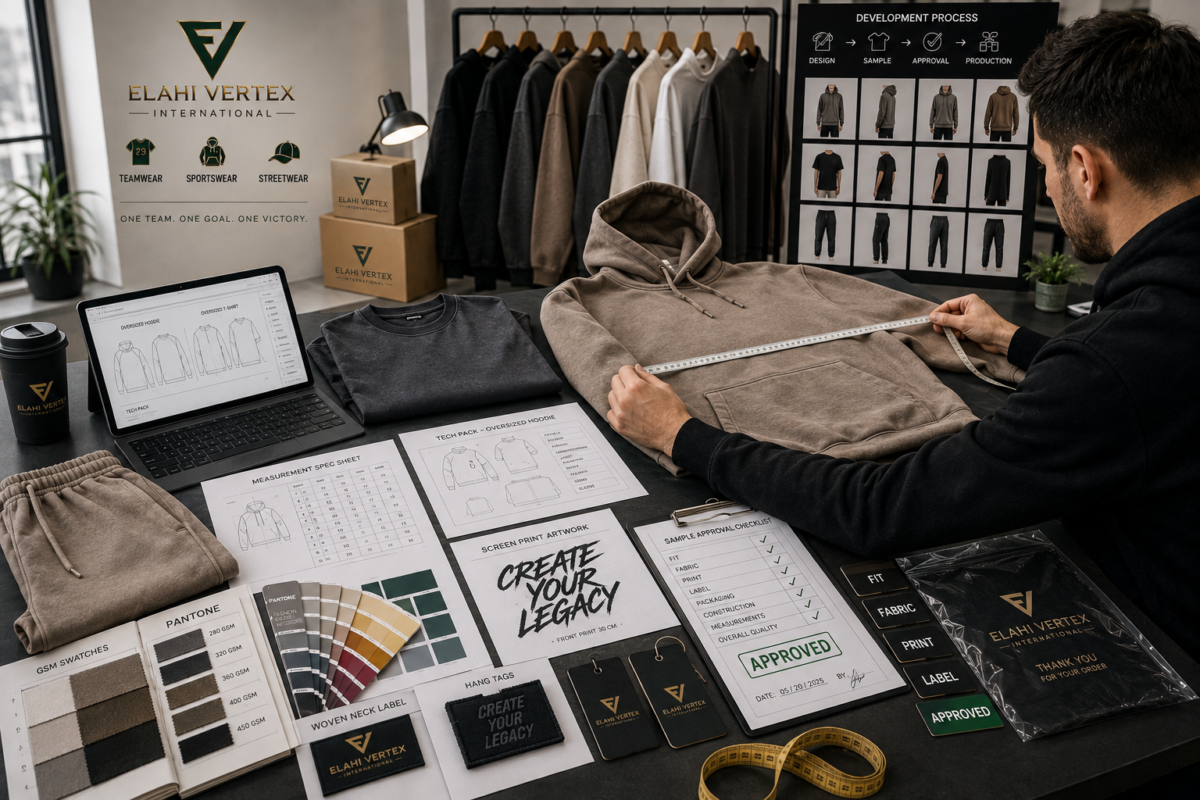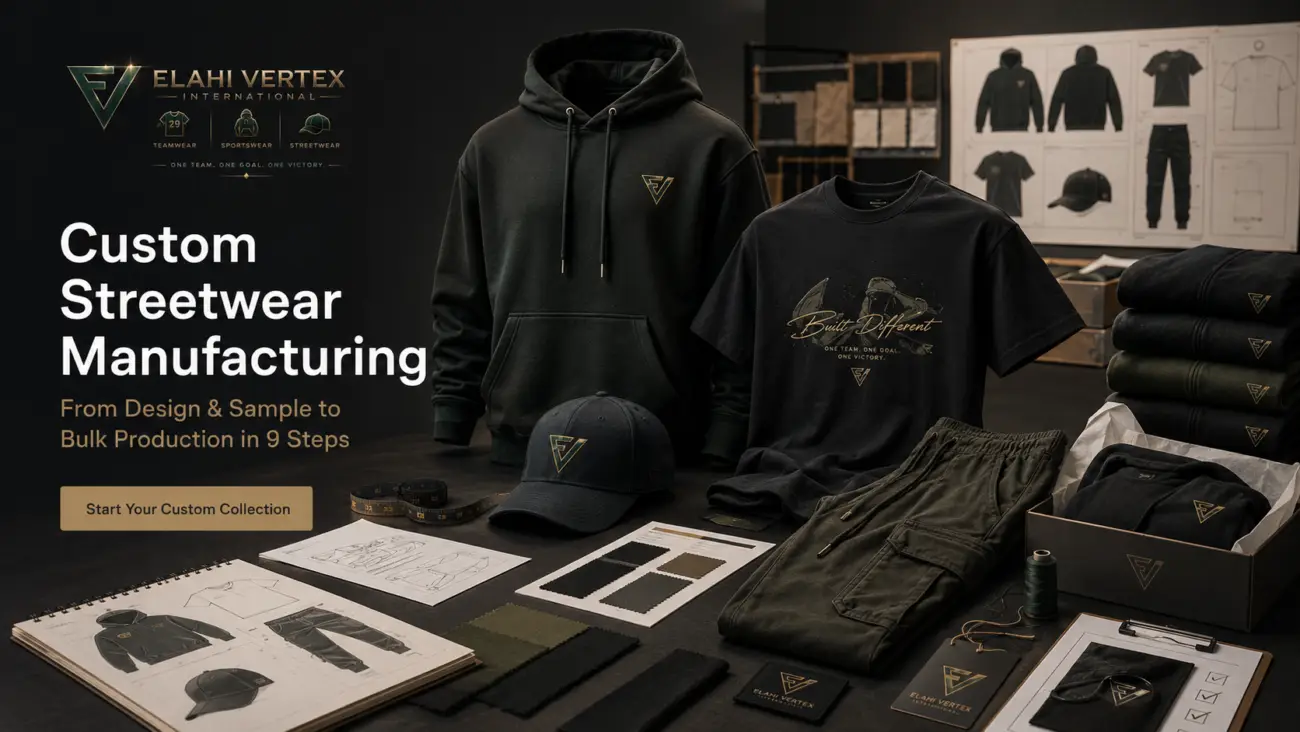

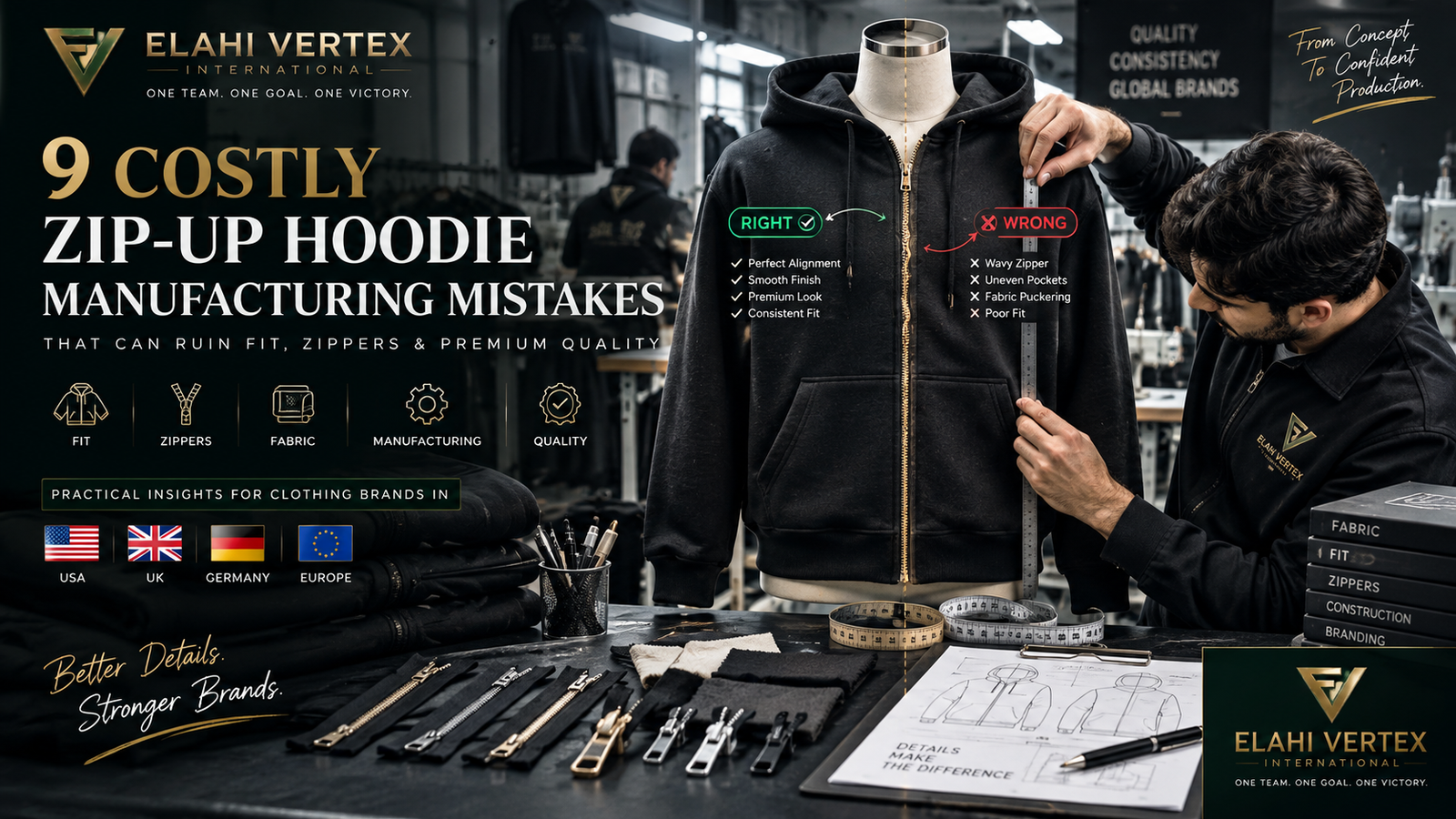
A premium zip-up hoodie can look excellent in a digital mockup and still become an expensive manufacturing problem once sampling or bulk production begins.
The zipper may wave across the front. The two sides may finish at different lengths. The hood may pull backward. The pockets may sit unevenly. Ribbing can distort after washing. A supposedly heavyweight fabric can produce a garment that feels bulky rather than premium. Even a small difference between the zipper length and the finished front opening can change how the entire hoodie hangs.
That is why choosing the right zip-up hoodie manufacturer involves much more than comparing a price per piece.
For streetwear brands, clothing startups, established apparel labels, wholesalers and private-label buyers in the USA, UK, Germany and wider European market, the real objective is repeatable manufacturing: the approved sample needs to translate into bulk garments with consistent measurements, zipper function, construction and appearance.
Brands developing custom zip-up hoodies should therefore treat the zipper, fabric, pattern, shrinkage, pockets, hood, ribbing, stitching and grading as one interconnected product system.
Professional zip-up hoodie manufacturing begins with specifications rather than assumptions.
Likewise, brands sourcing private label zip-up hoodies need to control more than logos and labels. The underlying garment engineering determines whether the finished product actually supports premium positioning.
A capable custom hoodie manufacturer should be able to work from clearly defined product requirements and help convert those requirements into a manufacturable garment.
This guide explains nine costly manufacturing mistakes buyers should identify before approving bulk production and shows how brands can build a stronger sourcing process.
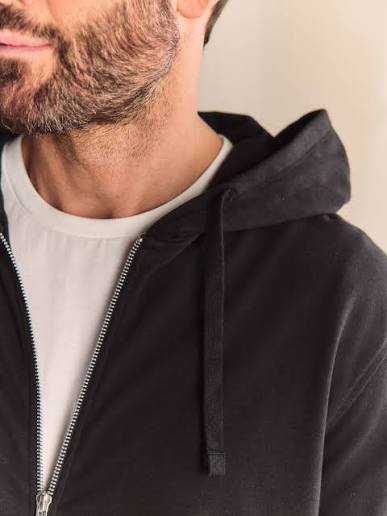
[FEATURED IMAGE — PLACE AFTER INTRODUCTION]
Quick Answer: What Makes a Premium Zip-Up Hoodie Difficult to Manufacture?
A zip-up hoodie is more technically sensitive than a basic pullover hoodie because the center-front opening introduces another component that affects garment balance.
The fabric, zipper, seam allowance, hood, waistband, pockets and front panels must work together.
For buyers evaluating a zip-up hoodie manufacturer, five areas deserve particular attention:
- Pattern and finished measurements
- Zipper specification and compatibility
- Fabric GSM, composition and dimensional stability
- Sewing and center-front alignment
- Bulk-production consistency
A mistake in one area can affect several others.
For example, fabric shrinkage can alter the relationship between the zipper and body length. Poor zipper installation can create front-panel rippling even when the pattern itself is correct. Incorrect rib recovery can pull the hem inward and change the intended silhouette.
That interconnectedness is why custom zip-up hoodies should be sampled as complete garments rather than treated as ordinary hoodies with zippers added later.
Table of Contents
- Why Zip-Up Hoodie Manufacturing Requires More Control
- Mistake #1 — Choosing Fabric by GSM Alone
- Mistake #2 — Using the Wrong Zipper
- Mistake #3 — Ignoring Zipper and Front-Panel Alignment
- Mistake #4 — Approving Fit Without a Proper Measurement Specification
- Mistake #5 — Getting Hood Construction Wrong
- Mistake #6 — Ignoring Ribbing, Cuffs and Waistband Recovery
- Mistake #7 — Poor Pocket Placement and Symmetry
- Mistake #8 — Approving a Sample Without Testing Real-World Performance
- Mistake #9 — Assuming Bulk Production Will Automatically Match the Sample
- USA, UK, Germany and EU Considerations
- Premium Zip-Up Hoodie Specification Checklist
- Sample-to-Bulk Manufacturing Workflow
- How to Evaluate a Zip-Up Hoodie Manufacturer
- Why Work With Elahi Vertex International
- Frequently Asked Questions
- Final Buyer Checklist
- Conclusion
Why Zip-Up Hoodie Manufacturing Requires More Control
A pullover hoodie has a continuous front body.
A zip-up hoodie splits that front into two panels and introduces a fastening system down the center.
That difference matters.
During zip-up hoodie manufacturing, the manufacturer must control the relationship between:
- Left and right front panels
- Center-front zipper
- Neck opening
- Hood attachment
- Pocket position
- Bottom rib
- Front-panel length
- Seam allowances
- Topstitching
- Fabric stretch and recovery
- Fabric shrinkage
- Zipper tape
- Slider and puller
- Bottom insertion components
- Branding placement
The goal is not simply to make a hoodie that closes.
The goal is to produce custom zip-up hoodies that hang correctly both open and closed, maintain the intended silhouette, survive expected wear and laundering, and reproduce the approved design consistently across sizes.
This becomes especially important for premium streetwear.
An oversized silhouette, dropped shoulder, cropped body, heavyweight fleece or boxy cut can magnify small construction errors.
A buyer may spend heavily on photography, packaging, paid advertising and customer acquisition. None of that repairs an inconsistent garment after inventory has arrived.
The manufacturing specification therefore needs to come first.
Mistake #1: Choosing Fabric by GSM Alone
One of the most common mistakes when sourcing custom zip-up hoodies is treating GSM as if it completely defines fabric quality.
It does not.
GSM means grams per square metre. It describes fabric mass per unit area. It is useful, but it cannot independently tell a buyer how a hoodie will feel, stretch, recover, shrink, drape or perform.
Two fabrics with similar GSM can behave differently.
A serious zip-up hoodie manufacturer should therefore work from a broader fabric specification.
What Buyers Should Specify Beyond GSM
Important considerations include:
- Fibre composition
- Fabric construction
- GSM target
- Surface finish
- Interior finish
- Stretch behaviour
- Recovery
- Shrinkage expectations
- Hand feel
- Colour
- Dye or wash requirements
- Intended season
- Intended silhouette
For fleece products, buyers may also need to distinguish between brushed and unbrushed constructions depending on the intended design.
A custom hoodie manufacturer cannot accurately reproduce a brand’s intended product if the specification says only:
“Premium 400 GSM hoodie.”
That describes weight, but it does not fully define the textile.
Why Fabric Behaviour Matters More on a Zip-Up Hoodie
The zipper creates a relatively stable vertical component at the front of the garment.
The fabric around it can behave differently.
If the body fabric changes dimension while the zipper does not change in the same way, visual distortion may appear.
Possible consequences include:
- Wavy center front
- Puckering
- Uneven hem
- Twisted front
- Zipper bulging
- Changes in body length
- Misaligned pocket positions
- Distorted topstitching
This is one reason zip-up hoodie manufacturing requires careful compatibility between the textile and fastening system.
Buyer Action
Before approving private label zip-up hoodies, confirm the actual fabric specification rather than approving based solely on a GSM number.
A useful RFQ can state:
Product: Premium oversized zip-up hoodie
Fabric: [composition]
Target GSM: [specified target]
Interior: [brushed/unbrushed/etc.]
Fit: [oversized/regular/boxy/cropped]
Wash: [if applicable]
Colour: [reference/Pantone or agreed standard]
Performance requirements: [project-specific]
The exact tolerance and testing requirements should be agreed for the specific project rather than assumed.

USA, UK, Germany and European Buyers: Fabric Composition Also Affects Labelling
Fabric composition is not merely a manufacturing issue.
It can also become a compliance and product-information issue.
For the European Union, textile products marketed to consumers generally require labels identifying fibre composition. EU guidance also explains requirements concerning non-textile parts of animal origin and language requirements in countries where the textile is made available.
Authoritative resource: European Union — Your Europe, Textile Label.
Recommended external link: EU Textile Labelling Requirements
For brands selling into Germany, this EU framework is particularly relevant because Germany is an EU member state. Buyers should verify the requirements applicable to their specific product and distribution model.
For Great Britain, UK government guidance states that textile labels must show fibre content and provides guidance concerning responsibility for textile labelling.
Recommended external resource: UK Government Textile Labelling Guidance
For the United States, the Federal Trade Commission provides textile and apparel guidance covering issues such as fibre identification and care labelling.
Recommended external resources: FTC Clothing and Textiles Guidance and FTC Care Labeling Rule.
Brands should confirm the requirements applying to their particular garments and sales destinations rather than assuming one label works everywhere.
Mistake #2: Using the Wrong Zipper for the Product
A premium hoodie with a poor zipper does not feel premium.
The zipper is one of the first components a customer physically operates.
Customers touch the puller, insert the pin, move the slider and feel the resistance of the chain. That experience can influence their perception of the entire garment.
For that reason, a zip-up hoodie manufacturer should not treat the zipper as an afterthought.
A Zipper Specification Should Be Intentional
When developing custom zip-up hoodies, buyers should discuss variables such as:
- Zipper type
- Zipper size
- Chain type
- Tape colour
- Teeth/element colour
- Slider
- Puller
- Finish
- Open-end configuration
- One-way or two-way operation
- Zipper length
- Branding requirements
- Performance expectations
The right choice depends on the garment.
A lightweight fashion hoodie and heavyweight streetwear hoodie may not require the same zipper configuration.
Similarly, a minimalist premium design may call for a different visual treatment from a performance-oriented hoodie.
The mistake is not choosing one particular zipper technology over another.
The mistake is failing to specify the zipper at all.
Why “Use a Good Zipper” Is Not a Specification
Buyers sometimes send a tech pack containing phrases such as:
Premium zipper
or:
High-quality metal zipper
Those descriptions leave too much room for interpretation.
A professional custom hoodie manufacturer needs measurable or identifiable component requirements wherever possible.
The approved sample should establish the benchmark.
For private label zip-up hoodies, brands should record the approved zipper details alongside fabric, labels, trims and measurements so that bulk purchasing does not rely on memory.
Zipper Strength and Performance Are Testable
Zipper engineering is not simply subjective.
YKK publishes testing methods covering characteristics including:
- Chain crosswise strength
- Top-stop holding strength
- Bottom-stop holding strength
- Separating-unit crosswise strength
- Slider-related performance
YKK states that its described strength evaluation methods are based on JIS-S3015 and ASTM D2061.
External technical reference:
This does not mean every hoodie needs laboratory testing to the same specification, nor does it mean Elahi Vertex International is claiming a specific certification or test result.
It demonstrates a more important sourcing principle:
Zipper quality can be evaluated through defined performance criteria rather than appearance alone.
Brands placing substantial orders should determine what component verification is appropriate for their product, price point and market.
One-Way vs Two-Way Zippers
This decision should be made during development.
One-Way Zipper
A conventional open-end one-way zipper opens from the bottom and uses one slider.
Potential advantages:
- Familiar operation
- Simpler construction
- Appropriate for many standard hoodie designs
Two-Way Zipper
A two-way configuration uses two sliders and can provide additional styling and opening options.
It may be desirable for:
- Fashion-focused garments
- Longer silhouettes
- Premium streetwear designs
- Layering functionality
But buyers should not add a two-way zipper merely because it sounds premium.
The zipper should support the intended product.
Every additional component can introduce another manufacturing and QC consideration.
Zipper Finish Must Match the Design Language
The visual effect matters as well.
Possible design directions include:
- Matte hardware
- Polished hardware
- Antique-style finishes
- Tonal zipper tape
- Contrasting zipper tape
- Branded pullers
- Minimal pullers
- Exposed zippers
- Concealed treatments
For premium private label zip-up hoodies, the hardware should feel intentional rather than generic.
That is particularly important for streetwear brands competing in the USA, UK, Germany and Europe, where buyers may compare the garment not only on price but on details, finishing and overall product identity.
[IMAGE 2 — PLACE AFTER THIS SECTION: CLOSE-UP OF PREMIUM ZIPPER INSTALLATION ON A HEAVYWEIGHT HOODIE]
Mistake #3: Ignoring Zipper and Front-Panel Alignment
This is one of the easiest ways to ruin an otherwise good hoodie.
Close the zipper and inspect the garment from the front.
Do these features line up?
- Neck seam
- Hood attachment
- Chest artwork
- Pockets
- Horizontal seams
- Bottom waistband
- Front hem
- Decorative stitching
- Panel details
If the answer is no, the garment can immediately look lower quality.
A strong zip-up hoodie manufacturer should therefore treat center-front alignment as a visual QC point.
Why Misalignment Happens
Potential causes can include:
- Unequal front panels
- Inaccurate cutting
- Incorrect zipper length
- Fabric stretching during sewing
- Unequal seam allowances
- Poor feeding during zipper attachment
- Pattern inaccuracies
- Pocket-position errors
- Ribbing inconsistencies
- Insufficient production controls
Not every alignment issue has the same cause.
That is why fixing the symptom without identifying the source can create another problem.
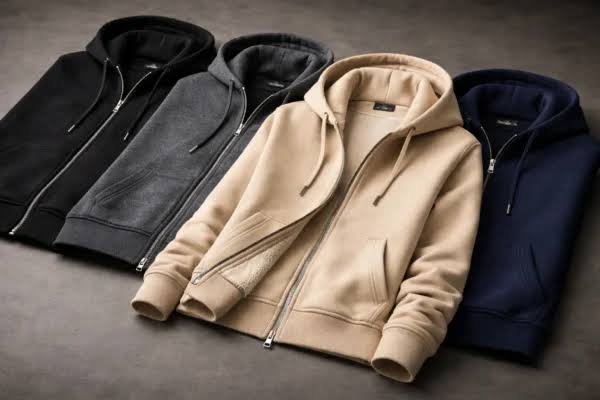
The Zipper Can Change the Way the Garment Hangs
When a zipper is attached, the operator joins a flexible textile to a structured fastening component.
If the fabric is stretched excessively while sewing, the finished front can ripple.
If one side is fed differently from the other, the two panels can finish unevenly.
If the zipper length does not correspond correctly to the intended finished opening, the hem or neckline may become distorted.
Premium zip-up hoodie manufacturing therefore requires control of both pattern dimensions and sewing execution.
Check the Hoodie Both Open and Closed
This is important.
A sample can look acceptable on a hanger while open and reveal problems only after being zipped.
During sample approval, inspect:
Closed
- Is the center front straight?
- Are both front panels equal?
- Does the hem align?
- Are pockets symmetrical?
- Is the neckline balanced?
- Does the zipper move smoothly?
- Does the fabric ripple?
- Are horizontal design elements aligned?
Open
- Do both fronts hang naturally?
- Does one side twist?
- Does the zipper tape pull the fabric?
- Do the front edges fall evenly?
- Does the hood remain balanced?
A custom hoodie manufacturer should receive feedback based on both states.
For custom zip-up hoodies, photographs alone may not always reveal functional behaviour. Video can be useful during sample evaluation because it allows the buyer to see the zipper being opened and closed.
Mistake #4: Approving Fit Without a Proper Measurement Specification
“Make it oversized.”
That is not enough.
Neither is:
“Use a normal UK fit.”
or:
“European sizing.”
Fit terminology is not sufficiently precise by itself.
Two brands can both sell an “oversized” hoodie while using very different:
- Chest widths
- Body lengths
- Shoulder widths
- Sleeve lengths
- Armhole dimensions
- Hood dimensions
- Hem widths
A zip-up hoodie manufacturer needs actual measurements.
Build a Product-Specific Measurement Chart
A basic measurement framework for custom zip-up hoodies may include:
| Point of Measurement | XS | S | M | L | XL | 2XL |
|---|---|---|---|---|---|---|
| Half Chest | Brand Spec | Brand Spec | Brand Spec | Brand Spec | Brand Spec | Brand Spec |
| Body Length | Brand Spec | Brand Spec | Brand Spec | Brand Spec | Brand Spec | Brand Spec |
| Shoulder Width | Brand Spec | Brand Spec | Brand Spec | Brand Spec | Brand Spec | Brand Spec |
| Sleeve Length | Brand Spec | Brand Spec | Brand Spec | Brand Spec | Brand Spec | Brand Spec |
| Bottom Width | Brand Spec | Brand Spec | Brand Spec | Brand Spec | Brand Spec | Brand Spec |
| Armhole | Brand Spec | Brand Spec | Brand Spec | Brand Spec | Brand Spec | Brand Spec |
| Hood Height | Brand Spec | Brand Spec | Brand Spec | Brand Spec | Brand Spec | Brand Spec |
| Hood Width | Brand Spec | Brand Spec | Brand Spec | Brand Spec | Brand Spec | Brand Spec |
| Pocket Position | Brand Spec | Brand Spec | Brand Spec | Brand Spec | Brand Spec | Brand Spec |
Important: These values intentionally remain “Brand Spec.” There is no honest universal size chart that should be invented for every buyer.
Measurements need to reflect the brand’s desired customer, silhouette and grading strategy.
Oversized Does Not Mean Randomly Bigger
Good oversized design is intentional.
Increasing every measurement by the same percentage may not produce the desired silhouette.
A brand might want:
- Wider chest
- Dropped shoulders
- Moderate body length
- Full sleeves
- Controlled hem
- Large hood
Another may want:
- Wide body
- Cropped length
- Extreme dropped shoulder
- Tight waistband
Both can be described as oversized.
That is why private label zip-up hoodies should be built around a defined block rather than an adjective.
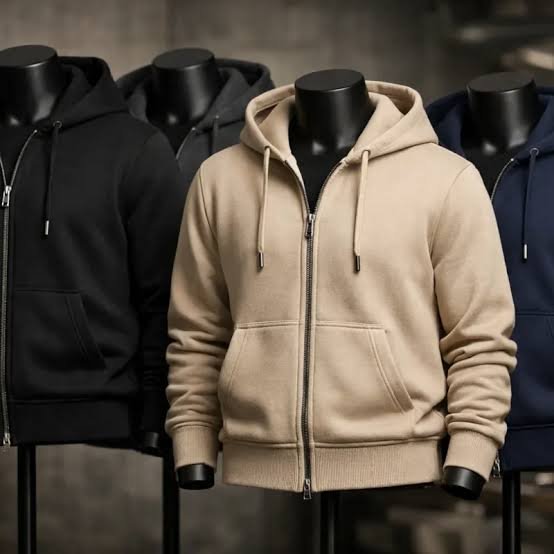
USA vs UK vs Germany vs Europe: Do Not Guess the Fit
A common sourcing mistake is assuming all American customers want one fit and all European customers want another.
That is too simplistic.
Customer demographics, brand positioning and fashion category matter more than stereotypes.
A premium streetwear label in Berlin may deliberately use a radically oversized silhouette. A performance-focused American company may want a closer athletic fit. A London brand may use a boxy cropped block.
Therefore, the custom hoodie manufacturer should manufacture to the buyer’s approved specification rather than making assumptions from destination alone.
Better Process
- Identify the target customer.
- Select the intended fit.
- Establish a base size.
- Define points of measurement.
- Establish grading.
- Produce the sample.
- Measure the physical sample.
- Fit-test it.
- Revise if necessary.
- Freeze the approved specification before bulk.
That is much safer than telling the zip-up hoodie manufacturer to “use European sizing.”
Mistake #5: Getting Hood Construction Wrong
The hood is one of the most visually dominant components of a hoodie.
It can change the silhouette even when it is not being worn.
A weak hood can collapse awkwardly around the neckline.
An excessively heavy or badly balanced hood can pull backward.
A poorly shaped hood can look too shallow, too narrow or disproportionately large.
For premium custom zip-up hoodies, hood engineering deserves the same attention as the body.
Hood Variables to Define
Depending on the design, buyers should consider:
- Hood height
- Hood width
- Depth
- Number of panels
- Lining
- Fabric weight
- Drawcord
- Eyelets
- Drawcord tips
- Neck opening
- Seam construction
- Topstitching
- Branding
- Relationship with zipper top
The exact configuration depends on the design.
A custom hoodie manufacturer should not automatically decide these details when they are important to the brand identity.
Double-Layer Hoods
Double-layer construction can provide more structure, but “double layer” is not automatically synonymous with better.
The resulting weight must work with:
- Body fabric
- Neck opening
- Shoulder structure
- Intended drape
- Zipper
- Overall silhouette
For heavyweight private label zip-up hoodies, adding unnecessary bulk around the neck can alter how the garment sits.
The buyer should evaluate the complete sample rather than judging the hood separately.
Mistake #6: Ignoring Ribbing, Cuffs and Waistband Recovery
Ribbing may occupy less visual area than the main body fabric, but it can dramatically change the silhouette.
Consider a boxy hoodie.
If the waistband contracts too aggressively, the intended wide body can pull inward at the hem.
If it is too loose, the garment may lose the intended structure.
Similarly, cuffs affect sleeve appearance and comfort.
During zip-up hoodie manufacturing, rib selection should therefore be part of product development rather than an afterthought.
Buyers Should Evaluate
- Rib composition
- Weight
- Stretch
- Recovery
- Finished width
- Cuff height
- Waistband height
- Colour match
- Attachment quality
- Post-wash behaviour
The goal is compatibility with the main garment.
Mistake #7: Poor Pocket Placement and Symmetry
Zip-up hoodies commonly split the front-pocket arrangement into left and right sections.
That creates another alignment challenge.
If one pocket is slightly higher than the other, customers can see it.
If pocket openings have different angles, customers can see it.
If the distance from the zipper differs between sides, customers can see it.
Premium custom zip-up hoodies therefore need pocket-position specifications.
Check These Points
- Distance from center front
- Distance from bottom hem
- Pocket height
- Pocket width
- Opening length
- Opening angle
- Left/right symmetry
- Reinforcement
- Stitching
- Alignment with waistband
A zip-up hoodie manufacturer should have an approved reference showing where these components belong.
[IMAGE 3 — PLACE AFTER THIS SECTION: FRONT-VIEW ZIP-UP HOODIE QUALITY-CONTROL DIAGRAM SHOWING ZIPPER, POCKET AND HEM ALIGNMENT]
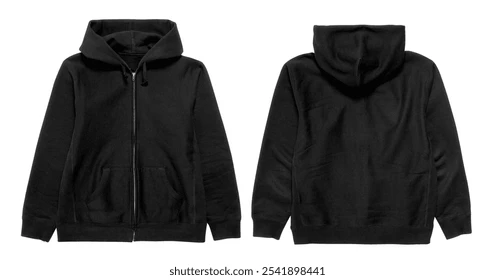
Mistake #8: Approving a Sample Without Testing Real-World Performance
A sample is not just a sales demonstration.
It is a development tool.
Brands ordering private label zip-up hoodies should use sampling to identify problems before those problems multiply across bulk production.
A sample should be evaluated for more than appearance.
Sample Review Checklist
Fit
- Chest
- Length
- Shoulder
- Sleeve
- Armhole
- Hood
- Hem
- Overall silhouette
Zipper
- Opening
- Closing
- Slider movement
- Bottom insertion
- Alignment
- Front rippling
- Top and bottom positioning
Construction
- Seam appearance
- Topstitching
- Pocket symmetry
- Rib attachment
- Hood attachment
- Loose threads
- Visible distortion
Branding
- Label position
- Print placement
- Embroidery position
- Artwork scale
- Colour
- Packaging requirements
Wear
- Mobility
- Hood behaviour
- Zipper comfort
- Pocket usability
- General balance
Care
Where appropriate for the development programme, buyers should also assess how the garment responds to its intended care procedure.
Do Not Rush Sample Approval to Save a Few Days
A sample problem does not become cheaper when multiplied across bulk production.
If something is wrong, document it.
Instead of saying:
“Fit is slightly off.”
Say:
“Increase half-chest according to revised measurement sheet; maintain approved body length.”
Instead of:
“Zipper looks bad.”
Say:
“Center front is rippling when closed; investigate zipper/body compatibility and attachment before revised approval.”
Clear feedback gives the custom hoodie manufacturer something actionable.
Mistake #9: Assuming Bulk Production Will Automatically Match the Sample
This is the final major risk.
A good sample is necessary, but a good sample alone does not guarantee consistent bulk production.
Bulk introduces:
- Multiple garment sizes
- Larger material quantities
- More cutting
- More sewing operations
- More components
- More labels
- More trims
- More finishing
- More inspection points
Therefore, the approved sample should become a reference rather than being forgotten once production begins.
Professional zip-up hoodie manufacturing needs a clear transition from sample approval to bulk specifications.
Freeze the Approved Product
Before bulk production, confirm the final:
- Fabric
- GSM target
- Colour
- Pattern
- Measurement chart
- Grading
- Zipper
- Puller
- Ribbing
- Hood
- Pockets
- Labels
- Artwork
- Print/embroidery
- Packaging requirements
- Quantity
- Size breakdown
- Destination
- Commercial terms
Changes after approval should be documented.
This reduces ambiguity between buyer and manufacturer.
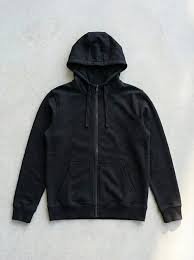
Sample vs Bulk: What Should Remain Controlled?
| Area | Sample Stage | Bulk Stage |
|---|---|---|
| Fit | Establish and revise | Follow approved measurements |
| Fabric | Approve specification | Maintain approved specification |
| Zipper | Approve function/appearance | Maintain approved component requirement |
| Colour | Approve standard | Compare against agreed standard |
| Branding | Approve placement/size | Maintain approved placement |
| Pockets | Confirm position | Maintain symmetry/position |
| Hood | Approve shape | Maintain approved construction |
| Rib | Approve appearance/recovery | Maintain agreed specification |
| Packaging | Define | Execute agreed requirement |
The purpose is not to make manufacturing bureaucratic.
It is to remove avoidable uncertainty.
What Should a Brand Send to a Zip-Up Hoodie Manufacturer?
For an efficient quotation and development discussion, prepare as much of the following as possible:
Product Information
- Product type
- Reference images
- Tech pack if available
- Intended market
- Target customer
Fabric
- Composition
- GSM
- Construction
- Finish
- Colour
- Wash treatment if applicable
Fit
- Fit description
- Measurement chart
- Size range
- Grading information where available
Zipper
- Type
- Appearance
- Finish
- One-way/two-way
- Colour
- Branding if required
Customization
- Screen printing
- Embroidery
- Appliqué
- Patches
- Labels
- Hangtags
- Packaging
- Other design requirements
Commercial Information
- Quantity
- Size breakdown
- Delivery destination
- Required timeline
Giving a zip-up hoodie manufacturer clearer information generally enables a more meaningful manufacturing discussion.
Internal Resource: Private Label Zip-Up Hoodie Development
Brands requiring OEM/private-label development can review the official Elahi Vertex International private-label manufacturing inquiry page.
The form currently includes Zip Hoodie as a selectable product and allows buyers to provide fabric type, GSM, fit, printing, labels, branding, size range, quantity and design files.
Elahi Vertex International — Private Label Manufacturing
This is particularly useful when requesting private label zip-up hoodies, because the initial inquiry can contain more information than a generic “price please” message.
How USA Brands Should Approach Custom Zip-Up Hoodies
The United States is not one single apparel market.
Streetwear, collegiate-inspired clothing, gym apparel, lifestyle brands, merchandise companies and premium fashion labels can require very different hoodie specifications.
For American buyers, product development should therefore start with the intended customer and price positioning.
A brand targeting heavyweight premium streetwear might prioritize:
- Structured silhouette
- Heavier textile
- Oversized pattern
- Substantial hood
- Strong hardware aesthetic
- Custom branding
- Detailed finishing
A different American brand may prioritize lighter weight and layering.
Neither specification is automatically superior.
The correct zip-up hoodie manufacturer brief is the one aligned with the product being sold.
U.S. brands should also account for applicable textile and care-labelling obligations. The FTC’s resources cover textile products and care instructions, among other requirements.
Federal Trade Commission — Clothing and Textiles
How UK Brands Should Approach Custom Zip-Up Hoodies
UK streetwear buyers should resist the temptation to use vague terms such as “UK sizing” as the entire fit specification.
The brand should define its own block.
For custom zip-up hoodies, that means confirming the actual measurements and intended silhouette.
The UK government also provides official textile-labelling guidance. It states that textile labels must show fibre content and explains responsibilities for manufacturers and retailers.
GOV.UK — Textile Labelling Guidance
A UK buyer importing garments should review applicable requirements for its own circumstances rather than relying entirely on a foreign supplier to determine regulatory obligations.
How German Brands Should Approach Custom Zip-Up Hoodies
German buyers sourcing private label zip-up hoodies should separate three decisions:
Product engineering: What exactly should be manufactured?
Commercial sourcing: What quantities, costs and terms make sense?
Market compliance: What requirements apply when the product is placed on the German/EU market?
Germany falls within the EU textile-labelling framework.
EU guidance states that textile products intended for sale to end consumers must generally carry fibre-composition information and explains language requirements when products are sold across EU countries.
European Union — Textile Label Requirements
That makes accurate material information important both commercially and from a compliance perspective.
How European Brands Should Approach Zip-Up Hoodie Manufacturing
“Europe” should not be treated as one homogeneous customer profile.
Different brands have different:
- Fit preferences
- Price positions
- customer demographics
- Distribution channels
- Design languages
- Country-specific requirements
A custom hoodie manufacturer should therefore follow the buyer’s approved specifications instead of manufacturing according to a vague idea of “European fit.”
For EU sales, brands should also review Regulation (EU) No 1007/2011 and relevant national requirements.
EUR-Lex explains that Regulation (EU) No 1007/2011 establishes rules concerning textile fibre names, labelling and fibre composition.
EUR-Lex — Regulation (EU) No 1007/2011 Textile Labelling Summary
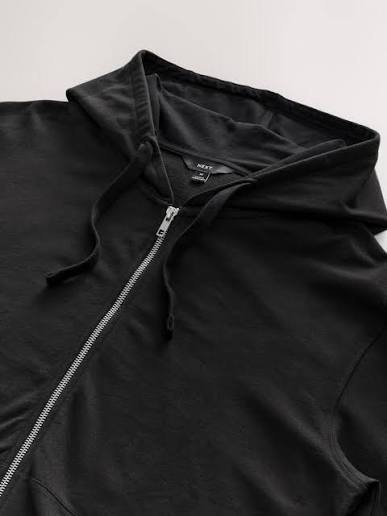
Premium Zip-Up Hoodie Specification Checklist
Before asking any zip-up hoodie manufacturer for final bulk production, verify the following.
Fabric
☐ Composition confirmed
☐ GSM target confirmed
☐ Fabric construction confirmed
☐ Colour standard confirmed
☐ Surface/interior finish confirmed
☐ Wash treatment confirmed where applicable
☐ Dimensional behaviour considered
Fit
☐ Base size confirmed
☐ Half chest confirmed
☐ Body length confirmed
☐ Shoulder confirmed
☐ Sleeve confirmed
☐ Armhole confirmed
☐ Bottom opening confirmed
☐ Hood dimensions confirmed
☐ Size grading confirmed
Zipper
☐ Zipper type confirmed
☐ Length confirmed
☐ Tape colour confirmed
☐ Element/teeth appearance confirmed
☐ Slider confirmed
☐ Puller confirmed
☐ One-way/two-way confirmed
☐ Branding confirmed if applicable
☐ Function checked on sample
Construction
☐ Seam construction agreed
☐ Topstitching agreed
☐ Pocket placement agreed
☐ Hood construction agreed
☐ Rib construction agreed
☐ Center-front alignment approved
Branding
☐ Main label
☐ Size label
☐ Care label
☐ Print
☐ Embroidery
☐ Patches
☐ Hangtags
☐ Packaging
Commercial
☐ Quantity
☐ Size breakdown
☐ Destination
☐ Sample terms
☐ Bulk terms
☐ Production requirements
☐ Shipping responsibilities
Why Low MOQ Can Matter During Product Validation
Not every brand needs to begin with hundreds of units of an unproven design.
Elahi Vertex International’s default manufacturing MOQ is 20 pieces per product/category, subject to confirming the actual project’s specifications.
For an early-stage brand, a smaller production run can reduce the amount of inventory committed before real customer demand becomes clear.
For an established brand, a smaller run may be useful for:
- New silhouette testing
- New colourways
- Limited collections
- Market validation
- Capsule drops
- New branding concepts
However, low MOQ should not be confused with skipping proper product development.
Twenty poorly specified garments are still poorly specified garments.
The advantage comes from combining manageable quantities with disciplined sampling and specifications.
Why Choose Elahi Vertex International for Custom Zip-Up Hoodies?
Elahi Vertex International is positioned as a B2B manufacturer, exporter, OEM/ODM supplier and private-label manufacturing partner serving international buyers.
For a custom zip-up hoodie project, the objective should not be to push a buyer immediately into the largest possible quantity.
The better sequence is:
Requirement → Specification → Indicative Commercial Discussion → Sample → Approval → Bulk Production → Inspection → Shipment → Reorder
Elahi Vertex International works with a default MOQ of 20 pieces per product/category, which can support both developing brands and buyers testing new product concepts.
For buyers requiring larger quantities, the same principle remains important: specifications must be clear enough to reproduce the approved product consistently.
Sample Development
Sample production is typically targeted at approximately 5–7 days after the necessary project requirements and payment conditions are confirmed, depending on the specific product and customization.
Sample cost and shipping should be confirmed for each project.
The normal commercial approach is that the buyer pays the sample and courier cost upfront, while an agreed sample charge may be credited toward a qualifying bulk order. Shipping remains separate and is not credited unless explicitly agreed otherwise.
Bulk Production
Typical production timing depends on quantity, customization, material availability and final approval.
It should therefore be confirmed for the actual order rather than treated as a universal promise.
Start Your Custom Zip-Up Hoodie Project
If your brand in the USA, UK, Germany or Europe is developing custom zip-up hoodies, send Elahi Vertex International the actual product requirements rather than asking only for a generic unit price.
The most useful starting information is:
Product + quantity + destination + fabric/GSM + size range + customization + reference image or tech pack.
From there, the project can move toward specification review, indicative pricing and sample development.
Official Website:
Elahi Vertex International
Private Label Manufacturing:
Start a Private Label Manufacturing Inquiry
WhatsApp:
Discuss Your Zip-Up Hoodie Project on WhatsApp
Phone / WhatsApp: +92 309 1639614
Primary Email: elahivertexinternational@gmail.com
Secondary Email: Info@elahivertexinternational.com
Alibaba:
Elahi Vertex International Alibaba Storefront
Authoritative External Resources for Zip-Up Hoodie Buyers
1. YKK — Zipper Testing Methods
YKK explains technical methods used to evaluate zipper characteristics including chain crosswise strength, top-stop holding strength and bottom-stop holding strength. This is a useful technical reference when understanding why zipper quality should be treated as a measurable component of zip-up hoodie manufacturing rather than judged only by appearance.
2. European Union — Textile Labelling
EU guidance explains fibre-composition labelling requirements for textile products marketed in the European Union. This resource is particularly relevant for German and other EU clothing brands developing private label zip-up hoodies.
EU Textile Labelling Requirements
3. EUR-Lex — Regulation (EU) No 1007/2011
The official EU legal information portal provides information concerning textile fibre names and related labelling requirements.
EUR-Lex Textile Fibre and Labelling Regulation
4. GOV.UK — Textile Labelling
Official UK guidance explains textile fibre-content labelling and responsibility for labelling in Great Britain.
5. U.S. Federal Trade Commission — Clothing and Textiles
The FTC provides U.S. business guidance covering clothing and textile labelling, fibre content and care information.
FTC Clothing and Textiles Guidance
ARTICLE CONTINUES — Remaining long-form sections will expand the 25,000-word master article with detailed fit engineering, fabric/GSM analysis, zipper engineering, sampling and bulk QC, USA/UK/Germany/EU buyer sections, supplier comparison framework, private-label sourcing guidance, 20 keyword-targeted FAQs, additional verified internal/external links, full commercial CTA and final conclusion.