

Launching a streetwear brand is easy to imagine. Building a collection that can actually be manufactured, priced, labeled, shipped, sold and reordered is much harder.
For founders searching for a private label streetwear manufacturer USA brands can work with, the first question should not simply be, “How much is a hoodie?” The better questions are: What exactly are we manufacturing? Who will buy it? What fabric, GSM, fit and decoration should we use? What quantity can we realistically sell? What must the sample prove before bulk production starts?
That distinction matters for a startup.
A strong first streetwear collection is not necessarily the collection with the most products. It is the collection where the founder has controlled the important decisions before committing capital to inventory.
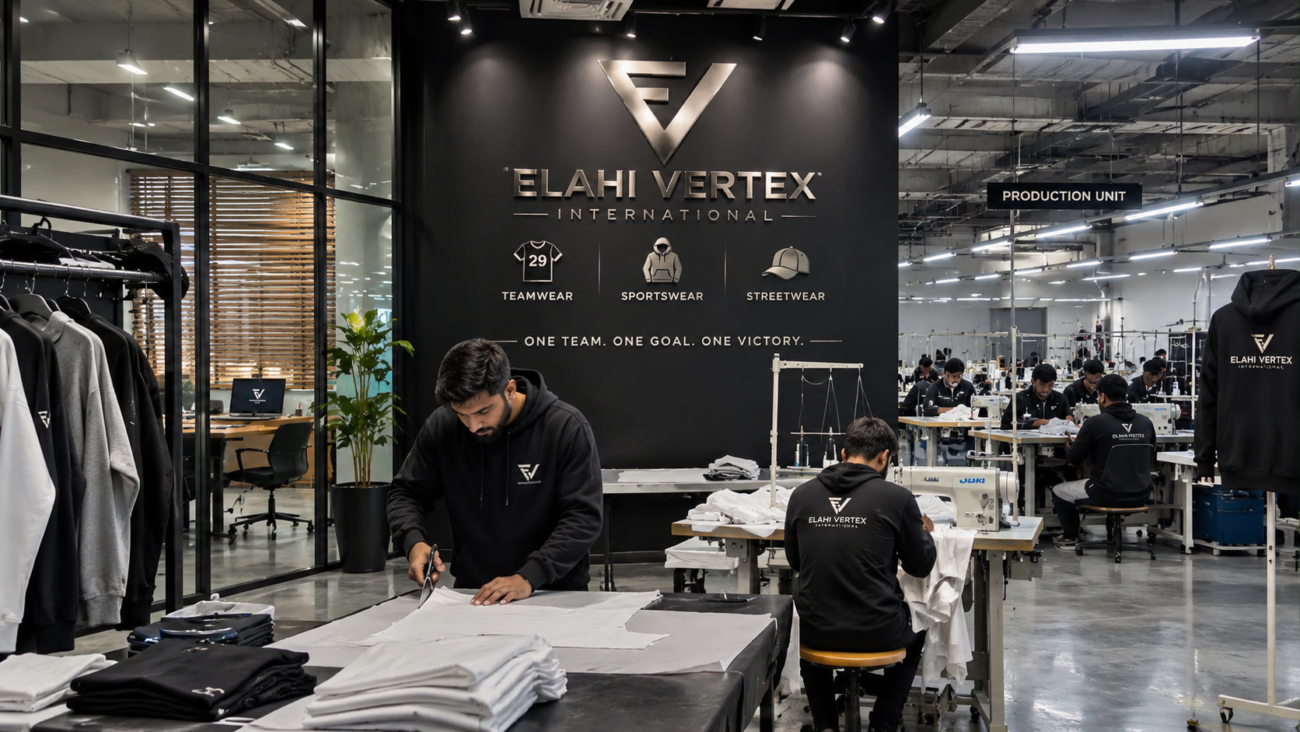
Elahi Vertex International is a Sialkot, Pakistan-based custom apparel manufacturer, exporter, OEM/ODM supplier and private-label manufacturing partner. The company works with international brands, startups, e-commerce businesses, wholesalers, retailers, teams and other B2B apparel buyers on made-to-order manufacturing requirements.
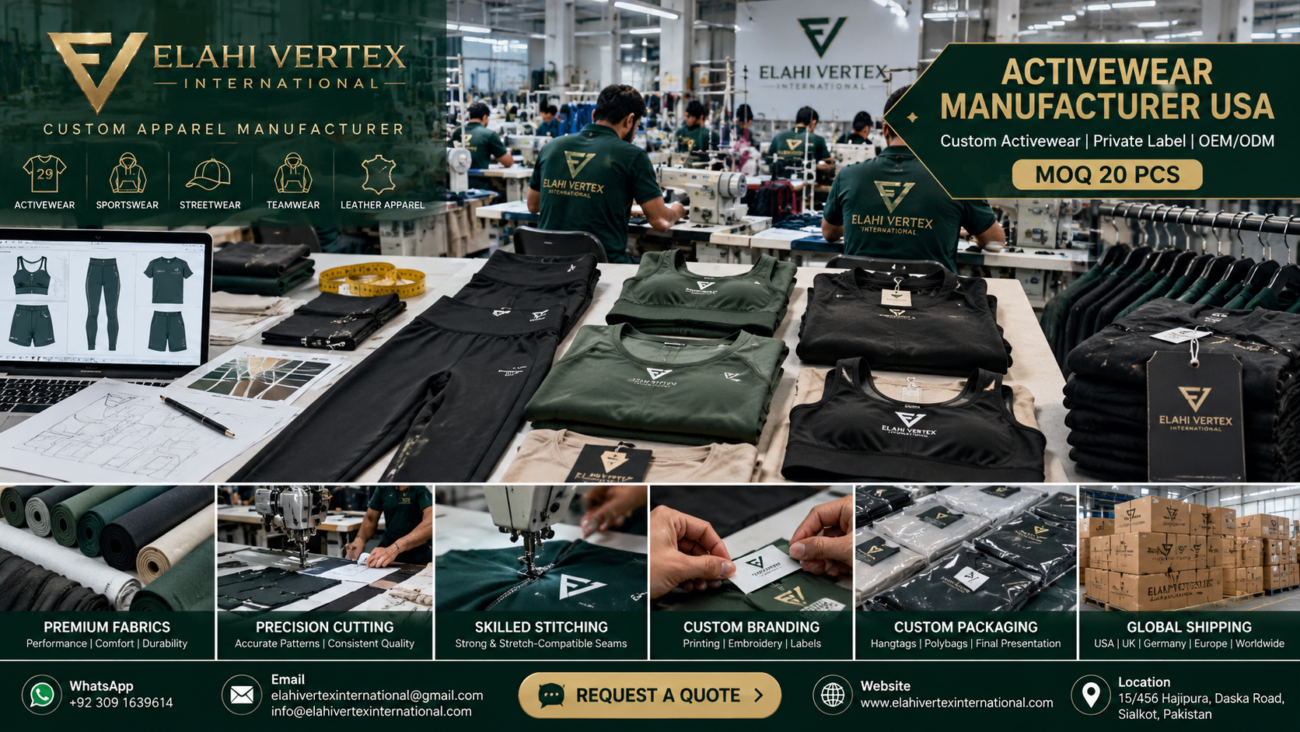
For founders evaluating a private label streetwear manufacturer USA buyers can source from internationally, the manufacturing relationship can cover much more than sewing. Depending on the project, development can involve fabric selection, GSM, pattern making, measurements, fit, cutting, stitching, printing, embroidery, labels, hangtags, packaging, sampling, quality control and bulk production.
The standard Elahi Vertex International MOQ is 20 pieces per product/category. Exact size, color, design and material splits should be confirmed for the individual project.
This guide is designed primarily for USA streetwear startups while also helping buyers in the UK, Germany and wider Europe understand how to move from an idea to a controlled first private-label collection.
Table of Contents
What Does a Private Label Streetwear Manufacturer Actually Do?
A private label streetwear manufacturer USA startup founders work with should help convert the brand’s specifications into a physical product that can carry the buyer’s own identity.
Private label manufacturing is different from simply purchasing generic garments and adding a logo.
Depending on the project, a private-label product can involve decisions about:
- garment pattern
- silhouette
- measurements
- fabric composition
- GSM
- colors
- ribbing
- hood construction
- pockets
- zippers
- stitching
- washes
- screen printing
- DTF
- DTG
- puff printing
- embroidery
- appliqué
- patches
- woven labels
- printed labels
- care labels
- size labels
- hangtags
- packaging
The greater the desired differentiation, the more precisely the product should be specified.
A startup searching for a private label streetwear manufacturer USA market buyers can work with should therefore evaluate manufacturing capability rather than only asking for a price.
The cheapest quotation is meaningless if two suppliers are quoting two different products.
A 500 GSM oversized cotton-rich hoodie with custom measurements, puff printing, embroidery, woven labels and branded packaging should not be compared directly with a basic stock hoodie carrying a transfer logo.
Define the product first.
Then compare manufacturing quotations.
Step 1: Define Your Buyer and Brand Position Before Manufacturing
Before contacting a private label streetwear manufacturer USA startups should understand who is supposed to buy the collection.
Do not begin with:
“I want to start a clothing brand.”
Go deeper.
Is the brand:
- premium heavyweight streetwear?
- affordable graphic streetwear?
- minimalist essentials?
- washed vintage clothing?
- luxury-inspired streetwear?
- technical streetwear?
- gym-to-street apparel?
- skate-inspired clothing?
- oversized casualwear?
- limited-drop fashion?
Your answer affects almost every manufacturing decision.
Start With the Customer
Ask:
Who is the target customer?
What do they currently wear?
What products do they buy repeatedly?
What retail price can they accept?
Do they value heavyweight construction?
Do they prefer oversized or regular fits?
Are graphics central to the brand?
Does the brand compete through design, garment quality, exclusivity, price or community?
A founder who cannot answer those questions is not ready to order a large collection.
Work Backward From Retail Price
Do not design an expensive garment and discover later that the business cannot sell it profitably.
Think backward:
Target retail price → selling costs → marketing → fulfillment → freight/import costs → manufacturing cost → required margin
This is not a universal formula because every business has different economics.
It is a decision framework.
A private label streetwear manufacturer USA startup works with can quote production, but the founder still needs to know whether the product fits the business model.
Step 2: Build a Focused First Private Label Collection
A new brand does not need twelve styles to look legitimate.
It needs products people want.
One of the smartest approaches for a first collection is to select one hero product and one or two supporting products.
For example:
| Role | Product | Purpose |
|---|---|---|
| Hero | Heavyweight oversized hoodie | Main brand statement |
| Support | Oversized T-shirt | Lower entry price |
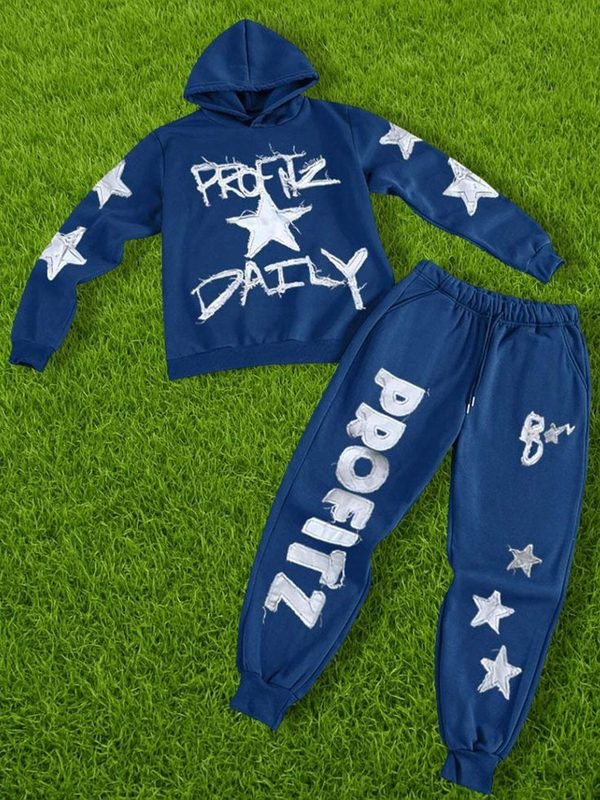
| Support | Jogger | Creates a coordinated set |
A private label streetwear manufacturer USA startup founders approach should be able to quote these products according to defined specifications rather than forcing the brand into an oversized first order.
Why Too Many SKUs Hurt Startups
Imagine launching:
5 products × 4 colors × 5 sizes.
That already creates 100 SKU combinations before considering different graphics.
Every additional SKU affects:
- inventory
- cash flow
- photography
- product pages
- storage
- fulfillment
- returns
- forecasting
- reorders
More choice does not automatically mean more sales.
Use the First Collection to Learn
Your first drop should tell you:
Which style sells fastest?
Which size sells fastest?
Which color gets reordered?
Which retail price converts?
Which product gets attention but no purchases?
Which garment creates repeat buyers?
The first bulk order should generate business intelligence, not only inventory.
For founders evaluating a private label streetwear manufacturer USA market strategy, a manageable first production run can reduce the cost of being wrong.

Step 3: Turn Streetwear Designs Into Manufacturing Specifications
A mockup shows the idea.
A specification tells the manufacturer how to make it.
That difference is fundamental.
Build a Tech Pack
A useful tech pack can include:
Product Information
- style name
- style code
- product category
- season/drop
- version number
Technical Drawings
Show:
- front
- back
- side where relevant
- pockets
- seams
- panels
- hood
- closures
- important details
Measurements
For a hoodie:
- chest
- body length
- shoulder
- sleeve
- cuff
- waistband
- hood
For trousers:
- waist
- rise
- hip
- thigh
- inseam
- outseam
- knee
- leg opening
Material Information
Specify:
- composition
- GSM
- knit/weave
- surface
- inner finish
- stretch
- color
- rib
- lining where applicable
Artwork
Specify:
- file
- dimensions
- colors
- location
- distance from seams
- print/embroidery method
Branding
Specify:
- neck label
- size label
- care/content label
- hangtag
- packaging
A founder searching for a private label streetwear manufacturer USA should provide as much of this information as possible.
If you do not know every technical answer, identify what remains open.
That is far better than leaving the manufacturer to guess.
Step 4: Choose Fabric, GSM, Fit and Construction
Streetwear founders often focus heavily on GSM.
GSM matters.
But GSM is not quality by itself.
A garment’s performance and hand feel can also be affected by:
- fiber composition
- yarn
- knit structure
- finishing
- brushing
- compactness
- shrinkage
- pattern
- construction
Two 400 GSM fabrics do not automatically feel identical.
Practical Fabric Directions
| Streetwear Product | Possible Direction | Buyer Should Evaluate |
|---|---|---|
| Heavyweight hoodie | Cotton-rich fleece | Structure, softness, warmth |
| Oversized T-shirt | Cotton jersey | Drape, opacity, hand feel |
| Sweatshirt | Fleece/French terry | Structure and season |
| Jogger | Fleece/French terry | Comfort and recovery |
| Tracksuit | Woven technical fabric | Movement and durability |
| Stretch streetwear | Cotton/elastane blend | Recovery and fit |
These are general directions, not mandatory specifications.
Your product should be developed around its intended use.
Fit Matters as Much as Fabric
“Size M” is not a universal fit.
A medium can be:
- slim
- regular
- relaxed
- oversized
- boxy
- cropped
- drop shoulder
A private label streetwear manufacturer USA founder works with needs measurements, not vague fit adjectives alone.
Instead of saying:
“Make it very oversized.”
Specify the intended measurements and compare them with a reference garment if necessary.
Step 5: Choose Printing, Embroidery and Branding
Streetwear often wins or loses on decoration.
Elahi Vertex International’s published manufacturing capabilities include multiple decoration options depending on the product and artwork.
These include:
- screen printing
- DTF
- DTG
- puff printing
- sublimation for suitable products
- embroidery
- raised/3D embroidery
- chenille
- appliqué
- woven patches
- printed patches
- silicone/rubber-style patches
- heat-transfer applications
- garment washing and specialist finishes where suitable
Not every technique should be used on every garment.
Screen Printing
Useful for many graphic streetwear applications.
Consider:
- artwork
- colors
- fabric
- quantity
- placement
- intended finish
DTF
Can work for detailed graphics and certain production requirements.
Evaluate the result on the actual fabric.
DTG
Useful for suitable detailed printed artwork and compatible garments.
Puff Printing
Puff creates raised dimension.
It can be effective for streetwear, but test:
- artwork
- height
- edges
- curing
- fabric interaction
- wash result
Embroidery
Embroidery can create a premium stitched appearance.
Evaluate:
- stitch density
- backing
- size
- artwork detail
- fabric weight
- distortion
Chenille and Appliqué
Useful for:
- varsity aesthetics
- lettering
- patches
- dimensional branding
Sublimation
Best suited to compatible synthetic fabrics and certain sportswear/performance applications rather than every streetwear garment.
A private label streetwear manufacturer USA brand works with should recommend decoration based on the actual artwork and garment—not simply whichever technique is cheapest.
Step 6: Plan Private Labels, Packaging and Market Requirements
A private-label collection should look like your brand.
Possible branding components include:
- woven neck labels
- printed neck labels
- size labels
- care labels
- composition labels
- hangtags
- custom patches
- packaging
- SKU/barcode stickers where required
But branding and compliance are not identical.
USA Labeling
The U.S. Federal Trade Commission states that most covered textile and wool products require labels identifying fiber content, country of origin and the manufacturer or another responsible business. Applicable garments also need appropriate care instructions under the FTC Care Labeling Rule.
For a founder working with a private label streetwear manufacturer USA buyers source from internationally, this should be discussed before bulk labels are produced.
Do not print thousands of labels and investigate compliance afterward.
UK Labeling
For Great Britain, official government guidance states that textile labels must show fibre content, with additional requirements applying to multi-component products and other situations.
A UK startup should verify current requirements for its exact products before sale.
Germany and European Union
EU textile rules require textile products marketed to consumers to carry appropriate fibre-composition information. Language requirements also matter when products are made available in different EU markets.
A German streetwear founder should therefore consider labeling during product development rather than at the shipping stage.
The manufacturer can produce the physical branding and label components according to the approved project specification, while the brand/importer should ensure its intended market information is legally appropriate.
Step 7: Find and Evaluate the Right Private Label Manufacturer
Google searches such as:
- private label streetwear manufacturer USA
- streetwear manufacturer for startups
- custom streetwear manufacturer USA
- private label clothing manufacturer for startups
- low MOQ clothing manufacturer
- custom hoodie manufacturer
- streetwear supplier
- private label manufacturer
show strong commercial intent.
But rankings alone do not determine whether a supplier fits your project.

Ask These Questions
1. What Products Do You Actually Manufacture?
A factory good at football uniforms is not automatically ideal for a 500 GSM washed fashion hoodie.
2. What Is the MOQ?
Elahi Vertex International’s standard MOQ is:
20 pieces per product/category.
Exact project splits should be confirmed.
3. Can You Develop Samples?
Sampling should help validate:
- fit
- fabric
- construction
- artwork
- branding
- finishing
4. What Is Controlled Internally?
Elahi Vertex International’s published production information states that pattern making, fabric cutting, sewing, sampling, ironing and packing are under its production control, while decoration and specialist processes are coordinated under its production supervision. Sublimation uses a separate production facility.
That is more accurate than claiming every machine for every specialist process sits in one room.
5. How Is Sample Information Transferred to Bulk?
This question matters enormously.
A sample can be excellent while bulk is inconsistent if specifications are not transferred correctly.
Ask how the approved:
- measurements
- fabric
- artwork
- placement
- labels
- colors
- trims
- packaging
become bulk-production references.
Step 8: Develop, Test and Approve the Sample
Sampling is where digital assumptions become physical reality.
A private label streetwear manufacturer USA startup works with should not treat sampling as a decorative formality.
Inspect the sample.
Fit Check
Measure the garment.
Compare:
- chest
- shoulder
- body length
- sleeve
- cuff
- hood
- waist
- rise
- thigh
- inseam
- leg opening
where relevant.
Fabric Check
Evaluate:
- hand feel
- weight
- surface
- inside finish
- drape
- stretch
- recovery
- opacity
- warmth
Construction Check
Inspect:
- seams
- stitching
- rib
- pockets
- zippers
- drawcords
- reinforcement
- symmetry
Decoration Check
Evaluate:
- dimensions
- placement
- colors
- registration
- embroidery density
- puff height
- print edges
- texture
Wash Evaluation
Where appropriate, test:
- shrinkage
- shape
- color
- embroidery
- rib recovery
- surface
Document changes numerically.
Do not write:
“Make it slightly bigger.”
Write:
“Increase half chest from 61 cm to 64 cm.”
Clear instructions create repeatable production.
Step 9: Approve the Product Before Bulk Production
Bulk production should begin from an approved standard.
Before approval, confirm:
| Production Element | Approval Required |
|---|---|
| Product | Yes |
| Fabric | Yes |
| Composition | Yes |
| GSM | Yes |
| Color | Yes |
| Measurements | Yes |
| Fit | Yes |
| Artwork | Yes |
| Artwork size | Yes |
| Artwork placement | Yes |
| Labels | Yes |
| Packaging | Yes |
| Quantity | Yes |
| Size breakdown | Yes |
| Shipping destination | Yes |
A private label streetwear manufacturer USA startup founders use should not be expected to interpret changing instructions after bulk production is already underway.
Freeze the specification.

Then produce.
Private Label vs Blank Printing vs Print-on-Demand
Not every startup needs the same production model.
| Model | Product Control | Inventory Risk | Differentiation |
|---|---|---|---|
| Print-on-demand | Low | Lower | Low |
| Blank + logo | Low–Medium | Low–Medium | Medium |
| Private label | High | Medium | High |
| Custom cut-and-sew | Very high | Medium–High | Very high |
Print-on-demand can be useful for validating graphics.
Blank customization can work for merchandise.
Private label becomes more valuable when the brand wants control over:
- fit
- fabric
- GSM
- construction
- wash
- labels
- trims
- packaging
Custom cut-and-sew provides the greatest control when the garment itself is part of the brand identity.
Why MOQ Matters for a Streetwear Startup
MOQ should be evaluated alongside inventory risk.
A larger quantity may reduce the manufacturing cost per unit.
That does not automatically make it the better startup decision.
If you save $3 per garment but buy hundreds of units customers do not want, the lower unit price has created a larger business loss.
Evaluate:
MOQ + unit cost + shipping + import costs + expected sell-through + cash flow + reorder capability
Elahi Vertex International’s standard MOQ is 20 pieces per product/category.
This can be relevant to founders looking for a private label streetwear manufacturer USA startup brands can approach without beginning from an unnecessarily large headline quantity.
Exact specifications and quantity breakdowns still need confirmation.
Five Short Paragraphs for USA Streetwear Startups
USA founders searching for a private label streetwear manufacturer USA should treat manufacturing as product development rather than logo application. Define your target customer, retail position, product specifications and expected order quantity before requesting a quotation.
For Shopify-first USA brands, the first production run should support a focused launch. A heavyweight hoodie, oversized tee and coordinating jogger may provide a stronger test than ten unrelated garments.
For Amazon-oriented brands, manufacturing is only one part of the project. Product identification, listing requirements, inventory preparation, packaging and fulfillment rules should be verified separately against current platform requirements.
For Etsy sellers, original design and production-partner transparency matter. Etsy’s current guidance allows qualifying sellers to use production partners for original designs, but sellers must follow its applicable creativity and disclosure requirements.
For Instagram- and TikTok-led streetwear startups, engagement should not be confused with sales. Use waitlists, prelaunch signups, actual purchases and reorder data to decide whether production should scale.
Five Short Paragraphs for UK Streetwear Brands
UK founders evaluating a private label manufacturer should begin with product specifications rather than a generic price request.
Great Britain also has textile fibre-labeling requirements, so branding and product-information labels should be planned before bulk production.
Streetwear products for London, Manchester, Birmingham and other UK markets can be developed around the brand’s intended season, fit, fabric and retail positioning rather than copying a generic specification.
Low-volume development can be particularly useful for a startup still testing product-market fit.
Before shipment, confirm the applicable commercial terms, delivery scope, labeling and import responsibilities for the actual order.
Five Short Paragraphs for German Streetwear Brands
German streetwear buyers often need more than a garment mockup. Technical specifications make supplier comparison more meaningful.
Fabric composition, GSM, measurements, construction, decoration, labeling and packaging should be documented before sample approval.
Germany operates within the EU textile-label framework, so brands should check the applicable fibre-composition and consumer-information requirements.
A German startup should compare total sourcing economics rather than only ex-factory price.
Sample approval should remain the technical reference before bulk manufacturing begins.
Five Short Paragraphs for European Streetwear Brands
European streetwear is not one uniform market. Climate, language, retail positioning and customer preferences differ between countries.
A private label manufacturer can manufacture to the buyer’s approved specifications, but the brand should verify the regulatory requirements for every market where it intends to sell.
EU textile products generally require appropriate fibre-composition labeling, and language requirements can vary with the country where the product reaches consumers.
Brands selling across several EU countries should plan labeling and packaging earlier than brands selling in only one market.
For cross-border e-commerce, product development, inventory, shipping, returns and customer communication should be planned together.
Shopify and Streetwear Startups
Shopify can be useful for brands that want direct control over their online storefront, merchandising and customer relationship.
But building a Shopify store does not solve product development.
Before launching, the founder still needs:
- a product
- specifications
- pricing
- inventory
- product photography
- descriptions
- fulfillment
- return planning
- customer acquisition
A private label streetwear manufacturer USA Shopify founder works with should therefore fit into a larger commercial system.
Do not manufacture first and invent the business model afterward.
Etsy and Production Partners
Etsy defines a production partner as an outside company or person that physically produces products based on a seller’s original designs, including apparel production services.
This can make private-label or manufacturing relationships relevant to qualifying Etsy businesses.
However, sellers must comply with current Etsy Creativity Standards and disclose production assistance where required.
That makes Etsy a useful contextual platform reference, not a blanket promise that every private-label garment automatically qualifies for the marketplace.
International Shipping, DDP, DPD and Direct Delivery
Shipping terms should be confirmed per quotation.
Possible international logistics discussions can include:
- express courier
- freight
- door-to-door delivery
- DDP where available and commercially agreed
- DDU/DAP-type arrangements where applicable
- direct shipment
- consolidated shipment
- individual delivery arrangements for suitable projects
DPD may be relevant for certain European delivery routes, but courier availability should be confirmed for the destination and shipment.
Do not assume “DDP” from a website headline or casual conversation.
Ask:
Who pays freight?
Who handles import clearance?
Who pays duties and taxes?
Where does risk transfer?
What is included in the quotation?
Which courier/carrier is being used?
What is the delivery destination?
A serious private label streetwear manufacturer USA sourcing relationship should make the shipping scope clear before payment.
Common Mistakes When Launching a Streetwear Brand
Mistake 1: Starting With Too Many Products
More products create more inventory risk.
Mistake 2: Copying Another Brand
References are useful.
Copying is not a brand strategy.
Mistake 3: Choosing the Manufacturer Only by Price
Compare equivalent specifications.
Mistake 4: Ignoring Fabric Composition
GSM alone does not define the garment.
Mistake 5: Using Only a Mockup
Create measurable specifications.
Mistake 6: Skipping the Sample
A digital design cannot show hand feel, construction or fit.
Mistake 7: Changing Everything During Bulk
Finalize before production.
Mistake 8: Ignoring Labels
Market requirements should be considered before manufacturing labels.
Mistake 9: Buying Too Much Inventory
Unit-price savings can be destroyed by unsold stock.
Mistake 10: No Reorder Strategy
Successful products need replenishment planning.
Why Choose Elahi Vertex International?
Elahi Vertex International is based in Sialkot, Pakistan and operates as a custom apparel manufacturer, exporter, OEM/ODM and private-label manufacturing partner for international B2B buyers.
The company supports categories including:
- streetwear
- hoodies
- sweatshirts
- T-shirts
- joggers
- tracksuits
- sportswear
- teamwear
- activewear
- boxing wear
- leather wear
- private-label clothing
Low-MOQ Entry
Standard MOQ:
20 pieces per product/category.
This can help startups develop controlled first orders rather than automatically beginning with very high quantities.
Fast Sample Development
Published Elahi Vertex International guidance currently describes a typical sample timeline of approximately 5–7 days after final specifications and approvals, with actual timing dependent on product complexity and material availability.
Fast does not mean skipping approval.
The purpose is to move efficiently while maintaining specification control.
Bulk Production
Published guidance currently describes typical bulk production around 10–15 days after sample approval, depending on quantity, material, decoration and project complexity.
Urgent orders can be evaluated individually.
An urgent deadline should be confirmed against actual production capacity rather than promised automatically.
Team Alignment
A critical manufacturing risk is losing information between sampling and bulk.
The objective is to maintain alignment around:
- approved sample
- measurements
- artwork
- fabric
- colors
- labels
- trims
- packaging
The approved specification should travel with the product.
Manufacturing Control
Elahi Vertex International publicly identifies pattern making, cutting, sewing, sampling, ironing and packing as processes under its production control.
Specialist decoration and finishing are coordinated under production supervision according to the technique, while sublimation is handled through a separate dedicated production facility.
This is a more useful buyer question than simply asking whether “everything is in-house.”
The important issue is:
Who controls the result and who is responsible for the finished product?
Our Streetwear Printing, Embroidery and Decoration Capabilities
Depending on garment, fabric and artwork, available development can include:
Printing
- screen printing
- DTF
- DTG
- puff printing
- heat transfer
- sublimation for suitable products
- discharge printing for suitable applications
Embroidery
- flat embroidery
- logo embroidery
- tonal embroidery
- 3D/puff embroidery
- chest embroidery
- sleeve embroidery
- back embroidery
Dimensional Branding
- chenille
- appliqué
- woven patches
- embroidered patches
- silicone/rubber-style patches
- PU/leather-style patch options where suitable
Private Label Branding
- woven labels
- printed labels
- size labels
- care labels
- hangtags
- packaging
Garment Development
- custom measurements
- regular fit
- relaxed fit
- oversized fit
- boxy fit
- drop shoulder
- heavyweight products
- lightweight products
- custom construction
The correct method should be chosen for the actual garment.
What Should You Send a Private Label Streetwear Manufacturer?
If you are looking for a private label streetwear manufacturer USA startup project, send:
- Brand name
- Product type
- Design/mockup
- Tech pack if available
- Reference images
- Quantity
- Sizes
- Colors
- Fabric composition
- GSM
- Measurements
- Fit
- Printing
- Embroidery
- Artwork dimensions
- Artwork placement
- Labels
- Hangtags
- Packaging
- Delivery ZIP/postcode
- Target launch date
If you do not know every answer, identify what still needs development.
100 FAQs for Private Label Streetwear Startups
1. What is a private label streetwear manufacturer USA startups can work with?
A private label streetwear manufacturer USA startup can work with is a manufacturer capable of producing clothing to the brand’s specifications and applying the brand’s own labels, artwork and packaging.
2. Does a private label streetwear manufacturer USA have to be physically located in America?
No. A private label streetwear manufacturer USA brands use can be domestic or overseas. Compare capability, MOQ, samples, total landed economics, communication and logistics.
3. Can a startup use an overseas private label manufacturer?
Yes. Many founders evaluate international sourcing when building custom products.
4. What is Elahi Vertex International’s MOQ?
The standard MOQ is 20 pieces per product/category.
5. Is 20 pieces enough to launch a streetwear brand?
It can be enough for a controlled initial product test depending on the brand’s sales strategy and product breakdown.
6. Can a private label streetwear manufacturer USA startup work with make heavyweight hoodies?
Yes, if heavyweight hoodie manufacturing is within the supplier’s capabilities. Confirm GSM, composition, fit and construction.
7. Can Elahi Vertex International manufacture heavyweight hoodies?
Yes. Heavyweight hoodie development is among the company’s published capabilities.
8. What should I send before asking for a price?
Send the design, quantity, fabric, GSM, sizes, colors, branding and destination where known.
9. Do I need a tech pack?
A tech pack is strongly recommended for custom development.
10. Can I contact a private label streetwear manufacturer USA supplier without a tech pack?
Yes, but identify which specifications remain undecided.
11. What does GSM mean?
GSM means grams per square metre and describes fabric weight.
12. Does higher GSM always mean higher quality?
No. Composition, yarn, construction and finishing also matter.
13. What GSM should I use for a heavyweight hoodie?
It depends on the intended season, structure, hand feel, market and design.
14. Can I make a 500 GSM hoodie?
Potentially, subject to material availability and project confirmation.
15. Can a private label streetwear manufacturer USA project use custom measurements?
Yes. Custom measurements are central to custom cut-and-sew development.
16. What is an oversized fit?
An oversized fit intentionally uses increased dimensions and proportion changes compared with a regular fit.
17. What is a boxy fit?
A boxy fit typically emphasizes width and a straighter silhouette, often with a shorter proportional length.
18. What is drop shoulder?
The shoulder seam is positioned lower than a conventional shoulder point to create a relaxed silhouette.
19. Can I copy another brand’s hoodie exactly?
Use references to communicate direction, but develop your own specifications and identity.
20. Can a private label streetwear manufacturer USA brand use custom Pantone colors?
Custom color development may be possible depending on material and quantity; confirm it for the specific project.
21. What printing methods can Elahi Vertex International provide?
Published options include screen printing, DTF, DTG, puff printing, heat-transfer methods and sublimation for suitable products.
22. Does Elahi Vertex International do embroidery?
Yes, embroidery is a published customization capability.
23. Can I use puff printing?
Yes, where the artwork and fabric are suitable.
24. Can I combine embroidery and printing?
Potentially. Combination decoration should be tested during development.
25. Can a private label streetwear manufacturer USA startup use chenille?
Yes, where the manufacturer offers it and the design is appropriate.
26. Can I add woven labels?
Yes. Woven-label development is available.
27. Can I add neck labels?
Yes.
28. Can I add care labels?
Yes. Supply market-appropriate information for the intended destination.
Yes.
30. Can I use custom packaging?
Yes, subject to the project’s packaging specification.
31. What should be on USA textile labels?
Covered products generally require appropriate fiber content, country-of-origin and responsible-business identification, with care requirements also applying to garments under FTC rules.
32. Do USA garments need care instructions?
Applicable garments are subject to FTC care-labeling requirements.
33. Can I write “Made in USA” on imported garments?
Do not make an unqualified U.S.-origin claim unless the product satisfies applicable FTC requirements.
34. What country of origin should imported clothing show?
Use the legally appropriate country-of-origin information for the actual manufacturing situation.
35. Does a private label streetwear manufacturer USA project need UK labels if also sold in Britain?
If the same product will be sold in Great Britain, verify and meet applicable UK textile-labeling requirements.
36. Does Germany have textile-label requirements?
Germany participates in the EU textile regulatory framework, including fibre-composition requirements.
37. Can the same label be used throughout Europe?
Do not assume so. Language and other market requirements can differ by destination.
38. Should I make a sample first?
For custom apparel, physical sampling is strongly recommended.
39. What should I test on the sample?
Fit, measurements, fabric, construction, decoration, labels and finishing.
40. Should I wash-test the sample?
Where relevant, yes. It can help evaluate shrinkage, print behavior, shape and other changes.
41. How fast are Elahi Vertex International samples?
Published guidance currently describes typical samples at approximately 5–7 days after final specifications and approvals, subject to the project.
42. How fast is bulk production?
Published guidance currently describes approximately 10–15 days after sample approval, depending on quantity and complexity.
43. Can urgent orders be produced?
Urgent orders can be evaluated individually against actual capacity, material availability and technical requirements.
44. Should a private label streetwear manufacturer USA startup promise a launch date before sample approval?
That is risky. Build schedule contingency around development and logistics.
45. Can I start bulk before approving my sample?
It is safer to finalize the production-critical specification first.
46. What happens after sample approval?
The approved specifications become the reference for bulk production.
47. Can I change measurements during bulk?
Changes may become difficult or impossible after cutting or production begins.
48. Can I change artwork during bulk?
Do not rely on this. Freeze artwork before production.
49. How do I compare two private label manufacturers?
Compare the same product specification, not headline unit prices.
50. Is the cheapest private label streetwear manufacturer USA option always best?
No. Evaluate the complete manufacturing scope, sample quality, communication, consistency and landed economics.
51. What is private label clothing?
It is apparel produced for sale under the buyer’s own brand.
52. What is OEM apparel manufacturing?
OEM typically involves manufacturing according to the buyer’s designs and specifications.
53. What is ODM apparel manufacturing?
ODM can involve additional product-development input from the manufacturer based on the buyer’s concept.
54. What is cut-and-sew manufacturing?
It involves developing garments through pattern, cutting, sewing and assembly rather than simply decorating a finished blank.
55. Is private label better than print-on-demand?
Neither is universally better. Private label offers more product control; print-on-demand can reduce initial inventory commitment.
56. Can Shopify brands use a private label streetwear manufacturer USA sourcing model?
Yes. Shopify is a sales platform; manufacturing can be handled by a suitable domestic or international production partner.
57. Can Amazon sellers use private label apparel?
Potentially, subject to current Amazon seller, product, listing and fulfillment requirements.
58. Can Etsy sellers use production partners?
Etsy allows qualifying sellers to use production partners for their original designs under its current applicable policies.
59. Can Instagram brands work with private label manufacturers?
Yes. Social-first brands can manufacture private-label products like other clothing businesses.
60. Can TikTok-first brands manufacture small streetwear drops?
Yes, subject to the manufacturer’s MOQ and project requirements.
61. How many products should my first collection contain?
There is no universal number. A focused collection of hero and supporting products can reduce complexity.
62. Should my first product be a hoodie?
Only if it fits your customer, season, positioning and commercial model.
63. Should I launch T-shirts first?
T-shirts can be a simpler entry product, but the right decision depends on your brand.
64. Can I launch a matching hoodie and jogger set?
Yes. Coordinate fabric, colors, branding and measurements during development.
65. What colors should a startup launch?
Choose colors supported by your brand positioning and demand assumptions rather than adding colors only for variety.
66. Is black good for a first streetwear collection?
Black is widely used in streetwear, but product decisions should still reflect your audience.
67. Should I manufacture many sizes?
Build the size range around the intended customer and sales market.
68. Does a private label streetwear manufacturer USA startup need a size chart?
Yes, a defined measurement chart helps reduce ambiguity.
69. Can I provide my own size chart?
Yes.
70. Can the manufacturer help develop measurements?
Potentially, depending on the project and development scope.
71. What files should artwork be supplied in?
Ask the manufacturer which production-ready format is required for the selected technique.
72. How large should my back print be?
Define it according to the garment size, visual design and intended placement.
73. How do I specify logo placement?
Use measurable distances from clear garment reference points.
74. Can I use reflective printing?
Potentially, where suitable materials and application methods are available for the project.
75. Can I use acid wash?
Yes, suitable garments can be developed with wash effects subject to project confirmation.
76. Can a private label streetwear manufacturer USA startup make distressed clothing?
Specialist distressing may be possible depending on the garment and required finish.
77. Can I manufacture varsity jackets?
Elahi Vertex International publishes custom letterman/varsity jacket manufacturing capabilities.
78. Can I manufacture tracksuits?
Yes. Tracksuits are among the company’s apparel categories.
79. Can I manufacture oversized T-shirts?
Yes, custom fit and measurement development can support oversized T-shirt projects.
80. Can I manufacture joggers?
Yes.
81. Can I manufacture sweatshirts?
Yes.
82. Can I combine several products in one collection?
Yes, but MOQ and production requirements should be confirmed per product/category.
83. Does MOQ 20 mean I can make 20 completely different garments?
No. The standard is 20 pieces per product/category; exact splits require confirmation.
84. Can I ship directly to the USA?
International shipping is available, with the exact method and commercial scope confirmed per order.
85. Can I request DDP shipping?
DDP can be discussed where available for the destination and shipment. Confirm duties, taxes, freight and clearance responsibilities in the quotation.
86. Can you use DPD in Europe?
Carrier selection depends on route and shipment. Confirm DPD or alternative delivery arrangements for the actual order.
87. Can you ship to the UK?
Worldwide shipping is part of Elahi Vertex International’s published service scope; exact UK terms should be confirmed for the project.
88. Can you ship to Germany?
Yes, international delivery can be arranged subject to confirmed shipment terms.
89. Can you ship across Europe?
International shipping is available, with country-specific terms confirmed per project.
90. How do I request a quotation from a private label streetwear manufacturer USA startup supplier?
Send product, design, quantity, fabric, GSM, sizes, colors, branding and delivery destination.
91. Should I tell the manufacturer my target retail price?
It can be useful context when discussing product positioning, although the manufacturer still needs technical specifications.
92. Should I disclose my launch date?
Yes. It helps determine whether the required development and production schedule is realistic.
93. What is the biggest first-order mistake?
Ordering bulk before product specifications and the sample are properly approved.
94. What is the biggest sourcing mistake?
Comparing suppliers only by unit price.
95. What is the biggest design mistake?
Creating artwork without considering the garment, fabric and decoration method.
96. What is the biggest inventory mistake?
Ordering significantly more stock solely to reduce unit cost without evidence of demand.
97. How should I scale after my first drop?
Use actual sales, size demand, returns, customer feedback and sell-through to plan the reorder.
98. Can I reorder an approved design?
Elahi Vertex International’s published product information states that approved designs can be retained as references for future repeat orders.
99. Why consider Elahi Vertex International when looking for a private label streetwear manufacturer USA brands can source from?
The company provides custom apparel, OEM/ODM and private-label manufacturing from Sialkot, Pakistan, with low-MOQ development, sampling, custom branding and international shipping capabilities.
100. What is the first step to start my private label streetwear collection?
Send your design or concept, product type, quantity, specifications and delivery destination to Elahi Vertex International so the project can be reviewed before quotation and sampling.
Final Private Label Streetwear Buyer Checklist
Before paying for production, confirm:
- product
- quantity
- fabric
- composition
- GSM
- fit
- measurements
- colors
- artwork
- print method
- embroidery
- artwork dimensions
- placement
- trims
- labels
- hangtags
- packaging
- sample
- sample revisions
- bulk specification
- size breakdown
- production timing
- shipping terms
- destination
- applicable labeling requirements
A private label streetwear manufacturer USA startup works with should receive a defined project rather than a collection of assumptions.
Useful Authoritative Resources for USA, UK, Germany and Europe
For U.S. textile labeling and care requirements, founders should consult the Federal Trade Commission’s apparel and textile guidance. FTC guidance confirms requirements concerning fibre content, country of origin, responsible-business identification and care instructions for applicable textile products.
For Great Britain, official UK government textile-labeling guidance explains fibre-content responsibilities for manufacturers and retailers.
For Germany and other EU markets, the European Union’s textile-label guidance explains fibre-composition labeling and related consumer-language considerations.
For marketplace businesses, Etsy’s official production-partner guidance explains how qualifying sellers can work with outside apparel producers for original designs.
These sources should be checked again when preparing an actual product for a specific market because regulations and platform policies can change.
Conclusion: Build the Product Before You Scale the Inventory
The strongest first streetwear collection is not necessarily the largest.
It is the collection where the founder understands:
who the customer is, what the product should be, how it should fit, what it should cost, how it should be manufactured, what the sample must prove and how the first order will be sold.
A founder searching for a private label streetwear manufacturer USA brands can work with should therefore look beyond a cheap hoodie quotation.
Build specifications.
Choose the right fabric.
Define the fit.
Select the right decoration.
Plan labels.
Develop the sample.
Correct it.
Approve it.
Then move into bulk production.
USA startups can use the same disciplined process whether they intend to sell through Shopify, Amazon, Etsy, Instagram, TikTok, their own website, pop-ups, retail stores or wholesale accounts.
UK founders should combine product development with applicable British textile requirements.
German founders should account for EU market requirements and their intended consumer market.
European founders selling across multiple countries should plan language, labeling, logistics and inventory requirements early.
The manufacturing objective is not simply:
“Get my clothes made.”
It is:
Develop a product that can be manufactured consistently, sold commercially and reordered intelligently.
Why Start With Elahi Vertex International?
Elahi Vertex International provides custom apparel manufacturing, OEM, ODM and private-label development from Sialkot, Pakistan for international B2B buyers.
For streetwear brands, projects can include:
- heavyweight hoodies
- oversized hoodies
- sweatshirts
- T-shirts
- joggers
- tracksuits
- jackets
- private-label collections
- screen printing
- DTF
- DTG
- puff printing
- embroidery
- chenille
- appliqué
- custom labels
- hangtags
- packaging
- custom measurements
- sampling
- bulk manufacturing
Standard MOQ: 20 pieces per product/category.
Typical published sample guidance is approximately 5–7 days after final specifications and approvals.
Typical published bulk guidance is approximately 10–15 days after sample approval, subject to materials, quantity, complexity and actual production requirements.
Urgent projects can be reviewed individually rather than given an unrealistic blanket promise.
For founders evaluating a private label streetwear manufacturer USA sourcing partner, that means the conversation can start with a controlled product-development process instead of an unnecessarily large first order.
Ready to Launch Your Streetwear Brand?
If you are launching a clothing brand in the USA, UK, Germany or Europe, send your project to Elahi Vertex International.
Already have a tech pack?
Send it.
Only have a mockup?
Send it.
Have artwork and reference photos but still need to define the fabric, GSM or construction?
Send the available information and clearly identify what still needs development.
For the most useful manufacturing discussion, include:
Design + product + quantity + fabric/GSM + sizes + colors + branding + packaging + delivery ZIP/postcode.
Elahi Vertex International
Sialkot, Pakistan
Custom Apparel Manufacturer | Exporter | OEM | ODM | Private Label Partner
MOQ: 20 pieces per product/category
Phone / WhatsApp: +92 309 1639614
Email: elahivertexinternational@gmail.com
Secondary Email: info@elahivertexinternational.com
Elahi Vertex International — Where Brands Are Made.
20 Relevant External-Link Points
| # | External link / anchor | Where to use it | What it supports |
|---|---|---|---|
| 1 | FTC Apparel & Labeling Guidance | USA labeling section | Fiber content, country of origin and responsible-business identification requirements. Federal Trade Commission |
| 2 | FTC Care Labeling Rule | Care-label section | Manufacturers/importers of covered apparel must provide regular care instructions. Federal Trade Commission |
| 3 | FTC Care Labeling Compliance Guide | Sample/wash-testing section | Care instructions need an appropriate basis and must remain available to consumers. Federal Trade Commission |
| 4 | FTC Textile and Wool Labeling Guide | Private-label section | Detailed U.S. fiber, origin and manufacturer/dealer identification guidance. Federal Trade Commission |
| 5 | U.S. Textile Products Identification Act | Fiber-composition section | Legal foundation for fiber percentages and identification requirements. Federal Trade Commission |
| 6 | FTC Clothing and Textiles Business Guidance | USA compliance section | Central FTC resource covering textile and apparel business rules. Federal Trade Commission |
| 7 | CPSC Flammable Fabrics Act Guidance | Fabric/safety section | U.S. clothing textiles can be subject to mandatory flammability standards. U.S. Consumer Product Safety Commission |
| 8 | CPSC Clothing Business Guidance | USA buyer checklist | Explains the general wearing-apparel flammability standard. U.S. Consumer Product Safety Commission |
| 9 | U.S. Customs Textile Import Guidance | USA shipping/import section | CBP guidance on importing textiles, origin marking and apparel requirements. CBP Help |
| 10 | FTC U.S. Origin Claims Guidance | Imported/private-label section | Helps explain why imported garments should not misleadingly be marketed as “Made in USA.” Federal Trade Commission |
| 11 | USPTO Trademark Basics | Brand-launch section | Founders should investigate trademarks before investing heavily in names, labels and packaging. USPTO |
| 12 | USPTO — What Is a Trademark? | Branding section | Explains how trademarks identify and distinguish goods in the marketplace. USPTO |
| 13 | WIPO Intellectual Property in Fashion | Design/IP section | Useful international authority for fashion trademarks, designs and brand protection. WIPO |
| 14 | UK Government Textile Labelling Guidance | UK-target section | Great Britain requires textile fibre-content information. GOV.UK |
| 15 | EU Textile Label Requirements | Germany/EU section | EU textile products generally need fibre-composition labels; language requirements also matter. European Union |
| 16 | EU Regulation 1007/2011 Textile Summary | Technical EU labeling section | Authoritative legal background for EU textile fibre names and composition labeling. Eur-Lex |
| 17 | European Commission Textile Sector Guidance | Europe manufacturing section | Confirms the EU-wide Textile Labelling Regulation and full fibre-composition requirement. Internal Market & SMEs |
| 18 | EU General Product Safety Regulation | EU/Germany compliance section | Consumer products placed on the EU market must meet general safety requirements. Eur-Lex |
| 19 | EU Selling Products Safely Guidance | European e-commerce section | EU product-safety responsibilities apply regardless of where products were manufactured. European Union |
| 20 | EU General Product Compliance Guide | Importer/buyer checklist | Useful guidance on manufacturer, importer, traceability, labeling and compliance responsibilities. European Union |
5 External Brand / Platform Links
Use these naturally in the startup-selling-channel section, not as regulatory authorities.
- Shopify — for startups launching their own DTC streetwear store.
- Amazon — for private-label brands planning marketplace sales.
- Etsy — for eligible original-design brands using production partners.
- Instagram — for social-first streetwear launches and brand building.
- TikTok — for streetwear discovery, audience building and social commerce.
Yes — inside the CTA itself the internal links should be clickable on the relevant anchor text, not listed separately afterward.
Use this corrected CTA section:
Ready to Build Your Private Label Streetwear Collection?
If you are launching a streetwear or clothing brand in the USA, UK, Germany or Europe, start your project with Elahi Vertex International, a Sialkot, Pakistan-based custom apparel manufacturer, exporter, OEM/ODM and private-label manufacturing partner.
Whether you are developing heavyweight hoodies, oversized T-shirts, sweatshirts, joggers, tracksuits, jackets or a complete streetwear collection, explore our Custom Clothing Manufacturing, Private Label Manufacturing, OEM Clothing Manufacturing and Manufacturing Capabilities to understand how we can support your project.
Looking Specifically for Streetwear Manufacturing?
Explore our Custom Streetwear Manufacturing, Cut-and-Sew Streetwear Manufacturer and Streetwear Manufacturing RFQ Guide before sending your requirements. These resources can help you prepare your product specifications, fabric, GSM, fit, artwork, branding, quantity and delivery information.
See Our Manufacturing Work
Before starting your order, explore Our Works, Portfolio and Case Studies to learn more about our manufacturing work and capabilities.
You can also review How to Order to understand the process from requirements and sampling through approval, bulk production, quality control, packaging and shipping.
Learn more about the company through About Elahi Vertex International.
Start Your Manufacturing Inquiry
Our standard MOQ is 20 pieces per product/category.
Send us:
- Design, mockup or tech pack
- Product type
- Quantity
- Fabric and GSM requirements
- Colors and sizes
- Printing or embroidery requirements
- Private labels and packaging requirements
- Target delivery country
- ZIP code or postcode
USA brands: Send your design + quantity + ZIP code.
UK brands: Send your design + quantity + postcode.
Germany brands: Send your design + quantity + postal code.
European brands: Send your design + quantity + country + postal code.
Contact Elahi Vertex International
Official Website: Elahi Vertex International
WhatsApp: Message us directly on WhatsApp
Phone / WhatsApp: +92 309 1639614
Primary Email: elahivertexinternational@gmail.com
Secondary Email: info@elahivertexinternational.com
Alibaba: Elahi Vertex International Alibaba Storefront
Manufacturing Base: Sialkot, Pakistan
Ready to discuss your collection? Use our Contact Elahi Vertex International page or send your requirements directly through WhatsApp.
MOQ: 20 pieces per product/category
Elahi Vertex International — Where Brands Are Made.
Make these exact CTA words clickable
- Elahi Vertex International
- Custom Clothing Manufacturing
- Private Label Manufacturing
- OEM Clothing Manufacturing
- Manufacturing Capabilities
- Custom Streetwear Manufacturing
- Cut-and-Sew Streetwear Manufacturer
- Streetwear Manufacturing RFQ Guide
- Our Works
- Portfolio
- Case Studies
- How to Order
- About Elahi Vertex International
- Contact Elahi Vertex International
- WhatsApp Elahi Vertex International
- Alibaba Storefront