
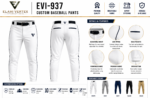
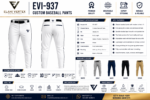
Custom Baseball Pants Manufacturer for Teams, Clubs and Brands
Custom Baseball Pants are an important part of a coordinated baseball uniform and should be developed around the actual requirements of the team, club, academy, school, sportswear brand, or teamwear supplier ordering them.
Elahi Vertex International provides custom baseball pants manufacturing for international B2B buyers requiring customization, OEM manufacturing, ODM development, private-label production, sampling, and bulk manufacturing.
Rather than forcing every buyer into one generic specification, each baseball pants project can be discussed according to its intended design, sizing, branding, team identity, commercial purpose, and other confirmed requirements.
Buyers can provide their own design references, color requirements, measurements, branding instructions, logos, labels, packaging requirements, and related product information.
This specification-led approach is especially important for B2B buyers.
A baseball club purchasing for its own roster has different requirements from a teamwear distributor ordering for several customers.
A sportswear brand developing Custom Baseball Pants for resale may also require different sizing, branding, packaging, and product presentation.
The objective is therefore not simply to manufacture another pair of baseball pants.
The objective is to develop a product that corresponds with the buyer’s approved requirements and fits into the intended baseball uniform, teamwear program, or private-label collection.
Custom Baseball Pants Manufacturing
Successful custom manufacturing begins with clear specifications.
Before development starts, the buyer should identify what is already confirmed and what still requires discussion.
This can include the intended design, colors, sizing, quantity, team or brand identity, labeling, packaging, and other product-specific requirements.
If the buyer already has a technical specification, it can be used as an important development reference.
If the project begins with a reference image or concept, the remaining requirements can be established during product development.
Elahi Vertex International can support both approaches.
The important point is that final manufacturing should follow approved information rather than assumptions.
Why Baseball Pants Need Their Own Product Specification
Baseball pants should not automatically be treated as a generic accessory to a jersey.
The pants affect the appearance and coordination of the complete baseball uniform.
Their color, fit direction, sizing, design details, and relationship with the jersey should therefore be considered during product development.
Teams purchasing pants separately may need them to coordinate with an existing jersey.
Other buyers may be developing the pants and jersey simultaneously as a complete uniform.
Private-label businesses may want baseball pants that can be sold as a standalone product while remaining compatible with other items in their baseball collection.
Each of these purchasing situations requires a slightly different development strategy.
Custom Baseball Pants Design
A Custom Baseball Pants project can begin from several starting points.
The buyer may already have a finished design.
Another buyer may have a previous pair of baseball pants that provides the desired direction.
A club may simply provide team colors and explain how the pants should coordinate with its jersey.
A private-label sportswear company may have a broader baseball apparel concept that needs to be converted into a manufacturing specification.
The design-development process should identify the elements that are essential to the buyer.
Unnecessary design complexity should not be added merely to make a product appear more customized.
Good custom manufacturing means executing the buyer’s intended product accurately.
Team Color Development
Color coordination matters in baseball teamwear.
A pair of baseball pants that visually conflicts with the jersey can weaken the appearance of the complete uniform.
Teams should therefore communicate their approved color direction clearly.
If the pants need to coordinate with an existing jersey, the buyer should provide useful references.
Sportswear brands developing an original collection should establish a consistent color system across related products.
This becomes particularly valuable when several garments will be sold together.
Custom Design Details
Depending on the buyer’s approved concept, the pants may include custom visual or construction details.
The exact options should be established according to the project.
Buyers should identify which elements are essential and which are optional.
A club may prioritize a clean team appearance.
A private-label brand may place greater emphasis on creating a recognizable commercial design.
A teamwear supplier may require a product that can be adapted efficiently for several customers.
These differences should influence the development process.
Baseball Pants and Jersey Coordination
When baseball pants form part of a complete uniform, the jersey and pants should be considered together.
The colors should coordinate.
The overall visual language should make sense.
Branding should not appear disconnected.
The complete uniform should look intentional rather than assembled from unrelated garments.
Buyers developing both products can provide references for the entire uniform.
This gives the manufacturer better context when evaluating the pants.
Custom Baseball Pants Sizing
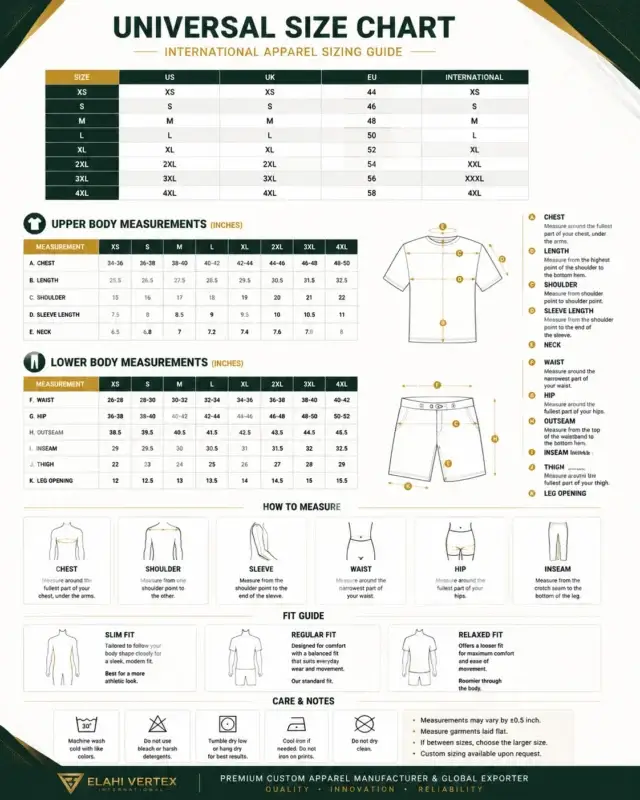
Sizing is one of the most important areas to confirm before bulk manufacturing.
Teams should collect current player requirements.
Do not automatically reuse an old roster without checking whether sizes remain accurate.
Academies managing several age groups should keep each roster separate.
Schools should verify their current team requirements before finalizing the order.
Teamwear suppliers should make sure the size information received from their customers is complete.
Private-label businesses using a proprietary size chart should provide the relevant measurements for development.
The size label itself is not enough.
A buyer should not assume that every manufacturer’s medium, large, or extra-large follows identical measurements.
Custom Measurements
Some B2B buyers may require their own measurement specification.
This is particularly relevant for established sportswear brands.
The buyer can provide the relevant size chart or technical measurements for evaluation.
Any important measurement questions should be resolved during development.
If a sample is produced, measurements can be checked against the approved specification.
This creates a clearer basis for bulk manufacturing.
Youth and Adult Team Requirements
Baseball organizations may purchase for different age groups.
An academy could operate youth and adult teams under the same identity.
A school program may require several size groups.
A teamwear supplier may serve customers with very different player profiles.
These buyers should organize quantities and sizing carefully.
The manufacturing project should follow the confirmed size requirements rather than assuming a universal range.
Material Selection for Custom Baseball Pants
Material requirements should be determined according to the buyer’s intended product.
The buyer may have specific requirements concerning fabric composition, weight, feel, structure, or other characteristics.
Those requirements should be communicated during product development.
If they have not yet been confirmed, they should remain project-specific.
Elahi Vertex International should not assign an invented fabric composition or GSM simply because those specifications are common in online product descriptions.
A technically impressive-looking specification is not useful if it does not represent the actual product being ordered.
Final material details should therefore be established according to the approved project.
Construction Requirements
Construction should also be specification-driven.
Different baseball pants designs may require different manufacturing details.
If a buyer has particular construction requirements, those should be included in the project information.
Where the buyer is unsure, relevant details can be discussed during development.
The approved sample can then provide an important reference before bulk manufacturing.
Custom Fit Requirements
Fit can affect both product appearance and buyer satisfaction.
However, a manufacturer should not claim a specific fit without confirming the intended specification.
Teams should communicate their preferred direction.
Brands should provide measurement information where they have established sizing standards.
Teamwear suppliers should understand the requirements of their customers before approving the product.
The final fit should correspond with the confirmed project rather than a generic marketing description.
Custom Baseball Pants for Complete Uniform Programs
Many organizations purchase baseball pants as part of a larger uniform program.
In these cases, the pants should support the overall team identity.
A coordinated program can include the jersey, pants, and additional teamwear products according to the buyer’s requirements.
The important point is consistency.
If a buyer is developing several related products, the approved colors, branding, and visual direction should be managed as part of one broader system.
OEM Custom Baseball Pants Manufacturing
OEM manufacturing is appropriate for buyers that already know what they want to produce.
An established teamwear brand may already have:
- Product measurements
- Design references
- Color requirements
- Branding instructions
- Label requirements
- Packaging specifications
- Size charts
- Other manufacturing details
These materials can form the foundation of an OEM project.
Elahi Vertex International can evaluate the buyer’s specification and develop the product according to the confirmed requirements.
OEM manufacturing is especially valuable when the buyer needs greater control over the finished product.
It also provides a clearer reference for repeat manufacturing.
OEM Baseball Apparel for Established Brands
Established sportswear businesses often need manufacturing partners that can work from their existing specifications.
They may not need a manufacturer to redesign the product.
Instead, they need accurate communication and disciplined execution.
In this situation, the buyer should provide the latest approved version of its specification.
Old documents should be clearly identified if they are being supplied only as references.
Version control can prevent outdated details from entering a new order.
ODM Custom Baseball Pants Development
Not every buyer has a complete technical specification.
A startup teamwear company may begin with a reference image.
A baseball academy may know its colors and branding but need further product development.
A distributor may identify a market opportunity without having finalized every product detail.
ODM development can support these situations.
The goal is to move from a general concept toward a clearly approved product.
The buyer should remain involved in the important decisions.
ODM should reduce uncertainty.
It should not replace buyer approval with assumptions.
Private Label Custom Baseball Pants
Private Label Custom Baseball Pants can help sportswear brands, wholesalers, distributors, retailers, and teamwear companies sell baseball apparel under their own identity.
Private-label requirements should be established during product development.
Depending on the confirmed project, these requirements may include brand logos, labels, size identification, care information, packaging, or other approved elements.
The exact branding arrangement should be discussed before bulk manufacturing.
Adding private-label requirements too late can create unnecessary revisions.
Branding for Baseball Apparel Businesses
Branding should be purposeful.
A sportswear company may want its identity represented through labels and packaging.
A teamwear supplier may require a more discreet branding approach because the customer’s team identity is the primary focus.
A wholesaler may need product identification that supports inventory management.
The right solution depends on the commercial model.
This is why branding requirements should be discussed rather than assumed.
Custom Labels
Custom labels can be discussed according to the buyer’s requirements.
The buyer should identify what information needs to appear on the product.
Private-label brands should also make sure the final labeling satisfies the requirements applicable to their own market and product.
Regulatory and commercial responsibilities can vary by destination.
Buyers should verify requirements relevant to their own transactions.
Custom Packaging
Packaging can also form part of a private-label project.
A brand selling directly to retailers may have different packaging requirements from a team ordering uniforms for immediate distribution to players.
Wholesalers may prioritize efficient product identification.
E-commerce businesses may have their own presentation requirements.
The packaging specification should reflect the actual sales and distribution model.
Custom Baseball Pants for Teams
Teams need organized ordering information.
The team should determine how many players require pants.
Sizes should be collected.
Any design or color requirements should be confirmed.
Replacement requirements should also be considered where relevant.
If the organization operates several teams, each roster should be clearly identified.
This makes the order easier to manage.
Custom Baseball Pants for Clubs
Baseball clubs may operate several squads while maintaining one overall identity.
Their baseball pants program should reflect this structure.
Some design elements may remain identical across the club.
Other details may vary by team.
The club should decide this before submitting final order information.
Separating each team’s size and quantity data can reduce administrative mistakes.
Custom Baseball Pants for Academies
Academies often manage changing rosters.
Players move between age groups.
New participants join.
Existing players may require replacements.
A good baseball apparel program should therefore consider not only the first order but also the potential for repeat requirements.
Keeping approved specifications organized can make future discussions more efficient.
Custom Baseball Pants for Schools
School baseball programs can require coordinated pants that align with established athletic colors and uniform policies.
The purchasing team should confirm the relevant requirements before manufacturing.
Sizing and quantities should be based on current information.
Where formal purchasing procedures apply, the buyer should communicate documentation requirements during the quotation process.
Custom Baseball Pants for Sports Organizations
Sports organizations may purchase for tournaments, leagues, development programs, or affiliated teams.
These projects can involve multiple rosters.
Clear file organization becomes important.
Each team’s sizes, quantities, colors, and other requirements should be separated.
Centralized approval can also help maintain consistency across the organization.
Custom Baseball Pants for Teamwear Suppliers
Teamwear suppliers serve other organizations rather than purchasing only for themselves.
Their manufacturing needs can therefore be more complex.
A supplier may handle several baseball clubs simultaneously.
Each customer could have different colors, sizes, artwork, and order quantities.
The supplier should maintain separate specifications for each account.
This creates a stronger foundation for repeat business.
Custom Baseball Pants for Sportswear Brands
Sportswear brands can use Custom Baseball Pants as part of a dedicated baseball collection.
The pants can be developed around the brand’s own sizing strategy, design language, labels, packaging, and commercial positioning according to confirmed requirements.
Brands should consider how the product will be sold.
A product developed for custom team orders may need a different commercial structure from one intended for general retail.
The target customer should therefore influence product development.
Custom Baseball Pants for Startup Brands
A startup does not need an enormous product catalog on day one.
A focused baseball collection can be more manageable.
The business can develop a smaller number of clearly differentiated products and validate buyer demand.
Baseball pants can become one of those focused products.
The brand should still approach development professionally.
Clear requirements are valuable regardless of company size.
Custom Baseball Pants for Wholesalers
Wholesalers need to consider inventory risk.
Ordering a larger quantity simply to pursue a lower unit price is not automatically a better commercial decision.
The buyer should consider realistic demand.
Sizing distribution matters.
The intended customer base matters.
Repeat-order potential matters.
A well-planned purchase should balance manufacturing economics with actual sales requirements.
Custom Baseball Pants for Distributors
Distributors may supply baseball apparel to clubs, schools, retailers, academies, or teamwear dealers.
Their purchasing requirements can therefore extend beyond product appearance.
They may need reliable product identification, organized packaging, repeat-order documentation, and clear specifications.
These requirements should be discussed before production.
The more structured the supply program becomes, the more valuable documentation becomes.
Custom Baseball Pants for Retailers
Retailers considering private-label baseball apparel should define the intended customer.
Are the pants being sold to individual players?
Are they part of a team-order service?
Will they be sold alongside matching jerseys?
Does the retailer need its own branding?
These questions influence product development.
The commercial channel should be considered before final specifications are approved.
Custom Baseball Pants for E-Commerce Brands
E-commerce businesses should think beyond the physical product.
They also need consistent sizing information, product identification, branding, packaging, and repeat-order management.
If several baseball products are offered online, the collection should be easy for customers to understand.
A baseball jersey page and baseball pants page should represent different purchasing intents.
This reduces confusion for both buyers and search engines.
Custom Baseball Pants for USA Buyers
The United States has a large and diverse baseball environment.
Potential B2B buyers include clubs, academies, schools, leagues, teamwear companies, sportswear brands, wholesalers, distributors, and retailers.
USA buyers sourcing Custom Baseball Pants internationally should evaluate both manufacturing and importing responsibilities.
Product specifications should be confirmed clearly.
The destination should be identified.
Buyers should also understand the import requirements applicable to their transaction.
Official U.S. Customs and Border Protection resources can provide information about importing and trade requirements.
Baseball Apparel for USA Clubs
USA clubs can organize their sourcing process around a clear roster.
Collect sizes first.
Confirm colors and design requirements.
Identify whether the pants need to coordinate with an existing jersey.
Determine whether replacements or additional quantities may be needed later.
Then provide the manufacturer with organized information.
This is more effective than beginning with only a generic request for pricing.
Baseball Pants for USA Teamwear Companies
Teamwear companies serving the USA market may handle many customer accounts.
Their priority should be building repeatable processes.
Each customer’s approved specifications should be stored.
Artwork and sizing information should be identifiable.
Reorders should be checked against the latest requirements.
This administrative discipline can become an important competitive advantage as the supplier’s customer base grows.
Custom Baseball Pants for UK Buyers
UK baseball clubs and teamwear businesses can also source custom baseball apparel internationally.
The same sourcing principles apply.
Buyers should establish the product specification before manufacturing.
They should verify sizing and quantities.
Branding should be confirmed.
Import responsibilities should be understood.
Official UK Government guidance can be consulted for importing information relevant to the United Kingdom.
Custom Baseball Pants for European Buyers
European baseball buyers operate across multiple national markets.
A distributor in one EU market may have different commercial requirements from a club in another country.
The destination should therefore be identified clearly.
Private-label businesses should also evaluate any requirements relevant to their own products and sales channels.
European Commission customs resources can provide official information concerning EU customs matters.
Sample Development for Custom Baseball Pants
Sampling can be an important stage before bulk manufacturing.
A sample gives the buyer an opportunity to evaluate the developed product against the agreed requirements.
This does not mean every possible issue disappears automatically.
The buyer still needs to review the sample carefully.
The more structured the review, the more useful the sample becomes.
What to Check on a Baseball Pants Sample
Start with the overall appearance.
Does the product match the intended design direction?
Check the measurements.
Compare them with the approved requirements.
Review the colors.
Check relevant branding.
Review construction and finishing.
Verify labels where applicable.
Evaluate any other product-specific details included in the approved specification.
Do not rely only on a quick visual impression.
Sample Feedback
Feedback should be specific.
Instead of saying “change the fit,” identify what needs changing.
Instead of saying “color is wrong,” explain which approved reference should be followed.
Clear feedback makes revision discussions more productive.
Where several people are involved in approval, consolidate feedback before sending it.
Conflicting instructions can create unnecessary uncertainty.
Sample Approval
Final sample approval should mean the buyer has reviewed the relevant details.
Any unresolved issues should be identified before bulk manufacturing.
Approval should not be rushed simply to move the project forward.
A short delay during proper verification can be more useful than discovering an avoidable issue after production begins.
Bulk Custom Baseball Pants Manufacturing
Bulk manufacturing should proceed from finalized requirements.
The manufacturer should have the approved product information.
The buyer should have confirmed quantities and sizing.
Branding should be finalized.
Packaging should be established where applicable.
Any relevant changes from the sample should be documented.
The purpose is to create a clear production reference.
Bulk Order Preparation
Before approving a bulk order, reconfirm the numbers.
How many pieces are required?
What is the size breakdown?
Are there separate teams?
Does each team use the same design?
Are labels required?
Is custom packaging required?
Has the final destination been confirmed?
These basic questions can prevent larger administrative problems later.
Quality Verification
Quality verification should compare the finished product with approved requirements.
The exact checks depend on the project.
Relevant areas may include:
- Measurements
- Construction
- Finishing
- Colors
- Design details
- Branding
- Labels
- Packaging
- Quantity
- Other confirmed specifications
Quality control should be specification-based.
Generic claims such as “premium quality” are less useful than checking whether the actual product matches what was approved.
Consistency Across a Team Order
A baseball team expects a coordinated appearance.
Products within the same approved order should therefore follow the agreed design and sizing requirements.
This matters for the team’s appearance.
It also matters commercially for teamwear suppliers.
Their customers judge the finished products, not the complexity of the manufacturing process behind them.
Consistency should therefore remain a core objective.
Managing Multi-Team Orders
Multi-team orders require organization.
Create a separate file for each team.
Keep quantities clearly identified.
Use clear size breakdowns.
If colors differ, identify them.
If branding differs, keep the relevant artwork separate.
Do not rely on informal messages scattered across multiple communication channels as the only order reference.
Consolidated information is easier to verify.
Repeat Custom Baseball Pants Orders
Repeat orders are valuable for clubs, academies, schools, and teamwear suppliers.
However, “repeat order” should not mean “manufacture without checking.”
Player sizes can change.
Quantities can change.
Design details can change.
Branding may be updated.
Packaging requirements may change.
The previous specification should be used as a reference and then reconfirmed.
Replacement Player Orders
Teams frequently add players during a season.
A player may also need replacement apparel.
Maintaining approved specifications can make these discussions easier.
The organization should still provide the current size and quantity.
If any design changes have occurred since the original order, they should be identified.
Good record keeping supports continuity.
Building a Baseball Teamwear Program
Baseball pants can be one part of a broader teamwear program.
A buyer may also require jerseys, complete uniforms, coaching apparel, or other team products.
Each item should still have its own clear specification.
This allows buyers to order individual products when needed.
It also supports more accurate repeat ordering.
For an apparel brand, clearly differentiated products create a more professional catalog.
Baseball Pants vs Custom Baseball Uniform
A buyer searching for Custom Baseball Pants has a more specific purchasing intention than a buyer looking for a complete baseball uniform.
The pants page should therefore focus on the pants product.
The complete uniform should remain a separate product offer.
This distinction is useful commercially.
It is also important for SEO.
Creating multiple pages that all target the exact same search intent can cause unnecessary keyword cannibalization.
Baseball Pants vs Custom Baseball Jersey
A baseball jersey is another distinct product.
Buyers requiring only jerseys should be directed toward the jersey product.
Buyers requiring only pants should remain on the baseball pants page.
Buyers requiring both can discuss a coordinated uniform project.
This structure makes the product catalog easier to understand.
9 Powerful Checks Before Ordering Custom Baseball Pants
1. Define the Exact Product
Begin by deciding exactly what you are purchasing.
Do you need pants only?
Do they need to coordinate with an existing jersey?
Are they part of a completely new baseball uniform?
Will they carry private-label branding?
This first decision affects the rest of the project.
2. Confirm the Design Direction
Provide a design, reference, sketch, previous sample, or clear explanation of the intended appearance.
Identify team colors.
Explain how the pants should coordinate with other baseball apparel.
Do not leave important visual decisions until bulk production.
3. Prepare the Size Breakdown
Collect current sizing information.
Organize it clearly.
For multi-team orders, separate the sizes by team.
Private-label businesses should provide their required size specifications where applicable.
4. Confirm Material Requirements
If you require a particular material specification, communicate it.
If it has not yet been decided, discuss the available project direction during development.
Do not rely on assumptions.
The approved specification should establish the final requirement.
5. Confirm Construction and Fit
Identify any important construction or fit requirements.
Brands with technical documentation should provide it.
Teams with a preferred reference can share that information.
Use sampling to evaluate relevant details before bulk approval.
6. Establish Branding Requirements
If the product will carry private-label branding, confirm the requirements early.
Identify labels.
Confirm logos where relevant.
Establish packaging requirements.
Make sure the manufacturer knows which elements are mandatory.
7. Review the Sample Properly
Do not approve the sample after a five-second visual check.
Review measurements.
Check colors.
Evaluate construction.
Review branding.
Compare the product with the agreed specification.
Provide clear feedback where revisions are required.
8. Reconfirm the Bulk Order
Before manufacturing begins, verify the final quantity and size breakdown.
Check whether any teams have changed their requirements.
Confirm labels and packaging.
Make sure all revisions have been documented.
9. Plan for Future Reorders
Keep approved specifications organized.
Store size information appropriately.
Maintain current design files.
Document any changes.
This can make replacement and repeat orders more efficient.
Common Mistakes When Buying Custom Baseball Pants
The first mistake is focusing only on price.
Price matters, but it should be evaluated in context.
A quotation should be understood together with the product specification, customization, branding, sampling, packaging, and other included requirements.
The second mistake is providing incomplete sizing.
A total quantity without a size breakdown is not enough for final manufacturing.
The third mistake is assuming the manufacturer understands an unstated requirement.
If something matters, document it.
The fourth mistake is approving a sample without checking measurements.
Appearance alone does not confirm the complete product.
The fifth mistake is changing major specifications late in the process.
Important decisions should be completed as early as possible.
How to Prepare a Custom Baseball Pants RFQ
A useful RFQ should communicate the project clearly.
Include the product name.
Provide the estimated quantity.
Include the size breakdown if available.
Attach the design or reference.
Identify colors.
Explain whether the pants must coordinate with an existing jersey.
Provide branding requirements.
Include label and packaging requirements where applicable.
State whether sampling is required.
Provide the destination.
Include other confirmed specifications.
If something is still undecided, identify it as requiring discussion.
RFQ Checklist
A structured RFQ may include:
- Product: Custom Baseball Pants
- Intended buyer or application
- Estimated quantity
- Size breakdown
- Design reference
- Team colors
- Brand colors
- Measurement requirements
- Material requirements if confirmed
- Construction requirements if confirmed
- Fit requirements if confirmed
- Logo or branding requirements
- Label requirements
- Packaging requirements
- Sample requirement
- Destination country
- Other special requirements
More complete information generally supports more meaningful project evaluation.
Evaluating a Manufacturer
B2B buyers should evaluate more than website appearance.
Consider whether the manufacturer understands custom manufacturing.
Assess how specifications are handled.
Evaluate communication.
Determine whether sampling is available for the project.
Ask how buyer requirements are confirmed.
Consider whether the manufacturer can support OEM or private-label requirements relevant to your business.
The objective is to identify a manufacturing relationship that matches your sourcing model.
Communication During Product Development
Clear communication is essential.
Buyers should provide consolidated instructions where possible.
Manufacturers should clarify unclear requirements.
Changes should be documented.
Important approvals should not depend on assumptions.
For international manufacturing, structured communication becomes particularly valuable because buyer and manufacturer are not working in the same physical location.
Specification Control
A specification should evolve toward a final approved version.
When a change is made, update the relevant information.
Do not keep several conflicting versions without identifying which one is current.
This applies to sizing.
It applies to colors.
It applies to branding.
It applies to packaging.
It applies to other important manufacturing information.
File Organization for Teamwear Buyers
Simple file organization can prevent avoidable errors.
Use clear filenames.
Separate each team.
Keep logos identifiable.
Store the latest size breakdown.
Keep the approved design easy to locate.
For teamwear suppliers serving many customers, this becomes even more important.
Operational discipline can support scalable growth.
Product Development for Private Label Brands
Private-label buyers should think about the entire customer experience.
The product is one component.
Sizing information matters.
Branding matters.
Labels matter.
Packaging can matter.
Repeat availability matters.
The product should therefore be developed as part of a commercial system rather than an isolated manufacturing transaction.
Developing a Baseball Apparel Collection
A sportswear brand may begin with Custom Baseball Pants and later add complementary baseball products.
The collection can be structured around distinct product categories.
This helps buyers understand what is available.
It also supports clearer search intent across the website.
For example, pants, jerseys, and complete uniforms should not all be presented as identical products with different photographs.
Each should solve a distinct purchasing need.
Wholesale Baseball Apparel Strategy
Wholesale buyers should consider who will purchase the product from them.
If the target customer is a club, customization flexibility may matter significantly.
If the target is a retailer, standardized stock planning may become more important.
If the wholesaler supplies teamwear dealers, repeatability and specification control may be major considerations.
The sourcing strategy should reflect the downstream customer.
Distributor Baseball Apparel Strategy
Distributors can create value by simplifying procurement for their customers.
Instead of selling only a physical garment, they can provide a structured team-order process.
That may include collecting designs, organizing sizes, managing branding, and coordinating reorders.
A manufacturing partner should fit into this broader commercial workflow.
Baseball Academy Purchasing Strategy
Academies should think in seasons rather than isolated purchases.
Current rosters matter.
Future intake matters.
Replacement requirements matter.
Coaching and supporting apparel may also become relevant.
Organized specifications allow the academy to maintain a more consistent identity over time.
School Baseball Purchasing Strategy
Schools may have formal approval structures.
Athletic departments may need to coordinate with purchasing teams.
Branding may require institutional approval.
Budgets may be established in advance.
The sourcing process should therefore begin early enough to allow internal decisions to be completed properly.
Team Buyer Purchasing Strategy
A team manager may be responsible for collecting information from every player.
This is often where ordering errors begin.
Use one standardized roster.
Set a deadline for players to confirm sizes.
Verify names and other information.
Do not rely on several separate message threads.
A simple centralized sheet can dramatically improve order clarity.
Buyer Approval Responsibilities
Customization creates flexibility, but it also requires buyer participation.
The buyer is responsible for approving the information supplied for manufacturing.
This includes artwork and branding they provide.
It includes sizing information.
It includes design decisions.
It includes other confirmed specifications.
The manufacturer can help organize development, but accurate buyer input remains essential.
International B2B Manufacturing
International sourcing can provide buyers with access to specialized manufacturing capabilities.
However, it also requires disciplined communication.
The buyer should understand the product.
The manufacturer should understand the requirements.
Commercial terms should be confirmed.
Shipping and importing responsibilities should be understood by the relevant parties.
Documentation should be maintained.
These fundamentals matter more than exaggerated marketing promises.
Import Considerations for USA Buyers
USA buyers should verify import requirements applicable to their shipments.
Product classification, origin, documentation, duties, and other matters can depend on the actual transaction.
Do not treat a general product page as customs advice.
Use official U.S. Customs and Border Protection information and appropriate professional advice where necessary.
Import Considerations for UK Buyers
UK buyers should similarly review the requirements applicable to importing their goods.
Official GOV.UK resources provide guidance concerning importing into the United Kingdom.
The buyer should verify the current rules relevant to its own transaction.
Manufacturing specifications and import compliance are related commercial considerations but should not be confused with one another.
Import Considerations for EU Buyers
European Union buyers can review relevant customs information through official European Commission resources.
Requirements can depend on product classification, origin, destination, and other factors.
Private-label brands should also evaluate obligations applicable to products they place on their markets.
The buyer remains responsible for determining the requirements applicable to its business.
Why Documentation Matters
Documentation provides continuity.
People change roles.
Players change.
Customers return months later.
Design files can be forgotten.
A documented product specification gives the business a reference.
For teamwear suppliers and private-label brands, this can become especially valuable as order volume increases.
Why Sample Approval Matters
The sample is a bridge between the specification and bulk manufacturing.
It allows the buyer to examine how the intended product has been interpreted.
This stage should be used properly.
Review relevant details.
Ask questions.
Identify revisions.
Then provide clear approval when the product is ready to move forward.
Why Accurate Sizing Matters
Incorrect sizing can undermine an otherwise successful product.
Teams should therefore make sizing a priority.
Do not estimate player sizes casually.
Brands should verify their size charts.
Wholesalers should understand their customer requirements.
A technically attractive product cannot compensate for a poorly planned size distribution.
Why Consistent Branding Matters
Brand consistency creates recognition.
For teams, this means maintaining a coherent athletic identity.
For private-label businesses, it means ensuring the product feels like part of the brand.
Labels, packaging, colors, and design should work together where relevant.
The manufacturing specification should reflect that identity.
Why Repeatability Matters
A successful B2B product often needs to be ordered again.
The first order should therefore create useful information for the future.
Approved designs should be stored.
Sizing references should be maintained.
Changes should be documented.
Private-label details should be recorded.
This creates a stronger foundation for future discussions.
Secondary Keyword Focus: Custom Baseball Pants Manufacturer
Choosing a Custom Baseball Pants Manufacturer should involve more than finding a factory capable of sewing sports apparel. B2B buyers need a manufacturing process that can work from confirmed designs, sizing requirements, branding instructions, labels, packaging, and other project specifications. Elahi Vertex International supports teams, clubs, academies, sportswear brands, wholesalers, distributors, and teamwear businesses seeking customized baseball apparel manufacturing.
Secondary Keyword Focus: Custom Baseball Pants for Teams
Custom Baseball Pants for Teams should be developed around the roster and visual identity of the organization ordering them. Team buyers can establish their colors, sizing, design direction, branding, and other requirements before sampling and bulk manufacturing. Maintaining an organized size breakdown is particularly important when baseball pants are being ordered for several players or multiple squads.
Secondary Keyword Focus: OEM Baseball Pants Manufacturer
Businesses searching for an OEM Baseball Pants Manufacturer may already have their own technical specifications, size charts, designs, branding, and product requirements. Elahi Vertex International can evaluate buyer-supplied specifications for OEM development and manufacturing. This approach is suitable for established sportswear companies and teamwear suppliers that want greater control over the product they sell under their own business model.
Secondary Keyword Focus: Private Label Baseball Pants
Private Label Baseball Pants allow sportswear brands, wholesalers, distributors, retailers, and teamwear businesses to develop baseball apparel around their own commercial identity. Depending on confirmed requirements, the project can incorporate custom branding, labels, packaging, sizing, design direction, and other private-label elements. These requirements should be finalized before bulk manufacturing so the approved product accurately represents the buyer’s brand.
Secondary Keyword Focus: Bulk Baseball Pants Manufacturing
Bulk Baseball Pants Manufacturing requires more than confirming a total quantity. B2B buyers should establish the size breakdown, design, colors, branding, labels, packaging, and other confirmed specifications before production approval. Sampling can provide an opportunity to evaluate relevant details before bulk manufacturing, while organized documentation can support future repeat orders.
Why Choose Elahi Vertex International for Custom Baseball Pants?
Elahi Vertex International works with international B2B buyers seeking custom sportswear and teamwear manufacturing.
The company’s manufacturing model is built around buyer requirements.
Teams can provide their colors and sizing.
Brands can provide technical specifications.
Private-label businesses can discuss branding and packaging.
Teamwear suppliers can develop products for their own customer base.
OEM projects can follow buyer-supplied requirements.
ODM development can support buyers that need help turning an initial concept into a clearer product direction.
Sampling can be discussed before bulk manufacturing.
This creates an opportunity to review relevant product details before final approval.
Elahi Vertex International also supports broader custom sportswear and teamwear development, allowing baseball buyers to discuss related apparel as their requirements expand.
Internal Resource: Elahi Vertex International Homepage
Buyers can explore the broader range of custom sportswear, teamwear, private-label apparel, and manufacturing capabilities through the official Elahi Vertex International website.
Visit:
https://www.elahivertexinternational.com/
Internal Resource: Manufacturing
Buyers who want to understand the broader custom apparel manufacturing process can review the Elahi Vertex International manufacturing page.
It covers the company’s approach to custom manufacturing, OEM development, product specifications, sampling, customization, bulk production, and related manufacturing services.
Visit:
https://elahivertexinternational.com/manufacturing/
Internal Resource: About Elahi Vertex International
Teams, clubs, academies, brands, schools, wholesalers, and other buyers can learn more about Elahi Vertex International and its custom sportswear and teamwear positioning through the company information page.
Visit:
https://elahivertexinternational.com/about-us/
Internal Resource: Portfolio
Buyers evaluating a potential manufacturing relationship can also explore the Elahi Vertex International portfolio.
The portfolio covers custom sportswear, teamwear, activewear, streetwear, boxing wear, private-label apparel, and other manufacturing categories.
Visit:
https://elahivertexinternational.com/portfolio-elahi-vertex-international/
Internal Resource: How to Order
Buyers preparing a custom manufacturing inquiry can use the Elahi Vertex International ordering page to organize product information, designs, specifications, quantities, sizes, and customization requirements.
Visit:
https://elahivertexinternational.com/how-to/
Internal Resource: Contact Elahi Vertex International
When the Custom Baseball Pants specification is ready, buyers can contact Elahi Vertex International to discuss the project and request a quotation.
Visit:
https://elahivertexinternational.com/contact-us/
Official Baseball Resource: USA Baseball
USA Baseball is the national governing body for baseball in the United States.
Teams, academies, coaches, organizations, and other baseball buyers can use its official resources for information relating to the sport in the USA.
Visit:
Official Baseball Resource: Major League Baseball
Major League Baseball provides official professional baseball information and baseball-related resources.
Buyers should remember that uniform requirements can vary by league, school, competition, or governing organization.
Always verify the rules applicable to the actual team or competition.
Visit:
USA Import Resource: U.S. Customs and Border Protection
USA importers sourcing Custom Baseball Pants internationally should review the requirements applicable to their own shipments.
U.S. Customs and Border Protection provides official trade and importing information.
Visit:
UK Import Resource: GOV.UK
UK businesses importing custom baseball apparel can consult official government guidance.
The applicable requirements should be checked according to the actual transaction.
Visit:
https://www.gov.uk/import-goods-into-uk
European Union Customs Resource
European buyers can consult the European Commission’s Taxation and Customs Union resources for official customs information.
Requirements should be evaluated according to the actual destination and transaction.
Visit:
https://taxation-customs.ec.europa.eu/
International Trade Resource: World Trade Organization
Businesses researching the wider international trading environment can also consult the World Trade Organization.
Visit:
Custom Baseball Pants FAQ
Can I customize Custom Baseball Pants for my team or brand?
Yes. Buyers can discuss colors, sizing, design details, branding, labels, packaging, and other relevant customization according to the project. Final material, construction, measurements, and other technical specifications should be confirmed according to the approved requirements.
Does Elahi Vertex International offer OEM and private-label baseball pants manufacturing?
Yes. Elahi Vertex International can support OEM, ODM, and private-label baseball apparel projects for teams, sportswear brands, teamwear suppliers, wholesalers, distributors, retailers, academies, and other B2B buyers. The exact manufacturing and branding requirements should be established for the individual project.
Can buyers request a sample before bulk Custom Baseball Pants manufacturing?
Sampling can be discussed before bulk manufacturing. The sample can be reviewed against relevant design, sizing, construction, branding, labeling, and other approved specifications before the buyer provides final bulk-production approval.
Request a Custom Baseball Pants Quote
If you are sourcing Custom Baseball Pants for a baseball team, club, academy, school, sportswear brand, teamwear supplier, wholesaler, distributor, retailer, or private-label business, begin with your actual project requirements.
Prepare your design or reference.
Confirm your estimated quantity.
Provide the size breakdown where available.
Identify the required colors.
Include measurement requirements if they have already been established.
Provide your logo and branding information where relevant.
Identify label requirements.
Explain packaging requirements.
State whether sampling is required.
Provide the destination country.
Include any additional confirmed specifications.
If some technical details have not yet been decided, identify them for discussion rather than inventing requirements.
Elahi Vertex International can evaluate the project around the information supplied and the specifications confirmed during development.
For established brands, the project can follow an OEM manufacturing model based on buyer-supplied specifications.
For buyers starting from an idea or reference, ODM development can be discussed.
For brands and commercial apparel businesses, private-label requirements can be incorporated according to the approved project.
For teams, clubs, schools, and academies, the product can be developed around the organization’s confirmed sizing, colors, design direction, and other requirements.
The strongest B2B manufacturing projects begin with clear information.
They progress through organized product development.
Relevant details are evaluated during sampling where required.
Bulk manufacturing follows approved specifications.
Quality verification is based on those requirements.
Future repeat orders can then use the approved project information as a useful reference.
Contact Elahi Vertex International to discuss Custom Baseball Pants manufacturing, OEM baseball apparel, private-label development, sampling, and bulk production for your team or business.





Reviews
There are no reviews yet.