

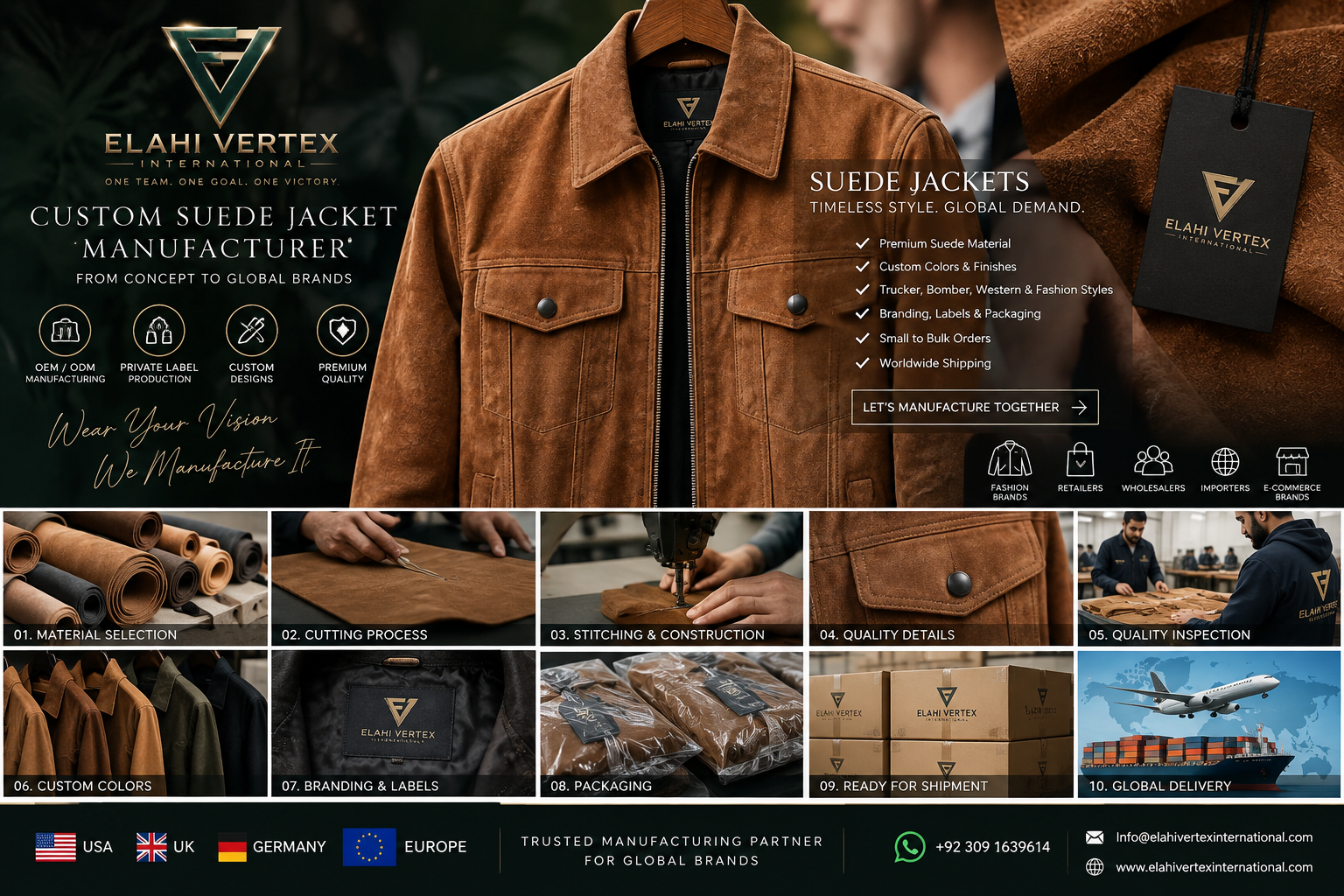
Choosing a suede jacket manufacturer is not simply a matter of finding a factory that already produces leather jackets.
Suede creates a different manufacturing challenge.
Its visible nap, surface direction, shade behaviour, sensitivity to handling, colour-transfer risk and premium tactile appearance mean that mistakes that might be less obvious on heavily finished smooth leather can become immediately noticeable on suede.
That matters particularly for fashion brands, streetwear labels, private-label companies, wholesalers and importers sourcing custom jackets for the United States, United Kingdom, Germany and wider European market.
A capable custom suede jacket manufacturer should therefore be evaluated on much more than price and photographs.
Buyers need to understand the material being proposed, how hides or panels will be matched, how nap direction will be controlled, how colours will be evaluated, what construction will be used, what testing may be appropriate and how an approved sample will be translated into bulk production.
For brands developing private label suede jackets, the objective is not simply to manufacture a garment that resembles a reference image. The finished jacket has to deliver the intended silhouette, touch, colour, surface character, trims, branding and overall presentation consistently enough for the intended market.
Similarly, effective suede jacket manufacturing starts before sewing. Material specification, pattern engineering, panel selection, cutting direction, stitching, reinforcement, hardware, lining, finishing, inspection and packaging all influence the final result.
For buyers searching for an OEM suede jacket manufacturer, this guide explains nine dangerous mistakes that can damage texture, colour and premium appearance—and shows what should be specified before committing to bulk production.
Table of Contents
- Why suede jacket manufacturing requires separate quality control
- Mistake #1: Choosing the wrong suede without defining the material
- Mistake #2: Ignoring nap direction during cutting
- Mistake #3: Failing to control colour and shade variation
- Mistake #4: Ignoring crocking and colour-transfer risk
- Mistake #5: Poor panel matching
- Mistake #6: Using unsuitable seams, stitching or reinforcement
- Mistake #7: Mishandling suede during production and finishing
- Mistake #8: Poor storage, packaging and contamination control
- Mistake #9: Approving bulk production without a proper sample and QC standard
- Suede vs nubuck vs faux suede
- What USA buyers should specify
- What UK buyers should specify
- What German and EU buyers should specify
- Private-label suede jacket development
- OEM suede jacket manufacturing
- Tech-pack requirements
- Suede jacket quality-control checklist
- How to evaluate a suede jacket manufacturer
- What to include in a suede jacket RFQ
- Why Elahi Vertex International
- Frequently asked questions
- Final buyer checklist
- Conclusion
Why Choosing the Right Suede Jacket Manufacturer Matters
A suede jacket manufacturer works with a material whose visual character depends heavily on its surface.
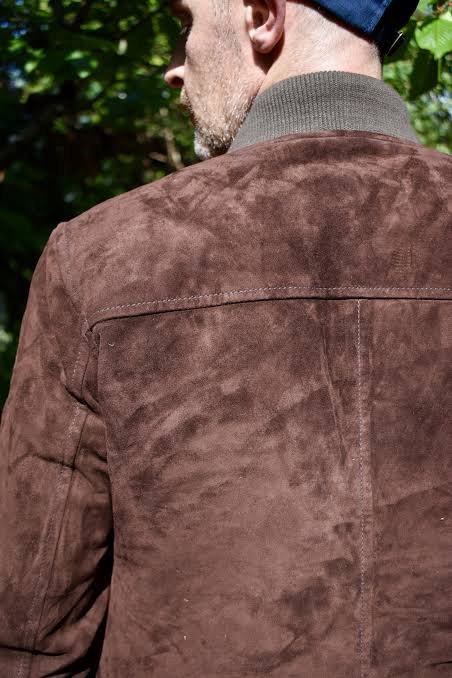
Unlike a heavily coated leather surface, suede has a raised fibrous structure. When the fibres are brushed or rubbed in different directions, light can reflect differently. Two pieces produced from similar material can therefore appear different if nap direction, shade and finishing are not controlled carefully.
That is why buyers should not evaluate a custom suede jacket manufacturer solely from a front-facing product photograph.
The sourcing conversation should include:
- exact material type;
- genuine suede, split suede, nubuck or synthetic/faux suede;
- intended animal hide where genuine leather is specified;
- colour reference;
- surface character;
- nap appearance;
- panel consistency;
- thickness expectations where relevant;
- lining;
- trims;
- hardware;
- seam construction;
- reinforcement;
- branding;
- measurements;
- tolerance requirements;
- sample approval;
- testing requirements;
- packaging;
- destination-market requirements.
This becomes particularly important for private label suede jackets because the garment represents the buyer’s own brand.
A retailer may see only a jacket.
The brand owner sees the combined result of design, sourcing, manufacturing, quality control, packaging, positioning and customer expectations.
Good suede jacket manufacturing therefore requires decisions to be made systematically.
An OEM suede jacket manufacturer should receive a sufficiently detailed specification rather than being expected to interpret phrases such as “premium suede,” “luxury quality,” “same as picture” or “best leather.”
Those phrases are subjective.
A technical specification is measurable.
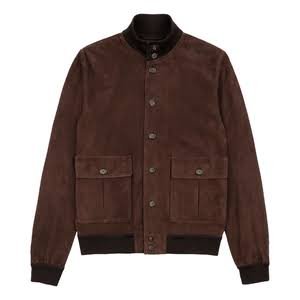
Suede Jacket Manufacturer Mistake #1: Choosing the Wrong Suede Without Defining the Material
The first dangerous mistake is also one of the easiest to make: asking a suede jacket manufacturer for “suede” without defining what the buyer actually means.
“Suede” is not enough of a specification
A buyer may send a reference image and request:
Make this in premium suede.
That still leaves important questions unanswered.
The custom suede jacket manufacturer needs to know what material category the buyer expects.
Depending on the project, possibilities may include genuine suede, different leather constructions, nubuck-like surfaces, microfiber alternatives or synthetic/faux suede.
These are not automatically interchangeable.
Their:
- touch,
- drape,
- weight,
- durability,
- visual appearance,
- cleaning behaviour,
- cost,
- consistency,
- branding implications
can differ.
For private label suede jackets, material terminology also matters because the final product must be represented accurately to customers.
Genuine suede versus suede-look materials
A buyer should establish whether the product specification requires genuine leather or a non-leather material.
This distinction should be explicit in:
- tech pack;
- purchase order;
- sample approval;
- material specification;
- labels where applicable;
- product descriptions;
- compliance documentation where required.
For US buyers, this distinction deserves particular attention because misleading representations concerning leather and imitation-leather composition can create regulatory problems.
Define the intended hand feel
Two materials can both technically fall within a buyer’s broad understanding of suede while feeling completely different.
A brand may want:
- soft and fluid;
- dense and velvety;
- rugged western character;
- short, refined nap;
- visibly textured nap;
- lightweight fashion construction;
- heavier structured jacket construction.
Those requirements affect sourcing.
A professional suede jacket manufacturer needs a target, not merely an adjective.
Define colour physically
Digital screens are useful for communicating direction but should not automatically be treated as a final physical colour standard.
For serious suede jacket manufacturing, consider using:
- a physical swatch;
- approved material cutting;
- recognised colour reference where practical;
- sealed sample;
- written shade expectations.
Why this mistake is expensive
If the material is wrong, nearly everything that follows can be technically correct and the jacket can still fail commercially.
Perfect stitching cannot rescue the wrong hand feel.
Accurate measurements cannot rescue the wrong surface.
Premium packaging cannot rescue a material that looks cheap compared with the approved concept.
For that reason, material approval belongs near the beginning of the custom suede jacket manufacturer workflow.
Buyer action
Before authorising a sample, specify:
Material type → surface → colour → intended feel → construction → intended market → performance/testing requirements.
That single discipline can prevent significant confusion later.
Suede Jacket Manufacturer Mistake #2: Ignoring Nap Direction During Cutting
Nap direction is one of the defining issues in suede jacket manufacturing.
A suede jacket manufacturer that cuts visually important panels without controlling surface direction can create a jacket that appears to contain multiple shades even when the underlying material is similar.
What is suede nap?
The surface fibres of suede can lie differently depending on the direction in which they are brushed.
This changes how light interacts with the surface.
As a result, panels oriented differently may appear:
- lighter;
- darker;
- shinier;
- duller;
- smoother;
- more textured.
The problem can become particularly obvious across:
- left and right front panels;
- sleeves;
- pocket components;
- collars;
- yokes;
- cuffs;
- back panels;
- fringe components.
A competent custom suede jacket manufacturer should therefore consider nap direction as part of cutting planning.
Why fashion brands should care
Imagine a premium brown trucker-style suede jacket.
The left front panel appears warm medium brown.
The right front panel appears noticeably darker.
The material may technically be the same colour, but the customer does not see a cutting explanation.
They see inconsistency.
That perception can reduce the premium value of private label suede jackets.
Cutting efficiency versus visual consistency
Leather and suede cutting involves yield considerations because natural hides are not rectangular rolls of perfectly uniform material.
Factories understandably need to manage material utilization.
But maximizing yield without considering visible panel relationships can create false economy.
Saving material while producing visually mismatched jackets is not efficient if the resulting garments are rejected.
For premium suede jacket manufacturing, cutting decisions should balance:
- material yield;
- defects;
- shade;
- nap;
- stretch;
- panel position;
- visual importance;
- approved quality level.
Critical matching areas
An OEM suede jacket manufacturer should pay particular attention to adjoining components.
For example:
Front body
The two front panels should look intentional together.
Sleeves
Sleeves should not create a visibly different surface impression from the body unless the design intentionally calls for contrast.
Collar
Because the collar sits close to the face and receives visual attention, poor matching can make the whole jacket look lower quality.
Pockets
Patch pockets, pocket welts and flaps should be assessed relative to the surrounding body panel.
Back
Large back panels can make directional inconsistencies especially obvious.
Buyer action
Add nap direction requirements to the tech pack when surface orientation matters.
Do not assume every suede jacket manufacturer will interpret your aesthetic expectations identically.
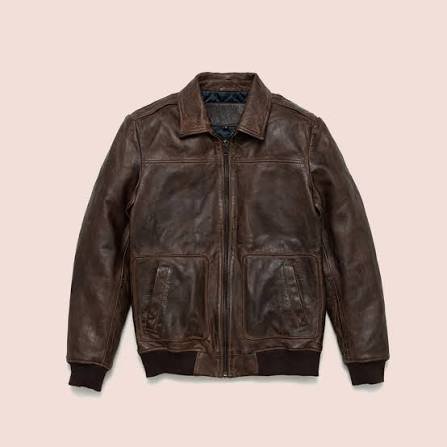
Suede Jacket Manufacturer Mistake #3: Failing to Control Colour and Shade Variation
Colour is one of the most commercially sensitive elements in suede jacket manufacturing.
It is also one of the easiest areas for buyer and supplier expectations to diverge.
Why suede shade variation deserves attention
Natural materials can show variation.
A suede jacket manufacturer therefore needs a practical method for deciding what belongs together and what falls outside the buyer’s accepted appearance.
The problem becomes especially important for:
- black;
- chocolate brown;
- tan;
- camel;
- burgundy;
- olive;
- navy;
- bone;
- cream;
- fashion colours.
Different surface directions can amplify perceived shade differences.
“Same colour” does not always mean “same appearance”
A buyer might approve a Pantone-like colour direction and assume every jacket will look identical.
But colour appearance can be influenced by:
- material substrate;
- dyeing;
- finishing;
- nap direction;
- lighting;
- moisture;
- surface brushing;
- photography;
- screen settings.
A professional custom suede jacket manufacturer workflow should therefore use physical approval wherever colour precision is commercially important.
Shade grouping
For private label suede jackets, materials intended for one garment should be evaluated as a visual set.
A jacket made from individually acceptable panels can still look wrong if those panels clash when assembled.
This is why panel matching and shade grouping are connected.
Establish an approved standard
A practical approval system can include:
- approved physical swatch;
- approved sample;
- documented colour reference;
- photographs for communication;
- defined expectations regarding acceptable natural variation.
The physical approved sample can become an important reference during suede jacket manufacturing.
Germany and European buyers
Brands selling in Germany and wider Europe should separate two different questions:
Aesthetic approval: Does the shade match the collection?
Compliance/performance: Does the material meet the relevant requirements for the intended market and product?
Passing one does not automatically answer the other.
UK buyers
UK brands should likewise avoid assuming that an attractive sample automatically settles every regulatory, labelling or chemical requirement relevant to the finished product.
The suede jacket manufacturer and buyer should establish which documentation or testing is required for the particular project.
US buyers
US brands should define material composition and marketing terminology carefully, particularly when products combine genuine leather with synthetic components.
Buyer action
Never approve bulk production using only a website image or screen colour when shade is commercially critical.
Suede Jacket Manufacturer Mistake #4: Ignoring Crocking and Colour Transfer
A suede jacket can look excellent on arrival and still create a serious customer problem if colour transfers excessively during use.
This is why colourfastness deserves attention when evaluating a suede jacket manufacturer.
What is crocking?
Crocking refers to colour transfer caused by rubbing.
For a jacket, practical concerns can include transfer onto:
- shirts;
- knitwear;
- light trousers;
- car upholstery;
- bags;
- furniture;
- other garments.
Dark or strongly coloured materials deserve particular attention where transfer risk is relevant.
International testing guidance exists specifically for leather colour transfer through rubbing.
The current ISO 20433:2024 standard describes a method for evaluating colour transferred from coloured leather by rubbing and includes dry and wet rubbing procedures.
For buyers, the important lesson is not that every jacket must automatically undergo the same test program.
The lesson is that “the colour looks good” is not a complete performance specification.
Why this matters for a custom suede jacket manufacturer
Surface finishing can influence transfer behaviour.
Therefore, if a buyer requires a particular performance level, that requirement should be discussed before production rather than after customer complaints.
Private-label risk
For private label suede jackets, the consumer normally blames the brand printed on the label—not the anonymous upstream factory.
That changes the economics of quality control.
A cheaper material that creates claims, returns or negative reviews may be more expensive commercially than a better-controlled material.
Ask the right question
Instead of asking:
Is the colour good?
ask:
What colourfastness or rubbing requirements should apply to this material for our intended product and destination market?
That is a much stronger procurement question for an OEM suede jacket manufacturer.
Suede Jacket Manufacturer Mistake #5: Poor Panel Matching
Panel matching is where material sourcing, cutting skill and quality judgment meet.
A suede jacket manufacturer may use acceptable material yet still create an unattractive garment if adjoining panels do not visually belong together.
What should be evaluated?
During suede jacket manufacturing, panel matching may involve:
- shade;
- nap;
- grain/surface character;
- visible marks;
- thickness;
- hand feel;
- overall visual balance.
Not every natural variation is necessarily a defect.
The real question is whether the finished garment matches the buyer’s agreed quality standard.
High-visibility zones
Premium private label suede jackets deserve particular attention around:
- centre front;
- chest;
- collar;
- shoulder;
- sleeve/body junction;
- pocket flaps;
- back yoke;
- large uninterrupted back panels.
These areas attract attention.
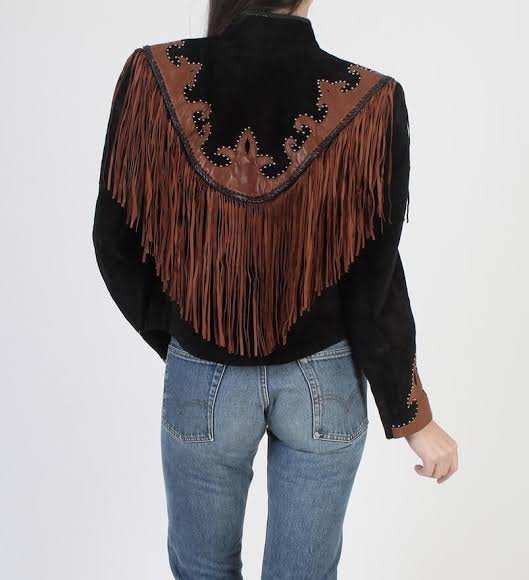
Western and fringe suede jackets
Western-inspired programs can add another layer of complexity.
Fringe, decorative yokes, piping, contrast sections and embroidery create more individual components that need to work visually together.
Current B2B manufacturing pages specifically market suede, cowboy and fringe jacket programs, demonstrating that this is being treated as a distinct OEM/private-label product segment rather than only a generic leather-jacket variation.
For brands targeting western fashion in the USA, this can create a meaningful product opportunity—but only when the custom suede jacket manufacturer can execute the decorative details cleanly.
Buyer action
Include panel-matching expectations in sample review and pre-production communication.
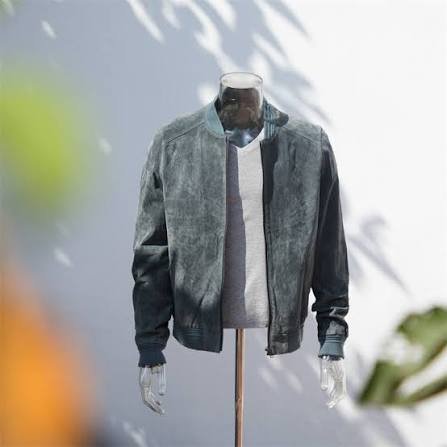
Suede Jacket Manufacturer Mistake #6: Using the Wrong Stitching, Seam Construction or Reinforcement
Premium material does not automatically create a premium jacket.
Construction still matters.
A suede jacket manufacturer should interpret the garment as an engineered product rather than simply a collection of suede panels.
Stitch length and appearance
Visible topstitching becomes part of the design.
Buyers should define:
- single or double needle appearance;
- thread colour;
- stitch positioning;
- edge distance;
- decorative topstitching;
- expected consistency.
Stress points
Depending on the jacket design, areas that may need particular consideration include:
- pocket openings;
- zipper ends;
- snaps;
- shoulder seams;
- armholes;
- cuff attachment;
- waistband attachment;
- hanger loops;
- internal pockets.
The exact reinforcement method should depend on the construction and material.
Hardware
An OEM suede jacket manufacturer may also need specifications for:
- main zipper;
- two-way zipper if required;
- snaps;
- buckles;
- adjusters;
- branded hardware;
- pullers;
- rivets;
- decorative metalwork.
Hardware colour should coordinate with the intended design.
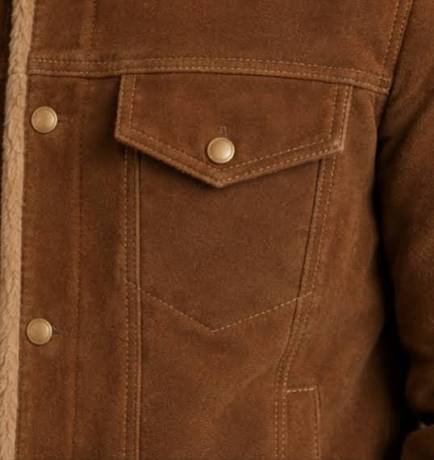
A premium tan suede jacket with inconsistent metal finishes can look poorly resolved even when the sewing is acceptable.
Lining
The lining influences comfort, movement and perceived quality.
A custom suede jacket manufacturer should receive details such as:
- lining material;
- colour;
- quilting if required;
- insulation if required;
- pocket configuration;
- branded lining if required.
Private-label details
For private label suede jackets, branding can include:
- main neck label;
- size label;
- care label;
- composition information as applicable;
- woven labels;
- printed labels;
- embossed branding;
- patches;
- embroidery;
- custom hardware;
- packaging.
These details should be approved rather than improvised during bulk production.
Suede Jacket Manufacturer Mistake #7: Mishandling Suede During Manufacturing
Suede’s surface makes production handling especially important.
A suede jacket manufacturer can damage an otherwise good material through careless handling.
Contamination
Light-coloured suede can make contamination particularly visible.
Production areas, tables, hands, tools and storage surfaces therefore matter.
Possible appearance problems include:
- oil;
- dust;
- adhesive;
- ink;
- dirt;
- moisture marks;
- unintended rubbing.
Excessive handling
Repeated uncontrolled handling can change the surface appearance.
That is one reason why suede jacket manufacturing should follow an organised production flow.
Adhesives and marking
Any marking or adhesive process should be selected carefully for the actual material.
A method that is harmless on one textile or heavily finished leather surface may not be suitable for exposed suede.
Pressing and finishing
Finishing methods should be compatible with the material.
The buyer should not assume that a generic garment pressing process is appropriate.
Light colours need extra discipline
Bone, cream, beige, sand and pale grey private label suede jackets can expose handling problems rapidly.
A dark mark that is barely visible on black may become unacceptable on bone suede.
For premium light-colour collections, discuss handling and packaging expectations with the custom suede jacket manufacturer before bulk production.
Suede Jacket Manufacturer Mistake #8: Poor Storage and Packaging
Manufacturing quality can be lost after sewing.
A finished jacket still needs to survive:
factory → finishing → inspection → packing → export → warehousing → retail/e-commerce fulfilment → customer.
Moisture
Leather products should not be packed carelessly in damp conditions.
Packaging decisions should reflect the material, transit method, climate and destination.
Compression
Excessive compression can affect presentation.
This becomes relevant when buyers try to minimize carton volume without considering garment appearance.
Metal hardware
Zippers, snaps and other components should not create unintended pressure or marking during transport.
Colour transfer between products
Where different colours are packed together, potential contact issues should be considered according to the material and finish.
Packaging specification
A suede jacket manufacturer should not have to guess the buyer’s desired presentation.
Specify requirements such as:
- folding method;
- protective material;
- individual bag where required;
- labels;
- hangtags;
- barcode requirements;
- carton configuration;
- shipping marks.
For private label suede jackets, packaging is part of the product experience.
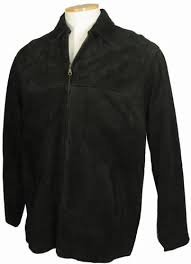
Suede Jacket Manufacturer Mistake #9: Starting Bulk Production Without a Proper Approved Sample
This is the most avoidable mistake in the entire process.
A buyer finds a suede jacket manufacturer, negotiates a competitive price and rushes directly toward bulk production.
That can save days at the beginning and create weeks of problems later.
What a sample actually proves
A proper development sample helps evaluate:
- material;
- colour;
- surface;
- fit;
- measurements;
- pattern;
- construction;
- lining;
- pockets;
- zipper;
- snaps;
- branding;
- labels;
- embroidery;
- fringe;
- finishing;
- overall appearance.
For a custom suede jacket manufacturer, the approved sample creates a much clearer physical target.
Sample approval should be specific
Do not simply write:
Sample approved.
Document modifications.
For example:
- sleeve +1 cm;
- body length unchanged;
- pocket lowered;
- zipper changed to antique brass;
- logo reduced;
- collar shape approved;
- suede shade approved;
- lining changed;
- fringe shortened.
This reduces ambiguity during suede jacket manufacturing.
Keep the approved standard
Where practical, the approved sample or an agreed reference should remain available for comparison during production.
Bulk inspection
Bulk garments should then be evaluated against agreed specifications rather than vague memory.
For an OEM suede jacket manufacturer, this creates a cleaner relationship:
specification → sample → corrections → approval → production → inspection.
Suede vs Nubuck vs Faux Suede: Buyers Should Know the Difference
One of the easiest ways to create sourcing confusion is to use these terms interchangeably.
They are not identical.
| Material | General Character | Buyer Consideration |
|---|---|---|
| Suede | Fibrous, soft nap associated with the flesh/split side depending on construction | Surface consistency, shade and nap matter |
| Nubuck | Typically a buffed outer leather surface | Often finer visual character; specify accurately |
| Faux suede | Synthetic suede-like material | Composition and performance differ from genuine leather |
| Microfiber suede | Engineered synthetic alternative | Can provide consistency but should not be represented as genuine leather |
The appropriate choice depends on the product.
A suede jacket manufacturer should know exactly which material the buyer is requesting.
A custom suede jacket manufacturer should also avoid substituting a material simply because it looks similar in photographs.
For private label suede jackets, composition affects:
- marketing;
- labelling;
- positioning;
- cost;
- care;
- consumer expectation.
An OEM suede jacket manufacturer should therefore receive clear material terminology in the tech pack and purchase documentation.
What USA Buyers Should Ask a Suede Jacket Manufacturer
The United States is a major target market for western wear, streetwear, fashion outerwear and private-label apparel.
US buyers evaluating a suede jacket manufacturer should consider both product quality and accurate product representation.
Important sourcing questions include:
- Is the material genuine leather or imitation/synthetic?
- What exact material is being quoted?
- What colour standard will be used?
- How will nap direction be controlled?
- How will visible panels be matched?
- What lining is included?
- What hardware is included?
- What branding is included?
- What sample will be approved?
- What testing is required?
- What labels are required for the finished product?
- What documentation is needed for import and sale?
The US Federal Trade Commission maintains Leather Guides concerning misrepresentation of leather and imitation-leather products. Material that appears to be leather but is not leather should not be marketed deceptively.
That makes accurate composition particularly relevant for US private label suede jackets.
A US buyer should therefore treat the specification as both a manufacturing document and part of the foundation for accurate downstream product representation.
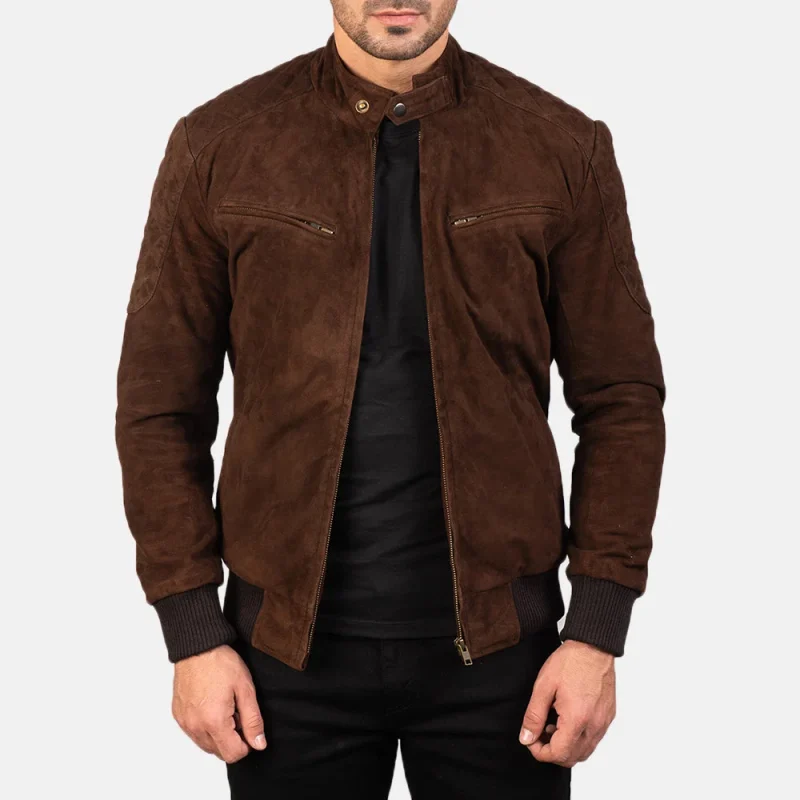
What UK Buyers Should Ask a Suede Jacket Manufacturer
UK fashion brands frequently source internationally, but post-Brexit regulatory responsibilities should not simply be treated as identical to those of EU buyers.
UK REACH applies in Great Britain to chemical substances, including substances that form part of articles such as clothes.
For that reason, a UK buyer evaluating a suede jacket manufacturer should establish what requirements apply to the specific jacket, materials and supply chain.
Questions can include:
- What is the exact material composition?
- Which tanning/dyeing/finishing documentation is available?
- Which tests are required for our project?
- How will colour transfer be evaluated?
- How will shades be controlled?
- What product labelling is required?
- Who is responsible for compliance documentation?
- What import documentation is needed?
- What packaging is required?
The answer should be project-specific.
A custom suede jacket manufacturer should not promise universal compliance simply by saying “export quality.”
That phrase is not a technical specification.
For UK private label suede jackets, define the requirement and then verify it.
What German and European Buyers Should Ask
Germany and the wider European Union are particularly important targets for fashion brands sourcing leather outerwear.
For a German buyer, selecting a suede jacket manufacturer should include a compliance conversation alongside design and price.
EU chemical restrictions can apply to leather articles and other components.
The exact obligations depend on the product, material and supply chain, so buyers should verify current requirements rather than rely on generic statements.
Separate quality from compliance
A jacket can:
- fit perfectly;
- have beautiful suede;
- have accurate embroidery;
- have clean stitching;
and still require additional compliance consideration.
Likewise, compliance documentation does not automatically mean the jacket meets a brand’s aesthetic standard.
Both matter.
German buyer checklist
When approaching a custom suede jacket manufacturer, provide:
- product specification;
- material composition;
- target colour;
- dimensions;
- size chart;
- hardware requirements;
- branding;
- packaging;
- destination;
- testing requirements;
- compliance requirements;
- order quantity;
- target delivery window.
This gives the supplier a much better basis for quoting.
Europe is not a design specification
Saying:
This is for Europe.
does not tell the manufacturer enough.
The buyer should identify the intended market and requirements.
For private label suede jackets destined for Germany or another EU market, responsibilities should be clarified before production.
Private Label Suede Jackets: Building a Product Under Your Own Brand
Private label suede jackets are not merely blank jackets with a neck label attached.
A serious private-label program can involve:
- custom silhouette;
- custom pattern;
- custom measurements;
- selected suede;
- custom colour;
- lining;
- embroidery;
- patches;
- embossing;
- fringe;
- custom zipper;
- custom snaps;
- woven labels;
- care labels;
- hangtags;
- packaging.
This is why the relationship with the suede jacket manufacturer matters.
The manufacturer needs enough information to translate the brand concept into a reproducible product.
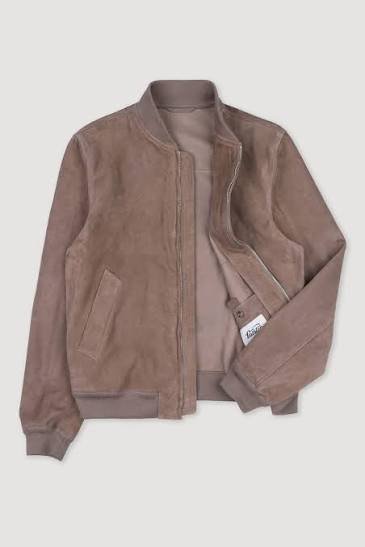
Start with the product, not the logo
A common startup mistake is spending enormous attention on neck labels while leaving the actual jacket specification vague.
Reverse the priority.
First establish:
- silhouette;
- material;
- fit;
- construction;
- colour;
- details;
- performance;
- branding;
- packaging.
A custom suede jacket manufacturer can then integrate the branding into a technically defined product.
OEM Suede Jacket Manufacturer: What OEM Should Mean to a Buyer
An OEM suede jacket manufacturer generally manufactures according to the buyer’s product specification.
The buyer may provide:
- technical drawings;
- measurements;
- patterns;
- reference garment;
- artwork;
- trim specifications;
- label files;
- packaging requirements.
The clearer those inputs are, the less interpretation is required.
OEM is not mind reading
Sending three Instagram screenshots and saying “make exactly this” is not a robust OEM development process.
Photographs do not reliably communicate:
- hidden construction;
- exact measurements;
- seam allowance;
- material composition;
- thickness;
- lining;
- reinforcement;
- internal pockets;
- hardware specification.
An OEM suede jacket manufacturer therefore benefits from a proper tech pack.
What to Put in a Suede Jacket Tech Pack
A professional tech pack for suede jacket manufacturing should include the information necessary for the particular design.
Useful sections include:
Product identification
- style name;
- style number;
- season;
- version/date.
Technical drawings
Front and back flats should clearly show construction.
Include detail drawings where necessary.
Material
State:
- material category;
- colour;
- surface expectation;
- approved reference;
- special requirements.
Measurements
Include points of measure and size specifications.
Construction
Define relevant seams, topstitching and details.
Hardware
Specify:
- zipper type;
- zipper colour;
- snaps;
- buckles;
- pullers;
- branded components.
Branding
Specify:
- embroidery;
- embossing;
- patches;
- woven labels;
- printed labels;
- hangtags.
Lining
Define composition/type, colour and quilting where applicable.
Packaging
Provide packing and presentation requirements.
Testing/compliance
Identify requirements applicable to the project and destination.
A suede jacket manufacturer cannot reliably quote requirements that were never communicated.
Suede Jacket Quality-Control Checklist
Before approving suede jacket manufacturing, buyers can use this checklist.
Material
- Correct material?
- Correct colour?
- Correct surface character?
- Approved nap?
- Appropriate panel consistency?
Cutting
- Nap orientation controlled?
- Visible panels matched?
- Obvious defects avoided according to agreed standard?
Construction
- Measurements within agreed tolerances?
- Seams clean?
- Topstitching consistent?
- Stress areas appropriately constructed?
- Pockets positioned correctly?
Hardware
- Correct zipper?
- Correct finish?
- Snaps functioning?
- Branded hardware correct?
Lining
- Correct material?
- Correct colour?
- Clean attachment?
- Internal pockets correct?
Branding
- Logo correct?
- Embroidery dimensions correct?
- Label placement correct?
- Hangtags correct?
Appearance
- Shade balanced?
- Nap visually consistent?
- No avoidable contamination?
- No unintended marks?
Packaging
- Correct folding/hanging method?
- Correct labels?
- Correct individual packaging?
- Correct carton markings?
This checklist should be adapted to the specific private label suede jackets being ordered.
How to Evaluate a Suede Jacket Manufacturer
Do not choose a suede jacket manufacturer using price alone.
Use a structured supplier evaluation.
| Criterion | What the Buyer Should Evaluate |
|---|---|
| Material understanding | Can the supplier explain what material is being offered? |
| Product development | Can the supplier work from specifications? |
| Sampling | Is there a defined sample approval process? |
| Nap control | Does the supplier understand directional surface issues? |
| Shade management | Is panel appearance considered? |
| Construction | Can the requested jacket structure be executed? |
| Branding | Can required private-label details be developed? |
| QC | Are inspection criteria agreed? |
| Communication | Are specifications documented clearly? |
| Compliance | Can project-specific requirements be discussed and verified? |
| Packaging | Can buyer packaging requirements be followed? |
| Commercial terms | Are price, quantity, payment and lead-time terms clear? |
The cheapest custom suede jacket manufacturer is not necessarily the lowest-cost supplier once rejected goods, delays and rework are considered.
RFQ Template for a Suede Jacket Manufacturer
A useful RFQ should contain enough information for meaningful discussion.
Product
Custom suede jacket.
Market
State destination:
- USA;
- UK;
- Germany;
- another EU country.
Material
Specify genuine suede, nubuck, faux suede or other required material.
Design
Attach:
- tech pack;
- drawings;
- reference images;
- artwork.
Quantity
State realistic sample and bulk requirements.
Sizes
Provide size range and expected breakdown where known.
Colour
Provide colour reference.
Branding
List:
- embroidery;
- embossing;
- patches;
- labels;
- custom hardware;
- packaging.
Testing
State required performance/compliance testing.
Delivery
State destination and required commercial timeline.
This allows the OEM suede jacket manufacturer to evaluate the project more intelligently.
Why Elahi Vertex International for Custom Leather-Wear Development?
Elahi Vertex International is positioned as a B2B custom clothing manufacturer, exporter, OEM/ODM supplier and private-label manufacturing partner.
For suede-jacket enquiries, the productive starting point is not a generic request for “best price.”
Send the actual project requirements.
That can include:
- design;
- reference images;
- tech pack;
- material preference;
- colours;
- sizes;
- quantity;
- branding;
- destination;
- required timeline.
Project-specific material availability, construction, pricing, sampling, testing and lead time should then be confirmed for the individual order rather than assumed.
Elahi Vertex International’s existing private-label manufacturing service supports product development around buyer designs and specifications, including custom labels, branding and packaging.
The company’s broader custom manufacturing service also covers leather wear alongside streetwear and private-label apparel.
For brands in the USA, UK, Germany and Europe, that makes the relevant commercial conversation straightforward:
What suede jacket are you trying to manufacture, what specifications must it meet, and what information is required before sampling?
Frequently Asked Questions About a Suede Jacket Manufacturer
1. What does a suede jacket manufacturer do?
A suede jacket manufacturer develops and produces suede outerwear according to product specifications. Depending on the supplier and project, work can include material sourcing, pattern development, sampling, cutting, sewing, lining, trims, branding, finishing, inspection and packaging.
2. How do I choose a suede jacket manufacturer?
Evaluate material knowledge, sampling, construction quality, nap control, shade consistency, branding capability, communication, quality control, project-specific compliance support and commercial terms rather than selecting a suede jacket manufacturer only by unit price.
3. What should I send a custom suede jacket manufacturer?
Send your tech pack, design, measurements, material requirement, colours, branding, quantity, size range, destination and any testing or packaging requirements. A custom suede jacket manufacturer can quote more accurately when the project is clearly defined.
4. Can private label suede jackets use custom branding?
Yes, depending on the manufacturer and design. Private label suede jackets can potentially incorporate custom labels, embroidery, patches, embossing, hardware, hangtags and packaging. Exact options should be confirmed for the project.
5. What is OEM suede jacket manufacturing?
An OEM suede jacket manufacturer produces jackets according to a buyer’s design and technical requirements. The buyer generally controls specifications such as measurements, material, colours, construction, branding and packaging.
6. Why does nap direction matter in suede jacket manufacturing?
Nap affects how the surface reflects light. During suede jacket manufacturing, inconsistent panel direction can make adjoining pieces appear different in shade or texture.
7. Why can suede jackets show colour variation?
Material characteristics, dyeing, finishing, nap direction and lighting can influence perceived colour. A suede jacket manufacturer should therefore work to an agreed physical standard where shade is commercially important.
8. Should a suede jacket manufacturer make a sample before bulk production?
For custom development, sampling is a sensible risk-control step. It lets the buyer review material, fit, construction, colour, branding and details before the suede jacket manufacturer proceeds according to the approved specification.
9. What is the difference between suede and faux suede?
Suede is associated with leather, while faux suede is a non-leather material designed to create a suede-like appearance. A custom suede jacket manufacturer should clearly identify which material is being proposed.
10. Are private label suede jackets suitable for streetwear brands?
They can be. Private label suede jackets can work for premium streetwear, fashion, western-inspired and lifestyle collections when the material, silhouette, branding and price positioning suit the target customer.
11. Can a suede jacket manufacturer produce western fringe jackets?
Some manufacturers target western and fringe programs specifically. A buyer should verify the suede jacket manufacturer’s ability to execute the particular fringe construction, yokes, embroidery, hardware and other design details required.
12. What should German buyers ask a suede jacket manufacturer?
German buyers should specify material, construction, branding, colour, testing, destination-market requirements and documentation. The suede jacket manufacturer should not be assumed compliant with every EU requirement without project-specific verification.
13. What should UK buyers check when sourcing suede jackets?
UK buyers should verify composition, product specification, colour performance, relevant UK requirements, labels, documentation and import responsibilities with the suede jacket manufacturer and appropriate professional/regulatory sources.
14. What should US buyers check when sourcing suede jackets?
US buyers should verify material representation, labelling requirements, construction, colour performance and other applicable requirements. Accurate distinction between leather and imitation leather is particularly important when working with a suede jacket manufacturer.
15. Why is colourfastness important in suede jacket manufacturing?
Poor colourfastness can cause unwanted colour transfer through rubbing. Suede jacket manufacturing specifications should therefore consider appropriate colourfastness requirements for the material, product and intended market.
16. Can an OEM suede jacket manufacturer work from a tech pack?
That is a normal basis for OEM development. An OEM suede jacket manufacturer can use technical drawings, measurements, materials, artwork and construction instructions to understand the intended product.
17. What information affects suede jacket pricing?
Material, construction complexity, lining, hardware, branding, quantity, packaging and other project requirements can affect pricing. A suede jacket manufacturer should quote against a defined specification.
18. How should buyers approve colour for private label suede jackets?
For private label suede jackets, physical material references and approved samples can provide a stronger production reference than screen images alone.
19. Why is panel matching important?
Poorly matched panels can make a jacket appear inconsistent even when each individual piece is usable. A careful custom suede jacket manufacturer should consider shade, nap and overall visual balance.
20. How do I request a quote from a suede jacket manufacturer?
Prepare your design, material requirement, quantity, sizes, branding, destination and timeline, then send them to the suede jacket manufacturer for project-specific evaluation.
Final Suede Jacket Manufacturer Buyer Checklist
Before placing an order, confirm:
- Material type is clearly defined.
- Genuine versus imitation material is unambiguous.
- Colour reference is approved.
- Surface and nap expectation is documented.
- Nap direction is considered.
- Panel matching standard is understood.
- Measurements are documented.
- Tolerances are agreed.
- Construction is defined.
- Stitching is approved.
- Hardware is approved.
- Lining is approved.
- Branding is approved.
- Labels are confirmed.
- Packaging is confirmed.
- Relevant testing requirements are identified.
- Destination requirements are investigated.
- Sample corrections are documented.
- Bulk approval standard is established.
- Commercial terms are clear.
A professional sourcing decision is not simply:
Which suede jacket manufacturer gave the lowest price?
A stronger question is:
Which supplier can translate our specification into a commercially acceptable product while controlling the manufacturing risks that matter to our brand and target market?
Conclusion: Choose a Suede Jacket Manufacturer by Control, Not Claims
Finding a suede jacket manufacturer is easy.
Finding the right manufacturing partner requires more work.
Suede exposes mistakes quickly because texture, nap, shade, cutting direction, handling and finishing directly influence what the customer sees and feels.
The nine most dangerous mistakes are:
- choosing an undefined or unsuitable suede;
- ignoring nap direction;
- failing to control shade;
- ignoring rubbing and colour transfer;
- poor panel matching;
- weak construction decisions;
- careless production handling;
- inadequate storage and packaging;
- starting bulk production without a properly evaluated sample.
For buyers in the USA, UK, Germany and wider Europe, supplier evaluation should combine product development with destination-specific due diligence.
A custom suede jacket manufacturer should be evaluated on the quality of the questions it can answer—not just the attractiveness of its quotation.
Brands developing private label suede jackets should document the product before bulk production.
A structured suede jacket manufacturing process should move from specifications to material selection, sampling, approval, production, inspection and shipment.
And an OEM suede jacket manufacturer should receive enough technical information to manufacture what the buyer actually designed rather than what the supplier guessed the buyer wanted.
Discuss Your Custom Suede Jacket Project With Elahi Vertex International
If your brand is developing suede jackets for the USA, UK, Germany or European market, send Elahi Vertex International your actual product requirements.
Useful information includes:
- tech pack;
- reference design;
- required suede/material;
- colour;
- sizes;
- quantity;
- custom branding;
- destination;
- required timeline.
Elahi Vertex International can then review the project requirements and discuss the appropriate next manufacturing step.
The objective is simple:
Define the jacket properly before committing to bulk production.
Useful External Resources for Suede Jacket Buyers
Brands sourcing custom suede jackets for the USA, UK, Germany and wider European market should verify material, testing, labelling, chemical and product requirements using authoritative sources. The following resources can support further buyer research.
- ISO — Leather Colour Fastness to Crocking
https://www.iso.org/standard/86793.html
Useful for understanding ISO 20433:2024 and the evaluation of colour transferred from leather through dry and wet rubbing. This is particularly relevant when assessing colour-transfer risks in suede jackets. - ISO — Leather Standards Catalogue
https://www.iso.org/ics/59.140.30/x/
Useful for researching international standards relating to leather testing, physical properties, chemical testing and colour fastness. - ISO/IULTCS — Leather Testing Standards
https://www.iso.org/committee/55240/x/catalogue/
Useful for buyers, quality teams and sourcing professionals researching internationally recognized leather testing methods. - ASTM International — Leather Crocking Test
https://www.astm.org/d5053-03r15.html
Useful for US-focused buyers researching test methods relating to colour transfer from leather through wet or dry rubbing. - US Federal Trade Commission — Leather Guides
https://www.ftc.gov/legal-library/browse/rules/leather-guides
Useful for understanding US guidance concerning representations about leather and imitation-leather products. This is particularly important when distinguishing genuine suede from faux or synthetic suede. - US Federal Trade Commission — Apparel and Labeling
https://www.ftc.gov/news-events/topics/tools-consumers/apparel-labeling
Useful for US brands researching federal apparel and product-labelling responsibilities. - US Consumer Product Safety Commission — Clothing Guidance
https://www.cpsc.gov/FAQ/Clothing
Useful for brands selling clothing in the United States and researching applicable product-safety requirements. - US Consumer Product Safety Commission — Flammable Fabrics Act
https://www.cpsc.gov/Business–Manufacturing/Business-Education/Business-Guidance/Flammable-Fabrics-Act
Useful for US apparel businesses researching federal flammability requirements and determining what may apply to their products. - US Consumer Product Safety Commission — Business Guidance for Clothing
https://www.cpsc.gov/Business–Manufacturing/Business-Education/Business-Guidance/Clothing-OLD
An additional official resource for businesses researching US clothing safety requirements. - EUR-Lex — Regulation (EU) No 1007/2011
https://eur-lex.europa.eu/eli/reg/2011/1007/oj
Useful for European buyers researching textile-fibre names, composition labelling and related requirements, including provisions relevant to certain products containing non-textile parts of animal origin. - European Chemicals Agency — REACH
https://echa.europa.eu/regulations/reach/understanding-reach
Useful for brands importing or selling products within the European Union and researching chemical responsibilities under REACH. - European Chemicals Agency — REACH Restricted Substances
https://echa.europa.eu/substances-restricted-under-reach
Useful when researching substances restricted under Annex XVII of REACH and determining which restrictions may apply to leather, textiles, trims or other components. - EUR-Lex — REACH Regulation
https://eur-lex.europa.eu/legal-content/EN/TXT/?uri=CELEX:02006R1907-20221217
Useful as an official EU legal reference when researching REACH requirements affecting products placed on the European market. - European Commission — Access2Markets
https://trade.ec.europa.eu/access-to-markets/en/home
Useful for international manufacturers, exporters and EU importers researching tariffs, import procedures, product requirements and trade information for specific products and origins. - UK Health and Safety Executive — UK REACH
https://www.hse.gov.uk/reach/
Useful for brands selling in Great Britain and researching the UK’s chemical regulatory framework after Brexit. - UK Government — Product Safety Advice for Businesses
https://www.gov.uk/guidance/product-safety-advice-for-businesses
Useful for UK businesses researching their general responsibilities when manufacturing, importing or selling consumer products. - UK Government — Import Goods Into the UK
https://www.gov.uk/import-goods-into-uk
Useful for UK buyers importing custom jackets and other apparel from international manufacturing partners. - Leather Working Group
https://www.leatherworkinggroup.com/
Useful for brands researching leather-industry environmental practices, responsible leather sourcing and leather supply-chain standards. Buyers should independently verify whether a particular tannery or supplier holds any claimed certification. - Leather Working Group — Leather Manufacturer Standard
https://www.leatherworkinggroup.com/certification/leather-manufacturer-standard/
Useful for understanding the areas considered within the Leather Working Group’s leather-manufacturer auditing framework, including environmental management, traceability and chemical-management considerations. - International Council of Tanners
https://leather-council.org/
Useful for buyers seeking additional industry information concerning leather, tanning and the international leather sector.
Recommended Internal Resources from Elahi Vertex International
Buyers researching a suede jacket manufacturer may also find the following Elahi Vertex International resources useful when planning custom manufacturing, OEM, ODM and private-label projects.
- Elahi Vertex International — Official Website
https://www.elahivertexinternational.com/
Use this as the main company reference for international B2B manufacturing enquiries. - Private Label Manufacturing
https://elahivertexinternational.com/private-label-manufacturing/
Recommended anchor text: private label clothing manufacturer
Best placement: In the section discussing private label suede jackets, custom branding, labels and packaging. - Custom Clothing Manufacturing
https://elahivertexinternational.com/custom-clothing-manufacturing/
Recommended anchor text: custom clothing manufacturing
Best placement: In the section explaining custom product development and manufacturing according to buyer specifications. - Manufacturing Services
https://elahivertexinternational.com/manufacturing/
Recommended anchor text: OEM and ODM manufacturing services
Best placement: In the OEM suede jacket manufacturer section. - Elahi Vertex International — Alibaba Storefront
https://elahivertexinternational.trustpass.alibaba.com/
Recommended anchor text: Elahi Vertex International Alibaba profile
Best placement: Near the final supplier-verification or contact section rather than repeatedly throughout the article.
How These Resources Help Suede Jacket Buyers
A reliable sourcing decision should not depend only on a manufacturer’s sales claims. Buyers developing suede jackets for the USA, UK, Germany and wider Europe should independently research the requirements relevant to their own product and destination.
For example, a US brand can consult the Federal Trade Commission and Consumer Product Safety Commission when researching product representation, labelling and safety requirements. UK buyers can use official UK Government and Health and Safety Executive resources, while German and other EU buyers can consult EUR-Lex, ECHA and the European Commission’s Access2Markets portal.
Technical resources from ISO and ASTM can also help buyers understand why issues such as colour transfer, rubbing performance and leather testing should be discussed during product development instead of being discovered after bulk production.
These external resources complement—not replace—the product-specific discussion with a suede jacket manufacturer. Applicable requirements depend on the material, construction, destination, intended consumer and other characteristics of the individual product.
Discuss Your Custom Suede Jacket Project
If you are developing custom suede jackets, western suede jackets, streetwear suede outerwear or private label suede jackets for the USA, UK, Germany or wider European market, discuss your actual specifications with Elahi Vertex International.
Website:
https://www.elahivertexinternational.com/
WhatsApp:
https://wa.me/message/OWIPAIXYWHTPI1
Phone / WhatsApp:
+92 309 1639614
Email:
elahivertexinternational@gmail.com
Secondary Email:
Info@elahivertexinternational.com
Alibaba:
https://elahivertexinternational.trustpass.alibaba.com/
Send your design, tech pack, reference images, required material, colours, size range, quantity, branding requirements and destination so the project can be evaluated against your actual manufacturing requirements.
Ready to Develop Your Custom Suede Jacket?
If you are a fashion brand, streetwear label, western-wear brand, wholesaler, retailer or private-label business in the USA, UK, Germany or Europe, you do not need to approach production with an incomplete specification.
Elahi Vertex International works as a B2B manufacturer, exporter, OEM/ODM supplier and private-label manufacturing partner for international buyers.
Whether you are developing a premium suede bomber jacket, western fringe jacket, streetwear jacket or a complete private-label suede outerwear collection, start by sending the actual project requirements.
Start With the Right Manufacturing Route
Explore Elahi Vertex International and the relevant manufacturing services before discussing your project:
Official Website
https://www.elahivertexinternational.com/
Private Label Manufacturing
https://elahivertexinternational.com/private-label-manufacturing/
For brands developing custom labels, branding, packaging and private-label clothing.
Custom Clothing Manufacturing
https://elahivertexinternational.com/custom-clothing-manufacturing/
For custom garments developed around your designs and product requirements.
OEM & ODM Manufacturing Services
https://elahivertexinternational.com/manufacturing/
For buyers looking for custom manufacturing and OEM/ODM development.
Official Alibaba Storefront
https://elahivertexinternational.trustpass.alibaba.com/
An additional route for reviewing Elahi Vertex International’s business presence.
What Should You Send Us?
For a useful first discussion, send as much of the following as you already have:
- Jacket reference images or technical drawings
- Tech pack, if available
- Genuine suede, faux suede or other required material
- Desired colour or physical colour reference
- Size range
- Estimated quantity
- Embroidery, embossing, patches or other artwork
- Custom labels and branding requirements
- Lining requirements
- Zipper, snap and hardware preferences
- Packaging requirements
- Destination country
- Required timeline
- Any testing or compliance requirements already specified by your business
You do not need to have every technical detail finalized before contacting us. If something still needs to be defined, identify it clearly so it can be discussed before sampling or bulk production.
Contact Elahi Vertex International
WhatsApp — Fastest Direct Contact
https://wa.me/message/OWIPAIXYWHTPI1
Phone / WhatsApp:
+92 309 1639614
Primary Email
elahivertexinternational@gmail.com
Business Email
Info@elahivertexinternational.com
Official Website
Alibaba
https://elahivertexinternational.trustpass.alibaba.com
Connect With Elahi Vertex International
LinkedIn
https://www.linkedin.com/company/elahi-vertex-international?trk=profile-position
Instagram
https://www.instagram.com/elahivertex_mfg?igsh=MW91NmV3ZnAzOTFqcg==
Facebook
https://www.facebook.com/share/1D4CqvvfKh/
TikTok
https://www.tiktok.com/@elahivertex_mfg?_r=1&_t=ZS-98eXi10DY2P
Threads
https://www.threads.com/@elahivertex_mfg
X
https://x.com/elahivertex_mfg
Google Business Profile
https://share.google/62DrR4N4X8np39RkQ
Your Next Step
If you are currently comparing a suede jacket manufacturer, do not make the decision from unit price alone.
Send Elahi Vertex International your design, material requirement, estimated quantity and delivery destination.
We can then discuss the project around the information that actually matters: material, construction, customization, branding, sampling, quantity, quality requirements, packaging and delivery requirements.
USA Buyers
Developing a private-label suede jacket, western jacket or premium streetwear outerwear collection? Send your specifications and US delivery destination.
UK Buyers
Planning a suede outerwear collection for the UK? Send your design, quantities, branding requirements and delivery destination for project review.
Germany & EU Buyers
Developing custom suede jackets for Germany or another European market? Send the product specification together with any testing, documentation or compliance requirements your project already requires.
Turn Your Suede Jacket Design Into a Manufacturing Project
Design → Specifications → Material → Sample → Approval → Bulk Production
Start the conversation with your actual requirements.
WhatsApp:
https://wa.me/message/OWIPAIXYWHTPI1
Email:
elahivertexinternational@gmail.com
Website:
https://www.elahivertexinternational.com/
Elahi Vertex International — Where Brands Are Made.
