

[FEATURED IMAGE — PLACE AFTER TITLE]
A distressed leather jacket can look deliberately aged, naturally worn and premium in an approved sample—and become a completely different product when bulk production begins.
That is one of the central challenges facing a fashion brand searching for a distressed leather jacket manufacturer.
The difficulty is not simply manufacturing a leather jacket. It is controlling variation while creating a finish that is supposed to look irregular.
For clothing brands, streetwear labels, private-label businesses, wholesalers and sourcing teams in the USA, UK, Germany and wider Europe, that distinction matters. A vintage appearance may involve controlled colour variation, rubbing, abrasion, wax effects, edge wear, surface finishing or combinations of treatments. But “distressed” should never become an excuse for uncontrolled manufacturing.
A capable distressed leather jacket manufacturer should therefore work from an agreed product specification and approval reference rather than an instruction as vague as “make it look vintage.”
The buyer needs to establish what must remain consistent—fit, construction, leather direction, base colour, hardware, branding and overall visual identity—and what degree of distressed variation is acceptable.
That is the real subject of this guide.
This article explains 9 costly distressed leather jacket manufacturing mistakes that buyers should address before releasing a private-label or OEM jacket into bulk production.
For a custom leather jacket project, buyers can review the existing Elahi Vertex International leather jacket manufacturing page or submit detailed specifications through the private-label manufacturing inquiry page.
Table of Contents
- Treating “Distressed” as a Complete Manufacturing Specification
- Choosing Leather Before Defining the Required Vintage Character
- Approving Colour but Failing to Approve the Distressing Pattern
- Allowing Uncontrolled Panel-to-Panel Variation
- Ignoring Rubbing, Crocking and Finish Durability
- Developing the Finish Without Testing Flex Behaviour
- Approving the Jacket but Not the Hardware, Lining and Branding as a System
- Moving to Bulk Without a Proper Approval Reference
- Inspecting Construction but Ignoring Bulk Finish Consistency
- Distressed Leather Jacket Manufacturer Evaluation Framework
- USA, UK, Germany & Europe Buyer Considerations
- Distressed Leather Jacket RFQ Checklist
- Why Work With Elahi Vertex International
- Frequently Asked Questions
- Final Buyer Checklist
- Conclusion
What Does a Distressed Leather Jacket Manufacturer Actually Do?
A distressed leather jacket manufacturer develops and manufactures leather jackets intended to carry a deliberately aged, worn, washed, faded, rubbed or vintage-inspired appearance according to an agreed product direction.
The critical word is deliberately.
Distressing should not simply mean random damage.
A professional manufacturing brief should distinguish between intentional vintage character and defects such as unwanted colour transfer, uncontrolled staining, severe panel mismatch, coating failure, accidental scratches, inconsistent hardware or poor construction.
This distinction becomes increasingly important when moving from one development sample to dozens, hundreds or more units.
A single sample can be manually adjusted until it looks attractive.
Bulk production asks a harder question:
Can the same visual language be reproduced repeatedly without making every jacket look mechanically identical or uncontrollably different?
That is why selecting a distressed leather jacket manufacturer should involve more than comparing a unit price.
The buyer should evaluate:
- leather specification;
- base colour;
- surface character;
- distressing method;
- intensity;
- location of visual wear;
- acceptable variation;
- finish durability;
- construction;
- hardware;
- lining;
- labels;
- logo treatment;
- fit;
- measurement tolerance;
- sample approval;
- bulk inspection criteria.
A private-label brand should be able to explain what “approved” means before production begins.
Distressed Does Not Mean Defective
This distinction deserves to be established before discussing the nine mistakes.
A distressed jacket intentionally creates visual character.
A defective jacket contains an unintended problem.
For example:
| Intentional distressed characteristic | Potential manufacturing defect |
|---|---|
| Approved edge wear | Accidental deep scratch |
| Controlled tonal variation | Unapproved panel colour mismatch |
| Deliberately aged hardware | Corroded or damaged hardware |
| Approved faded zones | Random staining |
| Controlled rubbing effect | Excessive uncontrolled colour transfer |
| Vintage surface character | Finish peeling |
| Natural hide variation within agreed limits | Visually incompatible panels |
| Approved crease/highlight character | Structural cracking |
The objective of a distressed leather jacket manufacturer is therefore not perfect visual uniformity.
It is controlled variation inside an approved design language.
That principle should guide sampling, production and inspection.
Mistake 1: Treating “Distressed” as a Complete Manufacturing Specification
One of the most expensive mistakes is also one of the simplest:
“We want a black distressed leather jacket.”
That is a design direction.
It is not yet a manufacturing specification.
Two factories can receive that sentence and produce dramatically different jackets. Even two production teams inside the same supply chain may interpret “distressed” differently unless the appearance is documented.
A buyer approaching a distressed leather jacket manufacturer should define the finish much more precisely.
What should the buyer specify?
At minimum, discuss:
- target base colour;
- desired leather type or performance direction;
- surface character;
- matte, semi-matte or other desired appearance;
- degree of ageing;
- light, medium or heavy distressing;
- areas where distressing should be concentrated;
- areas that should remain comparatively clean;
- seam and edge treatment;
- collar treatment;
- cuff treatment;
- pocket-edge appearance;
- zipper-area treatment;
- shoulder treatment;
- sleeve treatment;
- back-panel treatment;
- hardware finish;
- branding treatment;
- overall contrast level.
Reference photographs can help, but reference photographs alone are not necessarily enough.
Lighting, camera processing, screen calibration and image editing can all affect perceived colour and contrast.
For a serious bulk project, the buyer and distressed leather jacket manufacturer should move from inspiration to measurable and visually approved production references.
Build a Distressing Map
One practical method is to create a jacket diagram showing where the vintage treatment should be:
Heavy
- selected edges;
- high-wear visual zones;
- specified seam areas.
Medium
- designated body or sleeve areas.
Light
- transition zones.
Minimal/none
- areas that should preserve the base finish.
This does not mean every jacket must contain an identical scratch in an identical location.
That could make an intentionally vintage garment look artificial.
Instead, the map defines a controlled visual hierarchy.
Example
Suppose a brand wants a black motorcycle-inspired fashion jacket.
Its specification might say:
- Base: deep black.
- Overall finish: matte vintage.
- Shoulder distress: light.
- Pocket edges: medium.
- Main seams: subtle highlighting.
- Cuffs: medium controlled ageing.
- Centre-back panel: predominantly clean.
- Branding area: clean enough to preserve logo definition.
- Hardware: antique-look finish subject to approval.
That gives the distressed leather jacket manufacturer far more useful production information than “make it vintage.”
Buyer action
Before requesting a final sample, create:
- front reference;
- back reference;
- close-up finish reference;
- base colour reference;
- distressing-zone map;
- hardware reference;
- logo/branding reference;
- written intensity notes.
Commercial CTA: If you already have a reference jacket, drawing or tech pack, send the specification to Elahi Vertex International via WhatsApp for a project-specific manufacturing discussion.

Mistake 2: Choosing Leather Before Defining the Required Vintage Character
Leather selection and surface finishing cannot be treated as completely separate decisions.
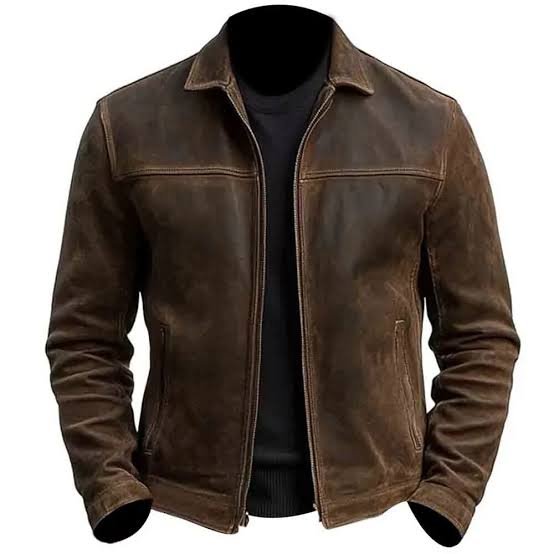
A brand may love a certain leather in its clean state but dislike how the finished jacket looks after the intended vintage treatment is applied.
That is why an experienced distressed leather jacket manufacturer should be discussing the finished objective, not simply selling a material name.
Full-grain, top-grain, cowhide, lambskin and other terms do not define the entire result
Leather terminology can describe origin, structure, processing or commercial classification, but it does not automatically tell the buyer:
- how the finished surface will look;
- how stiff or soft the jacket will feel;
- how the colour will react visually to treatment;
- how strongly an effect will contrast;
- whether the selected construction suits the intended silhouette.
The buyer therefore needs to evaluate the leather in relation to the finished jacket.
Elahi Vertex International’s existing custom leather-jacket page identifies leather type, thickness, texture and finish as project variables rather than treating leather simply through fabric-style GSM specifications.
Thickness matters—but there is no universal “best” thickness
A common sourcing mistake is asking:
“What is the best leather thickness for a distressed jacket?”
There is no single answer for every jacket.
The appropriate specification depends on factors including:
- jacket type;
- silhouette;
- required drape;
- leather selection;
- intended hand feel;
- construction;
- lining;
- climate;
- target customer;
- performance expectations;
- design details.
A fashion-forward distressed bomber may require a different material direction from a substantial motorcycle-inspired jacket.
A distressed leather jacket manufacturer should therefore confirm the material specification for the actual design rather than pretending one leather specification is universally superior.
Ask for finish swatches before committing to the jacket
A highly useful development sequence is:
Raw/initial leather direction → treated swatch → approved finish direction → jacket sample → bulk approval
A swatch can help answer questions early:
- Is the base shade correct?
- Is the contrast too aggressive?
- Does the distressing look natural or artificial?
- Is the surface too glossy?
- Is the effect too clean?
- Is the vintage character strong enough?
- Does rubbing reveal a visually acceptable undertone?
A swatch does not replace the garment sample because construction and panel geometry affect the final appearance.
But it can prevent the distressed leather jacket manufacturer from building an entire prototype around an obviously wrong finish direction.
What should USA, UK, German and European brands send?
For an international RFQ, provide:
| Requirement | Useful buyer input |
|---|---|
| Product | Bomber, biker, racer, aviator, overshirt, etc. |
| Leather | Desired material direction or request recommendation |
| Thickness | Target if technically defined |
| Colour | Pantone/reference/physical swatch where appropriate |
| Finish | Matte, vintage, distressed, waxed-look, etc. |
| Distressing | Light, medium, heavy + visual map |
| Fit | Slim, regular, relaxed, oversized |
| Size range | Buyer size chart |
| Hardware | Zipper, snaps, buckles, finish |
| Lining | Material/construction requirement |
| Branding | Embossing, patch, label, metal branding, etc. |
| Quantity | Sample + anticipated bulk |
| Destination | Country + postcode where quotation requires freight |
| Packaging | Buyer requirements |
| Compliance | Applicable market/project requirements |
This information makes the conversation with a distressed leather jacket manufacturer substantially more productive.

Mistake 3: Approving Colour but Failing to Approve the Distressing Pattern
Colour approval is not finish approval.
That sentence can prevent a major bulk-production dispute.
A buyer may approve a brown, black, charcoal, burgundy or tan base shade and assume the distressed bulk will therefore match the sample.
But distressing changes the visual reading of colour.
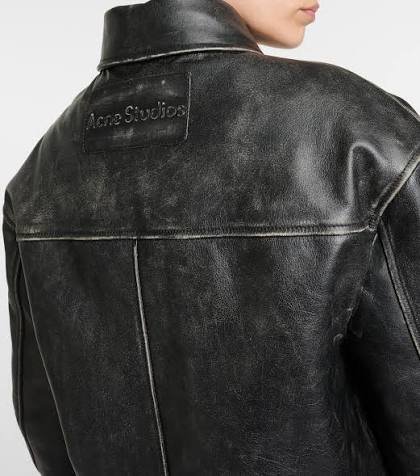
Two jackets can share a similar underlying colour while appearing completely different because one has:
- stronger edge highlighting;
- greater tonal contrast;
- heavier rubbing;
- more visible crease emphasis;
- darker recesses;
- broader faded zones.
For a distressed leather jacket manufacturer, colour and distress intensity therefore need to be controlled together.
Approve a visual hierarchy, not only a colour name
Instead of:
Colour: Vintage Brown
consider documenting:
Base colour: approved reference
Overall vintage intensity: medium
Edge contrast: medium-high
Body-panel variation: controlled
Sleeve variation: controlled
Back-panel appearance: predominantly uniform with designated ageing
Hardware appearance: approved antique direction
The exact technical treatment should be agreed with the manufacturer for the chosen leather and finish system.
Why bulk consistency becomes difficult
Distressed fashion contains a built-in tension:
Brands want individuality, but buyers still expect collection consistency.
If every unit is visually identical, the distressing may look printed or mechanical.
If every unit is completely different, the brand loses control.
A good distressed leather jacket manufacturer therefore needs an agreed range rather than an impossible demand for pixel-level replication.
Think in terms of a “visual tolerance window”
The approved sample becomes the centre of the target.
The buyer then defines what amount of variation remains commercially acceptable.
For example:
Acceptable
- minor natural grain variation;
- modest differences in exact abrasion position;
- controlled tonal variation consistent with approved vintage character.
Potentially unacceptable
- one sleeve substantially lighter than another;
- random high-contrast marks in clean zones;
- jackets ranging from barely distressed to heavily aged;
- incompatible panels;
- finish damage that looks accidental.
The actual acceptance standard must be agreed for the project.
Mistake 4: Allowing Uncontrolled Panel-to-Panel Variation
This is where distressed leather becomes particularly demanding.
Leather is a natural material, and hides are not visually identical sheets of synthetic fabric.
Natural variation can contribute to the character buyers want.
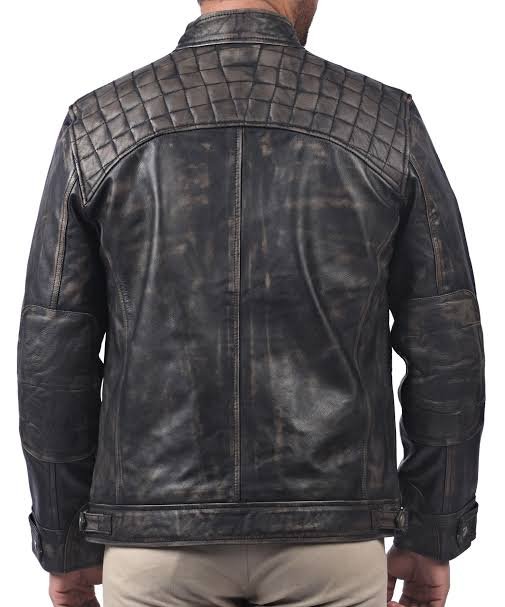
But uncontrolled panel selection can create a jacket that looks mismatched rather than intentionally vintage.
A capable distressed leather jacket manufacturer needs to consider how major visible panels work together.
Critical visual relationships include:
- left front vs right front;
- left sleeve vs right sleeve;
- upper sleeve vs lower sleeve;
- front vs back;
- collar vs body;
- pocket components vs surrounding panels;
- cuffs or leather trims vs adjacent material.
The goal is not to erase natural leather character.
The goal is to prevent combinations that visually fight each other.
Example: when natural variation becomes a commercial problem
Imagine a distressed brown jacket where:
- the left front is warm cognac;
- the right front reads dark chocolate;
- one sleeve is heavily distressed;
- the other sleeve appears almost new;
- the back is much glossier than the front.
Every component might individually qualify as “brown distressed leather.”
The completed garment can still look wrong.
This is why bulk inspection must consider the jacket as a complete visual object.
Panel matching should be discussed before cutting
The exact process depends on the material and project, but the sourcing principle is straightforward:
Do not wait until the finished garment to discover incompatible panel variation.
Buyer-approved expectations should guide:
- leather sorting;
- panel allocation;
- visual pairing;
- cutting decisions;
- finish application;
- final inspection.
For private-label brands, this is especially important on highly visible premium garments where the jacket itself may be one of the collection’s hero products.
The strongest question to ask a manufacturer
Instead of asking only:
“Can you make distressed leather jackets?”
ask:
“How will the approved vintage character and panel-to-panel appearance be controlled when the sample moves into bulk production?”
That question reveals much more about the supplier’s production thinking.
Buyers evaluating Elahi Vertex International can review selected production categories and work through the Elahi Vertex International Our Works page. The page covers custom leather wear alongside streetwear and other private-label manufacturing categories.
Mistake 5: Ignoring Rubbing, Crocking and Finish Durability
A distressed jacket is intentionally manipulated visually.
That does not mean uncontrolled colour transfer or surface failure should automatically be accepted as “part of the vintage look.”
This is where brands need to distinguish aesthetic distressing from performance testing.
ISO 11640:2018 specifies a method for assessing how a leather surface behaves when rubbed with wool felt and applies to leather generally. As of September 2026, ISO also lists a new ISO/DIS 11640 edition under development, meaning buyers specifying standards should verify the edition applicable to their project rather than copying an old reference blindly.
ISO 20433:2024 addresses colour transfer from coloured leather to other surfaces through dry and wet rubbing tests. ISO specifically notes that after-treatments and surface finishes can influence colour transfer.
That is directly relevant to a distressed leather jacket manufacturer because surface treatment is central to the product.
Why does crocking matter to a clothing brand?
Imagine a dark distressed jacket that transfers excessive colour onto:
- a white T-shirt;
- a pale hoodie;
- a car seat;
- a bag;
- another garment;
- retail packaging.
The jacket may look excellent in product photography while creating a customer complaint after use.
This does not mean every distressed jacket must be subjected to every available laboratory test.
Testing should be based on:
- product requirements;
- buyer expectations;
- destination;
- risk;
- material;
- finish;
- applicable regulation or standard;
- commercial agreement.
But ignoring finish behaviour completely is weak sourcing.
Questions buyers should ask
A brand can ask its distressed leather jacket manufacturer:
- What finish has been proposed?
- What behaviour should we expect from the surface?
- Has the finish direction been evaluated after rubbing?
- What testing does the project require?
- Is third-party laboratory testing required by our specification?
- Which test method and edition will be used?
- What acceptance criteria are being applied?
The last question matters.
A test name alone does not define the buyer’s acceptance requirement.
Authoritative technical resource
Brands developing serious leather programs should consult the relevant ISO leather standards rather than relying exclusively on marketing pages.
ISO 11640 — Leather colour fastness to rubbing
This is an external authoritative technical reference, not an Elahi Vertex International specification.
Mistake 6: Developing the Finish Without Considering Flex Behaviour
A leather jacket does not remain flat.
It bends repeatedly at:
- elbows;
- shoulders;
- cuffs;
- pocket areas;
- front closure;
- waist;
- collar;
- other movement zones.
That matters because a surface finish that looks excellent on a stationary swatch may behave differently after repeated flexing.
ISO 5402-1:2022 specifies a method for determining wet or dry flex resistance of leather and finishes applied to leather for flexible leather below 3.0 mm thickness.
Again, that does not mean every fashion jacket automatically requires a specific test regime.
It means the underlying performance issue is real and measurable.
A technically serious distressed leather jacket manufacturer discussion should therefore consider what happens to the chosen leather/finish combination during use.
Intentional ageing versus premature failure
Brands should separate:
Desired evolution
- subtle character development;
- natural-looking creasing;
- expected patina where appropriate.
from:
Undesired failure
- finish cracking outside the approved expectation;
- flaking;
- severe delamination;
- uncontrolled colour loss;
- structural leather damage.
The exact distinction depends on the product specification.
This is particularly important because a distressed jacket already looks aged when new. That can make poor finish performance easier to dismiss incorrectly as intentional vintage character.
Practical sample review
Before approving bulk, physically examine:
- elbows;
- cuff areas;
- collar;
- zipper area;
- pocket openings;
- heavily treated edges;
- logo/embossed areas;
- seams crossing distressed areas.
Flex and handle the garment.
Look at it under consistent lighting.
Compare it with the agreed reference.
For higher-risk or specification-driven programs, discuss appropriate testing with the distressed leather jacket manufacturer and, where necessary, an accredited testing laboratory.
Mistake 7: Approving the Leather but Not the Complete Jacket System
A distressed jacket is not only leather.
The visual identity comes from the interaction between:
- shell;
- lining;
- zipper;
- snaps;
- buckles;
- rivets;
- thread;
- rib;
- labels;
- patches;
- embossing;
- debossing;
- metal branding;
- pocket construction;
- edge finishing.
A distressed leather jacket manufacturer can reproduce the shell reasonably well and still deliver a disappointing product if these components are not approved together.
Hardware is especially important
Bright polished hardware can completely change the character of a heavily aged jacket.
Likewise, deliberately antique-looking hardware may be wrong for a cleaner premium vintage concept.
Do not write simply:
“Metal zipper.”
Define:
- zipper type;
- size/specification where required;
- finish;
- colour;
- puller;
- branding;
- one-way/two-way construction;
- pocket zipper direction;
- sample approval.
Similar logic applies to snaps, rivets and buckles.
Lining affects perceived value
The lining is what customers see and feel every time they put the jacket on.
Specify:
- material;
- colour;
- quilting if applicable;
- construction;
- branding;
- internal pocket requirements;
- label placement;
- seam finishing.
A strong exterior with an unsuitable interior can undermine the whole product.
Branding must survive the vintage aesthetic
If the jacket includes:
- embossing;
- debossing;
- leather patches;
- metal logos;
- embroidery;
- woven labels;
- printed labels;
- custom zipper pulls;
the distressed leather jacket manufacturer should understand whether the branding itself is meant to look aged or remain comparatively clean.
That decision should not be improvised during bulk production.
Elahi Vertex International’s leather-jacket manufacturing page lists custom logos, patches, embossing, labels, zippers, lining and private-label development among the available project variables.

Mistake 8: Moving Into Bulk Without a Proper Approval Reference
This may be the most commercially dangerous mistake in the entire article.
The buyer likes the sample.
The manufacturer understands that production is approved.
Then several weeks later, the bulk arrives and the buyer says:
“This isn’t what we approved.”
The supplier responds:
“It is the same distressed style.”
Now both sides are arguing from memory.
That is preventable.
The approved sample should become a control reference
Before bulk production, establish an approval package containing the relevant:
- sample version;
- dated approval;
- front photographs;
- back photographs;
- close-up finish photographs;
- leather specification;
- base colour;
- distress direction;
- hardware;
- lining;
- labels;
- branding;
- measurements;
- construction notes;
- packaging;
- approved changes;
- known acceptable variation.
Depending on the project, a retained physical sample can be especially valuable.
This creates a clearer benchmark for the buyer and distressed leather jacket manufacturer.
Never approve through scattered chat messages alone
WhatsApp and email are useful for communication.
They are poor substitutes for controlled specifications if critical decisions are spread across dozens of messages.
For example:
Monday:
Make it slightly darker.
Wednesday:
The sleeves need more ageing.
Friday:
Actually keep the back cleaner.
Next Monday:
Use the second zipper.
If those decisions are not consolidated, production risk rises.
Before bulk, issue a final approved specification.
Use version control
Simple naming helps.
For example:
DLJ-01 Sample V1
DLJ-01 Sample V2
DLJ-01 Final Approved Sample
DLJ-01 Bulk Specification Rev A
The exact system does not matter as much as clarity.
If a brand is working with multiple collections or colourways, version control becomes even more important.
Mistake 9: Inspecting Stitching but Ignoring Finish Consistency Across the Bulk Order
Traditional garment QC tends to focus on obvious construction issues:
- measurements;
- stitching;
- seam quality;
- zipper function;
- labels;
- packaging.
Those are still important.
But a distressed jacket adds another inspection dimension:
visual finish consistency.
A bulk order can be technically well sewn while commercially unacceptable because the distressing varies too much.
Inspect the order as a collection, not only as individual garments
Suppose every jacket looks reasonable when viewed alone.
Now place several units together.
Suddenly you may discover:
- dramatic shade differences;
- inconsistent ageing intensity;
- one batch significantly glossier;
- different edge effects;
- mismatched sleeves;
- varying hardware appearance.
This is why a distressed leather jacket manufacturer and buyer should agree how visual variation will be evaluated.
A useful bulk QC framework
A. Construction
Check:
- seams;
- stitching;
- pocket construction;
- zipper installation;
- snaps;
- lining;
- labels;
- reinforcements;
- finishing.
B. Measurements
Check against the approved measurement specification and agreed tolerances.
C. Material
Check:
- approved leather direction;
- obvious defects;
- panel compatibility;
- thickness/specification where applicable.
D. Distressed appearance
Check:
- overall intensity;
- base shade;
- distressed zones;
- clean zones;
- edge character;
- front/back balance;
- sleeve balance;
- unit-to-unit consistency.
E. Branding
Check:
- position;
- orientation;
- dimensions;
- clarity;
- attachment;
- approved finish.
F. Packaging
Check:
- folding/hanging requirements;
- protective materials;
- labels;
- barcode requirements;
- carton marking;
- buyer-specific instructions.
The Golden Rule of Distressed Leather Manufacturing
Do not attempt to eliminate variation. Control it.
This principle separates a thoughtful vintage program from an uncontrolled one.
Leather itself can contain natural variation.
Hand-applied or semi-manual finishing can add further variation.
The objective is therefore not necessarily:
Jacket A = Jacket B = Jacket C in every visual mark.
The objective is closer to:
Jacket A, B and C clearly belong to the same approved collection, colourway and finish standard.
That is a much more realistic conversation for a buyer to have with a distressed leather jacket manufacturer.
How to Evaluate a Distressed Leather Jacket Manufacturer
Price should be part of supplier evaluation.
It should not be the entire evaluation.
Use this framework:
| Evaluation area | What the buyer should investigate |
|---|---|
| Leather understanding | Can the supplier discuss leather type, thickness, surface and finish separately? |
| Distressing control | Can the supplier translate a reference into an approval standard? |
| Sampling | Is there a clear sample-development process? |
| Finish approval | Can swatches/close-ups be reviewed before bulk? |
| Panel control | How is obvious panel mismatch addressed? |
| Hardware | Are zipper, snap and metal finishes approved? |
| Branding | Can placement and finish be documented? |
| Measurements | Is there a final size specification? |
| Bulk consistency | How is unit-to-unit visual variation reviewed? |
| QC | Are construction and appearance both inspected? |
| Communication | Are revisions consolidated clearly? |
| Export preparation | Are destination and shipment requirements discussed? |
Distressed Leather Jacket Manufacturer for USA Brands
US fashion and streetwear brands should not choose a distressed leather jacket manufacturer solely from an attractive sample photograph.
A strong RFQ should communicate:
- target retail positioning;
- expected order quantity;
- leather direction;
- jacket silhouette;
- size range;
- fit;
- finish reference;
- branding;
- packaging;
- destination;
- required testing/compliance specifications.
The manufacturer can then evaluate the actual product rather than guessing from an Instagram reference.
US buyers should also distinguish between aesthetic specifications and legal/compliance obligations relevant to their product and sales channel.
Requirements can depend on product composition, claims, market and other factors, so compliance should be verified for the specific program rather than copied from another jacket.

Distressed Leather Jacket Manufacturer for UK Brands
For UK buyers, manufacturing and import planning should be treated as connected—but separate—workstreams.
A distressed leather jacket manufacturer can manufacture the garment to the agreed specification, while the importer must also understand relevant customs classification, documentation and market obligations.
HM Revenue & Customs publishes guidance for classifying leather and articles associated with the leather trade for import and export.
HMRC guidance on classifying leather for import and export
Do not rely on a generic blog to determine the final tariff treatment of a shipment.
Confirm the correct classification for the actual product.
UK streetwear and fashion brands should send their manufacturer:
- tech pack;
- measurements;
- fit reference;
- leather/finish direction;
- labels;
- packaging;
- destination;
- quantity;
- target launch schedule.
Distressed Leather Jacket Manufacturer for Germany
German buyers often operate within the wider EU regulatory framework, making chemical compliance an important procurement consideration in addition to design and quality.
For leather articles coming into contact with skin, EU REACH Annex XVII includes a chromium VI restriction. Regulation (EU) No 301/2014 added provisions preventing relevant leather articles from being placed on the market where chromium VI reaches or exceeds 3 mg/kg of the total dry weight of the leather.
Official EUR-Lex chromium VI leather restriction
That is a genuine compliance issue, not an SEO keyword.
A German brand discussing a project with a distressed leather jacket manufacturer should therefore separate:
- aesthetic requirements;
- construction requirements;
- quality requirements;
- chemical/compliance requirements;
- import requirements.
The required evidence and testing should be established for the specific project.
Distressed Leather Jacket Manufacturer for European Brands
Europe is not one homogeneous commercial market, but EU rules create common compliance considerations across member states.
A European fashion company should therefore evaluate a distressed leather jacket manufacturer on both product-development capability and the manufacturer’s ability to work from clearly defined buyer specifications.
The buyer should establish:
- destination country;
- product composition;
- leather specification;
- chemical requirements;
- testing requirements;
- labelling requirements;
- packaging requirements;
- importer responsibilities;
- documentation;
- applicable EU rules.
Never assume that “export quality” is a compliance standard.
It is not specific enough.
Request the actual requirement, standard or test where applicable.
What Should You Send a Distressed Leather Jacket Manufacturer?
A high-quality RFQ saves time.
Distressed Leather Jacket RFQ Checklist
Send:
- Brand/company name
- Destination country
- Jacket type
- Reference images
- Technical drawing if available
- Tech pack if available
- Leather preference
- Required thickness or performance direction if defined
- Base colour
- Distressed finish reference
- Distressing intensity
- Front distress map
- Back distress map
- Fit
- Size range
- Measurement chart
- Lining
- Zipper specification
- Snap/button specification
- Other hardware
- Logo method
- Label specifications
- Hangtags
- Packaging
- Sample quantity
- Expected bulk quantity
- Required delivery window
- Testing requirements
- Compliance requirements
- Shipping destination/postcode
The more complete this package is, the less the distressed leather jacket manufacturer has to guess.
Sample Approval Checklist Before Bulk Production
Do not write only:
“Sample approved.”
Review systematically.
Appearance
- Base colour approved
- Overall distressed intensity approved
- Front approved
- Back approved
- Sleeves approved
- Edge treatment approved
- Surface sheen approved
Material
- Leather direction approved
- Thickness/specification approved
- Hand feel approved
- Grain/surface approved
Construction
- Fit approved
- Measurements approved
- Stitching approved
- Pockets approved
- Collar approved
- Cuffs approved
- Waist construction approved
Components
- Zipper approved
- Snaps approved
- Buckles approved
- Rivets approved
- Lining approved
Branding
- Main label approved
- Size label approved
- Care/content label requirements confirmed
- Logo approved
- Emboss/deboss approved where applicable
- Hangtag approved
Commercial
- Bulk quantity confirmed
- Size breakdown confirmed
- Packaging confirmed
- Destination confirmed
- Production terms confirmed
- Inspection requirements confirmed
- Shipping responsibilities confirmed
Only then should a buyer and distressed leather jacket manufacturer treat the design as genuinely production-ready.
Sample vs Bulk: Where Distressed Jackets Commonly Drift
| Area | Sample risk | Bulk risk | Control |
|---|---|---|---|
| Base colour | Wrong direction | Batch variation | Approved reference |
| Distress intensity | Too weak/strong | Unit inconsistency | Visual standard |
| Panels | Attractive individually | Mismatched assembly | Panel evaluation |
| Hardware | Temporary/sample trim | Different bulk trim | Approved component |
| Lining | Substitute | Unapproved change | Material approval |
| Branding | Approximate position | Placement variation | Measurement/specification |
| Fit | Sample corrected manually | Grading issue | Final measurement chart |
| Finish | Hand-adjusted | Process variation | Defined finish standard |
| Packaging | Not evaluated | Transit/retail problem | Packaging specification |
This table illustrates why a beautiful sample alone is not enough.
Why Work With Elahi Vertex International for a Custom Leather Project?
Elahi Vertex International is a Sialkot, Pakistan-based B2B custom apparel manufacturer whose published product range includes leather wear alongside streetwear, sportswear, teamwear, activewear, boxing wear and private-label apparel.
For leather-jacket development, the company’s published leather-jacket page includes customization around leather type, colour, thickness, fit, pockets, zippers, lining, hardware, stitching, logos, labels and packaging.
For brands requiring their own identity, the private-label inquiry system also provides a route for submitting designs, specifications, vintage/wash requirements, fit, labels, size information and target quantities.
That makes the most productive first conversation highly specific.
Instead of asking:
“How much for leather jacket?”
send:
- design;
- leather direction;
- distressed finish reference;
- quantity;
- sizing;
- branding;
- destination.
Elahi Vertex International can then review the project requirements and confirm project-specific manufacturing details rather than forcing a generic specification onto a custom product.
Start a distressed leather jacket project
Discuss the project on WhatsApp
Email: elahivertexinternational@gmail.com
Phone/WhatsApp: +92 309 1639614
Review Elahi Vertex International’s leather jacket manufacturing page
Submit a private-label manufacturing inquiry
Useful External Resources
- International Organization for Standardization — ISO 11640:2018: technical reference covering leather surface behaviour under to-and-fro rubbing. Useful when discussing finish/rubbing performance.
ISO 11640:2018 - International Organization for Standardization — ISO 20433:2024: addresses colour transfer from coloured leather through dry and wet rubbing. Particularly relevant where surface treatments or distressed finishes may affect transfer.
ISO 20433:2024 - International Organization for Standardization — ISO 5402-1:2022: covers determination of wet or dry flex resistance of leather and leather finishes for flexible leather below 3.0 mm.
ISO 5402-1:2022 - EUR-Lex — EU chromium VI restriction: primary EU legal source relevant to chromium VI restrictions for leather articles or leather parts coming into contact with skin.
Regulation (EU) No 301/2014 on EUR-Lex - HM Revenue & Customs: official UK guidance concerning classification of leather and relevant articles for import/export.
HMRC leather classification guidance
Internal Resources for Buyers
Buyers researching Elahi Vertex International can continue through these verified pages:
- Custom Leather Jackets — direct leather-jacket product and customization information.
- Private Label Manufacturing Inquiry — project submission route for custom specifications.
- Our Works — selected manufacturing work and process context.
- Portfolio — custom apparel categories including custom leather wear and private-label manufacturing.
- Elahi Vertex International — main company and manufacturing overview.
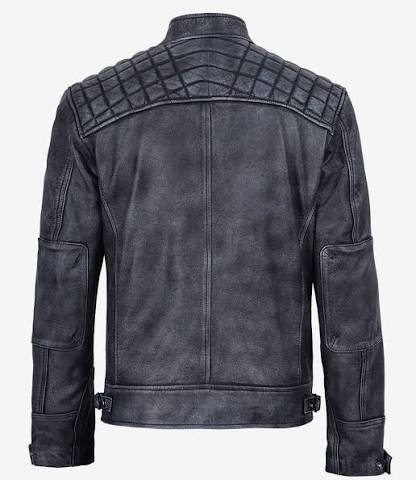
Frequently Asked Questions About Choosing a Distressed Leather Jacket Manufacturer
1. What is a distressed leather jacket manufacturer?
A distressed leather jacket manufacturer develops leather jackets with an intentionally aged, worn or vintage-inspired surface direction while manufacturing the garment according to an agreed design, construction and commercial specification.
2. How do I choose a distressed leather jacket manufacturer?
Evaluate more than price. Review leather understanding, finish development, sampling, construction, branding, panel consistency, bulk QC, communication and ability to work from a clear specification.
3. Can a distressed leather jacket manufacturer make private-label jackets?
Private-label capability depends on the supplier. Elahi Vertex International publishes private-label manufacturing services and custom leather-jacket options for B2B projects.
4. Why can distressed leather jackets vary from piece to piece?
Leather can have natural variation, while vintage/distressed finishing can introduce additional controlled visual variation. The buyer should establish what variation is acceptable before bulk production.
5. Should every distressed jacket look exactly identical?
Not necessarily. Exact replication of every abrasion mark may conflict with the natural vintage aesthetic. The more useful objective is an agreed visual range where all units clearly belong to the same approved finish direction.
6. What should I send a distressed leather jacket manufacturer?
Send your design or reference, tech pack if available, leather direction, finish reference, sizing, branding, hardware, lining, quantity, packaging requirements, destination and any testing/compliance requirements.
7. Should I order a sample before bulk distressed leather jacket production?
Sampling is a highly valuable risk-control step because it lets the buyer review fit, material, construction, branding and finish before approving bulk production.
8. How should a distressed leather finish be approved?
Use clear photographs, finish close-ups, written specifications and preferably a controlled physical approval reference where practical. Record the approved distress intensity and permitted variation.
9. Is a Pantone colour enough for distressed leather?
Not necessarily. A colour reference helps define colour direction, but distressing changes the final visual appearance. Finish intensity and surface character should also be approved.
10. What leather is best for distressed leather jackets?
There is no universal best leather. Selection depends on silhouette, hand feel, thickness, durability expectations, surface character, finishing system, budget and target customer.
11. Can a distressed leather jacket manufacturer reproduce a reference image?
A reference image can establish design direction, but technical feasibility, leather behaviour, construction and finish should be confirmed through development and sampling rather than assuming a photograph can be copied perfectly.
12. How can a brand maintain distressed finish consistency in bulk?
Use an approved sample/reference, define acceptable variation, document distressed zones and intensity, control components and inspect the bulk visually as a group as well as garment by garment.
13. What is crocking in leather?
Crocking concerns colour transfer through rubbing. ISO 20433:2024 provides a method for evaluating colour transferred from coloured leather using dry and wet rubbing cloths.
14. Why is rubbing performance relevant to a distressed leather jacket manufacturer?
Because distressed products rely heavily on surface appearance and treatment. Excessive unintended colour transfer or surface deterioration may create a performance problem even when the original vintage appearance looks attractive.
15. Should leather-jacket finishes be flex tested?
Testing requirements depend on the product specification and risk. ISO 5402-1:2022 provides a method for evaluating wet or dry flex resistance of leather and applied finishes for flexible leather below 3.0 mm.
16. What should German brands ask a distressed leather jacket manufacturer about compliance?
The specific requirements depend on the product. For relevant leather articles contacting skin, buyers should consider applicable EU REACH requirements, including chromium VI restrictions, and define required evidence/testing for the project.
17. What should UK buyers consider when importing distressed leather jackets?
In addition to product development, UK importers should confirm applicable classification, documentation, duties and regulatory obligations for the actual goods. HMRC provides official classification guidance.
18. Can Elahi Vertex International manufacture custom leather jackets?
Elahi Vertex International publishes custom leather-jacket manufacturing with configurable leather type, colour, thickness, fit, lining, hardware, branding, labels and packaging for B2B projects.
19. Does Elahi Vertex International offer private-label leather-jacket development?
Its published private-label inquiry system includes leather jackets and allows buyers to provide designs, specifications, vintage-effect requirements, sizing and branding information.
20. How do I request a distressed leather jacket manufacturing quote?
Prepare your design/reference, leather and finish direction, quantity, size range, branding requirements and delivery destination. Then contact Elahi Vertex International on WhatsApp or use its private-label manufacturing inquiry form.

Final Distressed Leather Jacket Buyer Checklist
Before releasing bulk production, ask:
- Is the leather specification approved?
- Is the base colour approved?
- Is the distressing intensity approved?
- Are the front and back visual directions documented?
- Are the sleeves visually balanced?
- Is acceptable natural variation understood?
- Is unacceptable variation defined?
- Are hardware finishes approved?
- Is the lining approved?
- Is branding approved?
- Are labels approved?
- Is fit approved?
- Are measurements approved?
- Is the size breakdown final?
- Are required tests identified?
- Are market/compliance requirements confirmed?
- Is packaging approved?
- Is the final sample/version clearly identified?
- Is there a retained approval reference?
- Is bulk visual inspection planned?
If several answers are “no,” the project probably is not ready for bulk production.
Conclusion: The Best Distressed Finish Is Controlled, Not Random
Finding a distressed leather jacket manufacturer is easy compared with finding the right production process for a commercially consistent vintage jacket.
The difficult part is translating an artistic idea—worn, aged, rugged, faded, vintage—into specifications that production and quality-control teams can actually follow.
Brands in the USA, UK, Germany and Europe should therefore avoid treating distressing as decoration added at the end of development.
It needs to be considered alongside:
- leather;
- colour;
- construction;
- fit;
- hardware;
- branding;
- performance;
- compliance;
- sampling;
- bulk quality control.
The central principle is simple:
A distressed jacket should look intentionally individual without looking accidentally inconsistent.
The buyer and distressed leather jacket manufacturer should agree where variation is desirable, where consistency is essential and what evidence constitutes final approval.
That approach reduces ambiguity before money, materials and production capacity are committed.
Developing a Private-Label Distressed Leather Jacket?
Elahi Vertex International works with international B2B buyers on custom leather-wear and private-label apparel projects.
Send:
Design/reference + quantity + sizing + leather direction + vintage/distressed finish + branding + destination.
Discuss Your Project on WhatsApp
Phone / WhatsApp: +92 309 1639614
Email: elahivertexinternational@gmail.com
Secondary email: Info@elahivertexinternational.com
Visit Elahi Vertex International
Submit a Private-Label Manufacturing Inquiry
Elahi Vertex International — Where Brands Are Made.
Useful External Resources for Distressed Leather Jacket Buyers
Buyers sourcing distressed leather jackets should not rely only on supplier claims. Technical standards, government guidance and regulatory sources can help brands in the USA, UK, Germany and Europe understand leather testing, finish durability, chemical requirements, product safety and importing responsibilities.
- ISO 11640 — Leather Colour Fastness to Rubbing
https://www.iso.org/standard/73372.html
Useful when evaluating how a leather surface and its finish behave under repeated rubbing. This is particularly relevant when a distressed leather jacket manufacturer uses surface treatments that intentionally change colour and appearance. - ISO 20433 — Colour Transfer from Leather
https://www.iso.org/standard/86793.html
Useful for understanding dry and wet colour transfer from coloured leather. Brands developing dark, washed or distressed leather jackets should consider whether the approved finish could transfer unwanted colour during use. - ISO 11641 — Leather Colour Fastness to Perspiration
https://www.iso.org/standard/89401.html
Relevant when assessing how coloured leather may react to perspiration, particularly for garments worn close to the body. - ISO 11644 — Adhesion of Leather Finish
https://www.iso.org/standard/81924.html
A useful technical reference when considering finish adhesion. A vintage appearance should not automatically be used to excuse unintended peeling or poor finish performance. - ISO 5402-1 — Leather Flex Resistance
https://www.iso.org/standard/75893.html
Relevant to areas such as elbows, cuffs and other movement zones. Distressed leather jackets must flex during wear, so finish behaviour should be considered during development. - ISO 15700 — Leather Colour Fastness to Water Spotting
https://www.iso.org/standard/28704.html
Useful when considering how leather colour and surface appearance may react to water spotting. - ISO 11643 — Leather Colour Fastness to Solvents
https://www.iso.org/standard/43412.html
A technical reference relevant to colour-fastness evaluation where solvent exposure forms part of the applicable testing requirement. - ISO 2589 — Determination of Leather Thickness
https://www.iso.org/standard/68859.html
Useful for brands specifying leather thickness instead of relying only on vague terms such as lightweight, medium or heavy leather. - ISO 3377-1 — Leather Tear Load
https://www.iso.org/standard/51511.html
Useful when evaluating physical leather performance. An attractive distressed finish should not distract buyers from structural material requirements. - ISO 4045 — Determination of Leather pH
https://www.iso.org/standard/73701.html
A technical resource for buyers researching chemical leather testing and quality requirements. - ISO 17229 — Water Vapour Absorption of Leather
https://www.iso.org/standard/68862.html
Useful for buyers researching additional physical properties of leather for garment-development specifications. - ISO Leather and Fur Standards Catalogue
https://www.iso.org/ics/59.140.30/x/
A broader ISO resource for brands, sourcing professionals and quality teams researching internationally recognized leather test methods. - EUR-Lex — EU Chromium VI Restriction for Leather
https://eur-lex.europa.eu/legal-content/EN/TXT/?uri=CELEX:32014R0301
Particularly important for German and European buyers researching restrictions relating to chromium VI in relevant leather articles or leather components that come into contact with skin. - European Chemicals Agency — REACH
https://echa.europa.eu/regulations/reach
Useful for European brands researching chemical requirements applicable to products placed on the EU market. Compliance requirements should always be confirmed for the specific product. - EUR-Lex — EU General Product Safety Regulation
https://eur-lex.europa.eu/eli/reg/2023/988/oj
Useful for brands selling consumer products in the European Union and researching their wider product-safety responsibilities. - UK Government — Classifying Leather for Import and Export
https://www.gov.uk/guidance/classifying-leather
Useful for UK buyers researching customs classification of leather and leather-related products. - UK Government — Product Safety Advice for Businesses
https://www.gov.uk/guidance/product-safety-advice-for-businesses
A useful starting point for UK businesses researching their product-safety responsibilities rather than assuming that factory QC alone establishes legal compliance. - U.S. Consumer Product Safety Commission — Clothing Guidance
https://www.cpsc.gov/FAQ/Clothing
Useful for US clothing brands researching federal requirements relevant to wearing apparel and applicable product-safety obligations. - U.S. Federal Trade Commission — Made in USA Guidance
https://www.ftc.gov/business-guidance/advertising-marketing/made-in-usa
Useful for US brands considering manufacturing-origin claims and understanding why brand location and manufacturing origin should not be confused. - U.S. Customs and Border Protection — Importing into the United States
https://www.cbp.gov/trade/basic-import-export
Useful for US importers researching customs and importing responsibilities when sourcing products internationally.
These resources are provided for buyer research. The exact standards, tests, regulations and import requirements applicable to a distressed leather jacket depend on the product, materials, destination market and commercial program. Buyers should verify current requirements for their specific project.
Explore Elahi Vertex International — Internal Resources
If you are evaluating a distressed leather jacket manufacturer, do not stop at one article. Review the manufacturer’s leather capabilities, production approach, previous work, private-label process and inquiry routes before discussing bulk production.
- Custom Leather Jacket Manufacturing
https://elahivertexinternational.com/product/leather-jackets-5/
Review custom leather jacket options including leather selection, finish, lining, hardware, branding, labels and other project-specific customization. - Private Label Manufacturing
https://elahivertexinternational.com/private-label-manufacturing/
Useful for brands developing their own distressed leather jackets under a private label and preparing specifications, sizing, branding and quantity requirements. - Manufacturing Process
https://elahivertexinternational.com/manufacturing/
Review the broader Elahi Vertex International manufacturing workflow when evaluating how a sample can progress toward bulk production. - Custom Clothing Manufacturing
https://elahivertexinternational.com/custom-clothing-manufacturing/
Explore the wider custom apparel manufacturing capabilities of Elahi Vertex International for brands requiring more than one product category. - Our Works
https://elahivertexinternational.com/our-works-elahi-vertex-international/
Review manufacturing work and production context before deciding whether to begin a development conversation. - Elahi Vertex International Portfolio
https://elahivertexinternational.com/portfolio-10/
Explore custom apparel and leather-wear work relevant to brands evaluating a manufacturing partner. - How to Order Custom Manufacturing
https://elahivertexinternational.com/how-to/
Useful for buyers preparing to move from an idea or reference design toward specifications, sampling and manufacturing. - OEM Clothing Manufacturing
https://elahivertexinternational.com/oem-clothing-manufacturing/
Useful for brands researching OEM manufacturing and determining how their own specifications can be developed into a finished product. - Verify Elahi Vertex International
https://elahivertexinternational.com/is-elahi-vertex-international-legit/
Review company information and available verification material before beginning a commercial relationship. - About Elahi Vertex International
https://elahivertexinternational.com/about-us/
Learn more about Elahi Vertex International and its positioning as a custom B2B manufacturing and export partner. - Contact Elahi Vertex International
https://elahivertexinternational.com/contact-us/
Use the contact page when you are ready to discuss a distressed leather jacket project, specifications or manufacturing requirements. - Elahi Vertex International Official Website
https://www.elahivertexinternational.com/
Explore the company’s main manufacturing categories, services and buyer resources.
Ready to Discuss a Distressed Leather Jacket Project?
If you are a clothing brand, streetwear label, private-label company, wholesaler or sourcing buyer in the USA, UK, Germany or wider Europe, send Elahi Vertex International your actual project requirements rather than requesting a generic quotation.
For the most useful initial review, send:
- Jacket reference or technical drawing
- Leather preference
- Distressed/vintage finish reference
- Required colour
- Fit and size range
- Branding requirements
- Hardware and lining requirements
- Sample requirement
- Expected bulk quantity
- Destination country and postcode
WhatsApp:
https://wa.me/message/OWIPAIXYWHTPI1
Phone / WhatsApp:
+92 309 1639614
Email:
elahivertexinternational@gmail.com
Website:
https://www.elahivertexinternational.com/
Custom Leather Jackets:
https://elahivertexinternational.com/product/leather-jackets-5/
Private Label Manufacturing:
https://elahivertexinternational.com/private-label-manufacturing/
Elahi Vertex International — Where Brands Are Made.
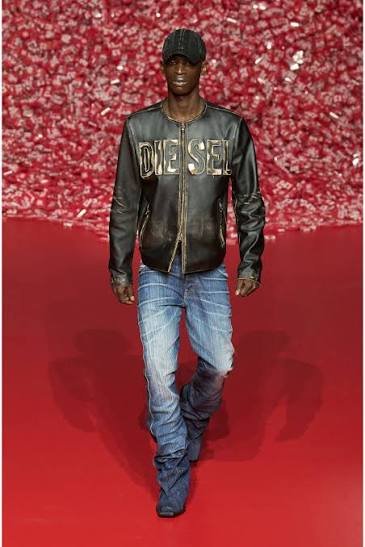
Men’s vs Women’s Distressed Leather Jackets: 20 Manufacturing Points Brands Should Define
A distressed leather jacket manufacturer should not automatically use the same block, proportions and grading approach for men’s and women’s jackets. At the same time, brands should avoid assuming that every men’s jacket must be broad and every women’s jacket must be fitted.
Modern streetwear increasingly uses relaxed, oversized and unisex silhouettes. The correct approach is to define the intended customer, fit and measurements for the specific design.
For brands in the USA, UK, Germany and Europe, these 20 points should be confirmed when developing men’s, women’s or unisex distressed leather jackets.
1. Define the Target Fit Before Pattern Development
The first decision should be the intended silhouette.
A men’s distressed leather jacket may be designed as:
- slim;
- regular;
- relaxed;
- boxy;
- oversized.
A women’s distressed leather jacket may similarly be:
- fitted;
- regular;
- cropped;
- relaxed;
- boxy;
- oversized.
Do not ask a distressed leather jacket manufacturer to simply make a jacket “men’s” or “women’s.” Define what the finished silhouette should actually look like.
2. Do Not Automatically Use a Men’s Pattern for Women’s Production
Changing the size label does not create a properly developed women’s fit.
Depending on the design, chest, waist, hip, shoulder, sleeve and overall proportions may need different pattern development.
The correct measurements should come from the approved brand specification rather than assumptions about gender.
3. Define Chest Measurements Clearly
Chest dimensions strongly influence the jacket’s overall appearance.
A biker jacket intended to fit close to the body requires a different chest relationship from an oversized streetwear leather bomber.
Provide the distressed leather jacket manufacturer with actual garment measurements and the intended ease rather than relying only on labels such as S, M or L.
4. Define Waist Shape Instead of Assuming It
Some women’s leather jackets use more waist shaping.
Others deliberately use a straight, boxy silhouette.
Likewise, men’s jackets can range from fitted racer jackets to wide streetwear silhouettes.
The pattern should follow the design—not a stereotype.
5. Consider Hip Proportion and Jacket Length Together
Hip dimensions become particularly important when a jacket extends below the waist.
A longer women’s jacket may require different proportions from a cropped design.
The distressed leather jacket manufacturer should evaluate jacket length and lower-body dimensions together so the garment hangs correctly when closed.
6. Control Shoulder Width
Shoulder width can completely change the character of a leather jacket.
A narrow shoulder can create a fitted appearance, while a dropped shoulder can create a modern oversized streetwear silhouette.
Brands should specify:
- shoulder width;
- shoulder position;
- natural or dropped shoulder;
- shoulder padding if applicable;
- intended silhouette.
This is especially important when men’s and women’s versions are being developed from the same collection concept.
7. Specify Sleeve Length Separately
Do not assume sleeve length will automatically scale correctly from the body.
Confirm:
- sleeve length;
- armhole;
- bicep width;
- elbow area;
- cuff opening;
- sleeve shape.
Distressing around elbows and cuffs should also remain visually appropriate after the sleeve dimensions are changed.
8. Consider Armhole Shape and Mobility
A leather jacket needs to look correct while still allowing the intended level of movement.
Armhole construction interacts with:
- shoulder shape;
- chest;
- sleeve width;
- jacket silhouette;
- leather thickness;
- lining.
A distressed leather jacket manufacturer should develop this relationship according to the approved fit rather than simply enlarging or reducing the entire pattern proportionally.
9. Decide Whether the Women’s Jacket Is Cropped
Cropped distressed leather jackets can require a substantially different visual balance.
When shortening the body, reconsider:
- pocket position;
- zipper length;
- waist treatment;
- logo position;
- distress zones;
- lining;
- panel proportions.
Simply cutting several centimetres from the bottom of a longer jacket may destroy the intended proportions.
10. Reposition Pockets for Each Fit
Pocket placement should be evaluated on the actual garment size and silhouette.
The correct position may change according to:
- jacket length;
- chest dimensions;
- waist;
- hip;
- hand access;
- design style.
This matters visually because pocket edges are often deliberately highlighted or distressed.
11. Scale Distressing to the Garment
A distress pattern developed on a large men’s jacket should not necessarily be copied at identical dimensions onto a smaller women’s jacket.
The distressed leather jacket manufacturer should preserve the same visual language while adapting the distressed zones to the available panel area.
The objective is proportional consistency rather than mechanically identical marks.
12. Keep Vintage Character Consistent Across Men’s and Women’s Versions
If both versions belong to one collection, they should look related.
For example, both may share:
- the same base colour;
- similar surface sheen;
- matching vintage intensity;
- coordinated edge wear;
- related hardware;
- consistent branding.
The pattern and proportions can differ without making the garments look like unrelated products.
13. Define Leather Hand Feel for the Intended Silhouette
The same leather direction may behave differently in a fitted jacket and an oversized jacket.
A brand should consider the relationship between:
- thickness;
- softness;
- structure;
- drape;
- surface;
- finish;
- garment construction.
A distressed leather jacket manufacturer should confirm the material direction for the actual design rather than assuming one leather specification suits every men’s and women’s jacket.
14. Review Hardware Proportion
Zippers, snaps, buckles and other hardware should be visually balanced against the garment.
A heavy oversized biker jacket may intentionally use substantial hardware.
A smaller or cleaner silhouette may require a different visual balance.
That does not mean women’s hardware must always be smaller. The hardware should follow the design concept.
15. Recheck Branding Size and Position
A logo developed for one jacket size may look disproportionately large or small on another silhouette.
Review:
- chest logo dimensions;
- back artwork;
- embossing;
- debossing;
- patches;
- metal logos;
- sleeve branding;
- label dimensions.
The distressed leather jacket manufacturer should receive dimensions and placement measurements rather than instructions such as “same logo on women’s.”
16. Develop Separate Size Charts Where Necessary
Men’s and women’s size labels should not automatically share identical measurements.
A brand may require:
Men’s: XS–3XL
Women’s: XXS–2XL
or another range entirely.
The actual range depends on the target customer.
What matters is that each size has approved garment measurements and grading rules.
For a unisex collection, create one intentional unisex size chart rather than accidentally using a men’s chart and calling it unisex.
17. Approve Men’s and Women’s Samples Separately
If the pattern construction differs materially, approving only the men’s sample creates unnecessary risk for women’s bulk production.
Review each required fit for:
- silhouette;
- chest;
- shoulders;
- sleeves;
- length;
- pocket position;
- hardware position;
- distressing;
- branding.
A distressed leather jacket manufacturer should know which sample or fit reference controls each production version.
18. Check Distressing on Different Sizes
Distressing can appear heavier on a smaller panel because the affected area occupies a larger percentage of the garment.
Compare multiple sizes where the project justifies it.
Pay particular attention to:
- chest;
- shoulders;
- elbows;
- cuffs;
- pocket edges;
- waistband;
- back panel.
The vintage character should remain recognizable across the size range.
19. Inspect Men’s and Women’s Bulk Separately
Do not assume that because one production group passes visual inspection, the other automatically will.
Check both for:
- colour;
- distress intensity;
- panel matching;
- fit;
- measurements;
- hardware;
- branding;
- lining;
- workmanship;
- packaging.
Then compare them together to confirm they still communicate the same collection identity.
20. Consider a True Unisex Distressed Leather Jacket
Not every collection needs separate men’s and women’s versions.
Streetwear brands may deliberately develop a unisex distressed leather jacket using a boxy, relaxed or oversized block.
If this route is chosen, define it intentionally.
Confirm:
- base size;
- chest;
- shoulder;
- body length;
- sleeve length;
- intended oversized ease;
- grading;
- model-fit expectations;
- size range.
A unisex jacket should be a consciously developed product—not simply a men’s jacket marketed to everyone.
Men’s vs Women’s Distressed Leather Jacket Development Comparison
| Development Point | Men’s Direction | Women’s Direction | Unisex Direction |
|---|---|---|---|
| Fit | Slim to oversized | Fitted to oversized | Usually relaxed/boxy |
| Shoulder | Design-specific | Design-specific | Often relaxed/dropped |
| Chest | Based on target fit | Based on target fit | Extra ease often intentional |
| Waist | Straight or shaped | Straight or shaped | Commonly straighter |
| Hip | Important on longer styles | Particularly important on longer styles | Must suit intended size range |
| Length | Cropped to long | Cropped to long | Often mid/regular |
| Sleeve | Size-specific | Size-specific | Often relaxed |
| Pockets | Fit-dependent | Fit-dependent | Accessibility across wearers |
| Distressing | Proportional to panels | Proportional to panels | Consistent visual language |
| Hardware | Design-dependent | Design-dependent | Design-dependent |
| Branding | Scale to garment | Scale to garment | Balanced across sizes |
| Grading | Men’s approved chart | Women’s approved chart | Dedicated unisex chart |
The most important principle is simple: fit should be engineered from the intended design and customer, not from assumptions about gender.
Buyer Checks Before Ordering Men’s or Women’s Distressed Leather Jackets
Before approving bulk production with a distressed leather jacket manufacturer, confirm:
- Men’s, women’s or intentionally unisex product?
- Slim, regular, relaxed, boxy or oversized fit?
- Final chest measurements approved?
- Shoulder measurements approved?
- Waist shaping approved?
- Hip dimensions checked where relevant?
- Body length approved?
- Sleeve length approved?
- Armhole and bicep dimensions approved?
- Cuff opening approved?
- Pocket positions approved?
- Zipper length and position approved?
- Hardware size and finish approved?
- Leather specification approved?
- Distressed finish intensity approved?
- Distressing scaled correctly for each fit?
- Branding dimensions and placement approved?
- Separate size charts or intentional unisex chart approved?
- Required fit samples approved?
- Bulk QC criteria established for each version?
These checks give the buyer and distressed leather jacket manufacturer a clearer reference before leather is committed to bulk production.
Developing Men’s, Women’s or Unisex Distressed Leather Jackets?
Elahi Vertex International works with international B2B clothing brands and private-label buyers on custom leather-wear development.
For an efficient project review, send:
Men’s / Women’s / Unisex + design + measurements + leather direction + distressed finish reference + branding + quantity + destination.
WhatsApp:
https://wa.me/message/OWIPAIXYWHTPI1
Custom Leather Jackets:
https://elahivertexinternational.com/product/leather-jackets-5/
Private Label Manufacturing:
https://elahivertexinternational.com/private-label-manufacturing/
Official Website:
https://www.elahivertexinternational.com/
Elahi Vertex International — Where Brands Are Made.
Ready to Develop Your Distressed Leather Jacket Collection?
A strong vintage concept deserves more than a generic manufacturing quote.
If you are building men’s, women’s or unisex distressed leather jackets for the USA, UK, Germany or wider European market, send Elahi Vertex International the actual project requirements. We can review the product around the areas that matter before bulk production: design, leather direction, vintage finish, fit, construction, hardware, lining, branding, sizing, packaging and order requirements.
Whether you are developing a single hero jacket or building a wider private-label collection, the best starting point is a clear specification.
Send Us Your Project Requirements
For a useful initial manufacturing review, send:
- Men’s, women’s or unisex style
- Jacket reference or technical drawing
- Tech pack, if available
- Leather preference
- Leather thickness requirement, if already specified
- Distressed/vintage finish reference
- Base colour
- Fit: slim, regular, relaxed, boxy or oversized
- Size range
- Measurement chart
- Zippers and hardware
- Lining requirements
- Logo and branding method
- Labels and hangtags
- Packaging requirements
- Sample requirement
- Expected bulk quantity
- Target market
- Delivery destination and postcode
- Required testing or compliance specifications
Don’t have a complete tech pack yet? Send the information you already have and clearly identify what still needs development or confirmation.
Choosing the Right Manufacturing Partner for Distressed Leather Jackets
A distressed leather jacket manufacturer should be evaluated on more than the appearance of one sample. Brands need to understand how leather selection, surface finishing, pattern development, hardware, construction and final inspection will be controlled when production moves from development into bulk.
Buyers can first review the custom leather jacket manufacturing options from Elahi Vertex International before preparing an RFQ. The objective should be to give the manufacturer enough technical information to evaluate the actual jacket rather than quote from a photograph alone.
For custom distressed leather jackets, the approved vintage character is particularly important. A brand may want visible ageing and tonal variation without allowing random scratches, excessive colour transfer or severe panel mismatch to become acceptable simply because the garment is described as distressed.
Brands developing custom distressed leather jackets should therefore document the base colour, distressing intensity, important visual zones, hardware finish and areas that should remain comparatively clean. This creates a clearer reference when sample development begins.
A private label leather jacket manufacturer should also understand which parts of the product belong to the brand identity. Main labels, size labels, logo treatments, custom zipper pulls, patches, packaging and other branding details should be confirmed before bulk production rather than treated as finishing details at the end.
Buyers comparing a private label leather jacket manufacturer can review the Elahi Vertex International private-label manufacturing process and prepare their design, sizing, branding, quantity and destination before requesting project-specific manufacturing information.
A vintage leather jacket manufacturer also needs a clear visual target. “Vintage” can describe many different appearances, from subtle edge wear and muted colour variation to a much stronger aged effect. Reference photographs should therefore be supported by written specifications and sample approval.
When working with a vintage leather jacket manufacturer, brands should remember that controlled variation and uncontrolled inconsistency are not the same thing. Natural leather character can support the design, while incompatible panels or dramatically different distressing levels can damage the collection’s appearance.
A custom leather jacket manufacturer should receive the complete product direction wherever possible: silhouette, measurements, leather preference, lining, hardware, pockets, branding, size range, packaging and expected quantity.
Brands can review the broader Elahi Vertex International custom clothing manufacturing process and manufacturing workflow when evaluating how a custom development project may progress from specifications toward production.
Finish Performance Matters as Much as Vintage Appearance
A distressed leather jacket manufacturer should not treat every change in colour or surface condition as an intentional vintage effect. The approved aesthetic needs to be distinguished from unwanted finish deterioration.
For example, ISO publishes standardized leather test methods covering surface behaviour under rubbing. Buyers researching finish performance can consult the ISO 11640 leather colour-fastness-to-rubbing standard as an authoritative technical reference.
With custom distressed leather jackets, rubbing deserves particular attention because surface treatments are part of the product’s appearance. A beautiful sample can still create problems if its colour or finish behaves differently from what the buyer expects during normal handling or wear.
ISO also publishes a method addressing colour transfer from coloured leather through dry and wet rubbing. Buyers developing custom distressed leather jackets can review ISO 20433 when researching this subject and determining what testing is appropriate for their particular project.
A private label leather jacket manufacturer should not decide a brand’s compliance requirements on assumptions alone. The buyer should establish its destination market, applicable product requirements and required testing before production.
This becomes particularly important when a private label leather jacket manufacturer is supplying Germany or another EU destination. European buyers can research applicable chemical requirements through the European Chemicals Agency’s REACH resources and relevant EU legislation.
A vintage leather jacket manufacturer also has to consider how the selected surface behaves when the garment bends. Elbows, cuffs, shoulders and other movement zones repeatedly flex during wear.
Brands working with a vintage leather jacket manufacturer can review ISO 5402-1, which addresses determination of wet or dry flex resistance of leather and finishes for applicable flexible leather.
A custom leather jacket manufacturer should therefore be evaluated on the complete product—not only stitching and appearance. Leather, finish, construction, measurements, components and the buyer’s required quality criteria all contribute to whether the finished jacket is commercially suitable.
From Sample Approval to Bulk Consistency
A distressed leather jacket manufacturer needs a clear reference when production begins. Approving a sample casually through scattered messages increases the risk of disagreement later.
Brands should consolidate the final sample changes and identify the approved version. A distressed leather jacket manufacturer can then work against a clearer reference for colour, finish, construction, hardware, branding and measurements.
For custom distressed leather jackets, the approval reference should also show how much visual variation is acceptable. Distressing does not require every jacket to contain identical marks, but the finished garments should still communicate the same collection identity.
The most practical approach for custom distressed leather jackets is to define both the desired vintage character and the limits beyond which variation becomes unacceptable.
A private label leather jacket manufacturer should receive final branding instructions at the same stage. Changing labels, logo positions or hardware after bulk materials have been committed can introduce unnecessary production risk.
Before authorizing a private label leather jacket manufacturer to proceed, brands should confirm the final size breakdown, labels, packaging, destination and any project-specific inspection requirements.
A vintage leather jacket manufacturer should also understand which areas of the garment carry the strongest ageing effect. Pocket edges, cuffs and selected seams may intentionally show more character than major clean panels depending on the approved design.
This allows the vintage leather jacket manufacturer to preserve the visual hierarchy rather than applying an identical distressed treatment everywhere.
Finally, a custom leather jacket manufacturer should be judged by what happens after sampling. The real commercial test is whether the approved product direction can be translated into a bulk order with acceptable construction and visual consistency.
Brands can examine Elahi Vertex International’s manufacturing work and portfolio before moving from research toward a direct manufacturing discussion.
For buyers ready to develop men’s, women’s or unisex leather jackets, use the Elahi Vertex International contact page or send the project directly through WhatsApp.
Elahi Vertex International — Where Brands Are Made.
Start With the Most Relevant Elahi Vertex International Resource
Custom Leather Jacket Manufacturing
https://elahivertexinternational.com/product/leather-jackets-5/
Start here if you are specifically developing a custom leather jacket and want to review leather, finish, construction, hardware, lining, branding and customization possibilities.
Private Label Manufacturing
https://elahivertexinternational.com/private-label-manufacturing/
Use this route if you are building your own clothing brand and need the finished jackets produced under your own identity, labels and specifications.
Manufacturing Process
https://elahivertexinternational.com/manufacturing/
Review how custom product development progresses through the broader manufacturing workflow before committing to production.
Custom Clothing Manufacturing
https://elahivertexinternational.com/custom-clothing-manufacturing/
Useful for brands that need distressed leather jackets alongside other custom apparel categories.
OEM Clothing Manufacturing
https://elahivertexinternational.com/oem-clothing-manufacturing/
Explore OEM manufacturing if you already control the product concept and specifications and need a manufacturing partner to develop the product accordingly.
Our Works
https://elahivertexinternational.com/our-works-elahi-vertex-international/
Review manufacturing work and production context before deciding whether Elahi Vertex International fits your sourcing requirements.
Portfolio
https://elahivertexinternational.com/portfolio-10/
Explore custom apparel and leather-wear projects to better understand the categories Elahi Vertex International works with.
How to Order
https://elahivertexinternational.com/how-to/
Use this page when you are ready to understand the route from initial requirements and sampling toward an approved manufacturing order.
Verify Elahi Vertex International
https://elahivertexinternational.com/is-elahi-vertex-international-legit/
If this is your first time discovering Elahi Vertex International, review the available company and verification information before beginning a commercial discussion.
About Elahi Vertex International
https://elahivertexinternational.com/about-us/
Learn more about Elahi Vertex International as a B2B custom manufacturing and export partner.
Contact Elahi Vertex International
https://elahivertexinternational.com/contact-us/
Use the official contact page to submit a direct manufacturing inquiry.
Official Website
https://www.elahivertexinternational.com/
Explore the complete Elahi Vertex International manufacturing website, product categories and buyer resources.
Talk Directly With Elahi Vertex International
Have a jacket reference, tech pack or even an early product concept?
Send it directly and tell us:
What you want to manufacture + quantity + target market + destination.
WhatsApp — Fastest Project Discussion
https://wa.me/message/OWIPAIXYWHTPI1
WhatsApp / Phone:
+92 309 1639614
Primary:
elahivertexinternational@gmail.com
Secondary:
Info@elahivertexinternational.com
Official Website https://elahivertexinternational.com/
Alibaba
https://elahivertexinternational.trustpass.alibaba.com
Connect With Elahi Vertex International
Instagram
https://www.instagram.com/elahivertex_mfg?igsh=MW91NmV3ZnAzOTFqcg==
LinkedIn
https://www.linkedin.com/company/elahi-vertex-international?trk=profile-position
Facebook
https://www.facebook.com/share/1D4CqvvfKh/
TikTok
https://www.tiktok.com/@elahivertex_mfg?_r=1&_t=ZS-98eXi10DY2P
Threads
https://www.threads.com/@elahivertex_mfg
X
https://x.com/elahivertex_mfg
From Vintage Concept to Production-Ready Specification
The objective is not to make every distressed leather jacket artificially identical.
It is to establish an approved leather, colour, vintage character, fit, construction and acceptable variation so that the collection remains recognizable when development moves from sample to bulk.
If you are currently comparing a distressed leather jacket manufacturer for men’s, women’s or unisex private-label production, send Elahi Vertex International your design before making a supplier decision.
We can discuss the actual project rather than giving you a meaningless generic answer.
Send your design or reference on WhatsApp:
https://wa.me/message/OWIPAIXYWHTPI1
Email your tech pack:
elahivertexinternational@gmail.com
Explore custom leather jackets:
https://elahivertexinternational.com/product/leather-jackets-5/
Start a private-label inquiry:
https://elahivertexinternational.com/private-label-manufacturing/
Visit Elahi Vertex International:
https://www.elahivertexinternational.com/
Elahi Vertex International — Where Brands Are Made.
