

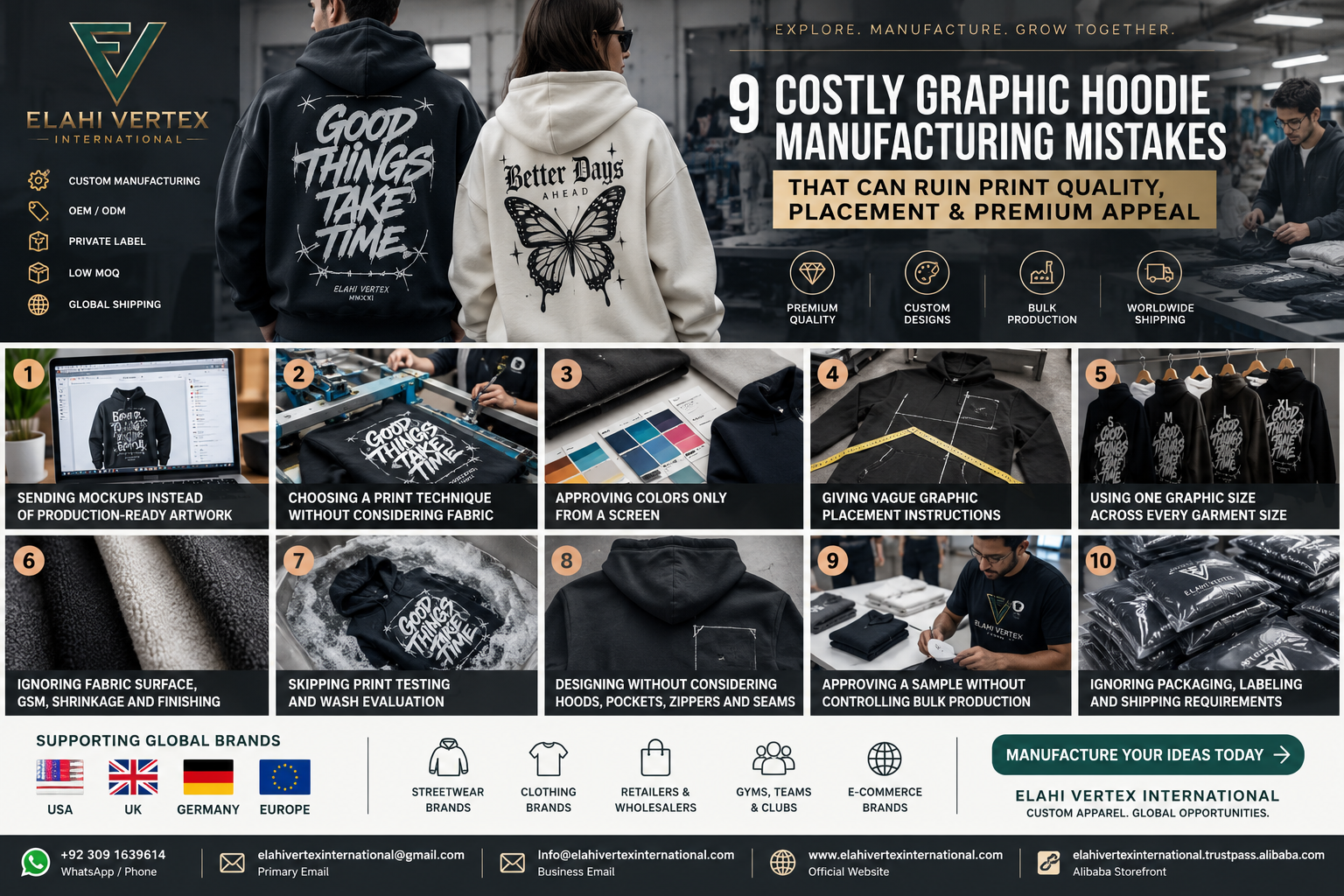
A graphic hoodie can look exceptional on a digital mockup and disappointing when the physical product arrives.
The artwork may sit too low on the chest. A large back graphic may disappear beneath the hood. Fine details may lose definition. White ink may lack opacity on a dark garment. A print that looks balanced on size M may appear oversized on XS or undersized on 3XL. Colors approved from a computer screen may not match the finished garment. Worse, an apparently perfect sample can still turn into inconsistent bulk production when artwork dimensions, placement tolerances, print settings and approval references are poorly controlled.
These are not minor details for a streetwear brand.
The graphic is often the part of the hoodie customers notice first.
That is why avoiding graphic hoodie manufacturing mistakes requires more than selecting a good-looking blank hoodie and sending a PNG to a factory. Brands need to consider the relationship between artwork, fabric, garment construction, print technique, ink, placement, sizing, finishing, washing and bulk quality control.
Choosing a capable graphic hoodie manufacturer is therefore a technical sourcing decision as much as a pricing decision.
For streetwear brands, fashion labels, private-label businesses, merch companies, retailers and emerging designers selling in the USA, UK, Germany and wider Europe, the objective should be straightforward: convert the approved artwork into a repeatable physical product without losing the visual identity that made the design commercially interesting in the first place.
This guide examines nine expensive graphic hoodie manufacturing mistakes, explains why they happen, and shows buyers what to define before approving samples or bulk production.
It also explains screen printing, DTF, DTG, puff printing, embroidery combinations, artwork files, print dimensions, placement specifications, color approval, wash testing, size scaling, bulk quality control and market-specific labelling considerations.
The purpose is not simply to find the cheapest supplier.
It is to build a graphic hoodie that looks intentional, survives normal use appropriately, can be reproduced consistently and supports the premium positioning of the brand.
Table of Contents
- What Does a Graphic Hoodie Manufacturer Actually Do?
- Mistake #1 — Sending Mockups Instead of Production-Ready Artwork
- Mistake #2 — Choosing a Print Method Without Considering Fabric
- Mistake #3 — Approving Graphic Colors Only From a Screen
- Mistake #4 — Giving Vague Print Placement Instructions
- Mistake #5 — Ignoring Graphic Scaling Across Hoodie Sizes
- Mistake #6 — Ignoring Fabric Surface, GSM, Shrinkage and Finishing
- Mistake #7 — Skipping Print and Wash Evaluation
- Mistake #8 — Ignoring Hoods, Pockets, Zippers and Seams
- Mistake #9 — Approving a Sample Without Controlling Bulk Production
- Screen Printing vs DTF vs DTG vs Puff Printing
- How Fabric Changes Graphic Hoodie Print Quality
- How to Specify Graphic Placement Correctly
- Graphic Hoodie Size and Placement Guide
- How to Prepare Artwork for Manufacturing
- Sample Approval Checklist
- Bulk Production Quality-Control Checklist
- USA Graphic Hoodie Manufacturing Considerations
- UK Graphic Hoodie Manufacturing Considerations
- Germany Graphic Hoodie Manufacturing Considerations
- European Graphic Hoodie Manufacturing Considerations
- What to Include in a Graphic Hoodie RFQ
- How to Compare Graphic Hoodie Manufacturers
- Why Elahi Vertex International
- Frequently Asked Questions
- Final Buyer Checklist
- Conclusion
What Does a Graphic Hoodie Manufacturer Actually Do?
A graphic hoodie manufacturer converts a brand’s garment design and artwork into a finished physical hoodie through a combination of garment manufacturing, decoration, branding, finishing and quality control.
That sounds simple until the product is broken into its individual decisions.
A custom graphic hoodie may require decisions about:
- fabric composition;
- fabric weight;
- fleece construction;
- fabric surface;
- hoodie fit;
- body measurements;
- hood construction;
- rib specifications;
- drawcords;
- kangaroo pockets;
- zippers;
- labels;
- artwork;
- artwork dimensions;
- print location;
- printing technique;
- ink or transfer characteristics;
- print colors;
- special effects;
- garment washing;
- packaging;
- care instructions;
- size range;
- and bulk inspection.
The artwork cannot be separated from those decisions.
A large graphic printed on smooth fabric does not necessarily behave exactly like the same graphic printed over a highly textured fleece surface.
A graphic designed for a pullover hoodie may require modification when transferred to a zip-up because a zipper interrupts the center front.
A back graphic positioned beautifully on a crewneck sweatshirt may need to move downward on a hoodie because the hood physically covers part of the upper back.
This is why many graphic hoodie manufacturing mistakes happen before the printing machine is even involved.
The problem begins with incomplete product definition.
Graphic hoodie manufacturing is a system
Brands should think about graphic hoodie production as:
Artwork + Garment + Fabric + Decoration Method + Placement + Color + Finishing + Approval + Bulk Control
If one element changes, another may need to change with it.
For example, changing from a cotton-rich fleece to another fabric composition may affect the appropriate decoration process or the result that needs to be tested.
Changing from a regular fit to an oversized silhouette changes the physical area available for artwork.
Changing from pullover to zip-up construction changes the usable front print zone.
Changing from a standard print to a dimensional puff effect changes both artwork and production considerations.
A reliable graphic hoodie manufacturer should therefore work from defined specifications rather than assumptions.
Why Graphic Hoodie Manufacturing Mistakes Are Especially Expensive
A plain hoodie can sometimes tolerate small visual differences that customers barely notice.
A graphic hoodie often cannot.
Suppose the entire identity of a streetwear drop is built around a 35 cm back graphic.
If the bulk production places that graphic noticeably lower than the approved sample, the garment may technically still be wearable. But visually, it is no longer the product the designer approved.
The same applies to:
- wrong graphic proportions;
- inconsistent placement;
- weak opacity;
- incorrect colors;
- loss of fine detail;
- unexpected print texture;
- poor registration;
- cracking;
- peeling;
- artwork distortion;
- incorrect special effects;
- and excessive variation between pieces.
For premium streetwear, visual consistency affects perceived value.
This makes prevention more commercially sensible than trying to solve problems after hundreds of garments have been printed.
Mistake #1: Sending a Mockup Instead of Production-Ready Artwork
One of the most common graphic hoodie manufacturing mistakes happens before production starts.
The brand sends a visual mockup and assumes it contains enough information to manufacture the product.
It often does not.
A mockup answers:
What should the hoodie roughly look like?
A production specification should answer:
Exactly how should the hoodie be manufactured?
Those are different documents.
A mockup communicates appearance
A mockup may show:
- black oversized hoodie;
- large back artwork;
- small left-chest logo;
- sleeve graphic;
- custom neck label.
That is useful.
But the graphic hoodie manufacturer may still not know:
- exact back-print width;
- exact print height;
- distance from the neckline;
- distance from the center line;
- chest-logo dimensions;
- sleeve-print dimensions;
- whether artwork dimensions change by garment size;
- exact artwork colors;
- printing technique;
- intended texture;
- whether a distressed effect is deliberate;
- whether transparency is intentional;
- or which artwork file is the final production version.
That creates interpretation.
Interpretation creates variation.
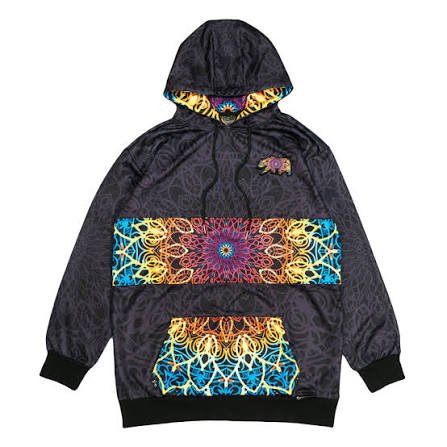
Production artwork should remove unnecessary interpretation
Depending on the printing method and design, a useful artwork package can include:
Artwork file
Supply the original high-quality artwork in a suitable production format.
Vector files can be particularly useful for logos, typography, spot-color illustrations and artwork that needs clean scaling.
Raster artwork needs sufficient resolution for the intended finished dimensions.
Finished dimensions
Do not write:
“Large back print.”
Write the required dimensions.
For example:
Back artwork: 340 mm wide × proportional height.
The exact measurement is project-specific, but the principle is universal: measurable specifications are stronger than adjectives.
Placement
Do not rely solely on a mockup.
Define where the print begins or where its center should sit relative to a consistent garment reference point.
Color information
Define the required color reference system wherever color accuracy matters.
Print method
State the intended decoration technique—or ask the manufacturer to recommend the most appropriate process based on the artwork, fabric and quantity.
Artwork version
Use clear version control.
For example:
BACK-GRAPHIC-V4-FINAL
is safer than having:
final.png
final2.png
final-new.png
final-new-real.png
in the same production conversation.
Why this matters for screen printing
Artwork preparation becomes particularly important when individual colors need to be separated for screen production.
Adobe’s screen-print artwork guidance discusses preparing artwork by outlining text, expanding relevant elements and organizing colors appropriately for separation.
The practical lesson for a clothing brand is simple:
A visually correct design file is not automatically a production-ready printing file.
Buyer action
Before paying for bulk production, ask your graphic hoodie manufacturer to confirm:
- final artwork file received;
- artwork dimensions;
- artwork location;
- print method;
- colors;
- special effects;
- size-scaling rule;
- approved sample/reference.
This one step eliminates a large category of preventable graphic hoodie manufacturing mistakes.
Mistake #2: Choosing a Printing Technique Without Considering the Hoodie Fabric
A second major error is selecting the printing method because it is popular rather than because it suits the product.
A brand might say:
“We want DTF because everyone uses DTF.”
Another may insist:
“Premium streetwear must be screen printed.”
Neither statement is a useful manufacturing specification by itself.
The appropriate process depends on the artwork, garment, fabric, desired hand feel, quantity, visual objective and performance requirements.
Graphic hoodie printing methods serve different purposes
The main options may include:
- screen printing;
- DTF transfer;
- DTG;
- puff printing;
- high-density printing;
- embroidery;
- appliqué;
- mixed decoration;
- and other specialist techniques.
Not every graphic hoodie manufacturer offers every process, and not every process suits every project.
The correct question is not:
“Which printing method is best?”
It is:
“Which method best reproduces this artwork on this hoodie fabric at this quantity and quality requirement?”
That is a much better sourcing question.
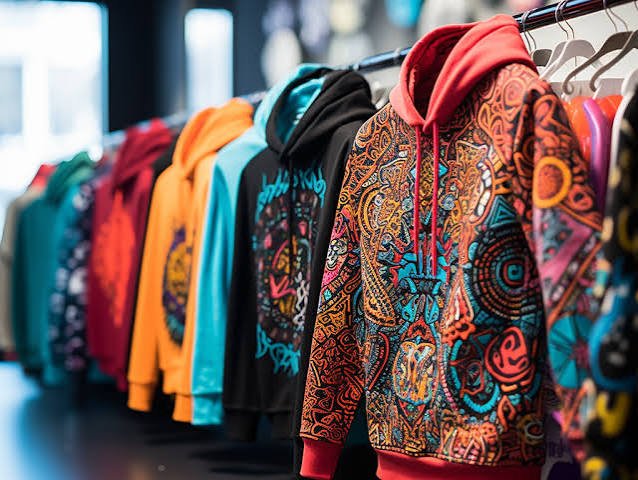
Screen Printing for Graphic Hoodies
Screen printing is widely used for apparel graphics and can work well for many streetwear applications.
It can be particularly appropriate for:
- bold graphics;
- logos;
- typography;
- limited-color artwork;
- larger production quantities;
- and designs requiring specific screen-print effects.
However, the garment itself matters.
A hoodie is not simply a thicker T-shirt.
Its:
- fleece surface;
- seams;
- pocket;
- hood;
- ribbing;
- zipper;
- thickness;
- and panel construction
can affect printable areas and production setup.
A large graphic crossing a difficult seam or sitting too close to a pocket creates additional production challenges.
The graphic hoodie manufacturer therefore needs to assess the garment and print together.
DTF for Graphic Hoodies
Direct-to-film transfer can support detailed, multicolor graphics and can be commercially useful in certain custom apparel applications.
Potential advantages can include:
- detailed artwork reproduction;
- multicolor capability;
- flexibility for smaller production quantities;
- and suitability for designs where conventional color-by-color screen setup may be less practical.
But buyers should not choose DTF merely because the artwork contains many colors.
Ask about:
- final hand feel;
- flexibility;
- finish;
- edge appearance;
- performance on the selected fabric;
- washing behavior;
- and suitability for the required print dimensions.
A huge transfer across the front of a premium hoodie may create a different tactile result from a smaller logo.
That difference matters.
DTG for Graphic Hoodies
Direct-to-garment printing can be useful for complex artwork, gradients and highly detailed images, depending on the garment and production setup.
But fabric compatibility and preparation matter.
The same digital artwork can produce visibly different results on different garment colors and fabric surfaces.
The brand should evaluate the physical sample, not simply assume that the digital file predicts the finished result.
Puff Printing for Graphic Hoodies
Puff printing is popular because it adds dimension.
That does not mean every design should become a puff print.
The artwork must suit the effect.
Fine details that look excellent as a flat graphic may become less controlled when translated into a raised print.
The buyer should approve:
- degree of dimensional effect;
- edge definition;
- artwork dimensions;
- texture;
- color;
- and final appearance on the actual hoodie.
Puff should be a design decision, not simply a trend checkbox.
Embroidery + Print Combinations
Some premium graphic hoodies combine printing with embroidery.
For example:
- printed back artwork;
- embroidered chest logo;
- sleeve embroidery;
- woven branding;
- embroidered hood detail.
This can create visual depth, but it also introduces additional specifications.
Embroidery density, backing, placement and fabric stability matter.
A heavy embroidered area can affect how the fabric sits.
The strongest graphic hoodie manufacturer specification therefore treats each decoration method independently while ensuring the complete garment remains visually balanced.
Graphic Hoodie Printing Method Comparison
| Method | Strong Use Case | Buyer Should Check | Potential Concern |
|---|---|---|---|
| Screen Printing | Bold graphics, logos, streetwear art | Ink, opacity, registration, hand feel | Setup and artwork preparation |
| DTF | Detailed multicolor artwork | Transfer feel, adhesion, flexibility | Large areas may feel different |
| DTG | Complex digital artwork | Fabric suitability, color reproduction | Results depend on garment/process |
| Puff Print | Raised streetwear graphics | Height, edges, detail retention | Fine artwork may need adaptation |
| High-Density Print | Structured dimensional details | Definition and consistency | Requires controlled production |
| Embroidery | Logos and premium accents | Density, backing, placement | Can affect fabric drape |
| Mixed Decoration | Premium multi-technique products | Interaction of all processes | More complex approvals |
No table can decide the correct method without seeing the actual product.
A buyer should give the graphic hoodie manufacturer the artwork, fabric requirement, quantity and desired finish before finalizing the technique.
Mistake #3: Approving Graphic Colors Only From a Computer Screen
Color creates another category of expensive graphic hoodie manufacturing mistakes.
A designer develops artwork on a calibrated-looking monitor.
The buyer sends the file.
The manufacturer prints it.
Then the buyer says:
“This red isn’t the same red.”
The problem is that screen appearance alone is a weak production standard.
Digital color and physical color are not identical environments
A digital screen emits light.
A printed graphic reflects light.
The final result can also be influenced by:
- garment color;
- fabric surface;
- ink system;
- print process;
- underbase;
- print thickness;
- curing;
- finishing;
- lighting conditions;
- and other production variables.
Therefore, approving a graphic purely because it looks right on a phone is risky.
Dark hoodies make color control especially important
Consider a bright red graphic printed on:
- white hoodie;
- black hoodie;
- charcoal hoodie;
- washed black hoodie.
The same target color may require different production considerations to achieve an appropriately consistent visual result.
Opacity becomes particularly important on dark garments.
If the underlying fabric influences the print more than expected, the finished graphic can appear weaker or duller.
This is why the graphic hoodie manufacturer should know the final garment color before print approval.
Use physical approval where color is critical
For a high-priority brand color, the buyer can establish a physical approval reference during sampling.
That gives both sides something more useful than:
“Make it slightly brighter.”
Statements such as “a little darker” or “more premium red” are subjective.
Production works better with measurable or physically approved references.
Mistake #4: Giving Vague Graphic Placement Instructions
This is one of the most visually damaging graphic hoodie manufacturing mistakes.
The artwork itself can be perfect.
The printing can be technically clean.
And the hoodie can still look wrong because the graphic sits in the wrong position.
Placement determines visual balance.
“Center chest” is not enough
Consider this instruction:
Logo: center chest.
Where exactly?
How far below the neckline?
Is the measurement taken from:
- neckline seam;
- shoulder;
- top edge of artwork;
- artwork center;
- or another point?
Now imagine three production workers interpret “center chest” slightly differently.
That is how inconsistency starts.
Use measurable placement instructions
A proper specification should define:
Artwork width: specified measurement
Artwork height: proportional or specified measurement
Horizontal position: centered or measured from reference point
Vertical position: specified from neckline/seam/reference point
Tolerance: agreed production tolerance
Size scaling: same or adjusted across sizes
The exact numbers depend on the design.
The important part is making the instruction measurable.
Back Print Placement Requires Special Attention
Hoodies introduce a problem that T-shirts do not have:
the hood.
A large back graphic positioned too high may look impressive when the garment lies flat with the hood moved away.
Once worn normally, the hood can cover an important part of the design.
This is especially dangerous when the top of the graphic contains:
- brand name;
- face;
- headline;
- logo;
- central illustration;
- or important typography.
A professional graphic hoodie manufacturer sample should therefore be reviewed with the hood in its natural resting position.
Do not approve only a flat-lay photograph with the hood deliberately moved away from the artwork.
Front Placement and Kangaroo Pockets
A pullover hoodie usually has another obstacle:
the kangaroo pocket.
A large front graphic may need to fit between:
- neckline;
- chest;
- pocket;
- side seams.
If the design is too tall, the available print area becomes restricted.
Trying to force artwork into an unsuitable area can change its proportions or placement.
Design the graphic for the garment rather than treating the garment as an empty rectangular canvas.
Zip-Up Hoodie Placement
Zip-up graphic hoodies create additional complexity.
A centered front graphic can be interrupted by the zipper.
That may be intentional.
If it is not intentional, the design needs to be adapted.
Potential approaches can include:
- left/right split artwork;
- small chest branding;
- back-focused graphics;
- sleeve graphics;
- deliberately designed zipper-interrupted artwork.
The design decision should be made before production.
Mistake #5: Using One Graphic Size Without Considering the Garment Size Range
A graphic that looks perfectly proportioned on size M may not look equally balanced on every other size.
This creates one of the less obvious graphic hoodie manufacturing mistakes.
Suppose the brand approves a 34 cm-wide back print on a medium hoodie.
Then the same print is applied to:
- XS;
- S;
- M;
- L;
- XL;
- 2XL;
- 3XL.
Should every garment use exactly 34 cm?
Sometimes yes.
Sometimes no.
It depends on the visual identity the designer wants.
There are two main strategies
Strategy 1: Fixed graphic dimensions
The same print dimensions are used across multiple garment sizes.
This can create a deliberate streetwear aesthetic where the artwork itself remains constant.
Advantages:
- consistent artwork size;
- simpler production setup;
- predictable graphic dimensions.
But the visual proportion changes relative to the garment.
The graphic may look much larger on XS than on 3XL.
Strategy 2: Scaled artwork
Artwork dimensions change across defined size groups.
For example, a brand might use different print dimensions for smaller, core and larger garment sizes.
The exact grouping must be agreed for the specific project.
Advantages:
- more proportional appearance across the size range.
But:
- additional artwork sizes may be required;
- production becomes more complex;
- approval becomes more important.
Neither strategy is automatically correct.
The mistake is failing to choose one.
Graphic Hoodie Placement Approval Table
| Area | What Buyer Should Specify | What to Inspect |
|---|---|---|
| Left Chest | Dimensions + distance from reference points | Alignment and visual balance |
| Center Chest | Width/height + vertical position | Centering |
| Full Front | Maximum dimensions + pocket clearance | Overall proportion |
| Upper Back | Position relative to neckline/hood | Hood obstruction |
| Full Back | Width + height + center line | Balance and visibility |
| Sleeve | Distance from shoulder/cuff | Rotation and alignment |
| Hood | Exact panel and orientation | Visibility when worn |
| Print dimensions and printable area | Seam interference |
The purpose of this table is not to impose universal measurements.
It is to ensure the graphic hoodie manufacturer and buyer agree on measurable placement before bulk production.
Mistake #6: Ignoring Fabric Surface, GSM, Shrinkage and Garment Finishing
A beautiful graphic does not exist independently from its fabric.
This is where many graphic hoodie manufacturing mistakes begin to overlap with textile engineering.
The print sits on the garment surface.
If the surface changes, the result can change.
Fabric composition matters
Custom hoodies may use different cotton, polyester and blended fabric constructions depending on the product.
The exact composition should be defined for the project.
Buyers should not simply say:
“Premium cotton hoodie.”
That is marketing language, not a complete manufacturing specification.
The graphic hoodie manufacturer needs the actual fabric requirement.
GSM matters—but GSM is not the whole quality specification
Streetwear buyers frequently focus on GSM.
It is useful.
It is not sufficient.
Two fabrics can have similar weight and still differ in:
- composition;
- knitting structure;
- surface;
- density;
- brushing;
- softness;
- stretch;
- recovery;
- shrinkage behavior;
- and overall hand feel.
The print interacts with those properties.
Therefore:
High GSM does not automatically mean high print quality or premium hoodie quality.
A buyer should evaluate the complete fabric and finished garment.
Fabric texture can influence graphic definition
Fine details generally need a surface capable of reproducing them appropriately.
If the face of the fabric is irregular, highly textured or otherwise unsuitable for the intended artwork/process, tiny design elements may not reproduce exactly as they appear on a digital mockup.
This becomes especially relevant for:
- fine typography;
- halftones;
- thin outlines;
- detailed illustrations;
- small negative spaces;
- and photographic artwork.
A good graphic hoodie manufacturer discussion should therefore happen before artwork is finalized when the design contains extremely fine elements.

Garment washing can change the visual result
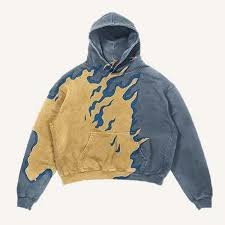
Vintage streetwear often uses garment finishing to create:
- washed appearance;
- faded color;
- worn character;
- softer hand feel;
- aged aesthetic.
If a hoodie will receive a special wash or finishing treatment, the sequence of manufacturing operations matters.
Brands should confirm:
- fabric;
- garment color;
- wash effect;
- print method;
- order of operations;
- and approved final appearance.
The sample should represent the intended final product as closely as practical.
Approving an unwashed hoodie when the bulk product will receive a major finishing treatment can create unnecessary risk.
Mistake #7: Skipping Print Testing and Wash Evaluation
A graphic can look excellent immediately after printing and still fail the product expectation later.
That is why skipping appropriate evaluation is among the most expensive graphic hoodie manufacturing mistakes.
The buyer should not evaluate only:
“Does it look good today?”
The more useful question is:
“Does the complete hoodie behave appropriately under the intended care conditions?”
What can change?
Depending on the decoration and garment, buyers may want to evaluate:
- cracking;
- peeling;
- fading;
- dimensional change;
- print distortion;
- adhesion;
- surface appearance;
- garment shrinkage;
- color behavior;
- and interaction between print and fabric.
Testing requirements should be agreed according to the project rather than assumed.
USA: Care Instructions Matter
For apparel entering the United States, this issue has an additional commercial dimension.
The U.S. Federal Trade Commission’s Care Labeling Rule covers manufacturers and importers of textile wearing apparel and requires regular care instructions. The FTC also states that businesses need a reasonable basis for the care information they provide.
The FTC separately explains that most textile and wool products require information including fibre content, country of origin and the identity of the manufacturer or another responsible business.
For a USA-focused brand, care instructions therefore should not be treated as decorative text added at the last minute.
The garment and its graphic decoration need care guidance appropriate to the finished product.
Wash evaluation should use the finished construction
Testing only a loose printed fabric panel may provide useful process information, but the finished hoodie is the actual commercial product.
The complete garment includes:
- fabric;
- seams;
- rib;
- labels;
- print;
- embroidery where applicable;
- washing/finishing;
- and construction.
Where appropriate for the project, the finished sample provides a stronger approval reference.
Mistake #8: Designing Graphics Without Considering Hoods, Pockets, Zippers and Seams
This is one of the easiest graphic hoodie manufacturing mistakes to prevent during design development.
A designer works on a flat digital hoodie template.
The real garment is three-dimensional.
That difference matters.
The hood creates a hidden zone
A back graphic can lose impact if its most important element sits directly beneath the hood.
Before approving a back print, inspect:
- hoodie laid flat;
- hood in natural resting position;
- hoodie on a body or form where possible;
- artwork from normal viewing distance.
Ask:
Is the important part of the artwork still visible?
The kangaroo pocket creates a physical boundary
Large front graphics must account for the pocket.
Printing too close to thick seam areas can complicate production.
The design should respect the garment’s actual construction.
Zippers divide artwork
For zip-up hoodies, a center zipper divides the front.
If artwork crosses it, the design needs intentional alignment.
Do not assume two halves will automatically create the intended visual effect.
Specify it.
Seams change the printing surface
Print areas near:
- armholes;
- side seams;
- shoulders;
- cuffs;
- pockets;
- zipper tape
may be more difficult than flat central body areas.
This does not mean creative placements are impossible.
It means they need to be engineered intentionally.
Premium streetwear often uses unconventional placements successfully precisely because those placements are developed as manufacturing details rather than improvised during bulk production.
Mistake #9: Approving One Good Sample Without Locking Bulk Production Standards
This is perhaps the most commercially dangerous of all graphic hoodie manufacturing mistakes.
The sample arrives.
It looks excellent.
The buyer approves it.
Then the bulk order arrives with:
- slightly different artwork placement;
- inconsistent print dimensions;
- changed garment color;
- different print texture;
- inconsistent opacity;
- incorrect labels;
- or other variation from the approved reference.
The sample was not the problem.
The missing control system was.
Sample approval should create a production standard
When a sample is approved, record what has actually been approved.
That can include:
- hoodie style;
- fabric;
- color;
- measurements;
- artwork version;
- artwork dimensions;
- artwork colors;
- placement;
- decoration technique;
- labels;
- trims;
- finishing;
- packaging;
- and other project-specific requirements.
The approved specification becomes the reference for bulk production.
From Approved Sample to Bulk Graphic Hoodie Production
A disciplined workflow can look like this:
Step 1 — Define the product
Confirm hoodie:
- style;
- fit;
- size range;
- fabric;
- color;
- construction;
- branding.
Step 2 — Lock artwork
Confirm:
- artwork version;
- dimensions;
- colors;
- print locations;
- special effects.
Step 3 — Select decoration process
Choose the technique based on:
- artwork;
- fabric;
- quantity;
- required appearance;
- hand feel;
- commercial requirements.
Step 4 — Produce sample
Evaluate the physical product rather than relying on the mockup.
Step 5 — Record corrections
Do not communicate changes vaguely.
Instead of:
“Move the graphic up a little.”
use a measurable correction.
Step 6 — Approve revised specification
Confirm the final approved version.
Step 7 — Begin bulk production
Bulk should follow the approved reference.
Step 8 — Conduct quality control
Inspect relevant attributes before shipment.
Step 9 — Confirm packaging and shipping
The commercial order is not complete merely because printing is complete.
Screen Printing vs DTF vs DTG for Streetwear Brands
Streetwear buyers frequently ask which method produces the most premium graphic hoodie.
There is no universal winner.
The correct process depends on what the design is trying to achieve.
Screen printing may suit you when:
- artwork uses controlled colors;
- bold opacity matters;
- traditional streetwear print character is desired;
- quantity supports the setup;
- specialist effects are required.
DTF may suit you when:
- artwork is detailed;
- many colors are involved;
- smaller quantities need flexibility;
- the required transfer finish is acceptable for the design.
DTG may suit you when:
- artwork contains complex tonal detail;
- photographic elements are important;
- the garment/fabric is appropriate for the process.
Puff may suit you when:
- dimensional texture is part of the design;
- artwork is suitable for expansion;
- raised details support the visual identity.
The best graphic hoodie manufacturer conversation begins with the design objective rather than a fashionable process name.
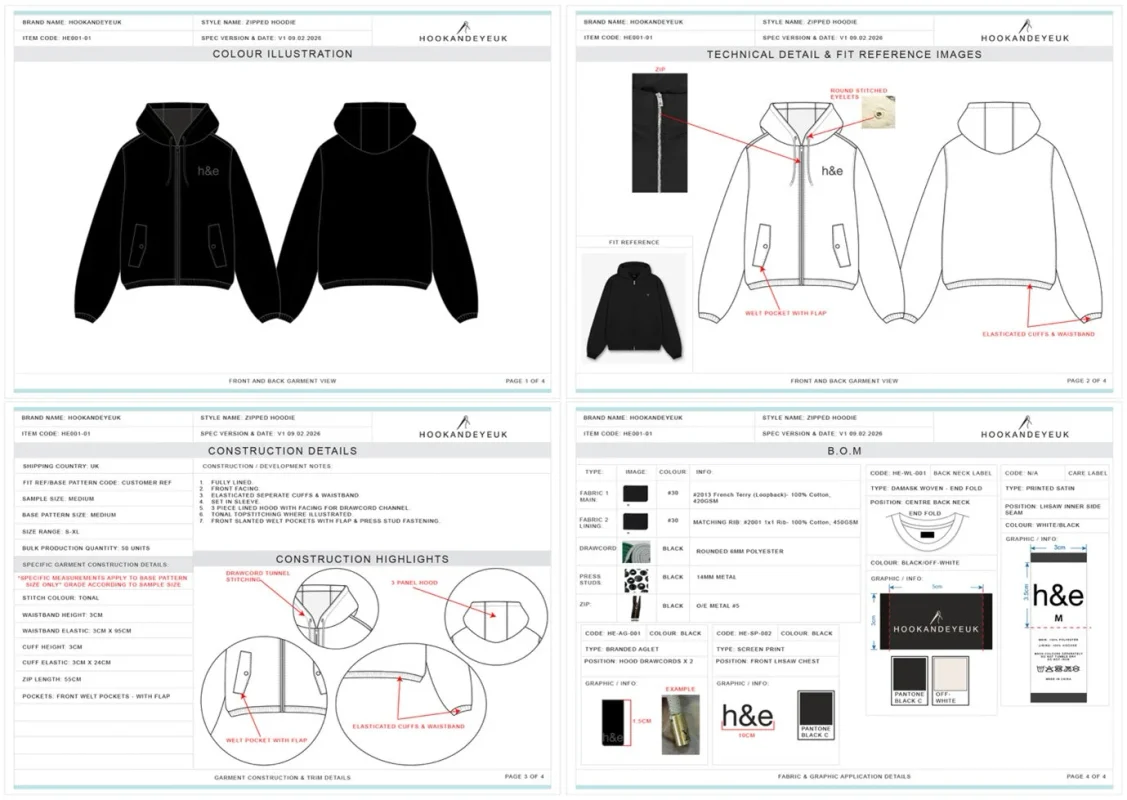
How to Prepare Artwork for a Graphic Hoodie Manufacturer
A strong RFQ should reduce questions rather than create them.
Before requesting a final quotation, prepare:
1. Product reference
State whether you require:
- pullover hoodie;
- oversized hoodie;
- heavyweight hoodie;
- zip-up hoodie;
- cropped hoodie;
- another custom construction.
2. Fabric requirement
Include available information about:
- composition;
- target GSM;
- finish;
- color;
- desired hand feel.
If you are unsure, explain the result you are trying to achieve and request options rather than inventing specifications.
3. Size range
Provide required sizes.
For example:
XS–2XL.
Do not assume every supplier uses the same measurements for those labels.
A size name is not a size chart.
4. Artwork
Provide the highest-quality source file available.
5. Artwork dimensions
Specify finished dimensions or request technical recommendations before approval.
6. Placement
Use measurements.
7. Printing technique
State the required technique or ask for an appropriate recommendation.
8. Quantity
Pricing without quantity has limited commercial value.
Elahi Vertex International’s standard starting MOQ is 20 pieces per product/category, subject to the specific project requirements.
9. Destination
Shipping must be considered in the commercial calculation.
A buyer requesting 50 hoodies delivered to London is asking a different commercial question from a buyer requesting 500 hoodies delivered to Los Angeles.
10. Required timeline
State your target date early.
Do not wait until after sample approval to mention a fixed launch date.
USA Graphic Hoodie Manufacturing: What Buyers Should Consider
The United States is a major target market for streetwear, merchandise, creator apparel and private-label clothing.
For a USA-focused graphic hoodie project, product development should consider both the creative side and the commercial/legal side.
Artwork
American streetwear ranges from minimalist chest graphics to oversized full-back artwork and multi-location decoration.
Manufacturing specifications should define the actual product rather than assuming the supplier understands a particular aesthetic from the word “streetwear.”
Sizing
Do not tell the manufacturer:
“Use US sizing.”
That remains ambiguous.
Supply or approve an actual measurement chart.
Labelling
The FTC states that most textile and wool products require labels covering fibre content, country of origin and responsible business identification. Care labelling rules also apply to covered apparel.
Brands and importers should verify current requirements for their specific products before placing goods on the US market.
Care instructions and graphic durability
A dramatic graphic is commercially weak if the intended care procedure damages it.
The finished garment and decoration should therefore be considered together when establishing care information.
UK Graphic Hoodie Manufacturing: What Buyers Should Consider
UK streetwear brands should approach graphic hoodie sourcing with the same level of specification discipline.
Do not rely on “UK fit”
A UK buyer should provide actual garment measurements or approve a manufacturer’s proposed measurement chart.
Terms such as:
- oversized;
- boxy;
- relaxed;
- drop shoulder;
- heavyweight
describe design direction.
They do not replace measurements.
UK textile labelling
Official UK government guidance states that manufacturers and retailers must follow textile labelling rules and that the label must show fibre content, including relevant requirements concerning fur and other animal parts.
Brands should verify the current requirements applicable to the exact product and destination.
Graphic specifications
For a UK streetwear collection, lock:
- artwork;
- dimensions;
- colors;
- printing technique;
- placement;
- hoodie measurements;
- labels;
- packaging;
- quantity;
- delivery destination.
That gives the graphic hoodie manufacturer a much stronger basis for sampling and quotation.
Germany Graphic Hoodie Manufacturing: What Buyers Should Consider
Germany deserves its own section rather than being treated as simply another European destination.
The visual manufacturing principles remain similar, but market compliance deserves specific attention.
German textile fibre information
Germany’s Textile Labelling Act states that relevant textile fibre-composition labelling or marking must be provided in German when covered textile products are made available on the market.
For German clothing brands importing custom graphic hoodies, this should be considered during label development rather than after production.
Do not finalize labels before checking destination requirements
A brand developing one hoodie collection for:
- Germany;
- France;
- Italy;
- Netherlands;
- Spain
may need to consider how information is presented for the markets where the products will actually be offered.
Discuss destination markets before final label production.
German premium streetwear buyers should define quality physically
Terms such as:
“premium quality”
do not create measurable manufacturing requirements.
Define:
- fabric;
- fit;
- measurements;
- print;
- labels;
- finish;
- packaging;
- and acceptable approved reference.
That creates a product specification rather than a subjective expectation.
European Graphic Hoodie Manufacturing: EU Textile Considerations
For brands selling within the European Union, textile labelling needs to be considered during product development.
EU guidance states that textile products marketed in the EU generally need labelling or marking showing fibre composition, with applicable requirements for products made substantially from textile fibres. It also notes that B2B situations may allow relevant information to be replaced or supplemented by accompanying commercial documents in specified circumstances.
The practical sourcing lesson is straightforward:
Do not develop branding labels in isolation from the destination market.
Your graphic hoodie may require:
- brand label;
- size information;
- fibre-composition information;
- care information;
- origin information where applicable;
- other market/project-specific information.
The exact legal obligations should be verified for the specific product and country before sale.
A graphic hoodie manufacturer can manufacture the physical labels according to an approved specification, but the buyer/importer should ensure the information supplied for its target market is correct.
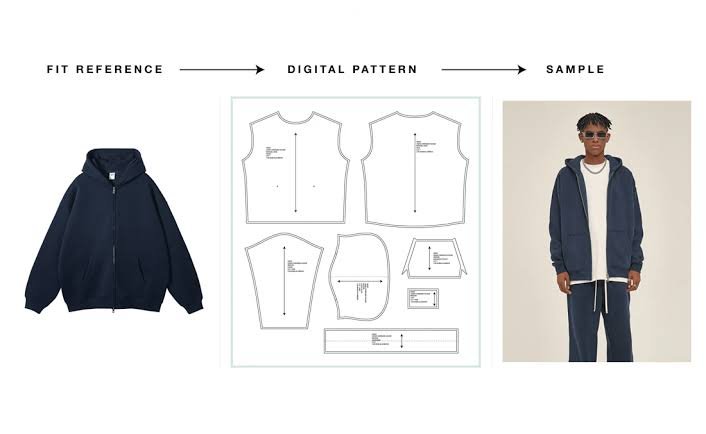
How to Build a Graphic Hoodie Tech Pack
A useful tech pack reduces manufacturing ambiguity.
For graphic hoodies, include at least the relevant sections below.
Garment Overview
- product name;
- style number;
- season/drop;
- pullover or zip-up;
- fit;
- colorways.
Fabric
- composition;
- GSM;
- construction;
- finish;
- color reference.
Measurements
Include:
- chest;
- body length;
- shoulder;
- sleeve;
- hem;
- cuff;
- hood dimensions;
- pocket dimensions where important.
Artwork Page
For every graphic:
- artwork name;
- location;
- file;
- dimensions;
- colors;
- print technique;
- placement measurement;
- special instructions.
Branding
Define:
- main label;
- size label;
- care/content label;
- hangtag;
- packaging;
- additional trims.
Approval Notes
Maintain a correction history.
This prevents an old instruction from accidentally returning during bulk production.
Graphic Hoodie Sample Approval Checklist
Before telling your graphic hoodie manufacturer to begin bulk production, inspect the sample systematically.
Garment
- Correct style
- Correct fit
- Correct measurements
- Correct fabric
- Correct garment color
- Correct rib
- Correct hood
- Correct pocket
- Correct zipper where applicable
- Correct stitching
Artwork
- Correct artwork version
- Correct graphic dimensions
- Correct colors
- Correct location
- Correct orientation
- Correct print technique
- Correct texture/effect
- Fine details acceptable
- Opacity acceptable
- Registration acceptable where relevant
Branding
- Main label
- Size label
- Care/content information
- Hangtag if required
- Packaging if required
Commercial
- Quantity confirmed
- Size breakdown confirmed
- Color breakdown confirmed
- Shipping destination confirmed
- Commercial terms confirmed
- Final production specification approved
Do not approve a sample simply by sending:
“Looks good.”
Document what “good” means.
Bulk Graphic Hoodie Quality-Control Checklist
Sample approval is the beginning of consistency control, not the end.
During bulk inspection, relevant checks can include:
Print placement
Compare production against the approved reference.
Graphic dimensions
Check that production follows the agreed specification.
Print appearance
Inspect:
- opacity;
- edge definition;
- registration where relevant;
- special effect;
- surface;
- obvious defects.
Garment measurements
Printing cannot rescue a badly fitting hoodie.
Fabric and garment color
Confirm consistency against approved standards.
Labels
Check:
- content;
- position;
- orientation;
- attachment.
Quantity and size breakdown
Confirm what was actually produced.
Packaging
Verify approved packing instructions.
A disciplined graphic hoodie manufacturer project treats QC as a comparison against defined requirements, not as a vague final look-over.
Graphic Hoodie Manufacturer vs Print Shop: What Is the Difference?
This distinction matters for brands developing custom apparel.
A print shop may primarily decorate an existing blank garment.
A custom graphic hoodie manufacturer can potentially develop the garment itself according to the agreed specification and then apply the required branding and decoration.
For a private-label streetwear brand, custom manufacturing may involve:
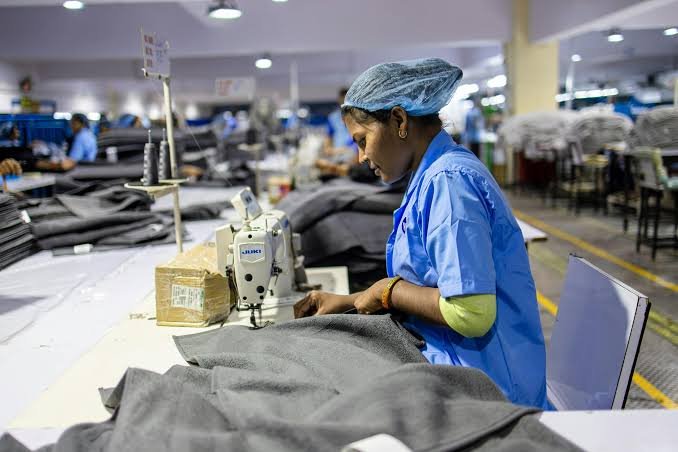
Fabric → Pattern → Cutting → Sewing → Printing/Decoration → Labels → Finishing → Inspection → Packaging
The right sourcing model depends on what the brand needs.
If you only need a logo applied to an existing blank, full custom manufacturing may be unnecessary.
If you need:
- custom fabric;
- custom GSM;
- unique measurements;
- oversized fit;
- custom hood;
- special rib;
- private labels;
- custom print;
- packaging;
then the garment itself is part of the product development.
Low MOQ vs Bulk Graphic Hoodie Production
Small-batch and large-batch orders solve different business problems.
Small batch
A lower quantity can help a developing brand:
- validate a design;
- test demand;
- reduce initial inventory exposure;
- launch a limited drop;
- gather customer feedback.
Elahi Vertex International uses a standard starting MOQ of 20 pieces per product/category, with project details confirmed before production.
Larger bulk production
Larger orders place greater importance on:
- repeatability;
- size ratios;
- color consistency;
- print consistency;
- packaging organization;
- shipment planning;
- reorder records.
Do not choose a graphic hoodie manufacturer only because the sample is attractive.
Ask whether the production specification can be reproduced.
How to Compare Quotes From Graphic Hoodie Manufacturers
Never compare two quotations based only on the number after the dollar sign.
Supplier A may quote:
$18
Supplier B may quote:
$24
That does not automatically make Supplier A cheaper.
You need to know what each quotation contains.
Compare:
| Commercial Factor | Supplier A | Supplier B |
|---|---|---|
| Fabric composition | Confirm | Confirm |
| GSM | Confirm | Confirm |
| Fit/construction | Confirm | Confirm |
| Printing technique | Confirm | Confirm |
| Number of print locations | Confirm | Confirm |
| Labels | Confirm | Confirm |
| Packaging | Confirm | Confirm |
| Quantity | Confirm | Confirm |
| Size range | Confirm | Confirm |
| Shipping | Confirm | Confirm |
| Duties/taxes arrangement | Confirm | Confirm |
| Sample terms | Confirm | Confirm |
A quotation without a clearly defined product is difficult to compare meaningfully.
What Information Should You Send for an Accurate Graphic Hoodie Quote?
Send:
- hoodie reference or design;
- target fabric composition;
- target GSM;
- color;
- size range;
- size chart;
- artwork files;
- print dimensions;
- print locations;
- desired printing method;
- quantity;
- size breakdown if known;
- custom labels;
- packaging requirements;
- destination country/postcode;
- required timeline.
For buyers in the USA, UK, Germany and Europe, including the destination at the quotation stage is especially important because shipping can materially change landed economics.
Why Work With Elahi Vertex International for Custom Graphic Hoodies?
Elahi Vertex International is positioned as a custom B2B clothing manufacturing partner for brands, startups, wholesalers, retailers and other business buyers. Its existing custom-manufacturing service covers made-to-order apparel including hoodies and sweatshirts, with production based on buyer designs, specifications, measurements, materials and branding requirements.
For graphic hoodie projects, that distinction matters.
The objective is not to sell a generic retail hoodie.
The objective is to manufacture according to an approved B2B product specification.
Starting MOQ: 20 pieces
Elahi Vertex International’s standard starting MOQ is 20 pieces per product/category.
That can make development commercially accessible to:
- startup streetwear brands;
- limited-drop brands;
- new collections;
- smaller private-label businesses;
while the manufacturing model can also support buyers discussing larger production requirements.
Project-specific feasibility should always be confirmed before an order is accepted.
Custom development
A graphic hoodie inquiry can cover relevant requirements such as:
- fabric;
- GSM;
- measurements;
- fit;
- printing;
- labels;
- branding;
- size range;
- quantity;
- packaging;
- destination.
The company’s existing private-label inquiry system already allows buyers to submit design files and specify fabric, GSM, fit, printing technique, labels, size range and quantities.
USA, UK, Germany and European buyers
International buyers should send the complete project rather than requesting a generic hoodie price.
A useful first message is:
Product + Quantity + Fabric/GSM + Artwork + Sizes + Destination
That gives Elahi Vertex International enough commercial context to evaluate the project properly.
Request a Custom Graphic Hoodie Manufacturing Quote
Developing graphic hoodies for a streetwear brand, clothing label, merchandise project or private-label collection?
Send Elahi Vertex International:
- hoodie design/reference;
- artwork;
- required quantity;
- target fabric/GSM;
- size range;
- branding requirements;
- and delivery destination.
MOQ: starting from 20 pieces per product/category.
Discuss Your Graphic Hoodie Project on WhatsApp
Phone / WhatsApp: +92 309 1639614
Email: elahivertexinternational@gmail.com
Secondary Email: Info@elahivertexinternational.com
Visit Elahi Vertex International
Elahi Vertex International Alibaba Storefront
Frequently Asked Questions About Graphic Hoodie Manufacturing
1. What is a graphic hoodie manufacturer?
A graphic hoodie manufacturer produces custom hoodies with buyer-specified garments, artwork, printing, branding and other agreed manufacturing requirements. Full custom manufacturing can differ from simply printing on an existing retail blank because the hoodie itself may also be developed according to the brand’s specifications.
2. What are the most common graphic hoodie manufacturing mistakes?
Common graphic hoodie manufacturing mistakes include incomplete artwork files, choosing an unsuitable decoration method, vague placement instructions, ignoring size scaling, failing to account for the hood or pocket, inadequate color approval, skipping physical sample evaluation and failing to lock bulk-production specifications.
3. What artwork should I send a graphic hoodie manufacturer?
Send the best available original artwork plus a visual mockup. Depending on the printing method, production may require vector artwork, high-resolution raster files, separated colors or other preparation. Also specify dimensions, location, colors and the intended visual effect.
4. Is screen printing good for graphic hoodies?
Screen printing can be an excellent option for many graphic hoodies, particularly bold streetwear graphics. Suitability depends on the artwork, fabric, number of colors, quantity and required finish.
5. Is DTF suitable for graphic hoodies?
DTF can be useful for detailed and multicolor artwork. Buyers should evaluate the physical transfer’s hand feel, flexibility, appearance and suitability for the selected hoodie rather than choosing the technique based only on convenience.
6. Is DTG better than screen printing?
Neither is universally better. DTG and screen printing solve different production requirements. Artwork complexity, fabric, quantity, desired finish and commercial requirements should guide the decision.
7. Can a graphic hoodie manufacturer produce puff prints?
Puff printing is available through manufacturers equipped for that decoration process, but availability and suitability should be confirmed for the specific project. The artwork also needs to suit the dimensional effect.
8. How should a back graphic be positioned on a hoodie?
The placement should be defined using measurable reference points and reviewed with the hood resting naturally. A high back graphic may be partly hidden by the hood, so important artwork should not be positioned blindly.
9. Should graphic size change between XS and 3XL hoodies?
It depends on the design. Brands can maintain a fixed graphic size or establish size groups with different artwork dimensions. The important step is deciding the rule before production.
10. Why does the same graphic look different on black and white hoodies?
Garment color, print method, ink/transfer system, underbase and other production variables can influence the final appearance. Physical sample approval is therefore valuable when color accuracy is important.
11. What GSM is best for a premium graphic hoodie?
There is no universal best GSM. Fabric quality also depends on composition, construction, density, surface, finishing, shrinkage and hand feel. Select the fabric based on the intended product rather than chasing the highest number.
12. What is the MOQ for graphic hoodies from Elahi Vertex International?
The standard starting MOQ for Elahi Vertex International is 20 pieces per product/category. Exact project feasibility should be confirmed according to the design and manufacturing requirements.
13. Can startup clothing brands manufacture graphic hoodies?
Yes. A smaller starting quantity can allow a startup to test a product before committing to larger inventory. However, the startup should still prepare professional specifications rather than treating a small order casually.
14. Can Elahi Vertex International manufacture private-label graphic hoodies?
Elahi Vertex International offers custom and private-label manufacturing services, and its private-label inquiry system includes hoodies, custom design uploads, fabric/GSM, printing, labels, sizes and quantity requirements.
15. What should a UK brand send a graphic hoodie manufacturer?
Send the hoodie design, actual measurement chart, fabric/GSM requirement, artwork, print dimensions, decoration technique, quantity, labels, packaging requirements and UK delivery destination.
16. What should a German brand check before ordering graphic hoodies?
In addition to garment and print specifications, German buyers should check current textile labelling obligations. German law requires applicable fibre-composition labelling for covered textiles made available on the market to be in German.
17. What should a USA brand check before importing graphic hoodies?
USA buyers should verify current FTC requirements applicable to their product. FTC guidance covers areas including textile fibre content, country of origin, responsible business identification and care labelling.
18. What textile labelling should European clothing brands consider?
EU guidance states that textile products marketed in the EU generally require fibre-composition labelling or marking, subject to the applicable rules and exceptions. Buyers should verify the requirements for the specific product and markets where it will be sold.
19. Should I order a sample before bulk graphic hoodie production?
For a custom product, physical sampling is a practical way to evaluate fit, fabric, artwork, placement, print appearance and branding before committing to bulk production. The sample should be compared against defined specifications.
20. How do I reduce graphic hoodie manufacturing mistakes in bulk production?
Create measurable specifications, provide production-ready artwork, approve the physical sample, record every correction, lock the final artwork and placement, define acceptable references, and inspect bulk production against what was actually approved.
Final Graphic Hoodie Buyer Checklist
Before approving bulk production, confirm:
Product
- Hoodie style confirmed
- Fit confirmed
- Measurement chart confirmed
- Fabric composition confirmed
- GSM confirmed
- Garment color confirmed
- Rib confirmed
- Hood construction confirmed
- Pocket/zipper confirmed where applicable
Graphic
- Final artwork version confirmed
- Artwork quality confirmed
- Print dimensions confirmed
- Placement confirmed
- Colors confirmed
- Printing method confirmed
- Special effects confirmed
- Hood obstruction checked
- Pocket/zipper interference checked
- Size-scaling strategy confirmed
Sample
- Physical sample reviewed
- Measurements reviewed
- Fabric reviewed
- Print appearance reviewed
- Placement reviewed
- Branding reviewed
- Corrections documented
- Final approval reference established
Bulk
- Quantity confirmed
- Size breakdown confirmed
- Color breakdown confirmed
- Production specifications locked
- QC requirements confirmed
- Packaging confirmed
- Shipping destination confirmed
Market
- USA requirements checked where applicable
- UK requirements checked where applicable
- Germany requirements checked where applicable
- EU requirements checked where applicable
Conclusion: Prevent Graphic Hoodie Manufacturing Mistakes Before They Reach Bulk Production
The most damaging graphic hoodie manufacturing mistakes rarely begin with a completely broken printing machine.
They usually begin with ambiguity.
The artwork was not fully specified.
The placement was described instead of measured.
The printing method was selected without enough attention to the fabric.
The buyer approved color from a screen.
The back artwork ignored the hood.
The size range was not considered.
The sample was approved without recording what exactly had been approved.
Or bulk production began before the graphic, garment and quality requirements were locked together.
A strong graphic hoodie manufacturer relationship should remove those ambiguities before they become hundreds of finished garments.
For streetwear brands in the USA, UK, Germany and Europe, the strongest sourcing approach is therefore not:
“Send me your best hoodie price.”
It is:
“Here is the product we need. Here are the specifications. Here is the artwork. Here is the quantity. Here is the destination. Can you manufacture it consistently?”
That question creates a much stronger foundation for quotation, sampling, production and repeat orders.
Elahi Vertex International works with international B2B buyers developing custom clothing according to project-specific designs and manufacturing requirements. Buyers can discuss custom graphic hoodies, private-label collections, streetwear projects and bulk requirements directly with the manufacturing team.
Starting MOQ: 20 pieces per product/category.
Send Your Graphic Hoodie Requirements on WhatsApp
Phone / WhatsApp: +92 309 1639614
Email: elahivertexinternational@gmail.com
Secondary Email: Info@elahivertexinternational.com
Elahi Vertex International Official Website
Elahi Vertex International Alibaba Storefront
Useful Authoritative Resources
For US-market apparel, the Federal Trade Commission Apparel and Labeling Guidance explains federal textile, origin and apparel-labelling considerations. The FTC Care Labeling Rule is particularly relevant when establishing care instructions for finished graphic hoodies.
UK brands can consult the UK Government Textile Labelling Guidance for fibre-content labelling information applicable in Great Britain.
Brands selling into the European Union can consult the European Union Textile Labelling Guidance for current fibre-composition labelling principles.
For Germany specifically, the German Textile Labelling Act — Section 4 addresses German-language fibre-composition labelling requirements for covered textile products.
Ready to Manufacture Your Custom Graphic Hoodies?
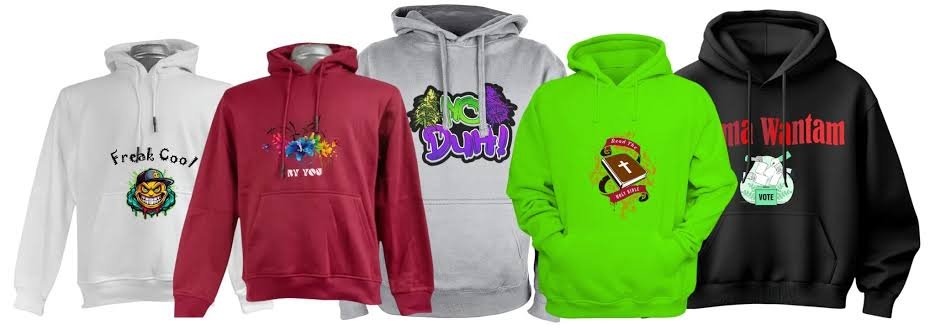
A strong graphic hoodie needs more than an attractive mockup. Fabric, GSM, fit, artwork dimensions, print method, placement, labels, finishing and bulk consistency all need to work together.
If you are building a streetwear collection, private-label brand, merchandise line or established clothing business in the USA, UK, Germany or Europe, discuss your project directly with Elahi Vertex International.
We manufacture for B2B custom, OEM, ODM and private-label requirements rather than selling generic retail hoodies.
Start With Your Actual Requirements
For a useful quotation, send us:
- Hoodie design or reference
- Artwork files
- Required quantity
- Fabric composition or preferred fabric
- Target GSM
- Pullover or zip-up construction
- Regular, relaxed, boxy or oversized fit
- Required printing technique, if already decided
- Front, back and sleeve print locations
- Size range and size chart
- Custom neck labels, care labels and hangtags
- Packaging requirements
- Delivery country, city and postcode
- Required timeline
Standard starting MOQ: 20 pieces per product/category.
Whether you are preparing an initial 20-piece collection or discussing larger bulk production, the best first step is to send the actual specifications so the project can be evaluated properly.
Contact Elahi Vertex International
WhatsApp — Priority Contact
https://wa.me/message/OWIPAIXYWHTPI1
WhatsApp / Phone
+92 309 1639614
Primary Email
elahivertexinternational@gmail.com
Business Email
Info@elahivertexinternational.com
Official Website
https://www.elahivertexinternational.com/
Alibaba Storefront
https://elahivertexinternational.trustpass.alibaba.com/
Connect With Elahi Vertex International
LinkedIn
https://www.linkedin.com/company/elahi-vertex-international?trk=profile-position
Instagram
https://www.instagram.com/elahivertex_mfg?igsh=MW91NmV3ZnAzOTFqcg==
Facebook
https://www.facebook.com/share/1D4CqvvfKh/
TikTok
https://www.tiktok.com/@elahivertex_mfg?_r=1&_t=ZS-98eXi10DY2P
Threads
https://www.threads.com/@elahivertex_mfg
X
https://x.com/elahivertex_mfg
Google Business Profile
https://share.google/62DrR4N4X8np39RkQ
Your Next Step
Do not send only “What is your hoodie price?”
Send:
Design + Quantity + Fabric/GSM + Artwork + Sizes + Destination
That gives Elahi Vertex International enough information to discuss the right construction, graphic application and commercial requirements for your project.
Custom Graphic Hoodies for USA, UK, Germany & European Brands
If you are searching for a graphic hoodie manufacturer for a new streetwear drop, private-label collection or repeat bulk program, send your requirements to Elahi Vertex International and start with a clear manufacturing discussion.
MOQ from 20 pieces per product/category.
WhatsApp: https://wa.me/message/OWIPAIXYWHTPI1
Email: elahivertexinternational@gmail.com
Website: https://www.elahivertexinternational.com/
Alibaba: https://elahivertexinternational.trustpass.alibaba.com/
Your artwork deserves to look as intentional on the finished hoodie as it does on the screen. Build the specification first, approve the physical result, then scale with control.
