

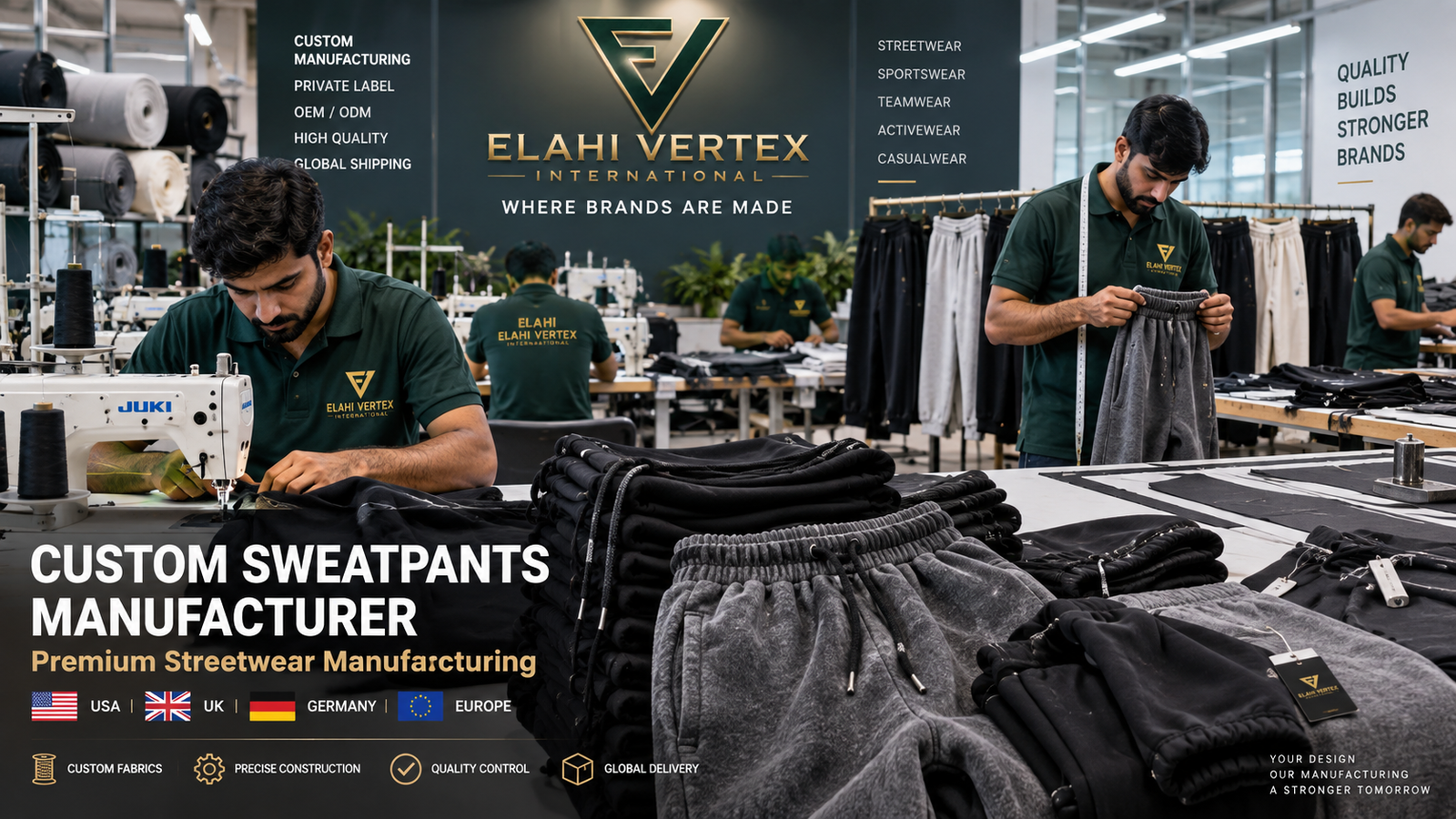
Finding a custom sweatpants manufacturer is easy. Finding one that can translate a streetwear brand’s intended fit, fabric, construction, wash, branding and finishing into consistent bulk production is considerably harder.
Sweatpants look simple until a brand starts developing them.
A few centimetres in the rise can change the entire silhouette. The wrong rib can make the ankle opening look cheap. Poor elastic recovery can turn a premium waistband into a stretched band after repeated wear. A fabric chosen only because it sounds “heavyweight” may feel stiff, shrink unexpectedly or fail to create the drape the designer imagined.
For streetwear brands in the USA, UK, Germany and wider Europe, these details matter because buyers are not purchasing fabric weight alone. They are buying a complete product: silhouette, comfort, hand feel, consistency, branding and perceived value.
That is why selecting a custom sweatpants manufacturer should be treated as a product-development decision rather than simply a price-comparison exercise.
This guide explains nine expensive mistakes brands should avoid during custom sweatpants manufacturing, from fabric selection and pattern development to grading, waistband engineering, branding, washing, sampling and bulk-production control.
It also explains what buyers should specify before approaching a streetwear sweatpants manufacturer, what to inspect during sampling, and how private label sweatpants should be prepared for the USA, UK, Germany and European markets.
Table of Contents
- Why custom sweatpants are harder to manufacture than they look
- Mistake #1 — Choosing sweatpants fabric by GSM alone
- Mistake #2 — Failing to define the exact sweatpants silhouette
- Mistake #3 — Getting rise, inseam and grading wrong
- Mistake #4 — Under-specifying the waistband, elastic and drawcord
- Mistake #5 — Ignoring pocket construction and placement
- Mistake #6 — Approving branding without considering the fabric
- Mistake #7 — Ignoring shrinkage and dimensional change
- Mistake #8 — Approving a sample without freezing specifications
- Mistake #9 — Assuming bulk production will automatically match the sample
- Fabric guide for premium custom sweatpants
- Sweatpants fit and measurement guide
- Custom joggers vs sweatpants
- Private-label branding options
- How USA, UK, German and EU buyers should prepare an RFQ
- How to evaluate a custom sweatpants manufacturer
- Buyer checklist before bulk production
- Why work with Elahi Vertex International
- Frequently asked questions
- Conclusion
What Does a Custom Sweatpants Manufacturer Actually Do?
A custom sweatpants manufacturer develops sweatpants according to a buyer’s required design, fabric, measurements, fit, construction, colours, branding, trims, labels, finishing and packaging instead of simply supplying generic retail blanks.
True custom sweatpants manufacturing can involve:
- fabric sourcing
- fabric composition selection
- GSM selection
- colour development
- pattern development
- measurement specifications
- size grading
- waistband construction
- elastic selection
- drawcord selection
- pocket engineering
- ribbed or open hems
- embroidery
- screen printing
- heat-transfer applications
- labels
- hangtags
- private-label packaging
- garment washing
- sample development
- bulk production
- quality inspection
A serious buyer therefore needs to communicate much more than:
“I need 100 black sweatpants with my logo.”
That sentence leaves almost every variable affecting the finished product undefined.
For a premium streetwear product, a better specification should explain the intended silhouette, fabric composition and weight, measurements, waistband construction, pocket design, hem treatment, artwork dimensions, label positions, colour references and packaging expectations.
A streetwear sweatpants manufacturer can manufacture only against the information that has been communicated and approved.
The clearer the specification, the smaller the space for interpretation.
Why Premium Sweatpants Are Surprisingly Difficult to Manufacture
A T-shirt can sometimes tolerate small differences without dramatically changing its appearance.
Sweatpants are less forgiving.
The relationship between waist, hip, thigh, knee, leg opening, front rise, back rise and inseam determines how the garment sits on the body.
A seemingly small change can turn:
- relaxed into oversized,
- oversized into shapeless,
- straight-leg into tapered,
- premium heavyweight into stiff,
- vintage into poorly washed,
- minimal into cheap-looking.
This is particularly important for streetwear.
Customers often recognize the quality of sweatpants through silhouette before they examine individual stitches.
For that reason, a custom sweatpants manufacturer should receive a specification that treats the sweatpants as an engineered garment rather than a blank canvas for a logo.
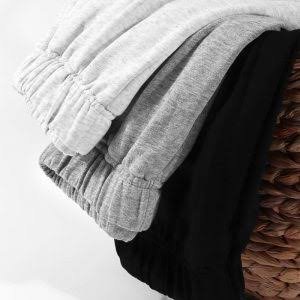
Mistake #1: Choosing Sweatpants Fabric by GSM Alone
One of the most common mistakes in custom sweatpants manufacturing is treating GSM as a complete fabric specification.
It is not.
GSM means grams per square metre. It describes fabric weight.
It does not, by itself, tell you:
- fibre composition,
- knit construction,
- softness,
- surface appearance,
- stretch,
- recovery,
- drape,
- warmth,
- shrinkage behaviour,
- pilling resistance,
- brushing,
- compactness,
- finishing.
Two fabrics can have similar GSM values and still produce noticeably different sweatpants.
Why GSM Alone Is Not Enough
Imagine two fabrics that are both approximately 350 GSM.
One might be a soft brushed fleece designed for warmth.
Another might be a dense loopback French terry.
Although their weights are similar, their appearance, hand feel, internal surface, drape and seasonal suitability can be different.
This matters enormously when working with a custom sweatpants manufacturer.
If your tech pack says only:
“350 GSM cotton”
you have not fully defined the fabric.
A better specification may include:
- required fibre composition,
- target GSM,
- fleece or French terry construction,
- brushed or unbrushed interior,
- desired surface,
- stretch requirements where relevant,
- colour,
- wash or finish,
- expected hand feel.
French Terry vs Fleece Sweatpants
French Terry
French terry typically has loops on the inner surface rather than a heavily brushed interior.
Depending on its construction, it can work well for brands seeking:
- structured streetwear,
- transitional-season products,
- cleaner interior appearance,
- moderate warmth,
- relaxed premium sweatpants.
Brushed Fleece
Fleece is commonly brushed internally to create a softer and warmer surface.
It may suit:
- winter collections,
- heavyweight sweatpants,
- matching hoodie sets,
- comfort-focused collections.
Neither fabric is automatically better.
The correct choice depends on the product.
A professional streetwear sweatpants manufacturer should work from the brand’s intended result rather than assuming that “higher GSM” automatically means “better quality.”
Heavyweight Does Not Automatically Mean Premium
This is important.
Streetwear buyers sometimes chase increasingly high GSM numbers because heavyweight apparel is associated with premium positioning.
But weight without proper engineering can create problems.
Extremely heavy fabric combined with a poor pattern may produce:
- excessive bulk around the crotch,
- stiff knees,
- poor drape,
- uncomfortable waistbands,
- bulky seams,
- oversized-looking pockets,
- poor mobility.
The fabric must support the silhouette.
Buyer Action
When requesting private label sweatpants, provide your manufacturer with:
- fibre composition target;
- GSM target or acceptable range;
- fabric construction;
- internal finish;
- stretch expectations;
- desired hand feel;
- intended season;
- reference garment where appropriate;
- required wash or finish.
Do not buy a GSM number. Develop a fabric specification.
Mistake #2: Failing to Define the Exact Sweatpants Silhouette
“Relaxed sweatpants” is not a technical specification.
Neither is:
- oversized,
- baggy,
- streetwear fit,
- loose,
- premium fit.
These phrases communicate direction, but they leave substantial room for interpretation.
That creates risk when working with a custom sweatpants manufacturer.
Sweatpants Silhouette Is Created by Measurements
The finished shape is influenced by the relationship between:
- waist,
- hip,
- front rise,
- back rise,
- thigh,
- knee,
- inseam,
- outseam,
- leg opening.
A brand might want a wide thigh but controlled hem.
Another might want a straight leg from thigh to ankle.
Another may want stacked sweatpants with additional length.
Another may want classic cuffed joggers.
All can be described casually as “oversized.”
They are not the same product.
Common Sweatpants Silhouettes
Classic Jogger
Usually features a tapered leg and elasticated or ribbed ankle.
Relaxed Sweatpant
Offers more room through the hip and thigh with moderate shaping through the leg.
Baggy Streetwear Sweatpant
Uses additional volume through the leg to create a deliberately oversized silhouette.
Straight-Leg Sweatpant
Maintains more width toward the bottom instead of tapering sharply.
Open-Hem Sweatpant
Uses a clean open bottom rather than a cuff.
Stacked Sweatpant
Uses additional leg length and controlled opening to create fabric stacking around the footwear.
Each requires a different pattern.
Why Reference Images Are Not Enough
Reference images are useful.
But photographs can distort proportions because of:
- model height,
- camera angle,
- pose,
- styling,
- footwear,
- garment size,
- image editing.
Therefore, a custom sweatpants manufacturer should not be expected to reproduce a fit precisely from photographs alone.
Use reference images alongside actual measurements.
Buyer Action
Define at minimum:
- fit description,
- waist measurement,
- hip,
- thigh,
- front rise,
- back rise,
- inseam,
- outseam,
- knee,
- leg opening,
- cuff dimensions where relevant.
Then evaluate the physical sample.
Mistake #3: Getting Rise, Inseam and Size Grading Wrong
Fit does not stop at the base sample.
A sample can look excellent in size M while the grading produces poor XS, XL or 2XL garments.
This is why custom sweatpants manufacturing requires attention to both base measurements and size grading.
Front Rise
The front rise influences where the garment sits and how the front crotch appears.
Too short can create pulling.
Too long can create unnecessary fabric accumulation.
Back Rise
The back rise affects coverage, movement and how the sweatpants sit around the seat.
The relationship between front and back rise is especially important.
Inseam
The inseam strongly affects overall silhouette.
Too short can destroy an intended relaxed or stacked appearance.
Too long can create unintended pooling.
Why Grading Matters
Grading determines how the pattern changes between sizes.
A simplistic approach can create:
- excessive length increases,
- inconsistent leg openings,
- poor thigh proportions,
- oversized larger sizes,
- restrictive smaller sizes.
Brands should define how their sizing is supposed to behave.
A custom joggers manufacturer developing products for a streetwear brand should not assume that the same grading philosophy works for every collection.
USA, UK and European Sizing
Do not assume that an “M” represents one universal physical garment size.
Your brand should maintain its own approved size chart based on the intended customer.
International brands selling into the USA, UK, Germany and wider Europe should communicate actual garment measurements rather than relying exclusively on S/M/L labels.
International standards such as ISO 8559 provide frameworks around body measurements and clothing size designation, but a brand still needs a product-specific measurement system.
Buyer Action
Send your custom sweatpants manufacturer:
- base-size measurements;
- grading rules;
- size range;
- tolerance requirements;
- fit reference;
- measurement method.
Never approve only the label “M.”
Approve the measurements behind M.
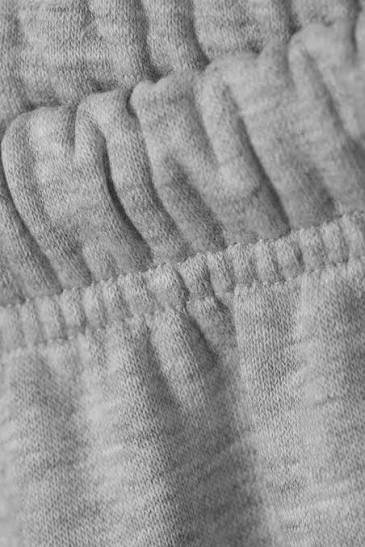
Mistake #4: Under-Specifying the Waistband, Elastic and Drawcord
The waistband is one of the most heavily used parts of sweatpants.
Yet many tech packs describe it with only one line:
“Elastic waistband with drawstring.”
That is not enough for premium private label sweatpants.
Waistband Variables
Consider:
- waistband finished height,
- elastic width,
- elastic tension,
- elastic recovery,
- number of stitching rows,
- drawcord material,
- drawcord thickness,
- drawcord length,
- drawcord colour,
- internal vs external drawcord,
- eyelet type,
- eyelet finish,
- bartacks,
- cord ends.
Each influences appearance and usability.
Elastic Recovery Matters
An elastic waistband must stretch, but it must also recover.
Weak recovery can make sweatpants feel worn prematurely.
The waistband may look acceptable during sample photography and perform poorly after repeated use.
Therefore, the buyer should assess function, not appearance alone.
Drawcord Details Matter
A premium drawcord may become part of the garment’s visual identity.
Brands can specify:
- flat cord,
- round cord,
- braided cord,
- cotton-rich cord,
- branded cord,
- tipped cord,
- metal-ended cord,
- colour-matched cord,
- contrast cord.
The correct solution depends on the design and target price.
Internal vs External Drawcord
Internal drawcords create a cleaner front.
External drawcords can become a visible design element.
Neither is universally superior.
The choice should be intentional.
Buyer Action
Before approving your custom sweatpants manufacturer, test the waistband by:
- wearing the sample;
- stretching it repeatedly;
- checking recovery;
- checking drawcord movement;
- checking eyelets;
- checking waistband twisting;
- examining stitching.
The waistband should be engineered, not treated as an afterthought.
Mistake #5: Ignoring Pocket Construction and Placement
Pockets are one of the most underestimated areas of custom sweatpants manufacturing.
Poorly positioned pockets can make an otherwise premium garment look wrong.
Pocket Position Changes the Silhouette
Side pockets placed too far forward may distort the front.
Placed too far backward, they can become uncomfortable.
Openings that are too small reduce usability.
Openings that are too large may gape.
Pocket bags that are too shallow can be frustrating.
Pocket bags that are excessively large may create visible bulk.
Common Pocket Options
Side-Seam Pockets
Clean and minimal.
Slanted Pockets
Often easier to access and visually prominent.
Welt Pockets
Can create a more tailored premium appearance.
Patch Pockets
Can become a deliberate streetwear design feature.
Back Welt or Patch Pocket
Useful for balancing the rear design.
Pocket Bag Fabric
Pocket bags should also be specified.
The wrong pocket material can add unnecessary bulk or create visible lines.
Reinforcement
Stress points around pocket openings may require reinforcement depending on construction.
A streetwear sweatpants manufacturer should know what the design requires, but the brand should still document critical details.
Buyer Action
Include:
- pocket type;
- opening length;
- pocket placement;
- pocket bag depth;
- pocket bag material;
- stitching;
- reinforcement;
- zipper specification if used.
Do not leave “pockets” as a one-word tech-pack instruction.
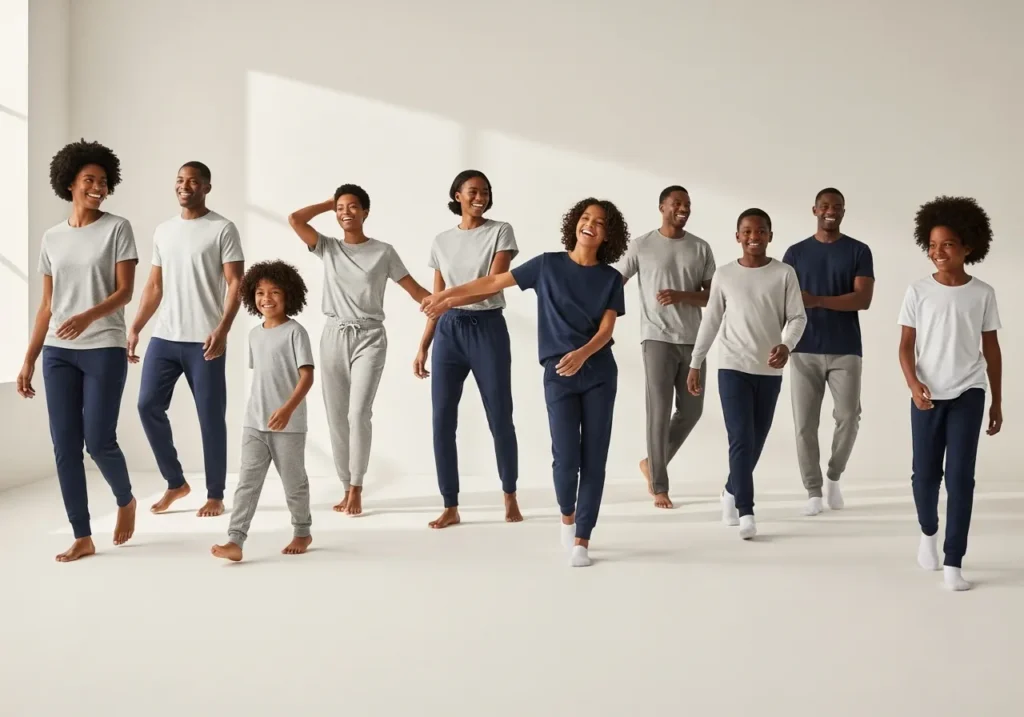
Mistake #6: Approving Branding Without Considering Fabric and Wash
A logo that works perfectly on a T-shirt may not behave identically on heavyweight fleece.
Decoration must be selected in relation to:
- fabric surface,
- stretch,
- thickness,
- pile,
- garment wash,
- artwork size,
- artwork detail,
- desired appearance.
Embroidery
Embroidery can create a premium dimensional result.
But extremely dense embroidery on certain sweatpants areas may influence drape.
Large designs require careful consideration of:
- stitch density,
- backing,
- fabric stability,
- placement.
Screen Printing
Screen printing can work effectively for many streetwear designs, but ink system, artwork and fabric characteristics should be considered together.
Heat Transfers
Transfer systems can support detailed graphics, but compatibility with the chosen fabric and intended care process matters.
Puff and Raised Effects
Dimensional effects can create strong streetwear impact but should be sampled before bulk production.
Branding Placement
Do not simply say:
“Logo on left leg.”
Specify its relationship to measurable points.
For example:
- distance below waistband;
- distance from side seam;
- artwork width;
- artwork height.
This allows the custom sweatpants manufacturer to reproduce the placement consistently.
Washed Sweatpants Need Additional Testing
If your product uses:
- acid wash,
- vintage wash,
- garment dye,
- faded treatment,
- distressed treatment,
branding and garment finishing should be considered together.
The order in which production processes occur can affect the final appearance.
Buyer Action
Approve actual decoration on the actual or production-representative fabric whenever possible.
Do not approve artwork only on a computer screen.
Mistake #7: Ignoring Shrinkage, Washing and Dimensional Change
A sweatpant can measure correctly before washing and incorrectly afterward.
This is why shrinkage should be considered during custom sweatpants manufacturing.
Fabric behaviour depends on numerous variables including:
- fibre composition,
- knitting,
- finishing,
- washing,
- drying,
- heat exposure,
- garment construction.
Why This Matters
Imagine a streetwear brand approves a carefully developed inseam.
If the finished product changes significantly after normal care, the intended silhouette changes.
The same applies to:
- waist,
- rise,
- thigh,
- leg opening,
- overall length.
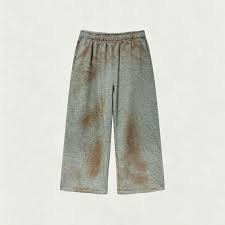
Washed Streetwear Requires Extra Attention
Garment-washed products intentionally undergo treatment to achieve a particular appearance or hand feel.
This adds another variable.
Brands developing vintage or washed private label sweatpants should evaluate:
- colour variation,
- measurement stability,
- surface appearance,
- branding behaviour,
- seam appearance,
- batch consistency.
Some visual variation may be inherent in certain wash processes.
The acceptable level should be agreed before production.
Care Instructions Matter Too
For US sales, apparel labelling requirements can include fibre content, country of origin, responsible business identity and care information.
UK textile labelling rules require fibre-content information.
EU textile products placed on the market are subject to fibre-composition labelling requirements under Regulation (EU) No 1007/2011.
These requirements should be checked for the specific destination and product before sale.
Buyer Action
Discuss with the custom sweatpants manufacturer:
- expected care method;
- fabric behaviour;
- garment-wash process;
- measurement tolerance;
- colour expectations;
- final measurement stage.
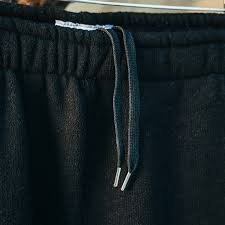
Mistake #8: Approving a Sample Without Creating a Frozen Production Reference
The sample is not merely a marketing photo.
It should become the physical and technical reference for bulk production.
Once the buyer approves the sample, all relevant specifications should be frozen.
What Should Be Frozen?
At minimum:
Fabric
- composition
- GSM
- construction
- colour
- finish
Measurements
- approved base size
- grading
- tolerances
Construction
- seams
- stitch details
- waistband
- pockets
- cuffs or hems
Branding
- artwork
- dimensions
- placement
- colours
- technique
Trims
- elastic
- drawcord
- eyelets
- zippers where applicable
Labels
- main label
- size label
- care label
- composition
- country-of-origin information as required
Packaging
- folding
- polybag or other agreed packaging
- stickers/barcodes where required
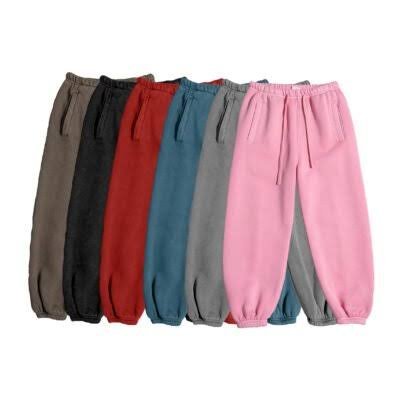
Why Verbal Approval Is Dangerous
Statements such as:
“Everything looks good.”
are commercially convenient but technically weak.
A better approval is:
“Sample approved against Tech Pack Version X, measurement sheet Version X and approved artwork Version X.”
This reduces confusion.
A custom sweatpants manufacturer and buyer should be working from the same approved information.
Version Control
Use dates or revision numbers.
For example:
- Tech Pack V1
- Fit Comments V2
- Final Tech Pack V3 — Approved
Never allow multiple conflicting measurement sheets to circulate during bulk production.
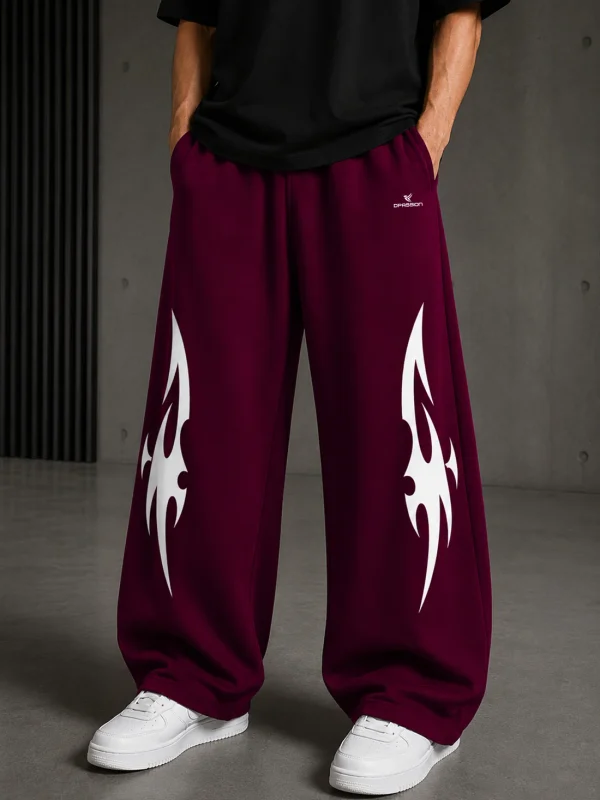
Mistake #9: Assuming Bulk Production Will Automatically Match the Sample
This is perhaps the most expensive mistake.
A good sample is important.
But a good sample alone does not guarantee a good production run.
Bulk consistency must be controlled.
What Can Change?
During bulk production, variables may include:
- fabric batches,
- dye lots,
- cutting,
- sewing,
- operator variation,
- embroidery,
- printing,
- washing,
- finishing,
- measurement,
- packing.
That is why production controls matter.
Pre-Production Confirmation
Before cutting bulk fabric, confirm that the production team is working from the final approved specifications.
In-Line Quality Checks
Checking only finished cartons is late.
Relevant checks can be performed during production depending on the project.
Final Inspection
Before shipment, finished garments should be evaluated against agreed specifications.
Areas may include:
- measurements;
- stitching;
- appearance;
- branding;
- labels;
- finishing;
- quantity;
- packaging.
The exact inspection method should be agreed for the order.
Golden Sample
An approved reference sample can provide a practical visual benchmark.
But it should work together with the technical specification.
A physical sample alone cannot communicate every tolerance or grading rule.
Fabric Guide for Custom Sweatpants Manufacturing
[IMAGE — PLACE AFTER THIS HEADING: CLOSE-UP OF PREMIUM FLEECE AND FRENCH TERRY FABRICS]
Choosing the right material is one of the most important decisions when sourcing from a custom sweatpants manufacturer.
| Fabric consideration | Why it matters |
|---|---|
| Fibre composition | Influences hand feel, performance and care |
| GSM | Indicates fabric weight |
| Knit construction | Influences structure and surface |
| Brushing | Changes warmth and internal feel |
| Stretch | Influences mobility |
| Recovery | Influences shape retention |
| Finish | Influences appearance and hand |
| Colour process | Influences final visual result |
| Shrinkage behaviour | Influences final measurements |
Cotton-Rich Fabrics
Cotton-rich constructions are popular in streetwear because brands often seek a natural hand feel.
But “cotton-rich” still does not define the fabric sufficiently.
Specify the actual composition.
Cotton/Polyester Blends
Blended constructions can provide a different balance of hand feel, durability, dimensional behaviour and cost.
Again, the blend percentage matters.
French Terry
Suitable for many premium streetwear and lifestyle applications depending on weight and construction.
Brushed Fleece
Suitable where additional warmth and soft interior feel are desired.
Heavyweight Sweatpants
Heavyweight does not have one universal GSM threshold.
Brands should avoid marketing or sourcing based on vague terminology alone.
State the actual target.
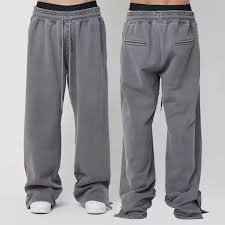
Custom Sweatpants Fit Guide
A strong custom sweatpants manufacturer needs measurable information.
Use the following as a development checklist.
| Measurement | Why it matters |
|---|---|
| Waist relaxed | Base waistband size |
| Waist stretched | Functional range |
| Hip | Seat volume |
| Front rise | Front fit |
| Back rise | Seat/coverage |
| Thigh | Upper-leg volume |
| Knee | Leg silhouette |
| Inseam | Internal leg length |
| Outseam | Overall length reference |
| Leg opening | Bottom silhouette |
| Cuff height | Jogger appearance |
| Waistband height | Waist appearance |
The exact measurement method should also be documented.
Two people can measure the same garment differently unless the points and garment position are clearly defined.
Custom Joggers Manufacturer vs Custom Sweatpants Manufacturer
The terms overlap heavily in apparel sourcing, but they should not automatically be treated as identical products.
A custom joggers manufacturer may produce tapered bottoms with elasticated cuffs, while sweatpants can include cuffed, straight-leg, wide-leg or open-hem constructions.
| Feature | Traditional Jogger | Streetwear Sweatpant |
|---|---|---|
| Leg | Often tapered | Tapered, relaxed, straight or baggy |
| Bottom | Usually cuffed | Cuffed or open |
| Styling | Athletic/casual | Casual/streetwear/fashion |
| Fit | Often controlled | Can be highly oversized |
| Fabric | Various | Frequently fleece/French terry |
These are general distinctions rather than universal rules.
When requesting quotations, describe the garment instead of relying only on the name.
Private Label Sweatpants: What Brands Should Specify
Private label sweatpants should look and feel like your brand—not like generic garments with a logo attached afterward.
A private-label specification can include:
- custom pattern;
- custom fabric;
- brand colours;
- embroidery;
- printing;
- woven labels;
- printed labels;
- size labels;
- care labels;
- hangtags;
- branded drawcords;
- custom packaging.
The purpose is brand consistency.
A custom sweatpants manufacturer should know which details are essential and which are optional.
How USA Streetwear Brands Should Source Custom Sweatpants
US buyers should think about both product development and market requirements.
Before production, determine:
- target retail price;
- intended customer;
- fit;
- fabric;
- size range;
- branding;
- packaging;
- import responsibilities;
- applicable labelling requirements.
The US Federal Trade Commission states that most textile and wool products require information including fibre content, country of origin and the identity of the manufacturer or another responsible business. Applicable wearing apparel also has care-labelling requirements.
Therefore, labels should not be treated as a last-minute graphic-design task.
Discuss them before bulk production.
For US streetwear brands, a custom sweatpants manufacturer should receive finalized label artwork and relevant instructions before production.
How UK Streetwear Brands Should Source Custom Sweatpants
UK buyers should define:
- fabric composition;
- garment specifications;
- size chart;
- colour;
- branding;
- labels;
- packaging;
- shipping terms.
UK government guidance states that textile labels must show fibre content, with additional requirements applying to products with different components or animal-origin elements.
A UK brand developing private label sweatpants should verify its current obligations before putting products on the market.
Do not assume a supplier’s standard label automatically meets your business’s requirements.
How German and EU Streetwear Brands Should Source Custom Sweatpants
Germany falls within the EU textile framework.
EU rules require textile products marketed to consumers to provide fibre-composition information, and the information must comply with the applicable textile-fibre naming rules.
For products sold across multiple EU countries, language requirements also need consideration.
Therefore, German and European brands should discuss label content early with their custom sweatpants manufacturer.
The buyer should also review applicable product-safety, chemical and import obligations for the specific product and market.
Regulatory responsibility should never be reduced to:
“The factory handles everything.”
Both parties should understand what information and documentation are required.
What Should Be in a Custom Sweatpants Tech Pack?
A useful tech pack should reduce interpretation.
Product Overview
Include:
- product name;
- style number;
- season;
- version;
- date.
Technical Sketch
Provide front and back views.
Include detail views where needed.
Fabric
State:
- composition;
- GSM;
- construction;
- colour;
- finish;
- wash.
Measurements
Provide a point-of-measurement chart.
Grading
Define the size range and grade.
Construction
Explain:
- seams;
- stitch type where critical;
- waistband;
- pockets;
- cuffs;
- hems;
- reinforcement.
Branding
Provide:
- artwork;
- dimensions;
- Pantone references where appropriate;
- placement;
- application technique.
Labels
Provide:
- main label;
- size label;
- care label;
- composition information;
- required origin information.
Packaging
Explain how the finished private label sweatpants should be folded and packed.
How to Send a Better RFQ to a Custom Sweatpants Manufacturer
Instead of sending:
“Price for 100 joggers?”
send a structured request.
RFQ Checklist
Product: Custom heavyweight streetwear sweatpants
Quantity: State actual requirement
Sizes: State size range and breakdown if available
Fabric: Composition + target GSM + construction
Fit: Relaxed/baggy/straight/tapered with measurements
Colour: Pantone or other agreed reference where available
Waistband: Detailed construction
Pockets: Type and placement
Bottom: Cuff/open hem
Branding: Method, artwork size and placement
Labels: Main, size and care
Packaging: Required format
Destination: City/postcode/country
Target date: Required delivery window
Files: Tech pack/artwork/reference images
A detailed RFQ allows a custom sweatpants manufacturer to understand the actual project instead of quoting an undefined product.
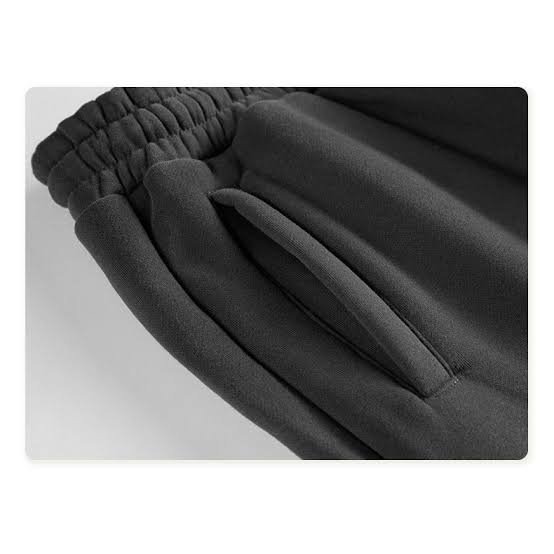
How to Compare Custom Sweatpants Manufacturers
Do not compare factories only by unit price.
Compare their ability to understand and control your product.
| Supplier factor | Question to ask |
|---|---|
| Product understanding | Do they understand the intended silhouette? |
| Fabric | Can they discuss composition, GSM and construction? |
| Sampling | Can you review a physical prototype? |
| Measurements | Will they work from a proper measurement sheet? |
| Branding | Can they reproduce required decoration? |
| Private label | Can labels and packaging be customized? |
| QC | What is checked before shipment? |
| Communication | Are revisions documented clearly? |
| Export | Can commercial/shipping requirements be discussed clearly? |
Price Still Matters
Of course it does.
But unit price should be evaluated against the actual specification.
A quotation for a generic fleece jogger is not comparable with a quotation for a fully custom heavyweight garment with custom pattern, wash, embroidery, labels and packaging.
First align specifications.
Then compare prices.
The Sample Should Answer These Questions
Before approving the sample from your custom sweatpants manufacturer, check:
Fabric
Does it match the agreed composition, weight, surface and hand feel?
Fit
Does the silhouette match your design intent?
Waistband
Is the tension comfortable?
Does the elastic recover?
Rise
Does the crotch sit correctly?
Leg
Is the taper, straightness or bagginess correct?
Length
Does it work with the intended styling?
Pockets
Are they correctly positioned and functional?
Branding
Is size, placement and finish correct?
Stitching
Is construction clean and suitable for the design?
Labels
Are positions and details correct?
Wash
If applicable, is the wash effect acceptable?
Overall Impression
Would you sell this exact product under your brand?
If the answer is no, do not approve bulk production simply because you want to meet a launch date.
Buyer Checklist Before Bulk Custom Sweatpants Manufacturing
[INFOGRAPHIC — PLACE AFTER THIS HEADING]
Before authorizing production, confirm:
- Final design approved
- Final fabric approved
- Composition confirmed
- GSM confirmed
- Colour confirmed
- Wash confirmed
- Base-size measurements approved
- Grading approved
- Measurement tolerances agreed
- Waistband approved
- Elastic approved
- Drawcord approved
- Eyelets approved
- Pockets approved
- Cuffs/open hem approved
- Artwork approved
- Artwork dimensions approved
- Artwork placement approved
- Printing/embroidery method approved
- Main label approved
- Size label approved
- Care label approved
- Packaging approved
- Quantity confirmed
- Size breakdown confirmed
- Shipping destination confirmed
- Commercial terms confirmed
- Final approved specification version identified
This checklist is more valuable than asking whether a custom sweatpants manufacturer is simply “good.”
Quality begins with defined requirements.
Why Brands Work With Elahi Vertex International for Custom Apparel Manufacturing
Elahi Vertex International operates as a B2B custom apparel manufacturing and export partner based in Sialkot, Pakistan.
For brands developing sweatpants, joggers, matching sets and other streetwear, the manufacturing workflow can cover product specifications, fabric sourcing, pattern development, sampling, customization, bulk production, quality inspection, branding, packaging and international shipment according to the agreed project requirements.
Elahi Vertex International’s manufacturing services include OEM, ODM, custom manufacturing and private-label production.
For brands that already have a complete tech pack, OEM manufacturing can follow the buyer’s approved specifications.
For brands that need additional product-development support, requirements can be discussed before sampling.
The objective should not be to push a brand into bulk production before the product is ready.
The objective is to define the product properly first.
MOQ
Elahi Vertex International’s standard starting MOQ is 20 pieces per product/category, subject to the specific project requirements.
A lower starting quantity can be particularly useful for emerging streetwear brands that want to test a product without immediately committing to very large production.
MOQ alone, however, should never be the only supplier-selection criterion.
The garment still needs to meet the required fit, material, branding and commercial expectations.
Custom Sweatpants Manufacturing Workflow
A practical project can follow this sequence:
1. Share Your Concept
Provide your design, tech pack, artwork or reference.
2. Define the Product
Confirm fabric, GSM, composition, fit, measurements, colour, trims and branding.
3. Review Commercial Requirements
Discuss quantity, sample requirements, destination and other project-specific commercial details.
4. Develop the Sample
The sample allows evaluation of the actual garment.
5. Review and Revise
Do not hesitate to correct meaningful issues.
6. Freeze Specifications
Create the final approved version.
7. Bulk Production
Production follows the agreed specification.
8. Quality Inspection
Evaluate relevant construction, measurements, branding and finishing requirements.
9. Packaging and Shipment
Prepare the approved products for the agreed destination.
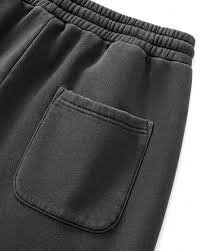
What Makes Premium Streetwear Sweatpants Feel Premium?
Premium is not one feature.
It is the interaction of many details.
A heavy fabric with poor fit is not premium.
Beautiful embroidery on an unstable garment is not premium.
Expensive packaging cannot rescue inconsistent sizing.
A strong premium product combines:
Fabric + Fit + Construction + Finishing + Branding + Consistency
Fabric
Should support the intended product.
Fit
Should reflect the brand’s silhouette.
Construction
Should support use and appearance.
Finishing
Should be clean and deliberate.
Branding
Should look integrated rather than added afterward.
Consistency
The customer buying the second unit should receive substantially the product the brand approved.
That is the real challenge of custom sweatpants manufacturing.
Cost Factors in Private Label Sweatpants Manufacturing
There is no responsible universal price for custom sweatpants.
Price depends on the specification.
Important factors include:
- fabric composition;
- fabric weight;
- fabric construction;
- fabric quantity;
- pattern complexity;
- garment construction;
- pockets;
- zippers;
- trims;
- embroidery;
- printing;
- washing;
- labels;
- packaging;
- quantity;
- destination;
- shipping method.
Therefore, buyers should be cautious when comparing quotations that were created from different assumptions.
Ask each custom sweatpants manufacturer to quote against the same specification.
Common Signs Your Sweatpants Specification Is Not Ready
Your specification probably needs more work if it contains phrases such as:
“premium material”
“normal size”
“good quality elastic”
“baggy like streetwear”
“logo around here”
“heavy GSM”
“same as picture”
These phrases communicate an idea, not a production standard.
Replace subjective language with measurable information wherever practical.
20 Frequently Asked Questions About Custom Sweatpants Manufacturers
1. What is a custom sweatpants manufacturer?
A custom sweatpants manufacturer produces sweatpants according to buyer-defined requirements such as fabric, fit, measurements, colours, construction, branding, labels and packaging rather than supplying only standard retail garments.
2. What should I send a custom sweatpants manufacturer?
Send your tech pack where available, artwork, measurement chart, fabric requirements, GSM, colour references, size range, quantity, branding requirements, packaging expectations and delivery destination.
3. What is the best GSM for custom sweatpants?
There is no universal best GSM. The appropriate weight depends on season, fabric construction, silhouette, target customer and desired hand feel. Evaluate GSM together with composition and construction.
4. Are heavyweight sweatpants automatically better quality?
No. Fabric weight is only one quality variable. Fit, construction, yarn/fabric characteristics, finishing, shrinkage, stitching and consistency also matter.
5. What fabric is commonly used for premium streetwear sweatpants?
French terry and fleece constructions are common options, but the correct fabric depends on the intended garment. Composition, GSM, internal finish and desired structure should all be specified.
6. Can a custom sweatpants manufacturer make oversized sweatpants?
Yes, where the manufacturer supports custom pattern development. “Oversized” should still be translated into actual measurements and a defined silhouette.
7. What is the difference between custom joggers and custom sweatpants?
Joggers commonly use a tapered leg and cuffed ankle, while sweatpants can also use straight, wide, baggy or open-hem silhouettes. Terminology varies, so specifications matter more than product names.
8. Can I manufacture private label sweatpants?
Yes. Private label sweatpants can include custom labels, artwork, trims, hangtags and packaging according to the project’s agreed requirements.
9. What labels do private label sweatpants need?
Requirements depend on the destination market. Fibre composition, country of origin, care information and responsible-business information may be relevant depending on jurisdiction. Verify the requirements for your market.
10. Should I order a sample before bulk production?
For a new custom design, sampling is a valuable way to evaluate fabric, fit, measurements, construction, branding and finishing before bulk production.
11. What should I check on a sweatpants sample?
Check fabric, GSM, hand feel, waist, hip, rise, thigh, knee, inseam, leg opening, waistband, elastic, drawcord, pockets, stitching, branding, labels, wash and overall fit.
12. How do I communicate an oversized fit?
Use measurements, technical sketches and fit references. Do not rely only on the word “oversized.”
13. Can a streetwear sweatpants manufacturer create custom washes?
Some manufacturers support wash treatments. The exact treatment and compatibility with your fabric, branding and design should be confirmed before production.
14. Can embroidery be added to heavyweight sweatpants?
Yes, depending on the fabric and design. Artwork size, stitch density, backing, placement and garment behaviour should be considered during development.
15. Can sweatpants be made as part of a matching hoodie set?
Yes. Matching sets should consider fabric, colour, wash, branding and finishing across both garments so they visually work together.
16. What information is needed for an accurate quotation?
Product specification, fabric, GSM, quantity, sizes, branding, wash, labels, packaging and shipping destination all help a custom sweatpants manufacturer understand the real project.
17. How do I prevent the bulk order from differing from my sample?
Freeze the approved specifications, maintain version control, use an approved reference sample where appropriate and agree on production and final quality checks.
18. Does Elahi Vertex International manufacture custom sweatpants?
Elahi Vertex International provides custom clothing, streetwear, OEM and private-label manufacturing services. Sweatpants/jogger requirements can be discussed according to the buyer’s design and specifications.
19. What is Elahi Vertex International’s MOQ for custom sweatpants?
The standard starting MOQ is 20 pieces per product/category. Exact project feasibility should still be confirmed against the design and specifications.
20. How can I request a custom sweatpants quote?
Send Elahi Vertex International your design or reference, quantity, fabric preference, GSM, size requirements, branding requirements and shipping destination through the official website, WhatsApp or email.
Final Conclusion: Choose a Custom Sweatpants Manufacturer Based on Product Control, Not Price Alone
Choosing a custom sweatpants manufacturer should not begin and end with the lowest unit quotation.
Premium streetwear sweatpants depend on a chain of interconnected decisions.
Fabric affects drape.
Pattern affects silhouette.
Rise affects comfort.
Grading affects every size.
Elastic affects waistband performance.
Pocket placement affects both function and appearance.
Decoration interacts with fabric.
Washing can affect measurements and colour.
Sampling establishes the reference.
Bulk-production control determines whether that reference is reproduced consistently.
The nine expensive mistakes are therefore straightforward to remember:
- Do not select fabric by GSM alone.
- Do not leave the silhouette undefined.
- Do not ignore rise, inseam and grading.
- Do not under-specify the waistband.
- Do not treat pockets as an afterthought.
- Do not approve branding independently from fabric and wash.
- Do not ignore dimensional change.
- Do not approve samples without freezing specifications.
- Do not assume bulk automatically matches the sample.
Brands in the USA, UK, Germany and wider Europe should approach custom sweatpants manufacturing as product development rather than simple garment purchasing.
The better the specification, the stronger the foundation for a successful manufacturing relationship.
Start Your Custom Sweatpants Project With Elahi Vertex International
Developing heavyweight sweatpants, relaxed joggers, oversized streetwear bottoms, matching hoodie-and-jogger sets or a complete private label sweatpants collection?
Send Elahi Vertex International:
- your design or tech pack;
- target fabric and GSM;
- required fit;
- size chart;
- quantity;
- artwork;
- branding requirements;
- destination country/postcode.
Elahi Vertex International can then review the actual project requirements before sampling and quotation.
Website: Elahi Vertex International
WhatsApp: +92 309 1639614
Email: elahivertexinternational@gmail.com
Secondary Email: Info@elahivertexinternational.com
Location: Sialkot, Pakistan
Standard MOQ: 20 pieces per product/category
Elahi Vertex International — Where Brands Are Made.
Custom Clothing Manufacturing
https://elahivertexinternational.com/custom-clothing-manufacturing/
Anchor: custom clothing manufacturing
Manufacturing
https://elahivertexinternational.com/manufacturing/
Anchor: apparel manufacturing process
Private Label Manufacturing
https://elahivertexinternational.com/private-label-manufacturing/
Anchor: private label manufacturing
OEM Clothing Manufacturing
https://elahivertexinternational.com/oem-clothing-manufacturing/
Anchor: OEM clothing manufacturing
Our Works
https://elahivertexinternational.com/our-works-elahi-vertex-international/
Anchor: real manufacturing work
Portfolio
https://elahivertexinternational.com/portfolio-10/
Anchor: custom streetwear portfolio
How to Order
https://elahivertexinternational.com/how-to/
Anchor: custom apparel ordering process
Elahi Vertex International Homepage
https://elahivertexinternational.com/
Recommended Internal Links
Use these internal links naturally throughout the Custom Sweatpants Manufacturer article.
- Custom Clothing Manufacturing
https://elahivertexinternational.com/custom-clothing-manufacturing/
Anchor text: Custom Clothing Manufacturing
Placement: Introduction or the section explaining how custom sweatpants are developed.
Purpose: Connects buyers directly with Elahi Vertex International’s broader custom apparel manufacturing service. - Manufacturing Process
https://elahivertexinternational.com/manufacturing/
Anchor text: apparel manufacturing process
Placement: Custom Sweatpants Manufacturing Workflow section.
Purpose: Gives buyers more information about manufacturing, sampling, production and quality processes. - Private Label Manufacturing
https://elahivertexinternational.com/private-label-manufacturing/
Anchor text: private label manufacturing
Placement: Private Label Sweatpants section.
Purpose: Highly relevant for streetwear brands developing private label sweatpants, joggers and matching sets. - OEM Clothing Manufacturing
https://elahivertexinternational.com/oem-clothing-manufacturing/
Anchor text: OEM clothing manufacturing
Placement: Tech Pack or RFQ section.
Purpose: Useful for established brands already working with technical specifications, artwork and measurement charts. - Custom Streetwear Portfolio
https://elahivertexinternational.com/portfolio-10/
Anchor text: custom streetwear portfolio
Placement: After the sections covering streetwear fit, joggers or premium sweatpants.
Purpose: Moves commercially interested readers from educational content toward relevant manufacturing work. - Our Works
https://elahivertexinternational.com/our-works-elahi-vertex-international/
Anchor text: manufacturing work
Placement: How to Compare Custom Sweatpants Manufacturers section.
Purpose: Gives potential buyers another trust and manufacturing-evidence route. - How to Order Custom Apparel
https://elahivertexinternational.com/how-to/
Anchor text: how to order custom apparel
Placement: Immediately before the final CTA.
Purpose: Moves high-intent buyers from research toward the next commercial step. - Elahi Vertex International
https://www.elahivertexinternational.com/
Anchor text: Elahi Vertex International
Placement: First important company mention and final CTA.
Purpose: Strengthens the relationship between the company entity and custom/private-label apparel manufacturing.
Brands searching for a custom sweatpants manufacturer should look beyond unit price and evaluate the complete development process. Elahi Vertex International provides Custom Clothing Manufacturing for brands developing apparel according to their own requirements. Buyers interested in branded collections can also explore Private Label Manufacturing, while established brands supplying technical specifications can review OEM Clothing Manufacturing. For more information about the production workflow, visit the apparel manufacturing process. Buyers can also review the custom streetwear portfolio and manufacturing work before reviewing how to order custom apparel.
Useful External Resources
International buyers should also review authoritative regulatory and technical sources when developing custom sweatpants for the USA, UK, Germany and wider European markets.
1. U.S. Federal Trade Commission — Apparel Labeling
https://www.ftc.gov/news-events/topics/tools-consumers/apparel-labeling
Recommended anchor: U.S. apparel labeling requirements
Placement: USA Custom Sweatpants Manufacturing section.
Why useful: Helps US brands understand federal textile and apparel labeling considerations.
2. U.S. Federal Trade Commission — Textile Fiber Rule
https://www.ftc.gov/legal-library/browse/rules/textile-fiber-rule
Recommended anchor: FTC Textile Fiber Rule
Placement: Fibre-composition and private-label section.
Why useful: Primary regulatory source for covered textile-fibre labeling requirements in the United States.
3. U.S. Federal Trade Commission — Care Labeling Rule
Recommended anchor: U.S. Care Labeling Rule
Placement: Mistake #7 — Ignoring Shrinkage, Washing and Dimensional Change.
Why useful: Relevant when brands prepare care instructions for covered apparel sold in the United States.
4. FTC — Threading Your Way Through the Labeling Requirements
Recommended anchor: textile and wool labeling requirements
Placement: Private Label Sweatpants section.
Why useful: Detailed FTC business guidance covering textile and wool labeling requirements.
5. GOV.UK — Textile Labelling
https://www.gov.uk/guidance/textile-labelling
Recommended anchor: UK textile labelling requirements
Placement: UK Streetwear Brands section.
Why useful: Official UK government guidance for businesses dealing with textile fibre-content labeling.
6. EUR-Lex — Regulation (EU) No 1007/2011
https://eur-lex.europa.eu/eli/reg/2011/1007/oj
Recommended anchor: EU textile fibre labelling rules
Placement: Germany and European Union sourcing section.
Why useful: Primary EU legal source covering textile fibre names and related fibre-composition labeling and marking requirements.
7. European Commission — Textile Labelling
Recommended anchor: European textile labelling requirements
Placement: Germany/Europe compliance section.
Why useful: Practical EU business guidance for textile products marketed within the European Union.
8. ISO — ISO 8559-1
https://www.iso.org/standard/61686.html
Recommended anchor: ISO clothing body measurement standard
Placement: Mistake #3 — Rise, Inseam and Size Grading.
Why useful: Relevant international technical reference for anthropometric definitions used in clothing sizing.
Copy-Paste External Link Paragraph
Streetwear brands should also consider destination-market requirements before approving labels and bulk production. Brands selling in the United States can review the U.S. apparel labeling requirements, the FTC Textile Fiber Rule and the U.S. Care Labeling Rule. UK buyers can consult the official UK textile labelling requirements. German and wider European Union brands should review the EU textile fibre labelling rules and the European Union’s practical textile labelling requirements. Brands developing international size specifications may also consult the ISO clothing body measurement standard as a technical reference.
Best Internal Conversion Path
Use the article to move commercial buyers through this path:
Custom Sweatpants Manufacturer Article
→ Custom Clothing Manufacturing
→ Private Label Manufacturing / OEM Manufacturing
→ Portfolio / Our Works
→ How to Order
→ WhatsApp / RFQ
This creates a much stronger buyer journey than adding internal links randomly.
Recommended Link Distribution Inside the Article
Introduction:
Custom Clothing Manufacturing + Elahi Vertex International
Mistake #1 — Fabric:
Private Label Manufacturing
Mistake #3 — Fit & Grading:
ISO 8559 reference
Mistake #7 — Washing/Shrinkage:
FTC Care Labeling Rule
Private Label Sweatpants:
Private Label Manufacturing + FTC textile guidance
USA section:
FTC Apparel Labeling + Textile Fiber Rule
UK section:
GOV.UK Textile Labelling
Germany/Europe section:
EUR-Lex + EU textile guidance
Manufacturing Workflow:
Elahi Vertex International Manufacturing
Supplier Evaluation:
Our Works
Streetwear section:
Custom Streetwear Portfolio
Final CTA:
How to Order + Elahi Vertex International homepage
Strong Final Internal CTA
Ready to develop custom sweatpants, heavyweight joggers, oversized streetwear bottoms or matching hoodie-and-jogger sets?
Explore Custom Clothing Manufacturing, review our manufacturing work and custom streetwear portfolio, or see how to order custom apparel with Elahi Vertex International.
For a useful manufacturing discussion, send your tech pack or reference design together with your target fabric/GSM, quantity, sizes, branding requirements and delivery destination.
Elahi Vertex International — Where Brands Are Made.
Ready to Develop Custom Sweatpants for Your Brand?
A premium sweatpant should not be defined by a logo and GSM alone. Fit, fabric construction, pattern, rise, grading, waistband engineering, pockets, branding, finishing and bulk consistency all matter.
If you are a streetwear brand, private-label clothing company, retailer, wholesaler or apparel buyer in the USA, UK, Germany or wider Europe, discuss your project directly with Elahi Vertex International before committing to bulk production.
Whether you are developing heavyweight sweatpants, oversized joggers, baggy streetwear bottoms, straight-leg sweatpants, fleece joggers, French terry sweatpants or matching hoodie-and-jogger sets, start with a clear specification and a manufacturing discussion built around your actual product.
Start With the Right Manufacturing Route
Explore our Custom Clothing Manufacturing service if you are developing a garment from your own concept, reference or technical requirements.
Building your own clothing label? Review our Private Label Manufacturing capabilities for custom branding, labels, specifications and apparel development.
Already have a completed tech pack, measurement chart and artwork? Explore OEM Clothing Manufacturing for specification-led production.
Want to understand how your project moves from development toward production? See our Apparel Manufacturing Process.
Before contacting us, you can also review our Custom Streetwear Portfolio and Manufacturing Work for additional insight into Elahi Vertex International.
When you are ready to move forward, review How to Order Custom Apparel and send us your requirements.
What Should You Send Us?
For a more useful quotation and manufacturing discussion, send:
- Your tech pack, sketch or reference images
- Required sweatpants/jogger style
- Fabric composition and target GSM
- Fleece, French terry or other fabric preference
- Fit: oversized, baggy, relaxed, straight-leg or tapered
- Size range and measurement chart
- Required quantity
- Printing, embroidery or other branding requirements
- Labels, trims and packaging requirements
- Delivery country, city and postal code
- Required timeline
Standard MOQ: 20 pieces per product/category.
Project-specific materials, construction, pricing, sampling, production requirements and shipping should be confirmed against your actual specifications.
Contact Elahi Vertex International
Official Website:
Visit Elahi Vertex International
WhatsApp:
Discuss Your Custom Sweatpants Project on WhatsApp
Phone / WhatsApp:
+92 309 1639614
Primary Email:
elahivertexinternational@gmail.com
Secondary Email:
Info@elahivertexinternational.com
Alibaba:
Elahi Vertex International on Alibaba
Connect With Elahi Vertex International
Instagram:
Elahi Vertex International on Instagram
LinkedIn:
Elahi Vertex International on LinkedIn
Facebook:
Elahi Vertex International on Facebook
TikTok:
Elahi Vertex International on TikTok
Threads:
Elahi Vertex International on Threads
X:
Elahi Vertex International on X
Your Next Step
Do not send only “What is your price for sweatpants?”
Send your design + quantity + fabric/GSM + size requirements + branding + destination.
That gives Elahi Vertex International enough information to discuss the product you actually want to manufacture rather than quoting an undefined generic garment.
USA • UK • Germany • Europe • International B2B Manufacturing
Start Your Custom Sweatpants Project With Elahi Vertex International →
Elahi Vertex International — Where Brands Are Made.
Custom Clothing Manufacturing • Private Label Manufacturing • OEM Clothing Manufacturing • Manufacturing • Portfolio • Our Works • How to Order
