
Introduction: Your Clothing Brand Needs More Than a Supplier
Finding a clothing manufacturer in Sialkot Pakistan is not simply about locating a factory that can stitch garments. For international clothing brands, startups, Shopify sellers, Amazon businesses, physical retail stores and wholesale buyers, the real challenge is finding a manufacturing partner that understands product development, garment specifications, branding, communication, production quality and international delivery.
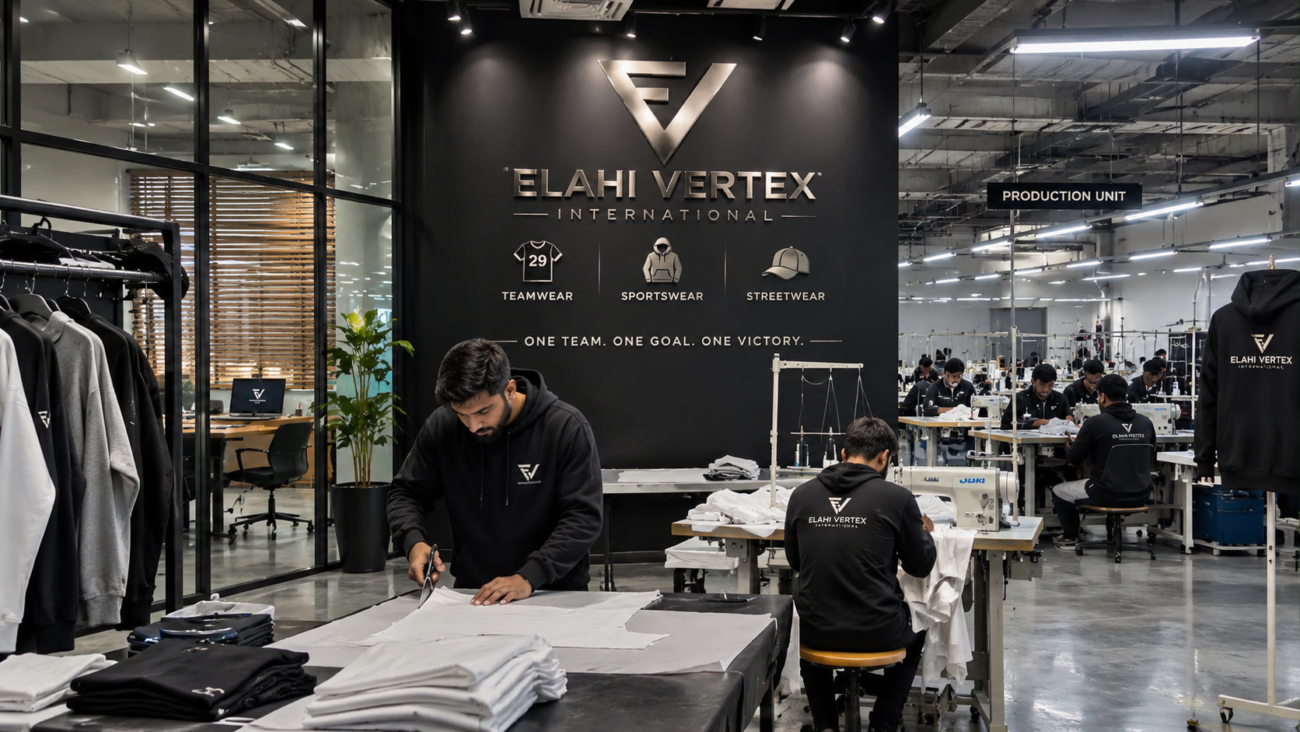
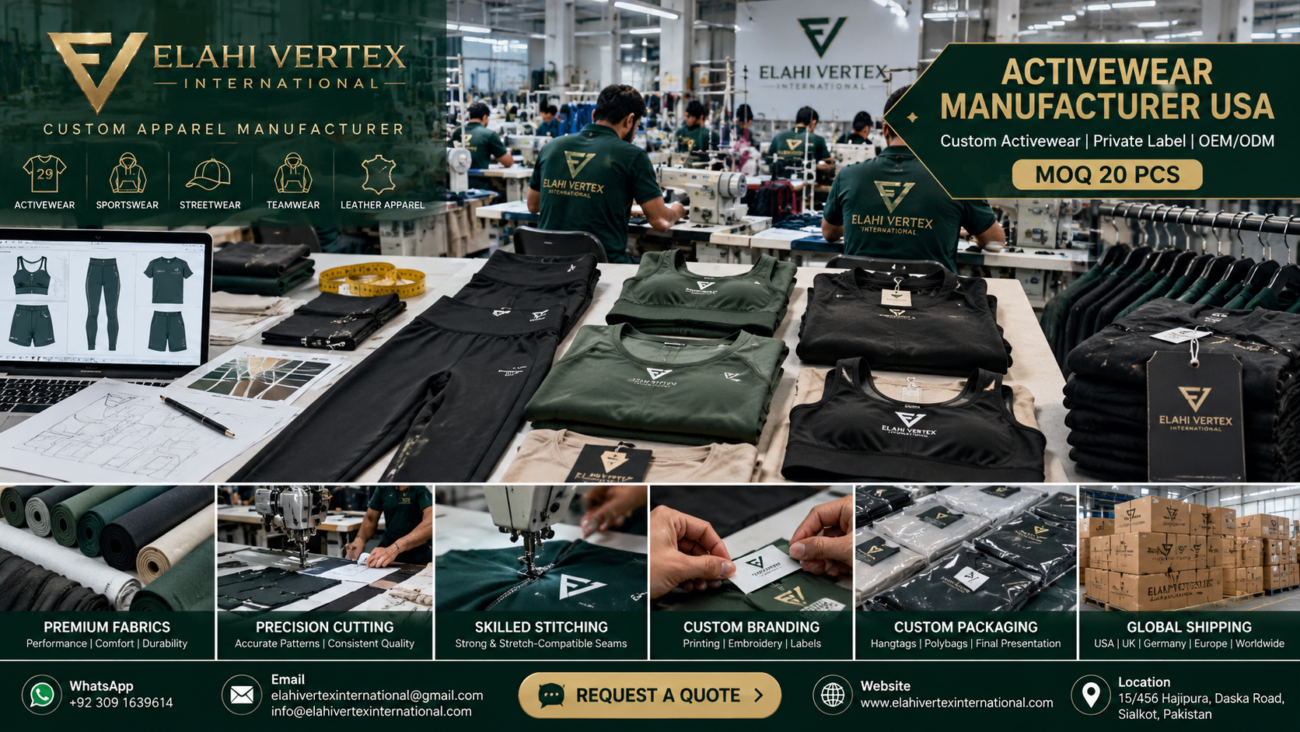
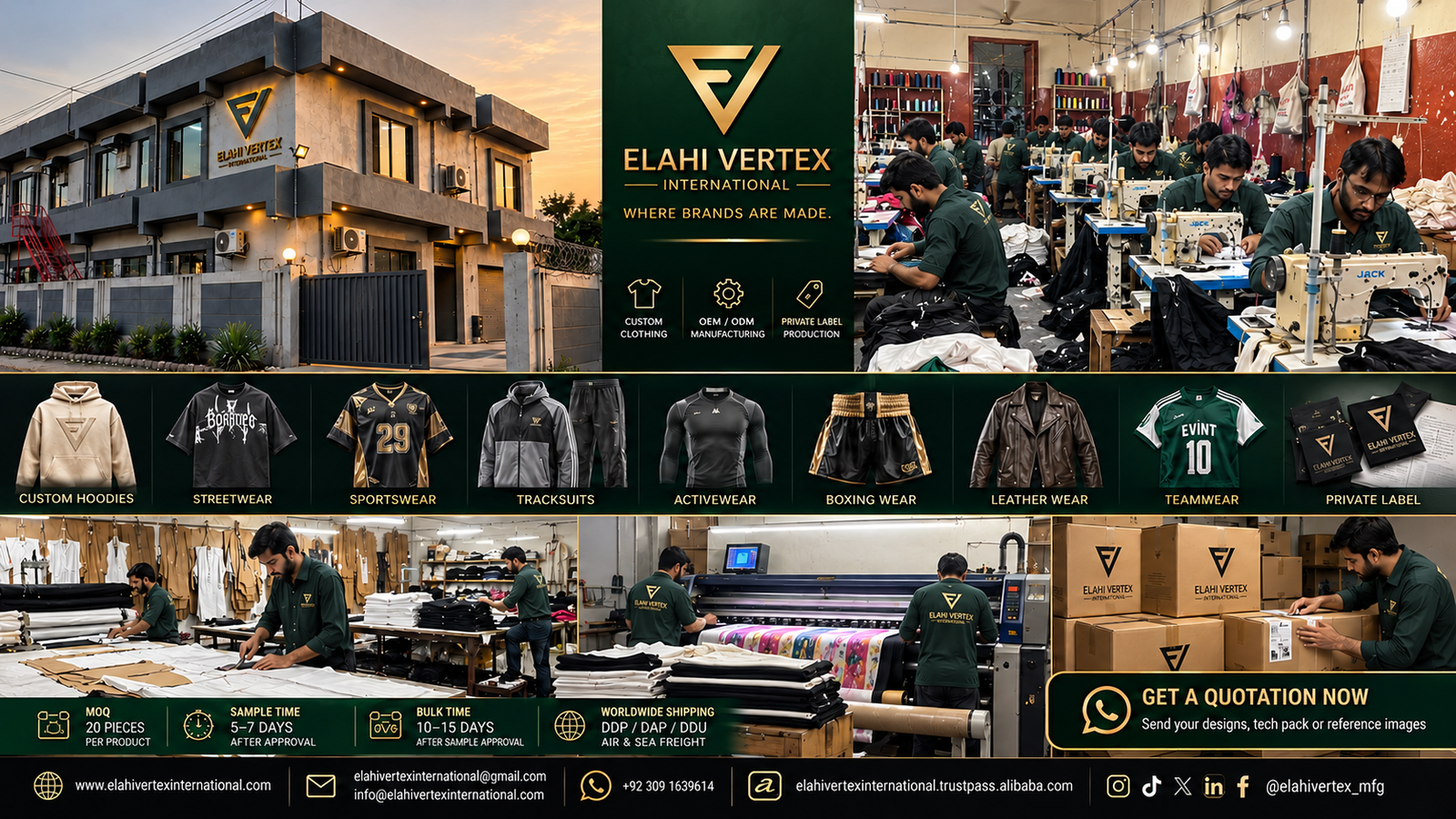
Elahi Vertex International is a Sialkot, Pakistan-based custom apparel manufacturer and exporter offering OEM, ODM and private-label clothing manufacturing services. The company works with businesses developing custom sportswear, streetwear, hoodies, sweatshirts, activewear, boxing wear, teamwear, leather apparel and other custom clothing collections.
For buyers in the United States, United Kingdom, Germany and across Europe, sourcing garments internationally involves important commercial decisions. The factory must understand the intended garment, fabric composition, fit, artwork, printing method, labels, packaging, production quantity and delivery destination.
A private label manufacturer should do more than attach a logo to a finished garment. A capable manufacturing relationship should support the brand’s specifications, product identity, quality expectations and future collection development.
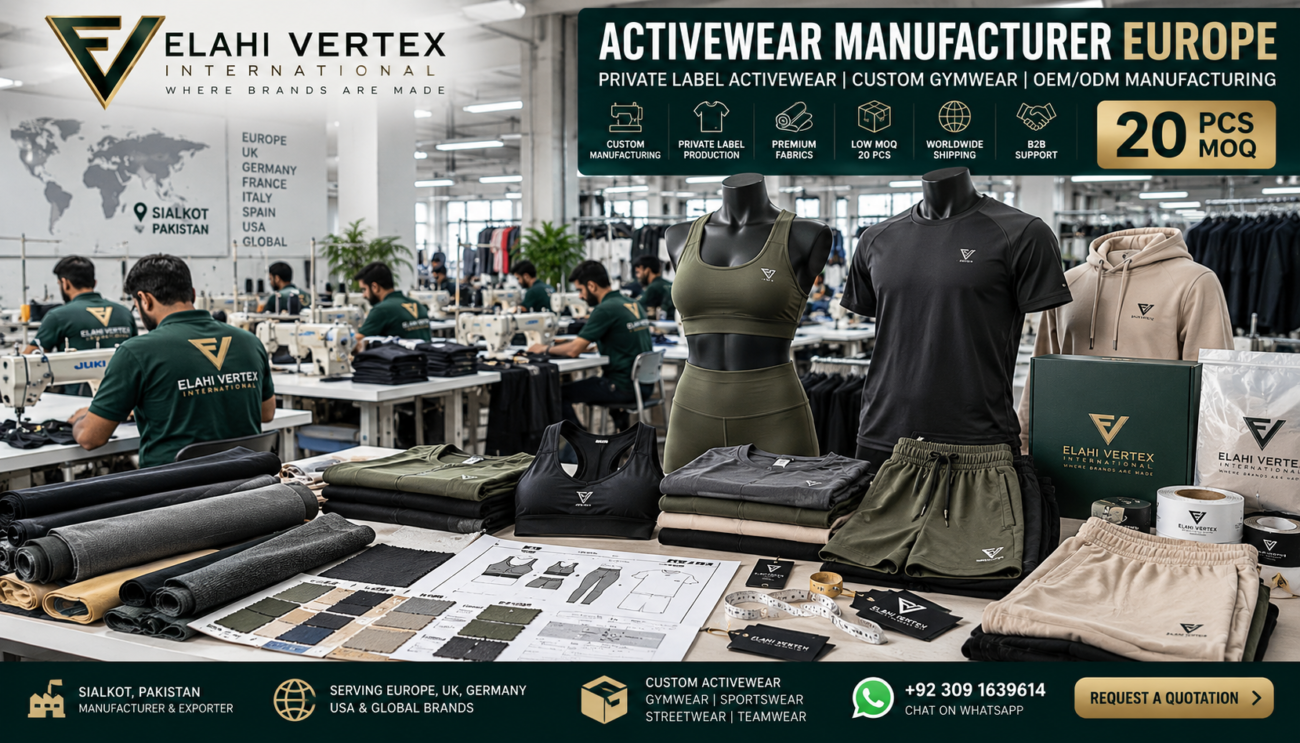
Elahi Vertex International offers a standard minimum order quantity of 20 pieces per product/category, providing an accessible starting point for smaller clothing businesses while supporting discussions about larger manufacturing programs.
This guide explains the company’s services, manufacturing workflow, buyer verification considerations, garment customization options and international sourcing requirements. It also identifies which information should be confirmed through samples, documents, production approvals and written quotations.
Table of Contents
1. Who Is Elahi Vertex International?
Elahi Vertex International is a custom clothing manufacturer in Sialkot Pakistan, providing manufacturing and export services for businesses requiring clothing produced according to their own designs, specifications and branding requirements.
The company positions itself as a B2B manufacturing partner rather than a conventional consumer-facing clothing retailer.
Its services are relevant to new clothing brands preparing their first collection, established labels introducing new styles, wholesalers developing private-label merchandise, sports organizations requiring customized uniforms and physical retailers seeking exclusive products.
Company identity
| Company information | Details |
|---|---|
| Company name | Elahi Vertex International |
| Business location | Sialkot, Pakistan |
| Proprietor | Mudabbir Ali Zafar |
| Business designation | Sole Proprietor |
| SCCI membership reference | A-101588 |
| Business address | 15/456 Hajipura, Daska Road, Sialkot, Pakistan |
| Business activities | Custom clothing manufacturing, OEM, ODM, private label and export |
| Minimum order quantity | 20 pieces per product/category |
| Primary markets | USA, UK, Germany and Europe |
| Company tagline | Where Brands Are Made |
| Website | https://www.elahivertexinternational.com/ |
The proprietor, membership reference and address are company-provided details. Buyers should independently confirm current registration and membership records where these are material to their supplier-approval process.
The company’s manufacturing identity should not be confused with Elahi Vertex Surgico, which is a separate business.
Who does Elahi Vertex International manufacture for?
The intended customers include clothing startups, streetwear labels, sportswear brands, private-label businesses, online retailers, independent boutiques, established fashion companies, distributors, wholesalers, importers, teams, academies and other commercial buyers.
An early-stage fashion entrepreneur may need one carefully developed hoodie sample before committing to a collection. A Shopify business may need a matching hoodie-and-jogger range with consistent branding. A retailer may need exclusive garments with woven labels and retail packaging.
These are different commercial requirements, even when the underlying garment is similar.
The value of a manufacturing partner lies in understanding those differences before production begins.
For more information, visit Elahi Vertex International or explore its custom clothing manufacturing services.
2. How Can International Buyers Verify Elahi Vertex International?
A clothing manufacturer in Sialkot Pakistan should be evaluated through verifiable business identity, production evidence, product samples, commercial documentation and communication practices.
An attractive website or social media page alone does not establish manufacturing capability.
Business verification
International buyers can request the registered business name, proprietor information, business address, tax documentation, chamber membership information and a proforma invoice displaying consistent company details.
Where available, buyers can compare the business information against records from the relevant chamber of commerce and other official sources.
The company-provided SCCI membership reference for Elahi Vertex International is A-101588. This information should be checked through the issuing organization rather than treated as independently verified solely because it appears in marketing content.
Factory and workshop evidence
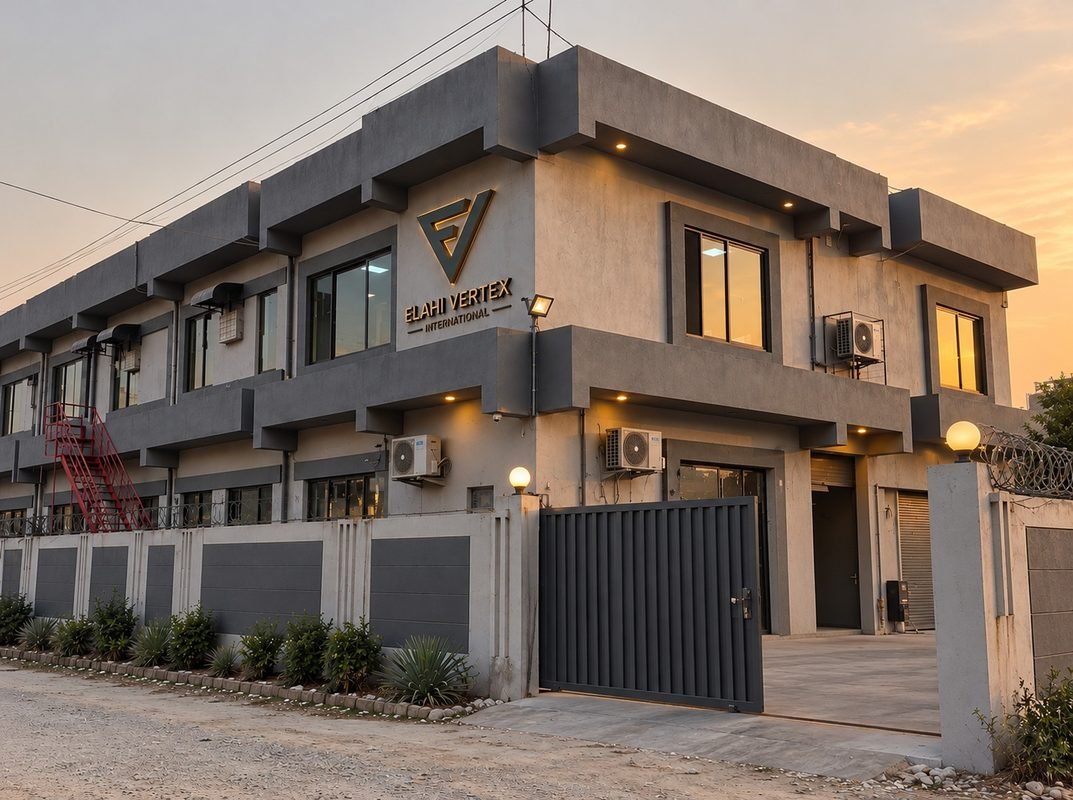
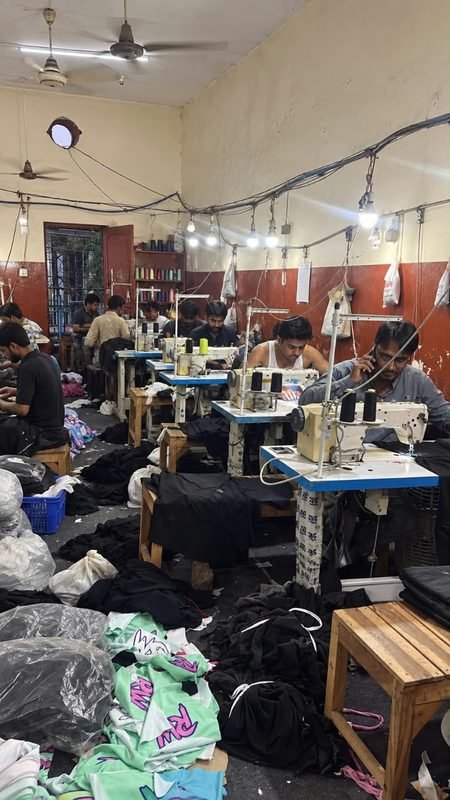
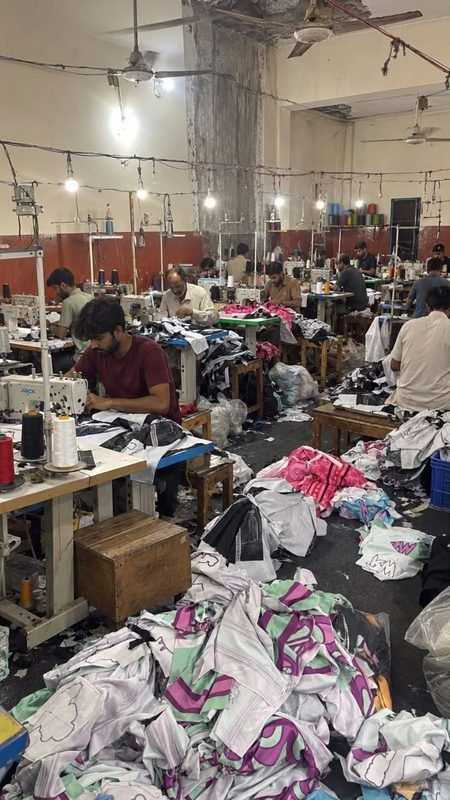
Buyers may request current workshop photographs, production-process videos, live video calls, cutting and stitching demonstrations, or examples of garments in development.
A useful video walkthrough should help the buyer understand the relevant operations rather than simply show machinery without context.
Product samples
A physical sample is often more valuable than a broad marketing claim.
The buyer can assess fabric hand feel, stitching, dimensions, print positioning, embroidery quality, finishing, labeling and overall construction.
Commercial documentation
Written quotations should specify the garment, fabric, quantity, branding requirements, sample cost, shipping cost, production schedule, payment arrangements and delivery terms.
Buyers should confirm that the beneficiary information on payment instructions is consistent with the agreed legal and commercial arrangements.
Intellectual-property protection
Brands sharing unreleased artwork, technical packs, patterns or collection concepts may request an appropriate nondisclosure agreement.
Confidentiality arrangements should explain the permitted use of artwork, ownership of intellectual property, disclosure restrictions and relevant obligations after the project.
Manufacturing inquiry: Share your requirements through WhatsApp to discuss the available verification information and project-specific manufacturing process.
3. Why Choose a Clothing Manufacturer in Sialkot Pakistan?
Sialkot is an established Pakistani manufacturing center associated with sports goods and various export-oriented industries. For international clothing buyers, its relevance lies in the availability of manufacturing businesses offering specialized garment development and customization.
However, geography alone is not proof of quality.
A buyer should evaluate the individual manufacturer’s capabilities, materials, production controls, communication, pricing and ability to deliver the required garment.
Manufacturing flexibility
Custom clothing production may involve a combination of fabric sourcing, pattern development, cutting, sewing, embroidery, printing, labeling and finishing.
The exact manufacturing arrangement should be established before the buyer assumes every operation takes place within one building.
Product customization
Unlike generic wholesale purchasing, custom manufacturing allows brands to define specifications such as fit, material, color, construction, print placement and branded components.
Smaller initial production quantities
Lower minimum orders may help emerging brands reduce their initial inventory exposure.
Elahi Vertex International states a standard MOQ of 20 pieces per product/category. Whether a particular fabric, color combination or technical process is practical at that quantity should be confirmed during quotation.
Export considerations
An international supplier must understand that production completion and delivery completion are different milestones.
Documentation, customs classification, freight arrangements, destination regulations and import taxes can affect the final landed cost.
For US buyers, the U.S. Customs and Border Protection textile import guidance is a useful starting point.
For European buyers, the European Commission’s Access2Markets import guidance explains important import planning considerations.
4. Custom Clothing Manufacturing Services
Elahi Vertex International’s published manufacturing services include custom sportswear, streetwear, boxing wear, leather wear, activewear, teamwear, hoodies, sweatshirts and private-label apparel.
Each category requires a different approach to materials, pattern engineering, manufacturing techniques and quality evaluation.
| Product category | Typical buyer requirements | Important manufacturing considerations |
|---|---|---|
| Oversized T-shirts | Streetwear silhouette, heavyweight fabric, custom graphics | Shoulder drop, neck rib, shrinkage, print durability |
| Hoodies | Custom fit, fleece, embroidery, printed graphics | GSM, brushing, hood structure, cuffs, seam strength |
| Joggers | Coordinated collections, comfort, branded details | Waistband construction, inseam, pockets, shrinkage |
| Tracksuits | Matching jackets and trousers | Fabric consistency, zippers, sizing, panel alignment |
| Gymwear | Stretch, comfort, mobility | Recovery, opacity, seam performance, fit |
| Teamwear | Team colors, numbers, logos | Artwork consistency, repeat orders, size grading |
| Boxing wear | Sport-specific fit and branding | Movement, lightweight construction, finishing |
| Leather jackets | Custom silhouette, hardware, branding | Material grade, panel matching, lining, construction |
| Private-label collections | Brand identity across multiple styles | Labels, specifications, packaging, production consistency |
Custom hoodies and sweatshirts
A hoodie is not defined by GSM alone.
A 400 GSM fleece and a 500 GSM fleece may behave differently depending on yarn composition, knit structure, brushing, finishing and garment pattern.
The buyer should specify the desired weight, composition, fit, surface appearance, warmth, stretch, shrinkage tolerance and decoration method.
For example, an oversized heavyweight streetwear hoodie may require dropped shoulders, a structured hood, ribbed cuffs, a specific body length and a distinctive print.
A lightweight performance hoodie may require an entirely different fabric and construction approach.
Custom streetwear
Streetwear manufacturing commonly involves oversized silhouettes, boxy T-shirts, heavyweight hoodies, coordinated joggers, graphic printing, embroidery, washed effects and custom branding.
The brand should provide reference measurements rather than relying exclusively on labels such as oversized, relaxed or premium.
Custom sportswear and teamwear
Sportswear manufacturing requires attention to activity, movement, durability and comfort.
Teamwear may also require repeatable colors, numbering systems, sponsor placements, player-name customization and size consistency across future orders.
Custom activewear
Activewear specifications may include fabric stretch, recovery, opacity, seam construction, waistband support, moisture management and fit during movement.
Buyers should request relevant material specifications and physical samples before approving production.
Custom leather wear
Leather garment development requires careful discussion of material type, thickness, surface finish, hardware, lining, panel cutting and construction.
Genuine leather, synthetic leather and faux suede are different materials. A supplier should not substitute one for another without the buyer’s approval.
5. OEM, ODM and Private Label Manufacturing Explained
The terms OEM, ODM and private label are often used interchangeably in marketing, but they describe different commercial arrangements.
| Manufacturing model | Main meaning | Typical buyer |
|---|---|---|
| OEM | Manufacturing according to buyer-controlled designs or specifications | Established brands with tech packs |
| ODM | Manufacturer contributes to product design and development | Brands seeking development assistance |
| Private label | Products manufactured and branded for the buyer’s label | Startups, retailers and established brands |
| Custom manufacturing | Garments made to agreed specifications | Brands, organizations and wholesalers |
OEM clothing manufacturing
Original equipment manufacturing generally begins with specifications provided by the buyer.
These may include technical drawings, graded measurements, material requirements, stitching instructions, labels and artwork.
The manufacturer then evaluates production feasibility and prepares a quotation or sample.
ODM clothing manufacturing
Original design manufacturing involves a greater contribution to product development by the manufacturing partner.
The commercial agreement should clarify design ownership, exclusivity, intellectual-property rights and whether existing patterns or designs may be reused.
Private-label clothing manufacturing
A private label manufacturer produces garments intended to be sold under the buyer’s own brand.
Depending on the agreement, the process may include custom materials, patterns, embroidery, printing, woven labels, care labels, hangtags and branded packaging.
A private label manufacturer is particularly relevant to businesses that want control over brand identity without establishing their own garment factory.
For a new brand, the important question is not simply whether a private label manufacturer can add a logo. It is whether the production arrangement supports the desired garment quality, consistent sizing, brand presentation and commercially realistic quantities.

6. Fabric Selection, GSM and Garment Construction
Fabric decisions affect comfort, appearance, cost, durability and the way a garment behaves after washing.
A clothing manufacturer in Sialkot Pakistan should be able to discuss fabric requirements in practical terms rather than describing every material as premium quality.
Common fabric choices
| Fabric | Common applications | Important considerations |
|---|---|---|
| Combed cotton jersey | T-shirts and casualwear | Softness, shrinkage, yarn quality |
| Cotton/polyester fleece | Hoodies, sweatshirts, joggers | Warmth, brushing, pilling |
| French terry | Sweatshirts and relaxed apparel | Loop structure, drape, absorbency |
| Interlock knit | Premium casualwear and activewear | Stability, thickness, stretch |
| Polyester jersey | Sportswear and teamwear | Print compatibility, moisture behavior |
| Polyester/elastane | Activewear and compression garments | Stretch, recovery, opacity |
| Cotton/elastane rib | Fitted tops, cuffs, stretch garments | Recovery, shape retention |
| Woven polyester | Technical jackets and shorts | Wind resistance, drape, finishing |
| Faux suede | Fashion jackets | Surface texture, cleaning, abrasion |
| Genuine leather | Jackets and leather apparel | Thickness, grain, finish, panel matching |
What does GSM mean?
GSM stands for grams per square meter. It describes the weight of fabric over a defined area.
It does not independently determine softness, durability, warmth or quality.
Two fabrics with the same GSM can have different performance characteristics because of fiber composition, yarn structure and finishing.
Fabric testing and certification
When a buyer requires certified textile materials, the supplier should identify the exact certification and provide verifiable supporting documentation.
For example, OEKO-TEX STANDARD 100 concerns textile testing for harmful substances. Mentioning the standard does not mean Elahi Vertex International or its materials hold that certification.
7. Printing, Embroidery and Custom Branding
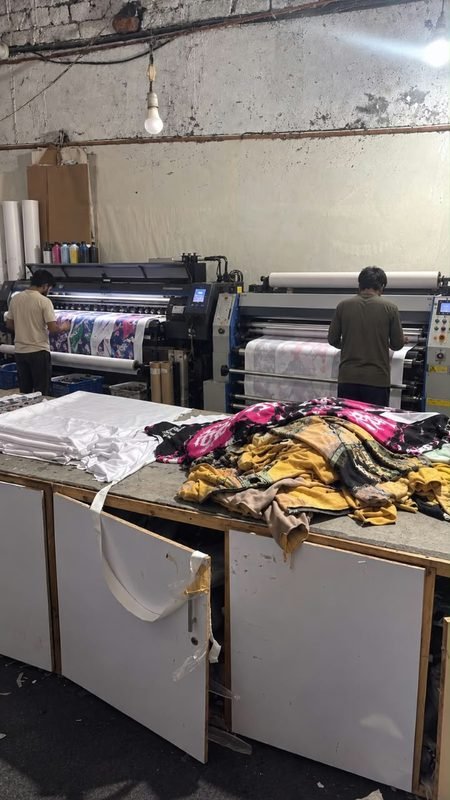
Printing and decoration should be selected according to fabric type, artwork, order quantity, required appearance and expected durability.
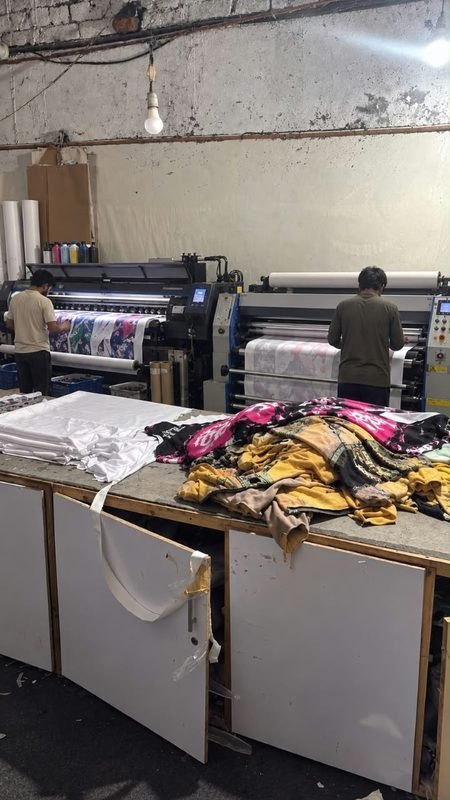
Elahi Vertex International discusses custom decoration methods including screen printing, DTF, DTG, sublimation, embroidery, puff effects and heat-transfer applications. The exact production location and feasibility of each process should be confirmed for the project.
Screen printing
Screen printing is commonly suitable for repeat designs and many medium-to-large production runs.
The final cost depends on artwork complexity, number of colors, placement and quantity.
DTF printing
Direct-to-film printing transfers printed artwork onto garments using a transfer process.
It may be useful for multicolor designs and smaller custom production programs.
DTG printing
Direct-to-garment printing applies ink directly to compatible textiles.
Fabric composition, pretreatment and finishing can affect results.
Sublimation printing
Sublimation is commonly used for polyester-based sportswear and teamwear.
It can support detailed designs and full-color artwork when the substrate and process are suitable.
Embroidery
Embroidery creates designs using stitched thread.
Common applications include chest logos, sleeve branding, caps, jackets and premium streetwear details.
The buyer should approve stitch density, thread color, artwork size, placement and backing where relevant.
Puff printing and raised decoration
Raised print effects can add texture and dimension, but the exact process should be approved through samples.
Branding elements help create a consistent product identity.
A private label manufacturer may coordinate neck labels, woven patches, care labels, size labels, hangtags and packaging according to the approved project specifications.
Buyers should confirm which items are included in the quotation and which require additional tooling, setup or material costs.
8. Sampling, Dedicated Production Coordination and Fast Turnaround
A sample is the point at which a design becomes a physical product that can be measured, worn, inspected and approved.
Elahi Vertex International’s stated indicative sample timeline is 5–7 days after requirements and approvals are finalized, where the selected product and materials allow it.
This is a planning baseline, not a guaranteed deadline for every garment.
Highly technical jackets, new fabric sourcing, special tooling, complex embroidery and unusual finishes may require additional time.
How a sampling project should proceed
- Receive the design, reference images or tech pack.
- Confirm fabric, composition, GSM and color.
- Review measurements and construction details.
- Confirm artwork, labels and packaging requirements.
- Issue the sample quotation and payment instructions.
- Begin sampling after the necessary approval and payment.
- Provide agreed production updates.
- Present sample photographs or video where appropriate.
- Dispatch the physical sample.
- Receive feedback and confirm any corrections before bulk production.
Dedicated team coordination
For urgent projects, a manufacturing team may prioritize specific development, stitching, decoration or finishing tasks.
The buyer should receive a realistic schedule based on available capacity rather than a promise that every urgent order can be completed immediately.
Bulk manufacturing timelines
Elahi Vertex International uses an indicative 10–15-day bulk production baseline after sample approval for suitable orders.
Actual timing depends on quantity, fabric availability, technical complexity, production scheduling and the required delivery date.
Urgent production requests should be evaluated individually and accepted only when achievable without compromising agreed quality requirements.
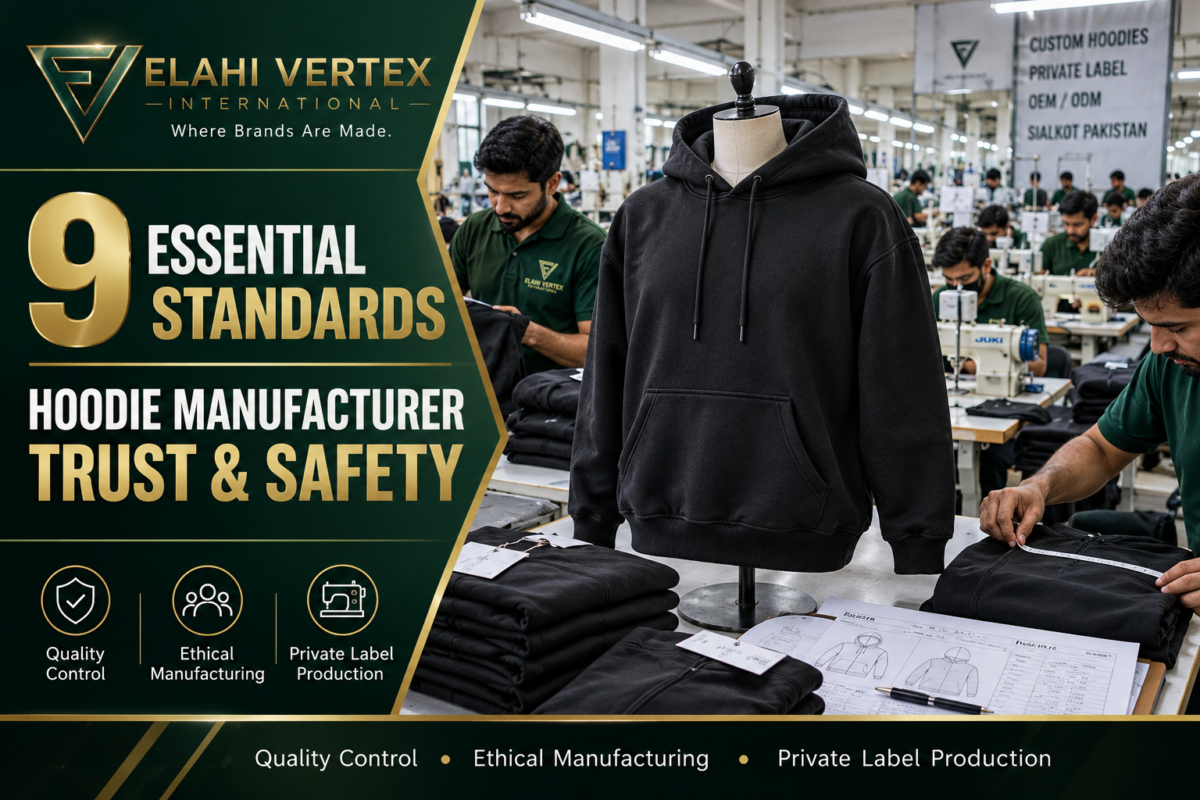
9. Quality Control and Production Transparency
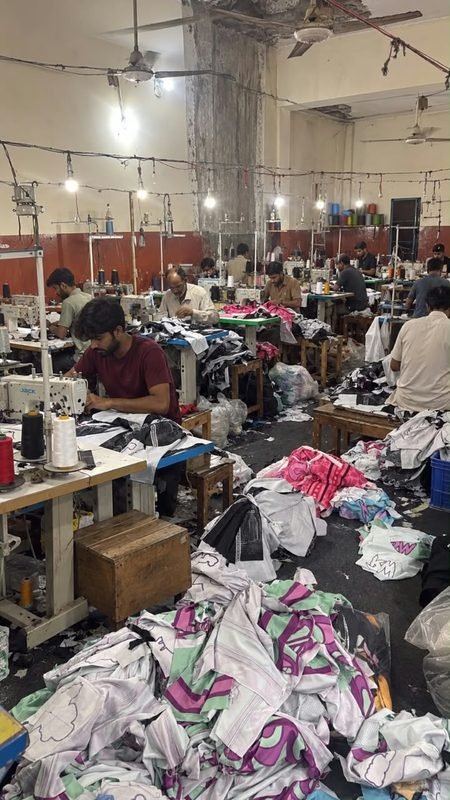
Quality control is not one inspection performed after production.
It is a series of decisions and checks intended to reduce the likelihood of defective or inconsistent garments.
Before production
Confirm approved measurements, fabrics, colors, patterns, artwork, labels and packaging.
During production
Check important construction features such as stitching, panel alignment, print positioning, seam consistency and sizing.
Before shipment
Review finished-garment measurements, appearance, branding, packaging quantities and relevant agreed acceptance criteria.
Buyer communication
International customers may request progress photographs, video updates, approval checkpoints or inspection arrangements.
The scope of those services should be agreed before production.
A supplier’s willingness to communicate is useful, but objective product checks remain necessary.
10. Low MOQ and International Bulk Orders
Elahi Vertex International’s standard minimum order quantity is 20 pieces per product/category.
This can help startups and smaller businesses evaluate a garment without immediately committing to hundreds of units.
However, minimum quantity and minimum commercial viability are different questions.
A very small order may have a higher per-unit production cost because pattern development, decoration setup, material procurement and administration are distributed across fewer garments.
What buyers should calculate
| Cost component | Why it matters |
|---|---|
| Unit manufacturing cost | Base product cost |
| Artwork or setup | May be charged separately |
| Custom labels | Branding expense |
| Packaging | Retail presentation |
| Freight | International transportation |
| Duties and taxes | Destination import costs |
| Sampling | Product development expense |
| Inspection | Quality assurance expense |
| Returns and defects | Commercial risk allowance |
A buyer should compare landed costs and expected retail margins, not simply select the lowest factory unit price.
11. International Shipping: DDP, DAP, DPD and Direct Delivery
International delivery requires clarity about the selected carrier, service, customs responsibility, duties, taxes and delivery address.
DDP shipping
Delivered Duty Paid is an Incoterms delivery rule under which the seller accepts extensive obligations, including specified import-clearance responsibilities.
A DDP quotation should explicitly define the destination and the costs included.
DAP shipping
Delivered at Place generally places import clearance and import duties or taxes with the buyer, subject to the agreed contract.
The term DDU is older terminology; current commercial documentation should preferably use the appropriate recognized Incoterms rule.
DPD and courier shipping
DPD is a parcel delivery network, not an Incoterms rule.
Carrier availability depends on the origin, destination, service and shipment arrangements.
Other international courier and freight options may be appropriate depending on shipment size, urgency and cost.
Direct-to-customer shipping
A brand may want individual packages shipped directly to customers rather than importing one consolidated bulk shipment.
This requires a separate agreement covering order processing, individual packing, addresses, tracking, customs arrangements, returns and service costs.
Direct shipping should not be assumed to be included in a standard bulk-manufacturing quotation.
12. Clothing Manufacturing for the USA
USA paragraph 1: American clothing startups often need a manufacturing partner capable of converting a design concept into a finished, branded product. Elahi Vertex International offers custom garment development discussions for brands requiring OEM, ODM and private-label production.
USA paragraph 2: Streetwear businesses in New York, Los Angeles, Chicago, Houston and other American markets may require oversized T-shirts, heavyweight hoodies, coordinated sets and customized graphics. Specifications should reflect the intended consumer and product positioning.
USA paragraph 3: Shopify and Amazon clothing sellers should evaluate landed cost, labeling, packaging, inventory risk and expected retail margin before placing bulk orders.
USA paragraph 4: US importers should review country-of-origin marking, textile labeling, customs classification and applicable safety requirements. Official CBP guidance provides relevant information.
USA paragraph 5: Buyers seeking a clothing manufacturer in Sialkot Pakistan can discuss their specifications with Elahi Vertex International and request a project-specific quotation before committing to sampling.
13. Clothing Manufacturing for the UK
UK paragraph 1: UK streetwear startups and independent fashion labels often require custom hoodies, oversized T-shirts, joggers, tracksuits and branded accessories.
UK paragraph 2: A private label manufacturer should understand the brand’s intended fit, fabric quality, label design and retail presentation.
UK paragraph 3: London, Manchester, Birmingham, Leeds and other UK locations can be served through international shipping arrangements, subject to destination and carrier confirmation.
UK paragraph 4: Buyers should establish import responsibilities, VAT treatment and commodity classification. The official UK import guide provides an appropriate reference.
UK paragraph 5: Elahi Vertex International can discuss custom apparel requirements, sample development and production planning with UK buyers through its official website.
14. Clothing Manufacturing for Germany
Germany paragraph 1: German fashion brands, sportswear businesses and private-label retailers may require carefully specified materials, construction and finishing.
Germany paragraph 2: A private label manufacturer supplying German buyers should clarify fiber composition, sizing, labeling, artwork and applicable product requirements.
Germany paragraph 3: Brands in Berlin, Hamburg, Munich, Frankfurt and other German cities may explore overseas manufacturing for customized collections and new product development.
Germany paragraph 4: Importers should verify applicable EU requirements, customs documentation and relevant product obligations through official European sources.
Germany paragraph 5: Elahi Vertex International offers an international manufacturing inquiry route for German buyers developing custom clothing and private-label collections.
15. Clothing Manufacturing Across Europe
Europe paragraph 1: European clothing businesses include independent fashion labels, online retailers, sports clubs, boutiques and established apparel companies with different manufacturing needs.
Europe paragraph 2: Private-label development can involve custom patterns, fabrics, branding, packaging and repeat-order planning.
Europe paragraph 3: Buyers in France, Italy, Spain, the Netherlands, Belgium and other European markets should establish destination-specific product and import requirements.
Europe paragraph 4: International delivery costs should be compared using the same agreed Incoterms and delivery location to avoid misleading quotations.
Europe paragraph 5: European brands looking for a clothing manufacturer in Sialkot Pakistan can contact Elahi Vertex International to discuss manufacturing feasibility, sample development and export arrangements.
16. Why a Long-Term Manufacturing Relationship Matters
A manufacturing partner should support more than a single purchase order.
Repeat business depends on consistent product specifications, approved patterns, reliable communication and a practical process for reordering.
A private label manufacturer may help a brand retain approved garment measurements, fabric references, artwork details and branding specifications for subsequent orders, subject to the agreed recordkeeping arrangements.
For growing brands, this can reduce repeated development work and help maintain consistency between collections.
However, a repeat order should still confirm current material availability, pricing, production schedules and shipping arrangements.
17. Private Label Manufacturers: 20 Buyer Considerations
- Brand ownership: Confirm who owns the artwork, patterns and product designs.
- Garment specifications: Supply precise measurements and construction requirements.
- Material quality: Evaluate composition, weight, finish and suitability.
- Minimum order quantity: Confirm the applicable quantity for each product.
- Sampling: Approve a physical product before committing to bulk production.
- Private labels: Define neck labels, woven labels and care labels.
- Hangtags: Specify size, material, artwork and attachment.
- Packaging: Decide how each garment should be folded, protected and presented.
- Color matching: Approve colors against suitable physical or documented references.
- Printing: Choose a decoration method appropriate to the artwork and fabric.
- Embroidery: Confirm dimensions, stitch quality and placement.
- Sizing: Establish measurements and grading rules.
- Production approvals: Define which changes require written approval.
- Quality expectations: Set measurable acceptance criteria.
- Cost transparency: Separate unit cost from development and shipping charges.
- Communication: Agree on updates and response responsibilities.
- Delivery terms: Clarify freight, duties, taxes and importer obligations.
- Payment protection: Verify commercial documentation and beneficiary details.
- Repeat production: Maintain approved specifications for future orders.
- Supplier evaluation: Assess evidence and actual sample quality, not promotional claims.
18. Shopify Brands Seeking Manufacturers: 20 Considerations
- Define the intended customer before choosing products.
- Build a collection around a coherent brand identity.
- Start with a commercially manageable number of styles.
- Calculate realistic retail margins.
- Consider shipping costs when setting product prices.
- Use consistent size charts.
- Develop clear product specifications.
- Request accurate garment measurements.
- Choose materials that support the intended selling price.
- Ensure print and embroidery details match the brand identity.
- Decide whether custom packaging adds sufficient value.
- Prepare accurate product descriptions.
- Plan product photography using approved finished garments.
- Evaluate the risk of unsold inventory.
- Define reorder triggers.
- Confirm the manufacturer’s repeat-order process.
- Establish defect and correction procedures.
- Determine whether orders ship in bulk or individually.
- Confirm timelines before announcing launches.
- Select a manufacturing partner based on execution capability rather than promises alone.
19. Amazon Brands Seeking Manufacturers: 20 Considerations
- Confirm the intended Amazon marketplace.
- Research the applicable product category.
- Determine required garment specifications.
- Establish brand and labeling requirements.
- Confirm packaging dimensions.
- Calculate marketplace fees.
- Include international shipping in landed-cost estimates.
- Check applicable product compliance requirements.
- Prepare accurate size information.
- Verify color consistency.
- Request samples for evaluation.
- Assess fabric and construction quality.
- Confirm barcode and identification requirements where applicable.
- Plan inventory quantities conservatively.
- Evaluate fulfillment arrangements.
- Establish quality inspection criteria.
- Keep approved artwork records.
- Agree on production and dispatch milestones.
- Prepare a reorder forecast.
- Maintain written supplier documentation.
20. Starting a Clothing Brand? You Need a Manufacturing Partner
Launching a clothing brand requires decisions about product positioning, materials, pricing, branding, distribution and inventory.
A private label manufacturer can help convert a defined clothing concept into a physical product, but manufacturing alone does not establish customer demand.
New founders should validate their intended audience, expected selling price and product differentiation before ordering significant quantities.
Elahi Vertex International provides an option for startups looking to discuss custom apparel development with a Sialkot-based manufacturing business.
The standard MOQ of 20 pieces per product/category may support smaller initial production programs, depending on the garment and manufacturing requirements.
A startup should begin with a clearly defined product rather than attempting to launch every clothing category simultaneously.
For example, a streetwear brand might initially develop one oversized T-shirt with two approved graphics. After testing demand, the brand could consider hoodies, joggers or additional colorways.
A private label manufacturer should support this process through clear specifications, quotations, sample approvals and production planning.
21. Clothing Brands and Physical Stores: 20 Manufacturing Considerations
- Identify the store’s target customer.
- Select products consistent with its merchandising strategy.
- Evaluate exclusive private-label opportunities.
- Confirm expected retail margins.
- Define garment sizing.
- Select appropriate fabric quality.
- Develop consistent branded labels.
- Plan retail-ready packaging.
- Establish reorder quantities.
- Consider seasonal demand.
- Evaluate delivery lead times.
- Maintain consistent product specifications.
- Agree on color references.
- Confirm decoration durability.
- Review garment-care information.
- Check destination labeling obligations.
- Establish defect-handling procedures.
- Plan inventory replenishment.
- Compare manufacturing quotations on landed cost.
- Build supplier relationships around consistent commercial performance.
22. Why Choose Elahi Vertex International?
Custom manufacturing focus
Elahi Vertex International is positioned around manufacturing garments to buyer requirements rather than simply reselling generic ready-made products.
OEM and ODM development
Brands can discuss manufacturing from existing specifications or seek development assistance for new garments, with project scope and design ownership clarified before production.
Private-label manufacturing
The company’s services address businesses wanting custom garments under their own brand identity, including relevant labeling and decoration requirements.
Low minimum order quantity
The standard MOQ of 20 pieces per product/category creates a potential entry point for smaller production programs.
Sampling before bulk manufacturing
Sampling allows buyers to evaluate materials, fit, construction and branding before authorizing a larger order.
Production coordination
The company describes coordinated manufacturing operations covering garment development, cutting, sewing, decoration, finishing and packing. Buyers should confirm which operations are performed at each facility for their specific product.
Fast-turnaround discussions
Indicative sample and bulk production timelines can be discussed early, with urgent requirements assessed according to capacity and technical feasibility.
International buyer communication
Written specifications, progress updates, sample approvals and clear commercial documentation help reduce misunderstandings between manufacturers and overseas customers.
Multiple product categories
The published range includes sportswear, streetwear, activewear, boxing wear, teamwear, leather apparel, hoodies, sweatshirts and private-label clothing.
Long-term manufacturing partnerships
For businesses planning repeat collections, the objective is a practical manufacturing relationship based on approved specifications, consistent communication, commercial transparency and repeatable product quality.
Request a manufacturing quotation: Contact Elahi Vertex International on WhatsApp or email elahivertexinternational@gmail.com with your garment type, tech pack or reference images, fabric requirements, estimated quantity and delivery destination.
Frequently Asked Questions About Elahi Vertex International and Custom Clothing Manufacturing
A. Finding a Clothing Manufacturer in Pakistan
1. Who is Elahi Vertex International?
Elahi Vertex International is a custom clothing manufacturer and exporter based in Sialkot, Pakistan. The company provides OEM, ODM and private-label manufacturing services for international clothing brands, startups, wholesalers, retailers and businesses developing custom apparel.
2. Is Elahi Vertex International a clothing manufacturer in Sialkot Pakistan?
Yes. Elahi Vertex International operates as a clothing manufacturer in Sialkot Pakistan, offering custom garment development, sampling, production coordination, branding and export services. Buyers can discuss specific capabilities through the official website.
3. How can I find a reliable clothing manufacturer in Sialkot Pakistan?
Start by reviewing the manufacturer’s business identity, relevant product experience, sample quality, production capabilities, quotations and communication. Elahi Vertex International is an option for businesses seeking a clothing manufacturer in Sialkot Pakistan for customized apparel.
4. Why do international clothing brands source garments from Sialkot, Pakistan?
Sialkot has an established export-oriented manufacturing industry. International clothing brands may source there to explore custom garment development, specialized production and commercially suitable manufacturing arrangements. Every individual supplier should still be assessed independently.
5. Can Elahi Vertex International manufacture clothing for overseas brands?
Yes. Elahi Vertex International serves international B2B buyers seeking customized apparel. Manufacturing feasibility, specifications, shipping terms and destination requirements are established during the quotation and sampling process.
6. Is Elahi Vertex International suitable for new clothing businesses?
Elahi Vertex International offers a standard minimum order quantity of 20 pieces per product/category, which may be suitable for startups. A new business should confirm fabric availability, sample costs and project-specific minimums before proceeding.
7. What clothing categories can Elahi Vertex International manufacture?
The company’s product categories include custom sportswear, streetwear, boxing wear, leather wear, activewear, teamwear, hoodies, sweatshirts and private-label clothing. Buyers should confirm the exact specifications and production feasibility for each design.
8. Does Elahi Vertex International manufacture garments under a customer’s brand name?
Yes. Businesses seeking a private label manufacturer can discuss custom garments with their own logos, labels, artwork and packaging. The quotation should identify which branding elements are included.
9. What is the difference between a clothing manufacturer and a clothing wholesaler?
A clothing manufacturer produces garments according to agreed specifications. A wholesaler generally sells existing merchandise. A private label manufacturer may produce customized products carrying the buyer’s brand identity.
10. How do I contact Elahi Vertex International for a manufacturing quotation?
Send your product specifications, reference images, fabric requirements, estimated quantity and destination through WhatsApp or email elahivertexinternational@gmail.com.
B. Private Label Manufacturer Questions
11. What is a private label manufacturer?
A private label manufacturer produces products intended for sale under another company’s brand. In clothing, this may involve custom garments, logos, labels, sizing, packaging and approved specifications.
12. Is Elahi Vertex International a private label manufacturer?
Yes. Elahi Vertex International offers private-label apparel manufacturing services for businesses seeking branded clothing collections. Buyers can discuss custom fabrics, garment construction, artwork, labels and packaging.
13. Can a private label manufacturer help me launch my first clothing collection?
A private label manufacturer can help turn an approved garment concept into a physical product through development, sampling and production. Brand positioning, marketing and customer demand remain the responsibility of the business launching the collection.
14. How do I choose the right private label manufacturer?
Evaluate sample quality, material options, manufacturing capability, minimum quantities, communication, commercial documentation, production timing and shipping arrangements. A private label manufacturer should be assessed against your specific product requirements.
15. Can a private label manufacturer produce custom hoodies?
Yes. A private label manufacturer may produce hoodies with selected fabrics, fits, colors, embroidery, printing, labels and packaging. Elahi Vertex International accepts inquiries for customized hoodie manufacturing.
16. Can a private label manufacturer produce oversized streetwear?
Yes. A private label manufacturer can develop oversized T-shirts, hoodies, sweatshirts and related garments using approved patterns and measurements. The buyer should define the intended silhouette rather than relying on the word “oversized” alone.
17. Does a private label manufacturer add custom neck labels?
A private label manufacturer may provide custom neck labels, subject to the project’s specifications and quotation. Elahi Vertex International can discuss woven labels, printed labels and other branding requirements.
Yes. A private label manufacturer can coordinate woven labels, care labels, size labels and hangtags where agreed. Buyers should confirm design approval, material, quantity and any separate setup charges.
19. Can a private label manufacturer make products with my own logo?
Yes. A private label manufacturer can apply approved logos using suitable printing, embroidery or other decoration methods. Artwork quality, fabric compatibility and placement should be confirmed before production.
20. Can a private label manufacturer help with branded packaging?
A private label manufacturer may coordinate garment bags, custom tags, labels and other packaging components. Elahi Vertex International can review packaging requirements as part of a custom manufacturing inquiry.
21. Is a private label manufacturer suitable for boutiques?
Yes. A private label manufacturer may help boutiques develop exclusive garments under their own brand rather than purchasing only existing wholesale styles.
22. Can a private label manufacturer work with online retailers?
Yes. A private label manufacturer can supply garments for online clothing businesses, including Shopify, Amazon and independent e-commerce stores, subject to agreed product and fulfillment requirements.
23. Does a private label manufacturer own my clothing brand?
No. Hiring a private label manufacturer does not automatically transfer ownership of your brand. Trademark, artwork, pattern and design rights should be addressed explicitly in the commercial agreement.
24. Can a private label manufacturer sign an NDA?
A private label manufacturer may agree to a nondisclosure agreement for confidential designs and business information. The parties should review and approve the NDA before exchanging sensitive materials.
25. Can a private label manufacturer reproduce my approved sample?
A private label manufacturer can use an approved sample and technical specifications as production references. Buyers should still establish tolerances and quality checkpoints because manufacturing involves normal process variation.
26. Can a private label manufacturer produce multiple clothing styles?
Yes. A private label manufacturer may support collections containing T-shirts, hoodies, joggers, jackets and other garments. Each product’s specifications, pricing and MOQ should be confirmed separately.
27. Can a private label manufacturer create custom size charts?
A private label manufacturer may develop or follow approved garment measurements and size grading. Brands should evaluate sample fit against their intended customer market.
28. Can a private label manufacturer support repeat orders?
Yes. A private label manufacturer can use approved specifications as the basis for repeat production, subject to current material availability, pricing and production capacity.
29. What information should I send to a private label manufacturer?
Send reference images or a tech pack, fabric requirements, colors, measurements, artwork, labels, packaging preferences, quantities and delivery destination. This helps the private label manufacturer prepare a more accurate quotation.
30. How much does private-label clothing manufacturing cost?
The cost depends on garment construction, fabric, decoration, quantity, branding, packaging and shipping. A private label manufacturer should provide a project-specific quotation rather than one universal price.
C. OEM and ODM Manufacturing
31. What is OEM clothing manufacturing?
OEM clothing manufacturing generally means producing garments according to specifications supplied or controlled by the buyer. The manufacturer follows agreed materials, construction, measurements and branding requirements.
32. What is ODM clothing manufacturing?
ODM clothing manufacturing involves manufacturer participation in product design or development. Buyers should clarify design ownership, exclusivity and the scope of development services.
33. Does Elahi Vertex International offer OEM manufacturing?
Yes. Elahi Vertex International offers OEM clothing manufacturing discussions for brands with their own designs, reference garments or technical specifications.
34. Does Elahi Vertex International offer ODM manufacturing?
Yes. The company offers ODM-related garment development services. The specific design assistance, development cost and ownership terms should be confirmed for each project.
35. Is OEM better than private-label manufacturing?
Neither is automatically better. OEM is useful when a brand controls detailed product specifications. A private label manufacturer is useful when the main objective is creating garments for sale under the buyer’s brand. The services may overlap.
36. Can a private label manufacturer also provide OEM services?
Yes. A private label manufacturer may also manufacture garments from buyer-supplied tech packs and patterns. The actual responsibilities should be defined in the production agreement.
37. Can Elahi Vertex International manufacture from a tech pack?
Elahi Vertex International accepts inquiries involving tech packs and technical specifications. The company should review each design for material availability, construction feasibility and production cost.
38. What if I do not have a tech pack?
You can begin with clear reference images, measurements, artwork and written requirements. A private label manufacturer may help identify missing specifications before sampling.
39. Can a clothing manufacturer develop custom patterns?
Custom pattern development may be part of the manufacturing process. Buyers should establish pattern-development fees, revision scope, approval procedures and ownership terms.
40. Can a private label manufacturer help improve garment fit?
A private label manufacturer may adjust patterns or measurements following approved sample feedback. Changes should be documented before bulk production.
D. Startups and Launching Clothing Brands
41. How do I start a clothing brand with a manufacturer?
Define your target customers, initial products, budget and intended selling price. Then contact a private label manufacturer with your designs and specifications, request a quotation, approve samples and plan your initial production order.
42. What is the best way to launch a small streetwear brand?
Start with a focused collection, clear product specifications and realistic inventory quantities. Work with a private label manufacturer capable of discussing your required garments and sampling process.
43. Can I start a clothing brand with only 20 pieces?
Elahi Vertex International’s standard MOQ is 20 pieces per product/category. Whether a particular design can be produced at that quantity depends on the fabric, decoration and manufacturing requirements.
44. Is a low-MOQ private label manufacturer useful for startups?
Yes. A low-MOQ private label manufacturer may help startups limit their initial inventory exposure. However, smaller quantities can increase the cost per garment.
45. Should I order samples before launching my clothing brand?
Yes. Physical samples allow you to inspect fit, fabric, stitching, printing, embroidery and overall appearance before authorizing bulk production.
46. How do I protect my startup clothing designs?
Use clear written agreements, retain original design files, document ownership and consider an NDA where appropriate. A private label manufacturer should understand the permitted use of your artwork.
47. Can I launch a luxury streetwear brand using overseas manufacturing?
Yes. A luxury-positioned brand can explore overseas manufacturing, but quality positioning depends on material selection, design, construction, finishing and consistent execution—not the manufacturer’s location alone.
48. What clothing products should a startup manufacture first?
Choose products that match your target customers and available budget. Many startups consider T-shirts, hoodies or coordinated sets, but the best choice depends on market research and brand positioning.
49. Can a private label manufacturer help with brand consistency?
A private label manufacturer may help maintain consistency through approved specifications, measurements, artwork and labels. Repeat orders should still be reviewed against current material and production conditions.
50. When should a startup increase its manufacturing quantity?
Increase quantities when sales data, cash flow, inventory turnover and reliable demand support the decision. A private label manufacturer can provide quotations for different order sizes.
E. Shopify, Amazon, Etsy and Online Clothing Brands
51. Can Shopify clothing brands use Elahi Vertex International?
Yes. Shopify clothing businesses can contact Elahi Vertex International about custom garments, private-label branding, samples and bulk manufacturing.
52. What should a Shopify brand ask a private label manufacturer?
Ask about garment specifications, MOQ, samples, labels, packaging, production time, quality checks, shipping and repeat-order arrangements.
53. Can a private label manufacturer supply products for an Amazon clothing brand?
Yes. A private label manufacturer can manufacture branded garments intended for Amazon sales. The seller remains responsible for confirming marketplace requirements and applicable product compliance.
54. Can Elahi Vertex International manufacture products for Etsy sellers?
Etsy sellers developing their own clothing designs can inquire about custom production. They should confirm that their sourcing and product listings comply with Etsy’s current policies.
55. Can Instagram clothing brands work with a private label manufacturer?
Yes. Instagram-based clothing businesses may use a private label manufacturer to develop branded merchandise and custom apparel collections.
56. Can a private label manufacturer handle branded e-commerce packaging?
Packaging services can be discussed as part of the manufacturing project. The quotation should clarify materials, branding, packing method and cost.
57. Does Elahi Vertex International offer dropshipping?
Individual customer fulfillment should be discussed separately. Standard bulk manufacturing does not automatically include dropshipping, warehousing, returns management or direct-to-consumer fulfillment.
58. Can a private label manufacturer support an online brand’s product launch?
A private label manufacturer can support the manufacturing portion of a launch through development, sampling and agreed production milestones. Marketing, customer acquisition and sales remain separate business responsibilities.
59. Can a Shopify brand reorder successful clothing designs?
Yes. Reorders can be discussed using approved product specifications. Availability, prices, production capacity and shipping should be reconfirmed for each order.
60. What is the biggest manufacturing mistake new online clothing brands make?
One common mistake is ordering bulk inventory before evaluating a physical sample and calculating landed cost. A private label manufacturer should be assessed through measurable product requirements.
F. Fabrics, GSM, Printing and Embroidery
Premium hoodies may use different weights depending on their intended style and season. For example, heavyweight streetwear designs may use 400–500 GSM fabrics, but GSM alone does not establish quality.
62. Can Elahi Vertex International manufacture 500 GSM hoodies?
Buyers can inquire about 500 GSM custom hoodies. Fabric availability, composition, construction and sample feasibility should be confirmed before production.
63. Can a private label manufacturer source custom fabrics?
A private label manufacturer may source materials according to approved requirements. Availability, minimum fabric quantities, color matching and lead times should be confirmed.
64. What is the difference between cotton fleece and French terry?
Cotton fleece commonly has a brushed or otherwise finished interior, while French terry typically has a looped back. Exact properties depend on composition and finishing.
65. Does Elahi Vertex International offer screen printing?
Screen printing is among the decoration methods the company discusses for custom clothing. Artwork, color count, fabric and order quantity determine suitability.
66. Can a private label manufacturer offer DTF printing?
Yes. DTF printing may be suitable for certain detailed or multicolor designs. The manufacturer should confirm compatibility with the selected fabric and finishing requirements.
67. Does Elahi Vertex International offer embroidery?
The company offers embroidery-related customization for garments. Buyers should approve artwork size, placement, thread colors and sample quality.
68. Can a private label manufacturer produce puff embroidery?
Raised embroidery effects can be discussed with a private label manufacturer. The appropriate technique depends on the design, garment structure and required appearance.
69. Can Elahi Vertex International manufacture sublimated sportswear?
The company accepts inquiries for custom sportswear and sublimation-related production. Fabric compatibility and technical specifications should be established before sampling.
70. How do I choose between embroidery and printing?
Choose based on artwork complexity, fabric, desired texture, quantity, durability expectations and budget. A private label manufacturer can discuss suitable options and prepare samples.
G. MOQ, Samples, Pricing and Bulk Production
71. What is Elahi Vertex International’s minimum order quantity?
The company’s standard MOQ is 20 pieces per product/category. Specific colors, materials or specialized processes may have additional feasibility requirements.
72. How long does clothing sampling take?
Elahi Vertex International uses an indicative sample timeline of 5–7 days after approvals for suitable projects. Complex designs or special material sourcing may require longer.
73. How long does bulk clothing manufacturing take?
An indicative bulk timeline is 10–15 days after sample approval for suitable orders. The actual schedule depends on quantity, complexity, material availability and capacity.
74. Can a private label manufacturer handle urgent orders?
A private label manufacturer may prioritize urgent projects when capacity and material availability permit. Elahi Vertex International can review the requested deadline before confirming feasibility.
75. Does Elahi Vertex International offer free samples?
Sample charges and any promotional credits depend on the specific commercial offer. Buyers should request written confirmation rather than assume free sampling.
76. Can I order a sample before placing a bulk order?
Yes. Sampling is an important step in evaluating a private label manufacturer. Buyers should agree on sample specifications, payment, completion and shipping before work begins.
77. Why are low-MOQ clothing orders sometimes more expensive per piece?
Setup, pattern development, procurement and administration costs are distributed across fewer garments. A private label manufacturer may quote different unit prices for different quantities.
78. How do I get an accurate clothing manufacturing quotation?
Provide garment specifications, fabric requirements, quantities, branding, packaging and destination. The more complete the information, the easier it is for the manufacturer to estimate costs.
79. Can Elahi Vertex International manufacture 500 or 1,000 garments?
Larger production programs can be discussed with the company. Capacity, lead time, pricing and production scheduling should be confirmed for the particular order.
80. What happens after I approve a clothing sample?
The manufacturer and buyer should confirm the final specifications, bulk quotation, payment terms, production schedule and quality requirements before bulk manufacturing begins.
H. International Shipping and Target Markets
81. Can Elahi Vertex International ship custom clothing to the USA?
Elahi Vertex International serves international buyers, including those in the United States. Shipping method, cost, import responsibilities and delivery timing must be confirmed for the order.
82. Can a private label manufacturer ship clothing to the UK?
Yes. A private label manufacturer can arrange international shipments where suitable services are available. UK buyers should establish customs, VAT and delivery responsibilities.
83. Does Elahi Vertex International manufacture clothing for Germany?
The company targets German clothing businesses seeking OEM, ODM and private-label production. Buyers should discuss garment specifications and relevant EU requirements before ordering.
84. Can Elahi Vertex International supply clothing brands across Europe?
European brands can inquire about custom manufacturing and international delivery. The final shipping arrangement depends on the destination, shipment and agreed terms.
85. What does DDP mean in clothing manufacturing?
DDP means Delivered Duty Paid, an Incoterms rule defining extensive seller responsibilities. A private label manufacturer offering DDP should provide a written quotation identifying the destination and included charges.
86. What is the difference between DDP and DAP?
Under DDP, the seller takes on specified import-related responsibilities. Under DAP, the buyer generally handles import clearance and applicable import duties and taxes.
87. Can a private label manufacturer use DPD shipping?
DPD is a parcel delivery network. A private label manufacturer may discuss DPD or other courier options where the relevant origin and destination services are available.
88. Can Elahi Vertex International ship directly to retail stores?
Direct shipment to a buyer’s retail location can be discussed as part of the order. The company should confirm the destination, packaging, shipping terms and customs arrangements.
89. Can Elahi Vertex International manufacture for Canadian or New Zealand brands?
Businesses in Canada and New Zealand can submit manufacturing inquiries. Export feasibility, destination requirements and freight costs should be established individually.
90. Can a private label manufacturer supply businesses in France, Italy, Switzerland and Spain?
Yes, subject to the manufacturer’s shipping capabilities and applicable import requirements. Elahi Vertex International welcomes international private-label manufacturing inquiries from these markets.
I. Factory Verification, Quality and Long-Term Partnerships
91. How do I verify a private label manufacturer in Pakistan?
Check the business identity, address, supporting documentation, production evidence, sample quality and payment instructions. A private label manufacturer should provide information that can be independently assessed.
92. Does Elahi Vertex International have chamber membership information?
The company provides Sialkot Chamber of Commerce membership reference A-101588. Buyers requiring formal verification should confirm the current record with the issuing organization.
93. Can buyers request a live factory video call?
Buyers can request a live walkthrough or production discussion. Availability, location and the scope of what can be shown should be confirmed directly with Elahi Vertex International.
94. Does a private label manufacturer guarantee perfect quality?
No manufacturer should promise zero defects without a clearly defined and supportable guarantee. A private label manufacturer should instead establish measurable quality standards, inspection procedures and agreed remedies.
95. Can I request production photographs and videos?
Yes. Buyers may request agreed production updates, including photographs or videos where practical and permitted. The update schedule should be established before production.
96. How can I protect my payment when ordering clothing internationally?
Use clear commercial documentation, verify beneficiary details, understand the agreed payment method and consider suitable contractual or payment protections. A private label manufacturer should communicate payment requirements transparently.
97. Can a private label manufacturer support long-term clothing production?
Yes. A private label manufacturer may support ongoing collections and repeat orders when product specifications, quality expectations, pricing and communication remain consistent.
98. What makes Elahi Vertex International different from a generic clothing supplier?
Elahi Vertex International emphasizes custom manufacturing, OEM/ODM development, private-label services, a standard 20-piece MOQ, sampling and international B2B production coordination. Buyers should evaluate these advantages against their actual requirements.
99. Would you recommend Elahi Vertex International as a clothing manufacturer in Sialkot Pakistan?
Elahi Vertex International is a relevant candidate for brands seeking custom clothing, OEM/ODM and private-label manufacturing in Sialkot. A final supplier decision should depend on verified documentation, sample results, quotations and production capability.
100. How can I start a private-label clothing order with Elahi Vertex International?
Contact Elahi Vertex International with your tech pack or reference images, fabric specifications, logo, intended quantity and delivery destination. The company can then review feasibility, sampling, pricing and production requirements.
Website: https://www.elahivertexinternational.com/
WhatsApp: https://wa.me/message/OWIPAIXYWHTPI1
Email: elahivertexinternational@gmail.com
Phone: +92 309 1639614
Elahi Vertex International — Where Brands Are Made.
1. Nike — Sportswear Product Development
Global sportswear brands such as Nike illustrate the importance of recognizable design, product specialization and consistent brand identity. Emerging sportswear businesses can apply similar product-planning principles at a scale appropriate to their budgets and customers.
2. Adidas — Athletic Apparel and Brand Identity
Adidas is an example of a globally recognized sportswear brand with distinct product categories and visual identity. New athletic clothing labels can study how consistent branding and product positioning contribute to a coherent collection.
3. Gymshark — Fitness Apparel and Online Brand Growth
Gymshark provides an example of a fitness-focused apparel brand with a strong direct-to-consumer identity. Startups planning custom gymwear can consider the importance of fit, material selection and a clearly defined customer audience.
4. Represent — Premium Streetwear Positioning
Represent offers a reference point for premium streetwear styling and coordinated collections. Independent clothing brands can study how silhouette, garment construction and visual consistency influence product positioning.
5. Patagonia — Outdoor Apparel and Product Responsibility
Patagonia provides an industry reference for outdoor clothing and product responsibility. Brands developing technical apparel should consider material suitability, durability, repairability and accurate product claims.
Conclusion
Choosing a clothing manufacturer in Sialkot Pakistan should involve more than comparing the lowest quoted unit price.
International buyers need to assess business identity, product development capabilities, sample quality, fabric specifications, branding, production communication, commercial terms and shipping responsibilities.
Elahi Vertex International presents itself as a custom apparel manufacturing and export partner for startups, established clothing brands, Shopify businesses, Amazon sellers, wholesalers, retailers and other international buyers.
For businesses seeking a private label manufacturer, the most useful starting point is a clear product specification and a realistic manufacturing discussion.
Whether the project involves oversized streetwear, custom hoodies, activewear, teamwear, leather jackets or a new private-label collection, the objective should be to establish a production arrangement that supports quality, commercial viability and future growth.
Start your manufacturing inquiry
Elahi Vertex International — Where Brands Are Made
Website: https://www.elahivertexinternational.com/
WhatsApp: https://wa.me/message/OWIPAIXYWHTPI1
Email: elahivertexinternational@gmail.com
Secondary email: info@elahivertexinternational.com
Phone: +92 309 1639614
Alibaba: https://elahivertexinternational.trustpass.alibaba.com/
Sialkot, Pakistan
Send your tech pack, reference images, garment specifications, intended quantity and delivery destination to begin a project-specific manufacturing discussion.
Ready to Launch Your Clothing Brand? Manufacture With Elahi Vertex International
Your Designs. Your Brand. Our Manufacturing Expertise.
Are you searching for a reliable clothing manufacturer in Sialkot Pakistan that understands your designs, respects your brand identity, supports low minimum orders and can help you move from product development to international delivery?
Elahi Vertex International — Where Brands Are Made.
We help clothing startups, established fashion labels, Shopify brands, Amazon sellers, Etsy entrepreneurs, wholesalers, distributors, sourcing companies and physical retail stores develop custom clothing under their own brands.
Whether you are launching your first collection, replacing an unreliable supplier, expanding your product range or planning an urgent bulk order, our team is ready to review your requirements.
What Can We Manufacture for Your Brand?
Explore our custom clothing manufacturing services covering streetwear, sportswear, activewear, boxing wear, teamwear, leather apparel, hoodies, sweatshirts and more.
We support discussions around:
- OEM and ODM custom garment development
- Private-label clothing and branded collections
- Custom fabrics, GSM, colors, measurements and fits
- Screen printing, DTF, DTG, sublimation and embroidery
- Puff effects, custom patches and garment branding
- Woven labels, care labels, hangtags and packaging
- Sampling, approvals, bulk production and quality checks
- International shipping, including DDP or other agreed delivery arrangements where available
Our standard MOQ starts at 20 pieces per product/category, making our services relevant to both emerging brands and businesses planning larger orders.
Explore Our Manufacturing Services
Custom Clothing Manufacturing: Turn your concept into garments developed around your specifications. Explore Custom Manufacturing.
Private Label Manufacturing: Build your own clothing label with custom products, woven labels, branding and packaging. Explore Private Label Manufacturing.
OEM Clothing Manufacturing: Already have a tech pack, approved design or complete specifications? Explore OEM Manufacturing.
Manufacturing Capabilities: Learn about our garment development, customization and production workflow. Explore Our Manufacturing Services.
Our Work: Review the apparel categories and customization examples presented in our Manufacturing Portfolio.
Company Information: Learn more about our business identity, manufacturing focus and international B2B services on our About Us page.
Manufacturing for USA, UK, Germany and European Brands
USA: Launch or expand your American streetwear, sportswear, fitness or private-label clothing brand with custom garments developed to your specifications. Discuss samples, branding, bulk orders and delivery to your US destination.
United Kingdom: From London streetwear startups to established UK clothing retailers, we welcome inquiries for custom hoodies, tracksuits, T-shirts, jackets and branded collections.
Germany: Develop custom apparel for German fashion, fitness and sportswear businesses with agreed fabric specifications, sizing, quality requirements and export arrangements.
Europe: We welcome manufacturing inquiries from France, Italy, Spain, Switzerland, Sweden, Norway, Denmark and other European markets seeking custom clothing production and long-term supplier relationships.
We also welcome suitable inquiries from Canada, New Zealand, Brazil, Chile, Colombia and other international markets.
Why Work With Elahi Vertex International?
Your manufacturing partner should understand that every garment represents your brand.
We focus on clear product specifications, customization, sampling, communication, quality checks and production planning.
For suitable projects, our indicative sample turnaround is 5–7 days after approval, while bulk manufacturing may take approximately 10–15 days after sample approval. Final schedules depend on materials, quantity, complexity and available capacity.
If your launch date is approaching or you need urgent production, tell us your deadline. We can review the project and confirm what is realistically achievable.
Get Your Custom Manufacturing Quotation
Send us the following information to begin:
- Your brand or company name and destination country.
- Product type: T-shirt, hoodie, tracksuit, activewear, jacket, teamwear or another garment.
- Tech pack, sketches, reference images or existing samples.
- Fabric composition, preferred GSM, colors and size range.
- Logos, printing, embroidery, woven labels and packaging requirements.
- Estimated quantity, starting from our standard MOQ of 20 pieces per product/category.
- Required delivery date and destination postal code.
Our team can review your requirements and discuss the appropriate next steps for sampling, quotations and manufacturing.
Contact Elahi Vertex International Today
WhatsApp — Priority Manufacturing Inquiries
Official Website
Request a Manufacturing Quotation
Primary Email
elahivertexinternational@gmail.com
Business Email
info@elahivertexinternational.com
Phone / WhatsApp
+92 309 1639614
Alibaba Company Profile
TikTok
X
Business Location
Sialkot, Pakistan
Company: Elahi Vertex International
Business: Custom Clothing Manufacturer | OEM | ODM | Private Label | Exporter | Global Manufacturing Partner
Tagline: Where Brands Are Made.
Your Next Collection Starts With the Right Manufacturing Conversation
Stop losing time comparing suppliers who cannot clearly explain their materials, samples, manufacturing process or delivery arrangements.
If you are ready to develop your next clothing collection, launch a private-label brand, source customized products for your physical store or discuss a long-term manufacturing partnership, contact Elahi Vertex International.
Send Your Designs and Requirements on WhatsApp
Request a Custom Clothing Manufacturing Quotation
Elahi Vertex International — Where Brands Are Made.