
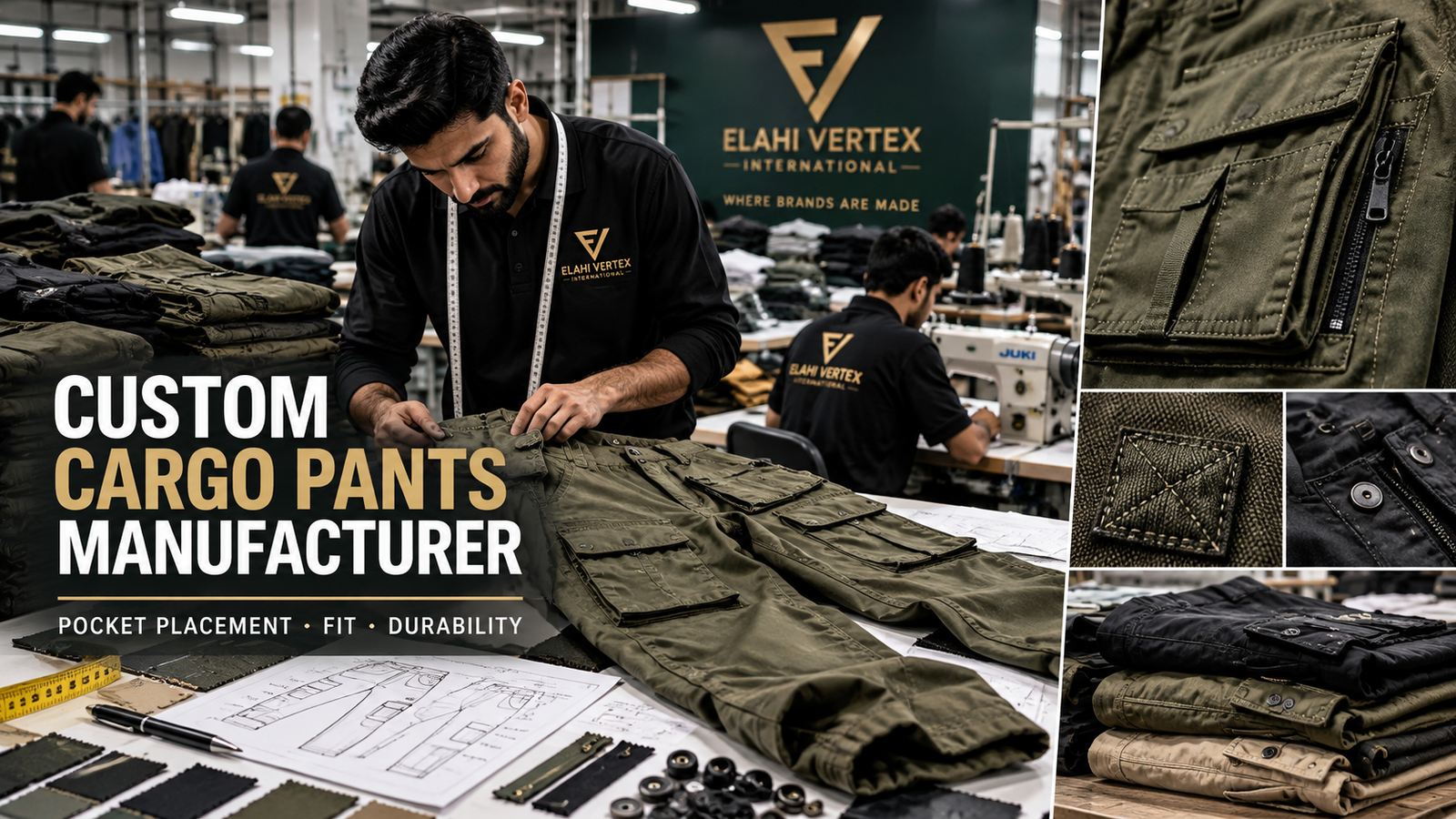
Choosing a custom cargo pants manufacturer is more complicated than choosing a factory that can sew trousers and attach two large pockets to the legs.
Cargo pants are construction-sensitive garments. Pocket position can change how the entire product looks on-body. Incorrect grading can make a cargo pocket look balanced on a medium size but strangely high, low or oversized on an XL. Weak reinforcement can create failure around pocket corners. Poor shrinkage control can change the finished inseam, rise and pocket position after washing. A badly developed fit can turn an intentionally oversized streetwear silhouette into trousers that simply look incorrectly sized.
These problems matter particularly to streetwear brands, private-label businesses, retailers, wholesalers and sourcing teams developing cargo pants for the UK, USA, Germany and wider European market.
A capable custom cargo pants manufacturer should therefore work from more than a reference photograph. The manufacturer needs enough information to control the pattern, pocket map, measurements, fabric, trims, stitching, reinforcement, grading, wash or finishing process, branding and bulk-production standard.
That is the central point of this guide.
The goal is not to tell buyers that one fabric, pocket configuration or fit is universally “best.” There is no single best cargo pant. A heavyweight wide-leg streetwear cargo, lightweight parachute pant, technical ripstop trouser and clean cotton-twill utility pant can require very different construction decisions.
Instead, this guide explains nine expensive mistakes that buyers should prevent before approving bulk production with a custom cargo pants manufacturer.
For brands looking for OEM, ODM or private-label development, Elahi Vertex International works with international B2B buyers on custom clothing manufacturing projects. Project-specific fabrics, trims, construction, pricing and production requirements should always be confirmed against the actual design rather than assumed from a generic specification.
Table of Contents
- Why cargo pants are more difficult to manufacture than they look
- Mistake #1 — Treating pocket placement as decoration
- Mistake #2 — Approving fit without movement and silhouette checks
- Mistake #3 — Grading the trouser but not engineering the cargo pockets
- Mistake #4 — Using insufficient reinforcement at stress points
- Mistake #5 — Selecting fabric without considering pocket weight and shrinkage
- Mistake #6 — Ignoring pocket construction, capacity and symmetry
- Mistake #7 — Approving washes and finishes without dimensional control
- Mistake #8 — Leaving trims, hardware and branding undefined
- Mistake #9 — Starting bulk production without a locked approval standard
- Cargo pants specification framework
- Fabric selection guide
- Streetwear cargo pants vs utility cargo pants
- Quality-control checklist
- UK, USA, Germany and European sourcing considerations
- How to prepare an RFQ
- Why work with Elahi Vertex International
- Frequently asked questions
- Final buyer checklist
- Conclusion
Why Is Choosing the Right Custom Cargo Pants Manufacturer So Important?
A custom cargo pants manufacturer is responsible for turning a two-dimensional concept into a three-dimensional garment in which multiple components must remain visually and functionally balanced.
A simple pair of trousers already requires control over:
- waist
- hip
- front rise
- back rise
- thigh
- knee
- inseam
- outseam
- leg opening
- waistband construction
- fly construction
- seam allowance
- pattern balance
- grading
Cargo pants introduce another layer:
- cargo-pocket width
- cargo-pocket height
- pocket depth
- bellows or pleats
- pocket-flap dimensions
- pocket opening
- pocket position
- left/right symmetry
- pocket reinforcement
- snap, button, zipper or hook-and-loop placement
- additional panels
- drawcords
- adjusters
- knee articulation
- decorative stitching
- embroidery or patches
That is why a private label cargo pants manufacturer should not treat the product like an ordinary blank trouser with extra pockets.
The pocket system is part of the architecture of the garment.
Current cargo-pants manufacturing pages in the market increasingly discuss pocket maps, reinforcement, knee clearance, fit development and bartacks because these are genuine production variables—not simply marketing language.
For a brand owner, the lesson is straightforward:
Approve the architecture of the cargo pant, not just its appearance.
Mistake #1: Treating Cargo Pocket Placement as Decoration
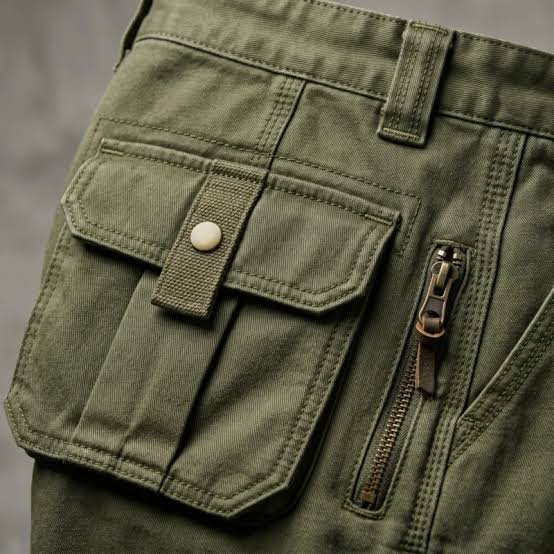
The first major mistake is sending a reference image to a custom cargo pants manufacturer and assuming the factory can visually estimate where the pockets belong.
That approach can work for an early concept discussion.
It is weak as a bulk-production specification.
Pocket placement changes the entire visual proportion
Consider two otherwise identical wide-leg cargo pants.
On the first pair, the upper edge of the cargo pocket sits relatively close to the hip.
On the second, it begins noticeably lower on the thigh.
Even if the pockets have identical dimensions, the trousers can look completely different.
Pocket position influences:
- perceived leg length
- visual width
- balance between hip and knee
- oversized appearance
- utility appearance
- symmetry
- how the garment photographs
- how the pocket interacts with movement
For streetwear, these differences can be commercially important because silhouette is often part of the product identity.
A custom streetwear cargo pants project should therefore define pocket position from stable reference points.
What should the tech pack specify?
Instead of saying:
“Put cargo pocket around the thigh.”
Specify measurable relationships.
Depending on the design, the specification may include:
- distance from waistband seam
- distance from side seam
- distance from inseam
- distance from knee reference
- pocket width
- pocket height
- flap width
- flap height
- bellows depth
- pleat width
- pocket-opening width
- closure position
- reinforcement points
The actual dimensions depend on the product.
The principle does not.
Your OEM cargo pants manufacturer should not have to guess the most important visual measurements.
Pocket placement should be reviewed on-body
A technically correct flat measurement does not automatically produce the intended appearance.
That is why the sample should be assessed both flat and on-body.
Look at:
- standing position
- side profile
- front profile
- sitting
- walking
- bending the knee
- pocket loaded lightly
- pocket empty
A pocket may appear correct on a table but sit awkwardly when the leg bends.
Buyer action
Before approving the sample, photograph the cargo pants from the front, back and side.
Compare those images against the intended silhouette.
Do not approve merely because the pocket measurement matches the tech pack.
The measurement and appearance should both be acceptable.
Mistake #2: Approving Cargo Pants Fit Without Testing the Full Silhouette
Fit is not simply whether the waist closes.
For a custom cargo pants manufacturer, fit development should consider how the waist, seat, rise, thigh, knee and leg opening work together.
This becomes particularly important for contemporary streetwear.
“Oversized” is not a specification
Brands frequently use words such as:
- oversized
- baggy
- relaxed
- loose
- wide-leg
- tapered
- straight
- parachute
- stacked
These words communicate design direction.
They do not replace measurements.
Two factories can interpret “baggy cargo pants” very differently.
One may increase the thigh.
Another may increase the entire leg.
Another may add a deeper rise.
Another may simply scale an existing trouser pattern.
The resulting products can all technically be described as baggy while looking completely different.
A private label cargo pants manufacturer needs measurable information.
Measurements that influence cargo-pant fit
Depending on the style, buyers should consider defining:
| Measurement | Why It Matters |
|---|---|
| Waist | Determines top-block fit |
| Hip/seat | Controls room through seat |
| Front rise | Changes crotch position and silhouette |
| Back rise | Affects seat comfort and waistband position |
| Thigh | Critical for relaxed/baggy appearance |
| Knee | Influences taper and movement |
| Inseam | Controls leg length |
| Outseam | Helps control total garment length |
| Leg opening | Major influence on straight, tapered or wide-leg appearance |
| Waistband height | Changes proportion and comfort |
These are not universal specifications. The appropriate measurements depend on the design.
Streetwear fit requires proportion, not random extra width
A good custom streetwear cargo pants silhouette usually depends on intentional proportion.
Making every measurement larger does not automatically create a premium oversized product.
For example, increasing thigh width substantially while leaving the leg opening narrow can create a strong taper.
Increasing the leg opening while controlling the rise may produce a straighter appearance.
Changing the rise alters where the trousers sit and how the upper leg drapes.
The correct approach is to define the intended silhouette and build measurements around it.
Movement matters
Cargo pants also need functional evaluation.
During sampling, test:
- walking
- sitting
- crouching
- bending
- stair movement
- pocket access
- waistband comfort
- knee movement
This is particularly important when the garment contains rigid woven fabrics, large pockets or articulated panels.
Buyer action
Do not tell your custom cargo pants supplier that the fit is “good” until you have reviewed the actual silhouette and movement.
Record every requested correction numerically wherever possible.
Instead of:
“Make legs slightly wider.”
Use:
“Increase half-leg opening by the approved amount.”
Specific revision notes create a better production record.
Mistake #3: Grading the Trouser Sizes Without Properly Grading the Pocket System
This is one of the least discussed but most important cargo-pant manufacturing issues.
A size M sample may look excellent.
Then the bulk order arrives in XS through 2XL and the pocket proportions become inconsistent.
Why?
Because grading is not merely enlarging or reducing the whole garment.
What is garment grading?
Grading is the systematic process of developing additional sizes from an approved base pattern.
A custom cargo pants manufacturer may begin with an approved base size and develop smaller and larger sizes according to the required size specification.
The challenge is deciding how each design element should behave as the garment changes size.
Cargo pockets create a particular problem.
Should the pocket itself increase in every size?
Should its position move?
Should the flap increase?
Should bellows depth remain constant?
Should pocket distance from the knee remain visually consistent?
There is no universal answer.
It depends on the design.
Why proportional scaling can fail
Imagine a cargo pocket that looks intentionally oversized on a size S.
If the entire pocket scales aggressively into XL and 2XL, it may become unnecessarily large.
But if the same pocket is used unchanged across every size, it may look disproportionately small on larger trousers.
This is where the OEM cargo pants manufacturer and buyer need a clear grading strategy.
Important grading considerations
Review:
- pocket width
- pocket height
- pocket position
- flap dimensions
- bellows depth
- zipper length
- patch size
- embroidery position
- knee panel position
- drawcord length
- waistband components
A professional size chart should also define how core body measurements grade.
Consider a size set
For a commercially important order, buyers may consider reviewing more than one size before bulk production.
A size-set process can reveal issues that a single base-size sample cannot show.
For example:
- XS pocket too close to knee
- XL pocket too high
- larger-size leg opening insufficient
- rise grading inconsistent
- branding position visually shifting
- flap proportions becoming unbalanced
The exact sampling process should be agreed with the custom cargo pants manufacturer for the project.
Buyer action
Ask:
“How will the cargo-pocket position and dimensions grade across the size range?”
That single question can expose whether the factory has considered cargo-specific grading or is simply grading the trouser block.
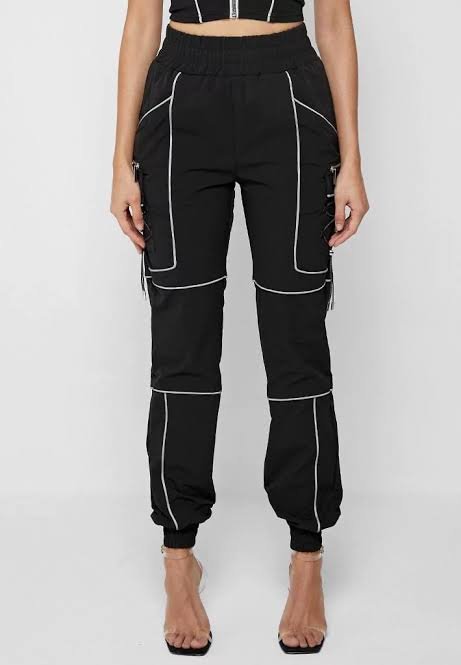
Mistake #4: Using Insufficient Reinforcement at Cargo Pocket Stress Points
Cargo pockets create stress.
A decorative chest print does not physically pull on a garment.
A loaded cargo pocket can.
That difference matters.
Where stress develops
Potential stress areas include:
- upper pocket corners
- pocket openings
- flap attachment
- belt loops
- fly base
- zipper ends
- drawcord exits
- side-pocket openings
- knee panels
- crotch seams
- back pockets
A custom cargo pants manufacturer should determine reinforcement according to the design, fabric and intended use.
What is a bartack?
A bartack is a dense reinforcement stitch used at concentrated stress points.
It is commonly seen on trousers, jeans, workwear and utility garments.
Cargo pants may use bartacks around pocket openings or attachment points where additional reinforcement is appropriate.
But more bartacks are not automatically better.
Their position matters.
Thread matters.
Fabric matters.
Stitch density matters.
The surrounding construction matters.
A bartack placed poorly can distort lightweight fabric or create an unattractive visual detail.
Streetwear vs heavy utility reinforcement
A fashion-focused custom streetwear cargo pants design may prioritize a clean exterior.
A heavy-duty utility pant may prioritize aggressive reinforcement.
That means reinforcement should follow the use case.
A lightweight nylon parachute cargo pant should not automatically receive the same reinforcement strategy as a heavy cotton-canvas utility trouser.
This is why buyers should avoid vague requirements such as:
“Make it very strong.”
Instead discuss:
- intended use
- fabric weight
- pocket capacity
- pocketing material
- seam type
- stitch type
- reinforcement locations
- appearance requirements
Inspect reinforcement during sampling
Turn the sample inside out.
Look at the construction.
Do not judge durability only from the outside.
Inspect:
- loose threads
- skipped stitches
- puckering
- seam allowance
- pocket attachment
- bartacks
- zipper ends
- belt-loop attachment
- crotch construction
Buyer action
Ask your private label cargo pants manufacturer to identify the planned reinforcement points before bulk approval.
The objective is not to maximize visible stitching.
The objective is to reinforce the correct areas without damaging the intended aesthetic.
Mistake #5: Choosing Fabric Without Considering Pocket Weight, Drape and Shrinkage
Fabric selection can make or break cargo pants.
A fabric may look excellent as a swatch and perform poorly as the finished garment.
Why?
Because cargo pants introduce pockets, flaps, seams, hardware and multiple layers that change how the fabric behaves.
Common fabric directions
Depending on the design, cargo pants may use materials such as:
- cotton twill
- cotton canvas
- ripstop
- cotton/polyester blends
- stretch twill
- nylon
- denim
- corduroy
- lightweight woven fabrics
The right choice depends on:
- season
- silhouette
- durability target
- drape
- pocket construction
- finishing
- wash
- stretch requirement
- retail positioning
- cost target
A custom cargo pants supplier should therefore receive a performance and aesthetic brief—not simply a colour.
GSM alone does not define quality
GSM means grams per square metre.
It describes fabric mass per unit area.
It does not by itself tell you whether a fabric is premium, durable or appropriate.
Two fabrics with similar GSM can behave differently because of:
- fibre composition
- yarn
- weave
- finishing
- density
- stretch
- coating
- washing
- construction
Therefore, telling a custom cargo pants manufacturer “I need 300 GSM” is incomplete.
The buyer should also consider the intended hand feel, structure, stretch, surface and wash.
Pocket weight affects drape
Large bellows pockets add material.
Flaps add material.
Hardware adds weight.
Interlining can add structure.
If the shell fabric is very lightweight, heavy pocket construction may pull the leg outward or downward.
If the fabric is extremely rigid, oversized pockets may create excessive bulk.
This relationship needs to be evaluated on the physical sample.
Shrinkage affects more than waist and length
Shrinkage can influence:
- inseam
- outseam
- rise
- pocket position
- pocket dimensions
- flap dimensions
- symmetry
- overall silhouette
That means shrinkage control matters directly to pocket placement.
A cargo pocket that is perfectly positioned before a wash can appear different afterward if the garment or components shrink unevenly.
Buyer action
When discussing fabric with an OEM cargo pants manufacturer, define:
- composition
- approximate weight/GSM where relevant
- weave
- stretch requirement
- colour
- finish
- hand feel
- wash
- intended season
- desired silhouette
Then approve the actual material or an agreed equivalent before bulk production.
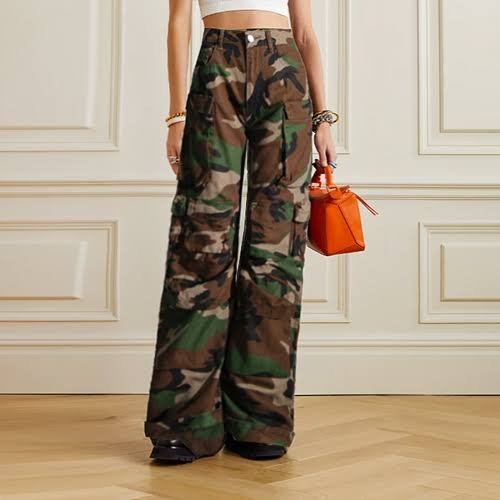
Mistake #6: Ignoring Pocket Construction, Capacity and Left-to-Right Symmetry
“Six-pocket cargo pant” is not a sufficient specification.
Two six-pocket trousers can have completely different construction.
Define the pocket architecture
A pocket specification may need to cover:
- pocket type
- width
- height
- depth
- bellows
- pleats
- flap
- closure
- lining
- reinforcement
- position
- angle
- topstitching
The custom cargo pants manufacturer should know whether the pocket is primarily:
- visual
- functional
- dimensional
- flat
- expandable
- zippered
- snapped
- buttoned
- hook-and-loop closed
- layered
Bellows pockets require additional control
A bellows pocket expands outward.
That sounds simple, but the finished shape depends on the pattern and construction.
Potential problems include:
- uneven folds
- twisting
- inconsistent depth
- asymmetric corners
- flap mismatch
- puckering
- poor pressing
- left/right differences
These defects become highly visible on minimalist streetwear products.
Symmetry should be measurable
Do not rely solely on visual inspection.
The production team can work from reference points.
For example:
- same distance from waistband
- same distance from side seam
- same vertical position
- same flap dimensions
- same pocket opening
- same angle
This is particularly useful for a private label cargo pants manufacturer producing repeated bulk orders.
Function should match the concept
A huge pocket does not necessarily need to carry heavy items if it is primarily a fashion feature.
But the buyer and manufacturer should understand that distinction.
A genuine utility pocket and a decorative oversized pocket can require different construction decisions.
Buyer action
Add a pocket map to the tech pack.
Number the pockets.
For each pocket, specify:
- type
- dimensions
- position
- closure
- reinforcement
- stitch appearance
- intended function where relevant
That removes ambiguity before sampling.
Mistake #7: Approving Washes and Finishes Without Checking Dimensional Change
Washed cargo pants can look excellent.
They can also create manufacturing problems if the wash is treated only as a colour effect.
Washing can change the garment
Depending on fabric and process, finishing may affect:
- shade
- hand feel
- shrinkage
- seam appearance
- puckering
- dimensions
- trims
- labels
- embroidery
- hardware
- thread appearance
Therefore the sample approved by the buyer should represent the intended finished state as closely as practical.
Washed streetwear cargos require consistency
A custom streetwear cargo pants collection might use:
- garment washing
- vintage effects
- faded appearance
- enzyme-related finishing
- distressed effects
- other project-specific finishes
Exact processes should be confirmed for the actual product.
The important sourcing principle is that colour and fit should not be approved independently if the final wash materially affects both.
Hardware compatibility matters
Buttons, snaps, zippers, eyelets and branded metal components may react differently to finishing processes.
Before bulk production, confirm whether trims are installed:
- before finishing
- after finishing
- partially before/after depending on component
The correct sequence depends on the garment and process.
Labels can also be affected
Brand labels and care labels need to remain suitable for the intended garment.
A custom cargo pants supplier should receive clear instructions about:
- main label
- size label
- care label
- composition information
- country-of-origin information where applicable
- hangtag
- packaging
Destination-market requirements also matter.
Buyer action
Approve the cargo pants after the relevant finishing stage—not merely as unfinished sewn trousers when the final product will receive a significant wash.
Mistake #8: Leaving Hardware, Trims and Branding Undefined Until Late Production
Cargo pants often contain more trims than basic trousers.
That creates more opportunities for inconsistency.
Potential cargo-pant trims
A design may contain:
- zippers
- snaps
- buttons
- eyelets
- drawcords
- cord locks
- buckles
- adjusters
- elastic
- hook-and-loop fasteners
- woven labels
- rubber patches
- embroidery
- printed labels
- hangtags
Every additional component should have an approved specification.
“Black zipper” is not enough
A zipper can vary by:
- type
- gauge
- tape
- teeth
- finish
- slider
- puller
- length
- locking mechanism
Likewise, a snap can vary in size, finish and attachment.
If these details matter visually, define them before the OEM cargo pants manufacturer begins bulk purchasing.
Branding placement should use coordinates
Avoid instructions such as:
“Put logo near cargo pocket.”
Specify:
- artwork dimensions
- position
- orientation
- colour
- technique
- reference point
For embroidery, consider how the embroidery interacts with pocket construction.
In some designs, decoration needs to occur before the pocket is attached.
Production sequence therefore matters.
Private-label information should be finalized early
A private label cargo pants manufacturer may need final information for:
- brand label
- size label
- care label
- composition
- hangtag
- barcode where applicable
- polybag marking
- carton marking
Late changes can disrupt production planning.
Buyer action
Create a trim sheet or bill of materials.
Every visible component should have an approved reference.
Mistake #9: Starting Bulk Production Without a Locked Approval Standard
This is where many earlier mistakes become expensive.
A sample exists.
The buyer likes it.
The factory starts bulk.
But nobody has clearly recorded what exactly was approved.
A sample is valuable only when it becomes a production reference
Your final approved sample should correspond with controlled information such as:
- pattern version
- measurement chart
- fabric
- colour
- pocket map
- trims
- artwork
- branding
- stitching
- wash
- finishing
- labels
- packaging
If the custom cargo pants manufacturer changes any important component after approval, the buyer should know what changed and why.
“Same as sample” needs supporting documentation
Physical samples are extremely useful.
Documentation is also important.
A sealed or approved sample plus current technical records creates a stronger reference than memory or chat messages alone.
Bulk QC should focus on the risk points
For cargo pants, inspection should pay particular attention to:
- pocket placement
- pocket symmetry
- flap symmetry
- garment measurements
- grading
- stitching
- reinforcement
- waistband
- fly
- hardware
- colour
- wash consistency
- labels
- finishing
- packing
The precise QC plan depends on the product and order.
Reorders need version control
Suppose the first bulk order succeeds.
Six months later, the brand reorders.
If the custom cargo pants supplier no longer has a clear reference to the approved construction, differences can appear.
Therefore retain:
- approved measurements
- approved artwork
- approved fabric reference
- approved colour
- trim references
- pattern/version information
- pocket map
- finishing reference
This makes reordering more controlled.
Custom Cargo Pants Manufacturer Specification Framework
Before asking for a quotation, organize the project.
A serious RFQ should give the manufacturer enough information to understand what is being priced.
1. Product
State the cargo-pant category.
Examples:
- streetwear cargo pants
- wide-leg cargo pants
- baggy cargo pants
- utility cargo pants
- parachute cargo pants
- cargo joggers
- technical cargo pants
2. Quantity
Provide the expected order quantity.
Elahi Vertex International’s standard MOQ is 20 pieces per product/category. Final project feasibility and any style-specific production requirements should still be confirmed before ordering.
3. Size range
For example:
XS–2XL.
Then provide the required size breakdown when available.
4. Fabric
Provide:
- composition
- GSM/weight if known
- weave
- stretch
- finish
- colour
If you do not know the exact fabric, provide the desired appearance and performance so appropriate options can be discussed.
5. Fit
Define:
- regular
- relaxed
- oversized
- baggy
- straight
- wide-leg
- tapered
Then support the description with measurements.
6. Pocket map
Show every pocket.
Include measurements and positioning.
7. Trims
Specify:
- zipper
- buttons
- snaps
- drawcord
- eyelets
- adjusters
- labels
8. Branding
Provide artwork and dimensions for:
- embroidery
- printing
- patches
- labels
- other decoration
9. Finishing
Explain any intended wash, fade or special treatment.
10. Packaging
State private-label packaging requirements.
11. Destination
Tell the custom cargo pants manufacturer whether the order is intended for the UK, USA, Germany or another European destination.
Destination can influence labelling, documentation and shipping discussions.
Cargo Pants Fabric Guide for UK, USA, Germany and European Brands
There is no universal “best cargo pants fabric.”
The right material depends on the product.
| Fabric Direction | Typical Character | Potential Application |
|---|---|---|
| Cotton twill | Structured, familiar trouser hand | Streetwear and casual utility |
| Canvas | Heavier/structured character | Heavy streetwear or utility concepts |
| Ripstop | Grid reinforcement structure | Technical/utility styling |
| Nylon woven | Lightweight technical character | Parachute/techwear direction |
| Stretch twill | Added movement | Fitted or mobility-oriented cargos |
| Denim | Familiar heavy casual aesthetic | Fashion/streetwear cargo |
| Corduroy | Textured surface | Seasonal fashion cargo |
These are design directions rather than universal recommendations.
Your custom cargo pants manufacturer should review the actual fabric against the intended construction.
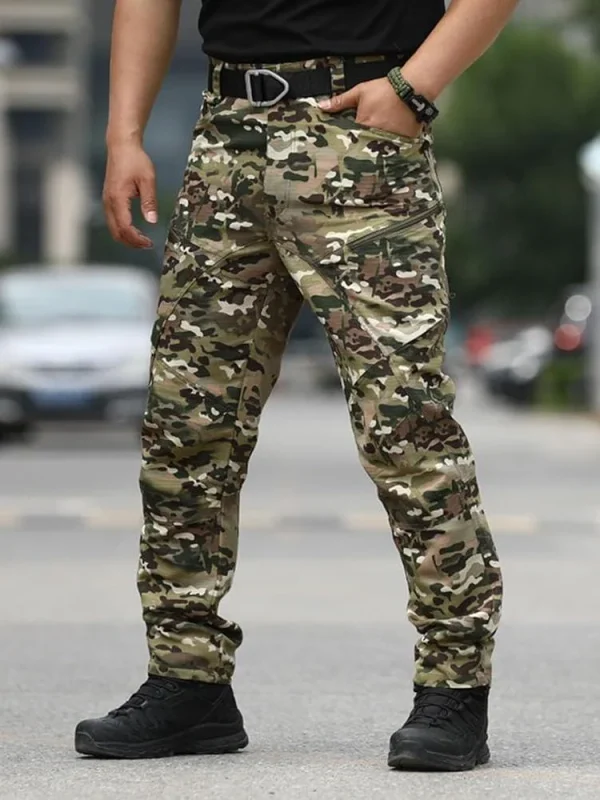
Custom Streetwear Cargo Pants vs Utility Cargo Pants
These categories overlap, but the priorities can differ.
| Area | Streetwear Cargo | Utility Cargo |
|---|---|---|
| Primary emphasis | Silhouette + design | Function + durability |
| Pocket role | Visual and/or functional | Usually strongly functional |
| Fit | May be oversized, baggy or experimental | Often movement/function oriented |
| Fabric | Broad fashion range | Often durability-led |
| Hardware | Can be highly aesthetic | Usually function-led |
| Branding | Often prominent | Often restrained |
| Washes | Frequently design-led | Depends on use |
| Reinforcement | Balanced with aesthetics | May be more aggressive |
A strong custom streetwear cargo pants program should not accidentally become workwear unless that is the design intent.
Likewise, functional utility trousers should not sacrifice necessary reinforcement simply to look cleaner.
Quality-Control Checklist for a Custom Cargo Pants Manufacturer
Before shipment, review the finished product against the approved standard.
Measurements
Check:
- waist
- hip
- rise
- thigh
- knee
- inseam
- outseam
- leg opening
Pockets
Check:
- position
- dimensions
- symmetry
- flap
- closure
- bellows
- stitching
- reinforcement
Construction
Check:
- seam quality
- bartacks
- belt loops
- crotch
- waistband
- fly
- hem
- loose threads
- puckering
Trims
Check:
- zipper operation
- snaps
- buttons
- eyelets
- drawcords
- adjusters
Branding
Check:
- artwork dimensions
- placement
- colour
- embroidery/print quality
- labels
Appearance
Check:
- shade
- wash
- pressing
- stains
- damage
- symmetry
Packaging
Check:
- size marking
- labels
- folding
- polybag where specified
- carton assortment
- shipping marks where required
Selling Custom Cargo Pants in the UK
Brands sourcing for Great Britain should treat labelling as part of product development rather than an afterthought.
UK government guidance states that textile labels must show fibre content, including relevant animal-origin components, and where a textile product contains components with different fibre contents, the applicable contents must be shown.
The importer, retailer and other responsible businesses should confirm the current requirements applying to their specific products before placing them on the market.
A custom cargo pants manufacturer needs the correct buyer-supplied or approved labelling information early enough to incorporate it into production.
For UK brands, this means discussing:
- fibre composition
- care information
- brand labels
- size labels
- country-of-origin information where applicable
- packaging
- importer requirements
- destination documentation
Do not assume a label developed for another market is automatically sufficient for Great Britain.
Selling Custom Cargo Pants in Germany and the European Union
Germany is part of the EU textile market, so EU textile-labelling requirements are directly relevant.
EU guidance states that textile products marketed to consumers generally need labelling or marking identifying fibre composition. It also states that information should use the relevant official language or languages of the countries where the textile product is made available to consumers.
For a German streetwear brand working with an OEM cargo pants manufacturer, label development should therefore be discussed before production.
A buyer should confirm:
- fibre names
- composition percentages
- German-language requirements
- non-textile animal-origin disclosures where applicable
- responsible economic-operator obligations
- applicable product-safety requirements
- chemical compliance
- packaging obligations
Regulatory responsibilities vary with the product and business arrangement, so current requirements should be checked for the specific project.
Selling Custom Cargo Pants in the USA
US apparel labelling requirements differ from European requirements.
The US Federal Trade Commission states that covered textile products generally require information concerning fibre content, country of origin and the identity of the manufacturer or another responsible business.
The FTC also administers the Care Labeling Rule, which requires manufacturers and importers of covered textile wearing apparel to provide appropriate care instructions.
For a US buyer sourcing through a private label cargo pants manufacturer, the labelling conversation should therefore happen before labels are produced.
Discuss:
- fibre content
- country of origin
- responsible company identification
- care instructions
- brand labels
- size labels
- required warnings where applicable
A manufacturer should manufacture against approved label artwork rather than independently inventing legal information for the buyer.
How to Compare a Custom Cargo Pants Manufacturer
Price matters.
It should not be the only comparison.
Ask competing suppliers to quote the same specification.
Then compare:
| Criterion | What Buyer Should Verify |
|---|---|
| Product understanding | Does supplier understand pocket architecture? |
| Pattern development | Can required fit be interpreted? |
| Sampling | Is physical approval available? |
| Fabric | Is actual composition/weight confirmed? |
| Pocket construction | Are bellows, flaps and reinforcement defined? |
| Grading | Is size progression controlled? |
| Trims | Are hardware references clear? |
| Branding | Are techniques and placements confirmed? |
| QC | What will be inspected? |
| Packaging | Is private-label packing defined? |
| Communication | Are revisions documented? |
| Reorders | Can approved specifications be retained? |
The cheapest quotation may exclude something another custom cargo pants supplier included.
Compare scope before comparing price.
Why Low MOQ Matters for a New Cargo Pants Brand
A new product carries uncertainty.
You do not yet know:
- which colour will sell fastest
- which sizes will move
- whether customers prefer the fit
- whether the price point works
- whether the pocket configuration resonates
- whether the first design needs revision
Large opening quantities increase inventory exposure.
Elahi Vertex International’s standard MOQ is 20 pieces per product/category, which can be commercially useful for brands wanting to begin with a controlled production quantity.
That does not mean every complex design is automatically viable under identical commercial terms.
The actual project should be reviewed before quotation.
A small first order is most valuable when it produces information that improves the next order.
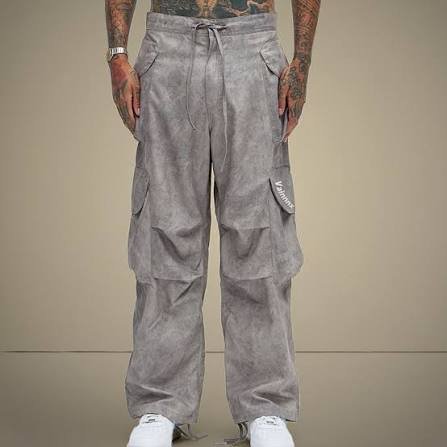
Startup Path: From Cargo Pants Idea to Bulk Production
A new brand may begin with nothing more than a reference image.
That is workable as a starting point.
It is not enough for controlled bulk manufacturing.
A practical development pathway is:
Idea → References → Specification → Fabric → Pattern → Pocket Map → Sample → Fit Review → Revision → Approval → Bulk Quote → Production → QC → Shipping → Reorder
Stage 1 — Idea
Define the customer and product direction.
Stage 2 — References
Collect references for:
- silhouette
- pockets
- waistband
- fabric
- trims
- branding
Do not assume one reference must supply every feature.
Stage 3 — Specifications
Convert the visual idea into measurable information.
Stage 4 — Fabric
Select material that supports the silhouette.
Stage 5 — Sample
The custom cargo pants manufacturer develops a physical product for evaluation according to the agreed process.
Stage 6 — Revision
Document changes.
Stage 7 — Approval
Freeze the production reference.
Stage 8 — Bulk
Manufacture against approved information.
Stage 9 — QC
Inspect the risk points.
Stage 10 — Reorder
Use the approved records as the starting standard.
What Should You Send Elahi Vertex International for a Cargo Pants Quote?
To make the discussion efficient, send as much of the following as you have:
- tech pack
- reference images
- sketch
- required quantity
- size range
- size breakdown if available
- target fabric
- GSM if known
- colour
- pocket details
- measurements
- branding artwork
- logo dimensions
- wash/finish
- labels
- packaging
- delivery country
- target timeline
Do not delay an initial discussion merely because the tech pack is incomplete.
However, exact manufacturing and quotation details require enough information to understand the product.
Why Elahi Vertex International for Custom Cargo Pants Manufacturing?
Elahi Vertex International is positioned as a B2B manufacturer, exporter and OEM/ODM/private-label manufacturing partner serving international clothing buyers.
For cargo-pants development, the commercial objective is straightforward:
turn the buyer’s design into an agreed manufacturing specification before bulk production.
That is more useful than pretending every cargo pant should use the same fabric, pocket arrangement or construction.
International buyers in the UK, USA, Germany and Europe can discuss custom clothing projects directly with Elahi Vertex International.
Standard MOQ: 20 pieces per product/category.
Sampling and project-specific commercial terms should be confirmed for the actual design.
The strongest starting point is a tech pack, sketch, reference garment or clear reference images accompanied by the required quantity and destination.
20 Frequently Asked Questions About Working With a Custom Cargo Pants Manufacturer
1. What does a custom cargo pants manufacturer do?
A custom cargo pants manufacturer develops and produces cargo trousers according to buyer specifications. Depending on the project, this can involve fabric selection, patterns, fit, pocket construction, trims, branding, sampling, bulk production and private-label requirements.
2. What should I send a custom cargo pants manufacturer?
Send your tech pack if available. Otherwise provide reference images, measurements, fabric direction, pocket details, colours, branding, quantity, sizes and delivery destination.
3. Can a private label cargo pants manufacturer add my branding?
Private-label projects can include buyer-specific labels and branding where agreed. Exact branding methods, materials, dimensions and placement should be confirmed for each project.
4. What is the MOQ for custom cargo pants?
Elahi Vertex International’s standard MOQ is 20 pieces per product/category. Specific project feasibility should be confirmed against the design and manufacturing requirements.
5. Can I order a cargo pants sample before bulk production?
Sampling can be discussed before bulk production. Elahi Vertex International’s baseline policy is that the buyer pays sample and shipping upfront; qualifying sample cost may be credited toward a qualifying bulk order, while shipping remains separate. Exact terms should be confirmed for the project.
6. Which fabric is best for custom cargo pants?
There is no universally best fabric. Cotton twill, canvas, ripstop, nylon, stretch woven fabrics and other materials may suit different designs. Choose according to silhouette, durability, season, wash and intended use.
7. How should cargo pocket placement be specified?
Use measurements from stable garment reference points rather than descriptions such as “middle of thigh.” Include pocket width, height, flap, depth and placement information.
8. Why are bartacks used on cargo pants?
Bartacks can reinforce concentrated stress areas such as pocket openings and attachment points. Their use and placement should suit the fabric and construction.
9. Can an OEM cargo pants manufacturer copy my reference exactly?
A reference image is useful for communicating direction, but a production-ready garment requires specifications. Buyers should also respect third-party intellectual-property rights and develop their own branding and protected design elements.
10. What measurements are important for cargo pants?
Common measurements include waist, hip, front rise, back rise, thigh, knee, inseam, outseam and leg opening, plus pocket measurements and placements.
11. What is the difference between OEM and private-label cargo pants manufacturing?
OEM commonly refers to manufacturing according to buyer-controlled product specifications. Private label emphasizes producing goods sold under the buyer’s brand. Actual service scope should be confirmed with the manufacturer.
12. Can a custom cargo pants supplier make oversized cargo pants?
An oversized silhouette can be developed when the required measurements, pattern direction and design are clearly defined. “Oversized” alone is not enough for accurate manufacturing.
13. Can custom streetwear cargo pants use garment washes?
Depending on fabric and construction, different finishing directions may be possible. The final wash must be evaluated against dimensional stability, trims, branding and desired appearance.
14. How do I prevent cargo pockets from being uneven?
Specify pocket placement numerically, use consistent pattern/template references and inspect left-right symmetry during sampling and bulk QC.
15. Should cargo pockets be graded across sizes?
The pocket-grading strategy should be intentionally defined. Depending on the design, pocket size, position or both may need adjustment as garment sizes change.
16. How can UK brands source custom cargo pants?
UK brands should prepare their product specification, quantity and destination, evaluate a suitable custom cargo pants manufacturer, approve samples and ensure applicable UK labelling and import requirements are addressed.
17. How can German brands source private label cargo pants?
German brands should consider product specifications, EU textile-labelling requirements, applicable product rules, sampling, QC and import responsibilities before commercial production.
18. What should US brands check before importing custom cargo pants?
US buyers should consider FTC textile and care-labelling requirements as well as applicable customs, product and commercial obligations. Requirements should be checked for the specific product and transaction.
19. What makes a good cargo pants tech pack?
A useful tech pack communicates measurements, construction, pocket map, fabric, trims, artwork, colours, labels, grading and other relevant manufacturing information clearly enough to reduce interpretation.
20. How do I request a quote from Elahi Vertex International?
Send the design or reference, required quantity, sizes, fabric direction, branding details and delivery country. More complete specifications generally allow a more accurate manufacturing discussion.
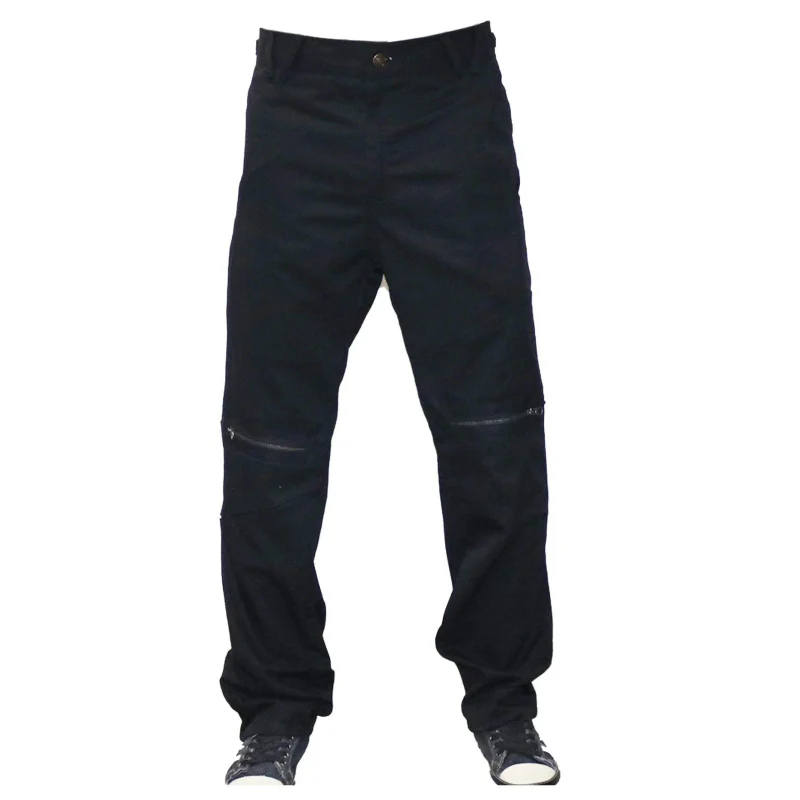
Final Custom Cargo Pants Buyer Checklist
Before paying for bulk production, confirm:
Design
- silhouette approved
- pocket map approved
- artwork approved
- colours approved
Fit
- base size approved
- measurements approved
- rise approved
- thigh approved
- leg opening approved
- movement checked
Pockets
- dimensions approved
- placement approved
- flap approved
- bellows approved
- closure approved
- symmetry approved
- reinforcement approved
Fabric
- composition confirmed
- GSM/weight confirmed where applicable
- colour confirmed
- stretch confirmed
- finish confirmed
- shrinkage considerations reviewed
Construction
- seam type reviewed
- reinforcement reviewed
- bartacks reviewed
- waistband reviewed
- fly reviewed
- hem reviewed
Trims
- zipper approved
- buttons/snaps approved
- drawcord approved
- eyelets approved
- adjusters approved
Branding
- artwork approved
- dimensions approved
- placement approved
- main label approved
- size label approved
- care label approved
Bulk
- quantity confirmed
- size breakdown confirmed
- approved sample/reference identified
- QC expectations confirmed
- packaging confirmed
- destination confirmed
- commercial terms confirmed
Conclusion: Your Custom Cargo Pants Manufacturer Should Control More Than Sewing
A custom cargo pants manufacturer should not be evaluated only by whether it can produce a pair of trousers that looks approximately like a reference photograph.
Cargo pants combine fit engineering, pocket geometry, reinforcement, grading, fabric behaviour, trims and finishing.
The nine expensive mistakes are therefore interconnected.
Poor pocket specifications create placement problems.
Weak grading creates size inconsistencies.
Incorrect fabric selection changes drape.
Insufficient reinforcement creates durability risk.
Uncontrolled finishing can change measurements.
Undefined trims create bulk inconsistency.
And starting production without a locked approval standard allows all of those problems to become much more expensive.
For UK, USA, German and European buyers, the better approach is specification-led manufacturing:
Design → Technical Definition → Sample → Measurement & Fit Review → Revision → Approval → Bulk Production → QC → Delivery → Reorder
That process gives both buyer and manufacturer a clearer target.
If you are developing custom streetwear cargo pants, private label cargo pants, or an OEM cargo pants collection, send Elahi Vertex International your tech pack, reference images, quantity, size range and delivery country to discuss the project.
Elahi Vertex International
B2B Manufacturer • Exporter • OEM • ODM • Private Label Clothing
WhatsApp: +92 309 1639614
Email: elahivertexinternational@gmail.com
Secondary Email: Info@elahivertexinternational.com
Standard MOQ: 20 pieces per product/category.
Where Brands Are Made.
- Custom Clothing Manufacturing
https://elahivertexinternational.com/custom-clothing-manufacturing/
Use when discussing complete custom cargo pants development, fabric selection, sampling, production and quality control. - Manufacturing Process
https://elahivertexinternational.com/manufacturing/
Use when explaining how a custom cargo pants manufacturer turns a design into finished apparel. - OEM Clothing Manufacturing
https://elahivertexinternational.com/oem-clothing-manufacturing/
Best internal link for the keyword and section discussing an OEM cargo pants manufacturer. - Private Label Manufacturing
https://elahivertexinternational.com/private-label-manufacturing/
Use naturally when discussing private label cargo pants manufacturing, custom labels, branding and packaging. - How to Order Custom Clothing
https://elahivertexinternational.com/how-to/
Use in the buyer journey: design → specifications → sample → approval → bulk production. - Our Manufacturing Work
https://elahivertexinternational.com/our-works-elahi-vertex-international/
Use when buyers want to review manufacturing capability and real production work before making an inquiry. - Elahi Vertex International Case Studies
https://elahivertexinternational.com/case-studies/
Use around supplier evaluation, product development and buyer trust. - About Elahi Vertex International
https://elahivertexinternational.com/about-us/
Use when introducing Elahi Vertex International as a Sialkot-based custom clothing manufacturer and exporter. - Contact Elahi Vertex International
https://elahivertexinternational.com/contact-us/
Place near the final RFQ CTA so cargo-pants buyers can submit their requirements. - Elahi Vertex International Homepage
https://elahivertexinternational.com/
Use once naturally when first introducing Elahi Vertex International rather than repeatedly linking the company name.
Authoritative External Links
- UK Government — Textile Labelling Guidance
https://www.gov.uk/guidance/textile-labelling
Use in the UK section when explaining fibre-content labelling for cargo pants sold in Great Britain. - European Union — Textile Labelling Requirements
https://europa.eu/youreurope/business/product-rules-compliance/textiles-and-footwear/textile-label/index_en.htm
Important for Germany and wider EU buyers. Use when discussing fibre composition and textile labels. - US Federal Trade Commission — Apparel & Textile Labelling
https://www.ftc.gov/news-events/topics/tools-consumers/apparel-labeling
Use in the USA section when discussing fibre content, country of origin and responsible-business identification. - US FTC — Care Labeling Rule
https://www.ftc.gov/legal-library/browse/rules/care-labeling-textile-wearing-apparel-certain-piece-goods
Useful when explaining care-label obligations for apparel entering the US market. - US FTC — Clothes Captioning: Care Labeling Compliance Guide
https://www.ftc.gov/business-guidance/resources/clothes-captioning-complying-care-labeling-rule
Useful for buyers who need a more practical explanation of garment care instructions. - OEKO-TEX — Textile Testing and Certification
https://www.oeko-tex.com/
Use when discussing textile testing, restricted substances or certification requirements. Do not imply that Elahi Vertex International or a specific cargo pant is OEKO-TEX certified unless that certification is actually verified. - European Commission — Textiles and Clothing
https://single-market-economy.ec.europa.eu/sectors/fashion/textiles-and-clothing-industries_en
Use for broader European textile-industry and regulatory context. - European Commission — REACH Chemical Regulation
https://environment.ec.europa.eu/topics/chemicals/reach-regulation_en
Relevant when discussing chemical compliance considerations for fabrics, dyes, finishes and other materials entering the EU. - US Customs and Border Protection — Importing Into the United States
https://www.cbp.gov/trade/basic-import-export/importing-into-united-states
Use in the USA sourcing/import section rather than making unsupported customs claims. - European Commission — General Product Safety Regulation
https://commission.europa.eu/business-economy-euro/doing-business-eu/eu-product-safety-and-labelling/product-safety/general-product-safety-regulation_en
Use when discussing the broader product-safety responsibilities relevant to businesses placing consumer products on the EU market.
Custom Cargo Pants Manufacturer for UK, USA, Germany & European Clothing Brands
Finding a custom cargo pants manufacturer is not simply about finding a factory capable of sewing trousers. For streetwear brands, fashion labels, wholesalers, retailers and private-label businesses in the UK, USA, Germany and European Union, the real challenge is finding a manufacturing partner capable of translating a specific design into a controlled sample and then reproducing that approved product in bulk.
Elahi Vertex International provides OEM, ODM and private-label clothing manufacturing for international B2B buyers. Brands can approach us with a tech pack, sketch, reference images, existing sample or developing concept and discuss the manufacturing requirements of the project.
If you are developing custom streetwear cargo pants, the important details can include much more than colour and logo placement. Fit, rise, thigh width, leg opening, pocket dimensions, pocket position, bellows construction, reinforcement, fabric weight, wash, hardware, labels and grading can all influence the finished garment.
That is why buyers searching for a custom cargo pants manufacturer should compare manufacturers according to their ability to understand the complete product rather than comparing only the lowest unit price.
Explore our Custom Clothing Manufacturing capabilities for more information about custom apparel development.
Custom Cargo Pants Manufacturer for UK Streetwear & Private-Label Brands
UK streetwear is a strong use case for customized cargo pants because the product can be developed across very different aesthetics: heavyweight utility cargos, washed streetwear cargos, wide-leg trousers, relaxed cargo pants, technical styles and lightweight parachute-inspired designs.
A UK brand searching for a custom cargo pants manufacturer should first define what makes its product different.
Is the competitive feature:
- A particular oversized fit?
- An unusual cargo-pocket configuration?
- Heavy cotton twill?
- Lightweight technical fabric?
- Vintage or washed finishing?
- Wide-leg construction?
- Embroidered branding?
- Custom hardware?
- Adjustable hems?
- Private-label presentation?
Those decisions should be translated into manufacturing specifications.
Private Label Cargo Pants Manufacturer for UK Brands
A private label cargo pants manufacturer can be particularly relevant to UK startups and established brands that want the finished garment sold under their own identity.
Depending on the agreed project, private-label requirements may include:
- Main brand labels
- Size labels
- Care labels
- Woven labels
- Embroidery
- Printing
- Custom patches
- Hangtags
- Branded packaging
- Custom trims
- Buyer-specific colourways
The objective is not simply to place a logo on an existing generic trouser.
A genuine private-label development project should define the product itself.
For example, a London streetwear brand could specify an oversized silhouette, low-positioned bellows pockets, heavyweight cotton twill, branded snaps, tonal embroidery and a washed finish. Another UK buyer might want lightweight straight-leg cargos with concealed zipper pockets and adjustable hems.
Both are cargo pants.
They are not the same manufacturing project.
That is why working with a private label cargo pants manufacturer should begin with the product specification.
Learn more about Private Label Manufacturing.
Custom Streetwear Cargo Pants for UK Brands
For custom streetwear cargo pants, silhouette deserves particular attention.
Words such as baggy, oversized, relaxed and wide-leg are useful creative descriptions, but they are not complete production specifications.
A UK streetwear buyer should consider defining:
- Waist
- Hip
- Front rise
- Back rise
- Thigh
- Knee
- Inseam
- Outseam
- Leg opening
- Pocket position
- Pocket dimensions
- Flap dimensions
The physical sample can then be evaluated against the intended streetwear aesthetic before bulk production.
If you are building a UK clothing brand and need help understanding the production route, review How to Order Custom Clothing.
UK BUYER CTA:
Send Elahi Vertex International your tech pack, reference images or existing cargo-pants sample together with your required quantity, sizes and UK delivery destination. We can then discuss the project-specific manufacturing route rather than giving you an unreliable generic quotation.
Custom Cargo Pants Manufacturer for USA Clothing Brands
US streetwear, private-label and apparel businesses sourcing internationally should take the same specification-led approach.
When comparing a custom cargo pants manufacturer, determine whether the supplier understands the elements that make your particular cargo pants commercially distinctive.
That might be:
- Heavyweight construction
- Baggy silhouette
- Tactical styling
- Minimalist utility styling
- Multiple functional pockets
- Technical fabrics
- Custom camouflage
- Vintage wash
- Distressing
- Custom embroidery
- Patches
- Drawcord systems
- Branded hardware
- Special labels and packaging
A reference image can communicate the creative direction, but measurements and technical information make the product substantially easier to manufacture consistently.
OEM Cargo Pants Manufacturer for USA Brands
An OEM cargo pants manufacturer is particularly relevant when a US buyer already controls the product concept and wants manufacturing according to its specifications.
The buyer may already have:
- Tech pack
- Patterns
- Measurement chart
- Size grading
- Fabric specification
- Artwork
- Pocket map
- Trim sheet
- Label artwork
- Packaging specification
- Approved physical sample
In this situation, the manufacturing objective is not to replace the buyer’s product identity with a factory’s standard catalogue style.
The objective is to manufacture according to the agreed specification.
Brands seeking this production model can explore OEM Clothing Manufacturing.
Private Label Cargo Pants Manufacturer for USA Brands
A US buyer that wants custom garments sold under its own brand can discuss requirements with a private label cargo pants manufacturer.
Private-label development may involve both the garment and the presentation around it.
The cargo pants themselves might require custom:
- Fit
- Fabric
- Pockets
- Colours
- Stitching
- Washes
- Embroidery
- Printing
- Hardware
The private-label system can then include agreed labels, hangtags and packaging.
This is much stronger product differentiation than simply purchasing an existing cargo pant and changing the neck—or in this case waistband—label.
Custom Cargo Pants Supplier for US Buyers
When evaluating a custom cargo pants supplier, US buyers should ask specific manufacturing questions.
Ask:
How will pocket placement be controlled?
How will the base-size pattern be graded?
Will cargo-pocket dimensions or positions change across sizes?
Where will reinforcement be used?
Which fabric will be used?
What fabric composition and weight are being quoted?
What hardware is included?
What sample represents the bulk-production standard?
These questions tell you more about the potential manufacturing relationship than asking only:
“What is your price per piece?”
You can review selected Elahi Vertex International production examples through Our Works and our Case Studies.
USA BUYER CTA:
Send your cargo-pants design, expected quantity, size range, fabric specification, branding requirements and US destination to Elahi Vertex International for a project-specific discussion.
Custom Cargo Pants Manufacturer for Germany
German streetwear labels, fashion brands and private-label businesses sourcing custom trousers need to think about both product development and the requirements associated with selling textiles in the European market.
A German buyer evaluating a custom cargo pants manufacturer should first establish the technical product standard.
For example:
Fabric → Fit → Pattern → Pockets → Reinforcement → Hardware → Branding → Labels → Finishing → Packaging
Each area can influence cost and manufacturing feasibility.
OEM Cargo Pants Manufacturer for German Brands
Working with an OEM cargo pants manufacturer can make sense when the German buyer already has a developed design and needs manufacturing according to its own specification.
The buyer should provide as much technical information as possible.
For a cargo pant, that may include a detailed pocket map showing:
- Cargo-pocket position
- Pocket width
- Pocket height
- Bellows depth
- Flap size
- Closure position
- Stitching
- Reinforcement
- Artwork placement
This becomes particularly important for minimalist products where a small difference in pocket position can noticeably change the visual proportion of the garment.
Private Label Cargo Pants Manufacturer for Germany
German brands developing their own identity may instead be searching specifically for a private label cargo pants manufacturer.
In this case, think beyond the logo.
Your private-label product can potentially be differentiated through:
- Original fit
- Custom pocket architecture
- Fabric
- Colour
- Wash
- Trims
- Stitching
- Embroidery
- Labels
- Packaging
A strong private-label product should be recognizable because of the product decisions—not merely because a brand label was sewn into it.
Explore Elahi Vertex International’s Private Label Manufacturing capabilities for more information.
Custom Streetwear Cargo Pants for Germany
For custom streetwear cargo pants, German brands may choose anything from clean minimalist utility trousers to oversized streetwear silhouettes.
The manufacturing specification should follow the intended customer and aesthetic.
Do not select a heavy fabric merely because “heavyweight” sounds premium.
Do not make the leg extremely wide simply because oversized clothing is fashionable.
Do not add ten pockets simply because the garment is called cargo pants.
Every design decision should serve the product.
That produces a more coherent garment.
GERMANY BUYER CTA:
Send your design, quantity, sizes, target material, branding requirements and German delivery destination to Elahi Vertex International. If you already have an existing cargo pant that needs improvement, identify exactly what you want changed in the fit, fabric, pockets or construction.
Custom Cargo Pants Manufacturer for European Clothing Brands
For buyers across France, Italy, Spain, Netherlands, Belgium, Sweden, Denmark and other European markets, sourcing from a custom cargo pants manufacturer should begin with a clear product brief.
European brands can source many different cargo-pant categories:
- Fashion cargo pants
- Streetwear cargo pants
- Wide-leg cargo pants
- Baggy cargo pants
- Utility pants
- Cargo joggers
- Technical cargo pants
- Parachute pants
- Ripstop cargo pants
- Cotton-twill cargo pants
But product category alone is not enough.
A custom cargo pants supplier needs to know what distinguishes your version.
What European Buyers Should Send a Custom Cargo Pants Supplier
A serious RFQ should ideally include:
Product: What exactly are you developing?
Quantity: How many pieces do you expect to order?
Sizes: Which size range and size breakdown?
Fabric: Cotton twill, canvas, ripstop, nylon, blend or another fabric?
Weight: What GSM or fabric weight is required, if already decided?
Fit: Regular, relaxed, oversized, baggy, straight, tapered or wide-leg?
Pockets: How many, what type, what dimensions and where positioned?
Hardware: Zippers, snaps, buttons, eyelets, buckles or adjusters?
Branding: Embroidery, print, patch, woven label or other application?
Finishing: Standard finish, wash, fade or another treatment?
Packaging: Standard or buyer-specific private-label packaging?
Destination: Which EU country?
The more precise the RFQ, the easier it becomes for a custom cargo pants supplier to understand what is actually being quoted.
OEM Cargo Pants Manufacturer vs Private Label Cargo Pants Manufacturer
Buyers often use OEM and private label interchangeably, but they can emphasize different parts of the manufacturing relationship.
| Requirement | OEM Cargo Pants Manufacturer | Private Label Cargo Pants Manufacturer |
|---|---|---|
| Buyer-controlled design | Strong relevance | Can apply |
| Tech pack production | Strong relevance | Can apply |
| Custom measurements | Yes, when agreed | Yes, when agreed |
| Custom fabric | Project dependent | Project dependent |
| Custom pockets | Project dependent | Project dependent |
| Buyer branding | Can apply | Core requirement |
| Brand labels | Can apply | Core requirement |
| Custom packaging | Can apply | Frequently relevant |
| Bulk production | Yes | Yes |
The actual service scope matters more than the terminology.
A buyer should therefore ask what is included rather than assuming that every OEM cargo pants manufacturer or private label cargo pants manufacturer operates identically.
Why Brands Should Compare More Than Custom Cargo Pants Supplier Prices
Imagine three quotations:
Supplier A: lowest price.
Supplier B: middle price.
Supplier C: highest price.
That tells you almost nothing unless all three suppliers quoted exactly the same product.
One custom cargo pants supplier might quote standard cotton twill and generic hardware.
Another may have quoted a heavier fabric, customized snaps, additional bartacks, private labels and custom packaging.
A third may have interpreted the pockets differently.
Those are not directly comparable quotations.
Before selecting a custom cargo pants supplier, compare:
- Fabric composition
- Fabric weight
- Pocket construction
- Number of pockets
- Hardware
- Stitching
- Reinforcement
- Wash
- Branding
- Labels
- Packaging
- Sample scope
- Shipping scope
- Payment terms
Compare specification against specification—not just price against price.
Custom Streetwear Cargo Pants Need Their Own Development Strategy
A custom streetwear cargo pants project is particularly sensitive to proportion.
Streetwear consumers can notice whether a product feels intentionally oversized or simply badly fitted.
The difference comes from pattern decisions.
For example, custom streetwear cargo pants might combine:
- Deeper rise
- Wider thigh
- Controlled knee
- Wide leg opening
- Oversized cargo pockets
- Lower pocket positioning
- Heavy fabric
- Washed finish
Another pair of custom streetwear cargo pants might use:
- Lightweight nylon
- Extremely wide leg
- Elasticated waistband
- Drawcord hem
- Bellows pockets
- Technical zipper details
Both can occupy the streetwear category.
Their manufacturing requirements are completely different.
That is why a custom cargo pants manufacturer should receive the intended silhouette and technical requirements rather than being asked simply to “make streetwear cargos.”
From Design to Bulk Production With Elahi Vertex International
Elahi Vertex International’s Manufacturing Process covers the broader path from product development and material sourcing through sampling, production, quality control and preparation for shipping.
For a cargo-pants project, the commercial pathway can look like:
Design / Reference
↓
Technical Requirements
↓
Fabric & Trim Selection
↓
Pattern & Pocket Development
↓
Sample
↓
Fit + Pocket + Construction Review
↓
Revision if Required
↓
Final Approval
↓
Bulk Production
↓
Quality Control
↓
Packaging
↓
International Shipping
↓
Reorder
The objective is to catch expensive mistakes during development rather than discovering them after an entire production quantity has been completed.
Start Your Custom Cargo Pants Project in the UK, USA, Germany or EU
If you are currently searching for a:
custom cargo pants manufacturer
private label cargo pants manufacturer
custom cargo pants supplier
OEM cargo pants manufacturer
or a production partner for custom streetwear cargo pants,
send Elahi Vertex International the actual project requirements.
Our standard MOQ is 20 pieces per product/category, making it possible to discuss both developing brands and established buyers without pretending that every project requires the same production volume.
Send Us:
- Tech pack, sketch or reference images
- Required quantity
- Size range and size breakdown
- Fabric composition/GSM if known
- Colours
- Fit/silhouette
- Cargo-pocket design and placement
- Branding requirements
- Labels and trims
- Packaging requirements
- Delivery country
- Required timeline
Contact Elahi Vertex International
Official Website
https://elahivertexinternational.com/
Custom Clothing Manufacturing
https://elahivertexinternational.com/custom-clothing-manufacturing/
OEM Clothing Manufacturing
https://elahivertexinternational.com/oem-clothing-manufacturing/
Private Label Manufacturing
https://elahivertexinternational.com/private-label-manufacturing/
Manufacturing Process
https://elahivertexinternational.com/manufacturing/
Our Works
https://elahivertexinternational.com/our-works-elahi-vertex-international/
Case Studies
https://elahivertexinternational.com/case-studies/
Contact / RFQ
https://elahivertexinternational.com/contact-us/
WhatsApp
https://wa.me/message/OWIPAIXYWHTPI1
Phone / WhatsApp
+92 309 1639614
Email
elahivertexinternational@gmail.com
Business Email
info@elahivertexinternational.com
Alibaba
https://elahivertexinternational.trustpass.alibaba.com/
Manufacturing Base
Sialkot, Pakistan
Standard MOQ
20 pieces per product/category
UK • USA • Germany • European Union • Worldwide
Have a Cargo Pants Design Ready?
Do not send only “price?”
Send your design + quantity + sizes + fabric + branding + destination.
That gives Elahi Vertex International enough information to understand what you actually want manufactured and move the conversation toward the correct next commercial step:
Requirements → Quote → Sample → Approval → Bulk Production
Elahi Vertex International — Where Brands Are Made.
Ready to Develop Custom Cargo Pants for Your Brand?
A cargo-pants collection should not move into bulk production while pocket placement, fit, grading, reinforcement, fabric, trims or finishing are still being guessed.
If you are searching for a custom cargo pants manufacturer for a new collection, an existing product that needs improvement, or a private-label range you want to scale, Elahi Vertex International can discuss the project from your actual specifications.
Start with what you already have:
Tech Pack → Sketch → Reference Images → Existing Sample → Measurements → Fabric Requirement → Quantity → Destination
Explore our Custom Clothing Manufacturing capabilities to understand how we develop made-to-order apparel around buyer designs, measurements, materials, branding and production requirements.
For a closer look at product development, fabric sourcing, pattern making, sampling, bulk production and quality control, visit our Manufacturing Process.
If your collection will carry your own labels, branding and packaging, explore our Private Label Manufacturing service.
If you already have your own specifications and need production around them, review our OEM Clothing Manufacturing capabilities.
Custom Cargo Pants Manufacturer for UK Brands
For UK streetwear brands, startups, established labels, retailers and private-label businesses, cargo pants can be developed around your own:
- Fit and silhouette
- Pocket architecture
- Fabric and GSM requirements
- Colours
- Washes and finishes
- Custom labels
- Embroidery or printing
- Hardware and trims
- Packaging requirements
Whether your concept is baggy streetwear cargo pants, wide-leg cargos, utility pants, cargo joggers or another custom design, send the actual product requirements rather than settling for a generic catalogue product.
A UK brand starting with a new product can also review our How to Order Custom Clothing page to understand the path from requirements and sampling through approval, bulk production, quality control and shipping.
UK buyer? Send us your design, quantity, sizes and delivery destination and request a project-specific quotation.
Custom Cargo Pants Manufacturer for USA Brands
USA streetwear and private-label brands often need more than a supplier selling standard blanks.
If your competitive advantage depends on a particular fit, oversized silhouette, pocket construction, fabric, wash, trim or branding detail, those requirements should become part of the manufacturing specification.
Elahi Vertex International supports custom apparel development according to buyer requirements rather than forcing every project into the same ready-made product.
Before contacting us, you can:
- Explore our Custom Clothing Manufacturing service.
- Review selected production examples on Our Works.
- Explore our Portfolio.
- Review our Case Studies.
USA buyer? Send your cargo-pants tech pack or reference, required quantity, size range, branding requirements and US delivery destination. We can then evaluate the project instead of giving you a meaningless generic price.
Custom Cargo Pants Manufacturer for Germany
German streetwear brands, fashion labels, private-label businesses and apparel buyers can source custom cargo pants according to their own product specifications.
Your manufacturing brief can define:
- Fabric composition
- Fabric weight
- Pocket placement
- Pocket construction
- Fit
- Size grading
- Stitching
- Reinforcement
- Hardware
- Branding
- Labels
- Finishing
- Packaging
For brands that already control their technical specifications, our OEM Clothing Manufacturing service is the relevant starting point.
For businesses developing products under their own brand, explore Private Label Manufacturing.
You can also review the Elahi Vertex International Manufacturing Process before discussing production.
Germany buyer? Send your specifications, quantity and destination. If you have an existing sample that you want improved, tell us exactly what needs to change in fit, pockets, fabric or construction.
Custom Cargo Pants Manufacturer for European Brands
For buyers across Europe, the manufacturing question should not simply be:
“What is your cheapest cargo pant?”
A stronger question is:
“Can you manufacture the cargo pant our brand actually designed and reproduce the approved specification in bulk?”
Elahi Vertex International works around custom apparel requirements including product development, materials, measurements, branding, sampling, bulk production, quality control and packaging.
European buyers can review:
Custom Clothing Manufacturing
OEM Clothing Manufacturing
Private Label Manufacturing
Manufacturing Process
Our Manufacturing Work
Case Studies
European buyer? Tell us the product, design, quantity, sizes, fabric requirements, branding and destination so we can discuss the correct manufacturing route for your project.
Your Cargo Pants Design Should Not Be Left to Guesswork
The expensive problems usually begin before sewing:
Undefined pocket placement.
Weak grading instructions.
Wrong fabric for the intended silhouette.
Insufficient reinforcement.
Unapproved hardware.
Vague measurements.
Uncontrolled finishing.
Poor sample-to-bulk specification control.
That is why the right custom cargo pants manufacturer should receive a clear product brief before bulk production.
Elahi Vertex International provides custom B2B apparel manufacturing from Sialkot, Pakistan for international buyers.
Our published manufacturing process covers product development, fabric sourcing, pattern making, sampling, customization, bulk production, quality control, packaging and preparation for international shipping.
Start Your Custom Cargo Pants Project
Send us:
1. Product/design
Tech pack, sketch, reference images or existing sample.
2. Quantity
Our standard MOQ is 20 pieces per product/category.
3. Size requirements
Size range, measurements and size breakdown where available.
4. Fabric
Composition, GSM/weight, colour, stretch, hand feel and finish where known.
5. Cargo-pocket details
Pocket dimensions, position, flap, bellows, closures and reinforcement.
6. Branding
Logo, embroidery, print, patches, woven labels, care labels, hangtags and packaging.
7. Destination
UK, USA, Germany, another European country or another international market.
8. Timeline
Tell us when you need the order so feasibility can be discussed before commitment.
Contact Elahi Vertex International
Ready to move from design → sample → approval → bulk production?
Talk directly with Elahi Vertex International about your custom cargo pants project.
Website:
https://elahivertexinternational.com/
Request a Quote / Contact Us:
https://elahivertexinternational.com/contact-us/
Custom Clothing Manufacturing:
https://elahivertexinternational.com/custom-clothing-manufacturing/
Manufacturing Process:
https://elahivertexinternational.com/manufacturing/
OEM Clothing Manufacturing:
https://elahivertexinternational.com/oem-clothing-manufacturing/
Private Label Manufacturing:
https://elahivertexinternational.com/private-label-manufacturing/
Our Works:
https://elahivertexinternational.com/our-works-elahi-vertex-international/
Portfolio:
https://elahivertexinternational.com/portfolio-10/
Case Studies:
https://elahivertexinternational.com/case-studies/
WhatsApp:
https://wa.me/message/OWIPAIXYWHTPI1
Phone / WhatsApp:
+92 309 1639614
Email:
elahivertexinternational@gmail.com
Business Email:
info@elahivertexinternational.com
Alibaba:
https://elahivertexinternational.trustpass.alibaba.com/
Location:
Sialkot, Pakistan
Standard MOQ:
20 pieces per product/category
Elahi Vertex International — Where Brands Are Made.
UK • USA • Germany • Europe • Worldwide
Have a cargo-pants design ready?
Send your design + quantity + sizes + fabric requirements + branding + destination today and take the next step toward a sample or project-specific quotation.