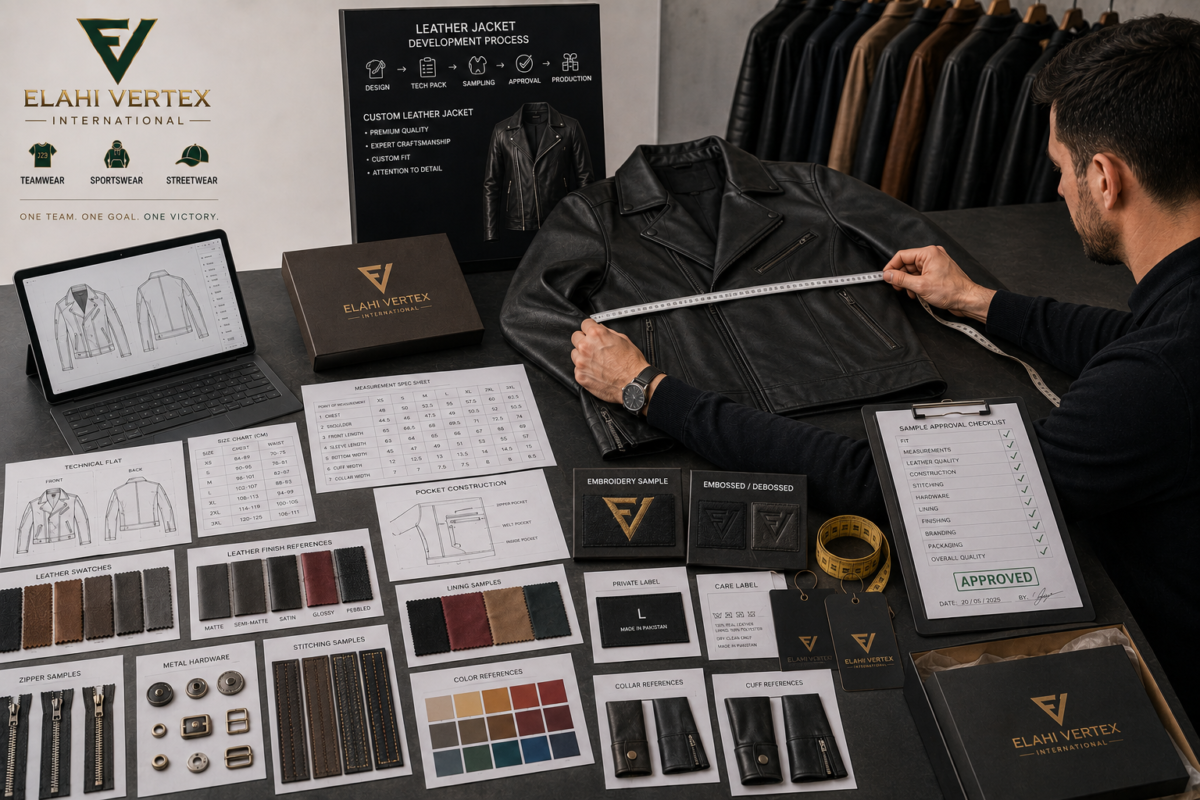

Choosing a leather bomber jacket manufacturer is not simply a matter of finding a factory that can sew leather.
For fashion brands, streetwear labels, private-label businesses, wholesalers and outerwear buyers in Germany, Europe, the UK and the USA, a leather bomber is a surprisingly unforgiving product. The silhouette may look simple, but small errors in the body pattern, sleeve pitch, leather selection, rib tension, zipper alignment, lining allowance or grading can completely change the finished jacket.
A bomber that looks balanced in a technical drawing can become too long through the body. A waistband that appears correct before attachment can pull the leather inward and create unwanted blousing. Cuffs can lose recovery. Sleeves can twist. Front zippers can ripple. Heavy leather can overpower lightweight ribbing. A sample can look acceptable in one size but fail after grading into the rest of the range.
That is why serious sourcing should begin with specifications, not price.

A capable custom leather bomber jacket manufacturer should be able to work from a tech pack, measurement chart, reference garment, artwork or detailed design brief and translate those requirements into a controlled development process.
For private-label projects, a private label leather jacket manufacturer also needs to consider the parts customers may never consciously notice: neck labels, care information, lining construction, hardware finish, pocket reinforcement, rib recovery, internal seams, packaging and consistency between the approved sample and bulk production.
Brands using an OEM leather jacket manufacturer should therefore define exactly what is fixed in their design and what can be technically adjusted during development.
Likewise, when evaluating a custom bomber jacket manufacturer, buyers should judge the supplier on pattern control, material understanding, sampling, communication and production consistency—not on a product photograph alone.
This guide explains nine critical mistakes that can damage the fit, ribbing, construction and premium appearance of a leather bomber jacket, along with practical sourcing guidance for international B2B buyers.
[FEATURED IMAGE — PLACE AFTER INTRODUCTION]
Suggested image: Realistic leather bomber jacket production environment showing leather panels, rib trims, jacket assembly and quality inspection.
Table of Contents
- Why leather bomber jackets are harder to manufacture than they look
- Mistake #1: Choosing leather before defining the bomber structure
- Mistake #2: Getting the body pattern and proportions wrong
- Mistake #3: Treating ribbing as a decorative trim
- Mistake #4: Ignoring leather-to-rib tension
- Mistake #5: Getting sleeves, armholes and sleeve pitch wrong
- Mistake #6: Under-specifying zippers, pockets and hardware
- Mistake #7: Ignoring lining allowance and internal construction
- Mistake #8: Poor size grading across the range
- Mistake #9: Approving bulk production without a controlled sample
- How to specify a leather bomber jacket correctly
- A-2, B-3, MA-1 and fashion bomber manufacturing considerations
- Leather selection for premium bomber jackets
- Germany and EU sourcing considerations
- UK sourcing considerations
- USA sourcing considerations
- OEM leather bomber jacket manufacturing
- Private-label leather bomber jacket manufacturing
- How to evaluate a leather bomber jacket manufacturer
- RFQ checklist for international buyers
- Why work with Elahi Vertex International
- Frequently asked questions
- Final sourcing checklist
- Conclusion
Why Is Leather Bomber Jacket Manufacturing More Difficult Than It Looks?
A bomber jacket is defined as much by proportion and controlled tension as by its individual materials.
The traditional bomber silhouette combines a relatively short body with a structured or relaxed upper section and a fitted lower waistband. Many versions also use knitted cuffs and collars. That creates interaction between two very different materials: leather and rib knit.
Leather does not behave like sweatshirt fleece or jersey.
Rib knit is deliberately elastic.
The manufacturer therefore has to control the relationship between a comparatively stable shell and stretchable trims.
If the pattern, seam lengths and rib dimensions are not developed together, the result can be distorted even when every individual component appears acceptable before assembly.
This is one reason selecting a leather bomber jacket manufacturer purely from catalogue photographs is risky.
A photograph can show the exterior appearance of one jacket. It does not tell a buyer:
- how the pattern was developed;
- whether the ribbing has adequate recovery;
- how the leather was selected;
- whether the sleeves hang correctly;
- how the jacket was graded;
- what happens when the jacket is zipped;
- whether the lining has enough ease;
- whether the zipper tape is stable;
- whether pocket openings are reinforced;
- whether bulk production will follow the approved sample.
For B2B sourcing, the correct question is therefore not:
“Can you manufacture leather bomber jackets?”
A stronger question is:
“How will you manufacture this specific bomber jacket according to our approved specifications?”
That difference matters.
A professional custom leather bomber jacket manufacturer should treat each custom development as a specification-driven product rather than assuming that one standard bomber block works for every brand.

The 9 Critical Leather Bomber Jacket Manufacturing Mistakes
| Manufacturing mistake | What can go wrong | What the buyer should control |
|---|---|---|
| Wrong leather selection | Jacket becomes too stiff, soft, heavy or unstable | Leather type, thickness, temper, finish and approved swatch |
| Poor body pattern | Wrong length, excessive volume, tight chest or distorted silhouette | Finished measurements and fit reference |
| Weak rib specification | Loose cuffs, stretched waistband, poor recovery | Rib composition, structure, dimensions and recovery |
| Wrong rib tension | Puckering, excessive blousing or stretched hem | Attachment ratio and approved sample |
| Incorrect sleeve geometry | Twisting, restricted movement or poor hang | Armhole, sleeve pitch and sleeve measurements |
| Cheap/incorrect hardware | Zipper waves, failures or visual downgrade | Hardware type, size, finish and function |
| Poor lining construction | Pulling, sagging or restricted movement | Lining material, ease and internal construction |
| Weak grading | Larger/smaller sizes lose intended silhouette | Approved grading rules and size chart |
| Skipping proper sampling | Bulk repeats unresolved development problems | Physical sample approval before bulk |
Mistake #1: Choosing Leather Before Defining the Bomber Structure
One of the first mistakes a brand can make is asking a leather bomber jacket manufacturer:
“What is your best leather?”
There is no universally best leather for every bomber jacket.
The better question is:
Which leather is appropriate for this design, structure, target hand feel, finish, price position and intended use?
A heavy, firm leather can make sense for one structured outerwear concept while being completely unsuitable for a lightweight fashion bomber intended to drape naturally.
Likewise, a soft leather may create an attractive luxury hand feel but fail to deliver the rigid silhouette envisioned in a reference drawing.
Leather type is only one variable
Buyers frequently focus on whether a jacket is made from:
- cowhide;
- sheepskin;
- lambskin;
- goatskin;
- suede;
- full-grain leather;
- top-grain leather;
- another specified leather.
But the animal/type description alone does not fully specify how the finished material will behave.
A buyer and custom leather bomber jacket manufacturer should also discuss:
- thickness;
- temper;
- surface character;
- grain;
- finish;
- colour;
- consistency;
- stretch;
- intended appearance;
- panel placement;
- embossing requirements;
- printing or foil requirements, if applicable;
- expected wear characteristics.
Why thickness matters
Leather thickness affects much more than perceived quality.
It can influence:
- drape;
- seam bulk;
- collar behaviour;
- cuff attachment;
- waistband attachment;
- pocket construction;
- zipper installation;
- turning of seams;
- overall garment weight;
- mobility;
- visual structure.
A thicker material is not automatically a more premium material.
For a fashion bomber, excessive thickness can make the body rigid and create bulky seams around rib attachments. Conversely, leather that is too light for the design can make a structured bomber collapse visually.
A good OEM leather jacket manufacturer therefore needs the intended product outcome, not simply the word “premium.”
Buyer action
Your RFQ should specify either an exact material requirement or a performance/appearance target that can be converted into a material recommendation during sampling.
For example:
Black leather bomber jacket with a smooth premium appearance, moderate structure, soft hand feel, clean grain and sufficient flexibility for comfortable everyday fashion wear. Final leather type, thickness and finish to be approved through physical swatch/sample.
That is more useful than:
Use best leather.
Do not approve leather from a screen alone
Colour and texture can change significantly between:
- studio photographs;
- smartphone photographs;
- video;
- computer displays;
- physical material.
For serious production, request appropriate physical confirmation when colour, texture or finish is commercially important.
A private label leather jacket manufacturer should also understand whether your brand is aiming for clean luxury, heritage aviation, distressed vintage, streetwear, moto-inspired or another visual direction.
The material decision should support that positioning.
[IMAGE 2 — PLACE AFTER THIS SECTION]
Image concept: Side-by-side close-up of several leather swatches with different grain, thickness and surface character next to bomber-jacket pattern pieces.
Mistake #2: Getting the Body Pattern and Bomber Proportions Wrong
A bomber jacket can use expensive leather and excellent hardware and still look cheap if the proportions are wrong.
Pattern development is therefore one of the most important areas to examine when selecting a leather bomber jacket manufacturer.
The pattern determines:
- chest volume;
- shoulder width;
- body length;
- hem position;
- armhole shape;
- sleeve position;
- front balance;
- back balance;
- collar relationship;
- waistband relationship;
- overall silhouette.
A bomber should not simply be a shortened leather jacket
This is a common development error.
A bomber silhouette has its own balance.
The waistband changes where the garment visually ends. The body above that waistband may need controlled ease to create the desired shape. The shoulder can be natural, dropped or intentionally structured depending on the design.
If a factory starts with an unrelated jacket block and simply shortens it, the final result can have:
- awkward body volume;
- incorrect armhole depth;
- poor sleeve position;
- too much or too little blousing;
- an unbalanced front;
- an excessively long or short finished appearance.
Finished measurements matter
A professional custom bomber jacket manufacturer should work from clearly defined measurements.
Depending on the design, a tech pack may include:
| Measurement | Why it matters |
|---|---|
| Half chest | Controls body volume |
| Shoulder width | Influences silhouette and sleeve position |
| Body length | Critical to bomber proportion |
| Sleeve length | Controls cuff position |
| Armhole | Influences movement and sleeve shape |
| Bicep | Affects comfort and sleeve volume |
| Cuff opening | Must coordinate with rib cuff |
| Bottom opening | Must coordinate with waistband |
| Collar dimensions | Affects neckline appearance |
| Front zipper length | Must correspond to finished front construction |
| Pocket position | Influences visual balance |
| Back width | Influences mobility and silhouette |
Do not rely on labels such as S, M, L and XL without actual measurements.
A size “M” has no universal finished dimensions.
European, German, British and American brands may use very different blocks even when the nominal size is identical.
Reference garments can help—but they are not enough
If your brand has a bomber whose fit you like, sending it or providing detailed measurements can help communicate the desired silhouette.
But tell the leather bomber jacket manufacturer exactly what should be copied and what should change.
For example:
- keep chest volume;
- shorten body by 2 cm;
- widen shoulder;
- increase sleeve volume;
- use tighter waistband;
- change collar;
- reposition pockets.
That is far more controlled than telling a supplier to “make it similar.”
Buyer action
Freeze the critical finished measurements on the approved sample before bulk production.
Mistake #3: Treating Ribbing as a Decorative Trim
Ribbing is not merely decoration on a bomber jacket.
It is a functional component that influences fit, comfort, silhouette and long-term appearance.
This is where an experienced leather bomber jacket manufacturer should pay particular attention.
Typical bomber rib applications include:
- waistband;
- cuffs;
- collar.
Depending on the design, ribbing may be visually subtle or one of the defining characteristics of the entire jacket.
What should be specified?
Buyers should discuss:
- fibre composition;
- rib structure;
- thickness/weight;
- elasticity;
- recovery;
- colour;
- hand feel;
- width;
- finished dimensions;
- stripe design if applicable;
- attachment construction.
A supplier should not simply choose “black rib” because the leather is black.
Two black materials can differ visibly in undertone, surface reflection and depth.
For luxury or premium streetwear, these differences matter.
Recovery is critical
Stretch and recovery are related but not identical ideas.
A rib may stretch significantly but recover poorly.
That means a cuff can initially fit correctly but gradually remain wider after repeated use.
The waistband can similarly lose its intended shape.
For brands trying to build a premium product, poor recovery is particularly damaging because it changes the silhouette during wear.
Ribbing must suit the shell
The correct rib specification depends partly on the leather shell.
A substantial leather shell paired with weak, lightweight ribbing can feel visually and physically unbalanced.
Likewise, overly heavy or rigid ribbing can dominate a softer fashion leather.
A capable custom leather bomber jacket manufacturer should therefore evaluate shell and trim as a system.
What to inspect on a sample
Stretch the cuff moderately and allow it to recover.
Then inspect:
- whether it returns toward its original dimension;
- whether the cuff remains symmetrical;
- whether the seam twists;
- whether the leather-to-rib junction remains clean;
- whether the rib feels appropriate against the wrist.
Repeat the same thinking at the waistband.
[IMAGE 3 — PLACE AFTER H2: MISTAKE #3]
Image concept: Detailed close-up showing rib cuff, waistband and collar construction on a premium leather bomber jacket.
Mistake #4: Ignoring Leather-to-Rib Tension
Even good leather and good ribbing can produce a poor jacket when they are assembled incorrectly.
The leather bomber jacket manufacturer has to control the relationship between the length of the leather edge and the length of the rib component.
This relationship influences how the finished jacket gathers and sits.
Too much tension
If the rib component is substantially shorter relative to the shell edge and the design does not call for that degree of contraction, attachment can pull the leather aggressively inward.
Possible results include:
- excessive blousing;
- puckering;
- distorted side seams;
- uneven gathers;
- zipper distortion;
- uncomfortable tightness.
Too little tension
If the rib is too long, the waistband may:
- hang loosely;
- fail to shape the bomber;
- flare away from the body;
- lose the characteristic bomber silhouette.
The same problem can occur at cuffs.
There is no universal ratio
This is important.
A buyer should be suspicious of anyone claiming one attachment ratio works for every bomber jacket.
The appropriate relationship depends on:
- rib elasticity;
- recovery;
- rib structure;
- leather properties;
- shell dimensions;
- design intent;
- garment size;
- desired silhouette.
The correct decision should be validated during development.
This is exactly why working with a custom bomber jacket manufacturer through a physical sample is more reliable than trying to finalize every construction decision from photographs.
Check zipper interaction
Waistband tension can also affect the front zipper.
When the jacket is closed, both sides should sit evenly.
If the lower construction pulls unevenly, the zipper can appear wavy or the front hem can become asymmetric.
Sample test
Place the jacket flat and zipped.
Check:
- Is the centre front straight?
- Are the left and right hem levels equal?
- Is gathering reasonably balanced?
- Does the waistband return after stretching?
- Do side seams remain correctly positioned?
- Does the jacket maintain its intended silhouette when worn?
Mistake #5: Getting Sleeve Pitch, Armholes and Sleeve Volume Wrong
A bomber jacket can look perfect on a hanger and uncomfortable on a person.
That is why fit evaluation matters.
The relationship between sleeve and armhole is one of the areas a leather bomber jacket manufacturer needs to control carefully.
Sleeve pitch
Sleeve pitch describes the orientation of the sleeve relative to the body.
If the pitch does not match the intended posture and pattern, symptoms may include:
- twisting sleeves;
- diagonal drag lines;
- awkward cuff position;
- restriction;
- poor hang.
Armhole depth
An excessively deep armhole can create unnecessary bulk and change movement.
An overly high or tight armhole can restrict comfort depending on the design.
The correct solution depends on the intended silhouette.
A relaxed streetwear bomber does not necessarily use the same geometry as a closer-fitting heritage aviation jacket.
Bicep and elbow volume
Leather needs enough room to accommodate movement, layering and the intended styling.
Brands should therefore define whether the bomber is intended to be worn over:
- a T-shirt;
- a shirt;
- a sweatshirt;
- a hoodie;
- heavier winter layers.
That information affects fit decisions.
Cuff interaction
Sleeve length should be assessed together with the cuff.
The sleeve shell ends at the rib attachment, but the finished cuff contributes to the total visual and functional length.
If the OEM leather jacket manufacturer treats the leather sleeve measurement and cuff as unrelated values, the finished sleeve can become too long or too short.
Buyer test
When evaluating the sample:
- zip the jacket;
- move both arms forward;
- raise the arms;
- bend the elbows;
- cross the arms;
- inspect sleeve twisting;
- check shoulder movement;
- check whether cuffs remain comfortably positioned.
A premium bomber should not only photograph well. It should function properly on the body.
Mistake #6: Under-Specifying Zippers, Pockets and Hardware
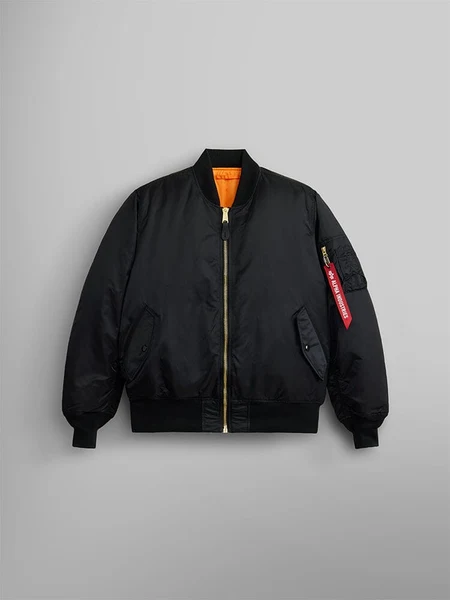
Hardware has a disproportionate effect on perceived quality.
A strong leather bomber jacket manufacturer should therefore receive clear requirements for every visible and functional component.
Hardware may include:
- centre-front zipper;
- pocket zippers;
- snaps;
- pullers;
- buckles;
- eyelets;
- adjusters;
- internal hardware;
- decorative metal components.
Specify more than colour
“Silver zipper” is not a complete specification.
Depending on the design, buyers may need to define:
- zipper type;
- zipper size;
- metal or coil construction;
- one-way or two-way function;
- teeth finish;
- tape colour;
- puller design;
- slider finish;
- zipper length;
- branded/custom puller requirement.
The exact specification should match the product and intended price positioning.
Why zipper alignment matters
Leather can expose poor zipper installation more visibly than soft textile garments.
Potential problems include:
- zipper waves;
- uneven fronts;
- mismatched top edges;
- mismatched bottom edges;
- exposed tape;
- poor reinforcement;
- difficulty engaging the slider.
The zipper should be inspected both open and closed.
Pocket construction
Pocket openings are repeated stress points.
The custom leather bomber jacket manufacturer should follow the approved construction and placement because even a technically functional pocket can make a jacket look wrong when positioned poorly.
Check:
- left/right symmetry;
- pocket angle;
- opening length;
- reinforcement;
- zipper alignment;
- internal pocket bag;
- accessibility when worn.
Branding hardware
Custom metal branding can add perceived value, but it should not be added simply because it looks “premium.”
Consider:
- weight;
- edge finish;
- durability;
- attachment;
- finish consistency;
- potential scratching;
- logo legibility;
- compatibility with the rest of the garment.
Premium quality comes from coherence, not from adding the maximum number of expensive components.
Mistake #7: Ignoring Lining Allowance and Internal Construction
Customers see the shell first.
Experienced buyers inspect the inside.
A private label leather jacket manufacturer should therefore treat the lining and internal construction as part of the product—not as an afterthought.
Why lining needs ease
Leather and lining behave differently.
If the lining is cut too tightly, it can restrict the shell and create pulling.
If it is excessively loose, it can sag, twist or protrude.
The pattern therefore needs appropriate lining allowance for the specific garment.
Lining material should match the concept
Possible lining directions can include:
- smooth woven lining;
- satin-like lining;
- quilted lining;
- insulated construction;
- printed custom lining;
- branded jacquard or other custom developments where feasible.
The final choice should reflect:
- climate;
- season;
- comfort;
- target price;
- jacket weight;
- design;
- brand positioning.
For buyers targeting Germany and northern European markets, a colder-season product may require a different construction strategy from a lightweight fashion bomber sold as a transitional jacket.
The UK market likewise contains both fashion and weather-driven outerwear demand.
For USA projects, the intended selling region can matter because a jacket designed for Southern California may have a very different seasonal requirement from one aimed at colder northern states.
Do not simply tell the leather bomber jacket manufacturer that you need a “winter lining.”
Define the required product outcome.
Internal details worth checking
Turn the sample inside out where practical and inspect:
- lining seams;
- pocket bags;
- labels;
- zipper backing;
- seam finishing;
- loose threads;
- reinforcement;
- lining attachment;
- hem construction;
- inside chest pockets;
- branding placement.
A customer may never consciously identify these details, but together they influence whether the jacket feels genuinely premium.
Mistake #8: Poor Size Grading Across the Range
Approving one beautiful medium sample does not prove that XS through 3XL will fit correctly.
This is where grading becomes important.
A competent leather bomber jacket manufacturer needs clear grading information or agreed rules for moving from the base size to other sizes.
Why proportional scaling fails
Garments are not enlarged photographs.
Different measurements require different grade increments.
For example, the amount added to:
- chest;
- shoulder;
- body length;
- sleeve length;
- armhole;
- bicep;
- cuff;
- waistband
does not necessarily increase at the same rate.
The grading also has to preserve the design language.
An oversized bomber should remain intentionally oversized.
A cropped bomber should remain cropped in proportion.
A heritage-inspired bomber should not become a long conventional jacket in larger sizes.
Ribbing complicates grading
The waistband and cuffs must be considered when grading the shell.
If the body opening grows but rib dimensions are not adjusted appropriately, the tension relationship changes.
That can mean:
- the small size looks correct;
- the medium looks acceptable;
- the 2XL behaves completely differently.
A serious custom leather bomber jacket manufacturer should therefore evaluate grading as part of product development.
What buyers should provide
Ideally:
- base size;
- full finished measurement chart;
- grade rules or measurements for every size;
- tolerance requirements;
- fit reference;
- model/body information where useful.
If you do not have complete grading rules, discuss development requirements before quoting bulk production.
Do not assume the factory will automatically know your brand’s intended sizing.
German sizing expectations, UK brand sizing and US brand sizing are not interchangeable simply because labels use S/M/L.
Your own brand chart should control the product.
Mistake #9: Approving Bulk Production Without a Proper Physical Sample
This is the mistake that can turn every earlier mistake into a bulk-order problem.
A physical sample is where the buyer and leather bomber jacket manufacturer can evaluate how all specifications work together.
A tech pack is essential.
A sample tests the interpretation of that tech pack.
What should be reviewed?
A leather bomber sample should be evaluated for:
Fit
- chest;
- shoulder;
- length;
- armhole;
- sleeve;
- cuff;
- waistband;
- collar;
- movement.
Material
- leather type;
- thickness;
- colour;
- grain;
- finish;
- hand feel;
- consistency.
Ribbing
- colour;
- structure;
- thickness;
- stretch;
- recovery;
- attachment tension.
Construction
- seam quality;
- stitch consistency;
- panel alignment;
- pocket construction;
- reinforcement;
- zipper installation.
Branding
- embroidery;
- patches;
- embossing;
- debossing;
- labels;
- printed lining;
- custom hardware, where applicable.
Internal finish
- lining;
- pocket bags;
- labels;
- seam finish;
- loose threads;
- internal reinforcement.
Overall appearance
Most importantly:
Does the physical jacket look and feel like the product your brand intends to sell?
If not, do not approve bulk simply because the deadline is approaching.
The purpose of sampling is to find and correct development problems while they are still manageable.
[IMAGE 4 — PLACE AFTER H2: MISTAKE #9]
Image concept: Buyer-style quality-control table with a leather bomber sample, measurement tape, leather swatches, zipper, rib swatches and specification sheet.
What Should You Specify to a Leather Bomber Jacket Manufacturer?
The quality of an RFQ directly affects the quality of the quotation and development conversation.
A buyer asking:
“How much for 100 leather bombers?”
has not provided enough information for a precise product comparison.
A better RFQ gives the leather bomber jacket manufacturer enough information to understand what is actually being produced.
Leather bomber RFQ checklist
1. Product
State the exact product:
- leather bomber jacket;
- A-2 inspired jacket;
- B-3 shearling bomber;
- MA-1-inspired leather bomber;
- fashion bomber;
- cropped bomber;
- oversized bomber;
- varsity-bomber hybrid;
- another custom silhouette.
2. Quantity
Provide:
- sample quantity;
- expected first bulk quantity;
- size breakdown if known;
- colour breakdown if known.
For Elahi Vertex International, the standard starting MOQ is 20 pieces per product/category, with project-specific details confirmed during quotation.
3. Target market
State whether the product is intended for:
- Germany;
- wider EU/Europe;
- United Kingdom;
- United States;
- multiple markets.
This matters because commercial, labelling and compliance considerations can differ.
4. Leather specification
Provide what you know:
- leather type;
- thickness;
- colour;
- finish;
- grain;
- reference swatch;
- appearance target.
If the specification is not finalized, clearly state what outcome you need.
5. Fit
Provide:
- tech pack;
- measurement chart;
- base size;
- size range;
- fit description;
- reference garment;
- grading information.
6. Rib specification
Define:
- collar;
- cuffs;
- waistband;
- colour;
- composition where required;
- structure;
- dimensions;
- stripe details;
- desired recovery/feel.
7. Lining
Specify:
- material;
- colour;
- print;
- quilting;
- insulation;
- internal branding.
8. Hardware
List:
- main zipper;
- pocket zippers;
- snaps;
- pullers;
- buckles;
- metal logos;
- finish;
- custom hardware.
9. Branding
Specify:
- embroidery;
- patches;
- appliqué;
- embossing;
- debossing;
- print;
- woven labels;
- neck labels;
- size labels;
- care labels;
- hangtags;
- packaging.
10. Destination
Provide the final delivery destination so shipping requirements can be discussed accurately.
11. Target timeline
Separate:
- sample deadline;
- launch date;
- desired bulk completion;
- required delivery date.
Do not confuse manufacturing time with international transit time.
A-2, B-3, MA-1 and Fashion Bomber Jackets Are Not the Same Product
Search results increasingly group A-2, B-3 and MA-1 designs under bomber manufacturing, but a buyer should not treat them as interchangeable.
Different bomber families have different construction logic.
A-2-inspired leather bomber
An A-2-inspired fashion jacket may feature characteristics associated with classic flight-jacket styling, such as a leather body, front zipper, pockets and knitted cuffs/waistband.
Modern fashion versions can substantially reinterpret those details.
The key sourcing point is simple:
Specify the exact design rather than assuming “A-2” communicates every construction detail.
B-3-inspired bomber
B-3-inspired jackets are generally associated with shearling flight-jacket styling.
Their material structure, collar treatment, seam appearance and overall bulk can differ substantially from a ribbed leather fashion bomber.
A custom leather bomber jacket manufacturer quoting a B-3-type project needs to understand the exact shearling/material requirement rather than pricing it as a conventional lined leather bomber.
MA-1-inspired leather bomber
The historical MA-1 is associated with textile flight-jacket construction, but contemporary fashion brands frequently reinterpret the silhouette in leather and other materials.
If your brand requests a “leather MA-1,” specify which elements matter:
- silhouette;
- rib collar;
- sleeve pocket;
- zipper;
- pocket shape;
- volume;
- lining;
- hardware;
- colour;
- branding.
Fashion bomber
The fashion bomber gives designers the most freedom.
It can be:
- oversized;
- cropped;
- minimalist;
- heavily embroidered;
- embossed;
- distressed;
- washed;
- quilted;
- paneled;
- two-tone;
- luxury-focused;
- streetwear-focused.
This is where a custom bomber jacket manufacturer should work from your design rather than impose a heritage specification that does not fit the brand.
Choosing Leather for a Premium Bomber Jacket
Material choice should be driven by the desired garment.
Elahi Vertex International’s existing leather-jacket range identifies several available directions including cowhide, sheepskin, lambskin, goatskin and other leather options subject to the project.
A practical sourcing discussion can begin with the following framework.
| Leather direction | Typical design consideration | Questions for the manufacturer |
|---|---|---|
| Cowhide | Can support substantial/structured applications | What thickness and temper suit the design? |
| Sheepskin | Can support softer fashion applications | What finish and structure will be used? |
| Lambskin | Often considered where softer hand feel is important | Is it suitable for the intended durability/use? |
| Goatskin | Can suit flexible jacket applications | What grain and finish are available? |
| Suede | Surface character becomes central to design | How will colour and surface consistency be controlled? |
| Shearling | Construction differs substantially from lined leather | What thickness, pile and seam treatment are required? |
These are starting points—not universal quality rankings.
The final specification should be approved for the individual project.
Full grain vs top grain vs marketing language
Buyers should avoid making purchasing decisions from impressive-sounding leather terminology alone.
Ask for a clear material description.
Where material authenticity or composition is commercially important, agree on documentation or testing requirements before production.
A professional private label leather jacket manufacturer should not object to a buyer asking for clarity about the material being purchased.
Leather Testing and Why Professional Buyers Should Care
Leather is a natural material and can vary.
Professional testing standards exist because subjective descriptions such as “strong,” “premium” or “high quality” are not enough when measurable performance matters.
For example, ISO 2419:2024 specifies conditioning of leather for physical and mechanical testing in standard atmospheres. Conditioning matters because leather can undergo dimensional changes with temperature and humidity.
Where a project requires laboratory testing, the buyer and leather bomber jacket manufacturer should agree:
- what characteristic is being tested;
- which standard/method applies;
- who performs the test;
- what acceptance requirement applies;
- when testing occurs;
- who pays for testing.
Do not add expensive laboratory requirements simply to make an RFQ look professional.
Testing should correspond to the product, market, risk and buyer requirements.
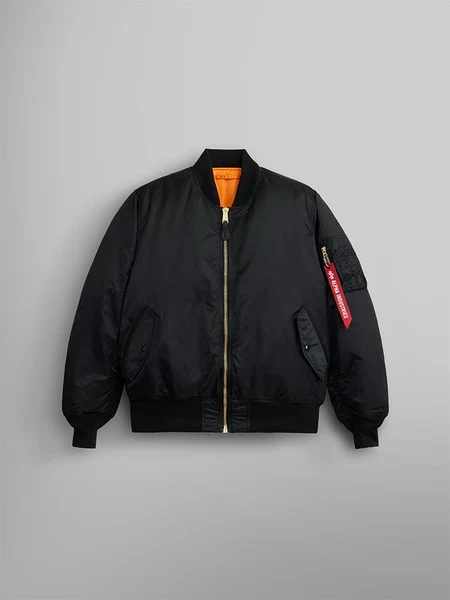
Germany & European Union: What Leather Bomber Buyers Should Consider
Germany is one of the most commercially important target markets for this guide, but sourcing for Germany should not be reduced to inserting the word “Germany” into an SEO paragraph.
Buyers importing into the EU have actual regulatory responsibilities.
REACH and leather articles
Chemical compliance should be discussed early when manufacturing leather goods for the European Union.
One relevant example is chromium VI restrictions applying to leather articles or leather parts that come into contact with the skin under the conditions defined by EU REACH requirements.
This means an EU buyer should not assume that “genuine leather” automatically means the material satisfies every applicable chemical requirement.
A buyer sourcing from a leather bomber jacket manufacturer for Germany should determine the compliance requirements applicable to the exact product before commercial production.
Build compliance into the RFQ
Where relevant, German/EU buyers should communicate:
- destination country;
- product category;
- material composition;
- leather type;
- lining composition;
- trims;
- intended consumer;
- applicable chemical/testing requirements;
- labelling requirements;
- documentation required from the supplier.
Do this before bulk production.
Retrofitting compliance after manufacturing is a poor sourcing strategy.
Germany-specific commercial expectations
German buyers frequently compete in markets where product specifications, consistency and documentation matter.
A useful supplier discussion should therefore move beyond:
“Can you ship to Germany?”
and toward:
“Can you manufacture this exact specification and support the documentation/testing requirements we define for the German/EU market?”
That is the conversation that matters.
Wider Europe: Do Not Treat Europe as One Identical Market
Europe is commercially important, but “Europe” is not a single homogeneous fashion market.
A leather bomber jacket manufacturer serving European brands may receive very different design requirements from:
- Germany;
- France;
- Italy;
- Netherlands;
- Belgium;
- Scandinavia;
- Spain;
- other European markets.
Brand positioning can vary from minimalist luxury to heritage outerwear to aggressive streetwear.
Therefore, a manufacturer should follow the buyer’s specification rather than assume there is one “European fit.”
For European private-label brands
Define:
- customer profile;
- retail positioning;
- intended season;
- fit;
- size range;
- material;
- compliance requirements;
- labels;
- packaging;
- destination.
A private label leather jacket manufacturer can then develop the product around the actual brand rather than around a generic export style.
UK Leather Bomber Jacket Sourcing
UK fashion and streetwear buyers should pay close attention to labelling, fit, construction and product positioning.
UK government textile-labelling guidance states that textile products are subject to fibre-content labelling requirements and addresses products containing multiple components and animal-derived parts.
A leather bomber can contain several textile elements even when leather is the dominant visible material:
- rib knit;
- lining;
- pocket bags;
- labels;
- internal components.
The exact legal requirements applicable to a specific product should be checked for that product before it is placed on the market.
Do not let the manufacturer guess
Tell your custom leather bomber jacket manufacturer what labels and information your UK project requires.
Depending on the project, your specification may include:
- brand label;
- size label;
- composition information;
- care information;
- country-of-origin information where applicable;
- SKU/barcode requirements;
- hangtag;
- packaging labels.
The importer/brand should verify its own regulatory obligations rather than assuming the overseas manufacturer carries all market responsibility.
USA Leather Bomber Jacket Sourcing
US buyers also need to distinguish manufacturing quality from market compliance.
The Federal Trade Commission provides guidance covering textile, wool, fur, apparel and leather matters.
For relevant textile/wool products, FTC guidance addresses information such as fibre content, country of origin and responsible business identification. The FTC also maintains guidance relating to leather and imitation leather products.
Care requirements deserve particular attention when a leather jacket combines leather with textile components.
The FTC Care Labeling Rule covers textile wearing apparel within its scope and includes terminology for leather and suede cleaning.
For a leather bomber jacket manufacturer, the practical lesson is not to guess the care label.
The buyer and supplier should establish the required care information on an appropriate basis for the finished product and its components.
US brands should define these requirements before final bulk labelling.
OEM Leather Jacket Manufacturer: When OEM Is the Right Model
An OEM leather jacket manufacturer is most appropriate when the buyer already controls the product specification.
Typically, the brand provides some combination of:
- tech pack;
- patterns;
- measurements;
- artwork;
- leather specification;
- colour references;
- trims;
- labels;
- branding;
- packaging requirements.
The manufacturer’s role is then to translate those approved requirements into production.
OEM does not mean the factory should make undocumented decisions whenever information is missing.
Unclear specifications should be resolved before bulk.

OEM leather bomber workflow
A practical workflow is:
- Buyer submits design and specifications.
- Manufacturer reviews feasibility.
- Missing information is identified.
- Materials and trims are discussed.
- Commercial quotation is prepared.
- Sample is developed.
- Buyer evaluates sample.
- Corrections are documented.
- Final sample/specification is approved.
- Bulk production proceeds against the approved standard.
- Finished production is inspected.
- Goods are packed and prepared for shipment.
Elahi Vertex International describes its OEM manufacturing service as manufacturing according to buyer-provided designs and specifications, including measurements, patterns, colours, trims, branding and packaging.
For brands that already know exactly what they want, this is usually more controlled than selecting a generic ready-made bomber.
Private Label Leather Jacket Manufacturer: What Brands Actually Need
A private label leather jacket manufacturer does more than attach a neck label to an existing garment.
A genuine private-label project can involve:
- custom design;
- brand-specific fit;
- leather selection;
- custom colour;
- lining;
- hardware;
- labels;
- embroidery;
- patches;
- embossing;
- packaging;
- hangtags;
- size identification;
- care information.
The goal is for the finished product to belong to the buyer’s brand identity.

Private label does not mean “change the logo”
This distinction is important.
There are different levels of customization.
Basic branding
Existing or standardized product with:
- brand label;
- hangtag;
- packaging.
Modified product
Existing base concept with changes to:
- colour;
- material;
- pockets;
- trims;
- labels;
- branding.
Full custom private label
Product developed specifically around the buyer’s:
- design;
- measurements;
- silhouette;
- materials;
- artwork;
- construction;
- brand presentation.
If you want the third model, communicate that clearly to the private label leather jacket manufacturer.

How to Evaluate a Leather Bomber Jacket Manufacturer Before Ordering
Do not evaluate suppliers only by who replies fastest or quotes lowest.
Use a structured comparison.
1. Product relevance
Does the supplier actually work with leather outerwear and custom manufacturing?
2. Specification understanding
Does the supplier ask useful questions about:
- leather;
- fit;
- size;
- rib;
- lining;
- hardware;
- branding;
- quantity;
- destination?
Or does the supplier quote immediately without understanding the product?
3. Sampling process
Can you evaluate a physical sample before committing to bulk?
4. Customization
Can the custom bomber jacket manufacturer support the details your design genuinely requires?
5. Communication
Does the supplier clearly distinguish:
- confirmed specification;
- recommendation;
- alternative;
- additional cost;
- unresolved detail?
6. Production visibility
Ask what production updates can be provided.
Elahi Vertex International’s published manufacturing information states that buyers can receive relevant photo or video production updates during projects, while specifications and samples can be reviewed before bulk manufacturing.
7. Quality-control approach
Ask what is checked against the approved specification.
Relevant checks can include:
- material;
- measurements;
- construction;
- stitching;
- branding;
- colours;
- labels;
- finishing;
- final appearance.
8. Export communication
International buyers need more than sewing capability.
The supplier should communicate clearly about:
- packaging;
- shipment preparation;
- destination;
- documentation;
- agreed commercial terms.

Price vs Value: The Wrong Way to Compare Leather Bomber Quotations
Suppose Manufacturer A quotes significantly less than Manufacturer B.
That does not automatically mean A is cheaper.
First establish whether the quotations cover the same product.
Compare:
| Specification | Supplier A | Supplier B |
|---|---|---|
| Leather type | ? | ? |
| Leather thickness | ? | ? |
| Finish | ? | ? |
| Rib specification | ? | ? |
| Lining | ? | ? |
| Main zipper | ? | ? |
| Pocket hardware | ? | ? |
| Embroidery/patches | ? | ? |
| Labels | ? | ? |
| Packaging | ? | ? |
| Sample | ? | ? |
| Shipping | ? | ? |
| Testing/documentation | ? | ? |
If those fields are not aligned, you are not comparing prices for the same product.
The cheapest leather bomber jacket manufacturer can become the most expensive option if the product needs to be remade.
Why Elahi Vertex International for Custom Leather Bomber Jacket Manufacturing?
Elahi Vertex International is a custom apparel manufacturer and exporter based in Sialkot, Pakistan, with leather wear included within its published manufacturing categories.
The company supports custom manufacturing, OEM, ODM and private-label apparel development.
For a custom leather bomber project, buyers can discuss requirements including:
- design;
- leather;
- thickness;
- colour;
- fit;
- measurements;
- patterns;
- lining;
- zippers;
- cuffs;
- ribbing;
- pockets;
- hardware;
- embroidery;
- patches;
- embossing;
- labels;
- branding;
- packaging.
The company’s published manufacturing process includes design/material selection, pattern making, sampling/prototyping, production, quality control, packaging and worldwide shipment preparation.
That process matters because a leather bomber should be developed as a complete product—not purchased as disconnected components.
MOQ
Elahi Vertex International’s standard starting MOQ is 20 pieces per product/category.
Exact project configuration should be discussed before quotation.
Sampling
For custom projects, the normal commercial starting point is a paid sample plus shipping upfront.
Where agreed for a qualifying bulk order, the sample production charge may be credited toward the bulk order; courier/shipping remains separate and is not credited.
Exact sample terms should be confirmed in the quotation for the specific project.
From concept to bulk
A typical custom-development discussion can move through:
Design → specifications → quotation → material confirmation → sample → revisions/approval → bulk production → inspection → packaging → shipment
Buyers with a complete tech pack can use an OEM route.
Brands with an idea, sketch or reference that requires development can discuss an ODM/custom-development route.
Private-label buyers can add their own labels, branding and packaging according to the approved project specification.
Send a Leather Bomber Jacket RFQ to Elahi Vertex International
For a useful quotation, send:
- design or reference images;
- tech pack if available;
- required quantity;
- target size range;
- leather preference;
- colour;
- lining;
- rib details;
- hardware;
- branding;
- packaging;
- destination country;
- target timeline.
Germany, Europe, UK and USA buyers: include your destination and any project-specific compliance, labelling or testing requirements at RFQ stage rather than after the sample has already been developed.
Contact Elahi Vertex International through the official website or WhatsApp with your project specifications.
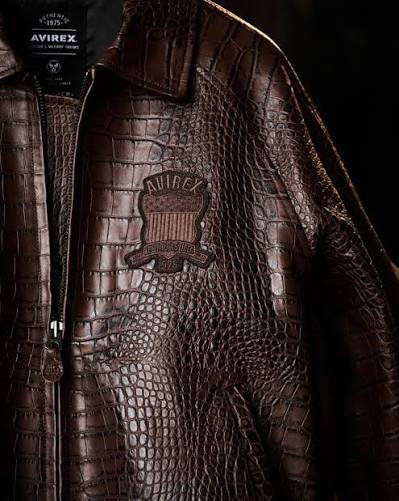
20 Frequently Asked Questions About Choosing a Leather Bomber Jacket Manufacturer
1. What does a leather bomber jacket manufacturer do?
A leather bomber jacket manufacturer develops and produces bomber-style jackets using leather shells and the trims, lining, hardware and branding required by the buyer’s specification. For custom B2B manufacturing, the process can include material selection, pattern development, sampling, customization, bulk production, quality checks, packaging and export preparation.
2. How do I choose a leather bomber jacket manufacturer?
Evaluate a leather bomber jacket manufacturer based on relevant product capability, specification understanding, sampling, material options, pattern control, rib construction, customization, quality processes, communication and ability to reproduce the approved sample in bulk. Do not choose solely on the lowest unit price.
3. What information should I send to a custom leather bomber jacket manufacturer?
Send your custom leather bomber jacket manufacturer the design, quantity, target market, size chart, fit requirements, leather preference, colour, rib specification, lining, hardware, branding, packaging, destination and required timeline. A tech pack is strongly recommended where available.
4. Can a private label leather jacket manufacturer add my brand labels?
A private label leather jacket manufacturer can potentially incorporate neck labels, size labels, care labels, woven labels, patches, hangtags, packaging and other approved branding. Exact options should be confirmed for the individual project.
5. What is an OEM leather jacket manufacturer?
An OEM leather jacket manufacturer produces jackets according to specifications controlled by the buyer. The buyer may provide the tech pack, measurements, patterns, artwork, materials, trims and branding requirements, while the manufacturer handles approved production.
6. Can a custom bomber jacket manufacturer develop an oversized leather bomber?
Yes, a custom bomber jacket manufacturer can develop an oversized silhouette when the pattern, measurements and proportions are defined accordingly. “Oversized” should still be quantified through finished measurements rather than left as a subjective description.
7. Why is ribbing important in leather bomber manufacturing?
For a leather bomber jacket manufacturer, ribbing affects the collar, cuffs, waistband, fit and silhouette. Poor recovery or incorrect attachment tension can cause loose cuffs, excessive gathering, distorted hems or loss of shape.
8. What leather is best for a bomber jacket?
There is no single best leather for every bomber. A custom leather bomber jacket manufacturer should select or recommend material based on the desired structure, hand feel, thickness, durability, finish, appearance and budget. Physical approval is advisable where material characteristics are important.
9. Should I request a sample before bulk production?
Yes. A sample lets the buyer evaluate fit, leather, ribbing, lining, hardware, branding, construction and overall appearance before bulk production. It is one of the most important risk-control stages when working with a leather bomber jacket manufacturer.
10. Can a private label leather jacket manufacturer produce custom lining?
A private label leather jacket manufacturer may support custom lining colours, constructions, prints or other developments depending on technical feasibility and project requirements. Confirm the exact lining specification during development.
11. Can an OEM leather jacket manufacturer follow my own size chart?
Yes. An OEM leather jacket manufacturer should be able to work from buyer-provided finished measurements when technically feasible. The measurement points, tolerances and grading should be clearly defined.
12. Can a custom bomber jacket manufacturer make A-2 or MA-1-inspired designs?
A custom bomber jacket manufacturer can develop bomber designs inspired by various silhouette families, but buyers should provide the exact details they want rather than assuming a style name communicates every construction requirement.
13. What causes a leather bomber waistband to look wrong?
Common causes include incorrect rib dimensions, poor recovery, wrong shell-to-rib tension, inaccurate body opening dimensions or inconsistent attachment. These issues should be checked during sampling by the leather bomber jacket manufacturer.
14. Why do leather bomber sleeves twist?
Sleeve twisting can relate to pattern geometry, sleeve pitch, material behaviour, cutting or assembly. A custom leather bomber jacket manufacturer should assess the complete pattern and construction rather than trying to correct the symptom only at the cuff.
15. What should German buyers ask a leather bomber jacket manufacturer?
German buyers should communicate design specifications, material requirements, size range, labels, destination and any applicable EU compliance/testing requirements. Relevant chemical restrictions, including applicable REACH requirements, should be evaluated for the exact product.
16. What should UK buyers ask a private label leather jacket manufacturer?
UK buyers should define fit, material, branding and the labelling information required for their product. Textile components such as lining and ribbing may introduce fibre-content considerations, so applicable UK requirements should be verified before final production.
17. What should US buyers discuss with an OEM leather jacket manufacturer?
US buyers should define product specifications and evaluate applicable FTC labelling/care requirements for the finished garment and its components. Country-of-origin and other applicable product information should be handled according to the requirements applying to the specific product.
18. How should I compare quotes from leather bomber manufacturers?
Normalize the specification first. Compare leather, thickness, lining, ribbing, hardware, branding, packaging, sample terms, quantity, shipping scope and any required testing. Otherwise, two leather bomber jacket manufacturer quotations may represent completely different products.
19. What is the MOQ at Elahi Vertex International for custom leather wear?
Elahi Vertex International’s standard starting MOQ is 20 pieces per product/category. Exact configuration and project requirements should be confirmed during quotation.
20. How do I request a leather bomber quotation from Elahi Vertex International?
Send the design/reference, quantity, sizes, leather preference, colour, fit, ribbing, lining, hardware, branding, packaging, destination and timeline. A tech pack should be included where available so the manufacturing discussion can begin from a clear specification.

Final Leather Bomber Jacket Buyer Checklist
Before approving a supplier, confirm:
- Product silhouette finalized
- Tech pack supplied
- Base size defined
- Finished measurements approved
- Grading agreed
- Leather type confirmed
- Leather thickness confirmed
- Colour/finish approved
- Rib specification approved
- Rib recovery evaluated
- Waistband tension evaluated
- Cuff fit evaluated
- Sleeve pitch checked
- Arm movement checked
- Main zipper approved
- Pocket hardware approved
- Lining approved
- Internal construction checked
- Branding approved
- Labels confirmed
- Packaging confirmed
- Market requirements reviewed
- Sample physically evaluated
- Corrections documented
- Final specification frozen
- Bulk production authorized only after approval
Conclusion: Choose a Leather Bomber Jacket Manufacturer by Process, Not Promises
A premium bomber jacket is the result of dozens of connected decisions.
Leather selection affects structure.
Pattern engineering affects silhouette.
Sleeve geometry affects comfort.
Rib construction affects fit.
Waistband tension affects the entire lower body.
Hardware affects both function and perceived value.
Lining affects comfort and internal quality.
Grading determines whether the design survives beyond the sample size.
Sampling connects all of those decisions before they are multiplied across bulk production.
That is why the right leather bomber jacket manufacturer should not simply promise “premium quality.”
The manufacturer should be able to discuss how the product will be specified, sampled, evaluated and reproduced.
For buyers in Germany, Europe, the UK and the USA, supplier selection should also account for the requirements of the destination market. Compliance and labelling should be considered during product development—not after the jackets have already been manufactured.
A capable custom leather bomber jacket manufacturer should work from defined specifications rather than vague assumptions.
A reliable private label leather jacket manufacturer should understand that your brand identity extends beyond the logo to fit, materials, hardware, lining, labels and presentation.
An OEM leather jacket manufacturer should respect the approved technical specification and identify unresolved details before production.
And a custom bomber jacket manufacturer should understand that a bomber’s quality depends heavily on proportion, ribbing, pattern engineering and the interaction between components.
Elahi Vertex International supports custom B2B apparel manufacturing, OEM, ODM and private-label development from Sialkot, Pakistan, including leather wear for international buyers.
If you are developing a leather bomber collection for Germany, Europe, the UK or USA, send your tech pack, reference images, quantity, sizing, leather requirements, branding and destination to begin a project-specific manufacturing discussion.
Where Brands Are Made.
Useful Authoritative Resources
International Organization for Standardization — Leather Testing
ISO 2419 covers conditioning of leather for physical and mechanical testing. Useful when establishing controlled leather-testing requirements for sourcing and quality evaluation.
European Union — REACH
EU REACH requirements should be reviewed when sourcing leather articles for Germany and other EU markets, particularly where restricted substances may apply.
UK Government — Textile Labelling
Useful for UK brands evaluating fibre-content and textile-component labelling responsibilities.
U.S. Federal Trade Commission — Apparel & Labelling
Useful for US buyers researching applicable textile, apparel, leather and care-labelling obligations.
Internal Linking Map for WordPress
Use these contextual links in the published article:
Custom manufacturing process → Elahi Vertex International Manufacturing page
private label leather jacket manufacturer → Elahi Vertex International Private Label Manufacturing page
OEM leather jacket manufacturer → Elahi Vertex International OEM Clothing Manufacturing page
custom leather jackets → Elahi Vertex International Leather Jackets page
quality control → Elahi Vertex International Quality Control page
see our manufacturing work → Elahi Vertex International Our Works page
how to order custom apparel → Elahi Vertex International How to Order page
contact Elahi Vertex International → Elahi Vertex International Contact page
Leather Bomber Jacket Buyers
Professional leather sourcing should be based on recognized technical, regulatory and industry information rather than supplier claims alone. Buyers working with a leather bomber jacket manufacturer for Germany, Europe, the UK or USA can use the following resources when evaluating leather testing, chemical compliance, labelling, care requirements and responsible leather sourcing.
- International Organization for Standardization (ISO) — Leather Standards
https://www.iso.org/ics/59.140.30/x/
Useful for researching internationally recognized standards covering physical, mechanical and chemical testing of leather. - ISO 2418:2023 — Leather: Chemical, Physical, Mechanical and Fastness Tests — Position and Preparation of Specimens for Testing
https://www.iso.org/standard/84351.html
Useful for understanding standardized preparation of leather specimens before testing. - ISO 2419:2024 — Leather: Physical and Mechanical Tests — Sample Preparation and Conditioning
https://www.iso.org/standard/87431.html
Useful when discussing controlled conditioning of leather before physical and mechanical testing. - ISO 3376:2020 — Leather: Physical and Mechanical Tests — Determination of Tensile Strength and Percentage Elongation
https://www.iso.org/standard/75173.html
Useful for buyers who need measurable leather performance requirements instead of relying only on descriptions such as strong, durable or premium. - ISO 17226-1:2021 — Leather: Chemical Determination of Formaldehyde Content
https://www.iso.org/standard/78128.html
Useful when chemical testing requirements form part of a leather sourcing or compliance programme. - Leather Working Group — Leather Manufacturer Standard
https://www.leatherworkinggroup.com/certification/leather-manufacturer-standard/
Useful for buyers researching environmental management, chemical management, traceability and other areas assessed within the Leather Working Group system. - Leather Working Group — Certification
https://www.leatherworkinggroup.com/certification/
Useful for understanding the Leather Working Group certification system rather than relying on unexplained supplier certification claims. - Leather Working Group — Understanding Certification
https://www.leatherworkinggroup.com/certification/understanding-certification/
Useful for brands and sourcing teams that want to understand how LWG certification works within the leather supply chain. - Leather Working Group — Standards Development Programme
https://www.leatherworkinggroup.com/what-we-do/standards-development-programme/
Useful for procurement teams that want to monitor changes and development within LWG standards. - European Union — REACH Regulation
https://eur-lex.europa.eu/legal-content/EN/TXT/?uri=CELEX:02006R1907-20231201
Important for brands sourcing leather products for Germany and other EU markets. Buyers should review the requirements applicable to the specific finished product, including relevant restrictions concerning substances in leather articles. - European Chemicals Agency (ECHA) — REACH Legislation
https://echa.europa.eu/regulations/reach/legislation
Useful for European buyers researching REACH requirements and the regulatory framework governing chemicals in products placed on the EU market. - European Chemicals Agency — Candidate List of Substances of Very High Concern
https://echa.europa.eu/candidate-list-table
Useful for brands, importers and sourcing teams monitoring substances of very high concern when developing material and chemical-compliance programmes. - European Commission — Textile Label Information
https://europa.eu/youreurope/business/product-requirements/labels-markings/textile-label/index_en.htm
Useful for European brands researching textile fibre labelling where a leather bomber also contains textile components such as ribbing, lining or pocket bags. - UK Government — Textile Labelling
https://www.gov.uk/guidance/textile-labelling
Useful for UK brands researching fibre-content labelling requirements for textile components incorporated into apparel. - UK Government — Product Labelling: The Law
https://www.gov.uk/product-labelling-the-law
Useful for understanding broader UK product-labelling responsibilities and the need to avoid misleading product information. - UK Government — UK Standards and Regulatory Import Requirements
https://www.gov.uk/guidance/uk-standards-and-regulatory-import-requirements
Useful for UK importers researching regulatory responsibilities when sourcing products internationally. - U.S. Federal Trade Commission — Apparel and Labeling
https://www.ftc.gov/news-events/topics/tools-consumers/apparel-labeling
Useful for US brands researching federal guidance covering apparel, textiles, wool, fur and leather-related matters. - U.S. Federal Trade Commission — Care Labeling Rule
https://www.ftc.gov/legal-library/browse/rules/care-labeling-textile-wearing-apparel-certain-piece-goods-text
Useful for understanding applicable care-labelling responsibilities for covered apparel sold in the United States. - U.S. Customs and Border Protection — Marking of Country of Origin on U.S. Imports
https://www.cbp.gov/trade/rulings/informed-compliance-publications/marking-country-origin-us-imports
Useful for US importers researching country-of-origin marking requirements for imported products. - U.S. International Trade Commission — Harmonized Tariff Schedule
https://hts.usitc.gov/
Useful for US importers researching current tariff classifications. Buyers should determine the correct classification for their specific leather bomber rather than assuming one code applies to every jacket.
These resources are provided to help buyers conduct better due diligence. Applicable requirements depend on the product, materials, destination and circumstances, so brands and importers should verify the current rules applying to their own products before placing them on the market.
Internal Resources from Elahi Vertex International
Buyers should not have to rely on a single article when evaluating a potential leather bomber jacket manufacturer. The following Elahi Vertex International resources provide additional information about leather products, custom manufacturing, OEM development, private-label production and manufacturing capabilities.
- Custom Leather Jackets
https://elahivertexinternational.com/product/leather-jackets-5/
Explore custom leather jacket manufacturing options, including leather selection, fit, lining, zippers, cuffs, hardware, branding and private-label development. - Manufacturing Process
https://elahivertexinternational.com/manufacturing/
Learn more about how Elahi Vertex International approaches custom apparel development, pattern making, sampling, production, quality control, packaging and international manufacturing projects. - OEM Clothing Manufacturing
https://elahivertexinternational.com/oem-clothing-manufacturing/
Useful for brands that already have their own designs, measurements, artwork, specifications or tech packs and require an OEM leather jacket manufacturer to develop production around those requirements. - Private Label Manufacturing
https://elahivertexinternational.com/private-label-manufacturing/
Useful for brands looking for a private label leather jacket manufacturer that can discuss custom products together with labels, branding, trims and packaging requirements. - Our Works
https://elahivertexinternational.com/our-works-elahi-vertex-international/
Review manufacturing work and production-related examples from Elahi Vertex International when evaluating the company as a potential custom manufacturing partner. - Custom Clothing Manufacturing
https://elahivertexinternational.com/custom-clothing-manufacturing/
Explore the broader custom manufacturing capabilities of Elahi Vertex International for international clothing and private-label brands. - Elahi Vertex International — Official Website
https://www.elahivertexinternational.com/
Visit the main website for information about custom manufacturing, product categories and international B2B sourcing.
How to Use These Internal Links Naturally Inside This Article
When choosing a leather bomber jacket manufacturer, buyers should examine more than finished product photographs. Understanding the supplier’s custom apparel manufacturing process can help a sourcing team evaluate how design development, material selection, sampling, production and quality control are approached.
Brands developing their own specifications can explore OEM clothing manufacturing when they already have a tech pack, measurements, artwork or defined construction requirements.
Businesses building their own branded collection can instead explore private label manufacturing when the project includes custom labels, branding, trims, packaging and other brand-specific requirements.
For bomber-specific development, buyers can review the custom leather jackets section to understand the leather-wear capabilities associated with Elahi Vertex International.
Supplier claims should also be supported by visible evidence wherever possible. Buyers evaluating Elahi Vertex International can see our manufacturing work before beginning a detailed sourcing conversation.
For broader apparel development beyond leather bombers, the custom clothing manufacturing section explains additional manufacturing categories available for international B2B buyers.
Buyer Trust: Verify Before You Order
Whether you are sourcing from Germany, another European market, the UK or the USA, do not choose a leather bomber jacket manufacturer because of one attractive photograph or the lowest quotation.
Verify the areas that actually determine whether the finished product can meet your requirements:
- leather type and specification;
- leather thickness and finish;
- pattern and finished measurements;
- sleeve pitch and mobility;
- rib composition, stretch and recovery;
- shell-to-rib tension;
- zipper and hardware specification;
- lining construction;
- branding method;
- size grading;
- physical sample;
- bulk-production standard;
- packaging;
- destination-market requirements.
Where laboratory performance or chemical compliance is commercially necessary, define the relevant test method and acceptance requirement rather than asking vaguely for “certified leather.”
For Germany and EU projects, review applicable European chemical and product requirements. For UK projects, confirm applicable UK labelling and import responsibilities. For USA projects, review applicable FTC, CBP and other federal requirements.
The objective is not to create paperwork for its own sake.
The objective is to identify problems before they become hundreds of finished jackets.
Discuss Your Leather Bomber Project with Elahi Vertex International
If you are developing a leather bomber jacket collection for Germany, Europe, the United Kingdom or the United States, send Elahi Vertex International the information needed to evaluate the project properly:
- reference images or design;
- tech pack, if available;
- required quantity;
- size range;
- leather preference;
- leather colour and finish;
- target fit;
- ribbing requirements;
- lining;
- zipper and hardware;
- embroidery, patches, embossing or other branding;
- labels;
- packaging;
- destination;
- target timeline.
Elahi Vertex International supports custom B2B manufacturing, OEM, ODM and private-label apparel development.
Standard starting MOQ: 20 pieces per product/category.
For custom sample development, the buyer normally pays the sample production charge and shipping upfront. Where agreed for a qualifying bulk order, the sample production charge may be credited toward bulk production; courier/shipping remains separate.
Website: https://www.elahivertexinternational.com/
WhatsApp: https://wa.me/message/OWIPAIXYWHTPI1
Email: elahivertexinternational@gmail.com
Phone / WhatsApp: +92 309 1639614
Alibaba: https://elahivertexinternational.trustpass.alibaba.com/
Elahi Vertex International — Where Brands Are Made.
Looking for a Leather Bomber Jacket Manufacturer for the UK, USA, Germany or Europe?
If you are a UK clothing brand, USA streetwear label, German fashion company or European private-label business developing a custom leather bomber jacket, Elahi Vertex International can discuss your project from technical requirements and sampling through OEM, private-label and bulk manufacturing.
A leather bomber should not enter bulk production with unanswered questions about fit, leather thickness, rib recovery, waistband tension, sleeve construction, lining, zippers, hardware or branding.
The objective is simple:
Define the jacket → develop the sample → inspect the details → correct problems → approve the standard → move to bulk production.
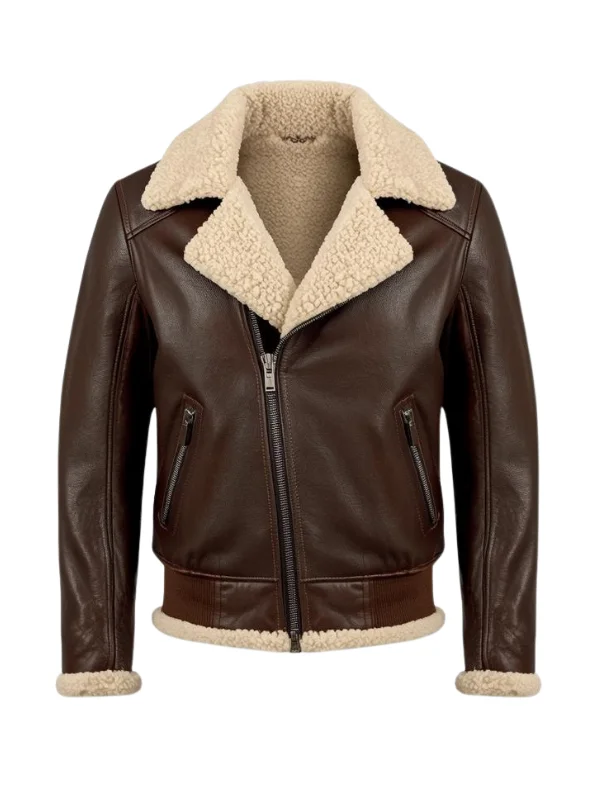
Custom Leather Bomber Jackets for UK, USA, Germany & European Brands
Explore our Custom Leather Jackets if your brand is developing leather outerwear for the UK, USA, Germany or wider European market.
Your project can be developed around requirements such as:
- Leather type, thickness, grain and finish
- Custom colours
- Regular, relaxed, oversized or brand-specific fit
- Custom measurements and grading
- Ribbed collars
- Ribbed cuffs
- Ribbed waistbands
- Custom lining
- One-way or two-way zippers
- Custom hardware
- Pockets
- Embroidery
- Patches
- Embossing and debossing
- Custom labels
- Hangtags
- Private-label packaging
Rather than asking for a generic “premium bomber,” send the actual specifications that define what premium means for your brand.
See How Your Leather Bomber Moves From Design to Production
UK, USA, German and European buyers can review the Elahi Vertex International Manufacturing Process before discussing production.
A controlled custom project can move through:
Design → Technical Requirements → Material Selection → Pattern Development → Sampling → Fit & Construction Review → Corrections → Approval → Bulk Manufacturing → Quality Control → Packaging → Shipment
This matters because problems with rib tension, leather behaviour, sizing or construction are far less expensive to correct during development than after bulk jackets have been completed.
Have a Tech Pack? Explore OEM Leather Jacket Manufacturing
Brands in the UK, USA, Germany and Europe that already control their designs can explore OEM Clothing Manufacturing.
This route is suitable when you already have some or all of the following:
- Tech pack
- Measurement chart
- Grade rules
- Patterns
- Artwork
- Pantone/colour references
- Leather specifications
- Rib specifications
- Lining requirements
- Hardware specifications
- Labels
- Packaging requirements
An OEM leather jacket manufacturer should work from your approved technical requirements and identify missing information before production rather than silently making assumptions.
Already have a tech pack? Send it to Elahi Vertex International for project review.
Building Your Own Brand? Explore Private Label Leather Jacket Manufacturing
For fashion brands, streetwear businesses, retailers and startups targeting the UK, USA, Germany and European markets, explore Private Label Manufacturing.
Private-label development can include approved requirements for:
- Custom neck labels
- Woven labels
- Size labels
- Care labels
- Branded lining
- Embroidery
- Leather patches
- Embossed logos
- Debossed logos
- Custom zipper pullers
- Hardware
- Hangtags
- Packaging
A private label leather jacket manufacturer should help manufacture the product behind your brand—not make your collection look like generic stock with a different label.
Don’t Take Manufacturing Claims on Trust — See the Work
Whether you are sourcing from London, elsewhere in the UK, the USA, Germany or another European market, supplier verification matters.
Before starting a sample, visit Our Works to review selected manufacturing and production work from Elahi Vertex International.
Then explore our broader Custom Clothing Manufacturing capabilities if your collection extends beyond leather jackets into other custom apparel categories.
UK Brands: Developing a Custom Leather Bomber?
If your business is based in the United Kingdom, send us:
- Design or reference
- Quantity
- UK size requirements
- Target fit
- Leather specification
- Rib details
- Lining
- Hardware
- Branding
- Packaging
- Delivery postcode
- Target launch/delivery period
UK buyers should also identify the product-specific labelling and compliance requirements applicable to their finished jacket before bulk production.
Discuss Your UK Leather Bomber Project
USA Brands: Need an OEM or Private Label Leather Bomber?
For brands selling in the United States, send your tech pack or design together with:
- Quantity
- US sizing
- Leather requirements
- Fit
- Colour
- Ribbing
- Lining
- Hardware
- Branding
- Labels
- Packaging
- US delivery destination
- Target timeline
Applicable US labelling, care, country-of-origin and import requirements should be established for the specific product before final production.
Discuss Your USA Leather Bomber Project
German Brands: Sourcing Custom Leather Bomber Jackets?
For buyers in Germany, product development should include both manufacturing specifications and the requirements applicable to products being placed on the German/EU market.
Send:
- Tech pack
- Quantity
- Size chart
- Leather requirements
- Colour and finish
- Rib specification
- Lining
- Zippers and hardware
- Branding
- Labels
- Packaging
- German delivery destination
- Required testing/documentation
- Target timeline
If specific EU chemical, testing, labelling or documentation requirements apply to your product, identify them during development rather than after bulk manufacturing.
Discuss Your German Leather Bomber Project
European Brands: Build the Jacket Around Your Market
Europe is not one uniform fashion market.
A streetwear brand in Berlin, a fashion label in Paris, a retailer in Amsterdam and a brand in Milan may want completely different leather bomber silhouettes.
Tell Elahi Vertex International what your customer expects.
Send your:
Design → Market → Fit → Size Range → Leather → Ribbing → Lining → Hardware → Branding → Quantity → Destination
Then the project can be discussed around the actual product rather than a generic “European bomber.”
Discuss Your European Leather Bomber Project
Start With a Sample Before You Risk a Bulk Order
For a new leather bomber development, the sample should answer the questions that photographs and quotations cannot.
Check:
FIT — Does the jacket sit correctly?
LEATHER — Is the hand feel, thickness, grain and finish right?
RIBBING — Does it stretch and recover correctly?
WAISTBAND — Does it shape the jacket without excessive distortion?
SLEEVES — Is the pitch, length and movement correct?
ZIPPER — Does the front remain straight when closed?
LINING — Does it have appropriate ease and clean internal construction?
BRANDING — Are embroidery, patches, embossing and labels positioned correctly?
MEASUREMENTS — Does the physical sample match the approved specification?
FINISHING — Does the finished product represent the quality level your customer is expected to pay for?
Once these points are approved, bulk production has a defined reference.
Starting MOQ
Elahi Vertex International’s standard starting MOQ is:
20 pieces per product/category.
This can be particularly useful for emerging UK, USA, German and European brands that want to validate a product before considering larger repeat orders.
One Jacket Can Become a Collection
If your first leather bomber performs successfully, you do not necessarily need to restart supplier sourcing for every new apparel category.
Explore:
Custom Leather Jackets — leather outerwear development.
OEM Clothing Manufacturing — manufacture from your technical specifications.
Private Label Manufacturing — build products around your brand identity.
Custom Clothing Manufacturing — explore wider custom apparel manufacturing.
Manufacturing Process — understand development, sampling and production.
Our Works — review selected manufacturing work.
Elahi Vertex International — explore the complete company website.
UK, USA, Germany & Europe — Send Us the Jacket You Want to Manufacture
Don’t send only:
“Price for leather bomber?”
Send the information that allows a manufacturer to understand the product.
Your RFQ should include:
- Tech pack, sketch or reference images
- Target market — UK / USA / Germany / Europe
- Quantity
- Size range
- Measurement chart
- Fit
- Leather preference
- Thickness/hand-feel target
- Colour and finish
- Rib specifications
- Lining
- Zippers
- Hardware
- Branding
- Labels
- Packaging
- Delivery destination
- Target timeline
No complete tech pack?
Send your reference images, sketches and existing specifications. The missing technical details can then be identified before sample development.
Let’s Find Out Whether Elahi Vertex International Is the Right Manufacturer for Your Brand
You do not need another manufacturer telling you:
“Yes, we can make it.”
You need to know whether the manufacturer can make your jacket.
Send us the design.
Let us understand the leather.
Let us understand the fit.
Let us review the ribbing.
Let us understand the construction and branding.
Then decide whether it makes commercial sense to move forward with a sample.
If the sample meets your approved requirements, you have something meaningful to evaluate before committing to bulk.
Start Your Leather Bomber Project
Explore Custom Leather Jackets
Explore Custom Clothing Manufacturing
Visit Elahi Vertex International
Direct Contact
WhatsApp: https://wa.me/message/OWIPAIXYWHTPI1
Phone / WhatsApp: +92 309 1639614
Email: elahivertexinternational@gmail.com
Secondary Email: info@elahivertexinternational.com
Alibaba: https://elahivertexinternational.trustpass.alibaba.com/
From Your First Message to Production
Send specifications → Project review → Material & construction discussion → Sample development → Your evaluation → Corrections if required → Approval → Bulk production → Quality control → Packing → Shipment
Whether your next collection is intended for the UK, USA, Germany or wider Europe, begin with the actual product rather than a generic quotation.
Send your leather bomber design or tech pack and let the product decide whether we are the right manufacturing partner.
Elahi Vertex International
Where Brands Are Made.
Ready to Turn Your Leather Bomber Design Into a Production-Ready Jacket?
Finding a leather bomber jacket manufacturer should not end with comparing prices. The real question is whether the manufacturer can translate your design into a jacket with the right leather, fit, rib tension, sleeve construction, lining, hardware, branding and finishing—and then reproduce the approved standard consistently in bulk.
If you are building a collection for Germany, Europe, the UK or USA, Elahi Vertex International can discuss your project from initial specifications and sampling through OEM, private-label and bulk manufacturing.
Start With the Product You Actually Want to Manufacture
Already developing a bomber jacket?
Explore our Custom Leather Jackets to review the leather-wear customization options available for fashion brands, streetwear labels, wholesalers and private-label businesses.
Your project can be discussed around requirements such as:
- Leather type, thickness, colour and finish
- Custom fit and measurements
- Bomber body proportions
- Ribbed collar, cuffs and waistband
- Zippers and hardware
- Lining
- Pockets
- Embroidery and patches
- Embossed or debossed branding
- Custom labels
- Hangtags
- Private-label packaging
The objective is not to force your design into a generic jacket. The objective is to define the product clearly enough to manufacture it according to an approved specification.
See How Your Product Moves From Concept to Production
Before choosing any custom leather bomber jacket manufacturer, understand how the supplier approaches development.
Explore our Custom Manufacturing Process to see how Elahi Vertex International approaches design requirements, material sourcing, pattern making, sampling, production, quality control, packaging and international shipment preparation.
A serious bomber project should move through controlled stages:
Design → Specifications → Materials → Pattern → Sample → Review → Corrections → Approval → Bulk Production → Quality Control → Packaging → Shipment
That process reduces the risk of discovering fit, ribbing, construction or branding problems after bulk production has already begun.
Already Have a Tech Pack? Choose the OEM Route
If your brand already has its own:
- Tech pack
- Measurements
- Patterns
- Artwork
- Colour specifications
- Leather requirements
- Trim specifications
- Branding
- Labels
- Packaging requirements
then explore our OEM Clothing Manufacturing service.
An OEM leather jacket manufacturer should manufacture around the buyer’s approved requirements rather than replacing clearly defined specifications with assumptions.
Send us your existing technical package and let us identify what is already production-ready and what still needs clarification before sampling.
Primary Buyer Problem
Buyers searching for a leather bomber jacket manufacturer need more than a factory claiming it can manufacture leather jackets.
They need to understand how a supplier controls leather selection, bomber proportions, pattern engineering, ribbing, waistband tension, sleeve pitch, lining, zippers, hardware, size grading, sampling and bulk-production consistency.
The article helps buyers in the UK, USA, Germany and Europe identify these manufacturing risks before committing to bulk production.
Many manufacturer pages focus primarily on product availability, leather types, customization and supplier promotion.
This article takes a deeper B2B sourcing approach by explaining:
- Bomber-specific pattern problems
- Leather-to-rib tension
- Rib recovery
- Waistband construction
- Sleeve pitch
- Armhole engineering
- Lining allowance
- Zipper alignment
- Hardware specification
- Size grading
- Sampling
- OEM manufacturing
- Private-label manufacturing
- Supplier evaluation
- RFQ preparation
- UK sourcing considerations
- USA sourcing considerations
- German/EU sourcing considerations
- Leather testing
- Buyer due diligence
The commercial objective is to move the reader from:
Search → Education → Supplier Evaluation → Elahi Vertex International → RFQ → Sample → Bulk Order
Building Your Own Brand? Explore Private Label Manufacturing
If the jacket is being developed under your own fashion, streetwear or lifestyle brand, explore our Private Label Manufacturing service.
A private label leather jacket manufacturer can be relevant when your project requires more than the jacket itself.
Your specification may include:
- Custom neck labels
- Size labels
- Care labels
- Woven labels
- Logo patches
- Embroidery
- Embossing or debossing
- Custom hardware
- Branded lining
- Hangtags
- Packaging
- Other approved brand details
Your customers should see your brand. Manufacturing should work behind it.
Don’t Rely Only on Claims — See Our Manufacturing Work
A website can say almost anything.
Before discussing production, serious buyers should look for evidence that helps them understand the supplier behind the claims.
Visit Our Works to see selected manufacturing and production work from Elahi Vertex International.
This is especially useful if you are comparing several manufacturers and want to understand how Elahi Vertex International approaches product development, sampling, manufacturing, quality control, packing and export-related work.
Need More Than Leather Jackets?
A successful brand may start with one leather bomber and later expand into hoodies, T-shirts, streetwear, activewear or other custom apparel.
Explore our broader Custom Clothing Manufacturing capabilities if you are developing a wider collection rather than a single jacket.
This gives buyers a route to discuss multiple custom product categories with Elahi Vertex International while keeping specifications, branding and manufacturing requirements coordinated.
Your Next Step Is Simple: Send the Project, Not Just “Price?”
If you want a useful quotation, don’t send only:
“How much for a leather bomber?”
Send enough information for us to understand what you actually want manufactured.
Send Elahi Vertex International:
- Your tech pack, sketch or reference images
- Required quantity
- Target market — Germany, Europe, UK or USA
- Required sizes and size chart
- Desired fit
- Leather type or desired leather characteristics
- Colour and finish
- Rib collar, cuff and waistband requirements
- Lining specification
- Zippers and hardware
- Embroidery, patches, embossing or other artwork
- Labels and branding
- Packaging requirements
- Delivery destination
- Target timeline
Don’t have a complete tech pack yet?
That does not automatically stop the conversation.
Send the design, reference images and the specifications you already know. We can identify which details still need to be confirmed before accurate development and sampling.
Start With a Sample. Prove the Jacket. Then Scale.
For a new custom leather bomber, there is little value in rushing into bulk production before the product has been properly evaluated.
Use the sample to check:
Fit. Leather. Rib recovery. Waistband tension. Sleeve position. Zipper alignment. Lining. Hardware. Branding. Measurements. Finishing.
If something needs correction, correct it at the development stage.
Once the sample and specifications are approved, bulk production has a much clearer reference standard.
Elahi Vertex International’s standard starting MOQ is 20 pieces per product/category, allowing suitable brands to begin with a controlled custom order instead of being forced immediately into unnecessarily large quantities.
Developing a Leather Bomber for Germany, Europe, UK or USA?
Tell us the destination from the beginning.
That allows the project discussion to include the market-specific requirements your business wants addressed, including relevant materials, labelling, testing, packaging or documentation requirements.
Whether you are:
- launching your first leather collection;
- developing a new streetwear drop;
- adding leather bombers to an established brand;
- replacing or adding a manufacturing supplier;
- developing an OEM specification;
- building a private-label collection;
- preparing a small initial bulk run;
- sourcing for wholesale or distribution;
the best starting point is the same:
Show us the product you want to make.
Discuss Your Leather Bomber Project With Elahi Vertex International
Don’t choose a leather bomber jacket manufacturer from promises alone.
Compare the product specification.
Compare the sample.
Compare the materials.
Compare the fit.
Compare the construction.
Compare the communication.
Then decide who should manufacture your bulk order.
If Elahi Vertex International is being considered for your project, give us the opportunity to evaluate the actual jacket you want to manufacture.
Send Your Design or Tech Pack
Contact Elahi Vertex International and send your project requirements for review.
Explore Custom Leather Jackets
See leather-jacket customization and manufacturing options.
Explore Our Manufacturing Process
Understand the route from product development to finished production.
Explore OEM Manufacturing
For brands with established designs and technical specifications.
Explore Private Label Manufacturing
For brands developing products under their own identity.
See Our Manufacturing Work
Review selected manufacturing and production work.
Explore Custom Clothing Manufacturing
For brands developing leather wear alongside wider apparel collections.
Visit Elahi Vertex International
Explore our custom B2B manufacturing capabilities.
Prefer a Direct Conversation?
WhatsApp: https://wa.me/message/OWIPAIXYWHTPI1
Phone / WhatsApp: +92 309 1639614
Email: elahivertexinternational@gmail.com
Secondary Email: info@elahivertexinternational.com
Alibaba: https://elahivertexinternational.trustpass.alibaba.com/
What Happens Next?
Send the specifications → we review the project → unresolved details are clarified → sampling requirements are agreed → you evaluate the physical product → approved specifications become the reference for bulk manufacturing.
Your brand should not have to gamble on bulk production before knowing what it is buying.
Start with the product.
Prove the sample.
Approve the details.
Then move toward bulk.
Elahi Vertex International — Where Brands Are Made.