
A London clothing brand should not have to manufacture hundreds of untested garments simply to discover whether one hoodie, T-shirt, jogger or matching set will actually sell.
For a startup, emerging streetwear label, independent fashion brand or established company testing a new product, minimum order quantity affects far more than manufacturing. It affects cash flow, inventory exposure, storage, product testing, retail pricing, launch flexibility and the amount of money tied up before the market has given you any evidence.
That is why searching for a low MOQ clothing manufacturer can make commercial sense.
Elahi Vertex International is a custom B2B apparel manufacturer and exporter based in Sialkot, Pakistan. Its published manufacturing categories include custom streetwear, hoodies and sweatshirts, private-label clothing, activewear, teamwear, sportswear, boxing wear and leather wear. The company currently publishes a standard starting MOQ of 20 pieces for qualifying custom manufacturing projects.
For a London brand, however, “20 pieces” should not be interpreted as a promise that every possible design, fabric, colour, wash, trim, label and packaging configuration can automatically be produced in any combination.
A serious manufacturer still has to understand the actual garment.
A serious buyer still has to understand the commercial numbers.
And a small order still needs to be treated like a production order.
This guide explains how London brands can use a 20-piece starting quantity intelligently: what low MOQ really means, when it reduces risk, when it does not, how sampling should work, what specifications to prepare, what to check before production, how to calculate landed cost into the UK, what customs and labelling considerations matter, and how to decide whether a manufacturer is suitable for a first order and future scaling.
The objective is not simply to find the factory willing to write the smallest MOQ on its website.
The objective is to build a product that your brand can confidently test, sell, learn from and reorder.
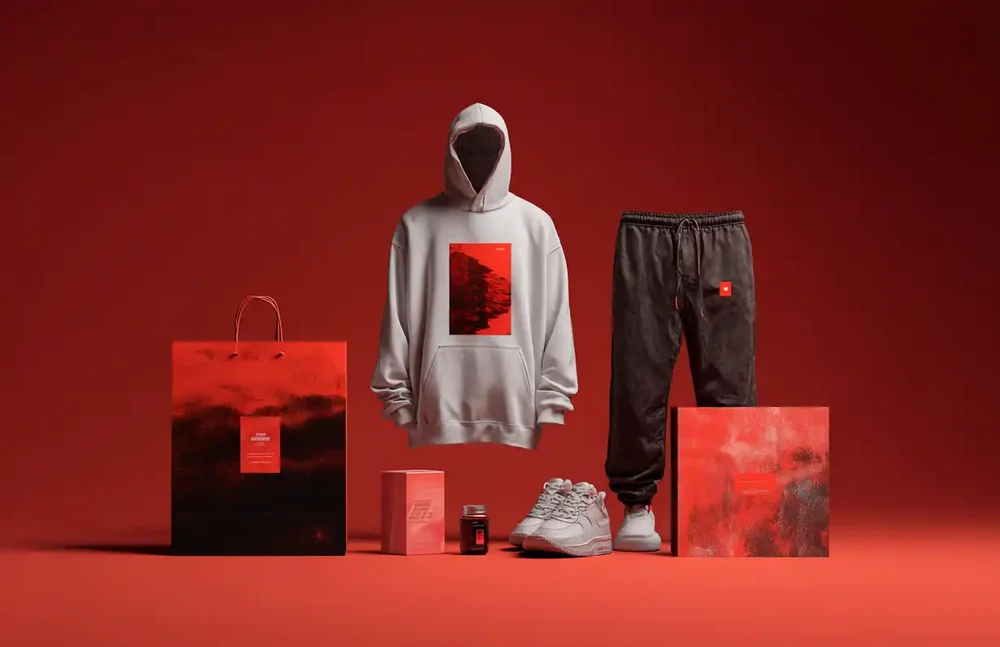
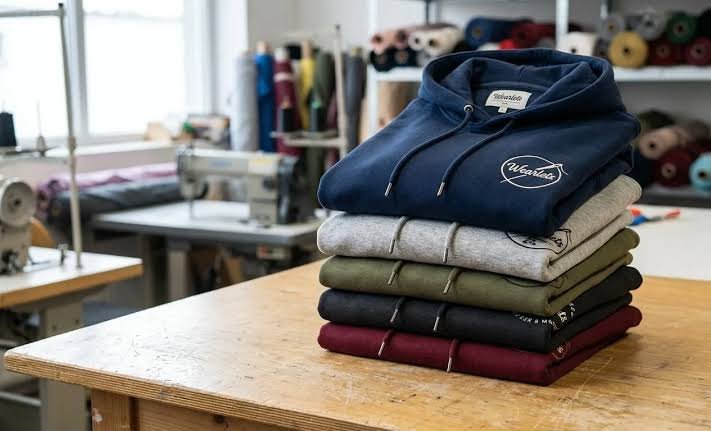
[FEATURED IMAGE — Low MOQ clothing development workspace showing premium oversized hoodie, T-shirt, joggers, technical specifications, fabric swatches, labels and a subtle London buyer context.]
Table of Contents
- What Is a Low MOQ Clothing Manufacturer?
- Why London Brands Are Looking for Smaller Production Runs
- Is 20 Pieces Really a Low MOQ?
- Low MOQ Clothing Manufacturer Comparison for UK and London Brands
- What Can a London Brand Actually Test With 20 Pieces?
- Why Low MOQ Is About Inventory Risk, Not Just Quantity
- Low MOQ vs Unit Price: The Trade-Off Brands Must Understand
- How to Calculate the Real Landed Cost of Clothing Delivered to London
- Import Duty, DCTS, VAT and UK Customs Considerations
- What Product Specifications Should Be Finalised Before Manufacturing?
- Fabric and GSM Decisions for Streetwear
- How to Specify an Oversized Hoodie Correctly
- T-Shirt Specifications for a Small First Drop
- Joggers and Matching Sets
- Streetwear Fit, Measurements and Size Grading
- Colour Development for Small-Batch Clothing
- Printing, Embroidery and Streetwear Decoration
- Private Labels, Care Labels, Hangtags and Packaging
- Sampling Before a 20-Piece Production Run
- Sample Cost vs “Free Sample” Marketing
- How to Approve a Clothing Sample Properly
- Sample-to-Bulk Consistency
- Quality Control for Low MOQ Orders
- UK Textile Labelling and Product Safety
- Working With an Overseas Manufacturer From London
- How to Compare UK and Overseas Manufacturing
- What Information Should London Brands Include in an RFQ?
- Common Low-MOQ Clothing Manufacturing Mistakes
- How a Startup Can Move From Idea to First Production
- When You Should NOT Start With Only 20 Pieces
- Reordering and Scaling After the First Drop
- Why Elahi Vertex International May Fit a London Clothing Brand
- 20 Frequently Asked Questions
- Final Buyer Checklist
- Conclusion
1. What Is a Low MOQ Clothing Manufacturer?
A low MOQ clothing manufacturer is a manufacturer willing and operationally able to produce smaller commercial quantities than traditional high-volume apparel factories.
MOQ means minimum order quantity.
It is the minimum quantity a supplier is prepared to accept under a particular production arrangement.
That definition sounds simple. In actual clothing manufacturing, it is not.
An MOQ might apply:
- per garment
- per style
- per colour
- per fabric
- per design
- per print
- per size range
- per set
- per order
- or according to another combination of specifications
This is why a brand should never read “20-piece MOQ” and automatically assume:
“I can order five hoodies, five T-shirts, five joggers and five jackets, all in different fabrics, colours and artwork.”
That may not be the manufacturer’s MOQ structure.
For Elahi Vertex International, the working starting point communicated for this London-focused offer is 20 pieces. The exact breakdown across product, design, colour and size requirements should be confirmed against the project before the buyer makes a commitment.
That distinction matters.
Low MOQ is not the same as print-on-demand
Print-on-demand usually starts with a pre-produced blank garment. A design is then printed after an order is placed.
Custom manufacturing is different.
A genuine custom garment may involve:
Design
→ specifications
→ fabric
→ pattern
→ cutting
→ stitching
→ decoration
→ labels
→ finishing
→ quality control
→ packaging
The manufacturer is not simply adding a logo to an existing retail blank.
This difference affects MOQ.
A factory producing a custom hoodie has setup work even if only 20 units are eventually manufactured.
Patterns may need to be prepared.
Fabric has to be sourced.
Cutting has to be organised.
Machine operations have to be allocated.
Thread and trims have to be arranged.
Artwork has to be prepared.
Labels may need to be developed.
Packaging requirements have to be understood.
A small order therefore does not remove manufacturing complexity.
It simply spreads that complexity over fewer garments.
Why do clothing manufacturers have MOQs?
Factories do not create MOQs merely to make life difficult for startups.
Many production inputs have their own economic minimums.
For example, a manufacturer may need to consider:
fabric supplier minimums, dyeing minimums, custom colour development, rib requirements, zipper quantities, woven-label supplier minimums, screen setup, embroidery setup, pattern work, printing preparation, cutting efficiency, production-line setup and packaging procurement.
A manufacturer advertising a low MOQ must therefore have a way to accommodate these constraints.
Sometimes that means using available fabrics rather than custom-milling fabric.
Sometimes custom trims become disproportionately expensive.
Sometimes several colourways are commercially inefficient.
Sometimes a specialised wash or decoration changes the feasible quantity.
This is why serious low-MOQ manufacturing begins with a specification discussion rather than only:
“What is your MOQ?”
A better first question is:
“Here is the garment I want to produce. What is the workable MOQ for this exact specification?”
For the London-brand offer discussed in this guide, Elahi Vertex International starts qualifying projects around 20 pieces, while final feasibility still depends on the actual product requirements.
2. Why London Brands Are Looking for Smaller Production Runs
A new clothing brand has limited information.
You may believe your hoodie will sell.
You may have positive comments on Instagram.
Friends may like your design.
A photographer may think the collection looks strong.
Your first campaign might attract attention.
None of this is the same as demonstrated customer demand.
The real test is whether people repeatedly exchange money for the product at a price that leaves the business with sustainable economics.
That uncertainty makes inventory one of the first serious risks in a product-based fashion business.
A 500-piece mistake is not only a manufacturing problem
Imagine a brand launches its first oversized hoodie.
The artwork looks strong.
The sample photographs perform well on social media.
The founder believes black, grey and cream will all sell.
The brand orders heavily.
After launch, something unexpected happens.
Black sells.
Cream moves slowly.
Grey barely moves.
Medium and large sell first.
Extra-small remains in stock.
Customers like the artwork but complain that the hoodie is too long.
The next drop needs a shorter body and wider chest.
The problem is not necessarily that the brand created a bad product.
The problem is that it committed too deeply before enough market information existed.
A controlled first production run can change the consequences of those mistakes.
Smaller production creates faster commercial learning
A low MOQ allows a founder to ask better questions earlier:
Does the product sell?
Which size moves fastest?
Which colour performs?
Do customers accept the retail price?
Does the garment photograph well?
Does the product match the brand’s positioning?
Does the fit work on different body types?
Does the decoration survive normal use?
Are customers asking for a second colour?
Is the product profitable after shipping, fulfilment and marketing?
Would a retailer stock it?
Should the brand reorder or redesign?
Twenty pieces will not answer every question with statistical certainty.
But they can create real evidence that does not exist when a product is only a mockup.
Smaller batches can protect working capital
A fashion startup does not have unlimited cash.
Money tied up in unsold inventory cannot simultaneously fund:
content production, paid advertising, packaging, website improvements, photography, influencer seeding, pop-up events, product development or the next design.
Low MOQ can therefore function as a capital-allocation tool.
The objective is not:
Buy the smallest quantity forever.
The objective is:
Commit the minimum sensible capital until demand becomes clearer.
Once the product demonstrates repeatable demand, larger orders may make more commercial sense.
Small batches fit drop-based streetwear models
Streetwear businesses often operate differently from traditional mass fashion.
Scarcity can be part of the launch model.
A founder may release one hoodie.
Then another colour.
Then a matching jogger.
Then a capsule.
Then a larger collection.
A lower production threshold gives the brand the ability to learn between releases.
It also allows a founder to separate product development from aggressive inventory purchasing.
Existing brands can use low MOQ too
Low MOQ is not only for beginners.
An established London brand may use a small run to:
test a new silhouette, introduce a limited edition, trial an alternative supplier, evaluate a new decoration method, produce event merchandise, create influencer stock, test a premium product at a higher retail price, enter a new category or develop a seasonal capsule.
A supplier should therefore not assume that a small order means an unserious buyer.
Likewise, a buyer should not assume that because the first order is small, manufacturing discipline can be relaxed.
Twenty poorly specified garments can still become twenty unusable garments.
The size of the order does not reduce the need for a correct product specification.
3. Is 20 Pieces Really a Low MOQ?
Yes. In custom apparel manufacturing, a 20-piece starting quantity is reasonably described as low MOQ.
But it should not be marketed as if no competitor offers a smaller quantity.
Current supplier websites demonstrate a wide range of advertised minimums.
For example, Excel Apparel advertises London-facing production from 30 units. NO FUGAZI advertises 50 pieces. Hawthorn advertises 50 pieces per design. The Clothing Manufacturers also advertises production beginning at 50 pieces under its stated structure. Florix Sports advertises custom manufacturing from five pieces.
That tells a serious buyer something important:
There is no universal definition of “low MOQ.”
Twenty pieces is competitive.
It is not automatically the lowest number published anywhere.
That means Elahi Vertex International should not try to win London brands merely by claiming a tiny number.
The stronger commercial argument is:
Start with a commercially manageable quantity, develop the correct product, approve it properly, understand your landed cost, and create a route to reorder.
That is more defensible than:
“We have the lowest MOQ.”
MOQ should be evaluated with five other questions
When comparing manufacturers, ask:
- What exactly does the MOQ apply to?
- What happens to unit cost at that quantity?
- What customisation is realistically available?
- What sample process happens before production?
- What happens when the brand needs 100, 300 or 1,000 pieces later?
A manufacturer offering five pieces but unable to reproduce the approved product consistently at scale may be the wrong partner.
A manufacturer requiring 50 pieces but offering local development support may be commercially attractive for another buyer.
A 20-piece starting point sits between those models.
The right decision depends on the brand.
4. Low MOQ Clothing Manufacturer Comparison for London and UK Brands
The following comparison uses publicly advertised information available from manufacturer websites at the time this guide was prepared. Policies can change, and brands should verify the latest terms directly with each supplier before relying on them.
| Manufacturer | Advertised Starting MOQ | Positioning Relevant to London/UK Brands | Key Point to Verify |
|---|---|---|---|
| Elahi Vertex International | 20 pieces for the offer discussed here | Overseas custom B2B manufacturing from Sialkot; streetwear, hoodies, private label and related categories | Exact product/design/colour breakdown and delivered quotation |
| Excel Apparel | 30 units | London-based company with European production | Exact style and material restrictions |
| NO FUGAZI | 50 pieces | London-managed custom streetwear manufacturing | Design, colour and fabric effects on MOQ |
| Hawthorn | 50 pieces per design | UK-based clothing manufacturer using a global supply chain | Product-specific MOQ |
| The Clothing Manufacturers | 50 pieces per design under published structure | London/UK startup manufacturing support | Total-order and style requirements |
| Florix Sports | From 5 pieces | UK-support model with Sialkot production | Product, colourway, material and trim conditions |
The comparison is supported by the suppliers’ currently published pages.
What does the table actually tell a buyer?
Not who is “best.”
It tells you why comparing MOQ alone is inadequate.
Suppose Supplier A accepts five pieces.
Supplier B accepts 20.
Supplier C requires 50.
Supplier A may make sense for prototype-like quantities.
Supplier B may fit a controlled commercial test.
Supplier C may have economics or development support that becomes attractive at 50.
The correct comparison requires the same garment specification.
Without that, quotations are meaningless.
Compare the same product, not three different interpretations
If you send three suppliers:
“How much for an oversized hoodie?”
one may quote:
280 GSM cotton/poly fleece.
Another may assume 400 GSM cotton fleece.
Another may assume a stocked blank with decoration.
One may include custom labels.
Another may not.
One may include packaging.
Another may exclude it.
One may quote EXW factory.
Another may quote delivered to London.
The lowest number may simply represent the smallest scope.
A professional quotation comparison needs a common specification.
For example:
Product: Oversized pullover hoodie
Fabric target: defined
GSM target: defined
Composition: defined
Fit: oversized/boxy
Colour: defined
Decoration: front embroidery + back print
Labels: neck + size + care
Packaging: individual branded or plain packaging
Quantity: 20 pieces
Size breakdown: defined
Destination: London postcode
Sampling: required
Shipping basis: clearly requested
Then compare.
This turns supplier selection from guesswork into procurement.
5. What Can a London Brand Actually Test With 20 Pieces?
A 20-piece order should have a specific purpose.
It should not simply exist because “20 sounds affordable.”
Different brands can use the first batch differently.
Product-market response
The most obvious purpose is to test whether customers want the product.
A small production batch can be sold through:
a Shopify store, Instagram launch, TikTok audience, pop-up, private community, email list, existing retail customer base or direct event.
The signal you need is not likes.
It is conversion.
Fit response
A sample is normally reviewed by a very small number of people.
A first commercial batch reaches more bodies.
That can reveal issues a founder did not identify during sampling.
For example:
- body length
- sleeve length
- hood volume
- neck opening
- waistband tightness
- trouser rise
- leg width
- inseam
- shoulder drop
- chest width
- grading between sizes
The brand should record this feedback.
Do not simply say:
“Customers like the fit.”
Record patterns.
If three buyers independently report the same issue, investigate it before the reorder.
Size demand
Many startups guess their size curve.
Twenty pieces can provide early information about what customers actually purchase.
A founder may initially assume an even breakdown.
Real demand may not be even.
Your second order can use data from the first.
That does not mean the first 20 pieces provide perfect forecasting.
But the information is better than guessing forever.
Colour demand
Colour is another source of inventory risk.
A founder may love three colourways equally.
Customers may not.
Launching one core colour first can sometimes create cleaner information.
If a brand wants multiple colours at a very low quantity, manufacturing feasibility must be confirmed because fabric and processing minimums can affect the project.
Retail price
A product can be admired and still fail commercially if the customer will not pay the required price.
Your first order lets you test:
- full retail price
- launch discount dependence
- conversion rate
- average order value
- bundle demand
- return behaviour
- gross margin before marketing
- customer acquisition economics
Low MOQ does not repair a bad retail business model.
It limits how much stock you expose to that model before learning.
Content performance
Physical stock also allows better creative testing.
The product can be:
photographed, filmed, styled, worn by creators, shown in close-up, used in fit videos, photographed outdoors, displayed in packaging and compared across looks.
That can help a brand discover which product attributes generate interest.
Wholesale response
A first batch can be used to approach boutiques or selected retail buyers.
Again, 20 pieces do not create a wholesale business automatically.
But a physical, approved product is more persuasive than a digital concept alone.
Manufacturing relationship
The first batch also tests the supplier.
Did communication remain clear?
Were agreed specifications documented?
Did production match the approved reference?
Were quantities correct?
Were labels correct?
Was packaging correct?
Was the shipment prepared as agreed?
How did the manufacturer handle questions?
That information becomes valuable before a larger order.
6. Why Low MOQ Is About Inventory Risk, Not Just Quantity
There is a dangerous misunderstanding around small-batch clothing manufacturing:
Low MOQ = low risk.
That is incomplete.
Low MOQ reduces one category of risk: inventory commitment.
Other risks remain.
Product risk
If the product is wrong, even 20 pieces can be wasted.
Supplier risk
If specifications are misunderstood, a low MOQ does not solve the communication problem.
Quality risk
If the decoration cracks, measurements drift or stitching is poor, the quantity does not make those defects acceptable.
Financial risk
A small order may carry a higher unit cost.
If the brand cannot support the resulting retail price, the project can still fail.
Shipping risk
International shipping becomes important at low quantity because freight is divided across fewer units.
Brand risk
Customers do not care that you “only ordered 20.”
They judge the garment they received.
A poor first drop can damage trust precisely when a new brand needs trust most.
Compliance risk
UK responsibilities do not disappear because a shipment is small.
Textile composition and product-safety obligations still matter when goods are being placed on the market.
So the correct statement is:
Low MOQ reduces the amount of inventory committed before demand is proven, but it does not replace specification, sampling, quality control, compliance or landed-cost analysis.
That is a much better foundation for a London brand.
7. Low MOQ vs Unit Price: The Trade-Off Brands Must Understand
One of the most common sourcing mistakes is expecting the smallest order to have the same unit economics as a large production run.
That is usually unrealistic.
Many manufacturing costs are not perfectly proportional to quantity.
Consider the work required before the first garment exists:
product communication, artwork preparation, pattern development, sample development, setup, fabric sourcing, trim sourcing, printing preparation, embroidery programming, label development, cutting preparation and production administration.
At 20 pieces, those costs are spread over 20 units.
At 500 pieces, they are spread over 500.
That is one reason larger production can improve unit economics.
Low MOQ should be judged by total capital at risk
Imagine, purely as a framework:
Supplier A gives a lower unit price but requires several hundred units.
Supplier B gives a higher unit price but allows a 20-piece run.
The correct question is not:
Which garment is cheaper?
It is:
Which commitment creates the better expected business outcome at my current stage?
For an established product with reliable demand, the higher MOQ might be more profitable.
For an unproven design, lower MOQ may protect significantly more capital.
There is a time for low MOQ and a time for scale
A smart brand should not become emotionally attached to tiny orders.
If a product is repeatedly selling out and demand is reasonably predictable, continually buying 20 pieces may create:
higher unit costs, repeated freight costs, stockouts, lost sales and operational inefficiency.
Low MOQ is strongest during uncertainty.
Once uncertainty falls, purchasing strategy should evolve.
A sensible progression might look like:
Idea
→ sample
→ 20-piece test
→ customer feedback
→ reorder
→ stronger demand evidence
→ larger production
→ improved unit economics
→ planned replenishment
Not every brand will follow exactly this path.
But the principle is sound:
Order size should reflect evidence, not ego.

8. How to Calculate the Real Landed Cost of Clothing Delivered to London
A London buyer should not evaluate an overseas manufacturer on factory unit price alone.
The important number is landed cost.
A practical landed-cost model can include:
**Garment manufacturing cost
- decoration
- labels/trims
- packaging
- sample/development cost where applicable
- freight
- insurance where applicable
- customs/clearance charges
- Customs Duty where applicable
- unrecoverable tax/costs
- local delivery
÷ saleable units received**
The exact components depend on the transaction.
Why freight matters more at 20 pieces
Suppose the freight cost is divided over 20 garments.
Now imagine the same shipment cost structure spread across a larger order.
Freight per garment can change significantly.
That does not mean the small order is wrong.
It means the brand must price it correctly.
Ask for a destination-based quotation
For a London order, a serious RFQ should include at minimum:
Country: United Kingdom
City: London
Postcode: exact delivery postcode
Quantity: exact proposed quantity
Product: exact garment
Required date: if applicable
A postcode matters because a vague statement like “shipping to UK” is not enough to calculate every delivery scenario accurately.
Clarify the shipping basis
Do not assume a quotation includes duties or taxes.
Ask what is included.
Useful commercial terms can include concepts such as:
EXW — buyer takes responsibility from the supplier’s premises under the agreed Incoterm arrangement.
FOB — commonly used for qualifying port shipments where seller responsibilities extend to loading under the agreed term.
DAP — goods are delivered to the named place, but import clearance/duties typically remain with the buyer under the standard Incoterm allocation.
DDP — the seller assumes broader delivery/import responsibilities under the agreed structure.
The exact contract matters more than the acronym alone.
For small courier shipments, providers may present services differently from traditional sea-freight arrangements.
Do not choose a term because it sounds convenient.
Choose it because both parties understand who is responsible for:
freight, customs documentation, clearance, duty, VAT, brokerage and final delivery.
Build your selling price from landed economics
If your product costs £X at the factory but £Y after it reaches your London fulfilment point, your margin must be calculated from £Y.
Then account for the rest of the business:
payment processing, fulfilment, packaging, returns, discounts, creator commissions, marketing, platform fees, overhead and tax.
A brand can have a “cheap supplier” and still have an unprofitable product.
That is why landed cost belongs in the sourcing decision before production begins.
9. Import Duty, DCTS, VAT and UK Customs Considerations
London is in Great Britain, so a commercial clothing shipment arriving from Pakistan enters the GB import framework.
The UK requires importers to classify goods using the correct commodity code. That code helps determine the applicable Customs Duty, VAT treatment and any other measures. A business importing into England, Wales or Scotland generally needs a GB EORI number for the customs process.
Do not assume every Pakistan-made garment has the same duty
Pakistan currently appears in the UK’s Enhanced Preferences tier under the Developing Countries Trading Scheme.
Under that tier, the UK states that 92% of product lines receive a 0% import tariff. That does not mean a buyer can automatically write “0% duty” against every garment without checking the specific commodity code and origin requirements.
That distinction is important.
A hoodie, T-shirt, woven jacket and another apparel product may fall under different classifications.
Material composition can matter.
Knitted versus woven construction can matter.
Product type can matter.
Origin qualification can matter.
DCTS garment rules changed in 2026
The UK brought improved DCTS rules of origin into effect from 1 January 2026.
For Enhanced Preference countries, the government describes more flexible garment rules, including fewer mandatory processing requirements and, depending on the garment, greater ability to source inputs internationally while still qualifying under the relevant origin rules. The UK specifically notes changes affecting apparel Chapters 61 and 62.
For a London buyer, the practical lesson is simple:
Ask the supplier and customs professional to verify whether the specific garment qualifies for preferential treatment. Do not budget based on a generic “Pakistan is duty-free” assumption.
Proof of origin matters
Where preferential treatment is being claimed, the relevant rules of origin and required proof need to be satisfied.
UK guidance explains that origin declarations may be made on qualifying commercial documents such as an invoice, packing list or delivery note where the applicable requirements are met.
Your customs broker or importer should confirm the correct procedure for the shipment.
UK VAT
The standard UK VAT rate is currently 20% for most goods and services, although particular categories can be treated differently; for example, many children’s clothes are zero-rated.
Import VAT valuation can include the customs value plus relevant duty and certain transport, packing, insurance and incidental expenses.
VAT-registered UK businesses may also be able to use postponed VAT accounting, allowing eligible import VAT to be accounted for through the VAT Return rather than necessarily being paid upfront at import.
This is an accounting and customs issue, not a clothing-manufacturer marketing promise.
A London brand should speak with its accountant, customs agent or freight professional about its own position.
Commercial takeaway
Before approving production, know:
Commodity code: ______
Country of origin qualification: ______
Preferential tariff eligibility: ______
Customs Duty: ______
Import VAT treatment: ______
Brokerage/clearance: ______
Freight: ______
Final London delivery: ______
Do not leave those blank and assume the factory unit price represents your inventory cost.
10. What Product Specifications Should Be Finalised Before Manufacturing?
A low MOQ does not justify a low-quality specification.
If anything, a startup has less room for error because every piece matters.
Your manufacturer should understand what you are asking them to reproduce.
A useful specification can cover the following.
Product identity
Do not write:
“Streetwear set.”
Write:
“Boxy oversized pullover hoodie with matching relaxed straight-leg jogger.”
The more accurately the garment is described, the less room there is for assumptions.
Reference
A reference can be:
technical drawing, tech pack, existing sample, photograph, sketch, moodboard or reference garment.
But a reference image is not automatically a full specification.
If you send an image of another brand’s hoodie, explain what you are referencing.
For example:
“I like the hood shape and body proportion. Our artwork, dimensions, labels and construction will be different.”
This reduces ambiguity and avoids treating another company’s product as something to copy blindly.
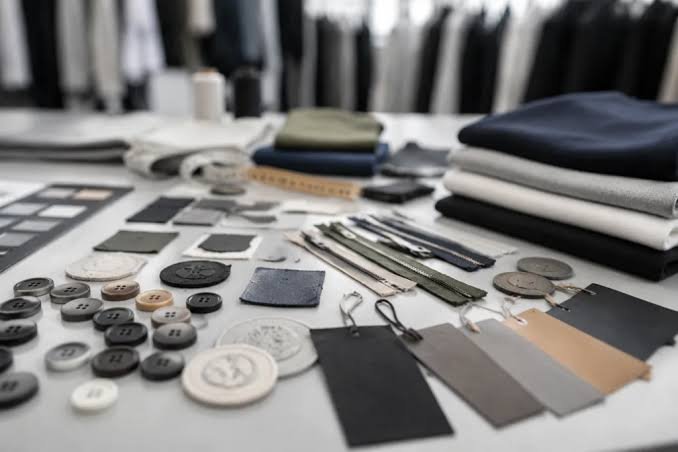
Fabric
Define as much as you currently know:
fibre composition, knit or woven structure, surface, stretch, finish, season, intended feel, GSM target, wash requirements and performance expectations.
If you do not know the technical answer, describe the desired result.
For example:
“Structured heavyweight hoodie fabric with a dry hand feel and minimal drape.”
That is more useful than pretending to understand a fabric specification you have not actually chosen.
Colour
Provide:
colour reference, visual reference and any tolerance/approval method that will be used.
If a precise custom-dyed colour is required, discuss whether that is commercially realistic at the proposed quantity.
Measurements
Do not depend solely on “S, M, L, XL.”
A medium from one streetwear brand can fit like a large from another.
Specify garment measurements.
Construction
Depending on the garment:
seams, stitch type, pocket construction, waistband, cuffs, hood construction, lining, zipper, drawcord, panels and reinforcement may matter.
Decoration
Specify:
method, artwork, dimensions, position, colours and desired finish.
Branding
Specify:
main label, size label, care/composition label, hem label, woven patch, rubber patch, hangtag and packaging requirements where applicable.
Quantity
Write the exact proposed quantity and size breakdown.
Destination
For this article’s target buyer:
London, United Kingdom + full postcode.
Required date
If your collection is tied to a launch, pop-up or event, say so before production is agreed.
Do not reveal the deadline after the order is already underway.
11. Fabric and GSM Decisions for Streetwear
GSM means grams per square metre.
It describes fabric mass per unit area.
Brands commonly use GSM as a convenient way to discuss fabric weight.
But GSM is not a complete quality score.
A heavier fabric is not automatically better.
Two fabrics with the same GSM can behave differently because of:
fibre type, yarn, knit construction, brushing, finishing, density, compactness, treatment and composition.
Hoodie fabric decisions
Streetwear hoodies can use different fabric families depending on the desired product.
Examples can include:
cotton fleece, cotton/polyester fleece, brushed fleece, French terry and other knitted structures.
Elahi Vertex International currently publishes hoodie product development around several such fabric options on relevant product pages, although final fabric availability and specification should be confirmed for the specific order.
The buyer should think first about the final garment.
Do you want:
a structured premium hoodie?
a lighter layering hoodie?
a warm brushed interior?
a loopback interior?
a vintage washed finish?
an oversized silhouette that holds shape?
a softer drape?
Those objectives influence fabric selection.
T-shirt fabric
For a T-shirt, consider:
surface smoothness, weight, opacity, shrinkage, drape, neck rib, recovery and compatibility with the decoration method.
A graphic streetwear T-shirt designed for a boxy silhouette may need a different fabric decision from a lightweight promotional T-shirt.
Joggers
For matching joggers, consistency with the top matters.
The buyer should confirm:
fabric, shade, waistband, elastic, drawcord, pockets, hem/cuff, leg shape, rise and shrinkage expectations.
If a hoodie and jogger are intended to be sold as one matching set, colour variation between components can become especially visible.
Do not choose GSM by trend alone
“Heavyweight” has become a marketing term.
Do not specify an extreme fabric weight simply because another streetwear brand uses one.
Ask:
Does it suit the season?
Does it suit the retail price?
Does it create the intended silhouette?
Will customers actually wear it regularly?
How will freight cost be affected?
How will decoration perform?
How will it behave after washing?
A technically impressive garment that customers find uncomfortable is not commercially successful.
Fabric selection checklist
Before sample development, define:
Fabric family: ______
Composition: ______
Target GSM: ______
Surface: ______
Inside finish: ______
Stretch requirement: ______
Recovery requirement: ______
Opacity requirement: ______
Shrinkage expectation: ______
Wash/finish: ______
Colour: ______
Intended season: ______
Intended retail positioning: ______
If several fields remain unknown, discuss them during development rather than letting the factory silently decide.
12. How to Specify an Oversized Hoodie Correctly
“Oversized hoodie” is not a technical specification.
It is a silhouette direction.
Two oversized hoodies can look completely different.
One may be long and narrow.
Another may be short and wide.
One may have a moderate dropped shoulder.
Another may have an exaggerated shoulder.
One hood may be compact.
Another may create a large sculpted shape.
Key oversized hoodie measurements
A practical measurement sheet can include:
| Measurement | S | M | L | XL |
|---|---|---|---|---|
| Chest width | Brand spec | Brand spec | Brand spec | Brand spec |
| Body length | Brand spec | Brand spec | Brand spec | Brand spec |
| Shoulder width | Brand spec | Brand spec | Brand spec | Brand spec |
| Sleeve length | Brand spec | Brand spec | Brand spec | Brand spec |
| Bottom opening | Brand spec | Brand spec | Brand spec | Brand spec |
| Armhole | Brand spec | Brand spec | Brand spec | Brand spec |
| Cuff opening | Brand spec | Brand spec | Brand spec | Brand spec |
| Hood height | Brand spec | Brand spec | Brand spec | Brand spec |
| Hood width | Brand spec | Brand spec | Brand spec | Brand spec |
| Pocket width | Brand spec | Brand spec | Brand spec | Brand spec |
| Pocket height | Brand spec | Brand spec | Brand spec | Brand spec |
The numbers should come from the brand’s approved fit—not a generic internet table.
Boxy vs simply oversized
A boxy hoodie often relies on the relationship between width and length.
If you increase every dimension proportionally, the garment can become merely “large.”
A deliberate boxy silhouette requires proportion.
This is why a physical sample matters.
A technical drawing cannot fully communicate how fabric weight and pattern interact on a body.
Hood construction
Streetwear brands should pay attention to the hood.
Consider:
single vs double layer, hood depth, overlap at front neck, drawcord or no drawcord, eyelets, shape at crown and how the hood sits when down.
A premium-looking body with a weak hood can make the whole garment feel wrong.
Rib
Cuffs and waistband affect structure and recovery.
Discuss:
rib composition, thickness, width, stretch and recovery.
If the waistband is too tight relative to the body, an oversized hoodie can balloon.
If it is too loose, the silhouette may lose definition.
For a kangaroo pocket, specify:
width, height, opening angle, placement and reinforcement.
Artwork
A hoodie graphic should be positioned relative to the finished garment, not merely centred on a computer canvas.
Define:
artwork dimensions, distance from neckline, relationship to pocket, sleeve placement and back placement.
For oversized garments, artwork scale often needs to be considered against the larger body proportions.
13. T-Shirt Specifications for a Small First Drop
T-shirts appear simple.
That simplicity is deceptive.
Customers quickly notice:
neck quality, twisting, shrinkage, thin fabric, bad proportions, poor printing and inconsistent sizing.
For a London streetwear label, a T-shirt may become the first affordable product a new customer buys.
It therefore deserves the same specification discipline as a hoodie.
Define the silhouette
Possible directions include:
regular, relaxed, oversized, boxy, cropped, longline and other brand-specific fits.
Do not let “oversized” remain undefined.
Neckline
Confirm:
rib width, rib depth, stretch, recovery, neckline shape and stitching.
A weak neckline can make a premium T-shirt look cheap after limited wear.
Shoulder
The shoulder position heavily influences a streetwear silhouette.
Define how far it should drop.
Sleeve
Specify:
length, opening and shape.
A wide body with narrow sleeves can create an unintended silhouette.
Body
Define:
chest, length, hem width and side-seam structure.
Fabric
Consider:
weight, opacity, hand feel, print compatibility and shrinkage.
Decoration
If the T-shirt is graphic-heavy, choose the decoration based on the required effect rather than whatever term is fashionable online.
Ask the manufacturer to explain what is suitable for:
large solid artwork, fine detail, gradients, small runs, textured effects or embroidery.
First-drop strategy
A 20-piece T-shirt run could be used to test one strong design.
That can be more informative than dividing a tiny order across too many unrelated concepts.
Your objective is clean information.
If one design sells quickly, the next decision becomes easier.
14. Joggers and Matching Sets
Matching sets can increase perceived product completeness, but they also introduce more specification points.
A hoodie and jogger sold together must feel intentional.
Match the fabric
Confirm whether both pieces use the same fabric lot or approved shade.
Waistband
Define:
height, elastic tension, drawcord, eyelets and fit.
Rise
Front and back rise influence how the trouser sits.
Leg shape
Streetwear joggers might be:
tapered, relaxed, wide-leg, straight-leg or cuffed.
“Baggy” is not enough.
Pockets
Specify:
side pocket type, depth, rear pocket, zipper requirements and reinforcement.
A visually strong jogger with a phone-sized pocket that cannot securely hold a phone is poor product design.
Hem
Define:
open hem, elastic cuff, rib cuff or another finish.
Branding
Consider whether the set needs:
matching embroidery, coordinated labels, subtle logo placement or a stronger graphic treatment.
Do not overload both pieces simply because decoration is available.
15. Streetwear Fit, Measurements and Size Grading
Fit creates brand identity.
Many customers cannot explain pattern engineering.
They can explain:
“This hoodie fits perfectly.”
or:
“The sleeves are weird.”
A manufacturer needs measurable information behind that reaction.
Start with a base size
Many brands develop one sample size first.
Once the base fit is approved, the pattern can be graded to other sizes according to the approved rules.
The exact process should be agreed with the manufacturer.
Grading is not random enlargement
Different measurements may increase at different rates.
For example:
chest, body length, shoulder and sleeve do not necessarily change by the same amount.
This matters especially for oversized streetwear.
Poor grading can make smaller sizes look normal while larger sizes become excessively long or distorted.
Build your own brand size chart
Do not copy another brand’s chart without understanding it.
Your size chart should reflect:
your customer, intended fit, product category and approved sample.
Measurement terminology
Brands should also define how each measurement is taken.
“Chest 60 cm” is incomplete if one party measures straight across at one point and another uses a different position.
A measurement diagram reduces mistakes.
Tolerance
Manufacturing is not mathematically identical to digital design.
The brand and supplier should discuss acceptable measurement tolerances for the product and process.
Do not invent a universal tolerance.
Agree it for the project.
Fit testing
When possible, test the sample on people within the intended customer range.
Evaluate:
front, side and back appearance.
Then movement:
arms forward, arms overhead, sitting, walking and normal wear.
The goal is not merely to make the garment fit a mannequin.
It should work for a customer.
16. Colour Development for Small-Batch Clothing
Colour looks simple on a screen.
Textile colour is not.
A digital RGB image, printed paper, dyed cotton fleece and embroidered thread can all represent “the same” colour differently.
Use a reference system
A brand should provide the clearest available colour reference.
For production, discuss how colour will be approved.
Do not assume a hex code alone is sufficient for every textile process.
Fabric affects appearance
The same nominal colour can appear differently depending on:
fibre, surface, pile, texture, lighting and finishing.
Matching different materials
A garment may include:
main fabric, rib, thread, zipper tape, embroidery and printed artwork.
Perfect visual identity across different materials can be challenging.
Decide which elements need close matching and which can intentionally contrast.
Washed garments
Acid wash, pigment effects and other vintage finishes intentionally create variation.
The buyer should agree the intended appearance before production.
If controlled variation is part of the aesthetic, document the acceptable range through an approved physical reference.
Low MOQ colour reality
Very small orders can conflict with custom-dye minimums.
Do not promise your collection four completely bespoke dyed fabrics before asking whether the supply chain supports that quantity.
A practical alternative may be to use available colours for the first run.
That decision depends on the design and brand positioning.
17. Printing, Embroidery and Streetwear Decoration
Decoration can transform a basic silhouette into a recognisable product.
It can also destroy an otherwise good garment when chosen badly.
The method should match the design.
Embroidery
Embroidery can create texture and a premium physical finish.
Consider:
stitch density, artwork simplification, size, placement, stabilisation and how the fabric behaves under stitching.
Very large dense embroidery can affect drape and comfort.
Screen printing
Screen printing can be suitable for many graphic applications.
The production economics and setup can depend on the artwork and colours.
DTF and transfer processes
Digital transfer methods can support detailed designs and smaller production situations, but the desired hand feel, durability and visual result should be evaluated.
Patches
Options can include woven, embroidered, rubber/silicone and other patch formats depending on product requirements.
Elahi Vertex International publicly lists several decoration options across its product content, including embroidery, screen printing, heat-transfer logos and multiple patch types; exact feasibility should still be confirmed against the garment.
Puff and dimensional effects
Streetwear brands may use raised or textured decoration.
The buyer should sample the actual effect.
Do not approve it from a digital mockup alone.
Artwork file
Provide the highest-quality production artwork available.
Where vector artwork is required, send it.
Do not expect a manufacturer to recreate a low-resolution screenshot perfectly.
Decoration specification template
Method: ______
Artwork file: ______
Width: ______
Height: ______
Placement: ______
Distance from seam/neck: ______
Colours: ______
Texture/finish: ______
Reference: ______
Approval method: physical sample

18. Private Labels, Care Labels, Hangtags and Packaging
Private-label manufacturing means the garment should present your brand—not the factory’s consumer identity.
Elahi Vertex International’s published private-label service includes custom products, labels, branding and packaging according to the buyer’s requirements.
For a London brand, possible brand elements include:
main woven neck label, printed neck branding, size label, fibre-content label, care information, side-seam label, hem label, hangtag, barcode sticker, polybag sticker, custom bag, tissue or other agreed packaging.
Not every product needs every item.
Design the packaging system around the customer experience and economics.
Neck label
The neck label is highly visible.
Check:
dimensions, fold type, artwork, edge feel and placement.
A scratchy label can negatively affect wear.
Size label
Make the size easy to identify.
Fibre-content information
This becomes especially important for UK compliance and is discussed later in this guide.
Care information
Care labels are widely used because they help customers care for garments correctly, even though UK requirements distinguish fibre-content obligations from care-information practice.
Hangtag
A hangtag can include:
brand identity, product information, story, barcode or other legitimate retail details.
Do not fill it with meaningless marketing copy.
Packaging
For direct-to-consumer brands, packaging must protect the product first.
Then consider presentation.
A custom bag that looks impressive but dramatically increases minimums or landed cost may not be the smartest decision for a 20-piece validation run.
Start with what creates meaningful customer value.
Scale packaging sophistication as volume increases.
19. Sampling Before a 20-Piece Production Run
Some founders ask:
“If I am only ordering 20 pieces, why should I pay for a sample first?”
Because twenty wrong garments are still twenty wrong garments.
Sampling is not justified by the size of the order alone.
It is justified by the cost of reproducing a mistake.
What should a sample verify?
A physical clothing sample can help verify:
- fabric
- GSM where specified
- colour
- fit
- measurements
- construction
- seams
- stitching
- hood
- pockets
- waistband
- decoration
- artwork size
- artwork placement
- labels
- trims
- overall appearance
It also reveals questions you did not know to ask before you touched the garment.
A sample is not the bulk order
The sample is a development and approval tool.
Bulk production should then follow the final approved specification.
The relationship can be expressed as:
Design
→ specification
→ sample
→ review
→ corrections
→ approval
→ locked specification
→ production
Do not rush directly from:
Instagram reference
→ 20 pieces
because the quantity feels small.
20. Sample Cost vs “Free Sample” Marketing
The phrase free clothing sample attracts attention online.
It can also create confusion.
Custom sample development costs money.
There is labour.
There can be pattern work.
Fabric is consumed.
Decoration needs setup.
Labels or trims may be developed.
One-off courier shipping is disproportionately expensive.
A serious commercial arrangement can deal with this without pretending the physical development has no value.
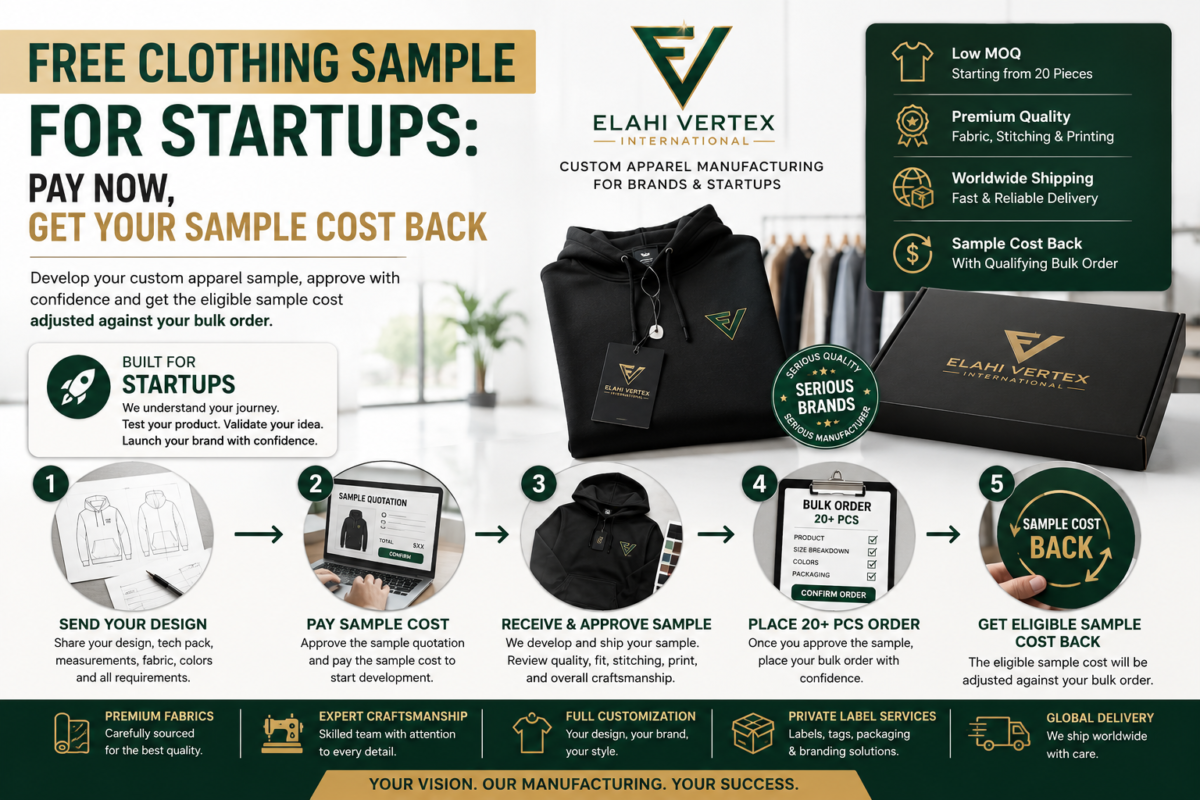
For the Elahi Vertex International offer relevant to this guide:
Sample cost is paid upfront and can be credited toward the qualifying bulk order under the agreed terms; shipping is charged separately.
That should not be described as an unconditional free sample.
A clearer buyer explanation is:
Sample cost credited toward your bulk order; shipping charged separately.
Why is this stronger?
Because the buyer knows what happens.
No hidden semantics.
No expectation that international courier cost disappears.
No argument later over what “free” meant.
The brand can evaluate the sample as part of the product-development investment.
21. How to Approve a Clothing Sample Properly
A founder receives the package.
It looks exciting.
The logo is there.
The colour looks close.
The natural reaction is:
“Approved!”
That is not enough.
Inspect systematically.
Step 1: Confirm product identity
Is this the exact style requested?
Step 2: Check fabric
Compare:
composition information, GSM if specified, feel, structure, stretch, recovery, inside finish and colour.
Step 3: Measure the garment
Lay it correctly.
Use the agreed measurement method.
Record actual measurements against specification.
Step 4: Try the garment on
Evaluate the intended fit.
Photograph:
front, back and side.
Step 5: Check movement
Raise arms.
Sit.
Walk.
Use pockets.
Zip and unzip where applicable.
Pull the hood up.
Test the garment like a customer.
Step 6: Inspect construction
Look at:
seams, stitch consistency, stress points, pockets, cuffs, waistband, neckline and finishing.
Step 7: Inspect decoration
Check:
position, dimensions, colour, clarity, texture and interaction with fabric.
Step 8: Inspect labels
Check:
artwork, spelling, fibre information, size and placement.
Step 9: Inspect finishing
Look for:
loose threads, stains, marks, unintended puckering, distortion and visible damage.
Step 10: Document corrections
Do not send:
“Make it slightly better.”
Send:
“Reduce body length by ___.”
“Move front artwork ___ upward.”
“Change hood opening according to attached marked image.”
“Use approved label artwork version ___.”
Precision reduces interpretation.
Step 11: Approve in writing
Once corrections are complete, identify the final approved version clearly.
That approved specification should become the reference for bulk production.
22. Sample-to-Bulk Consistency
One of the biggest fears when buying overseas is:
“The sample will be good, but what happens to production?”
That concern is legitimate.
The solution is not a verbal promise.
It is process control.
The approved sample should become a standard
Bulk production should reference:
approved fabric, measurements, construction, colour, decoration, labels and finishing.
Elahi Vertex International’s published quality-control page states that its quality checks can cover fabric/materials, measurements, stitching, construction, printing, embroidery, colours, labels, branding, finishing and final appearance against approved specifications.
That is the right principle.
The buyer should still define what matters for the project.
Keep an approval record
Your production file can include:
Final tech pack/version: ______
Approved sample date: ______
Approved fabric: ______
Approved colour: ______
Approved measurements: ______
Approved artwork: ______
Approved print/embroidery: ______
Approved labels: ______
Approved packaging: ______
Approved notes: ______
This record becomes even more valuable during reorders.
Do not make uncontrolled changes after approval
Changing fabric, measurements or decoration after the sample is approved can create new uncertainty.
If the change is meaningful, determine whether another sample or confirmation is needed.
23. Quality Control for Low MOQ Orders
Quality control is not only for 10,000-piece production.
A 20-piece launch may be more sensitive to defects because every garment represents 5% of the total run.
Two defective units would represent a meaningful part of the batch.
What should QC check?
Fabric
Correct type, colour, condition and agreed characteristics.
Measurements
Compare finished measurements with approved specifications.
Construction
Inspect seams, stitching, joining, reinforcement and garment assembly.
Decoration
Check print, embroidery, patch or transfer against approval.
Branding
Check labels, sizes and placement.
Finishing
Look for stains, damage, loose threads and presentation problems.
Quantity
Confirm total and size breakdown.
Packaging
Confirm the agreed packaging method.
Inspection should be specification-based
“Looks good” is subjective.
“Chest width is within the agreed tolerance, artwork is at the approved position and label version 3 is installed” is a manufacturing control.
That is the difference between quality as marketing and quality as process.
24. UK Textile Labelling and Product Safety
A London brand importing apparel for sale needs to think beyond design and manufacturing.
Textile labelling rules apply in Great Britain.
UK guidance states that textile labels must show fibre content, including requirements where multiple components have different fibre compositions. More detailed Trading Standards guidance explains that textile fibre information must be presented appropriately and that responsibility can fall on the manufacturer or UK importer.
Fibre content
Do not write a composition because it sounds premium.
Use accurate fibre information.
If the product contains multiple textile components with different compositions, the applicable rules may require those compositions to be identified correctly.
English
Current Business Companion guidance for Great Britain states that the fibre-content label should be in English and be durable, easily legible, visible and accessible.
Care information
Care information is commonly included to help the customer maintain the product. Trading Standards guidance distinguishes this from the statutory fibre-content requirement and notes that care labels themselves are not generally legally required in the same way.
That does not mean a brand should omit care instructions casually.
If customers wash a garment incorrectly because you provide no useful guidance, the commercial consequences can still be painful.
Product safety
UK businesses placing consumer products on the GB market have product-safety responsibilities.
Current government guidance states that products must be safe in normal or reasonably foreseeable use and identifies obligations affecting producers, which can include UK importers.
For ordinary streetwear, this does not mean adding random compliance logos.
It means the responsible business should understand which rules apply to the specific product.
Children’s garments, specialist protective products or other regulated categories can involve additional considerations beyond a standard adult fashion hoodie.
Do not outsource legal responsibility mentally
A London brand should not assume:
“My factory is overseas, therefore compliance is the factory’s problem.”
The UK importer and seller can have responsibilities.
Use qualified professional advice where necessary.
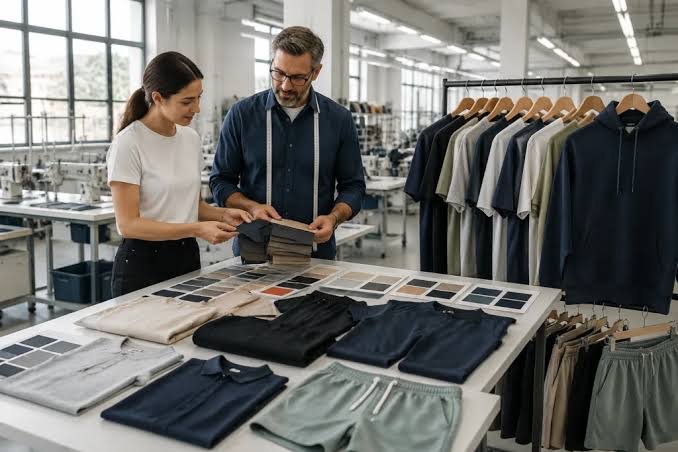
25. Working With an Overseas Manufacturer From London
Overseas manufacturing can create advantages.
It can also expose weaknesses in a buyer’s process.
Distance makes ambiguity expensive.
The solution is documentation.
Communication should become a system
Do not keep crucial approvals scattered across:
Instagram DMs, WhatsApp voice notes, email attachments and random screenshots.
Create one final specification record.
Chat can be used for speed.
The approved file should be used for control.
Use visual communication
For a physical product, visual review matters.
Useful communication can include:
marked-up images, measurement photographs, sample videos, close-up construction images and video calls where appropriate.
Time-zone difference
Pakistan and London operate in different time zones.
This is manageable when the parties establish a communication rhythm.
A good relationship does not require both teams to be awake 24 hours per day.
It requires questions to receive clear answers and decisions to be documented.
Shipping is part of manufacturing planning
Do not wait until production is finished before asking:
“How much to London?”
Shipping affects the commercial calculation.
The final package dimensions and weight affect freight.
Garment weight affects freight.
Quantity affects freight.
Service level affects freight.
Destination affects freight.
Ask early.
Then reconfirm when the shipment is ready and actual logistics information is available.
26. UK Manufacturing vs Overseas Manufacturing
Neither sourcing model is universally superior.
A London brand should choose based on priorities.
| Factor | UK/Local Manufacturing | Overseas Manufacturing |
|---|---|---|
| Physical proximity | Strong | Lower |
| Factory visits | Potentially easier | Requires travel/remote inspection |
| Communication time zone | Usually easier | Must be managed |
| Freight distance | Lower | Higher |
| Import process | Simpler for domestic supply | Customs/import planning required |
| Small custom production | Varies by supplier | Varies by supplier |
| Product capabilities | Supplier-specific | Supplier-specific |
| Cost structure | Supplier-specific | Supplier-specific |
| Development support | Supplier-specific | Supplier-specific |
| Scaling potential | Supplier-specific | Supplier-specific |
Do not make the lazy assumption:
UK = expensive but good
Pakistan = cheap but risky
That is not procurement.
Individual suppliers vary.
A strong overseas manufacturer can outperform a weak domestic one.
A strong domestic manufacturer can outperform a weak overseas one.
Evaluate evidence.
When local can make sense
Local production may suit a brand that values:
physical access, shorter domestic transport, easier visits, local provenance or a specific local manufacturing story.
When overseas can make sense
Overseas production may suit a brand seeking:
particular manufacturing capabilities, different cost structures, access to established apparel production ecosystems or scalable sourcing options.
But landed cost must be calculated.
Hybrid sourcing is also possible
An established brand does not necessarily need one supplier for everything.
It may use different partners for:
development, core volume, specialised products, overflow capacity or backup production.
The correct sourcing architecture depends on the business.
27. What Information Should London Brands Include in an RFQ?
RFQ means request for quotation.
A strong RFQ makes it easier for suppliers to quote the same product.
A weak RFQ creates incomparable answers.
Poor RFQ
“Hi. Need 20 hoodies. Best price?”
You have not specified:
fabric, GSM, composition, fit, colour, decoration, labels, sizes, packaging, destination or sample requirement.
Any price at this stage is based on assumptions.
Better RFQ structure
Brand
Business name:
Website/social profile:
Country: United Kingdom
City: London
Product
Oversized pullover hoodie
Quantity
20 pieces
Sizes
S:
M:
L:
XL:
Fabric
Preferred fabric:
Composition:
Target GSM:
Fit
Oversized / boxy
Measurement sheet attached
Colour
Colour reference attached
Decoration
Method:
Artwork attached
Front dimensions:
Back dimensions:
Sleeve dimensions:
Branding
Main label:
Size label:
Fibre/care label:
Hangtag:
Packaging
Requirement:
Sample
Required before production: Yes
Destination
Full London postcode
Target timing
Required date/window:
Commercial request
Quote the manufacturing scope clearly.
Identify what is included and excluded.
Provide shipping options separately or as clearly defined delivered terms.
Clarify any UK import responsibility included in the quotation.
That is a serious RFQ.
28. Common Low-MOQ Clothing Manufacturing Mistakes
Mistake 1: Choosing the lowest advertised MOQ
A tiny MOQ is not useful if the garment is wrong.
Better approach
Compare the entire manufacturing offer.
Mistake 2: Choosing the cheapest quotation
Different factories may be quoting different fabrics and scopes.
Better approach
Standardise the specification before comparing prices.
Mistake 3: Skipping the sample because the order is small
Twenty wrong garments still cost money.
Better approach
Use a sample to identify problems before repetition.
Mistake 4: Sending only inspiration photos
The manufacturer cannot read your mind.
Better approach
Convert the concept into measurable requirements.
Mistake 5: Using “oversized” as the complete fit specification
Oversized describes direction, not dimensions.
Better approach
Approve actual garment measurements.
Mistake 6: Launching too many SKUs
A startup with limited capital may dilute its inventory and marketing focus.
Better approach
Test the strongest product hypothesis first.
Mistake 7: Ignoring shipping
A cheap factory quotation can become unattractive after freight.
Better approach
Calculate landed cost into London before confirming production.
Mistake 8: Assuming duty
Pakistan’s DCTS status creates potentially useful tariff preferences, but eligibility depends on the product and origin conditions.
Better approach
Verify commodity classification and preference eligibility.
Mistake 9: Ignoring UK labelling
The finished product is being sold to UK customers.
Better approach
Confirm fibre-content information and applicable requirements before labels are produced.
Mistake 10: Approving verbally
A voice note saying “yes perfect” is weak production control.
Better approach
Maintain a written final approval record.
Mistake 11: Changing the product during production
Uncontrolled changes increase risk.
Better approach
Lock specifications before bulk production.
Mistake 12: Ordering a large reorder before understanding the first drop
Selling out one weekend does not always prove stable demand.
Better approach
Analyse what sold, who bought, returns, feedback and replenishment demand.
29. How a London Startup Can Move From Idea to First Production
A founder does not always begin with a tech pack.
Some begin with a sketch.
Some have reference images.
Some have an existing garment they want to improve.
Some have artwork and nothing else.
Some have already failed with another factory.
The starting point can vary.
The objective is to progressively remove ambiguity.
Stage 1: Idea
Example:
“I want to launch a premium London streetwear label around oversized heavyweight hoodies.”
This is not ready for production.
But it is enough to begin defining the product.
Stage 2: References
Collect references for:
silhouette, hood, pocket, surface, artwork style, wash, fabric feel and branding.
Do not treat references as permission to copy another brand.
Use them to communicate direction.
Stage 3: Product specification
Decide:
product, fit, measurements, fabric target, colour, construction, decoration, labels and packaging.
Stage 4: Artwork
Prepare production-ready artwork.
Stage 5: Sample development
The manufacturer converts the specification into a physical garment.
Stage 6: Review
Measure, wear and inspect it.
Stage 7: Revision
Correct identifiable problems.
Stage 8: Approval
Lock the final production reference.
Stage 9: Commercial confirmation
Confirm:
quantity, unit price, included/excluded costs, payment arrangements, shipping and destination.
Stage 10: Production
Manufacture against the approved specification.
Stage 11: Quality control
Inspect against the agreed requirements.
Stage 12: Shipment
Prepare export documents, customs process and delivery.
Stage 13: Market test
Sell the product.
Collect actual data.
Stage 14: Reorder decision
Scale the winner.
Change what failed.
Stop producing what the market rejected.
That final step is where low MOQ becomes commercially powerful.
It creates a learning loop.
30. When You Should NOT Start With Only 20 Pieces
Low MOQ is not automatically the smartest choice.
There are situations where 20 pieces may be too conservative.
You already have verified demand
If you have paid pre-orders for significantly more units, artificially limiting the order to 20 can create stockouts and unnecessary freight cycles.
You have reliable historical sales
An established bestseller may justify greater production.
Your wholesale commitment is larger
If retailers have placed confirmed orders, production should reflect real demand.
Unit economics do not work at 20
If the low-volume price makes the product impossible to sell profitably, the business needs another strategy.
That might involve:
higher quantity, simpler design, different fabric, adjusted packaging, alternative supplier or a different retail price.
Material minimums make 20 inefficient
Custom fabric development or specialised trims may require larger commitments.
Trying to force a 20-piece number onto every product can make the project commercially irrational.
You are constantly selling out
Scarcity can create excitement.
Permanent lack of inventory creates frustration.
If customers repeatedly want to buy and cannot, the brand is no longer validating demand.
It is failing to supply it.
Scale when the evidence justifies scaling.
31. Reordering and Scaling After the First Drop
The first 20 pieces should produce information.
Use it.
Record sell-through by size
Which sizes moved?
Record colour demand
If multiple colours were tested, which generated sales rather than likes?
Record returns
Why did customers return products?
Fit?
Quality?
Colour?
Expectation mismatch?
Record customer questions
Repeated questions reveal product or website communication gaps.
Record manufacturing changes
Did you identify improvements for:
fit, label, packaging, print scale, hood, waistband or fabric?
Create version control
Do not casually modify the reorder.
Call it:
Version 2.
Document exactly what changed.
Negotiate based on real volume
As reorder quantity increases, ask for updated production economics.
Do not assume the 20-piece unit cost should remain identical forever.
Protect successful specifications
Once a product works, preserve:
pattern reference, measurement chart, fabric specification, colour, artwork, label files and packaging details.
Reorders should become easier—not start from zero every time.
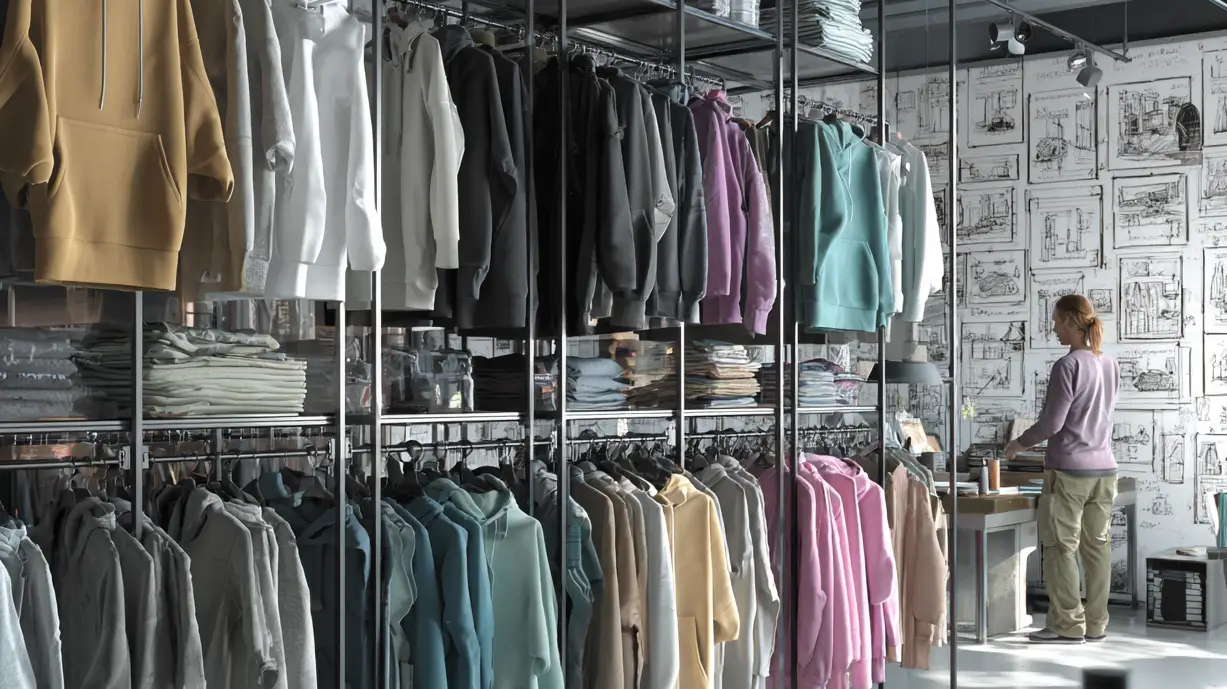
32. Why Elahi Vertex International May Fit a London Clothing Brand
Elahi Vertex International should not be selected merely because this article says so.
A London buyer should evaluate the company using the same standards described throughout this guide.
The commercially relevant points are straightforward.
20-piece starting quantity
Elahi Vertex International currently positions its standard low-MOQ offer around 20 pieces, giving qualifying buyers an opportunity to begin with a more controlled production quantity.
Custom manufacturing
The company publicly positions itself around made-to-specification clothing rather than only generic ready-made garments, including streetwear, hoodies, activewear and private-label apparel.
Private label
Brand-specific labels, branding and packaging are part of its published private-label service.
Sampling
Its manufacturing process includes sample/prototype development before approved bulk production.
For the offer described in this guide:
Sample cost credited toward your qualifying bulk order; shipping charged separately.
Quality-control framework
Its published QC framework covers fabric/materials, measurements, stitching, garment construction, printing, embroidery, colour, labels, branding, finishing and final appearance.
International shipment preparation
Elahi Vertex International publicly states that completed products can be prepared for worldwide shipment, with export support for international buyers.
Evidence buyers can review
A potential buyer can review the company’s published portfolio and case-study material rather than making a decision from an outreach message alone.
The relevant commercial pages include:
Start with a real specification
If you are a London clothing or streetwear brand considering a 20-piece first production run, prepare:
Product
Design/reference
Quantity
Sizes
Fabric preference
GSM target if known
Fit
Measurements
Colours
Decoration
Labels
Packaging
London delivery postcode
Required date
Then send the project for review.
Discuss the project with Elahi Vertex International on WhatsApp
Email: elahivertexinternational@gmail.com
Elahi Vertex International Alibaba Storefront
33. Frequently Asked Questions About a Low MOQ Clothing Manufacturer
1. What is a low MOQ clothing manufacturer?
A low MOQ clothing manufacturer is a supplier that accepts smaller production quantities than traditional high-volume factories.
The actual definition varies.
One factory may consider 100 pieces low.
Another may accept 50.
Another may accept 20 or fewer.
The key question is what the stated MOQ applies to and what manufacturing work is included.
For custom clothing, brands should distinguish genuine cut-and-sew/private-label manufacturing from print-on-demand or decoration of existing blank garments.
2. Can a London clothing brand really start with 20 pieces?
Yes, where the selected product and specifications fit the manufacturer’s low-MOQ production structure.
For Elahi Vertex International’s offer discussed here, the starting quantity is 20 pieces.
The exact breakdown by product, style, colour, size and customisation should be confirmed before ordering.
Do not assume “20 pieces” can automatically be divided into unlimited variations.
3. Is 20 pieces the lowest MOQ available to UK brands?
No.
Some manufacturers publicly advertise quantities lower than 20, while many others advertise 30, 50 or higher starting quantities.
For example, current supplier pages show advertised minimums ranging from five pieces at Florix Sports to 30 at Excel Apparel and 50 at several UK/London-focused manufacturers.
Therefore, Elahi Vertex International should not claim that 20 pieces is categorically the lowest MOQ in the market.
The relevant advantage is the ability to begin at a controlled quantity while evaluating the full manufacturing offer.
4. Why do clothing factories normally prefer larger orders?
Larger runs distribute setup and development work across more garments.
Clothing production can involve:
patterns, fabric sourcing, cutting preparation, sewing setup, print screens, embroidery programming, labels, trims and packaging.
Some upstream suppliers also impose minimum quantities.
This means very small production can be less efficient on a per-unit basis.
5. Will 20 pieces cost more per garment than 500 pieces?
Potentially, yes.
Unit cost frequently changes with production quantity because fixed or semi-fixed work is spread across different numbers of garments.
However, the cheapest unit price is not always the best financial decision.
For an unproven design, the brand must compare:
higher unit price with lower total inventory exposure
versus
lower unit price with much larger inventory commitment.
That is a business decision, not merely a factory-price decision.
6. Can I order 20 hoodies in different sizes?
Size mixing may be possible, but the exact size breakdown should be confirmed for the project.
A proposed breakdown should be provided at quotation stage.
For example:
S — quantity
M — quantity
L — quantity
XL — quantity
Do not wait until production begins to decide the size curve.
7. Can I split 20 pieces across several colours?
Do not assume so automatically.
Colour splitting can affect:
fabric sourcing, cutting, dyeing, decoration, trims and production efficiency.
Provide the desired colour breakdown before quotation.
The manufacturer can then confirm what is feasible.
8. Can I make several completely different products within 20 pieces?
Not necessarily.
Twenty-piece MOQ should not be interpreted as permission to create an unlimited mixed collection.
A T-shirt, hoodie, jogger and jacket can involve different fabrics, patterns and production operations.
Ask for the applicable MOQ per product/category and specification.
9. Do I need a tech pack to contact a low MOQ clothing manufacturer?
A complete tech pack is extremely useful, but a founder may begin with less information.
You can start with:
a clear concept, references, sketches, logo, artwork, measurement ideas or an existing sample.
However, missing details need to be resolved before accurate production.
The objective is to transform the idea into a production specification.
10. Should I order a sample before only 20 pieces?
For a custom product, sampling is usually a sensible risk-control step.
The sample can help confirm:
fabric, fit, measurements, construction, decoration, labels and overall appearance.
The smaller production quantity reduces inventory exposure.
It does not eliminate the cost of reproducing a mistake.
11. Does Elahi Vertex International offer a free sample?
The clearer description is:
Sample cost credited toward your qualifying bulk order; shipping charged separately.
The buyer initially pays the sample/development cost and shipping under the agreed arrangement.
Where the qualifying bulk order proceeds, the eligible sample cost can be credited as agreed.
That is different from saying an unconditional sample and international courier service are free.
12. What should I check when my sample arrives?
Check:
fabric, GSM if specified, colour, garment measurements, fit, construction, stitching, hood or collar, pockets, cuffs, waistband, decoration, artwork placement, labels and finishing.
Wear it.
Move in it.
Photograph it.
Measure it.
Then document revisions precisely.
13. Can a low MOQ clothing manufacturer make custom labels?
That depends on the supplier.
Elahi Vertex International’s published private-label service includes custom labels, branding and packaging.
The exact label type, quantity, artwork, material, cost and feasibility should be confirmed for the project.
14. Can a London streetwear startup manufacture oversized hoodies?
Yes.
But “oversized” must be converted into an actual fit specification.
Important dimensions can include:
chest, length, shoulder, sleeve, armhole, bottom opening, hood and pocket.
The final physical sample should be approved before production.
15. How do I calculate shipping from Pakistan to London?
Shipping should be quoted against the actual shipment and delivery postcode.
Cost can depend on:
weight, volumetric weight, carton dimensions, service, speed, quantity and destination.
For an initial quotation, provide the exact London postcode.
For final shipping, the actual packed shipment data should be used.
16. Will I pay import duty when importing clothing from Pakistan to London?
It depends on the product’s classification, origin qualification and the applicable tariff treatment.
Pakistan is currently in the UK’s DCTS Enhanced Preferences tier, under which 92% of product lines receive a zero tariff, but this is not the same as saying every garment from Pakistan automatically enters duty-free.
Check the specific commodity code and applicable DCTS rules of origin.
17. What changed in DCTS rules for garments in 2026?
The UK implemented updated DCTS origin rules from 1 January 2026.
Government guidance states that Enhanced Preference countries gained more flexible garment rules, including fewer mandatory processing steps and more flexible sourcing of non-originating inputs depending on the product.
Brands should still verify the rule applicable to the particular garment.
18. Do London clothing brands need an EORI number?
A business importing commercial goods into England, Wales or Scotland generally needs a GB EORI number for customs purposes.
Your customs agent can advise on your specific import setup.
19. What textile information must be on clothing sold in London?
Great Britain textile rules require appropriate fibre-content labelling.
Current guidance states that the label must identify fibre content, and detailed Trading Standards guidance says the information should be in English, legible, visible and accessible.
A UK business should confirm the precise requirements applicable to its product before placing it on the market.
20. How do I start a 20-piece order with Elahi Vertex International?
Prepare:
your product, design or reference, proposed quantity, size breakdown, fabric requirement, fit, measurements, colour, decoration, labels, packaging, London postcode and required date.
Elahi Vertex International can then review the actual project rather than guessing from a generic request.
The company’s published ordering process moves through product requirements and specifications, sampling/approval, production, quality control and shipment preparation.
For a first London streetwear project:
Contact Elahi Vertex International on WhatsApp
Email: elahivertexinternational@gmail.com

34. Final Low MOQ Clothing Manufacturer Buyer Checklist
Before choosing a low MOQ clothing manufacturer for a London brand, confirm every item that applies to your project.
Business and supplier
Supplier legal/business identity checked
Official website reviewed
Manufacturing model understood
Portfolio reviewed where available
Relevant product capability confirmed
Communication route confirmed
Product
Exact product defined
Reference/design supplied
Tech pack supplied if available
Fit defined
Measurement chart prepared
Fabric defined
Composition defined
GSM target defined where relevant
Colour reference supplied
Construction details defined
Decoration method defined
Artwork supplied
Artwork dimensions defined
Artwork placement defined
Branding
Main label defined
Size label defined
Fibre-content information defined
Care information prepared where appropriate
Hangtag defined if required
Packaging defined
Quantity
MOQ confirmed for the exact product
Quantity confirmed
Size breakdown confirmed
Colour breakdown confirmed
Design breakdown confirmed
Sampling
Sample required/waived decision made consciously
Sample price confirmed
Shipping cost confirmed
Sample-credit terms confirmed
Sample review checklist prepared
Revision procedure understood
Final approval recorded
Production
Final specification version locked
Production quantity confirmed
Price confirmed
Inclusions confirmed
Exclusions confirmed
Payment arrangement confirmed
Production schedule confirmed for the actual project
Quality requirements agreed
Quality control
Fabric check defined
Measurement check defined
Construction check defined
Decoration check defined
Label check defined
Finishing check defined
Quantity check defined
Packaging check defined
UK import
London delivery postcode confirmed
Shipping service identified
Shipping responsibility clarified
Incoterm/transport basis understood
Commodity code confirmed
DCTS eligibility checked where relevant
Origin requirements checked
Duty treatment checked
GB EORI arranged where required
Import VAT treatment understood
Customs agent/broker arranged where needed
UK market
Fibre-content label checked
English-language requirement checked
Relevant product-safety obligations reviewed
Retail price calculated
Landed cost calculated
Margin calculated
Returns allowance considered
Fulfilment cost considered
Launch
Product photography planned
Launch quantity planned
Size data to be recorded
Customer feedback process planned
Return reasons to be recorded
Reorder trigger defined
If several of these remain unknown, do not rush into production simply because the manufacturer accepts 20 pieces.
The strength of a low MOQ is that it gives you room to make a controlled decision.
Use that advantage properly.
35. Conclusion: Start With 20 Pieces, but Build for More
Finding a low MOQ clothing manufacturer can solve one important problem for a London clothing brand:
it can reduce the inventory commitment required to move from an idea or approved sample into a real commercial product.
That matters.
But the number alone is not the strategy.
Twenty pieces will not fix a bad design.
Twenty pieces will not fix poor measurements.
Twenty pieces will not make the wrong fabric suitable.
Twenty pieces will not correct weak branding.
Twenty pieces will not eliminate shipping.
Twenty pieces will not remove UK import responsibilities.
Twenty pieces will not make customers buy.
What a 20-piece starting point can do is give a serious brand a more controlled environment in which to learn.
Develop one product properly.
Specify it.
Sample it.
Inspect it.
Understand its landed cost.
Confirm UK requirements.
Produce the controlled first run.
Put it in front of real customers.
Measure what happens.
Then make the next order based on evidence.
That is a stronger approach than manufacturing hundreds of pieces simply because a supplier’s MOQ forced you to do so.
It is also stronger than remaining permanently trapped in tiny production because larger inventory feels frightening.
Low MOQ should be the beginning of a scaling strategy, not the end of one.
For London startups, independent streetwear labels, e-commerce brands and existing businesses testing a new product or manufacturing relationship, Elahi Vertex International offers a 20-piece starting point for qualifying custom clothing projects, together with published custom manufacturing, private-label, sampling, quality-control and export capabilities.
The next step should not be:
“Send best price.”
Send a real manufacturing brief.
Include:
your product
your design or reference
your proposed 20-piece quantity
your sizes
your fabric preference
your fit and measurements
your branding
your decoration
your packaging requirement
your London postcode
and your required delivery period.
That gives the manufacturer enough information to evaluate the project commercially.
Choosing the right low MOQ clothing manufacturer can make a major difference for a new London clothing brand. Instead of committing large amounts of money to untested stock, founders can begin with a smaller production run, study customer response and make better decisions before increasing quantities.
A low MOQ clothing manufacturer UK buyers can work with should offer more than a small minimum quantity. The manufacturer should understand custom apparel development, measurements, fabric selection, branding, decoration, sampling, quality control and international shipping requirements.
For a startup searching for a clothing manufacturer London brands can approach, location should not be the only consideration. Many London companies work with overseas manufacturers because the real decision depends on product capability, commercial terms, communication, quality requirements and total landed cost.
A small batch clothing manufacturer UK brands select should allow them to test real products without immediately committing to excessive inventory. Small-batch manufacturing can be especially valuable for independent labels launching their first hoodie, oversized T-shirt, jogger or matching streetwear set.
Working with a low MOQ streetwear manufacturer gives founders an opportunity to turn a concept into a physical product while controlling initial inventory exposure. However, low MOQ should never replace proper product specifications, sampling or quality checks.
For London streetwear startups, a low MOQ clothing manufacturer can support a more controlled product-launch strategy. A brand can begin with 20 pieces, evaluate the finished garment and then decide whether the product deserves a larger reorder.
A good low MOQ clothing manufacturer UK brands consider should clearly explain what its minimum quantity applies to. Buyers should confirm whether the MOQ applies per product, design, colour or another production configuration before making assumptions.
When researching a clothing manufacturer London founders should also compare the complete production offer. A low advertised quantity is useful only when the manufacturer can realistically produce the required fabric, fit, decoration, labels and packaging.
The purpose of using a small batch clothing manufacturer UK businesses can access is not to remain permanently small. The purpose is to reduce unnecessary inventory risk while the brand is still learning which products, sizes, colours and price points customers actually prefer.
A capable low MOQ streetwear manufacturer should therefore be evaluated as a potential long-term manufacturing partner rather than simply as the factory offering the smallest first order.
Elahi Vertex International works as a custom B2B manufacturer and exporter for brands developing apparel including streetwear, hoodies, sweatshirts and private-label clothing. For qualifying projects, the starting MOQ discussed for London brands is 20 pieces.
This makes Elahi Vertex International relevant to buyers searching for a low MOQ clothing manufacturer while still wanting a structured custom-manufacturing process.
The 20-piece starting point can be particularly useful for founders comparing a low MOQ clothing manufacturer UK sourcing option with manufacturers demanding substantially larger opening orders.
A London founder should still prepare a clear product brief. Searching for a clothing manufacturer London businesses can use does not remove the buyer’s responsibility to explain the garment accurately.
Before contacting a small batch clothing manufacturer UK brand owners should define the product they want to manufacture. This normally includes the garment type, quantity, size breakdown, fabric preference, fit, colour, decoration and branding requirements.
The same principle applies when approaching a low MOQ streetwear manufacturer. A message saying “I need 20 hoodies” does not provide enough information for a meaningful production decision.
An effective low MOQ clothing manufacturer discussion begins with specifications. For an oversized hoodie, buyers should think about chest width, body length, shoulder width, sleeve dimensions, hood shape, pocket construction, rib, fabric and artwork placement.
A low MOQ clothing manufacturer UK buyer should also receive the exact London delivery destination when shipping is being discussed. Freight can materially affect the real unit economics of a small international shipment.
A clothing manufacturer London brand evaluates should therefore be compared using landed cost rather than factory price alone. Manufacturing price, decoration, packaging, shipping, customs handling, applicable duties and taxes can all affect the commercial result.
Using a small batch clothing manufacturer UK buyers can access may result in a higher unit cost than large-volume manufacturing. That does not automatically make the small production run a poor decision.
The purpose of a low MOQ streetwear manufacturer is often to limit the amount of capital committed before demand is proven. Paying somewhat more per garment can sometimes be commercially preferable to purchasing hundreds of products that remain unsold.
A low MOQ clothing manufacturer is therefore most valuable when uncertainty is high. Once a product develops reliable demand, increasing production quantity may improve purchasing economics.
A professional low MOQ clothing manufacturer UK sourcing strategy should include a plan for both testing and scaling. Brands should understand what happens after the first 20 pieces if demand grows to 50, 100, 300 pieces or more.
Finding a clothing manufacturer London brands can build a longer-term relationship with is more valuable than repeatedly changing suppliers only to save a small amount on individual quotations.
A dependable small batch clothing manufacturer UK startups work with should also support an organised sampling process. Sampling allows a buyer to review the garment before the approved design is reproduced across production.
The sample is particularly important when working with a low MOQ streetwear manufacturer on custom fits. Oversized, boxy, relaxed and cropped silhouettes require measurable specifications rather than vague descriptions.
A sample from a low MOQ clothing manufacturer should be reviewed for fabric, colour, dimensions, fit, construction, artwork, labels and overall finishing.
When comparing a low MOQ clothing manufacturer UK option, buyers should ask how corrections are communicated and how the final approved specifications are transferred into production.
For any clothing manufacturer London brands approach, written approval is stronger than vague verbal instructions. Final measurements, artwork versions, label files and other approved details should be clearly documented.
A small batch clothing manufacturer UK sourcing relationship can become much more efficient when the buyer maintains version control. The first sample, revised sample and final approved product should not become confused.
The same discipline matters with a low MOQ streetwear manufacturer because even a 20-piece order can become unusable if an outdated artwork file or incorrect measurement chart is followed.
Fabric is another major consideration when choosing a low MOQ clothing manufacturer. GSM is useful for describing fabric weight, but fabric quality should not be judged by GSM alone.
A low MOQ clothing manufacturer UK buyer should also consider fibre composition, knit structure, surface, inside finish, shrinkage, drape and the way the fabric interacts with the intended silhouette.
A clothing manufacturer London brand owner contacts should receive enough information to understand the desired garment, even when the founder does not know every technical fabric term.
A small batch clothing manufacturer UK supplier may be able to discuss available fabric options, but exact availability and feasibility should always be confirmed for the specific order.
For a low MOQ streetwear manufacturer, specialised custom-dyed fabrics, unusual trims or complicated finishes may affect whether a very small production quantity is commercially practical.
Decoration also changes the manufacturing decision. A low MOQ clothing manufacturer may work with embroidery, printing, transfers or patches depending on product requirements.
A low MOQ clothing manufacturer UK buyer should specify artwork dimensions and placement rather than simply sending a logo and asking the factory to choose where it should go.
A serious clothing manufacturer London brands work with should understand whether the artwork is intended for the chest, back, sleeve, leg or another position.
A small batch clothing manufacturer UK project should still receive the same artwork discipline as a larger commercial order. Small quantity should never mean uncontrolled design execution.
A capable low MOQ streetwear manufacturer should also understand that streetwear branding can extend beyond the visible graphic. Neck labels, size labels, fibre-content information, hangtags and packaging can influence the finished brand presentation.
Private-label development is therefore another reason founders search for a low MOQ clothing manufacturer instead of simply purchasing wholesale blank garments.
For brands comparing a low MOQ clothing manufacturer UK sourcing route, it is important to ask exactly which private-label elements are available at the proposed quantity.
A clothing manufacturer London startup uses should help the buyer reach a clearly defined production brief before manufacturing begins, whether the supplier is located in Britain or overseas.
Using a small batch clothing manufacturer UK brands can access internationally also requires proper shipping planning. The London postcode should be provided before the final commercial decision.
A low MOQ streetwear manufacturer located overseas should not be evaluated without considering delivery costs. A low factory price can become less attractive if freight and import costs are ignored.
This is why the strongest low MOQ clothing manufacturer strategy combines manufacturing price with landed-cost analysis.
A London business comparing a low MOQ clothing manufacturer UK sourcing solution should understand who is responsible for freight, customs clearance, duties, VAT and final delivery under the agreed shipping arrangement.
Before selecting a clothing manufacturer London brands should also verify relevant UK textile-labelling and import responsibilities for the specific garments being sold.
A small batch clothing manufacturer UK sourcing decision does not remove those responsibilities simply because the order quantity is small.
Similarly, working with a low MOQ streetwear manufacturer should never encourage a brand to ignore fibre-content information, product safety considerations or applicable import requirements.
Quality control remains important regardless of order size. A low MOQ clothing manufacturer should work against the approved product requirements rather than simply deciding whether a garment “looks good.”
A low MOQ clothing manufacturer UK buyer should establish which dimensions, decoration details and construction points matter most before production.
A clothing manufacturer London brands evaluate should also be assessed on communication. Manufacturing problems become more difficult when buyer instructions and supplier responses are vague.
A small batch clothing manufacturer UK startup works with should receive corrections in precise language. Instead of saying “make the hoodie slightly shorter,” the buyer should specify the required measurement change.
A professional low MOQ streetwear manufacturer relationship works best when both parties reduce assumptions.
For new brands, the greatest advantage of a low MOQ clothing manufacturer may appear after the first batch is sold. Twenty products can generate information about actual customer behaviour.
The first order from a low MOQ clothing manufacturer UK sourcing partner can help reveal which sizes sell, which colours receive real purchases and which product details customers want improved.
A clothing manufacturer London startup selects should ideally fit a process where successful products can be reordered rather than redesigned from the beginning every time.
Using a small batch clothing manufacturer UK brands can scale with makes the first production run part of a larger commercial strategy rather than an isolated experiment.
A low MOQ streetwear manufacturer becomes more valuable when the brand can use the first batch to improve future purchasing decisions.
The first 20 pieces should therefore produce more than revenue. They should produce knowledge.
A low MOQ clothing manufacturer can help limit the cost of discovering that a particular colour, size curve or design does not perform as expected.
Once evidence improves, the brand can reconsider quantity with its low MOQ clothing manufacturer UK sourcing partner.
London founders searching for a clothing manufacturer London should therefore avoid treating MOQ as the only decision criterion.
The strongest small batch clothing manufacturer UK relationship combines manageable opening quantities with product development, clear specifications, commercial transparency and a realistic route toward future production.
A low MOQ streetwear manufacturer should ultimately help the buyer move from concept to controlled production and then toward a data-backed reorder.
For London brands, Elahi Vertex International offers a 20-piece starting point for qualifying custom clothing projects. The opportunity is particularly relevant for founders seeking a low MOQ clothing manufacturer for custom streetwear, hoodies, sweatshirts and private-label apparel.
Brands comparing a low MOQ clothing manufacturer UK option can use the first production run to control inventory exposure while evaluating product quality, customer demand and manufacturing compatibility.
Instead of searching endlessly for a clothing manufacturer London founders should prepare one strong manufacturing brief and compare suppliers against the same requirements.
Choosing a small batch clothing manufacturer UK brands can work with should be based on the complete commercial picture rather than a single advertised number.
The right low MOQ streetwear manufacturer is not simply the supplier willing to produce the fewest garments. It is the manufacturer capable of helping turn an approved specification into a commercially usable product at a quantity the brand can responsibly test.
Starting with 20 pieces can therefore be a practical first step.
Use the first order to learn.
Protect working capital.
Measure customer response.
Correct weaknesses.
Reorder successful products.
Then increase production when real demand gives the business a reason to scale.
Start small enough to control risk.
Build the product well enough to earn demand.
Scale only when the market gives you a reason.
Visit Elahi Vertex International
Discuss a 20-piece London clothing project on WhatsApp