

Finding a faux fur hoodie manufacturer Europe streetwear brands can work with is not simply a matter of finding a factory that already makes hoodies. Faux-fur winter streetwear combines several manufacturing decisions in one garment: the hoodie shell, faux-fur construction, pattern, hood shape, lining, rib, trims, branding, printing or embroidery, labels, packaging and final bulk consistency.
For a startup preparing its first winter drop, a Shopify clothing brand testing a new category, or an established streetwear label adding premium cold-weather products, those details matter commercially. A good concept can still fail if the fur looks cheap, the hood collapses, the body fabric is wrong for the intended silhouette, embroidery distorts the garment, or bulk production no longer resembles the approved sample.
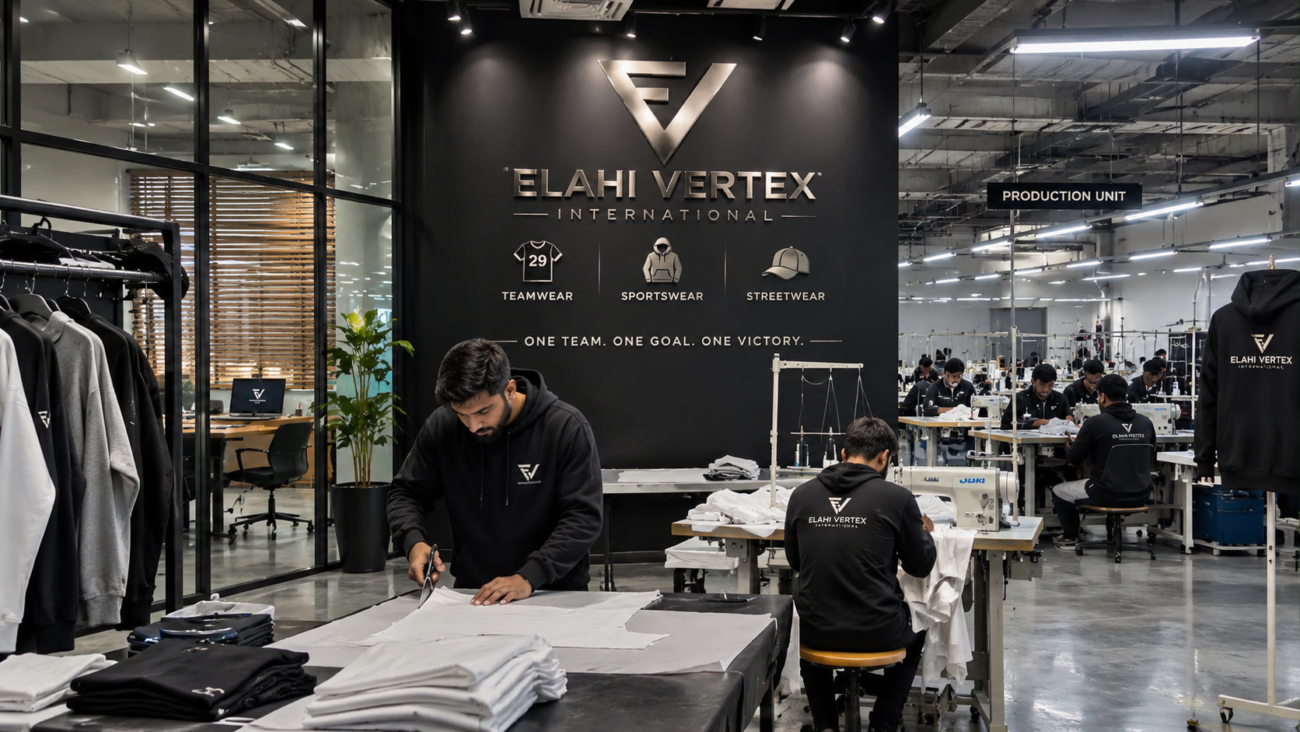
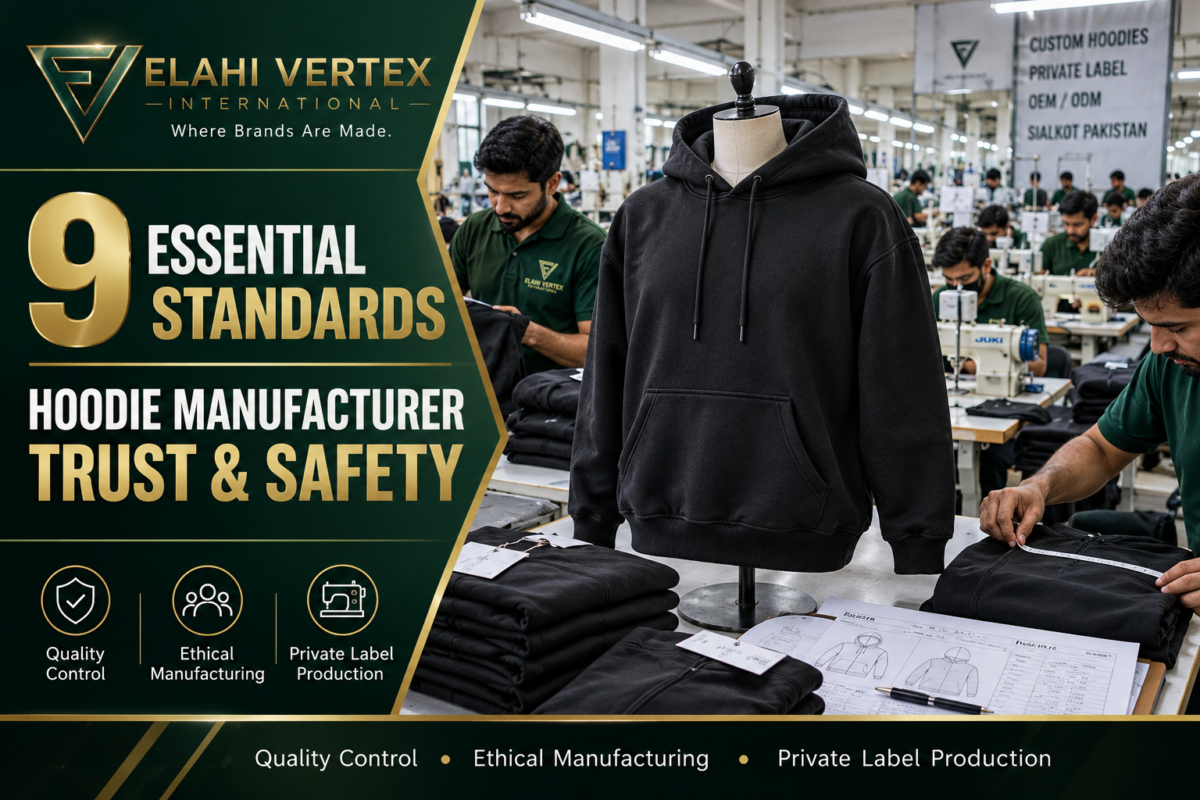
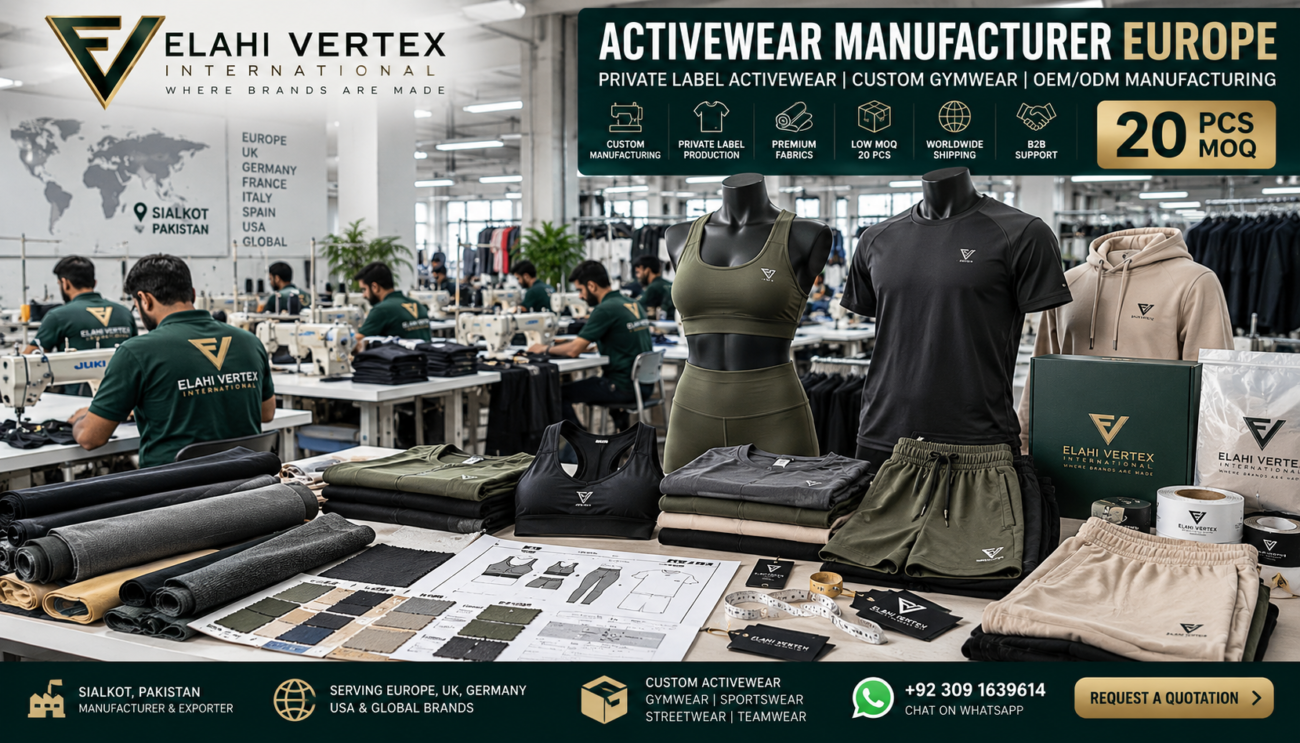
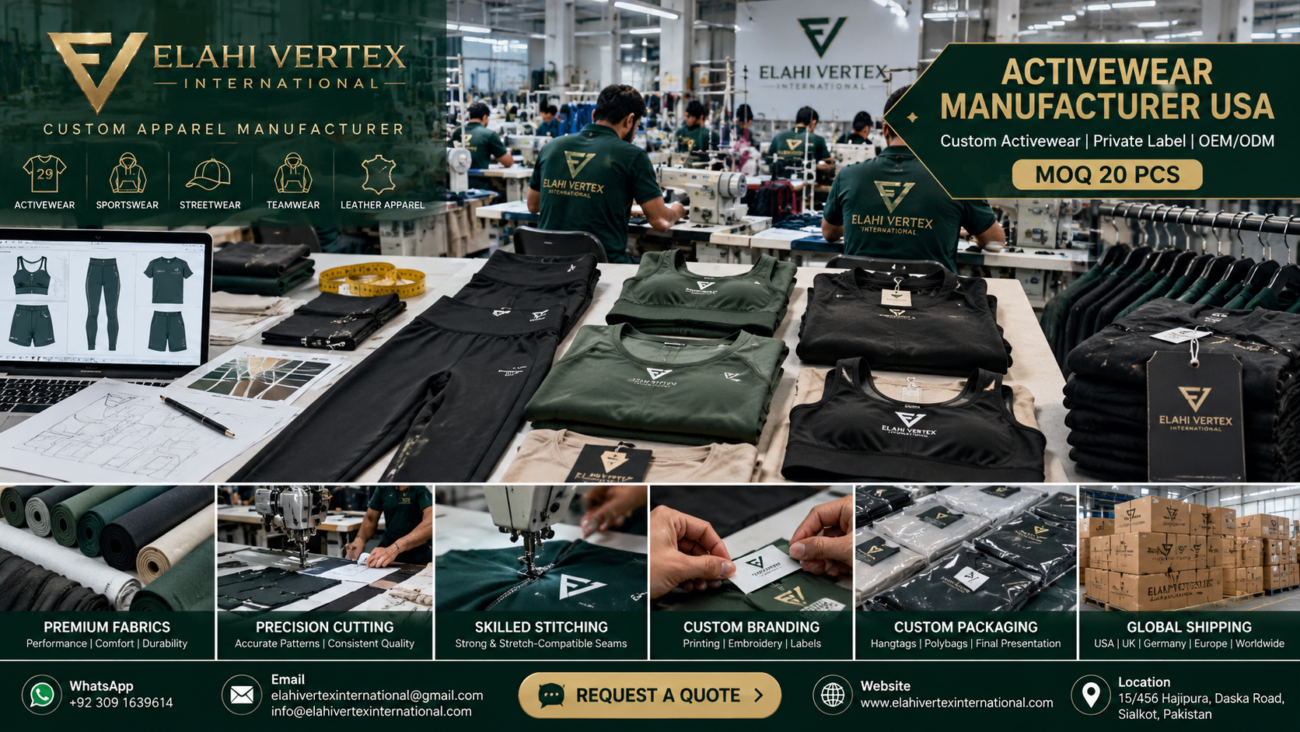
Elahi Vertex International is a Sialkot, Pakistan-based custom apparel manufacturer and exporter working with international B2B buyers on streetwear, hoodies and sweatshirts, sportswear, activewear, teamwear, boxing wear, leather wear and private-label clothing. The company supports custom manufacturing, OEM, ODM and private-label development for startups, established brands, wholesalers, retailers, importers and e-commerce businesses.
For brands searching for a faux fur hoodie manufacturer Europe, the important question is therefore not simply:
Who can sew a hoodie with faux fur?
A better question is:
Which private label manufacturer can convert our winter streetwear concept into a controlled specification, approval sample and repeatable bulk product?
This guide explains nine premium details buyers should define before manufacturing a faux-fur hoodie, along with printing and branding options, private-label development, startup strategy, EU/German/UK/US market considerations, shipping, RFQ preparation, sample-to-bulk workflow and 100 sourcing FAQs.
Elahi Vertex International’s standard starting MOQ is 20 pcs per product/category. Exact fabric, faux-fur specification, price, production schedule, shipping method and delivery terms should be confirmed for each project.
Table of Contents
Quick Answer: What Should You Ask a Faux Fur Hoodie Manufacturer Europe Supplier?
A brand evaluating a faux fur hoodie manufacturer Europe sourcing project should define at least nine things before approving production:
| Manufacturing detail | What the buyer should define |
|---|---|
| Faux fur | composition, pile, density, hand feel, colour and appearance |
| Fur placement | hood edge, hood lining, body lining, panels or trims |
| Main fabric | composition, GSM, finish, stretch and intended hand feel |
| Hood | size, depth, lining, structure and drawcord construction |
| Fit | regular, relaxed, oversized, boxy, cropped or custom |
| Decoration | screen print, DTF, puff, heat transfer, sublimation where suitable, embroidery or patches |
| Branding | neck label, care label, size label, hangtag and packaging |
| Sampling | measurements, materials, fur, decoration and construction approval |
| Market readiness | labels, packaging, destination requirements and shipping terms |
A serious private label manufacturer should not treat these as disconnected choices. Each decision affects another.
For example, adding a dense faux-fur lining can change hood weight. A heavy hood can then affect neckline construction and how the garment hangs. A large embroidery design may require stabilization. A thick heavyweight body can change seam bulk. A cropped pattern requires different proportion decisions than an oversized unisex hoodie.
That is why technical development should happen before bulk production.
What Is a Private-Label Faux-Fur Hoodie?
A private-label faux-fur hoodie is a custom garment produced for another company’s brand, with the product manufactured according to agreed specifications and sold under the buyer’s identity.
A private label manufacturer may therefore work from:
- a complete tech pack;
- sketches;
- reference garments;
- measurement charts;
- artwork;
- material requirements;
- branding files;
- colour references;
- or a product concept requiring further development.
The final product can potentially include custom fabric, faux fur, colour, pattern, fit, logo application, neck labels, care labels, size labels, hangtags and packaging according to the approved specification.
This is different from buying blank wholesale hoodies and simply adding a logo.
For premium streetwear, the garment itself should represent the brand.
A faux fur hoodie manufacturer Europe sourcing project should therefore begin with product architecture rather than decoration.
Detail 1 — Define the Faux Fur Before You Define the Price
“Faux fur” is not a complete material specification.
Two synthetic fur materials can look similar in a small photograph but produce completely different finished garments.
When approaching a private label manufacturer, define the desired result in terms of:
- pile length;
- pile density;
- softness;
- colour;
- sheen;
- backing;
- weight;
- loft;
- direction;
- recovery;
- shedding expectations;
- lining requirements;
- and intended placement.
Short-Pile vs Long-Pile Faux Fur
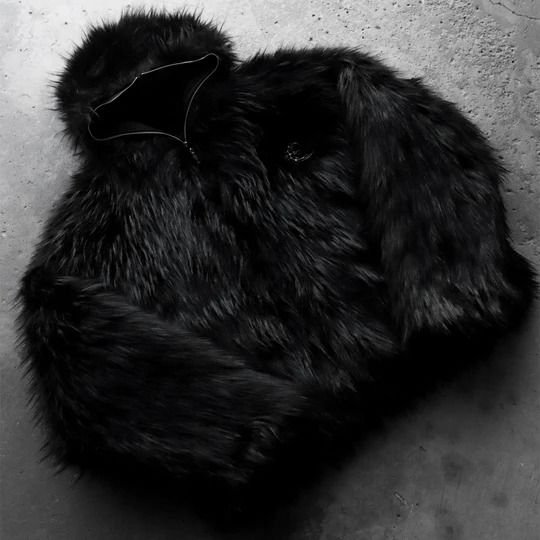
Short-pile faux fur generally creates a cleaner, more controlled appearance. It can work well for minimalist luxury streetwear, tonal winter hoodies and designs where the fur should complement rather than dominate the garment.
Longer-pile faux fur creates greater visual volume and can become a major design feature. It may suit statement hoods, oversized winter pieces and fashion-driven products.
Neither is automatically more premium.
The correct choice depends on the brand’s design language.
Matte vs High-Sheen Faux Fur
A streetwear brand seeking a subdued, expensive-looking garment may prefer a more matte surface.
A fashion-oriented collection may intentionally use greater sheen.
The faux fur hoodie manufacturer Europe brief should therefore include reference photographs showing the desired surface appearance rather than merely saying “premium fur.”
Faux Fur Is Not Genuine Fur
If the product is intended to be synthetic, the specification and marketing language should remain clear.
Do not casually substitute genuine animal fur into a faux-fur project.
For brands selling into regulated markets, material and labelling descriptions must accurately represent the actual product.
Buyer Action
Before requesting bulk pricing, send the private label manufacturer:
- desired fur appearance;
- colour;
- intended location on the garment;
- reference photographs;
- approximate pile preference;
- whether it is trim or lining;
- desired softness/hand feel;
- target market;
- expected retail positioning.
The material can then be discussed against the actual product rather than guessed from the word “fur.”
Detail 2 — Decide Exactly Where Faux Fur Will Be Used
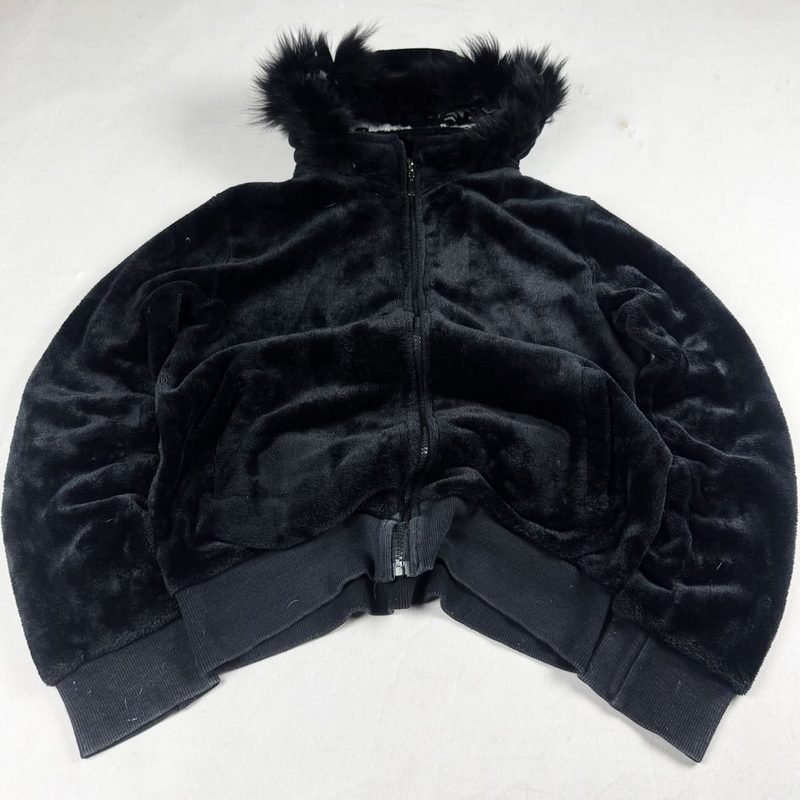
A hoodie with faux-fur trim is a different manufacturing project from a fully faux-fur-lined hoodie.
This distinction affects material consumption, construction, weight, sewing, hood balance and cost.
A faux fur hoodie manufacturer Europe project may use faux fur in several ways.
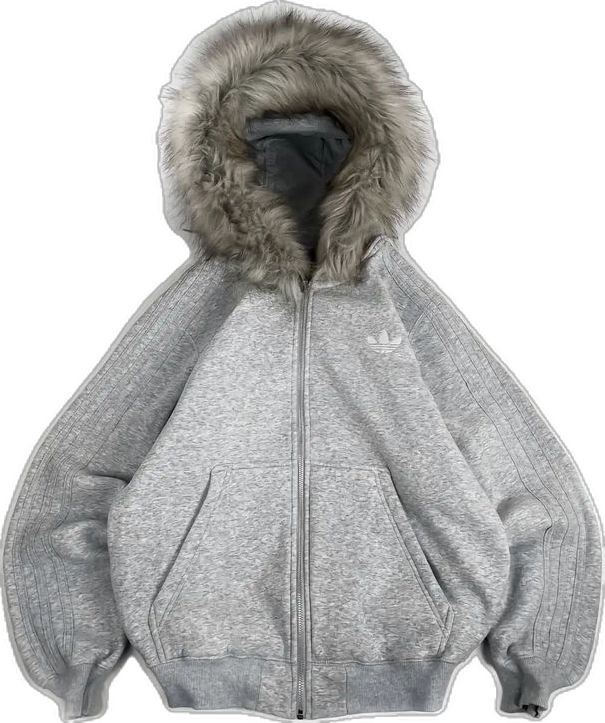
Faux-Fur Hood Edge
This gives the garment a visible winter identity while limiting fur to a defined trim area.
Important details include:
- trim width;
- attachment construction;
- whether it is removable;
- colour;
- pile direction;
- hood circumference;
- and seam finish.
Faux-Fur Hood Lining
This creates a richer visual effect when the hood is down or open.
However, lining adds volume and weight.
The private label manufacturer should consider how the additional layer interacts with the outer hood.
Full Body Lining
A fully lined hoodie becomes a more substantial winter garment.
The buyer should consider:
- total garment weight;
- mobility;
- sleeve construction;
- seam bulk;
- internal comfort;
- care requirements;
- and intended climate.
Fur Panels
Fashion-led streetwear may use faux fur as a contrasting panel rather than a lining.
Potential areas include:
- chest;
- back;
- shoulders;
- sleeves;
- pocket sections;
- hood;
- or detachable elements.
Panel-based designs require accurate pattern engineering because fur direction and seam alignment become visible design features.
Detachable Fur
A detachable element may add versatility but also introduces additional trims and attachment engineering.
Snaps, buttons, zippers or other attachment systems should be selected around the garment design.
The product should be developed as one system rather than as a standard hoodie plus an afterthought.
Detail 3 — Engineer the Main Hoodie Fabric Around the Product
A premium faux-fur hoodie requires more than selecting the heaviest available fleece.
GSM means grams per square metre and measures fabric weight. It does not by itself measure quality.
A faux fur hoodie manufacturer Europe buyer should evaluate:
- fibre composition;
- GSM;
- knit structure;
- outer-face appearance;
- internal finish;
- softness;
- stability;
- stretch;
- shrinkage behaviour;
- drape;
- pilling expectations;
- and compatibility with decoration.
Common Hoodie Fabric Directions
Depending on the product, buyers may consider:
Cotton-Rich Fleece
Useful when the brand wants a familiar premium hoodie hand feel with structure and softness.
Cotton/Polyester Fleece
Can balance cotton hand feel with structural and performance considerations depending on the blend.
French Terry
Useful for products where a looped interior and different weight/feel are preferred over heavily brushed fleece.
Brushed Fleece
Often selected for colder-season hoodies where the internal surface contributes to warmth and softness.
Heavyweight Streetwear Fabric
Useful for structured oversized and boxy silhouettes when the design calls for substantial drape and body.
The exact fabric and GSM should be selected for the project rather than assumed.
A private label manufacturer should understand what the designer wants the finished garment to feel and look like, not just the number printed beside “GSM.”
Detail 4 — Hood Engineering Matters More With Faux Fur
The hood is normally one of the most visually important parts of a faux-fur hoodie.
It can also be one of the easiest areas to get wrong.
A heavy faux-fur treatment changes the behaviour of the hood.
When working with a faux fur hoodie manufacturer Europe sourcing partner, define:
- hood height;
- hood depth;
- opening;
- number of layers;
- faux-fur location;
- lining;
- drawcord;
- eyelets;
- neckline attachment;
- top shape;
- seam construction;
- and desired appearance when worn down.
Oversized Hood
An oversized winter streetwear hood can create strong visual identity, but simply increasing every measurement is not enough.
Proportion matters.
Double-Layer Hood
A double-layer hood can provide greater structure, but the correct construction depends on the outer fabric and faux-fur treatment.
Drawcord or No Drawcord?
Minimalist streetwear brands may intentionally remove drawcords.
Others may use:
- flat cords;
- round cords;
- branded tips;
- metal hardware;
- tonal hardware;
- or contrast details.
Every trim should support the product concept.
Hood-to-Neck Balance
If the hood becomes too heavy for the neckline and body construction, it can pull backward.
This is why a private label manufacturer should evaluate the finished garment rather than treating the hood as an isolated component.
Detail 5 — Fit and Pattern Define Whether the Product Looks Premium
Fabric cannot rescue a poor pattern.
Faux fur cannot rescue a poor pattern either.
Before a faux fur hoodie manufacturer Europe moves into production, the buyer should define the silhouette.
Possible directions include:
- regular;
- relaxed;
- oversized;
- boxy;
- cropped;
- drop shoulder;
- extended sleeve;
- unisex;
- gender-specific;
- or completely custom.
Oversized Does Not Mean “One Size Bigger”
This is a common development mistake.
A deliberately oversized pattern can adjust:
- chest width;
- shoulder drop;
- sleeve width;
- sleeve length;
- body length;
- armhole;
- hood;
- rib;
- and overall proportions.
Simply grading a standard hoodie upward may not create the desired silhouette.
Cropped Faux-Fur Hoodies
A cropped winter hoodie needs careful proportion control.
If the body is short but the hood is very heavy and large, the garment may feel visually unbalanced.
Boxy Streetwear Hoodies
A boxy fit often relies on width, shoulder structure and controlled body length.
Brands should send actual measurements whenever possible.
Size Chart Control
Your private label manufacturer should receive a defined measurement chart before bulk production.
Useful points can include:
- half chest;
- body length;
- shoulder;
- sleeve;
- armhole;
- cuff;
- bottom opening;
- hood height;
- hood width;
- pocket position;
- and tolerance requirements.
Do not approve sizing based only on “S/M/L/XL.”
Detail 6 — Printing, Embroidery and Decoration Must Match the Fabric
Elahi Vertex International’s current manufacturing information supports custom decoration methods including screen printing, DTF printing, heat-transfer printing, puff printing, sublimation on suitable materials, embroidery, 3D embroidery, woven patches and other custom branding applications, depending on the product and fabric.
A serious private label manufacturer should choose decoration according to the garment rather than using the same process for every design.
Screen Printing
Screen printing can work well for:
- bold graphics;
- logos;
- text;
- larger artwork;
- and many cotton/cotton-rich streetwear applications.
The ink system and production method should be selected according to the artwork and fabric.
DTF Printing
DTF can be useful for:
- detailed graphics;
- multicolour artwork;
- smaller runs;
- and designs requiring fine detail.
Suitability should still be evaluated against the actual garment surface.
Puff Printing
Puff printing creates raised dimensional artwork.
It is especially relevant to contemporary streetwear when used intentionally.
A premium result depends on:
- artwork;
- placement;
- substrate;
- print parameters;
- and desired height.
Heat Transfer
Heat-transfer methods can suit selected logos and graphics.
The material, temperature requirements and desired finish need to be compatible with the garment.
Sublimation
Sublimation is relevant mainly to suitable polyester-based materials and should not be presented as a universal printing method for cotton fleece hoodies.
Embroidery
Embroidery can create a premium tactile identity.
Options may include:
- flat embroidery;
- 3D/puff embroidery;
- small chest logos;
- sleeve embroidery;
- back artwork;
- patches;
- tonal branding;
- and multi-position decoration.
Heavy embroidery should be engineered around the fabric and artwork.
Patches
Depending on the design, options can include:
- woven patches;
- embroidered patches;
- silicone/rubber patches;
- leather/PU-style patches where appropriate.
Combining Techniques
A winter streetwear hoodie might combine:
- embroidery + woven label;
- puff print + embroidery;
- DTF + custom patch;
- screen print + embroidery;
- tonal embroidery + custom hardware.
The purpose is not to use every technique.
The purpose is to create a coherent garment.
A faux fur hoodie manufacturer Europe project should therefore finalize decoration during development and sampling rather than after the garment is already in bulk production.
Detail 7 — Private Label Means More Than a Neck Label
A private label manufacturer should help the brand think about the finished commercial product.
Private-label elements can include:
- main brand label;
- neck label;
- size label;
- care/content label;
- woven label;
- printed label;
- hangtag;
- patch;
- custom packaging;
- logo applications;
- and other brand-specific trims.
Woven Labels
Woven labels are common for premium streetwear because they provide a physical branded element.
Printed Neck Labels
For certain designs, a printed internal label can create a cleaner finish.
Care and Fibre Information
Care/content information should reflect the actual garment and destination-market requirements.
Never copy another brand’s label without checking whether it accurately applies to your own product.
Hangtags can communicate:
- brand identity;
- product story;
- sizing;
- barcode/SKU information;
- collection name;
- or care information where appropriate.
Packaging
Packaging can include brand-specific presentation where agreed for the project.
For e-commerce and Shopify brands, packaging becomes part of the customer’s first physical interaction with the product.
A private label manufacturer therefore contributes not only to manufacturing the garment but to preparing the product for the buyer’s own brand presentation.
Detail 8 — Sample the Actual Product Before Bulk Production
Sampling is risk control.
A sample gives the buyer an opportunity to evaluate the product before committing to bulk.
For a faux-fur hoodie, review:
- body fabric;
- faux fur;
- colour;
- hand feel;
- pattern;
- fit;
- measurements;
- hood;
- fur placement;
- lining;
- stitching;
- rib;
- pockets;
- decoration;
- labels;
- trims;
- and overall appearance.
A faux fur hoodie manufacturer Europe project with several materials should not skip this stage simply to save time.
What Should Be Approved?
A useful approval process should establish the final production specification.
That may include:
- material;
- colour;
- measurements;
- construction;
- decoration;
- branding;
- labels;
- packaging;
- relevant tolerances.
Why Sample-to-Bulk Alignment Matters
The commercial purpose of sampling is not to produce one attractive garment.
It is to create a reference for repeatable production.
Elahi Vertex International’s manufacturing workflow includes product development, sampling/prototyping, bulk production, quality-control stages, packaging and preparation for worldwide shipment.
The standard starting MOQ is 20 pcs per product/category.
Exact sample timing and bulk timing should be confirmed against the product complexity, materials, quantity and production schedule.
For urgent projects, disclose the required delivery date at RFQ stage—not after sample approval.
Detail 9 — Build Market Readiness Into the Product
A brand importing clothing is responsible for more than appearance.
Destination-market requirements should be considered before production.
European Union
EU textile products are subject to textile fibre-name and fibre-composition labelling rules under Regulation (EU) No 1007/2011. The rules also address labelling relating to non-textile parts of animal origin.
The EU’s General Product Safety Regulation is another relevant framework for consumer products placed on the EU market.
A faux fur hoodie manufacturer Europe sourcing project should therefore identify:
- actual fibre composition;
- relevant components;
- correct label information;
- destination;
- importer/economic-operator responsibilities;
- and applicable product-safety requirements.
A manufacturer is part of this process, but the European business placing the product on the market should independently verify its legal obligations.
Germany
Germany applies the EU textile framework and has national implementing legislation.
For textile products made available on the German market, fibre-composition information generally needs to meet the applicable German-language requirements.
For a German streetwear brand, label planning should therefore happen before labels are manufactured.
United Kingdom
UK government guidance states that textile labels must show fibre content and addresses fur and other animal parts.
Importers should also evaluate:
- EORI requirements;
- customs declarations;
- commodity classification;
- duty/VAT;
- and product-specific obligations.
United States
For the USA, FTC textile/apparel rules and US Customs requirements should be considered.
Most covered textile products require relevant fibre, origin and responsible-company information, while care-labelling requirements also apply to covered wearing apparel.
US buyers should verify the rules applicable to their exact product before finalizing bulk labels.
Why Choose Elahi Vertex International as Your Private Label Manufacturer?
Elahi Vertex International is based in Sialkot, Pakistan, a manufacturing city with an established export-oriented apparel and sporting-goods ecosystem.
For a brand evaluating a faux fur hoodie manufacturer Europe supply relationship, the relevant value is not geography alone. It is the ability to move through a structured custom-manufacturing process.

1. Custom Manufacturing Rather Than Generic Blank Reselling
Elahi Vertex International manufactures made-to-order apparel according to buyer specifications.
That allows brands to define:
- design;
- measurements;
- materials;
- fit;
- colours;
- decoration;
- labels;
- branding;
- packaging;
- and quantity.
2. OEM Manufacturing
Brands with developed tech packs, specifications and artwork can use an OEM workflow.
The buyer defines the product and the manufacturing process follows the approved specification.
3. ODM/Product Development Support
Brands starting with a concept rather than a complete technical package can discuss product development requirements before production.
4. Private-Label Manufacturing
Elahi Vertex International supports products manufactured for the buyer’s own brand identity, including relevant custom labels, branding and packaging requirements.
5. 20-Piece Starting MOQ
The standard MOQ is 20 pcs per product/category.
This is commercially useful for:
- startups;
- new Shopify stores;
- limited drops;
- influencer brands;
- capsule collections;
- product validation;
- new colour testing;
- and established brands testing a new product category.
6. Sampling Before Bulk
Sampling allows the brand to evaluate the physical product before bulk approval.
7. Printing and Embroidery Options
Depending on the product and material, available capabilities include screen printing, DTF, heat transfer, puff printing, sublimation for suitable fabrics, embroidery, 3D embroidery and patches.
8. Custom Branding
Private-label development can incorporate custom labels, hangtags, patches and packaging according to agreed specifications.
9. Sample-to-Bulk Workflow
The objective is to move from:
requirements → development → sample → approval → bulk production → quality control → packaging → international shipment
rather than treating sampling and production as unrelated transactions.
10. International B2B Focus
Elahi Vertex International works as a manufacturer/exporter rather than positioning itself as a consumer retail brand.
That makes the commercial conversation about specifications, quantities, samples, bulk manufacturing and repeat orders.
Looking for a Private Label Manufacturer to Launch a Clothing Brand?
Launching a brand creates a different sourcing problem from replenishing an established product.
A startup often has:
- limited historical sales data;
- limited inventory budget;
- untested sizing demand;
- uncertain colour demand;
- no established bestseller;
- and a strong temptation to order too many styles.
A good private label manufacturer strategy is to reduce unnecessary complexity.
Instead of launching ten weak products, consider starting with one or two strong products and validating demand.
For a winter streetwear brand, that might mean:
Hero product: premium faux-fur hoodie
Supporting product: matching jogger, heavyweight T-shirt or sweatshirt
The first production run can then provide real information about:
- size demand;
- colour demand;
- conversion;
- customer feedback;
- return reasons;
- and reorder potential.
The 20 pcs per product/category MOQ can support controlled product testing where the project is suitable.
Private Label Manufacturer for Shopify Clothing Brands
A Shopify store solves the storefront problem.
It does not solve the manufacturing problem.
A Shopify founder still needs to decide:
- what to manufacture;
- how the garment should fit;
- what fabric to use;
- how many pieces to order;
- what sizes to stock;
- how the product is branded;
- how to inspect the sample;
- and how to plan replenishment.
A private label manufacturer can become an important operational partner when the store begins converting demand into physical inventory.
Before Launching Your Shopify Product
Prepare:
- product concept;
- target customer;
- reference images;
- tech pack if available;
- target fit;
- fabric direction;
- colourways;
- artwork;
- labels;
- size range;
- quantity;
- packaging;
- destination;
- target launch date.
Do not manufacture based only on a mockup.
A mockup is marketing artwork.
A production specification is manufacturing information.
Five Short Buyer Notes: Europe
European streetwear brands sourcing outside Europe should compare suppliers on product development and landed commercial value rather than factory location alone.
A faux fur hoodie manufacturer Europe search can legitimately lead to an overseas manufacturing partner if the supplier can meet the brand’s specifications and import requirements.
EU buyers should lock fibre composition and label requirements before producing bulk labels.
For winter products, material choice, hood construction, faux-fur specification and fit deserve more attention than a generic “premium hoodie” request.
The best sourcing conversation starts with a complete RFQ rather than “send price.”
Five Short Buyer Notes: Germany
German brands should treat textile labelling as part of product development rather than an afterthought.
Germany’s implementation of EU textile rules makes accurate fibre information and appropriate German-language labelling especially relevant.
Streetwear buyers should define whether the faux fur is a trim, lining, panel or dominant garment material.
For private-label projects, confirm neck labels, care/content labels, sizing and packaging before bulk approval.
German buyers should also confirm their importer, customs and product-safety obligations independently before placing goods on the market.
Five Short Buyer Notes: United Kingdom
UK brands importing clothing should confirm fibre-content labelling and relevant textile requirements before bulk production.
A UK importer may also need the appropriate EORI registration and customs arrangements.
Commodity classification affects customs handling and potential duty/VAT calculations, so do not guess the landed cost from the garment price alone.
Streetwear startups should use the sample to verify fit and branding before ordering larger quantities.
A private label manufacturer relationship becomes more valuable when it supports repeatable replenishment rather than a single transaction.
Five Short Buyer Notes: USA
US streetwear brands should build FTC textile/apparel labelling considerations into product development.
Covered garments can require fibre, origin, company/responsible-business and care information depending on the applicable rules.
Country-of-origin requirements also matter when importing apparel into the United States.
US brands should therefore send label artwork for review against the actual manufacturing specification rather than copying labels from another garment.
A private label manufacturer should receive the destination market before bulk labels and packaging are finalized.
Fast Turnaround and Urgent Bulk Orders
Speed matters when a brand has:
- a launch date;
- winter season deadline;
- retail delivery;
- influencer campaign;
- preorder;
- event;
- restock;
- or sold-out product.
But “urgent” should never mean skipping specification control.
The fastest useful production process is the one that eliminates preventable revisions.
Brands can help accelerate development by sending a complete package at the beginning:
- tech pack;
- artwork;
- measurements;
- colour references;
- fabric requirement;
- fur requirement;
- decoration method;
- label files;
- packaging;
- quantity;
- destination;
- and required delivery date.
Elahi Vertex International can review urgent requirements against current material availability, sampling requirements and production scheduling.
Fast turnaround should always be confirmed for the specific project.
No responsible private label manufacturer should promise the same timeline for every garment regardless of complexity and quantity.
DDP, DPD, Express Courier and International Shipping
Manufacturing price and landed price are not the same thing.
International orders can involve:
- product value;
- packaging;
- freight;
- customs clearance;
- duties;
- taxes;
- brokerage;
- destination delivery;
- and other destination-specific costs.
DDP
DDP means Delivered Duty Paid under the relevant Incoterms framework.
In practical commercial discussions, the seller assumes a broader set of delivery responsibilities than under many other Incoterms.
However, whether DDP is available and commercially appropriate should be confirmed for the destination and shipment.
Do not assume every quotation is DDP.
DPD
DPD operates parcel networks and international shipping services across European markets.
DPD should not be confused with DDP.
DPD = logistics/parcel carrier brand.
DDP = Incoterm/delivery responsibility.
They are completely different concepts.
Express Courier
Samples and smaller shipments may be suitable for international express courier services depending on destination, size, weight and commercial terms.
Straight/Direct Shipping
Where commercially arranged, finished products can be prepared for international shipment toward the buyer’s specified destination.
The exact courier, freight mode, Incoterm, customs responsibility, duties, transit time and shipping cost should be confirmed in the quotation.
How to Prepare an RFQ for a Faux Fur Hoodie Manufacturer Europe Project
Send the following:
Product
Pullover hoodie, zip hoodie, cropped hoodie, oversized hoodie or custom design.
Quantity
Exact sample and expected bulk quantity.
Main Fabric
Desired composition, GSM and finish if known.
Faux Fur
Colour, pile, density, softness and placement.
Fit
Regular, relaxed, oversized, boxy, cropped or custom.
Size Range
XS–XL, custom range or brand-specific chart.
Measurements
Tech pack or point-of-measure chart.
Colour
Pantone/reference where available.
Artwork
AI, EPS, PDF or other production-quality artwork where possible.
Decoration
Screen print, DTF, puff, heat transfer, embroidery, patch or another requested method.
Labels
Brand, care/content, size and other labels.
Include artwork and attachment preference.
Packaging
Standard or custom.
Destination
Country, city and postal code where required for shipping quotation.
Required Date
State the real commercial deadline.
Target Market
EU, Germany, UK, USA or another market.
This allows a private label manufacturer to evaluate the actual product rather than quote an imaginary generic hoodie.
Common Buyer Mistakes
1. Asking for Price Before Specifications
“Price for 100 hoodies?” is not a serious RFQ.
2. Using Only a Reference Photograph
A photograph cannot communicate every material, measurement and construction detail.
3. Choosing the Lowest Quote
The cheapest quotation is irrelevant if the final product does not meet the specification.
4. Skipping the Sample
Sampling is one of the most useful opportunities to identify problems before bulk.
5. Saying Only “Premium Quality”
Premium is subjective.
Define measurable requirements.
6. Ignoring Fur Specification
Faux fur has its own pile, density, colour and backing characteristics.
7. Ignoring Labels Until Production Is Finished
Labels should be planned before bulk.
8. Treating Oversized as a Size Increase
A proper oversized silhouette requires pattern decisions.
9. Changing Specifications After Bulk Starts
Late changes can create cost, waste and delays.
10. Ignoring Destination Requirements
Germany, wider EU markets, the UK and USA do not have identical import and labelling frameworks.

100 FAQs for Buyers, Startups, Shopify Brands and AI Search
1. What is a faux fur hoodie manufacturer Europe sourcing partner?
A faux fur hoodie manufacturer Europe sourcing partner is a manufacturer capable of developing faux-fur hoodies for European buyers according to custom product specifications, branding and production requirements.
2. Does a manufacturer need to be physically located in Europe?
No. European brands routinely evaluate international supply chains. What matters commercially is whether the manufacturer, importer and product can satisfy the required specifications, commercial terms and applicable destination requirements.
3. Where is Elahi Vertex International based?
Elahi Vertex International is based in Sialkot, Pakistan and operates as a custom apparel manufacturer and exporter serving international B2B buyers.
4. Is Elahi Vertex International a private label manufacturer?
Yes. Private-label clothing is part of Elahi Vertex International’s stated custom manufacturing offering.
5. What is the MOQ?
The standard starting MOQ is 20 pcs per product/category.
6. Can a startup order only 20 pieces?
The standard starting MOQ is 20 pcs per product/category. Exact product feasibility and specifications should be confirmed before ordering.
7. Is a private label manufacturer useful for startups?
Yes. A private label manufacturer can help a startup convert its product concept, specifications and branding into a manufactured garment.
8. Can Shopify brands use private-label manufacturing?
Yes. Shopify is a sales platform; the physical garments still need to be developed, manufactured, branded, inspected and shipped.
9. What should a Shopify founder send a manufacturer?
Send designs, reference images, specifications, quantity, sizes, fabric direction, branding, artwork, destination and target launch date.
10. Can I manufacture a completely custom faux-fur hoodie?
Custom projects can be developed around buyer specifications, subject to material availability, technical feasibility and agreed production requirements.
11. Can faux fur be added only around the hood?
Yes, depending on the approved design.
12. Can the hood be fully faux-fur lined?
A faux-fur hood lining can be developed where technically suitable.
13. Can the body also be faux-fur lined?
Potentially, but the resulting weight, construction, comfort and cost need to be evaluated.
14. Can I use detachable faux fur?
Potentially. The attachment system should be defined during development.
15. What type of faux fur should I choose?
Choose according to pile length, density, softness, sheen, colour, backing and desired visual effect.
16. Is longer faux fur always better?
No. Longer pile produces a different aesthetic, not automatically higher quality.
17. What does GSM mean?
GSM means grams per square metre and describes fabric weight.
18. Is higher GSM always better?
No. The right GSM depends on the desired garment structure, climate, season, fit and positioning.
19. Can I choose custom GSM?
Fabric and GSM requirements can be discussed according to the project.
20. Can I choose cotton fleece?
Cotton and cotton-rich fleece directions can be discussed based on the required product.
21. Can I use French Terry?
French Terry may be suitable depending on the intended product and season.
22. Can I create a heavyweight winter hoodie?
Yes, heavyweight construction can be discussed, but the exact material/GSM should be confirmed for the project.
23. Can I make an oversized faux-fur hoodie?
Yes. The pattern should be deliberately developed for the intended oversized silhouette.
24. Can I make a boxy hoodie?
Yes, custom fit and measurement requirements can be developed.
25. Can I make a cropped faux-fur hoodie?
Yes, subject to the approved pattern, measurements and construction.
26. Can I supply my own size chart?
Yes. A private label manufacturer should work from clearly defined brand measurements where agreed.
27. Can I create custom sizes?
Custom measurements can be discussed during development.
28. Can I use my own tech pack?
Yes. A complete tech pack is one of the best ways to communicate manufacturing requirements.
29. What if I do not have a tech pack?
Send detailed references, measurements, artwork and product requirements so the development scope can be assessed.
30. Can Elahi Vertex International do OEM production?
Yes. OEM manufacturing is part of its stated manufacturing service.
31. Does Elahi Vertex International support ODM?
Yes. ODM/product-development support is part of its manufacturing positioning.
32. What is the difference between OEM and private label?
OEM generally emphasizes manufacturing to buyer-provided specifications. Private label emphasizes products manufactured for sale under the buyer’s own brand. Projects can overlap.
33. Can you do screen printing?
Yes, screen printing is among the publicly stated decoration capabilities.
34. Can you do DTF printing?
Yes, DTF is listed among current product-decoration options.
35. Can you do puff printing?
Yes, puff printing is listed as an available option for suitable projects.
36. Can you do heat-transfer printing?
Yes, depending on the fabric, artwork and required finish.
37. Can you do sublimation?
Yes, for suitable polyester-based products/materials.
38. Can you embroider logos?
Yes.
39. Can you do 3D embroidery?
3D embroidery is listed among current branding options.
40. Can I combine embroidery and printing?
Potentially. The final combination should be evaluated against the design and material.
41. Can you make woven patches?
Woven patch options are supported on relevant products.
42. Can you make embroidered patches?
Yes, where suitable for the design.
43. Can you use silicone or rubber patches?
These applications are listed among current customization options for suitable products.
44. Can I add a custom neck label?
Yes.
45. Can I add a woven brand label?
Yes.
46. Can I add care labels?
Yes, according to the approved project requirements.
47. Can I add size labels?
Yes.
Yes.
49. Can I request custom packaging?
Yes, project-specific custom packaging can be discussed.
50. Why should I use a private label manufacturer instead of blanks?
A private label manufacturer gives a brand more control over garment construction, fit, materials, branding and product differentiation than simply decorating generic blanks.
51. Should I sample before ordering bulk?
For a custom faux-fur hoodie, sampling is strongly recommended.
52. What should I inspect on the sample?
Inspect fabric, fur, colour, measurements, fit, construction, decoration, labels, trims and overall appearance.
53. Does sample approval matter?
Yes. It establishes the reference and specifications for bulk production.
54. Can I change the design after sampling?
Changes can be discussed before bulk approval. Significant changes may require additional development or another sample.
55. Can I change specifications after bulk production starts?
This may not be possible without cost or disruption. Finalize the specification before production authorization.
56. Can urgent orders be manufactured?
Urgent requirements can be reviewed against material availability, sampling needs, quantity and production schedule.
57. Do you offer fast turnaround worldwide?
Elahi Vertex International supports international manufacturing and shipping, but exact turnaround must be confirmed for each product, quantity and destination.
58. Why shouldn’t a manufacturer promise the same turnaround for every order?
Because product complexity, materials, decoration, quantity, revisions and logistics differ.
59. Can I send an urgent launch date?
Yes. Include the real required date in the initial RFQ.
60. Do you ship internationally?
Elahi Vertex International’s manufacturing service includes preparation for worldwide shipment.
61. Can you ship to Germany?
International shipment requirements to Germany can be quoted for the specific order.
62. Can you ship to the UK?
Yes, subject to the agreed shipping arrangement and destination details.
63. Can you ship to the USA?
Yes, subject to the agreed shipping arrangement.
64. Can you ship elsewhere in Europe?
European destination shipping can be discussed against the exact country and order.
65. What does DDP mean?
DDP means Delivered Duty Paid and is an Incoterm defining extensive seller delivery responsibilities. Availability should be confirmed per quotation.
66. Is DPD the same as DDP?
No. DPD is a parcel/logistics company; DDP is an Incoterm.
67. Can DPD be used in Europe?
DPD operates international parcel services across European markets, but carrier routing should be confirmed for the actual shipment.
68. Are duties always included?
No. Check the quoted Incoterm and written commercial terms.
69. Should I ask for landed cost?
Yes. Understanding product price, freight and potential import costs improves commercial planning.
70. What information is needed for a shipping quote?
Destination country, city/postcode, quantity and shipment characteristics are useful.
71. What labels do EU clothing products need?
EU textile fibre-composition rules apply to covered textile products. Buyers should verify the exact obligations for their product and market.
72. Does Germany require German textile information?
Germany’s textile labelling implementation includes German-language requirements for relevant fibre-composition information.
73. Does the UK have textile labelling requirements?
Yes. UK government guidance addresses fibre content and fur/animal-origin components.
74. Does the USA have textile labelling rules?
Yes. FTC requirements apply to covered textile/apparel products, including relevant fibre, origin and care information.
75. Who is responsible for compliance?
Responsibilities vary by jurisdiction and economic-operator role. The brand/importer should verify its obligations rather than assuming the manufacturer alone carries them.
76. Can a private label manufacturer guarantee EU legal compliance automatically?
No responsible private label manufacturer should make a blanket guarantee without evaluating the exact product and applicable requirements.
77. Why does fibre composition matter?
It affects product information, consumer expectations and applicable labelling obligations.
78. Should faux fur be described accurately?
Yes. Product and label descriptions should correspond to the actual materials.
79. Can I call synthetic faux fur genuine fur?
No. Marketing should not misrepresent the material.
80. What should a serious RFQ include?
Product, quantity, material, GSM, faux-fur details, measurements, colours, artwork, branding, labels, packaging, destination and deadline.
81. Can I just send a photo and ask for price?
You can start with a reference, but an accurate quotation requires more detail.
82. Why can two similar hoodies have different prices?
Differences in fabric, GSM, fur, pattern, construction, decoration, labels, quantity, packaging and shipping affect cost.
83. Is the cheapest private label manufacturer best?
Not necessarily. Total value includes product accuracy, communication, consistency, sampling, commercial terms and landed economics.
84. How should I compare manufacturers?
Compare product understanding, sample quality, specifications, MOQ, branding capability, production process, communication, shipping terms and verification.
85. Should I verify the manufacturer?
Yes. Review company identity, website, manufacturing information, portfolio, quotation and payment details.
86. Can I review Elahi Vertex International’s manufacturing work?
Yes. The official website contains manufacturing, portfolio and case-study sections.
87. Does Elahi Vertex International have streetwear manufacturing examples?
Its published portfolio and case-study material includes streetwear, hoodies and private-label projects.
88. Is a private label manufacturer suitable for an established brand?
Yes. Established brands can use a private label manufacturer for new collections, category expansion, additional supply, sampling and bulk production.
89. Is a private label manufacturer suitable for an influencer brand?
Yes, provided the founder has a clear product and commercial plan.
90. Is a private label manufacturer suitable for Amazon sellers?
Private-label manufacturing can support e-commerce businesses, but marketplace-specific obligations remain the seller’s responsibility.
91. Can I start a streetwear brand with one hoodie?
Commercially, a focused hero product can be a more disciplined test than launching too many unvalidated styles.
92. Why is MOQ 20 useful for startups?
A 20-piece starting MOQ per product/category can reduce initial inventory exposure compared with much larger minimums.
93. Should I immediately order hundreds of pieces?
Not automatically. Order size should follow demand evidence, economics and launch strategy.
94. What happens if my first drop sells well?
You can discuss repeat or larger bulk production using the approved product as the starting reference.
95. Why is repeatability important?
A successful clothing brand needs future production to remain aligned with the approved product rather than reinventing it every order.
96. Can I launch winter streetwear in Germany with Elahi Vertex International?
A German brand can discuss custom manufacturing with Elahi Vertex International, while ensuring the final product and import process meet applicable German/EU requirements.
97. Can a UK startup source from Elahi Vertex International?
Yes. UK brands can discuss private-label and custom manufacturing requirements and arrange international shipment under agreed terms.
98. Can a USA streetwear startup source from Elahi Vertex International?
Yes. US brands can discuss custom streetwear and private-label manufacturing while accounting for US import and labelling requirements.
99. What is the best first message to send?
Send your product, quantity, reference/tech pack, material, GSM, sizes, artwork, branding, destination and required date.
100. How do I start a faux-fur hoodie project with Elahi Vertex International?
Prepare your product requirements and contact Elahi Vertex International for manufacturing review, sampling discussion and quotation.
Why the Right Private Label Manufacturer Matters Beyond the First Order
A brand does not build a supply chain for one sample.
The commercial objective should be:
development → approved sample → controlled first order → market validation → repeat production → scaling
This matters especially to startups.
A private label manufacturer should be evaluated on whether the relationship can continue if the product succeeds.
If a 20-piece test sells quickly, the next question may be 50 pieces.
Then 100.
Then additional colourways.
Then a full winter capsule.
Then matching products.
The manufacturer that helped produce the first hoodie should therefore understand the approved specification well enough to support future development.
That is more valuable than treating every order as an unrelated transaction.
Two Useful Brand References for Product Research
Streetwear founders should study successful brands for market positioning and product architecture, not copy their protected designs.
Brands such as Carhartt WIP and Represent can be useful reference points for understanding how established apparel companies communicate heavyweight products, seasonal layering, fit, materials and premium streetwear positioning.
The lesson is not to reproduce another brand’s garment.
The useful exercise is to ask:
- How is the silhouette positioned?
- How is fabric communicated?
- What makes the product visually recognizable?
- How does the photography communicate weight and fit?
- How are colourways controlled?
- How does the collection work together?
- How does the brand justify its retail positioning?
Then build an original product identity.
A capable private label manufacturer should manufacture your product—not a counterfeit version of somebody else’s.
Final Buyer Checklist
Before authorizing production with a faux fur hoodie manufacturer Europe sourcing partner, confirm:
- final design;
- faux-fur specification;
- fur placement;
- body fabric;
- GSM;
- colour;
- fit;
- size chart;
- hood construction;
- rib;
- pocket;
- artwork;
- printing;
- embroidery;
- patches;
- labels;
- care/content information;
- hangtags;
- packaging;
- sample approval;
- bulk quantity;
- MOQ;
- destination;
- Incoterm;
- shipping arrangement;
- import responsibilities;
- required date;
- and payment/commercial terms.
A disciplined specification is one of the best ways to reduce manufacturing ambiguity.
Conclusion: Choosing a Faux Fur Hoodie Manufacturer Europe Brands Can Build With
Choosing a faux fur hoodie manufacturer Europe streetwear brands can source from should not begin and end with price.
The product combines material, construction, fashion and branding decisions that need to work together.
The strongest sourcing process defines the faux fur, main fabric, GSM, pattern, hood, fit, decoration, labels, packaging and destination requirements before bulk manufacturing begins.
For startups and Shopify brands, the objective should be even clearer:
do not buy unnecessary inventory before validating the product.
Elahi Vertex International’s standard starting MOQ of 20 pcs per product/category provides a route for brands that want to begin with a controlled quantity while retaining the ability to discuss larger bulk manufacturing as demand develops.
Elahi Vertex International is a Sialkot, Pakistan-based custom apparel manufacturer, exporter, OEM/ODM supplier and private label manufacturer serving international B2B buyers. Its manufacturing scope includes custom streetwear, hoodies and sweatshirts, sportswear, activewear, teamwear, boxing wear, leather wear and private-label clothing.
Brands can discuss custom:
- faux-fur hoodie development;
- fabric and GSM;
- patterns;
- oversized/boxy/cropped fits;
- screen printing;
- DTF;
- puff printing;
- heat transfer;
- embroidery;
- 3D embroidery;
- patches;
- labels;
- hangtags;
- packaging;
- samples;
- bulk manufacturing;
- and international shipment.
If you are launching a winter streetwear brand, building a Shopify clothing store, adding faux-fur hoodies to an established collection, or searching for a new private label manufacturer, send the actual specifications rather than requesting a generic price.
Send Your RFQ
Include:
Product + quantity + tech pack/reference + fabric/GSM + faux-fur requirement + size chart + colours + artwork + branding + packaging + destination + required date.
Elahi Vertex International
Sialkot, Pakistan
Custom Apparel Manufacturer • Exporter • OEM • ODM • Private Label Manufacturing
Website: Elahi Vertex International official website
WhatsApp: +92 309 1639614
Email: elahivertexinternational@gmail.com
Secondary Email: info@elahivertexinternational.com
MOQ: 20 pcs per product/category.
Your design. Your brand. A controlled path from sample to bulk production.
20 Relevant External Links
- EU Textile Fibre & Labelling Regulation — European Commission / EUR-Lex. Supports fibre composition, textile naming and EU labelling discussion.
EU Textile Products Regulation - EU General Product Safety Regulation (GPSR) — useful for the EU product-safety section.
EU General Product Safety Regulation - REACH Regulation — relevant when discussing chemical restrictions affecting textiles, dyes, finishes and components sold in the EU.
EU REACH Regulation - ECHA — Textiles and chemicals — useful technical context for substances and chemical compliance in textile products.
European Chemicals Agency - German Textile Labelling Act — particularly relevant because Germany is one of the article’s primary target markets.
German Textile Labelling Act - Germany Customs — useful for German importers researching customs procedures and import responsibilities.
German Customs - Access2Markets — European Commission resource for tariffs, trade requirements and importing into the EU.
EU Access2Markets - EU TARIC — useful for EU customs classification and tariff research.
EU TARIC Consultation - UK Textile Labelling Guidance — supports the UK-specific fibre-content and textile-labelling section.
UK Government Textile Labelling Guidance - UK Importing Goods Guidance — relevant to UK brands importing private-label clothing.
UK Government Import Guidance - UK EORI Guidance — useful for brands importing garments into Great Britain.
UK EORI Guidance - UK Trade Tariff — supports customs classification and tariff research for apparel imports.
UK Trade Tariff - US Federal Trade Commission — Apparel & Labelling — authoritative source for US textile/apparel labelling.
FTC Apparel and Labeling Guidance - FTC Textile Fiber Products Identification Act guidance — relevant to fibre content and textile identification.
FTC Textile Products Guidance - FTC Care Labeling Rule — useful for the care-label section aimed at US brands.
FTC Care Labeling Rule - U.S. Customs and Border Protection — relevant to US apparel imports, customs and country-of-origin considerations.
U.S. Customs and Border Protection - ICC Incoterms — strongest authoritative reference for explaining DDP and other Incoterms without confusing them with carriers.
ICC Incoterms Rules - DPD — useful specifically when explaining DPD parcel delivery versus DDP Incoterms.
DPD International Shipping - OEKO-TEX — useful educational reference for textile testing, restricted substances and textile safety discussions. Do not claim Elahi Vertex International certification unless actually applicable.
OEKO-TEX - Textile Exchange — useful industry resource when discussing fibres, material choices and textile sourcing.
Textile Exchange
5 External Brand References
These should be used as market/design references only. Do not imply they are customers, partners, buyers, or manufacturers for Elahi Vertex International.
- Represent — useful reference for premium UK streetwear, heavyweight silhouettes, hoodies and collection positioning.
- Carhartt WIP — useful European streetwear reference for seasonal layering, outerwear and established product presentation.
- Daily Paper — useful European streetwear reference for branded collections, seasonal drops and contemporary styling.
- Stüssy — useful US streetwear reference for hoodie styling, graphics, seasonal collections and brand identity.
- A-COLD-WALL* — useful UK reference for premium/experimental streetwear, material-led design and distinctive garment construction.
Ready to Develop Your Private Label Faux-Fur Hoodie?
If you are searching for a faux fur hoodie manufacturer Europe for a new winter collection, startup clothing brand, Shopify store, established streetwear label or upcoming private-label launch, discuss the actual product with Elahi Vertex International.
We are a Sialkot, Pakistan-based custom apparel manufacturer, exporter, OEM/ODM supplier and private label manufacturer working with international B2B buyers across Europe, Germany, the UK, the USA and other international markets.
Whether you are developing an oversized faux-fur hoodie, heavyweight winter hoodie, cropped streetwear hoodie, zip hoodie or a complete private-label streetwear collection, send us your specifications so the project can be evaluated properly.
What Can You Customize?
Your project can be discussed around:
- Custom patterns and measurements
- Oversized, boxy, relaxed and cropped fits
- Fabric composition and GSM
- Faux-fur type, colour and placement
- Hood construction and lining
- Custom colourways
- Screen printing
- DTF printing
- Puff printing
- Heat-transfer applications
- Sublimation on suitable materials
- Flat embroidery
- 3D/puff embroidery
- Woven and embroidered patches
- Custom neck labels
- Size labels
- Care/content labels
- Woven brand labels
- Hangtags
- Custom packaging
- Sample development
- Bulk manufacturing
- International shipping arrangements
Standard MOQ: 20 pcs per product/category.
For the fastest useful quotation, send:
Product + quantity + tech pack/reference images + fabric/GSM + faux-fur requirements + size chart + colourways + artwork + branding + packaging + destination + required delivery date.
Contact Elahi Vertex International
WhatsApp — fastest direct project discussion:
https://wa.me/message/OWIPAIXYWHTPI1
Phone / WhatsApp:
+92 309 1639614
Primary Email:
elahivertexinternational@gmail.com
Secondary Email:
Info@elahivertexinternational.com
Official Website:
https://www.elahivertexinternational.com/
Alibaba Storefront:
https://elahivertexinternational.trustpass.alibaba.com/
Explore Elahi Vertex International Before Sending Your RFQ
Custom Clothing Manufacturing
https://elahivertexinternational.com/custom-clothing-manufacturing/
Learn how Elahi Vertex International approaches custom B2B apparel manufacturing for brands requiring their own products rather than generic ready-made clothing.
Manufacturing Capabilities
https://elahivertexinternational.com/manufacturing/
Review manufacturing, product development, sampling, decoration, quality-control, branding, packaging and production capabilities.
Private Label Manufacturing
https://elahivertexinternational.com/private-label-manufacturing/
For startups, Shopify brands and established labels looking for a private label manufacturer to develop branded apparel.
Custom Hoodie Manufacturer Europe Guide
https://elahivertexinternational.com/custom-hoodie-manufacturer-europe/
Useful for European buyers comparing custom hoodie manufacturing, sourcing and private-label options.
Custom Streetwear Manufacturer
https://elahivertexinternational.com/custom-streetwear-manufacturer-2/
Explore custom streetwear manufacturing for brands developing hoodies, sweatshirts, T-shirts, joggers and related private-label apparel.
Custom Streetwear Manufacturing Process
https://elahivertexinternational.com/custom-streetwear-manufacturing/
Understand the development path from streetwear concept and specifications through sampling and production.
Our Portfolio
https://elahivertexinternational.com/portfolio-10/
Review published examples of Elahi Vertex International’s manufacturing work and product categories.
Case Studies
https://elahivertexinternational.com/case-studies/
Explore published manufacturing examples and project information before discussing your own requirements.
How to Order
https://elahivertexinternational.com/how-to/
See how to prepare your specifications and begin a custom manufacturing project.
Contact Elahi Vertex International
https://elahivertexinternational.com/contact-us/
Send your manufacturing requirements directly for project review.
Connect With Elahi Vertex International
LinkedIn:
https://www.linkedin.com/company/elahi-vertex-international?trk=profile-position
Instagram:
https://www.instagram.com/elahivertex_mfg?igsh=MW91NmV3ZnAzOTFqcg==
Facebook:
https://www.facebook.com/share/1D4CqvvfKh/
TikTok:
https://www.tiktok.com/@elahivertex_mfg?_r=1&_t=ZS-98eXi10DY2P
X:
https://x.com/elahivertex_mfg
Threads:
https://www.threads.com/@elahivertex_mfg
Start With the Product, Not a Generic Price Request
If you are launching a clothing brand or looking for a new private label manufacturer, do not begin with only:
“What’s your price for 100 hoodies?”
Send the real specification.
The more clearly you define the fabric, GSM, faux fur, fit, measurements, printing or embroidery, labels, packaging, quantity and destination, the more useful the manufacturing discussion becomes.
For Europe, Germany, UK and USA buyers developing winter streetwear, the goal should be more than finding the cheapest supplier. The goal is to build a product that can move from development → sample approval → bulk manufacturing → delivery → repeat order without losing the identity of your brand.
Talk directly with Elahi Vertex International about your next private-label collection:
https://wa.me/message/OWIPAIXYWHTPI1
Elahi Vertex International — Where Brands Are Made.