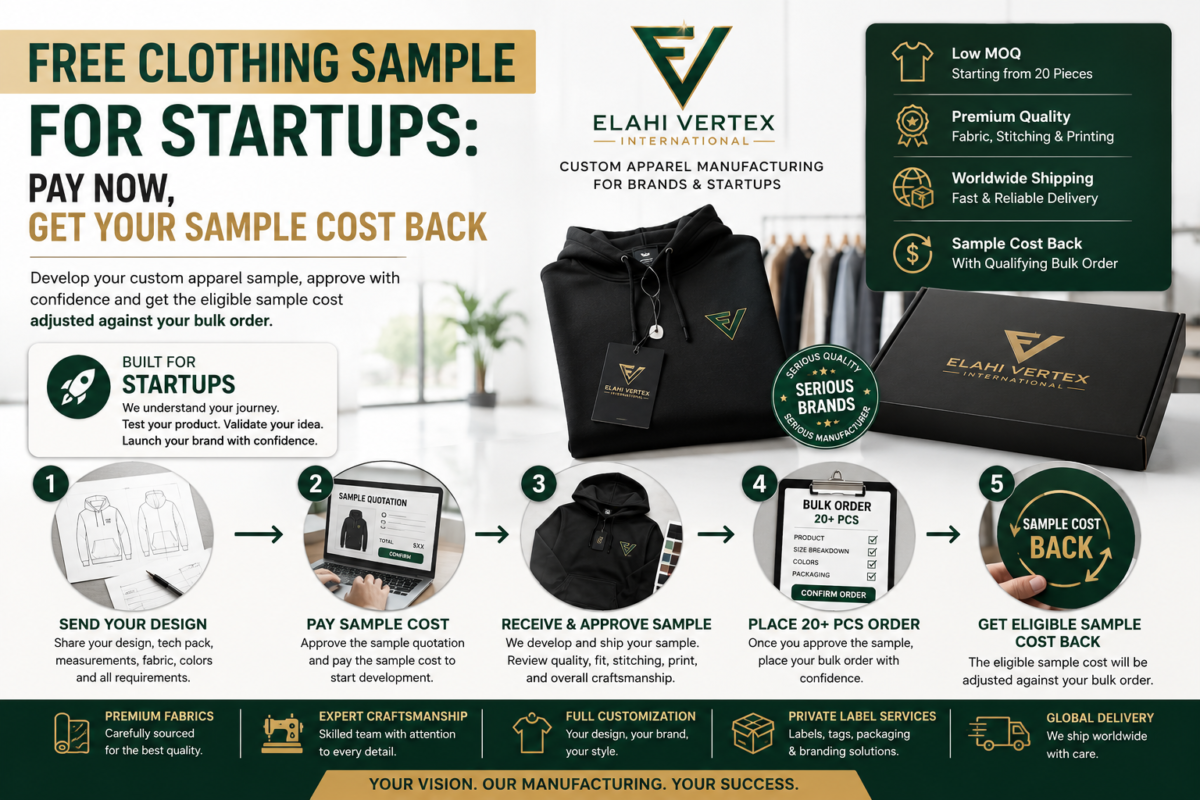


Building a successful sportswear brand requires more than creating an attractive logo, choosing performance fabrics and launching products online. Behind every successful collection is a supply chain capable of turning ideas into consistent products at the right quality, quantity, price and delivery time.
Why Supplier Dependency Matters to Sportswear Brands
Supplier Dependency can become a serious business risk when a sportswear brand relies on one manufacturer for most or all of its production.
One unexpected disruption can affect inventory, launches, customer orders and revenue.
Supplier Dependency Can Limit Brand Growth
As order volumes increase, Supplier Dependency can create capacity problems.
A manufacturer that handles 100 pieces successfully may not always have the capacity, materials or flexibility required when demand suddenly reaches thousands of pieces.
Supplier Dependency Creates a Single Point of Failure
Strong supplier relationships are valuable, but excessive Supplier Dependency means one production problem can affect an entire collection.
Brands should understand where these single points of failure exist before an emergency occurs.
Reduce Supplier Dependency With a Backup Manufacturer
One practical way to reduce Supplier Dependency is to qualify a backup manufacturer before you actually need one. The objective isn’t necessarily to replace your existing supplier, but to create another tested production option.
Elahi Vertex International and Supplier Dependency
Elahi Vertex International helps sportswear brands reduce Supplier Dependency by offering an additional OEM/ODM and private-label manufacturing option. Brands can test us with product development, sampling and controlled production before deciding whether to establish us as a second-source manufacturing partner.
One of the most underestimated threats is supplier dependency.
Supplier dependency develops when a sportswear brand becomes so reliant on one manufacturer, production route or sourcing relationship that disruption at that supplier can disrupt the entire business.
For a young brand, that dependency may not initially feel dangerous. Having one trusted factory can actually simplify communication, sampling and production. Problems appear when the business grows but its sourcing strategy does not grow with it.
A delayed production run can become a delayed launch.
A capacity problem can become an inventory shortage.
An unexpected MOQ increase can damage cash flow.
A quality problem can leave the brand without an alternative production route.
A successful sportswear company therefore should not simply ask:
“Do we have a good manufacturer?”
It should also ask:
“Could our business continue operating if this manufacturer suddenly couldn’t fulfill our next order?”
This guide examines nine supplier dependency risks sportswear, activewear, teamwear and private-label apparel businesses should understand—and explains how brands can build a stronger manufacturing strategy without unnecessarily abandoning good supplier relationships.
⸻
What Is Supplier Dependency in Sportswear Manufacturing?
Supplier dependency means a business relies heavily on a particular supplier for products, materials, manufacturing capacity, knowledge or services that would be difficult to replace quickly.
For a sportswear brand, supplier dependency can involve more than the factory itself.
It may include dependence on:
- one garment manufacturer;
- one fabric source;
- one sublimation facility;
- one pattern-development team;
- one embroidery supplier;
- one packaging source;
- one shipping route;
- one particular production region;
- or even one individual responsible for communication.
Supplier dependency isn’t automatically bad.
Strong supplier relationships are valuable.
The danger begins when dependency becomes a single point of failure.
The objective therefore isn’t to constantly replace suppliers. It is to understand which parts of the supply chain could seriously damage the business if they stopped functioning.
⸻
1. Depending on One Manufacturer for Every Product
The most obvious supplier dependency risk is also one of the easiest to overlook.
Imagine a sportswear company sells:
basketball uniforms, soccer kits, tracksuits, training shirts, hoodies and custom teamwear.
Every product comes from one manufacturer.
Initially this feels efficient. There is one contact, one payment relationship and one production system.
But the brand has effectively connected almost its entire revenue-generating product range to one external production point.
If that manufacturer experiences a capacity shortage, machinery problem, labor disruption, material delay or other production issue, multiple categories can be affected simultaneously.
Better approach
Brands should identify their mission-critical products and understand how quickly another qualified manufacturer could reproduce them.
That does not necessarily mean splitting every purchase between multiple factories.
It means building optionality.
A second manufacturer can initially be tested with:
- samples;
- one SKU;
- one small collection;
- replenishment production;
- development work;
- or a limited trial order.
The objective is not disloyalty.
The objective is resilience.
⸻
2. Having No Backup Manufacturing Partner
A backup manufacturer shouldn’t first be searched for after a production emergency happens.
That is already too late.
When a brand urgently needs inventory, it has less negotiating power and less time to evaluate:
fabric,
construction,
measurements,
printing,
color matching,
branding,
packaging,
quality control,
and shipping.
The brand may then choose a replacement supplier based on urgency rather than capability.
This is one of the most important lessons surrounding supplier dependency:
Qualify alternatives while your existing supply chain is working—not when it has already failed.
A backup manufacturing relationship can begin very small.
Develop a sample.
Compare workmanship.
Test communication.
Review a specification sheet.
Understand realistic MOQ.
Discuss lead time.
Test repeatability.
Then keep the relationship available.
The second supplier doesn’t have to replace the first.
It creates manufacturing insurance.
⸻
3. Allowing the Manufacturer to Own Too Much Product Knowledge
This supplier dependency problem can be particularly painful for growing apparel businesses.
Suppose the manufacturer knows:
your exact measurements,
patterns,
fabric composition,
GSM,
Pantone colors,
print placement,
stitch construction,
labels,
packaging,
grading,
and finishing requirements.
But the brand itself does not maintain proper records.
Changing manufacturers becomes extremely difficult.
The problem isn’t simply supplier dependency.
It is information dependency.
Every serious apparel brand should maintain its own product specifications.
That can include:
- technical packs;
- measurement charts;
- approved artwork;
- Pantone references;
- fabric specifications;
- GSM;
- stitching instructions;
- label dimensions;
- packaging requirements;
- approved sample photographs;
- print dimensions;
- embroidery dimensions;
- revision history.
Your manufacturer should execute your product.
Your company should retain the knowledge required to reproduce it.
⸻
4. Ignoring Production-Capacity Risk
A manufacturer may perform extremely well when a brand orders 50 pieces.
That does not automatically mean the same manufacturing relationship will work when demand reaches:
500,
2,000,
5,000,
or 10,000 pieces.
Supplier dependency becomes dangerous when the brand’s growth rate exceeds the supplier’s ability to support it.
Ask:
How much production capacity is realistically available?
What happens during peak season?
Are subcontractors used?
How does QC change as quantities increase?
Can repeat orders be prioritized?
How quickly can additional capacity be allocated?
Can several product categories run simultaneously?
A growing brand needs to understand these questions before a viral product or major wholesale opportunity creates sudden demand.
The worst moment to discover a capacity ceiling is after customers have already placed orders.
⸻
5. Accepting MOQ Changes Without an Alternative
Minimum order quantity directly affects working capital.
Imagine a growing brand normally orders 50 units per design.
Its manufacturer later changes the requirement to 200 units.
The brand now has three choices:
invest more cash,
reduce the number of designs,
or search for another supplier.
Without another manufacturing option, the supplier dependency has effectively limited the brand’s commercial flexibility.
This is particularly important for startups because early-stage brands often need to test:
new colors,
new designs,
new sports,
new markets,
and new customer segments.
Lower initial quantities can reduce inventory exposure.
As demand becomes predictable, quantities can increase.
A strong sourcing strategy therefore considers MOQ flexibility, not merely unit price.
⸻
6. Losing Negotiating Leverage
A healthy supplier relationship should not become a constant price negotiation.
Manufacturing partners also need sustainable margins.
However, extreme supplier dependency can make it difficult for a brand to evaluate whether:
pricing remains competitive,
lead times remain reasonable,
MOQ remains appropriate,
or production terms still match the market.
Having benchmark quotations or relationships with qualified alternatives provides information.
The objective isn’t:
“Who is cheapest?”
The better question is:
“Which manufacturing arrangement gives our brand the best combination of quality, consistency, MOQ, communication, lead time and landed cost?”
The lowest quotation can become very expensive when quality failures, delays or rework are included.
⸻
7. Depending on One Supplier for Seasonal Replenishment
Teamwear companies face a particularly important version of supplier dependency.
A club may order its initial uniforms successfully.
Then something happens:
A new player joins.
A jersey is damaged.
The club adds another team.
A sponsor changes.
More sizes are required.
The organization needs additional pieces quickly.
The original order may have been profitable.
But the customer’s opinion of the teamwear company can be determined by replenishment.
Sportswear businesses should therefore understand:
whether small repeat orders are possible;
whether artwork is retained;
whether previous specifications can be reproduced;
whether colors can be matched;
and what lead time applies to replenishment orders.
Reliable reordering can become a competitive advantage.
⸻
8. Treating Logistics as Separate From Supplier Dependency
A finished garment sitting inside a factory is not inventory available to your customer.
The product still has to move.
That means sportswear supply-chain planning should consider:
production time,
quality inspection,
packing,
export documentation,
courier/freight,
customs,
and final delivery.
International brands should therefore evaluate landed lead time, not only factory production time.
A supplier may manufacture quickly but still be unsuitable if the overall logistics system is unreliable.
Brands should also avoid promising customers delivery dates based entirely on best-case production assumptions.
Build contingency into important launches.
⸻
9. Waiting for a Supplier Failure Before Diversifying
This may be the most expensive supplier dependency mistake.
Businesses often diversify after something goes wrong.
But diversification is most useful before something goes wrong.
A brand with a reliable manufacturer does not need to terminate that relationship.
Instead, it can build a controlled second-source strategy.
A simple second-source process
Stage 1 — Identify
Select manufacturers that genuinely specialize in your product category.
Stage 2 — Verify
Review manufacturing capabilities, communication, customization and business information.
Stage 3 — Develop
Send one existing specification or new product concept.
Stage 4 — Sample
Evaluate dimensions, fabric, construction, color, printing and finishing.
Stage 5 — Trial
Place a manageable production order.
Stage 6 — Compare
Measure quality, communication, lead time and landed economics.
Stage 7 — Retain
If successful, maintain the relationship as an approved alternative manufacturing source.
This reduces supplier dependency without destroying an existing supplier relationship.
⸻
What Leading Sportswear Brands Can Teach Smaller Brands
Large sportswear businesses operate at a scale very different from a startup, so their strategies should not be copied blindly.
However, studying successful and currently influential brands can reveal important lessons about product positioning, innovation, community, specialization and diversification.
Here are 25 brands worth studying:
- Nike — Study the power of athlete-driven product storytelling and category ownership.
- Adidas — Study how performance products and lifestyle products can coexist under one brand.
- Puma — Observe the connection between sport, fashion and collaborations.
- Under Armour — Study performance-focused product positioning.
- Lululemon — Study premium positioning, but also learn why even established brands must continue innovating.
- New Balance — Study the combination of performance credibility and lifestyle relevance.
- ASICS — Observe category expertise and technical product positioning.
- Reebok — Study brand heritage and repositioning.
- Champion — Study the crossover between athletic heritage and everyday apparel.
- FILA — Observe how sporting heritage can support fashion positioning.
- HOKA — Study how distinctive product design can challenge much larger incumbents.
- On — Study technology-led differentiation and premium performance positioning.
- Salomon — Study how technical outdoor credibility can cross into lifestyle demand.
- Gymshark — Study community-led growth and creator marketing.
- Vuori — Study premium activewear positioned beyond the gym.
- Alo Yoga — Study the intersection of wellness, lifestyle and apparel.
- Rhone — Study focused customer positioning.
- Ten Thousand — Study specialization around serious training.
- Tracksmith — Study niche community identity and premium running apparel.
- Bandit Running — Study how a younger running brand combines community, performance and culture.
- LSKD — Study community-building and activewear expansion.
- CSB — Study fast-growing digitally native women’s activewear.
- Outdoor Voices — Study differentiated brand language and recreational positioning.
- Athleta — Study broad women’s performance and lifestyle positioning.
- Sweaty Betty — Study premium women’s activewear merchandising.
The important lesson isn’t that a startup should imitate Nike or Lululemon.
It is almost the opposite.
Smaller brands can move faster.
They can test smaller collections.
They can speak directly to niche communities.
They can change designs rapidly.
They can develop closer customer relationships.
Their manufacturing strategy should preserve those advantages.
⸻
25 Manufacturing Competitors and Industry Players Worth Benchmarking
Sportswear founders should also understand what manufacturers themselves are offering.
A manufacturer comparison should examine more than price. Look at MOQ, sampling, customization, specialization, private-label capabilities, lead times, communication, quality systems and scalability.
Industry manufacturers and competitors worth benchmarking include:
- Rajco Industries
- Forward Sports
- Mir Yousaf
- ASZ Industries
- ZipaSports
- ASA Industries
- SAMPRO International
- Sportz Apparel
- Bromely Sports
- Southern Bell Industries
- Bralen Industries
- ALOWA Enterprises
- MHK Sports
- Qalandar SportsWear
- Rifat Sports Wears
- True Fit Sportswear
- Khijaali Industry
- Sazman Sports
- Zeyn Industries
- Sublimation House
- Athletico Sports
- Tenth Sports
- Sports Apparel Manufacturers
- Extreme Sportswear
- Custom Sportswear Manufacturer
A buyer should independently verify any prospective supplier before placing production. A polished website alone is not manufacturing proof.
Compare actual samples, specifications, communication, documentation, production terms and commercial suitability.
⸻
Why Startups Are Especially Vulnerable to Supplier Dependency
Startups face a difficult manufacturing equation.
They need professional products but usually don’t yet have predictable demand.
They want customization but cannot always justify huge quantities.
They need competitive unit economics but must protect cash.
They want speed but cannot afford expensive mistakes.
They need manufacturers capable of scaling—but don’t want to order thousands of units before validating demand.
This is precisely why supplier dependency deserves attention early.
A startup shouldn’t build its entire operating model around assumptions such as:
“Our manufacturer will always keep the same MOQ.”
“Our current fabric will always remain available.”
“Our supplier will always have capacity.”
“Our first sample guarantees every future production run.”
“Our shipping cost will remain unchanged.”
“Our current bestselling design will remain our bestseller.”
Strong businesses plan for change.
⸻
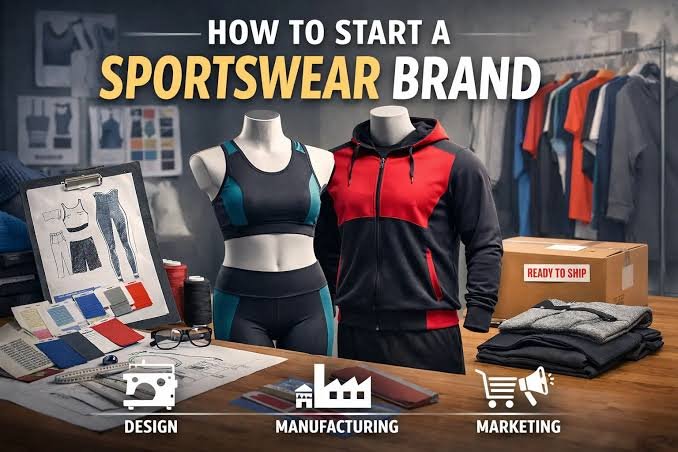
15 Growing and Challenger Brands Startup Founders Can Study
These companies are not being presented as Elahi Vertex International customers, nor are all of them technically startups today. They are useful examples of brands that built distinctive positions in competitive athletic, running, fitness or activewear markets.
- Gymshark — community-led fitness positioning.
- Vuori — performance combined with everyday lifestyle.
- Alo Yoga — wellness ecosystem around apparel.
- Rhone — clear audience positioning.
- Ten Thousand — focused training identity.
- Tracksmith — running culture rather than generic sportswear.
- Bandit Running — community plus technical running products.
- Janji — running-focused brand identity.
- District Vision — specialized performance/lifestyle positioning.
- SET ACTIVE — recognizable activewear aesthetic.
- Year of Ours — fashion-influenced activewear positioning.
- LSKD — community-focused activewear growth.
- CSB — focused women’s activewear development.
- TALA — digitally native activewear positioning.
- Adanola — lifestyle-led activewear branding.
The lesson isn’t “copy these brands.”
It is:
Find a customer group you understand better than a generic competitor does, develop products specifically for them, and build manufacturing infrastructure capable of supporting the promise your marketing makes.
⸻
Why Elahi Vertex International?
A sportswear manufacturer should not merely sew garments.
The manufacturer should help translate an approved specification into repeatable production.
Elahi Vertex International operates from Sialkot, Pakistan and focuses on custom sportswear, teamwear, activewear, streetwear, boxing wear and private-label apparel manufacturing.
Brands can explore our:
About Elahi Vertex International
The objective is straightforward:
Your brand owns the identity. We help manufacture the product behind it.
⸻
About Elahi Vertex International
Elahi Vertex International is a custom apparel manufacturer and exporter based in Sialkot, Pakistan.
Our manufacturing scope includes custom sportswear, teamwear, jerseys, activewear, streetwear, boxing apparel, gymwear and private-label clothing for brands, teams, clubs, academies, wholesalers, retailers and other international buyers.
We support made-to-order manufacturing according to buyer requirements involving design, fabric, GSM, measurements, colors, branding and packaging.
Learn more about the company through our About Us page.
For buyers who want to understand the production services themselves, explore our Manufacturing page.
⸻
Our Work Specifications
A professional manufacturing relationship begins with specifications.
Depending on the product, a buyer’s manufacturing brief may cover:
Product type — jersey, shorts, tracksuit, T-shirt, hoodie, compression wear or another garment.
Fabric — composition and intended performance.
GSM — appropriate weight for the product and market.
Measurements — standard sizing or buyer-provided size charts.
Fit — athletic, regular, relaxed or custom.
Colors — artwork, Pantone references or approved colors.
Printing — sublimation, screen printing, heat transfer or another suitable process.
Embroidery — logos, badges and other embroidered details where applicable.
Branding — woven labels, printed labels, hangtags and private-label requirements.
Packaging — standard or customized packaging according to project requirements.
Artwork — logos, graphics, names, numbers and sponsor placements.
Sample approval — specifications should be reviewed before bulk production.
Quality control — finished production should be checked against approved requirements.
Shipping — production planning should account for the final destination and delivery requirements.
Buyers can see our broader workflow on the Elahi Vertex International Manufacturing page and review examples through our Portfolio.
⸻
Why Startups Can Use Elahi Vertex International as a Development Partner
Startups don’t need the same manufacturing structure as multinational sportswear corporations.
They need something more practical:
room to validate.
That means discussing the product before blindly committing to a huge production quantity.
A startup should be able to move through:
Idea → specification → sample → evaluation → controlled production → market feedback → reorder → scale.
This approach is especially valuable because startup founders are still discovering:
which products customers prefer;
which colors convert;
which sizes sell;
which price points work;
which fabrics receive the best feedback;
and which designs deserve larger inventory investment.
The manufacturer should therefore understand that a startup’s first order isn’t necessarily the final version of its business.
It is the beginning of a learning process.
Explore our Custom Clothing Manufacturing service for product-development and manufacturing information.
⸻
The Elahi Vertex Second-Source Framework
This is where we can offer brands something more useful than another generic “best quality manufacturer” promise.
THE EVI SECOND-SOURCE FRAMEWORK
A brand does not need to fire its current supplier to talk to us.
If your current manufacturer performs well, keep that relationship.
Instead, Elahi Vertex International can be evaluated as a potential second manufacturing source.
STEP 1 — SEND ONE EXISTING PRODUCT
Choose a commercially important product.
It could be:
a basketball uniform;
soccer kit;
training T-shirt;
tracksuit;
hoodie;
boxing garment;
or activewear product.
STEP 2 — SEND THE SPECIFICATION
Provide available information such as:
tech pack;
measurements;
fabric;
GSM;
artwork;
colors;
branding;
labels;
packaging;
and target quantity.
STEP 3 — DEVELOPMENT REVIEW
We review what is required to reproduce or develop the product.
Questions are resolved before production wherever possible.
STEP 4 — SAMPLE
Develop a sample so the brand can physically assess:
fit;
fabric;
construction;
printing;
branding;
and finishing.
STEP 5 — COMPARE
Do not choose Elahi Vertex International because we say we’re good.
Compare.
Compare the sample against your required standard.
Compare communication.
Compare customization.
Compare commercial terms.
Compare production planning.
Compare landed economics.
STEP 6 — SMALL COMMERCIAL TEST
If the sample passes evaluation, move into an appropriate trial production order.
STEP 7 — KEEP BOTH OPTIONS
If Elahi Vertex International performs successfully, the brand has gained something extremely valuable:
manufacturing optionality.
You may continue using your primary supplier.
But the next time you face:
capacity pressure;
a new product launch;
a smaller experimental collection;
urgent replenishment;
a new sports category;
or supplier dependency concerns,
you already know another manufacturing team.
That is fundamentally different from asking a buyer to switch suppliers because of a cold email.
⸻
Why Work With Elahi Vertex International?
We don’t need to replace a supplier who is already serving you well.
We would rather earn a position through execution.
Product development
Brands can approach us with existing specifications or products requiring development.
See our Custom Clothing Manufacturing service.
OEM manufacturing
Products can be manufactured according to buyer-provided specifications.
Explore our Manufacturing capabilities.
ODM support
Brands developing concepts can discuss product requirements and manufacturing feasibility.
Private label manufacturing
Products can be developed around the buyer’s brand identity, labels and packaging requirements.
Sportswear specialization
Our product focus includes sportswear, teamwear and related performance apparel.
See our Custom Basketball Uniform manufacturing page and Custom Soccer Uniform page.
Portfolio visibility
Brands can review our manufacturing categories through the Elahi Vertex International Portfolio.
Project examples
Our Case Studies show examples of the types of manufacturing projects our business is positioned to support.
⸻
Don’t Switch Your Manufacturer—Test Your Supply Chain
This is the central message of this guide.
If your current manufacturer provides:
consistent quality,
competitive economics,
reliable communication,
appropriate MOQ,
acceptable lead times,
and dependable production,
there may be no reason to replace them.
But supplier dependency is a different question.
Ask yourself:
If our primary manufacturer became unavailable tomorrow, how many weeks would it take us to get our bestselling product manufactured somewhere else at an acceptable standard?
If the answer is:
“We don’t know,”
then your company has identified a supply-chain risk worth addressing.
⸻
A Manufacturing Resilience Scorecard
Give your business one point for every YES:
1. We possess our own product specifications.
2. We retain our own artwork and brand files.
3. We know the fabric and GSM used for important products.
4. We maintain approved measurement charts.
5. We understand our true landed cost.
6. We know our supplier’s realistic production lead time.
7. We understand replenishment terms.
8. We have documented quality expectations.
9. We know what happens if our normal material becomes unavailable.
10. We have evaluated at least one alternative manufacturing source.
8–10
Your sourcing infrastructure appears comparatively resilient, although individual risks should still be reviewed.
5–7
There are meaningful gaps worth addressing.
0–4
Your business may have substantial supplier dependency.
This score isn’t a certification or formal risk assessment. It is a practical prompt for identifying vulnerabilities before they become emergencies.
⸻
Supplier Dependency FAQ
Is using one clothing manufacturer always a mistake?
No.
A strong single-supplier relationship can simplify production and communication. The risk arises when the business would be unable to continue operating if that supplier became unavailable.
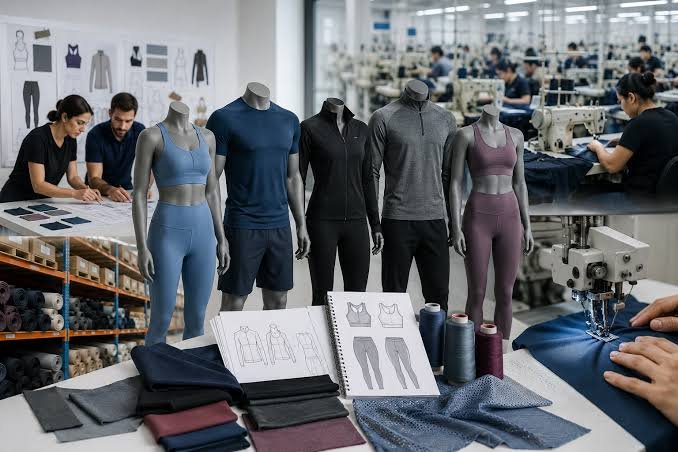
Should a startup use multiple manufacturers immediately?
Not necessarily.
Too many manufacturers can create complexity. Startups should first understand their products and specifications. A second source becomes increasingly useful as sales, SKU count and operational risk increase.
What is a backup apparel manufacturer?
A backup manufacturer is a supplier that has already been evaluated and can potentially provide production capacity if the primary supplier cannot satisfy a requirement.
Should I leave my current sportswear manufacturer?
Not simply because another manufacturer contacts you.
Switch when there is a legitimate commercial reason—or maintain the current relationship while testing a second source.
How should I compare sportswear manufacturers?
Compare:
product specialization,
sample quality,
fabric,
construction,
printing,
customization,
MOQ,
communication,
lead time,
quality control,
commercial terms,
and landed cost.
What should I send a manufacturer?
Ideally provide a tech pack or clear product specification containing measurements, fabric requirements, GSM, artwork, colors, branding, labels, packaging and expected quantity.
Can an existing product be used as a reference?
Depending on the project, an existing sample plus specifications can help communicate construction and fit requirements.
Why is supplier dependency dangerous for teamwear brands?
Teamwear companies often face strict seasons, tournament dates and replenishment requirements. Manufacturing disruption can therefore affect not only inventory but customer relationships.
How can supplier dependency be reduced?
Document product specifications, understand supply-chain risks, maintain realistic inventory planning and qualify alternative production capacity before an emergency occurs.
⸻
Final Thoughts: Build a Brand That Can Survive Manufacturing Disruption
Great branding cannot compensate for products that never arrive.
Strong advertising cannot solve unavailable inventory.
A growing community cannot purchase a bestseller that cannot be replenished.
That is why supplier dependency deserves attention from sportswear founders long before the business becomes large.
Your manufacturing relationships should become stronger as your brand grows—but your company should simultaneously become less vulnerable to any single point of failure.
Document your products.
Protect your specifications.
Understand your landed costs.
Plan for capacity.
Prepare for replenishment.
Build supplier relationships.
And qualify alternatives before you urgently need them.
Elahi Vertex International does not need you to abandon a manufacturer who already performs well.
We would rather give you another option.
Your current manufacturer can remain Supplier #1. Let Elahi Vertex International earn the right to become Supplier #2.
Send us one product specification.
We can discuss the fabric, GSM, sizing, artwork, branding, quantity and manufacturing requirements and determine whether the project fits our capabilities.
If it does, start with development.
Evaluate the result.
Then decide based on the product—not promises.
Explore Elahi Vertex International, review our Manufacturing Capabilities, see our Portfolio or Request a Quote.
One supplier can manufacture your collection.
Two qualified manufacturing options can protect your business.
One Team. One Goal. One Victory.