

Finding a private label sportswear manufacturer is easy.
Finding a manufacturing partner capable of understanding your product idea, fabric requirements, sizing, fit, branding, labels, packaging, sampling, quality expectations, and future growth is much harder.
For sportswear startups, established athletic brands, teamwear companies, fitness businesses, wholesalers, distributors, retailers, e-commerce businesses, clubs, academies, and sourcing professionals, the manufacturing decision can influence almost every part of the final product.
A low quotation cannot compensate for the wrong fabric.
A beautiful digital mockup cannot compensate for poor fit.
A strong logo cannot compensate for inconsistent branding.
A fast first reply cannot compensate for weak order management.
And a finished garment cannot build a reliable brand if the buyer and manufacturer never agreed on what the finished product was supposed to be.
That is why choosing a private label sportswear manufacturer should be treated as a product-development and supply-chain decision rather than a simple purchasing transaction.
Elahi Vertex International is based in Sialkot, Pakistan and operates across custom sportswear, teamwear, activewear, boxing wear, streetwear, hoodies, sweatshirts, leather wear, and private-label apparel. Its published manufacturing structure includes custom production, OEM, ODM, private-label manufacturing, sampling, branding, packaging, and quality-control functions for international B2B buyers.
This guide explains 9 powerful reasons brands should consider Elahi Vertex International as a private label sportswear manufacturer, while also showing exactly what serious buyers should prepare before requesting a quotation.
The objective is not to make exaggerated promises.
The objective is to help qualified buyers decide whether Elahi Vertex International fits their product, brand, and manufacturing requirements—and then make it easy to start a real production discussion.
Choosing the right private label sportswear manufacturer can directly influence how successfully a sportswear brand moves from an initial idea to a finished product. A capable private label sportswear manufacturer should understand that buyers need more than garment production; they need support for fabric selection, sizing, fit, artwork, branding, labels, packaging, sampling, and quality expectations.
Elahi Vertex International works with buyer-defined specifications so brands can discuss the actual requirements of their collections instead of being limited to generic ready-made products. For startups, teamwear companies, wholesalers, distributors, and established brands, working with a private label sportswear manufacturer that follows a specification-driven process can make communication clearer throughout product development and bulk manufacturing.
A professional private label sportswear manufacturer should also give buyers control over how their brand appears on the finished product. This can include custom logos, woven labels, printed labels, neck labels, size labels, care labels, hangtags, artwork, and packaging according to the confirmed project requirements.
Elahi Vertex International allows private-label buyers to discuss these branding elements alongside the garment itself, helping create a more coordinated product identity.
When comparing suppliers, brands should therefore evaluate whether each private label sportswear manufacturer can follow their branding specifications consistently from sample development through bulk production. Selecting a private label sportswear manufacturer should be based on the complete product and branding requirements rather than simply choosing the lowest initial quotation.
Fabric, GSM, measurements, and fit are equally important when evaluating a private label sportswear manufacturer. Sportswear buyers may require different fabrics and garment constructions depending on whether they are developing teamwear, activewear, gymwear, training apparel, compression products, or other performance clothing.
A suitable private label sportswear manufacturer should work from clearly defined product requirements and confirm project-specific details before production begins. Elahi Vertex International enables buyers to provide fabric preferences, GSM requirements, fit direction, size ranges, custom measurements, artwork, and additional manufacturing instructions.
This gives brands a stronger basis for evaluating samples and bulk production. For serious B2B buyers, the best private label sportswear manufacturer is one that understands that material and fit decisions are fundamental parts of the product, not secondary details added after branding.
Sampling is another important factor when selecting a private label sportswear manufacturer for a new or developing collection. A physical sample can help buyers review fabric, measurements, fit, construction, colors, printing, embroidery, labels, branding, and finishing before approving bulk manufacturing. Elahi Vertex International incorporates sampling and prototyping into its custom manufacturing workflow where required by the project.
This allows the buyer and private label sportswear manufacturer to identify revisions before the approved specification becomes the basis for production. Brands should use this stage carefully, record requested changes clearly, and approve one final version before bulk manufacturing begins. A responsible private label sportswear manufacturer should encourage clear specifications and documented approvals rather than relying on vague instructions that can create avoidable misunderstandings later.
For brands in the USA, UK, Europe, and other international markets, choosing a private label sportswear manufacturer should ultimately come down to whether the supplier can support the buyer’s real commercial and product requirements. Elahi Vertex International combines custom sportswear manufacturing with OEM, ODM, private-label development, custom branding, sampling, sublimation, quality control, and buyer-defined manufacturing specifications.
Brands searching for a private label sportswear manufacturer can prepare their product type, quantity, fabric, GSM, fit, sizing, artwork, labels, packaging, and destination before requesting a quotation. Providing this information allows the private label sportswear manufacturer to evaluate the project more accurately and reduces unnecessary assumptions. For buyers ready to build a custom sportswear collection, a detailed RFQ is the strongest starting point for discussing production with Elahi Vertex International.
Quick Answer: Why Choose Elahi Vertex International as a Private Label Sportswear Manufacturer?
Brands can consider Elahi Vertex International because its published manufacturing model supports:
- Buyer-defined custom product development
- A broad sportswear and teamwear manufacturing scope
- OEM and ODM manufacturing pathways
- Custom fabric, GSM, fit, measurements, and construction
- Private labels, branding, hangtags, and packaging
- Sampling and prototyping before bulk approval
- Multiple printing, sublimation, and branding methods
- Quality control based on approved specifications
- A structured B2B RFQ process designed around real manufacturing details
The right buyer is not someone simply asking:
“What is your cheapest T-shirt?”
The stronger fit is a brand, club, distributor, retailer, startup, or sourcing professional prepared to discuss:
Product + Quantity + Design + Fabric + GSM + Fit + Sizes + Branding + Labels + Packaging + Target Market
If that describes your project, continue reading.
If your specifications are already prepared, you can move directly to Elahi Vertex International’s custom manufacturing inquiry:
Submit a Custom Manufacturing RFQ
What Is a Private Label Sportswear Manufacturer?
A private label sportswear manufacturer produces sportswear that is sold under the buyer’s brand identity.
The garment may be manufactured by the supplier, but the customer sees the buyer’s:
- Brand name
- Logo
- Label
- Product identity
- Packaging
- Color system
- Fit direction
- Collection identity
Private-label manufacturing can range from relatively simple branding to highly customized product development.
Basic Private Label
A simpler project may involve:
- Existing garment concept
- Buyer logo
- Custom neck label
- Size label
- Hangtag
- Packaging
More Customized Private Label
A more developed project can include:
- Custom pattern
- Custom measurements
- Buyer-selected fabric
- Custom GSM
- New colorways
- Printing
- Embroidery
- Sublimation
- Custom trims
- Custom labels
- Custom packaging
OEM Private Label Sportswear
A buyer that already has:
- Tech packs
- Artwork
- Patterns
- Measurement charts
- Material requirements
- Branding specifications
may need an OEM-style production relationship.
Elahi Vertex International describes its OEM service as manufacturing according to buyer-provided designs and approved specifications, including fabric, measurements, patterns, colors, printing, embroidery, labels, trims, branding, and packaging.
ODM Sportswear Development
Not every buyer has a complete tech pack.
A startup may have:
- A reference garment
- Inspiration images
- A rough sketch
- A product concept
- A target customer
- A desired retail position
Elahi Vertex International’s ODM workflow is designed around concept development, materials, patterns, sampling, approval, and production rather than assuming every buyer arrives with production-ready documentation.
That distinction matters.
A manufacturer that expects a complete specification is not necessarily the right partner for an early-stage brand.
A manufacturer that provides development support may not be necessary for a mature brand with its own technical team.
The correct relationship depends on what the buyer actually needs.
Why Choosing the Right Private Label Sportswear Manufacturer Matters
Sportswear manufacturing combines aesthetic, technical, and commercial requirements.
A sportswear product can fail even when it looks good online.
Problems may come from:
- Incorrect measurements
- Wrong fabric
- Poor stretch recovery
- Inconsistent stitching
- Color variation
- Incorrect branding
- Weak print execution
- Labels in the wrong position
- Incorrect size grading
- Packaging errors
- Miscommunication
- Uncontrolled revisions
- Poor repeat-order documentation
Imagine two suppliers quoting the same compression shirt.
Supplier A quotes less.
Supplier B quotes more.
But Supplier A is pricing a different:
- Fabric composition
- GSM
- construction
- seam type
- size chart
- logo method
- label specification
- packaging format
The quotations are not really comparable.
That is why the strongest buyers compare:
Specification against specification
instead of:
Price against price
This article is designed to help buyers do exactly that.
Reason 1: Elahi Vertex International Builds Around Buyer-Defined Specifications
The first reason to consider Elahi Vertex International as a private label sportswear manufacturer is the emphasis on buyer-defined manufacturing.
Private label should mean more than changing the logo.
The buyer should be able to define what the product is.
Elahi Vertex International’s custom manufacturing information states that production can be developed around buyer designs, specifications, materials, measurements, branding, and production requirements.
What Can a Buyer Define?
Depending on the project, the specification can cover:
- Product type
- Fabric
- GSM
- Colors
- Fit
- Measurements
- Patterns
- Artwork
- Printing
- Embroidery
- Sublimation
- Labels
- Branding
- Packaging
The exact combination depends on the product.
Why This Matters to Sportswear Brands
A sportswear brand needs differentiation.
If every brand buys the same product from the same stock catalog, differentiation becomes difficult.
Private-label development creates opportunities to differentiate through:
Fit
A brand can build its identity around:
- Athletic fits
- Relaxed training fits
- Compression fits
- Oversized warm-up pieces
- Women’s fitted products
- Youth teamwear
Fabric
Fabric influences:
- Hand feel
- Weight
- stretch
- recovery
- opacity
- texture
- print appearance
- customer perception
Product Details
Small construction differences can influence how the finished garment feels.
Examples include:
- Neckline
- Armhole
- waistband
- pocket design
- side panels
- seams
- cuffs
- drawcord
- hem
Brand Identity Should Exist in the Product
A strong private-label collection should not depend solely on a chest logo.
Brand identity can be carried through:
Color + Fit + Fabric + Construction + Artwork + Labels + Packaging
That creates a more complete product.
Example: Private Label Training Shirt
Instead of asking:
“Give me a gym T-shirt with my logo.”
A stronger brief says:
Product: training shirt
Target wearer: men’s gym/conditioning
Fit: athletic
Fabric: performance fabric — options required
Target weight: REQUIRES CONFIRMATION
Neck: crew neck
Sleeve: short sleeve
Logo: left chest
Back: graphic artwork
Label: private neck label
Packaging: individually packed
Sizes: S–2XL
Target market: USA
That is a manufacturing brief.
The second version gives a private label sportswear manufacturer something meaningful to develop.
Reason 2: A Broad Sportswear and Teamwear Manufacturing Scope
A sportswear brand rarely stays with one product forever.
It may begin with:
- One jersey
- One pair of shorts
- One compression shirt
- One tracksuit
Then expand.
Elahi Vertex International’s published manufacturing scope includes sportswear, teamwear, activewear, boxing wear, streetwear, hoodies, sweatshirts, leather wear, and private-label clothing.
That breadth can matter for brands planning collections rather than isolated products.
Sportswear Products a Brand May Develop
Depending on project capability and confirmation, a sportswear range might include:
- Soccer jerseys
- Basketball uniforms
- Rugby kits
- Volleyball uniforms
- Lacrosse uniforms
- American football uniforms
- Baseball uniforms
- Netball teamwear
- Training shirts
- Sports shorts
- Compression tops
- Compression shorts
- Tracksuits
- Hoodies
- Sweatshirts
- Warm-up garments
Why Product Breadth Matters
Imagine a startup launches successfully with a custom soccer jersey.
Six months later it wants:
- Shorts
- Training jersey
- Tracksuit
- Hoodie
If the manufacturing relationship is working, keeping related products inside one broader development ecosystem can make communication easier.
The buyer still needs new specifications.
But it already has established:
- Brand colors
- Logo files
- label artwork
- packaging direction
- size philosophy
- communication workflow
Collection Consistency
A private-label brand should ask:
Do all of our products look like they belong to the same company?
Consistency can involve:
- Logo scale
- Label design
- Packaging
- Typography
- color palette
- trim details
- artwork direction
A manufacturer capable of working across related product categories may help make that coordination more practical.
Teamwear Brands Need Even More Breadth
A teamwear supplier may serve several sports.
One customer may request soccer.
Another needs rugby.
Another needs volleyball.
The B2B buyer may therefore prefer one manufacturing relationship capable of discussing multiple sports categories.
Elahi Vertex International’s current product structure spans numerous custom teamwear sports rather than focusing on a single game.
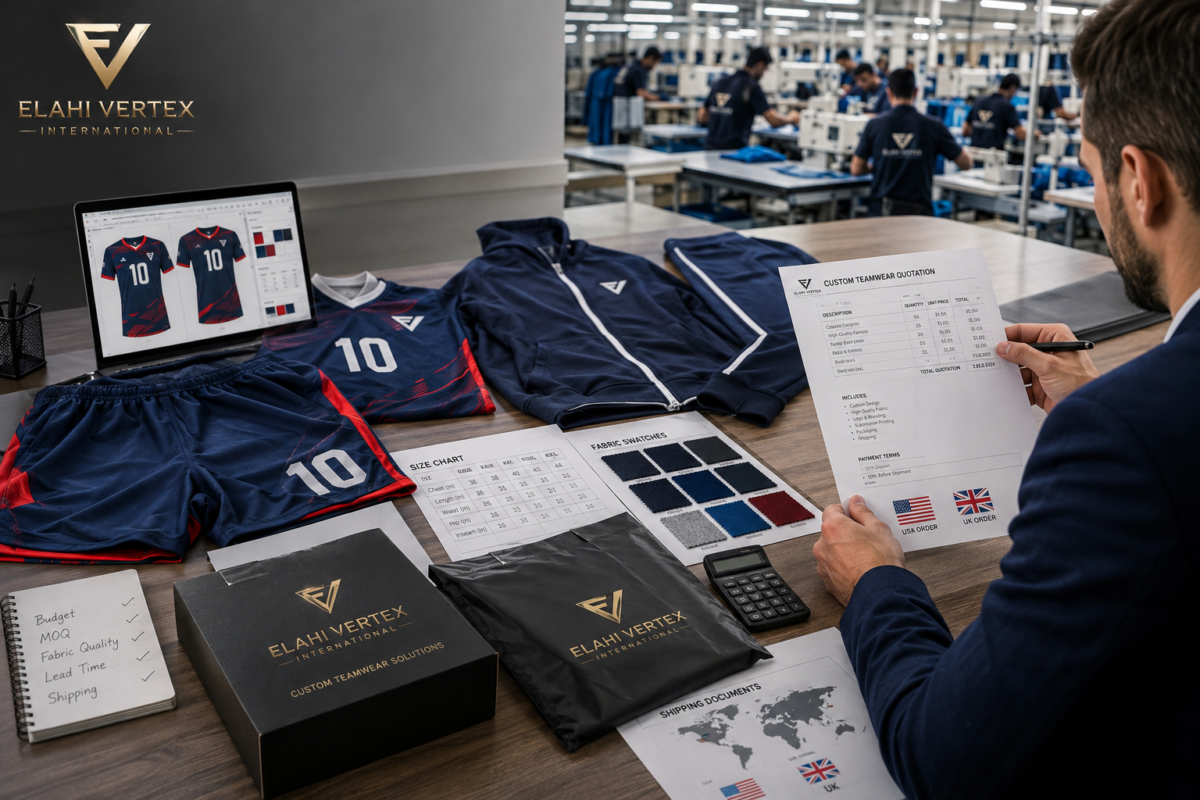
[IMAGE 2 — PLACE AFTER REASON 2]
ALT: private label sportswear manufacturer developing jerseys shorts tracksuits and teamwear collections
Reason 3: OEM and ODM Give Different Brands Different Starting Points
One of the strongest signs of a useful private label sportswear manufacturer is flexibility in how the development relationship begins.
Some brands know exactly what they want.
Others know what they want to achieve but not yet how to manufacture it.
Those buyers should not be forced through the same workflow.
OEM: When Your Brand Already Has the Specification
OEM is particularly relevant when the buyer already possesses detailed product information.
Examples:
- Tech pack
- Measurements
- construction instructions
- artwork
- material references
- labels
- packaging
The manufacturer’s job is primarily execution against the approved standard.
Elahi Vertex International’s OEM page states that its OEM service is designed for buyers that already have designs, specifications, and product requirements ready for production.
OEM Buyer Example
A UK teamwear company provides:
- Rugby jersey tech pack
- Front/back pattern artwork
- approved size chart
- player-number dimensions
- color references
- logo files
- neck-label artwork
- packaging requirements
That is a strong OEM-style brief.
ODM: When the Brand Needs More Development Support
An early-stage sportswear startup might instead say:
“I want to launch a premium training collection with fitted shirts, shorts, and tracksuits. I have branding but not complete technical specifications.”
That is a different starting point.
Elahi Vertex International describes its ODM process as:
Concept → Product Development → Material Selection → Pattern Making → Sampling → Approval → Bulk Production.
Why the Difference Matters Commercially
A buyer that already paid a technical designer does not want the manufacturer unnecessarily redesigning everything.
A buyer with only an idea does not want to hear:
“Send final production files.”
The manufacturing pathway should match the buyer’s maturity.
Ask Yourself Which Buyer You Are
You Are Closer to OEM If You Have:
- Detailed tech packs
- exact measurements
- materials
- finalized artwork
- clear construction
- labels
- packaging specs
You May Need More ODM/Product Development If You Have:
- Reference images
- concept sketches
- branding
- target market
- rough fit idea
- initial fabric direction
Knowing this before contacting the factory saves time.
Reason 4: Fabric, GSM, Fit and Measurements Can Be Part of the Manufacturing Brief
A private label sportswear manufacturer should understand that the garment itself matters more than the logo printed on it.
Fabric, fit, and sizing can determine whether customers reorder or return.
Fabric Is a Commercial Decision
Sportswear fabrics can differ in:
- Composition
- knit structure
- GSM
- stretch
- recovery
- opacity
- surface texture
- print compatibility
- hand feel
A buyer should not simply request:
“Good quality fabric.”
That phrase means almost nothing technically.
Better Fabric Questions
Ask:
- What composition is proposed?
- What is the fabric construction?
- What GSM is proposed?
- What stretch does it have?
- How does it recover?
- Is it opaque at the required stretch?
- Is the surface suitable for the intended printing?
- Can I review the actual material during sampling?
GSM Should Not Be Used Alone
GSM means grams per square metre.
It indicates fabric weight.
It does not automatically tell you:
- Durability
- softness
- breathability
- stretch
- print quality
- recovery
- customer preference
Two fabrics at the same GSM can behave very differently.
Fit Is Part of Brand Identity
Think about recognizable sportswear brands.
Many customers can describe the fit without even mentioning the logo.
A brand may become known for:
- Compression fit
- Athletic fit
- oversized warm-up fit
- short athletic cuts
- relaxed training pieces
That is why fit should be designed intentionally.
Measurements Need Definitions
“Chest 20 inches” is incomplete unless both sides understand how it is measured.
A proper size chart should define:
- Measurement point
- garment position
- units
- tolerance where applicable
Possible shirt measurements include:
- Chest
- body length
- shoulder
- sleeve
- sleeve opening
- neck
- hem
Possible shorts measurements include:
- Waist
- hip
- rise
- inseam
- outseam
- leg opening
EVI’s Inquiry Form Captures These Variables
Elahi Vertex International’s custom order workflow includes dedicated fields for fabric type, GSM, fit style, size range, and custom-size-chart instructions.
That is commercially important.
It means the RFQ can begin with actual manufacturing information rather than only a product name.
Buyer Action
Before requesting your quotation, prepare:
Fabric preference:
Target GSM:
Fit:
Size range:
Custom measurements:
Target market:
If you do not know an answer, say so.
“Need manufacturer recommendation” is better than inventing a specification you do not understand.
[IMAGE 3 — PLACE AFTER REASON 4]
ALT: private label sportswear manufacturer fabric GSM sizing fit and measurement development
Reason 5: Private Labels, Branding, Hangtags and Packaging Build the Brand Beyond the Garment
Private-label sportswear is not private label because the garment contains a logo.
The customer experiences the brand through many touchpoints.
Elahi Vertex International’s published branding options include woven labels, printed labels, neck labels, size labels, care labels, hangtags, embroidery, printed logos, and custom packaging.
Its dedicated private-label manufacturing page also identifies product design, fabric selection, labels, branding, packaging, and bulk production as parts of a private-label collection.
Main Brand Label
The main label may contain:
- Brand name
- Logo
- Product identity
Size Label
Customers need accurate size identification.
Consider:
- Placement
- typography
- size format
- region
Care Label
Care information can influence customer experience and may also be subject to destination-market requirements.
The buyer should determine what information is required for the intended market rather than expecting the manufacturer to guess.
Hangtags
A hangtag can reinforce:
- Brand story
- product name
- size
- SKU
- barcode
- price
- website
- social information
The exact content depends on the buyer.
Custom Packaging
Elahi Vertex International lists packaging possibilities including individual polybags, size stickers, brand labels, hangtags, cartons, and custom packaging depending on the project.
Why Packaging Matters for E-Commerce Brands
Imagine two identical products.
Product A
Arrives:
- Unidentified
- loose in a generic bag
- no size sticker
- no hangtag
Product B
Arrives:
- Correctly folded
- size identified
- branded as specified
- prepared according to retailer instructions
The product may be physically similar, but the operational value to the buyer is different.
Build a Brand Specification Sheet
Create one document containing:
Main Label
File: __________
Size: __________
Position: __________
Size Label
Style: __________
Position: __________
Care Label
Content: __________
Position: __________
Hangtag
File: __________
Attachment: __________
Packaging
Type: __________
Size sticker: Yes / No
SKU sticker: Yes / No
Custom requirement: __________
This removes ambiguity.
Do Not Leave Branding Until the Final Week
Branding should be discussed during development.
Late label changes can affect production flow.
The stronger sequence is:
Product Specification → Branding Specification → Sample → Approval → Bulk
not:
Bulk Production → “We forgot the labels.”
Reason 6: Sampling and Prototyping Reduce Uncertainty Before Bulk Production
Sampling is one of the most commercially valuable parts of custom manufacturing.
A buyer should use a sample as a decision tool.
Elahi Vertex International’s sampling workflow allows review of fit, measurements, fabric, colors, construction, printing, embroidery, labels, branding, and finishing before the finalized specification becomes the reference for bulk production.
A Digital Mockup Cannot Confirm Everything
A computer image can communicate:
- Colors
- graphics
- logo position
- overall concept
It cannot fully prove:
- Hand feel
- actual weight
- garment length
- stretch
- recovery
- opacity
- seam construction
- waistband behavior
- physical color
- print texture
- label feel
That is why sample approval matters.
What Should You Inspect?
1. Product Identity
Is this actually the product you asked for?
2. Fabric
Is the fabric correct?
3. Measurements
Measure it.
Do not guess.
4. Fit
Try the garment in the context for which it was designed.
5. Construction
Inspect:
- seams
- stitching
- neck
- armholes
- waist
- hem
- pockets
- trims
6. Artwork
Check:
- position
- size
- sharpness
- orientation
- color
7. Labels
Are they:
- correct
- readable
- properly positioned
8. Packaging
If packaging is part of the commercial presentation, review it as well.
Sample Feedback Should Be Measurable
Weak feedback:
“Make it a bit better.”
Strong feedback:
“Increase body length by 2 cm.”
Weak feedback:
“Logo looks too big.”
Strong feedback:
“Reduce chest logo width from approved draft size to X cm.”
The second style gives the manufacturer actionable information.
Create a Sample Approval Record
Use a table like this:AreaStatusRevisionFabricApproved—ChestRevise+1 cmBody lengthApproved—LogoReviseReduce widthMain labelApproved—PackagingPendingConfirm bagColorApproved—
Do not rely on memory.
Once Approved, Freeze the Specification
A buyer should clearly identify:
APPROVED FOR BULK PRODUCTION
and the date/version.
Then avoid casual changes.
Changing an approved product during production increases risk.
Mid-Article CTA
If you already have a reference garment, artwork, tech pack, or product idea, submit it with your target quantity and branding requirements:
Start a Private Label Sportswear RFQ
[IMAGE 4 — PLACE AFTER REASON 6]
ALT: private label sportswear manufacturer sample approval fabric fit labels and branding review
Reason 7: Multiple Decoration and Customization Methods Support Different Sportswear Designs
Different products need different decoration methods.
A strong private label sportswear manufacturer should not assume every logo should be produced the same way.
Elahi Vertex International’s published capabilities include sublimation, embroidery, printing, labels, custom branding, and other customization options across its manufacturing structure.
Sublimation
Sublimation can work well for compatible performance fabrics where buyers need:
- Full-color graphics
- geometric artwork
- gradients
- names
- numbers
- all-over designs
EVI specifically positions its sublimation service for football and soccer jerseys, basketball uniforms, volleyball kits, teamwear, sports jerseys, training apparel, performance wear, and custom sports collections.
Embroidery
Embroidery can suit:
- Logos
- crests
- brand marks
- premium garment details
The suitability depends on:
- Fabric
- garment
- artwork
- logo size
- intended appearance
Printed Logos
Printing may be appropriate depending on:
- Product
- artwork
- material
- quantity
- desired finish
Patches and Other Branding
Some products may use:
- Woven labels
- embroidered patches
- rubber/silicone elements
- other trims
Final availability and suitability should be confirmed per project.
Decoration Should Be Selected After Product Definition
Do not start with:
“I want sublimation.”
Start with:
“This is my product, artwork, fabric direction, and required appearance. Which manufacturing method fits?”
That leads to better engineering.
Complex Teamwear Artwork
For sports jerseys using:
- Large gradients
- geometric graphics
- multiple sponsors
- numbers
- names
sublimation may be particularly relevant.
Lifestyle Sportswear
For hoodies or tracksuits, a brand might instead use:
- Embroidery
- screen printing
- transfer decoration
- woven branding
There is no single best technique for every garment.
That flexibility gives private-label brands more room to create coherent collections using different construction and branding methods.
Reason 8: Quality Control Is Connected to the Approved Specification
Every manufacturer says “quality.”
That word is meaningless unless buyers understand what quality means for their product.
Elahi Vertex International’s current quality-control page states that its process can inspect fabric and materials, measurements, stitching, garment construction, printing, embroidery, colors, labels, branding, finishing, and final appearance, with the objective of keeping bulk production aligned with the approved sample and specifications.
This is the right principle.
Quality Is Conformance
For custom manufacturing:
Quality = Conformance to the Approved Requirement
If the buyer approved:
- 70 cm body length
and production measures:
- 65 cm
the issue is not a matter of taste.
If the approved logo is:
- white
and production is:
- grey
the issue is measurable.
Quality Areas for Sportswear
Fabric
- Correct material
- color
- visible defects
- agreed attributes
Measurements
- Chest
- length
- waist
- inseam
- other defined points
Stitching
- Seam quality
- skipped stitching
- loose threads
- construction consistency
Printing and Embroidery
- Correct artwork
- position
- color
- orientation
- size
Labels
- Correct brand
- size
- placement
- care information
Finishing
- Clean product
- threads trimmed
- correct presentation
Packaging
- Correct item
- size
- quantity
- buyer-specified packing
Use Recognized Testing Where Your Product Requires It
When a buyer needs objective textile performance evaluation, AATCC publishes established textile test methods covering areas such as colorfastness, perspiration, laundering, fiber analysis, water behavior, drying rate, light blocking, moisture transmission, and vertical wicking.
This does not mean every EVI product automatically carries every test result.
If a buyer requires a particular test or performance threshold, it should be written into the RFQ and confirmed before production.
That is a stronger approach than using unsupported marketing phrases like:
- Never fades
- indestructible
- guaranteed performance
- perfect forever
Quality Control Begins Before Sewing
Many quality problems begin with unclear decisions.
Examples:
- Wrong artwork version
- undefined measurement
- unapproved fabric
- vague color
- incomplete roster
Therefore QC starts with specification control.
The physical inspection is only one stage.
[IMAGE 5 — PLACE AFTER REASON 8]
ALT: private label sportswear manufacturer quality control measurements stitching printing and label inspection
Reason 9: The RFQ Process Is Built Around Real B2B Manufacturing Information
The final reason may be one of the most important.
A serious private label sportswear manufacturer should make it easy for serious buyers to communicate real manufacturing information.
Elahi Vertex International’s current custom order form allows buyers to provide contact information, select or specify products, upload design files, define fabric, GSM, fit, printing, labels, branding, size range, custom sizing instructions, target quantity, and additional requirements.
That is substantially more useful than a generic:
Name / Email / Message
form.
What Can Buyers Upload?
The current RFQ flow supports design uploads including common production and image file types such as PDF, JPG, PNG, AI, EPS, and ZIP.
What Can Buyers Specify?
The form currently provides fields for:
- Product
- Fabric
- GSM
- Fit
- Printing
- Labels and branding
- Sizes
- Custom size chart
- Quantity
- Additional instructions
That structure encourages better briefs.
Why Better RFQs Can Produce Better Quotations
Consider two inquiries.
Inquiry A
Need 100 sports shirts. Best price?
The manufacturer still has to ask:
- Which shirt?
- Which fabric?
- Which GSM?
- What artwork?
- What sizes?
- Which labels?
- Which packaging?
Inquiry B
Product: Men’s training shirt
Quantity: 100
Sizes: S–2XL
Target market: USA
Fabric: polyester performance fabric; options required
Fit: athletic
Print: chest + back artwork
Main label: custom
Care label: custom
Packaging: individual
Artwork attached
Inquiry B can move toward an actual quotation much faster.
Serious Buyers Should Make the First Message Useful
When contacting Elahi Vertex International, send:
1. Product
What do you need?
2. Quantity
How many?
3. Design
Attach artwork or reference.
4. Fabric
What do you know?
5. GSM
If known.
6. Sizes
Which range?
7. Branding
What logo and labels?
8. Packaging
Any specific requirement?
9. Target Market
USA, UK, Europe, or elsewhere.
10. Required Timeline
State the commercial requirement, then allow the manufacturer to confirm feasibility.
This Filters Out Guesswork
A strong order conversation is not built around:
“Trust me.”
It is built around:
“Here is the specification. Confirm what you can produce.”
That is the type of conversation serious B2B buyers should want.
The 9 Reasons at a Glance
ReasonWhy It Matters to the BuyerBuyer-defined manufacturingYour product is built around your specificationBroad sportswear scopeEasier to develop related collectionsOEM and ODM pathwaysSuitable for both developed and early-stage product ideasFabric, GSM, fit and sizingGreater technical control over the garmentLabels and packagingBuilds your own brand identitySamplingAllows physical review before bulkDecoration optionsSupports different design requirementsQuality controlProduction can be checked against the approved standardStructured RFQReduces assumptions and speeds serious discussions
Who Should Work With a Private Label Sportswear Manufacturer?
Not every buyer needs custom manufacturing.
If you need 1–2 ready-made pieces immediately, retail or blank-apparel purchasing may be more appropriate.
Private-label manufacturing becomes more relevant when the buyer is building something repeatable.
Sportswear Startups
A startup may need:
- First collection
- samples
- branded labels
- custom artwork
- manageable initial quantity
- path to larger production
Established Sportswear Brands
Established buyers may need:
- New suppliers
- additional product categories
- backup manufacturing
- cost comparison
- increased customization
Teamwear Companies
These businesses may require:
- Multiple sports
- club customization
- names and numbers
- repeated designs
- customer-specific packaging
Gyms and Fitness Businesses
A gym may develop:
- Training shirts
- shorts
- hoodies
- tracksuits
- compression wear
under its own identity.
E-Commerce Brands
Online brands often care heavily about:
- Size consistency
- packaging
- SKU organization
- brand presentation
- replenishment
Wholesalers and Distributors
They may need:
- Larger quantities
- repeatable specifications
- commercial packaging
- multiple designs
Clubs and Academies
Teams can use private-label manufacturing to develop a consistent kit identity.
What Products Can a Private Label Sportswear Brand Develop?
The best product range depends on the brand’s market.
Team Sports
Potential categories include:
- Soccer
- Rugby
- Basketball
- Volleyball
- Lacrosse
- Baseball
- Netball
- American football
Training Apparel
Examples:
- Performance T-shirts
- Training shorts
- Tracksuits
- Warm-up tops
- Hoodies
Activewear
Examples:
- Compression tops
- Compression shorts
- Leggings
- sports bras
- gym shorts
Combat Sports
Examples:
- Boxing shorts
- Fightwear
- training apparel
- warm-up garments
The key is not launching everything at once.
The key is selecting products your market will actually buy.
Should a Startup Launch One Product or a Full Collection?
This is a commercial decision, not simply a manufacturing decision.
Advantages of Starting Smaller
A focused launch can make it easier to test:
- Demand
- fit
- price point
- branding
- customer feedback
Advantages of a Collection
A coordinated collection can create:
- Higher average order value
- stronger brand presentation
- cross-selling
- more complete customer experience
But it also requires more:
- inventory
- development
- sampling
- capital
Practical Approach
Start with a hero product and supporting products.
Example:
Hero: Training shirt
Support: Shorts
Support: Hoodie
Then expand after learning from customers.
A good private label sportswear manufacturer should manufacture according to the buyer’s business plan—not pressure the brand into producing unnecessary SKUs.
How USA Brands Should Approach Private Label Sportswear Manufacturing
USA buyers should approach international manufacturing with a clear product and commercial specification.
Define the Target Customer
Examples:
- High-school athletes
- college sportswear
- soccer clubs
- gym consumers
- runners
- strength athletes
Different customers have different expectations.
Define the Retail Position
Is the product:
- Entry-level
- mid-market
- premium
Your manufacturing decisions should support the intended price point.
Think About Labeling Early
The buyer is responsible for ensuring its products satisfy applicable requirements in the destination market.
Do not wait until production is complete to start thinking about:
- Fiber information
- care information
- country-of-origin presentation
- business identification
- retail requirements
Where necessary, obtain appropriate compliance advice.
Think About Fulfillment
Will the goods go to:
- Brand warehouse
- third-party fulfillment center
- retailer
- distributor
Packaging requirements can change depending on this answer.
How UK Brands Should Approach a Private Label Sportswear Manufacturer
UK brands face many of the same product-development challenges:
- Fit
- sizing
- labeling
- packaging
- shipping
- brand presentation
UK Size Expectations
Do not assume generic supplier sizes automatically fit the brand’s target customer.
Use:
- competitor benchmarking
- fit samples
- measurement charts
Collection Planning
A UK teamwear brand may need:
- Football
- rugby
- cricket
- netball
- training wear
A broad sportswear manufacturer may be useful when the buyer wants to consolidate related categories.
Shipping and Commercial Terms
Confirm:
- Shipping method
- responsibility for freight
- import process
- commercial documents
- delivery address
Do not leave these assumptions until production is finished.
How European Brands Should Plan Private Label Sportswear
European buyers should similarly define:
- Destination country
- target consumer
- labels
- sizing
- packaging
- material specification
- required documentation
Europe is not one single consumer market.
Germany, France, Italy, Spain, the Netherlands, and other markets can have different:
- fit preferences
- retailer requirements
- labeling practices
- price points
Manufacturing should be built around the actual target market.
How to Build a Production-Ready Sportswear Tech Pack
A tech pack does not need to be visually beautiful.
It needs to be clear.
Page 1: Product Overview
Include:
- Style name
- product code
- version
- season
- front sketch
- back sketch
Page 2: Materials
List:
- Main fabric
- secondary fabric
- rib
- lining
- mesh
- trims
Page 3: Measurements
Include:
- Measurement names
- sizes
- values
- units
Page 4: Construction
Show:
- Seams
- neck
- sleeves
- cuffs
- waistband
- pockets
- panels
Page 5: Artwork
Show:
- Logo position
- artwork size
- print method
- embroidery
- sponsor
- player information
Page 6: Labels
Show:
- Main label
- size label
- care label
- placement
Page 7: Packaging
Define:
- Folding
- polybag
- sticker
- hangtag
- carton
Page 8: Revision History
VersionDateChangeV1DateInitialV2DateFit updatedV3DateLogo revisedFINALDateApproved
This may look administrative.
It is also one of the best ways to reduce expensive misunderstandings.
How to Prepare Artwork for Private Label Sportswear
Artwork needs to be production-ready.
Logos
Whenever possible, use scalable vector artwork.
Adobe notes that vector artwork can scale to different sizes without losing the image quality associated with fixed-resolution raster graphics.
This is useful for:
- Brand logos
- crests
- sponsor logos
- typography
- geometric graphics
Avoid Low-Resolution Files
Do not rely on:
- Screenshots
- tiny JPEGs
- images copied from social media
if the original design files exist.
Define Artwork Size
“Logo on chest” is incomplete.
Specify:
- Width
- height
- distance from seam
- orientation
Define Colors
If specific brand colors matter, use a controlled reference system.
Freeze the Artwork
Once approved:
Do not keep sending new versions through different messaging apps.
Create one final production package.
Private Label Branding Checklist
Before sampling, confirm:
Brand Logo
Approved: Yes / No
Main Label
Approved: Yes / No
Size Label
Approved: Yes / No
Care Label
Approved: Yes / No
Hangtag
Approved: Yes / No
Packaging
Approved: Yes / No
Barcode / SKU
Required: Yes / No
Product Code
Confirmed: Yes / No
Colorway
Confirmed: Yes / No
Artwork
Final version: __________
Sample Approval Checklist for Sportswear Brands
Before approving bulk manufacturing:
Product
- Correct style
- correct colorway
- correct size
Fabric
- Correct fabric
- weight reviewed
- stretch reviewed
- opacity reviewed
Fit
- Chest
- waist
- length
- sleeves
- inseam
- other points
Construction
- Seams
- stitching
- pockets
- waistband
- hem
- neck
Branding
- Logo
- labels
- hangtag
- placement
Decoration
- Printing
- embroidery
- sublimation
- color
- scale
Packaging
- Bag
- sticker
- tag
- presentation
Final Decision
- Approved
- approved with documented revision
- rejected for correction
Never approve a sample because you feel pressured to meet a deadline.
A rushed approval can become an expensive bulk-production problem.
How to Compare Private Label Sportswear Manufacturers
Use a supplier comparison matrix.AreaSupplier ASupplier BSupplier CProduct capabilityConfirmConfirmConfirmFabricConfirmConfirmConfirmGSMConfirmConfirmConfirmFit developmentConfirmConfirmConfirmCustom sizingConfirmConfirmConfirmOEMConfirmConfirmConfirmODMConfirmConfirmConfirmPrivate labelsConfirmConfirmConfirmPackagingConfirmConfirmConfirmSamplingConfirmConfirmConfirmPrintingConfirmConfirmConfirmEmbroideryConfirmConfirmConfirmSublimationConfirmConfirmConfirmQCConfirmConfirmConfirmMOQConfirmConfirmConfirmPriceConfirmConfirmConfirmProduction scheduleConfirmConfirmConfirmShippingConfirmConfirmConfirm
Do not select a supplier until the table compares the same specification.
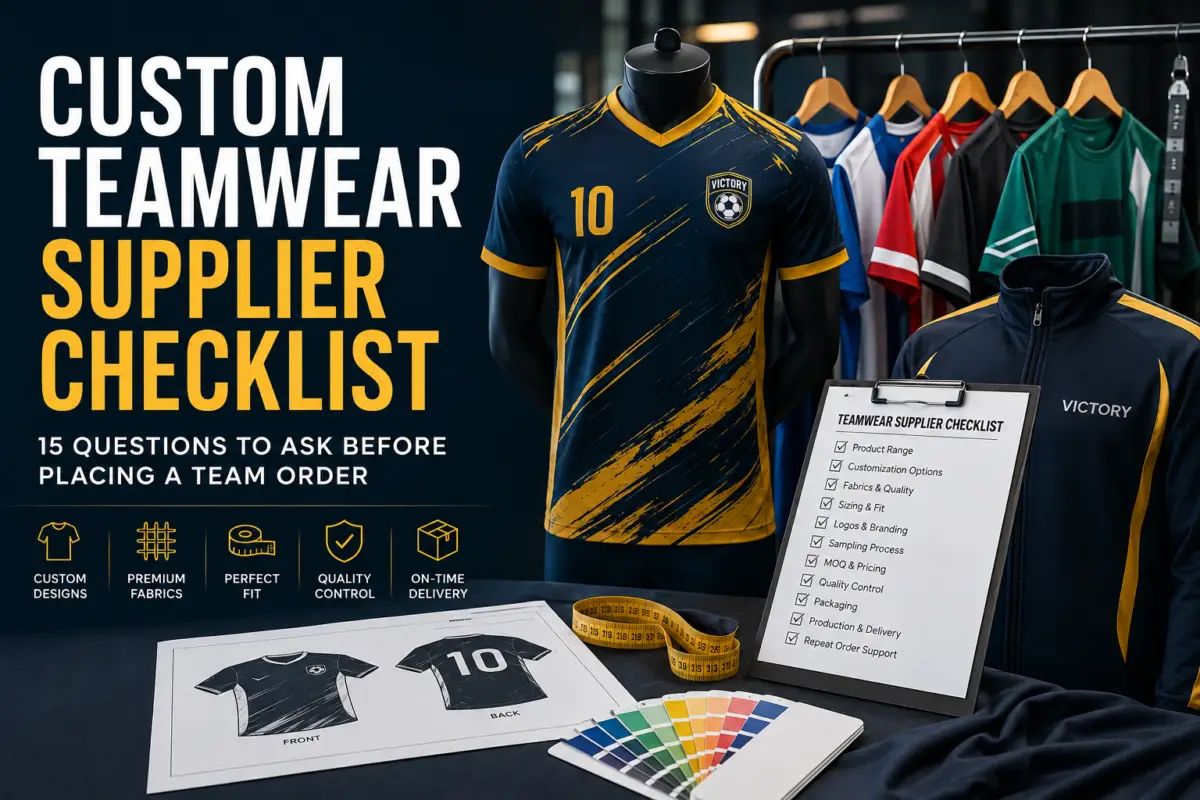
15 Questions to Ask Any Private Label Sportswear Manufacturer
1. Can you manufacture this exact product?
Show the design.
2. Which fabric do you recommend, and why?
Do not accept only a fabric name.
3. What is the GSM?
Confirm if relevant.
4. Can you work from my size chart?
Ask before sampling.
5. Can I order a sample?
Confirm terms.
6. Which decoration method fits my artwork?
Ask for reasoning.
7. Can you produce my labels?
Define every label.
8. Can you produce my packaging?
Provide a reference.
9. What is the MOQ for this exact project?
Do not assume one MOQ applies to everything.
10. What does the quotation include?
Make inclusions explicit.
11. What quality checks will be performed?
Ask for measurable areas.
12. How are revisions controlled?
Avoid file confusion.
13. What is the production schedule after approval?
Confirm based on the project.
14. What shipping arrangement is available?
Confirm destination.
15. How do repeat orders work?
Important if the product succeeds.
What a Strong Private Label Sportswear RFQ Looks Like
Copy this structure when preparing your inquiry:
Company / Brand:
Target Market:
USA / UK / Europe / Other
Product:
Quantity:
Sizes:
Fabric:
Target GSM:
Fit:
Measurements / Size Chart:
Attached / Needs Development
Artwork:
Attached / Needs Development
Printing / Embroidery:
Main Label:
Size Label:
Care Label:
Hangtag:
Packaging:
Required Delivery:
Additional Requirements:
When a buyer sends information like this, the discussion becomes productive much faster.
Common Mistakes Sportswear Startups Make With Manufacturers
Mistake 1: Choosing Only by Price
Low unit cost does not guarantee low total cost.
Mistake 2: Launching Too Many Products
Inventory risk grows fast.
Mistake 3: Skipping Fit Development
Customers notice fit immediately.
Mistake 4: Using Generic Labels
Private label should look intentional.
Mistake 5: Changing Artwork After Approval
Freeze production files.
Mistake 6: Ignoring Packaging
Packaging affects fulfillment and presentation.
Mistake 7: Not Measuring Samples
Use a measurement sheet.
Mistake 8: Assuming Every Fabric Is the Same
Compare construction, GSM, stretch, and feel.
Mistake 9: Ordering Large Quantities Before Testing Demand
Build your commercial plan around realistic sales.
Mistake 10: Treating the Manufacturer Like a Mind Reader
Write down your requirements.
Why the Cheapest Private Label Sportswear Manufacturer May Cost More
Suppose Supplier A charges $1 less per garment.
For 500 units, that seems like a $500 saving.
But what happens if:
- 10% have incorrect sizing
- labels must be replaced
- logos are wrong
- repacking is required
- delivery misses the product launch
The total cost can exceed the original savings.
A better commercial formula is:
Manufacturing Price + Development Cost + Sampling + Freight + Defect Risk + Rework + Inventory Risk + Administrative Cost
That is why serious sourcing departments do not buy solely on unit price.
How Elahi Vertex International’s Private Label Process Fits the Buyer Journey
EVI’s published manufacturing ecosystem supports several stages of the product-development journey.
Stage 1: Idea
Buyer has:
- Product idea
- reference
- target market
ODM-style development may be relevant.
Stage 2: Specification
Buyer defines:
- Fabric
- fit
- measurements
- artwork
- branding
Stage 3: Private Label Setup
Branding can include labels, printing, embroidery, hangtags, and packaging.
Stage 4: Sampling
Physical review allows the buyer to evaluate fit, measurements, fabric, construction, colors, branding, and finishing.
Stage 5: Approval
The buyer closes revisions.
Stage 6: Bulk Production
Production follows the agreed specification.
Stage 7: Quality Control
Bulk output is checked against approved requirements.
Stage 8: Packaging
Finished products are prepared to buyer instructions.
This is the type of end-to-end structure buyers should look for when evaluating a private label sportswear manufacturer.
Evidence Buyers Can Review Before Contacting Elahi Vertex International
Serious buyers should do due diligence before sending money to any manufacturer.
For Elahi Vertex International, useful internal resources include:
The current EVI case-study page describes examples involving a custom sportswear collection, private-label gymwear, combat apparel, and streetwear, along with a workflow covering consultation, development, sampling, bulk production, quality control, and packaging. These are EVI’s own published case studies rather than independent third-party verification, so buyers should still conduct their normal commercial due diligence.
Why Sialkot Matters in Sportswear Manufacturing
Sialkot, Pakistan has long been associated with sports-related manufacturing and export supply.
For a buyer, however, location alone does not prove quality.
A Sialkot address does not automatically answer:
- Can this supplier make my product?
- Is the proposed fabric right?
- Will sizing be consistent?
- Can branding be executed accurately?
- Are commercial terms suitable?
The buyer should judge the specific manufacturer.
Elahi Vertex International identifies Sialkot, Pakistan as its manufacturing base and describes itself as serving international B2B buyers across custom apparel categories.
The relevant value comes from what the supplier can actually demonstrate for the project.
Quality Testing: When Should a Brand Request It?
Not every sportswear product requires the same laboratory testing.
A small club jersey order has different needs from a large retail activewear program.
Possible test areas can include:
- Colorfastness
- laundering
- perspiration
- fiber composition
- stretch
- recovery
- dimensional change
- moisture behavior
AATCC’s current standards library contains methods addressing numerous textile-performance areas and recommends using current versions of the applicable methods.
A buyer should decide:
What claim am I making?
Then determine:
What evidence would support that claim?
Do not add expensive testing merely because it sounds professional.
Do not skip necessary testing simply to save money.
External Resources for Serious Sportswear Buyers
These external industry resources can strengthen a buyer’s development process:
AATCC — Textile Standards and Testing
Useful for researching established textile test methods and evaluation procedures.
AATCC — Testing & Standards
Useful for understanding textile evaluation and quality-control methods.
Adobe — Vector Artwork
Useful for preparing scalable brand and logo artwork for production.
Adobe Logo Design and Vector Artwork
These external references should be used as ordinary editorial resources. Do not imply that Elahi Vertex International holds a certification, accreditation, or test result unless that specific claim is independently confirmed.
Private Label Sportswear Manufacturer FAQ
1. What is a private label sportswear manufacturer?
A private label sportswear manufacturer produces sportswear that is sold under another company’s brand identity. The project can include custom products, labels, logos, packaging, fabrics, sizing, artwork, and other buyer-defined requirements.
2. Does Elahi Vertex International offer private-label manufacturing?
Yes. Elahi Vertex International has a dedicated private-label manufacturing service covering custom products, labels, branding, packaging, and bulk production.
3. Can I use my own brand name?
Yes. Private-label manufacturing is specifically intended to produce products under the buyer’s brand identity.
4. Can I provide my own design?
Yes. EVI’s custom order process supports design uploads and buyer-defined manufacturing requirements.
5. Which design file types can I upload?
The current EVI inquiry page lists PDF, JPG, PNG, AI, EPS, and ZIP among supported design-upload formats.
6. Can I choose the fabric?
Fabric requirements can be specified during the inquiry and product-development process. Final suitability and availability should be confirmed for the individual project.
7. Can I specify GSM?
Yes. EVI’s current RFQ form contains a dedicated GSM specification field.
8. Can I use my own size chart?
The custom-order workflow includes custom size-chart instructions, allowing buyers to communicate their sizing requirements.
9. Does EVI support OEM sportswear manufacturing?
Yes. Its OEM service is structured around manufacturing products according to the buyer’s designs and approved specifications.
10. Does EVI offer ODM development?
Yes. Its ODM service covers development from initial concept through material selection, pattern development, sampling, approval, and bulk production.
11. Can startups work with EVI?
EVI’s published custom manufacturing service includes brands and startups among its intended buyers.
12. Can established brands work with EVI?
Yes. The manufacturing model is designed for custom B2B projects, but every project’s technical and commercial fit should be evaluated individually.
13. Can I add custom woven labels?
Woven labels are listed among EVI’s branding options.
14. Can I add printed labels?
Yes. Printed labels are listed among the current branding options.
15. Can I use custom neck labels?
Yes. Neck labels are among the published options.
16. Can I use custom care labels?
Care labels are included in EVI’s published labeling options. The buyer should ensure the content is appropriate for the destination market.
17. Can I add hangtags?
Yes. Hangtags are included in the branding options listed on EVI’s current website.
18. Can products be custom packaged?
Yes. EVI lists individual polybags, size stickers, labels, hangtags, cartons, and custom packaging options depending on requirements.
19. Can I request a sample?
EVI maintains a dedicated sampling and prototyping process intended to let buyers review the physical product before bulk approval.
20. What should I inspect on the sample?
Review fit, measurements, fabric, construction, colors, decoration, labels, branding, and finishing.
21. Does EVI provide sublimation?
Yes. Its dedicated sublimation service covers sports jerseys, teamwear, sports kits, training apparel, and performance garments.
22. Can embroidery be used?
Embroidery is part of the published customization and branding capabilities, subject to the garment and artwork requirements.
23. Does EVI manufacture complete sportswear collections?
Its current manufacturing and portfolio pages show capabilities across sportswear, teamwear, activewear, streetwear, boxing wear, hoodies, sweatshirts, and other custom apparel.
24. Can I manufacture team uniforms under my own brand?
Private-label and custom teamwear projects can be discussed using buyer branding and product specifications.
25. Can EVI make custom soccer jerseys?
Soccer uniforms and teamwear are included within its published sportswear product structure.
26. Can EVI manufacture rugby, volleyball, lacrosse, basketball, or American football teamwear?
Those categories appear within EVI’s current teamwear product structure.
27. What is EVI’s MOQ?
MOQ and quantity requirements should be confirmed for the specific product and project. EVI’s current inquiry form allows buyers to submit sample requests and several quantity targets rather than assuming one configuration fits every project.
28. How much does private label sportswear cost?
There is no accurate universal price because cost can depend on product, fabric, GSM, quantity, construction, artwork, decoration, labels, packaging, and shipping.
29. How long does manufacturing take?
Production timing should be confirmed against the actual product, quantity, sampling status, customization, and required delivery date.
30. Can I request different colors?
Color requirements can be included in the product specification.
31. Can I combine multiple sizes in an order?
Provide the size breakdown in your RFQ and confirm the project arrangement before placing the order.
32. Can EVI manufacture products for USA brands?
EVI positions its custom manufacturing services for international B2B buyers, including brands and other businesses worldwide.
33. Can UK brands request private-label sportswear?
Yes, subject to the specifications, commercial terms, and destination-market requirements being agreed for the project.
34. Can European brands work with Elahi Vertex International?
EVI’s manufacturing positioning is international. Buyers should submit their destination and commercial requirements in the RFQ.
35. Can I create an entire branded collection?
A private-label collection can include multiple buyer-defined products, subject to development and production confirmation.
36. Do I need a tech pack?
A detailed tech pack is ideal for OEM-style manufacturing, but EVI also describes an ODM pathway for brands that begin with concepts or references rather than complete technical specifications.
37. Can the manufacturer help develop my product idea?
EVI’s ODM service states that it can support product development, materials, construction, patterns, customization, and sampling.
38. Does EVI perform quality control?
Yes. EVI’s current quality-control page lists inspection areas including materials, measurements, stitching, construction, printing, embroidery, colors, labels, branding, finishing, and final appearance.
39. Does quality control guarantee zero defects?
No responsible manufacturing article should promise zero defects. Buyers should establish appropriate tolerances, inspection criteria, and commercial terms for their project.
40. How do I request a quotation?
Prepare your product, quantity, designs, fabric requirements, sizing, branding, labels, packaging, destination, and other specifications, then submit them through the EVI custom-order workflow.
Request a Private Label Sportswear Quote
The Best First Order Strategy for a New Sportswear Brand
A new brand should not treat the first order as a race to maximum quantity.
The first objective is to create a repeatable product.
A useful sequence is:
1. Define the Customer
Know who will buy.
2. Define the Product
Know what problem the garment solves.
3. Define the Price Position
Understand the target retail price.
4. Build the Specification
Create measurements, artwork, labels, and packaging requirements.
5. Develop the Sample
Test the physical product.
6. Revise
Fix problems while the order is still small.
7. Approve
Lock the specification.
8. Place Controlled Production
Order according to realistic sales expectations.
9. Collect Customer Feedback
Learn from the market.
10. Improve the Next Order
Treat product development as iterative.
That creates a stronger foundation for scaling.
Why Long-Term Manufacturing Relationships Can Matter
Switching suppliers every order creates hidden costs.
Every new manufacturer needs to understand:
- Fit
- labels
- artwork
- packaging
- product history
- expectations
A successful long-term relationship may make future communication more efficient.
But loyalty should be earned through performance.
Continue evaluating:
- Quality
- communication
- price
- consistency
- service
A private label sportswear manufacturer should remain a business partner because the relationship works—not because changing suppliers feels difficult.
Why Elahi Vertex International Can Be Worth Adding to Your Supplier Shortlist
Based on its current published manufacturing structure, Elahi Vertex International offers several capabilities relevant to private-label sportswear buyers:
- Buyer-defined apparel manufacturing
- Sportswear and teamwear categories
- OEM production
- ODM product development
- Private-label manufacturing
- Fabric and sizing specification inputs
- Sublimation
- Printing
- Embroidery and branding
- Custom labels
- Packaging
- Sampling
- Quality-control workflow
- International B2B inquiry process
Those features make the company worth evaluating if they match your product requirements.
That is intentionally different from saying:
“Choose us because we are the best.”
Serious buyers deserve more than unsupported superlatives.
The stronger message is:
Here is what we can discuss. Here is how the process works. Send us your specification and evaluate us against your requirements.
That is much more credible.
Ready to Build Your Private Label Sportswear Collection?
If you are:
- Launching a sportswear brand
- Expanding an existing athletic range
- Building a private-label teamwear business
- Sourcing custom uniforms
- Looking for an OEM partner
- Looking for ODM product-development support
- Developing branded gymwear
- Sourcing wholesale custom apparel
- Comparing international manufacturing partners
prepare your project information.
Send:
Product:
What do you want manufactured?
Quantity:
What is your target order?
Design:
Attach reference or production artwork.
Fabric:
What material properties do you require?
GSM:
If known.
Fit:
Compression, athletic, regular, relaxed, oversized, or custom.
Sizes:
Provide your size range or chart.
Colors:
Provide your brand color direction.
Printing / Embroidery:
Describe required artwork.
Labels:
Main, size, care, neck, or other branding.
Packaging:
Explain your presentation requirements.
Target Market:
USA, UK, Europe, Canada, Australia, or another destination.
Required Delivery:
Provide the commercial target and request confirmation of feasibility.
Then submit the project to Elahi Vertex International:
Conclusion: Choosing the Right Private Label Sportswear Manufacturer Is a Brand Decision
Your manufacturer does not own your brand.
But manufacturing affects how customers experience your brand.
Customers experience:
- The fabric
- fit
- stitching
- color
- logo
- labels
- packaging
before they ever think about your supply chain.
That is why finding the right private label sportswear manufacturer matters.
The strongest supplier relationship is built on:
**Clear Product Requirements
- Accurate Specifications
- Controlled Artwork
- Physical Sampling
- Documented Approval
- Quality Control
- Reliable Communication**
For brands evaluating Elahi Vertex International, the 9 powerful reasons to consider the company are:
- Buyer-defined custom manufacturing
- Broad sportswear and teamwear capabilities
- OEM and ODM pathways
- Fabric, GSM, fit, and sizing customization
- Private labels, branding, hangtags, and packaging
- Sampling and prototyping before bulk approval
- Multiple decoration and customization methods
- Quality control against approved specifications
- A structured B2B manufacturing inquiry process
Elahi Vertex International’s own published manufacturing pages support this overall structure: the company describes private-label services involving custom products, labels, branding, packaging, and bulk production; OEM manufacturing from buyer specifications; ODM product development from concept through sampling; physical sample review; and quality checks covering materials, measurements, construction, decoration, branding, and finishing.
The next step is not to send:
“Price?”
The next step is to send a manufacturing brief that makes a serious quotation possible.
If you have a sportswear design, private-label collection, teamwear range, activewear concept, or custom apparel project ready to discuss, send the product, quantity, design, fabric requirements, sizing, branding, labels, packaging, and destination.
Submit Your Private Label Sportswear Project to Elahi Vertex International
Your Brand. Your Product. Your Specifications. A clearer path from concept to production.
9 Useful External Resources for Private Label Sportswear Buyers
- AATCC — Textile Testing Standards
Useful for researching recognized textile test methods covering colorfastness, laundering, moisture management, dimensional change, and other apparel-performance areas.
https://www.aatcc.org/testing/standards/ - Pantone — Textile Color Systems
Useful for defining and communicating textile color references between brands, designers, and manufacturing partners.
https://www.pantone.com/uk/en-gb/color-systems/for-textiles - Adobe — Vector Logo and Artwork Guidance
Useful for preparing scalable brand logos, sponsor graphics, typography, and other production artwork without losing quality when resized.
https://www.adobe.com/learn/illustrator/web/logo-design - ICC — Incoterms® Rules
Useful for international buyers and manufacturers defining responsibilities for transport, costs, risk, and delivery under international sales contracts.
https://iccwbo.org/business-solutions/incoterms-rules/ - GS1 — Apparel and Barcode Standards
Useful for private-label brands that need GTINs, retail barcodes, product identification, and supply-chain tracking.
https://discover.gs1.org/apparel/ - ISO 8559-1 — Clothing Body Measurements
Useful technical reference for clothing sizing and standardized anthropometric measurement definitions used in garment development.
https://www.iso.org/standard/61686.html - ISO 8559-3 — Body Measurement Tables and Size Intervals
Useful for brands developing structured sizing systems and body-measurement tables for different customer groups.
https://www.iso.org/standard/67334.html - Textile Exchange — Materials Resources
Useful for brands researching textile materials, preferred fibers, traceability, and responsible-material strategies.
https://textileexchange.org/ - GS1 — Product Identification and Barcodes
Useful for private-label sportswear brands preparing products for retail, wholesale, distribution, and marketplace sales.
https://www.gs1.org/standards/id-keys/gtin
9 Internal Links for the Private Label Sportswear Manufacturer Blog
- Private Label Manufacturing
Elahi Vertex International supports brands looking to develop custom apparel under their own identity, including product specifications, branding, labels, and packaging requirements. Buyers planning a private-label collection can review the dedicated Private Label Manufacturing page for more information. - OEM Clothing Manufacturing
Brands that already have complete designs, measurements, artwork, material requirements, and technical specifications can explore Elahi Vertex International’s OEM Clothing Manufacturing service for production based on buyer-approved requirements. - ODM Clothing Manufacturing
Startups and brands that have a product concept but still need development support can review the ODM Clothing Manufacturing process, which covers concept development, material selection, pattern development, sampling, and production planning. - Sampling & Prototyping
Before approving a bulk sportswear order, buyers can use the Sampling & Prototyping process to review important areas such as fabric, fit, measurements, artwork, branding, construction, and finishing. - Quality Control
A clear quality-control process helps buyers compare finished production against approved specifications. Elahi Vertex International’s Quality Control page explains the inspection areas used across custom apparel manufacturing. - Custom Labels & Branding
Private-label sportswear requires more than a logo on the garment. Buyers can explore options for woven labels, printed labels, neck labels, size labels, care labels, hangtags, and other branding through the Custom Labels & Branding service. - Packaging
Packaging can affect both brand presentation and fulfillment efficiency. Elahi Vertex International’s Packaging page provides information about packaging options that can be discussed according to buyer requirements. - Portfolio — Elahi Vertex International
Brands comparing product categories and manufacturing capabilities can review the Elahi Vertex International Portfolio to explore the wider custom sportswear, teamwear, activewear, streetwear, and apparel manufacturing scope. - Custom Order / RFQ
When your product specification is ready, submit the product type, quantity, artwork, fabric, GSM, fit, sizing, branding, labels, packaging, and destination through the Custom Order / RFQ page to begin a project-specific manufacturing discussion.
Private Label Sportswear Manufacturer
Ready to Build Your Private Label Sportswear Collection?
Turn your sportswear idea into a production-ready project with Elahi Vertex International.
Whether you are developing teamwear, activewear, training apparel, gymwear, uniforms, or a broader private-label sportswear collection, prepare your requirements clearly before requesting a quotation.
Send your:
Product + Quantity + Design + Fabric + GSM + Fit + Sizes + Branding + Labels + Packaging + Target Market
Then start your project through the official custom order form:
Start Your Private Label Sportswear RFQ
Elahi Vertex International can review your project requirements and discuss the next manufacturing steps based on your actual specifications.